Applehead or Wedge-Head? The Real Differences Between Siamese Types
Ever seen two Siamese cats that look like they belong to different species? One is stocky with a round face while the other is lean with ears that could pick...

PurrScript Editorial Team
Editorial Team
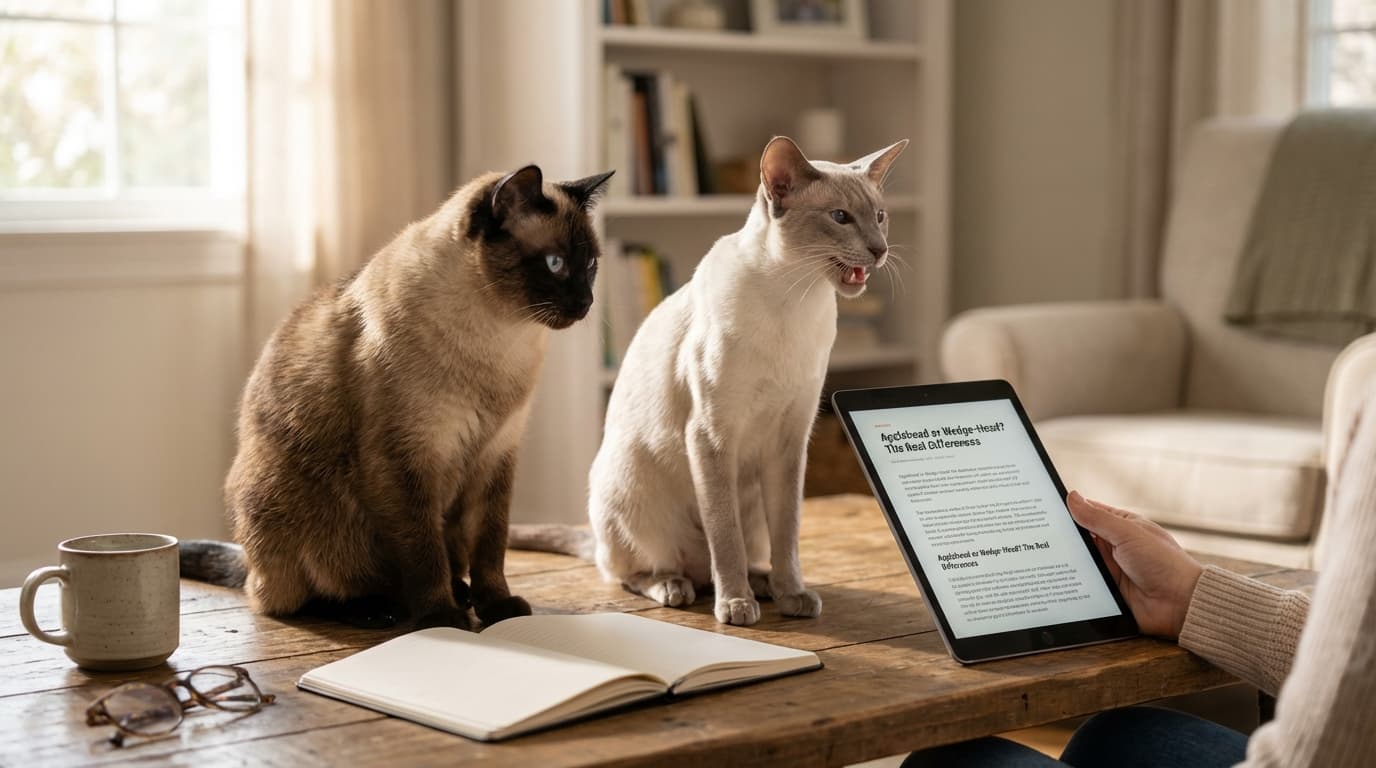
Applehead or Wedge-Head? The Real Differences Between Siamese Types
Ever seen two Siamese cats that look like they belong to different species? One is stocky with a round face while the other is lean with ears that could pick up satellite signals. This visual split is at the heart of the applehead vs wedge-head Siamese debate. Whether you are looking for a dog-like companion or an elegant showstopper, these intelligent cat breeds offer way more than just a pretty face.
It is not just about looks. From the legendary Siamese cat yowling that sounds surprisingly like a human baby to the mystery of Siamese kitten color changes, there is a lot to learn before bringing one home. You might be deciding between a classic seal point vs lilac point, but their body type actually tells you a lot about their health and how long they might live.
This guide breaks down the real differences between the traditional Applehead and the modern Wedge-head. We will look at their royal history, their vocal personalities, and why one type often lives five years longer than the other. By the end, you will know exactly which of these tiny geniuses belongs on your sofa.
Ever wonder why some Siamese cats look like sleek aliens while others look like the sturdy companions in old movies? It is a wild split within a single breed. On one side, you have the traditional Applehead - the robust, round-faced original once gifted to royalty. On the other, the modern Wedgehead, a lean, triangular-faced athlete favored by today's show judges.
The differences go beyond looks. Appleheads are sturdy, weighing up to 15 pounds and often living 20 years. Wedgeheads are more delicate, usually topping out at 12 pounds with a shorter lifespan. While a show judge might dismiss an Applehead as "not legit," your vet likely loves their hardy constitution.
Choosing depends on your lifestyle. If you want a vocal, high-energy shadow, the Wedgehead is your match. But if you prefer a slightly quieter, long-lived friend who looks like a classic treasure, the Applehead is the way to go.
Key insights:
- Applehead Siamese typically live up to 5 years longer than the modern Wedgehead variety.
- Official show standards favor the Wedgehead, while many pet owners and vets prefer the traditional Applehead's health and look.
- Wedgeheads tend to be more intensely vocal and energetic compared to the calmer Applehead.
The Big Showdown: Physical Differences You Can't Miss
Ever looked at two Siamese cats and wondered if they were even the same breed? It is a common reaction. While they share the same famous color points, the physical gap between a traditional Applehead and a modern Wedge-head is massive. One looks like a sturdy, cuddly companion from a vintage postcard, while the other looks like a sleek, high-fashion model ready for the runway. This isn't just about looks, though; their builds tell a story of royal history versus modern show-ring evolution.
If you go back to the breed’s roots in Thailand, you find the Applehead. These are the original heavyweights that were once gifted to royalty and heads of state. They are often described as cobby or stocky, carrying a much more robust frame than their modern cousins. A large Applehead can reach 15 pounds, feeling solid and muscular when you pick them up. Their rounder faces and moderate bone structure give them a classic look that many pet owners still prefer today, even if show judges have moved on. There is a practical benefit to this traditional build, too: they often live between 12 and 20 years, generally outlasting the more delicate varieties.
Then there is the Wedge-head, the variety that took over the show circuit in the late 20th century. These cats are all about sharp angles and extreme elegance. They are noticeably lighter, usually weighing between 6 and 12 pounds, but their long, fine-boned limbs make them look like tiny athletes. The most striking features are the large bat ears and that distinct triangular head shape. While they might not have the same sturdy feel as the traditional type, their lean, elongated profile is the current gold standard for breed competitions. Think of them as the high-energy, intensely vocal modern variety of the family.
The choice between these two often comes down to what you want in a companion. Do you want the robust, slightly quieter traditionalist, or the high-energy athlete? Interestingly, there is a bit of a divide in the cat world. Some show fanciers might claim the Applehead isn't a real Siamese because it doesn't fit current standards, but for many families, that traditional look is exactly what a Siamese should be. It is a classic case of show-ring fashion versus historical reality, and both types bring that famous intelligence and personality to the table.
Key insights:
- Applehead Siamese are the original royal breed from Thailand, known for a stockier build and longer lifespan of up to 20 years.
- Wedge-head Siamese represent the modern show standard, featuring a triangular head, large ears, and a much leaner, finer bone structure.
- While Appleheads are often heavier (up to 15 lbs), Wedge-heads are typically more energetic and intensely vocal.
- There is a documented divide between official show recognition and the high demand among pet owners for the traditional Applehead look.
Why Appleheads Are the 'Original' Heavyweights
Ever wonder what the very first Siamese cats looked like when they were hanging out in royal palaces? Long before the skinny show cats of today, there was the Applehead. These are the true old-style cats, the ones gifted to royalty and heads of state in the late 1800s. They are not just historically significant; they are built differently too. While modern versions are lean and elongated, Appleheads are often described as cobby or stocky. Think of them as the original heavyweights of the breed.
These cats typically weigh between 8 and 15 pounds, which is a solid jump over their smaller cousins. As expert Christian Adams puts it, they have a large, round head with a more robust body that is heavier-boned than the modern wedge-head. This sturdier frame is a big part of their traditional charm and appeal. It is that classic, rounder face that most people think of when they imagine a traditional pet cat from the past.
The best part is that this extra bulk usually comes with a longer life. Appleheads often live up to 20 years, outlasting many modern varieties by half a decade. They also tend to be a bit quieter and more laid back than their intensely vocal counterparts. Even though some show judges might dismiss them, many owners prefer this classic look and hardy health. It is hard to argue with a cat that has been a royal favorite for centuries.
Key insights:
- Appleheads represent the original lineage gifted to Thai royalty and heads of state.
- They are significantly heavier than modern varieties, often weighing up to 15 pounds.
- This traditional build correlates with a longer lifespan, often reaching 20 years.
The Modern Wedge-Head: Lean, Mean, and Pointy
Ever seen a cat that looks like it stepped out of a high-fashion magazine? That is the modern Wedge-head. During the late 20th century, show standards shifted toward an extreme, stylized look. These cats swapped the rounder features of their ancestors for a sharp, triangular profile and those famous, oversized "bat ears." They are the supermodels of the feline world: lean, long, and incredibly fine-boned.
This athletic build means they usually weigh between 6 and 12 pounds, making them noticeably lighter than the traditional Applehead. While they are stunning to look at, there is a trade-off in longevity. Their lifespan typically ranges from 12 to 15 years, which is a few years shorter than the hardier original type. You will also find they have a personality to match their sharp look - they are often more energetic and intensely vocal.
Why the change? Show circuits began favoring these "pointy" features to highlight elegance. It is a big shift from the sturdier cats once gifted to royalty. If you want a chatty, living piece of art, the Wedge-head is it. Just be ready for a pet that demands your full attention with every loud, raspy meow.
Key insights:
- The Wedge-head is a product of modern show standards that emerged in the late 1900s.
- They possess a finer bone structure and lower average body weight than traditional Siamese.
- Higher energy levels and more intense vocalizations are common traits of this variety.
From Cream to Color: The Magic of Siamese Points
Ever wonder why Siamese kittens look like little white snowballs when they first arrive? It is one of nature’s coolest tricks. These cats are actually born completely white because the mother’s womb is a cozy, uniform temperature. It is only after they hit the cooler air of the outside world that their true colors begin to rust into place. This happens because of a specific genetic quirk called temperature-sensitive albinism. Essentially, their fur only develops pigment on the parts of the body that stay the coolest, which is why we see those iconic dark patches on their ears, faces, paws, and tails.
Think of your Siamese cat as a living, breathing heat map. The points are the darkest where the body temperature is lowest. If a Siamese cat lives in a very cold climate, you might even notice their coat darkening overall to compensate. This transformation is why watching a kitten grow is so exciting. You are literally seeing their DNA react to the environment in real-time. While they all start out pale, by the time they are a few weeks old, you will start to see the first hints of whether they will be a deep, dark brown or a soft, misty gray.
When it comes to telling these beauties apart, the Seal Point and the Lilac Point are on opposite ends of the intensity scale. The Seal Point is the classic look most people picture, featuring a warm cream body with points that are a deep, dark brown. It is a high-contrast, striking look that has defined the breed since they were first imported from Thailand in the late 1800s. On the flip side, the Lilac Point is the frosty sibling. These cats have a bright white body and points that are a delicate, pinkish-gray. They look almost ethereal, like they have been dusted with silver and light lavender.
But wait, there is more to the color wheel than just those two. You will also run into Blue Points, which carry a cool, slate-blue tone, and Chocolate Points, which offer a warmer, milk-chocolate vibe compared to the dark Seal variety. While show judges might get picky about the exact shade of a Lilac's nose leather, for most of us, it is all about that beautiful contrast. Whether they are dark and bold or light and subtle, that point pattern is the unmistakable signature of a cat that was once a prized gift for royalty.
What does this mean for you as an owner? Beyond just being pretty to look at, these colors are a window into the breed's history. From the original Applehead types gifted to heads of state to the modern Wedgeheads seen in shows today, these four primary color variations remain the gold standard. Whether you prefer the robust, heavy-boned traditional look or the lean, triangular modern style, the magic of the color-point genetics remains exactly the same.
Key insights:
- Siamese cats are essentially walking heat maps due to temperature-sensitive albinism.
- Seal Points offer the highest contrast with dark brown points, while Lilac Points are the lightest with pinkish-gray tones.
- All Siamese kittens are born white and develop their specific point colors over the first few weeks of life.
- The four primary recognized colors are Seal, Blue, Chocolate, and Lilac.
Seal Point vs. Lilac Point: Warm Brown vs. Pinkish Gray
Have you ever noticed how some Siamese cats look like they stepped straight out of a classic movie while others have a much softer, almost ghostly glow? It usually comes down to the color of their points. The Seal Point is the iconic look most of us imagine first. These cats feature a cream-colored body that stands out against deep, dark brown markings on their face, ears, and paws. It is a bold, high-contrast style that feels very traditional and striking.
If you want something more subtle, the Lilac Point is a stunning alternative. Often described as having a frosty elegance, these cats have pinkish-gray points and a bright white body. The look is much more delicate than the dark Seal Point. You might also see Blue Points with their cool grayish-blue tones or Chocolate Points that look like warm milk chocolate. While the colors differ, the genetics stay the same. The darker fur only grows on the cooler parts of their body like the tail and nose.
Choosing between them is really about the vibe you want in your home. Do you love the sharp, royal look of the dark brown contrast? Or does the soft, ethereal feel of the lilac suit you more? Regardless of the shade, these cats all share that famous vocal personality and high intelligence that makes the breed so special. It is less about finding a better color and more about which coat catches your eye when they are zooming across your living room.
Key insights:
- Seal and Lilac points represent opposite ends of the Siamese color spectrum, from high-contrast drama to subtle, frosty tones.
- Point coloration is a result of temperature-sensitive genetics where darker fur grows only on the cat's cooler extremities like the paws and face.
Let’s Talk About the Noise (And the Yowling)
If you have ever lived with a Siamese, you know they do not just meow. They talk. It is a raspy, demanding, and strangely human-like yowl that can travel through three closed doors and a floorboard. These cats are the undisputed chatterboxes of the feline world, and they have opinions on everything from the brand of kibble you bought to the fact that you are trying to sleep in. This vocal nature is a core part of their identity, stretching back to their origins in Thailand where they were once the prized companions of royalty.
But is there a volume difference between the two main types? Generally, yes. While every cat is an individual, Wedge-head Siamese are often the louder and more persistent of the two. These modern show-stoppers are high-energy and intense, which usually translates into a more piercing voice. The traditional Applehead, while still very chatty, is often described as having a slightly more relaxed temperament. Think of it like this: the Wedge-head is the friend who narrates their entire day in real-time, while the Applehead is the one who waits until they have something specific to tell you, even if they say it very loudly.
Living with such a talkative roommate requires a bit of translation. When a Siamese starts yowling, they are usually trying to bridge the communication gap. Often, a sudden increase in noise means they are bored or under-stimulated. Because these are incredibly intelligent animals, they need a job to do. Interactive play is your best tool here. A solid fifteen-minute session with a feather wand or a puzzle feeder can often turn a screaming cat into a purring, sleepy companion. They just want to be heard and noticed by their favorite human.
The reality is that whether you have a robust fifteen-pound Applehead or a sleek, six-pound Wedge-head, you are signing up for a cat that will always have the last word. Learning to distinguish a 'hello' chirp from a 'feed me' yowl makes life much easier. It is part of the charm that has kept people obsessed with this breed since they were first imported to the United States in the late 1800s. They are not just pets; they are active participants in your household conversations.
Key insights:
- Wedge-head Siamese are typically more energetic and intensely vocal compared to the more moderate Applehead.
- Excessive yowling is often a sign of boredom, which can be managed through structured interactive play.
- The Siamese voice is uniquely 'human-like' and serves as a primary way for the breed to bond with their owners.
How to Live With a Talkative Roommate
Living with a Siamese is like having a roommate who never runs out of stories. Whether you have a sturdy Applehead or a sleek Wedgehead, these cats are famous for their vocal cords. It is not just noise. They are truly trying to tell you something about their day or their empty food bowl. Since Wedgeheads are often more energetic, their yowling can feel a bit more intense, but all Siamese use their voice to bond with you.
To manage the noise, try more interactive play. Think of it as burning off the energy that usually turns into a loud concert. A quick session with a feather toy can work wonders. When they are tired from hunting, they are much less likely to spend the evening shouting. If you listen closely, you will start to recognize their patterns. A short chirp might be a simple hello, while a long yowl usually means they are bored and need your attention.
Health and Longevity: Which Type Lives Longer?
When you bring a cat into your home, you're naturally hoping for as many years together as possible. But did you know that the shape of your Siamese cat's head might actually give you a clue about how long they will stay by your side? It is a bit of a shocker, but there is a noticeable five-year gap between the two main types. While the modern Wedge-head usually averages around 12 to 15 years, the traditional Applehead often reaches 20. That is a lot of extra birthdays just because of a sturdier build.
Why the big difference? It mostly comes down to how they are built. Appleheads are the heavy-boned athletes of the family, typically weighing between 8 and 15 pounds. They have a more moderate, rounder look that has not changed much since they were gifted to royalty in Thailand centuries ago. On the flip side, Wedge-heads are bred for the extreme look favored in modern cat shows. This often means super-lean bodies and those very large, triangular ears. This focus on show-stopping looks over traditional traits can sometimes lead to a more delicate constitution.
Think of it this way. The Applehead is like a rugged vintage truck, while the Wedge-head is a high-performance sports car. The sports car looks flashy, but the truck is built to last through the decades. Because Appleheads are not bred for extreme features, they tend to avoid some of the health hiccups seen in show-line breeding. If you want a hardy companion who will be yowling for treats well into their senior years, the robust old-style Siamese is usually the safer bet.
Key insights:
- Applehead Siamese live up to 20 years on average, outlasting Wedge-heads by about 5 years.
- The heavier-boned build of the traditional Applehead contributes to a much hardier constitution.
- Extreme breeding for show standards in modern Wedge-heads can lead to a more delicate health profile and shorter lifespan.
Living with a Tiny Genius: Intelligence and Play
Ever wonder why people call Siamese cats dogs in cat suits? It is not just because they follow you from room to room. These cats are famously smart and crave constant engagement. Whether you have a sturdy Applehead or a sleek Wedgehead, you are living with a high-speed processor on four legs. They do not just sit on your lap. They want to be part of the action.
This intelligence is a double-edged sword. If you do not give them something to do, they will find their own jobs. This usually involves opening your kitchen cabinets or unrolling the toilet paper. While Wedgeheads are often the more energetic and vocal of the two, even the more robust Appleheads need regular mental workouts. Think about their history. These cats were once royal gifts in Thailand, and they have kept that main character energy for centuries.
The good news is that you can actually train them. Since they are so motivated by interaction, many Siamese owners successfully teach their cats to play fetch or walk on a leash. Some even learn to open doors just by watching you do it. Just remember that a bored Siamese is a mischievous Siamese. Keeping a variety of puzzle toys around helps, but nothing beats fifteen minutes of active play with you. It keeps them healthy, happy, and out of your cupboards.
Key insights:
- Wedgehead Siamese tend to be more intensely vocal and energetic compared to the calmer Applehead variety.
- Training a Siamese to walk on a leash or play fetch provides the mental stimulation they need to stay out of trouble.
- A lack of engagement often leads to destructive behaviors like opening cabinets or clearing off shelves.
Common Questions About Siamese Cats
Ever had a vet or a cat person look at your round-faced Siamese and hint that they aren't the real deal? It happens more than you would think. There is a bit of a rift in the cat world today. While show judges obsess over the modern Wedgehead with its triangular face and huge ears, many owners still swear by the traditional Applehead. The funny thing is that the Applehead is actually the original look that was once gifted to royalty in Thailand back in the late 1800s. So, if anyone tells you your cat is not legit, just remember they are actually carrying the classic royal lineage that started it all.
The differences are not just about looks. They are also about how much cat you are actually getting. An Applehead is a sturdy companion that usually weighs between 8 and 15 pounds. Compare that to the lean Wedgehead, which typically stays between 6 and 12 pounds. But the most important number is the years you get to spend together. Appleheads often live significantly longer, sometimes reaching 20 years. The more extreme show varieties usually average closer to 12 or 15 years. It seems that sticking to that traditional, heavy-boned build comes with some serious health perks and a more robust constitution.
Then there is the question of color and those famous kitten color changes. All Siamese are born white and develop their darker points as they grow based on their genetics. You will eventually see those four classic shades: dark brown Seal Points, grayish-blue Blue Points, warm Chocolate Points, or the delicate Lilac Points. These are incredibly intelligent cat breeds, but that brainpower often comes with a very loud voice. While all Siamese are famous for yowling, Wedgeheads are usually the most intense and energetic. If you want a talkative cat that is a bit more mellow, the traditional Applehead is often the quieter, sturdier choice for your home.
Key insights:
- Applehead Siamese typically live up to 5 years longer than the modern Wedgehead variety.
- The traditional Applehead was the original breed gifted to royalty before show standards shifted toward leaner builds.
- While all Siamese are vocal, Wedgeheads are generally known for more intense and frequent yowling.
The Verdict: Which Siamese Is Right for Your Sofa?
So, which of these famous Meezers belongs on your sofa? If you want a sturdy companion who might stick around for up to twenty years, the Applehead is a fantastic choice. These cats are the original royals, often weighing up to fifteen pounds with a calm, heavy-boned build. They tend to be a bit quieter than their modern cousins, making them perfect if you want a talkative cat that does not quite scream at the neighbors.
On the flip side, the Wedgehead is your go-to if you love high energy and a sleek, show-stopping look. They are smaller and more athletic but bring a lot of intensity and personality to the table. While show judges usually prefer the sharp, triangular face of the Wedgehead, many pet owners still seek out the traditional Applehead for its robust health and sweet, round face. It is a classic case of show standards versus real-world durability.
Whether you pick a dark Seal Point or a frosty Lilac Point, you are getting an incredibly smart friend. First-time owners should remember that any Siamese will demand your attention. These cats do not just sit on the furniture, they want to be part of your soul. Pick the one that matches your daily energy, and you will have a loyal, vocal shadow for years to come.
Key insights:
- Appleheads typically live five years longer and have a more robust physical build than Wedgeheads.
- Wedgeheads are the modern show standard but often require more active engagement and tolerate less downtime.
- Regardless of head shape, all Siamese carry the same intelligent, social genes that make them legendary companions.
Frequently Asked Questions
Yes, they definitely are. Actually, Appleheads represent the original look of the breed that was once gifted to royalty and heads of state in Thailand. While modern cat shows now prefer the thin and triangular Wedgehead style, the Applehead is the traditional version that first arrived in the United States in the late 1800s.
You might hear some show experts or vets say they aren't 'real' Siamese, but that is just because show standards changed over time. These cats are sturdier and often live up to five years longer than their thinner cousins, so they are very much the real deal.
Basically, you have a very chatty roommate. Siamese cats are famous for being one of the most talkative and intelligent breeds in the world. When they yowl at night, they are usually just looking for attention or feeling a bit bored because they are so social.
They are incredibly smart, so they quickly learn exactly which sounds will get you to wake up and check on them. While all Siamese are vocal, the modern Wedgehead types are known to be even more intense and energetic than the calmer Appleheads. It is just part of their big personality.
Yes, they definitely do. Most people do not realize that Siamese kittens are actually born white or cream because their coat color is temperature sensitive. As they grow and their skin temperature changes, those famous dark points on their ears, face, and paws start to show up.
You will see the full color develop over their first year of life. For instance, a Seal Point will eventually have a cream body with dark brown points, while a Lilac Point stays much lighter with pinkish-gray markings. It is almost like watching a photo develop in slow motion as they mature.
Most families find the Applehead Siamese a better fit because they tend to be a bit calmer and more sturdy. Since they are heavier-boned, they usually handle the busy energy of a home with kids or other pets really well. They also tend to live longer, often reaching twenty years, which makes them a long-term part of the family.
If you want a cat that is constantly on the move and very vocal, the Wedge-head is a fun choice. But for a more traditional pet experience, the Applehead is usually the favorite. It really depends on if you want a lean athlete or a solid companion.
Conclusion
So which Siamese wins the spot on your sofa? It comes down to whether you want a sturdy, round-faced companion who might live into their twenties or a sleek, high-fashion athlete. Both types bring the same high-energy intelligence and those striking color changes that turn white kittens into deep seal or lilac points. They are just different looks for the same legendary breed.
Living with these cats means embracing the noise. That famous Siamese cat yowling is not a quirk; it is a conversation. As one of the most intelligent cat breeds, they expect you to play along and keep their busy minds occupied. If you want a quiet pet, a Siamese might not fit. But if you want a tiny genius who follows you everywhere, you will be happy.
The best move is to meet a few cats to see which energy matches your home. Whether you go with a traditional applehead or a modern wedge-head, you are getting a loyal friend who will never let you feel lonely. Just be ready to do a lot of listening.
Send it to someone who should read it next.
PurrScript Editorial Team
Editorial Team
PurrScript's in-house editorial team. We research, write, and review every guide using established veterinary and behavioral resources, and update articles as best practices evolve.
View all articles