British Blue or Russian Blue? How to Tell These Silver Beauties Apart
Have you ever spotted a stunning, silver-grey cat and wondered if you were looking at a British Blue cat or a Russian Blue? It's a common mix-up because both breeds...

PurrScript Editorial Team
Editorial Team
British Blue or Russian Blue? How to Tell These Silver Beauties Apart
Have you ever spotted a stunning, silver-grey cat and wondered if you were looking at a British Blue cat or a Russian Blue? It's a common mix-up because both breeds share that gorgeous, velvety coat that glimmers in the light. But while they might look similar at first glance, these two felines are actually worlds apart when you look closer at their faces and frames.
One is a sturdy, chubby-cheeked cat that looks like a living teddy bear, while the other is a sleek and elegant athlete. Choosing between them isn't just about looks. These low-maintenance cat breeds have very different personalities and histories that might make one a better fit for your home than the other.
This guide breaks down the British Shorthair vs Russian Blue debate so you can tell them apart in seconds. We will cover everything from their striking eye colors to their unique energy levels, helping you decide which of these silver beauties is the right companion for your lifestyle.
Ever found yourself staring at a gorgeous silver-grey cat and wondering if it is a British Shorthair or a Russian Blue? You are not alone. While both share that stunning 'blue' coat, which is really just a genetic trait where black fur is diluted, these two breeds are quite different. One looks like a plush teddy bear, while the other is more like a sleek, silver athlete.
If you see a cat with a broad, chubby face and wide jowls, you are likely meeting a British Blue. These stocky beauties have been around since Roman soldiers brought them to Britain way back in 43 AD. They take their time growing up and can take three years to fully mature. Meanwhile, the Russian Blue is all about angles. They have triangular faces and a much more slender build. They also tend to live longer, often reaching 20 years.
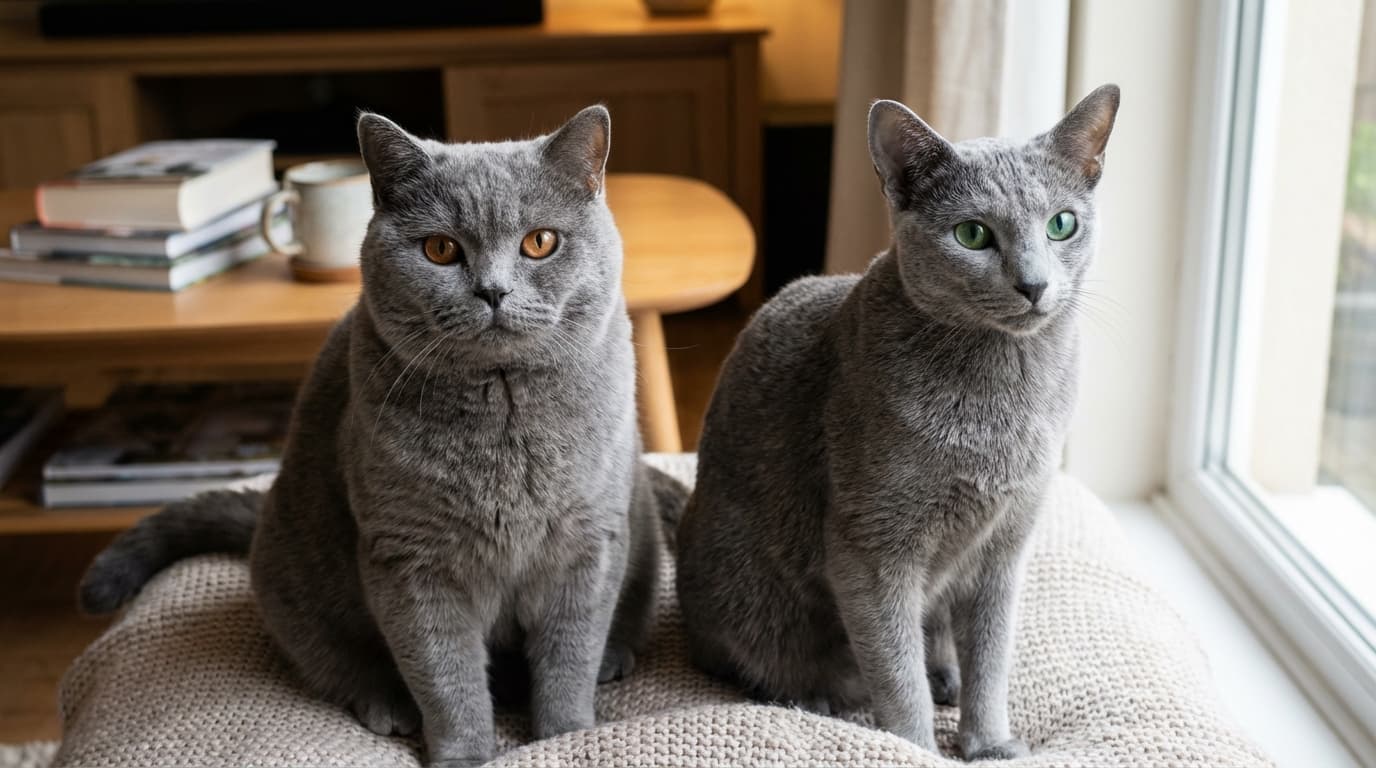
The easiest trick is to look at the eyes. Adult Russian Blues have vivid green eyes that pop against shimmery fur. British Blues usually have gold or copper eyes. As experts say, the secret is in their eyes. Both breeds make calm apartment pets, but these small details tell a much larger story about their unique history and where they came from.
Key insights:
- Eye color is the definitive tell: Russian Blues have green eyes, while British Blues have gold or copper eyes.
- Body shape differs greatly; British Blues are round and stocky, whereas Russian Blues are lean and athletic.
- Russian Blues tend to live longer on average, with some reaching up to 20 years of age.
The 'Teddy Bear' vs. The Athlete: Spotting Physical Differences
At first glance, you might think you are looking at the same cat in two different sizes, but the physical reality is quite different. The British Shorthair is the true 'teddy bear' of the cat world. They have what breeders call a cobby body, which basically means they are stocky, low-slung, and heavy-boned. This rugged look actually has a pretty cool backstory. Roman soldiers brought these cats to Britain around 43 AD to protect their food supplies. They needed a cat that was tough enough to handle the elements, not a delicate pet. Because of this, British Shorthairs are slow burners and can take up to three years to fully grow into their heavy frames.
On the other side of the ring, the Russian Blue is a pure athlete. While the Brit is built like a sturdy little tank, the Russian Blue is slender and graceful. They usually weigh between 3.6 and 6.8 kilos and move with a quiet elegance that the stockier British cat just does not have. It is a classic case of a rugged, ancient worker versus a refined, shimmery sprinter. Even though they both share that iconic blue-grey fur, their skeletons tell two very different stories about where they came from and what they were meant to do.
The secret is in the eyes. If you are still not sure which breed you are looking at, just wait for them to look at you. The eyes are the best giveaway for adult cats. Russian Blues are famous for their vivid green eyes. It is a bright, clear emerald color that is hard to miss. British Blues go in a completely different direction. They have deep gold or copper eyes that look like glowing pennies. As the team at Untamed puts it, the secret is in their eyes. It is the most reliable way to tell them apart, though you have to be patient because kittens of both breeds often start with blue or muddy-colored eyes before their true colors come in.
Faces and jowls: why one is chubbier than the other. You can also tell them apart by looking at their 'smiles.' The British Blue has those famous wide jowls and a broad, chubby face that makes them look like they are constantly holding their breath. Their noses are also a bit flatter, which adds to that round, teddy-bear vibe. The Russian Blue has a much more angular face. Some people describe it as triangular or even apple-like. They have very prominent whisker pads that give them a sweet, slightly mysterious expression that people often compare to the Mona Lisa.
Even the way they feel when you pet them is different. A British Shorthair has a dense, firm coat that is so thick it actually breaks into crisp sections when the cat turns or moves. It feels a bit like a plush carpet. The Russian Blue has a double coat that is incredibly soft and shimmery. Their fur has silver-tipped hairs that catch the light, making them look like they are glowing. While the British cat feels sturdy and crisp, the Russian Blue feels like touching silk. These small details show just how much personality is packed into their physical traits.
Key insights:
- Eye color is the most reliable physical trait to distinguish adults: Russian Blues have green eyes, while British Blues have gold or copper eyes.
- Body structure reflects their history: the British Shorthair is stocky and cobby, whereas the Russian Blue is slender and athletic.
- Coat texture differs significantly: British coats are dense and crisp, while Russian coats are shimmery, double-layered, and silver-tipped.
The Secret is in the Eyes
Ever feel like you are seeing double when looking at these two silver-coated beauties? You are not alone. But here is a trick: look straight into their eyes. As the experts at Untamed say, the secret is in their eyes. While their coats might look similar at a glance, their gaze tells a completely different story.
If you see a cat with striking, vivid green eyes, you are almost certainly looking at a Russian Blue. These emerald gems usually stand out against their shimmery double coats. On the other hand, a British Blue shows off round eyes in shades of gold or deep copper. This warm color perfectly matches their stocky build and those famous chubby cheeks.
Keep in mind that this trick works best for adults. Since British Shorthairs can take up to three years to fully mature, their features might shift as they grow. But once they are grown, that color contrast is the most reliable way to tell them apart. It is a simple detail that reveals whether you have a slender athlete or a sturdy, teddy-bear-like companion.
Key insights:
- Adult Russian Blues always have vivid green eyes.
- British Blues are known for their distinct gold or copper eye color.
- Eye color is the most dependable physical indicator for distinguishing these two breeds.
Faces and Jowls: Why One Is 'Chubbier' Than the Other
If you have ever looked at a British Blue and thought they looked like a fluffy teddy bear, you are not alone. Their signature look comes from those wide, heavy jowls and a slightly flattened nose that gives them a permanent chubby expression. This stocky build is actually a slow burn because it can take up to three years for a British Shorthair to fully mature and fill out those famous cheeks. When you pet one, the coat feels dense and firm, almost like it breaks into crisp sections under your fingers.
Contrast that with the Russian Blue, who looks more like a high-fashion model. Instead of roundness, you get sharp angles. Their face is often described as apple-like or triangular, highlighted by very prominent whisker pads that make them look like they are wearing a tiny, secret smile. Their coat is a totally different experience too. It is a shimmery double layer with silver-tipped hairs that catch the light and feel incredibly plush compared to the more rugged texture of the British Blue.
But here is the real trick for telling them apart when they are sitting still. The secret is in their eyes. While the British Blue usually sports deep gold or copper tones, a mature Russian Blue will show off vivid green eyes. It is a small detail that makes a huge difference. Whether you prefer the broad, powerful look of the Brit or the slender, athletic grace of the Russian, both breeds have spent decades perfecting their unique styles for indoor life.
Key insights:
- British Blues have a cobby, stocky build that takes three years to fully develop.
- Russian Blues feature prominent whisker pads and a shimmery, silver-tipped double coat.
- Eye color is the fastest way to tell them apart: look for green in Russians and copper in British Blues.
From Roman Soldiers to Russian Royalty: A Quick History Lesson
Imagine a cat that’s seen the rise and fall of empires. That is the British Shorthair for you. These stocky cat breeds did not just appear out of nowhere; they actually marched into Britain with Roman legions back in 43 AD. While they were busy guarding grain from rodents for soldiers, the Russian Blue was developing its own royal reputation further east. It took until 1912 for the Russian Blue to get official recognition as a unique breed, but by then, both of these silver beauties had already spent centuries winning over humans with their quiet charm.
But history was not always kind to these cats. After World War II, both breeds faced a real threat of extinction. To save them, breeders had to get creative with crossbreeding. The Russian Blue was crossed with Siamese cats to keep the line going, while the British Shorthair was bred with Persians. This era is exactly why they look so different today. That Persian influence is what gave the British Blue those famous chubby cheeks and a dense, crisp coat, while the Russian Blue maintained its slender, athletic frame and shimmery double coat.
There is a big difference in how they grow up too. A British Shorthair is a bit of a slow burner, often taking three full years to finally reach its mature, teddy bear size. On the other hand, the Russian Blue stays lean and graceful, often living a bit longer - sometimes up to 20 years. When you are looking at the British Shorthair vs Russian Blue, you are not just comparing coat colors. You are looking at two very different survival stories that resulted in the calm apartment cats we love today.
What does this mean for you as a potential owner? Well, knowing their past helps explain their present. The British Blue is built for durability and has a laid-back attitude that dates back to its days in the Roman camps. The Russian Blue’s history of being a bit more exclusive makes it a slightly more independent, though still deeply loyal, companion. Both are excellent low-maintenance cat breeds, but they bring very different historical vibes to your living room couch.
Key insights:
- British Shorthairs arrived in Britain with Roman soldiers in 43 AD.
- Russian Blues gained official breed recognition much later, in 1912.
- Both breeds were saved from post-WWII extinction through strategic crossbreeding with Persians and Siamese.
- The British Shorthair takes up to three years to fully mature into its stocky shape.
Living With a Blue: Personality and Apartment Life
Ever wondered why these silver-coated felines are taking over city apartments? It is not just about their striking looks. Both the British Blue cat and the Russian Blue have earned a reputation as the perfect indoor roommates for very different reasons. These breeds are trending right now because they handle smaller spaces so well without getting stressed or destructive. If you live a fast-paced life, you will likely appreciate the Russian Blue. They have a famous independent streak that makes them great for busy professionals who work long hours. As Ana K. from Airtasker points out, you can leave them alone for a day and they will happily entertain themselves. They are loyal but not clingy, which is a big win for a modern lifestyle.
On the other hand, if you want a low-maintenance buddy who doubles as a living teddy bear, the British Shorthair is a fantastic choice. These stocky cat breeds are known for being incredibly calm and easygoing. While the Russian Blue is slender and athletic, the British Blue is built like a little tank with those iconic chubby cheeks. They do not usually jump on high counters or swing from curtains. Instead, they prefer to lounge nearby, watching the world go by. Their dense coat is also quite unique. It is a firm single coat that actually breaks into crisp sections when the cat moves, unlike the shimmery double coat of the Russian Blue.
Patience is a big part of the journey when you bring home a British Shorthair. These cats are notorious slow growers. It can take up to three full years for them to reach their final size and mature completely. You might feel like you have a kitten for a very long time, which has its own charms. During this growing phase, you have to be careful with their food. British Shorthairs are more prone to dietary health issues and obesity compared to the more active Russian Blue. Keeping them at a healthy weight is the best way to ensure they stay mobile as they get older. Think of it as a long-term investment in their comfort.
When it comes to the long haul, both breeds are sturdy, but the lifespans vary. A Russian Blue is a serious long-term commitment, with many living between 15 and 20 years. They were officially recognized as a unique breed in 1912 and have remained a healthy, athletic choice for over a century. British Blues typically live between 12 and 17 years. This breed has deep roots, having been brought to Britain by Roman soldiers around 43 AD. As they age, both breeds remain quiet and predictable. What does this mean for you? It means you get a steady, silver companion that fits perfectly into a quiet home life for a decade or two.
Key insights:
- Russian Blues are ideal for busy owners because they can entertain themselves while you are at work.
- British Shorthairs take up to three years to fully mature, so expect a long kitten phase.
- The Russian Blue typically has a longer lifespan, often reaching 20 years with proper care.
- While both are calm, the British Shorthair is stockier and less likely to be found climbing on high furniture.
The Wait for Maturity
Ever wonder why your British Shorthair still feels like a kitten well into its second year? It isn't just your imagination. These cats are famous for being slow growers, often taking three full years to reach their final size and that iconic, stocky build. They take their time filling out those famous chubby cheeks, so do not worry if your young cat looks a bit lanky for a while.
While they take their time getting big, they do not always stay around as long as their Russian cousins. A British Blue typically lives between 12 and 17 years. In contrast, the Russian Blue is a true marathon runner of the cat world, often reaching a 20-year lifespan. They tend to stay lean and athletic, while the British Shorthair is more prone to obesity as it matures, which means you will need to watch their portions as they age.
As the years pass, your British Blue will likely lean into its low-maintenance reputation and become a professional napper. The Russian Blue stays active longer but thrives on a predictable, quiet routine. Whether you are waiting for those jowls to fill out or planning for two decades of companionship, both breeds offer a steady, calm presence that only gets better with time.
Key insights:
- British Shorthairs require up to three years to reach full physical maturity and their signature stocky shape.
- Russian Blues have a higher lifespan potential, frequently living up to 20 years with proper care.
- Weight management is more critical for aging British Blues due to their prone-to-obesity nature and slower metabolism.
Health and Chores: Keeping Your Blue Cat Happy
Ever wonder why British Blues look like living teddy bears? That stocky, cobby build is part of their charm, but it comes with a bit of a dietary trap. Because these cats can take up to three full years to mature, it is easy to mistake late-stage growth for weight gain - or vice versa. Since they are naturally prone to obesity, you really have to watch the food bowl. Unlike the slender Russian Blue, who stays athletic and typically weighs between 3.6 to 6.8 kilos, the British Shorthair will happily nap their way into health issues if you let them.
Grooming these silver beauties is a different story for each breed. Think of it this way: the British Blue has a dense, firm single coat that actually breaks into crisp sections when they move. It feels thick and sturdy. On the flip side, the Russian Blue sports a shimmery double coat with silver-tipped hairs that feels more like plush velvet. While both are considered relatively low-maintenance, a quick weekly brush is the best way to keep that blue fur from taking over your sofa. It is also a great time to check their eyes - remember, vivid green means Russian, while gold or copper points to the British side of the family.
What about the long game? A healthy Russian Blue can be your shadow for 15 to 20 years, while British Blues typically live between 12 and 17 years. To hit those high numbers, you need to monitor their activity levels closely. Russian Blues are famous for being independent and can usually entertain themselves for a day, but your British Blue might need a little more encouragement to get off the rug. Keeping them moving is the secret to a long life, ensuring those chubby-cheeked faces stay part of your family for as long as possible.
Key insights:
- British Shorthairs require strict portion control because their slow three-year growth cycle makes it hard to spot early obesity.
- The Russian Blue's double coat provides a shimmery, silver appearance that differs from the crisp, single coat of the British Blue.
- Regular activity is more critical for British Blues to match the naturally higher lifespan seen in Russian Blues.
Which Blue Is Right for You?
So, how do you choose between these two silver beauties? Start by looking at your daily rhythm. If you work long hours, the Russian Blue is a fantastic partner because they are famous for being independent and can happily entertain themselves while you are away. But if you have a busy household with kids or other pets, the British Shorthair is a great fit. They are sturdy and mellow enough to handle the hustle without getting stressed out.
Your personality matters too. Do you want a thick, cobby companion who might need a bit of help staying trim? British Blues are prone to obesity, so you will need to keep an eye on their bowl. Or are you looking for an athletic, long-lived friend? Russian Blues often live up to 20 years, which is a bit longer than the British Blue average of 17 years. It is really a choice between a stocky, copper-eyed teddy bear and a slender, green-eyed athlete.
Both of these breeds are perfect for apartment living because they are naturally quiet and calm. Whether you are drawn to the broad, chubby face of the British Shorthair or the elegant, shimmery coat of the Russian Blue, you are getting a stunning pet. At the end of the day, the right cat is the one that matches your energy and home life. Both offer a lifetime of silver-grey charm and quiet companionship.
Key insights:
- Russian Blues are more independent and better for owners who work long hours.
- British Shorthairs are sturdier for busy families but require more weight management.
- Russian Blues generally have a longer lifespan, often reaching 20 years.
Frequently Asked Questions
Yes, they are exactly the same breed. British Blue is just a popular nickname for a British Shorthair that has a solid blue-grey coat. These cats have been around for a long time and were first brought to Britain by Roman soldiers nearly two thousand years ago.
While people use the names interchangeably, remember that British Shorthairs come in many colors, but the blue version is the most famous. You can tell them apart from other grey cats by their stocky and cobby build, which makes them look like little teddy bears with thick cheeks and round copper eyes.
It is actually very common for Russian Blue kittens to have yellow or even muddy-colored eyes while they are young. All kittens are born with blue eyes, and as they grow, the color starts to change. For this specific breed, the eyes often go through a yellow phase before they turn into the bright green that everyone recognizes.
As your cat matures, that yellow will shift into a vivid green. This is actually the best way to tell an adult Russian Blue apart from a British Blue, because the British cats keep those gold or copper eyes for life while the Russian cats always end up with green eyes.
It really depends on what your kids are like, but generally, the British Blue is a fantastic choice for families. They have a very sturdy, cobby build that makes them feel like a living teddy bear. Because they are so calm and take about three years to fully mature, they tend to be very patient with the extra attention and noise that children bring into a home.
Russian Blues are also wonderful and very easygoing, but they value their independence a bit more. They can entertain themselves for hours and might slip away for some quiet time if things get too rowdy. While both are great apartment cats, the British Shorthair's laid-back nature usually makes them the more huggle-proof option for younger kids.
You will be happy to hear that neither of these breeds is a shedding machine like some long-haired cats, but you will still find some fur here and there. British Blues have a very dense and firm single coat. It is so thick that it actually breaks or parts when they move. Because of that density, they do shed, especially when the weather changes, so a weekly brush is a good idea to keep your furniture clean.
Russian Blues are a bit different because they have a shimmery double coat. It is very short and plush, which usually means less visible shedding compared to the thicker British Shorthair. If you want a low-maintenance breed that won't leave you covered in hair every time you pick them up, the Russian Blue has a slight edge.
The secret is all in the eyes! Once they are fully grown, Russian Blues have bright green eyes, while British Blues have eyes that look like gold or copper coins. It is the fastest way to know which breed you are looking at without needing a DNA test.
You can also look at their body shapes. British Blues are stocky and round with those famous chubby cheeks and wide jowls. Russian Blues are much more athletic and slender with a face that looks more like a triangle or a little apple. One looks like a sturdy little tank, and the other looks like a graceful runner.
Yes, both breeds are actually famous for being great apartment pets for busy people. Russian Blues in particular are known for being very independent. You can leave them alone for the day and they will happily entertain themselves until you get back. They don't get as lonely as some other vocal breeds might.
British Blues are also quite chill and don't demand your constant attention, though they do love a good nap nearby while you relax. Just keep an eye on the British Shorthair's diet because they can get a bit chubby if they spend the whole day snacking while you are away. Since they are prone to obesity, careful portion control is a must.
Conclusion
Deciding between a British Blue and a Russian Blue really comes down to whether you want a sturdy teddy bear or a sleek athlete. While they both share that stunning silvery coat, their body types and eye colors tell very different stories. One is a round, chubby-cheeked cat with warm copper eyes, while the other is a graceful, green-eyed companion with an elegant, silver-tipped coat.
Choosing the right one is about more than just looks. It is about finding a pet that fits your lifestyle, whether you need a calm apartment cat that enjoys its own space or a sensitive, loyal friend who follows you from room to room. Both are famous for being low-maintenance cat breeds, but they bring their own unique energy to a home.
If you are still stuck, your next move should be visiting a local breeder or a rescue to see these traits in person. Feeling the difference between a dense, crisp coat and a plush double layer usually clears up any lingering confusion. Whichever blue beauty you pick, you are getting a stunning, lifelong friend who is just as lovely on the inside as they are on the outside.
Send it to someone who should read it next.

PurrScript Editorial Team
Editorial Team
PurrScript's in-house editorial team. We research, write, and review every guide using established veterinary and behavioral resources, and update articles as best practices evolve.
View all articles