Coffee Grounds or Just Wax? A Friendly Guide to Cat Ears and Eyes
Have you ever been mid-snuggle with your kitty only to spot something that looks like dark coffee grounds inside their ear? It is a common surprise for owners, but it...

PurrScript Editorial Team
Editorial Team
Coffee Grounds or Just Wax? A Friendly Guide to Cat Ears and Eyes
Have you ever been mid-snuggle with your kitty only to spot something that looks like dark coffee grounds inside their ear? It is a common surprise for owners, but it usually leads to a big question about whether it is just dirt or a sign of something tiny and crawling. Understanding the difference between feline ear mite vs. wax is the first step to making sure your cat stays happy and itch-free.
While cats are great at washing themselves, they cannot reach every spot. If you are worried about gunk or want to start cleaning cat tear stains properly, getting the right technique matters. This is very important for flat-faced cat eye care, as those adorable smushed faces often need a daily hand to stay dry and avoid skin irritation.
We will cover how to spot signs of ear infection in cats and what to look for in a cat-safe ear cleaner. From wiping cat eyes safely to knowing when to call the vet, this guide gives you a simple roadmap for home grooming. Let's get started on keeping your feline friend fresh and comfortable.
The Mystery of the Dirty Ear: Why Cat Grooming Matters
Ever find yourself mid-snuggle only to spot something dark and crumbly inside your cat’s ear? It is a common surprise. While cats are grooming experts, their paws simply cannot reach deep into those tricky spots. That dark, granular discharge looking like coffee grounds is often the first sign of ear mites, microscopic parasites called Otodectes cynotis.
These pests love the dark, moist feline ear canal. Because the ear is shaped like an L, it easily traps wax and debris, making it a natural breeding ground for trouble. If you see this gunk, it is likely not just dirt from the garden. It is actually a highly contagious issue that spreads quickly between pets and can lead to painful swelling known as otitis externa.
We will show you how to tell the difference between normal wax and a real infection. Here is your plan to keep your kitty fresh faced and itch free. What does this mean for you? It means a happier cat and much less scratching at the furniture.
Key insights:
- Mite debris looks like dry coffee grounds, while healthy wax is usually minimal and odorless.
- The L-shaped ear canal makes cats naturally prone to trapping moisture, yeast, and bacteria.
- Ear mites are highly contagious and can jump between cats and dogs in the same home easily.
Is It Ear Mites or Just Wax? How to Tell the Difference
Ever looked in your cat’s ear and wondered if that dark gunk is just dirt or a tiny army of invaders? It is a common worry for many cat parents. Healthy ears are usually pink and clean, but when things get messy, you need to know what you are looking at. While normal wax is usually pale and oily, mite discharge has a very specific look that is hard to miss once you know the signs.
If your cat is acting like their ears are on fire, you are likely dealing with Otodectes cynotis. These are microscopic parasitic arachnids, basically tiny cousins to spiders, that set up shop in the ear canal. You will not see the mites themselves without a microscope because they hide so well, but you will see the aftermath. Their waste looks exactly like dry, dark coffee grounds. It is grainy and often smells a bit funky.
The most obvious sign is actually the behavior. A cat with mites will shake their head frantically and scratch until their ears are red. This often leads to Otitis externa, which is the clinical term for inflammation of the outer ear canal. If you have other pets, watch out. These critters are incredibly contagious and hop from cat to cat or even to dogs through shared bedding or just a quick snuggle on the rug.
But wait, not every bit of brown in an ear is a cause for alarm. Just like us, cats produce wax to trap dust and debris. The feline ear has a unique L-shape that is great for hearing but also acts like a trap for everyday grime. Some cats are naturally waxier than others, especially if they spend time in dusty spots. The outer ear, including the pinna and canal, does a lot of work catching particles.
The key is how your cat feels. Normal wax is usually light-colored and does not come with an intense itch. If your cat is calm and their ears do not smell bad, it is probably just standard buildup. A healthy ear should be relatively odorless. If the wax turns dark and dry or starts smelling foul, it is time for a vet visit. They will use an otoscopy exam to see if parasites are the cause.
Key insights:
- Mite debris is uniquely dry and granular, resembling coffee grounds, whereas healthy wax is usually oily and lighter in color.
- Behavioral cues like frantic head shaking and scratching are the most reliable indicators of a parasitic infestation over normal wax.
- Ear mites are highly contagious arachnids that can quickly spread to every dog and cat in a multi-pet household through direct contact.
The Telltale Signs of Mites
Ever watch your cat suddenly go into a scratching frenzy or shake their head so hard you worry their ears might fly off? It is a common sight when ear mites move in. These tiny troublemakers, scientifically known as Otodectes cynotis, are actually microscopic arachnids. Think of them as tiny, invisible spiders or ticks living deep in the ear canal. While you usually cannot see the mites themselves without a vet's help, you will definitely see the mess they leave behind - a dark, dry, and crumbly discharge that looks exactly like old coffee grounds.
The real kicker is how social these pests are. If you live in a multi-pet home, one cat with mites usually means the whole crew is at risk. They are highly contagious and spread easily between cats and even to the family dog through simple contact or shared bedding. Because they hide in the dark, moist environment of the ear canal, they are experts at staying out of sight until the inflammation starts. This condition is known as otitis externa, and it makes the ear canal feel swollen and incredibly itchy.
What does this mean for you? If you notice that coffee ground look or smell something a bit funky, it is time to act. These mites hide in plain sight by blending into the debris they create, making it hard to tell if you are looking at simple wax or a full-blown infestation. Since they can lead to more serious inner ear issues or secondary infections if left alone, catching those frantic head shakes early is the best way to keep your kitty comfortable and the rest of your pets safe.
Key insights:
- Mite debris is uniquely dark and granular, unlike the pale or yellowish tint of normal earwax.
- In multi-pet households, treating just one animal is rarely enough since mites jump between hosts so easily.
When It's Just Normal Feline Wax
Ever peek into your cat's ear and feel a tiny surge of panic? Before you worry, take a closer look. If you see a small amount of light-colored discharge and your cat isn't scratching, you are likely looking at everyday wax. The outer ear acts like a natural trap for dust and debris. It is normal for a healthy ear to catch a little bit of the world as your cat explores.
Some cats are also just naturally waxier than others. While a deeper ear canal helps them hear well, it also gives more space for gunk to collect. As long as the skin is a healthy pink and there is no foul smell, you are fine. Normal wax stays minimal and does not look like those dark coffee grounds associated with mites. If your cat is acting like their usual self, that buildup is just a sign their ears are working correctly.
Key insights:
- Healthy wax is light-colored and lacks the foul odor of an infection.
- The outer ear naturally collects dust to protect the more sensitive internal structures.
- Visual cues are the best way to tell if your cat needs a vet or just a quick wipe.
The L-Shaped Secret: Why Your Cat's Ears Are So Sensitive
Ever wonder why your cat reacts so strongly when you touch their ears? It is not just about them being finicky. Their ears are built like a deep, winding tunnel that takes a sharp L-shaped turn. This unique structure is amazing for catching the tiny rustle of a mouse or a treat bag from across the house, but it also creates a hidden world where air does not move very well. Because of this shape, the ear canal becomes a specialized environment that requires a bit of extra attention from us.
Think of the feline ear canal as a warm, dark basement. Because of that sharp bend, moisture and heat get trapped inside easily. This creates a perfect clubhouse for bacteria and yeast to move in and start trouble. Doctors call inflammation in this outer part Otitis externa. If you see your cat shaking their head or pawing at their ears, it is usually because this deep, dark structure is irritated. Without proper airflow, a small amount of moisture can quickly turn into a stubborn infection that is hard for the cat to clear on their own.
The situation gets even more complicated when parasites show up. Ear mites, known scientifically as Otodectes cynotis, are microscopic arachnids that love these dark spaces. They are highly contagious and can hop from cat to cat or even to the family dog in no time. You can usually tell them apart from normal earwax by looking at the debris. While healthy wax is minimal and light, mite discharge looks like dark, dry coffee grounds. It is a messy sight that often leads to secondary infections because all that scratching breaks the skin and lets germs in.
But why does this matter so much? It is because the ear is not just for hearing. If an infection moves past the outer canal and hits the inner ear, it affects your cat's internal GPS. Since the inner ear handles balance, a serious infection can make a cat wobbly, lethargic, or even sick to their stomach. Taking a quick look inside those ears during your next cuddle session is the best way to catch these issues before they turn into a real balancing act. If things look dark or smell off, a vet can use a tool called an otoscope to see what is really happening around that L-shaped bend.
Key insights:
- The L-shaped ear canal traps heat and moisture, making it a natural breeding ground for yeast and bacteria.
- Ear mite debris is uniquely dark and grainy, making it easy to distinguish from normal, light-colored earwax.
- Chronic infections that start in the outer ear can travel deeper, eventually causing severe balance issues and vomiting.
- Mites are highly contagious parasites that can spread quickly between different types of pets in the same home.
Cleaning Cat Eyes Without the Drama
Have you ever looked at your cat and wondered why they have those rusty, reddish streaks under their eyes? It is a common sight, especially on lighter-colored pets. These are tear stains, caused by porphyrins which are iron-rich molecules that turn that distinct copper color when exposed to air. While it looks a bit dramatic, it is usually just a part of feline life. However, if you let that moisture sit, it can get crusty, making it much harder to remove later on.
Cleaning them does not have to be a battle. You just need a soft, lint-free cloth and some lukewarm water. The temperature is the secret here; it needs to be warm enough to dissolve dried-on gunk but cool enough to be comfortable against sensitive skin. Think of it as a tiny warm compress. Dampen the cloth, hold it against the fur for a moment to soften the debris, and then prepare for the gentle swipe.
The key is to always wipe away from the eyeball. Start at the inner corner and move outward toward the cheek or nose. This keeps you from accidentally poking them or pushing bacteria back into the eye. What does this mean for your cat? It means a clean face without the stress. If they are feeling extra wiggly, try doing this while they are mid-nap or right after a meal when they are in a relaxed food coma.
While you are checking their face, it is a smart move to peek at their ears too. Just as rusty tears are often normal, a little light earwax is usually fine. But keep an eye out for anything dark and granular. If you see discharge that looks like coffee grounds, that is a classic sign of ear mites, or Otodectes cynotis. These tiny parasites are highly contagious between pets, so if the wax looks like dirt, you might be dealing with a bigger grooming issue than just tear stains.
If you live with a Persian, Himalayan, or any smush-faced kitty, you know the eye-cleaning struggle is on another level. Their unique anatomy means their tear ducts are often compressed, leading to constant overflow. This is not just a cosmetic issue. Because their faces have deep nooks and crannies around the nose, that moisture gets trapped easily, which can lead to skin fold dermatitis.
This skin irritation is basically a painful, smelly infection caused by constant dampness. You might notice your cat scratching at their face or see the skin getting red and raw under the fur. It is a bit like wearing a wet sock all day; eventually, the skin just gives up. To prevent this, a daily eye routine is a must for these breeds.
The fix is simple: wipe the folds clean every single morning. But here is the most important part - always follow up with a soft, dry cloth. Keeping the smush dry is just as vital as getting it clean. By removing that moisture, you stop bacteria from moving in. It only takes a minute of your day, but it keeps your flat-faced friend much more comfortable and avoids those expensive vet visits for skin infections.
Key insights:
- Tear stains are caused by iron-reacting with air, not just dirt.
- Wiping away from the eye prevents accidental injury and bacterial spread.
- Flat-faced cats require a two-step 'wash and dry' process to prevent skin fold infections.
- Dark, coffee-ground discharge in ears is a sign of mites, not just normal wax.
Special Care for Flat-Faced Kitties
If you share your home with a Persian or a Himalayan, you know that "smushed" face is part of their charm. But that unique anatomy comes with a bit of extra daily homework. Because their faces are flat, their tear ducts often do not drain the way a typical cat's would. This leads to those familiar brownish tear stains that can get crusty and uncomfortable if they are left alone. Think of a daily eye wipe as a quick spa moment rather than a chore. It keeps them looking fresh and prevents the sensitive skin underneath from getting irritated.
The real challenge lies in those adorable facial folds. Moisture loves to hide in the wrinkles around the nose and cheeks, which is a perfect recipe for skin fold dermatitis. If these spots stay damp, bacteria and yeast can move in, leading to redness or a funky smell. You want to keep the area clean and, more importantly, bone-dry. What does this mean for you? It means a soft, damp cloth followed by a gentle pat with a dry towel should be your go-to move.
It is a simple habit, but it makes a world of difference for your kitty's comfort. While it might seem like a lot of maintenance at first, it quickly becomes part of your bonding time. After all, a clean, dry face means more comfortable head bunts and snuggles for everyone involved. Keeping the 'smush' clean is just one more way to show your flat-faced friend some love.
Key insights:
- Daily eye cleaning prevents tear stains from hardening into painful crusts.
- Trapped moisture in facial folds is the leading cause of feline skin infections.
- Always follow a wet wipe with a dry cloth to ensure no bacteria-friendly dampness remains.
What Actually Belongs in Your Cat-Safe Grooming Kit?
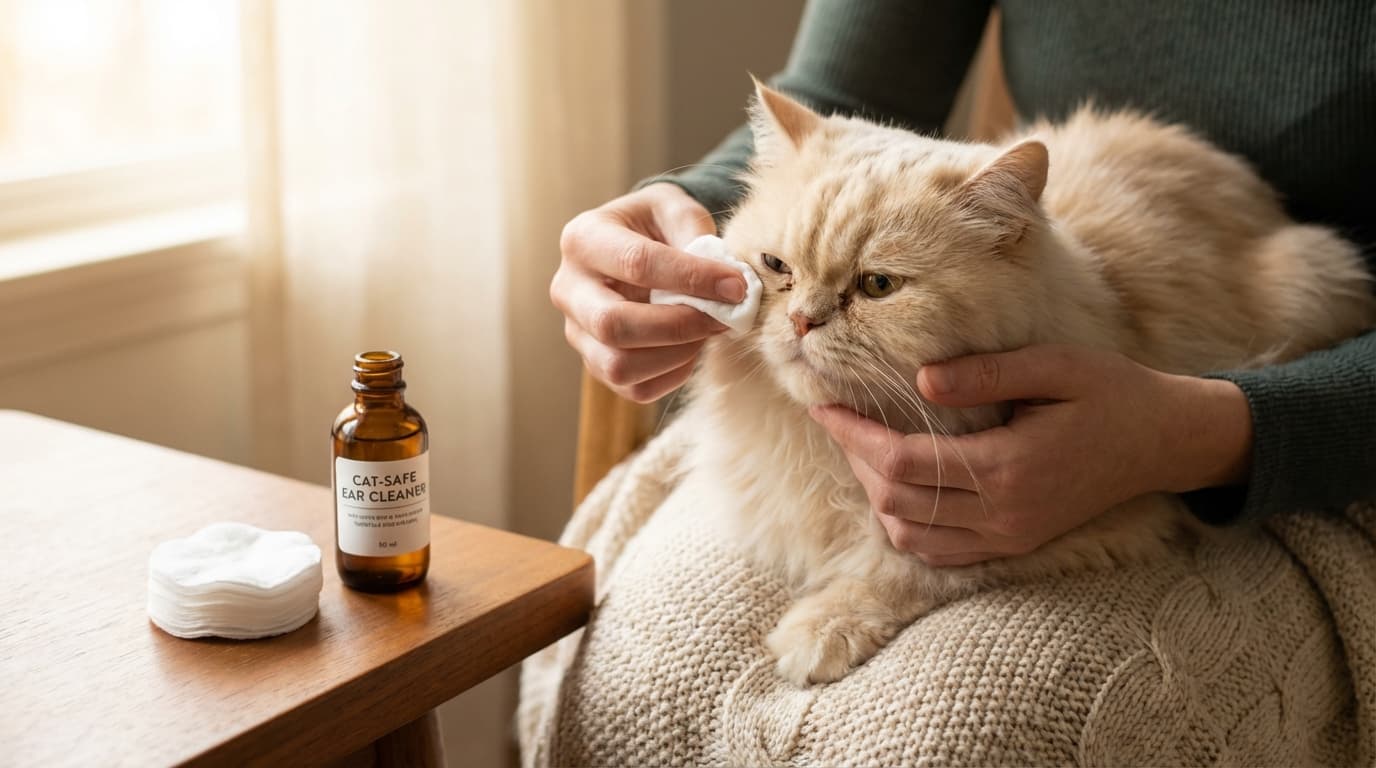
When you look at your cat's ears, it is tempting to reach for whatever is in your own medicine cabinet. But here is the thing: your cat's skin and ear canals are much more sensitive than yours. A cat-safe ear cleaner is the foundation of any good kit. You want to avoid harsh chemicals or alcohol because they can sting and cause inflammation, a condition vets call otitis externa. Instead, look for products specifically made for felines. Many owners are now moving toward natural or herb-based cleaners. These can be great for breaking up normal wax without the risk of chemical burns or irritation.
So, what is actually in a good kit? You need plenty of soft cotton balls or gauze pads. The golden rule of cat ear care is simple: never use a Q-tip or any pointed swab inside the ear canal. Think of it this way. The feline ear has a unique L-shape that traps dirt and moisture. If you poke a swab down there, you are not cleaning. You are just packing the debris deeper into that dark, moist environment where bacteria love to grow. This can lead to serious infections that might even spread to the middle or inner ear, causing balance issues or worse.
While you are cleaning, keep an eye out for anything that looks like coffee grounds. This dark, dry discharge is a classic sign of ear mites, which are tiny parasites related to ticks. If the wax is gooey and smells bad, it might be a secondary fungal infection instead. A good grooming kit is not just about tools. It is about having a clear view of what is normal. If you are unsure, many people use pet telemedicine to get a quick expert opinion before heading to the clinic. Stick to wiping only the parts of the ear you can see, and your cat will thank you.
Key insights:
- Human-grade cleaners and alcohol can cause painful inflammation in the sensitive feline ear canal.
- The L-shaped anatomy of a cat's ear means Q-tips often push debris deeper rather than removing it.
- Natural and herb-based cleaners are an effective, gentler alternative to traditional chemical treatments.
When to Put Down the Wipe and Call the Vet
Cleaning your cat's ears can feel like a simple bonding moment until you notice something that makes you pause. While a little bit of wax is normal, there are clear signs that it is time to put the cotton ball away and call your vet. If you see visible swelling, smell a foul odor, or notice gooey pus instead of dry debris, you are likely dealing with more than just a few ear mites. These are the major red flags of Otitis externa, which is just the clinical term for a painfully inflamed outer ear canal.
You might be tempted to keep scrubbing to get every last bit of gunk out, but that is where things get risky. Because a cat's ear canal is shaped like an L, it is very easy to accidentally push debris deeper or even rupture the eardrum during a DIY deep cleaning. A damaged eardrum can quickly turn a surface irritation into a serious middle or inner ear infection. When that happens, your cat might lose their balance or start acting lethargic, and that is a much bigger hurdle to clear for both of you.
The reality is that you simply cannot see what is happening deep inside that dark, moist canal without the right tools. A vet uses a professional otoscopy to look all the way down and check for those microscopic Otodectes cynotis parasites or secondary fungal growths that often hide under the wax. Since mites are highly contagious and spread easily to other pets in the house, getting an expert opinion is the only way to be 100% sure. It is always better to let a pro handle the diagnosis so you can get back to the fun parts of being a cat parent.
Key insights:
- Watch for red flags like swelling, foul odors, and gooey pus that indicate an infection.
- The unique L-shape of a cat's ear canal makes it easy to cause a ruptured eardrum during home cleaning.
- A professional otoscopy is the only reliable way to distinguish between ear mites and secondary infections.
Frequently Asked Questions
The short answer is no, you do not need to worry about those tiny pests moving into your own ears. These microscopic parasites, known as Otodectes cynotis, are very picky about who they live on and they much prefer the warm, waxy environment of a cat or dog ear over human skin.
But here is the thing you should keep in mind. While you are safe, your other pets are not. Mites are incredibly contagious and spread like wildfire between cats and dogs through direct contact or even shared bedding. If one cat has them, you will likely need to treat every furry friend in your home to make sure the infestation is really gone.
For a healthy cat, less is usually more. Most cats are experts at grooming themselves and do not need much help. If you clean too often, you might actually cause irritation or swelling, which vets call otitis externa. Usually, a quick check once a week is plenty.
When you do your weekly check, look for anything that looks like dark coffee grounds or smells a bit funky. Because of the L-shape of a cat's ear canal, dirt and wax can get trapped deep down where it is dark and moist. If you see buildup or if your cat is scratching more than usual, then it is time to use a cat-safe ear cleaner to help them out.
You will see that rusty color because of porphyrins. These are iron-rich molecules that show up in cat tears. When they hit the air, they oxidize and turn brown or red, which is why the fur changes color.
It is very common in cats with light fur or flat faces. Just keep in mind that while the color is usually fine, a sudden increase in tearing could mean an irritation or a blocked duct, so keep an eye on how much they are leaking.
It is better to avoid them if you can. Even though they seem gentle, baby wipes often have scents or chemicals like propylene glycol that can sting a cat's eyes.
Cats have a different skin pH than humans, so our products can cause itchy rashes for them. Stick to a soft washcloth with warm water or a cleaner made specifically for cats to stay on the safe side.
The easiest way to tell is by looking at the debris. Ear mite discharge is usually dark and crumbly. It looks a lot like someone dumped coffee grounds in your cat's ear. Normal earwax is usually lighter and does not have a strong smell.
Also, watch your cat's behavior. If they are constantly scratching or shaking their head, it is likely mites or an infection. Mites are tiny parasites, and they make life very itchy for your pet.
They definitely can. Ear mites are very contagious and love to travel between furry friends. If your cat has them, there is a big chance your dog or other cats will pick them up too.
Because they spread so fast through direct contact or shared bedding, veterinarians usually suggest treating all the pets in your house at the same time. This stops the mites from just hopping back and forth between your animals.
If an infection in the outer ear canal sits for too long, it can get much worse. It can eventually break through the eardrum and move into the middle or inner ear.
When that happens, your cat might start having trouble with balance. You might also notice them vomiting or acting very tired, so it is always best to handle ear issues as soon as you spot them.
Conclusion
So what is the takeaway from all this poking and prodding? Taking care of your cat's ears and eyes is really about paying attention to the small details before they become big headaches. Whether you are dealing with feline ear mite vs. wax or just wiping cat eyes safely after a nap, these little moments of care help you spot the early signs of ear infection in cats before things get painful. It is less about having a perfect-looking pet and more about making sure they feel their best every single day.
Your next move is to put together a simple, cat-safe ear cleaner kit and get used to those quick weekly checks for cleaning cat tear stains. If you have a flat-faced kitty, that daily eye wipe will soon become just another part of your bonding time. Remember that consistency matters more than a deep scrub, and keeping things calm will help your cat trust you even when the cleaning cloth comes out.
Being your cat's health advocate is one of the best ways to show them love. A fresh face and itch-free ears make for one very happy camper.
Send it to someone who should read it next.

PurrScript Editorial Team
Editorial Team
PurrScript's in-house editorial team. We research, write, and review every guide using established veterinary and behavioral resources, and update articles as best practices evolve.
View all articles