Dental Problems, Shedding, Families, Lifespan, and Seniors
Breed genetics determine dental risk, shedding, temperament, and lifespan — but only if you understand the mechanism behind each trait. This guide explains what each breed characteristic actually commits you to before adoption.

PurrScript Editorial Team
Editorial Team
Dental Problems, Shedding, Families, Lifespan, and Seniors
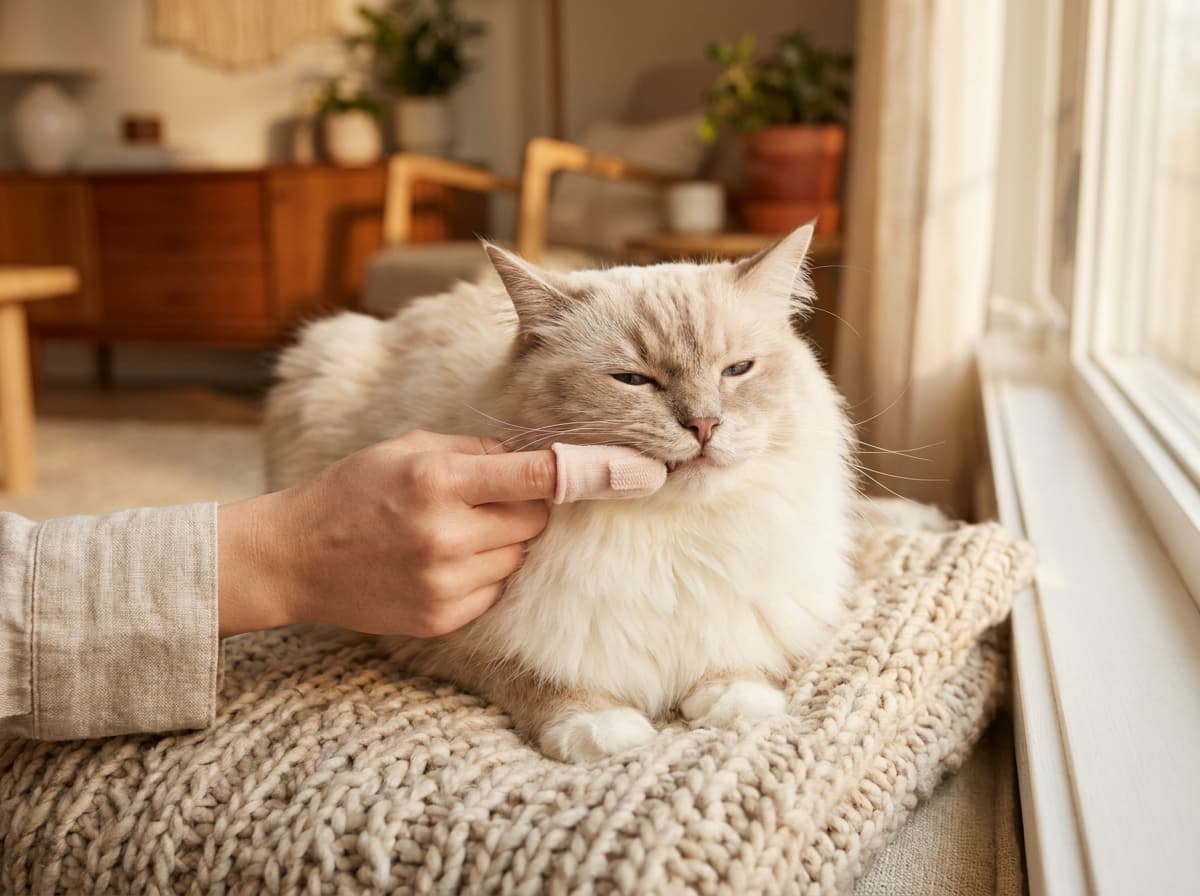
Which cat breeds are most prone to dental problems is a question most owners never think to ask until they are already at the vet looking at an unexpected bill. Breed genetics influence far more than appearance — they determine structural vulnerabilities, shedding behavior, temperament under stress, and the specific health conditions a cat is statistically likely to develop. Choosing a breed without understanding these factors is choosing a decade-plus care commitment without reading the terms.
The stakes are concrete. A brachycephalic cat with untreated dental crowding develops periodontal disease that spreads to the jaw and can eventually affect cardiac tissue. A low-shedding breed chosen for allergies will still produce the protein that drives allergic responses — just in a less dispersed form. A calm breed adopted for a senior owner still requires active preventive care to reach its full lifespan. In each case, the breed characteristic that drove the adoption decision carries a corresponding care requirement that determines whether the match works long-term.
This guide covers the five breed-related questions that matter most before making a selection: dental risk by breed type, which breeds shed least and why that does not mean allergy-free, which breed temperaments genuinely suit family environments, what drives lifespan variation between breeds, and which breeds provide the specific kind of companionship that works for senior owners.
Every section explains the underlying mechanism rather than just the recommendation — because understanding why a breed behaves or develops health issues the way it does is what allows you to make good care decisions across a lifespan, not just at the point of adoption.
Which Cat Breeds Are Most Prone to Dental Problems?
Dental disease risk in cats correlates directly with skull geometry, and brachycephalic breeds carry the highest risk by a significant margin. Brachycephalic — meaning 'short-headed' — describes cats whose faces have been selectively compressed through breeding: Persians, Exotic Shorthairs, British Shorthairs, and Himalayans are the primary examples. The anatomical problem is straightforward: these cats have the same 30 adult teeth as any other domestic cat, but significantly less jaw space to accommodate them. The result is crowding, rotation, and misalignment that has no equivalent in longer-skulled breeds.
The clinical consequences of this crowding are progressive and cumulative. When teeth are crowded, the natural self-cleaning that occurs during chewing — upper and lower teeth scraping against each other and clearing debris from contact surfaces — is compromised or eliminated. Food and bacteria accumulate in the narrow pockets between rotated teeth. Plaque mineralizes into tartar faster and in harder-to-reach locations. Periodontal disease, which begins as gum inflammation but progresses to bone loss and tooth root exposure, develops earlier and more aggressively in these breeds than in cats with normal skull proportions.
The Exotic Shorthair illustrates this clearly. The breed combines the flat-faced skull structure of the Persian with a plush, dense coat, producing a cat whose dental anatomy is architecturally challenging from kittenhood. Individual teeth frequently erupt sideways or at angles that prevent normal occlusion. The spaces between misaligned teeth are effectively impossible to clean by the cat and difficult to reach with standard home brushing tools. Professional dental scaling under anesthesia is not an optional maintenance item for these breeds — it is a scheduled medical necessity, ideally annual.
What most breed guides fail to address is that the dental vulnerability in brachycephalic cats does not exist in isolation. The same selective breeding that compressed the skull also shortened the nasal passages, narrowed the airways, and in many lines, concentrated genes associated with polycystic kidney disease. An owner managing dental care in a Persian or Exotic Shorthair is managing one component of a multi-system health profile. Reputable breeders in these lines test for PKD via genetic screening; this should be a non-negotiable documentation requirement when purchasing from any breeder.
Burmese cats carry a different dental risk profile worth noting. They are not brachycephalic in the extreme sense, but Burmese have a genetic predisposition to early-onset feline orofacial pain syndrome — a neurological condition producing extreme sensitivity around the mouth that makes dental handling, eating, and grooming acutely distressing. The condition is distinct from standard periodontal disease and requires different management, including pain medication and sometimes referral to veterinary neurology. Burmese owners who notice compulsive pawing at the face or reluctance to eat should raise this condition specifically with their vet rather than assuming standard dental disease.
**Key insights:
- Schedule annual professional dental examination and cleaning under anesthesia for any brachycephalic breed — this is medical maintenance, not optional cosmetic care.
- Begin finger brushing or gauze wiping of the teeth within the first weeks of bringing a kitten home — tactile habituation established early is the prerequisite for effective adult dental care.
- Request PKD genetic screening documentation from any breeder selling Persians, Exotic Shorthairs, or British Shorthairs — this should be provided proactively, not on request.
- Watch for food dropping, reluctance to chew, asymmetric chewing, or pawing at the mouth — these are behavioral indicators of dental pain in cats that do not vocalize discomfort.
- For Burmese cats specifically, raise feline orofacial pain syndrome with your vet if the cat shows face-pawing or eating reluctance — the condition is neurological, not dental, and requires different treatment.
Why Skull Geometry Is the Core Dental Risk Factor
The relationship between skull shape and dental health in cats is not a secondary concern or a breeder caveat — it is a direct anatomical consequence of how these breeds were developed. Brachycephalic skull compression does not reduce the number of teeth. It reduces the space between them. Veterinary dentists use the term 'dental crowding' to describe the result, but the clinical reality is that multiple teeth in these breeds are structurally predisposed to periodontal disease from the moment they erupt.
The practical implication for owners is that the breed selection itself commits them to a specific dental care investment. This is not a risk that can be managed away through diet or genetics — it is structural. An owner who understands this before adoption can budget for annual professional cleanings, establish a home brushing routine, and select pet insurance that covers dental procedures. An owner who discovers it reactively after the first periodontal diagnosis faces the same care requirements with less preparation and usually higher initial costs.
**Key insights:
- Treat dental care costs as a predictable line item in the annual budget for brachycephalic breeds, not a contingency expense.
- Ask breeders specifically about the dental history of parent animals — recurring extractions in the lineage indicate the degree of structural compression in the line.
- Introduce dental-specific foods or treats formulated to mechanically reduce plaque as a supplement to, not replacement for, professional cleaning.
What Cat Breed Sheds the Least Hair?
The most important clarification for anyone choosing a breed based on shedding or allergies is the distinction between low-shedding and low-allergen. These are related but not equivalent properties, and conflating them leads to adoptions that do not resolve the problem they were intended to solve. All cats produce Fel d 1 — the glycoprotein produced primarily in the sebaceous glands and salivary glands that is responsible for the majority of human allergic responses to cats. Low-shedding breeds produce and distribute Fel d 1 in lower volume simply because less saliva-coated hair is deposited across surfaces. They do not produce less of the protein at the source.
With that distinction established, the breeds that genuinely minimize airborne allergen load through reduced shedding are worth understanding in terms of the structural reason each sheds less. The Cornish Rex has only a fine, curly undercoat — it lacks the longer guard hairs that most cats carry as the primary shed layer. The Devon Rex is structurally similar. The Sphynx has no hair coat at all, eliminating hair-mediated allergen distribution entirely while requiring regular skin maintenance because the sebaceous oils that a fur coat would normally absorb accumulate directly on the skin surface. The Oriental Shorthair has an extremely fine, short single coat that sheds minimally. The Siamese has a similar coat profile.
The Siberian is a counterintuitive inclusion in this category. It is a large, heavily coated breed that produces substantially less Fel d 1 than most cats — not because it sheds less, but because it produces less of the protein at the glandular level. Research published in the Journal of Allergy and Clinical Immunology found Siberian cats produce measurably lower salivary Fel d 1 concentrations than the domestic average, making them genuinely lower-allergen rather than just lower-shedding. This is a functionally different mechanism from the Rex breeds and matters differently for allergy management.
Managing the allergen load a low-shedding cat still produces requires environmental interventions that are independent of the breed choice. HEPA filtration in rooms where the cat spends the most time captures airborne particulates before they settle on surfaces. Washing hands after contact prevents hand-to-eye and hand-to-mucous-membrane transfer, which is the most direct allergen exposure route. Regular bathing or skin wiping of hairless or near-hairless breeds prevents surface oil and dander accumulation that substitutes for hair-distributed allergen in these breeds.
**Key insights:
- Distinguish between low-shedding breeds (Cornish Rex, Devon Rex, Oriental Shorthair) that reduce allergen distribution, and low-Fel d 1 breeds (Siberian) that reduce allergen production — they address different parts of the allergy problem.
- Install HEPA filtration in main living areas regardless of breed — airborne Fel d 1 dispersal occurs through dander and dried saliva particles, not only through shed hair.
- Budget for regular skin maintenance with hairless breeds — Sphynx and similar cats require weekly bathing or wiping to manage oil accumulation that fur would otherwise absorb.
- Spend time with the specific individual cat before adopting if allergies are the driver — Fel d 1 production varies significantly between individual animals even within the same breed.
- Wash hands after every contact session and avoid touching the face before washing — direct mucous membrane transfer is the highest-dose allergen exposure route regardless of breed.
What Is the Best Cat Breed for Families with Kids?
The temperament traits that make a cat genuinely suitable for a household with children are specific and worth identifying clearly: high tolerance for unpredictable handling, low startle threshold, willingness to seek contact rather than avoid it, and the ability to disengage from overstimulating situations without aggression. These traits are not universal across social breeds — a cat can be affectionate with adults while being poorly suited to young children, who move unpredictably, handle roughly, and generate noise levels that many cats find threatening.
The Ragdoll is the breed that most consistently meets all four criteria. The name references the characteristic limpness — the breed genuinely goes relaxed when picked up, a physical response associated with extremely low reactive aggression. Ragdolls actively seek human contact across the activity spectrum: they will follow family members between rooms, settle among children playing on the floor, and return to contact after overstimulating interactions rather than retreating and becoming avoidant. Their size — males commonly reach 15 to 20 pounds — also means they are not easily startled into defensive response by a child's rough grab the way a smaller, more fragile breed might be.
The Maine Coon brings a different but equally valid profile. Maine Coons are large, physically robust, and have what behaviorists describe as 'dog-like' social orientation — they tend to follow family members, participate in household activity, and show interest in interactive play that extends well into adulthood. They are less uniformly passive than Ragdolls and more likely to engage actively with play, which suits children who want an interactive companion rather than a lap cat. Maine Coons are also among the longer-lived large breeds, with typical lifespans of 12 to 15 years and some individuals considerably longer.
The Manx deserves specific mention for a trait that is genuinely useful in family settings: loyalty orientation. Manx cats tend to bond strongly to their household group rather than to a single primary person, making them more consistently accessible to multiple children with different interaction styles. They also tend to follow family members between spaces and show interest in household activity without requiring constant handling — useful for children who want a cat that is present and interactive but do not always want to be holding it.
One structural consideration that most family breed guides skip: temperament is necessary but not sufficient for a good family match. The health profile of the breed matters equally over the 10 to 20-year horizon. A breed with excellent child-suitable temperament but significant hereditary health vulnerabilities will require substantial veterinary investment and may experience reduced quality of life during the years children are most actively bonded to it. Ragdolls are screened for hypertrophic cardiomyopathy (HCM) in reputable breeding programs — confirm this screening was performed before adoption. Maine Coons carry HCM risk as well; the same documentation standard applies.
**Key insights:
- Prioritize tolerance for unpredictable handling and low reactive aggression threshold over general friendliness — not all social cats are genuinely suited to young children.
- Request HCM screening documentation for Ragdolls and Maine Coons before adoption — cardiac disease is the primary hereditary health risk in both breeds.
- Supervise all interactions between young children and cats regardless of breed — even the most tolerant cat can bite when genuinely frightened, and supervision prevents the incidents that create lasting fear in both child and animal.
- Consider a breed's expected lifespan alongside its temperament — a 20-year companion is a different commitment than a 12-year one, and children will form attachments that outlast a shorter-lived breed's natural lifespan.
- Introduce consistent household rules for cat interaction from the start — a cat that is handled respectfully from day one maintains its tolerant temperament; one that is handled roughly develops defensive patterns that override breed temperament.
How Long Do Specific Cat Breeds Live?
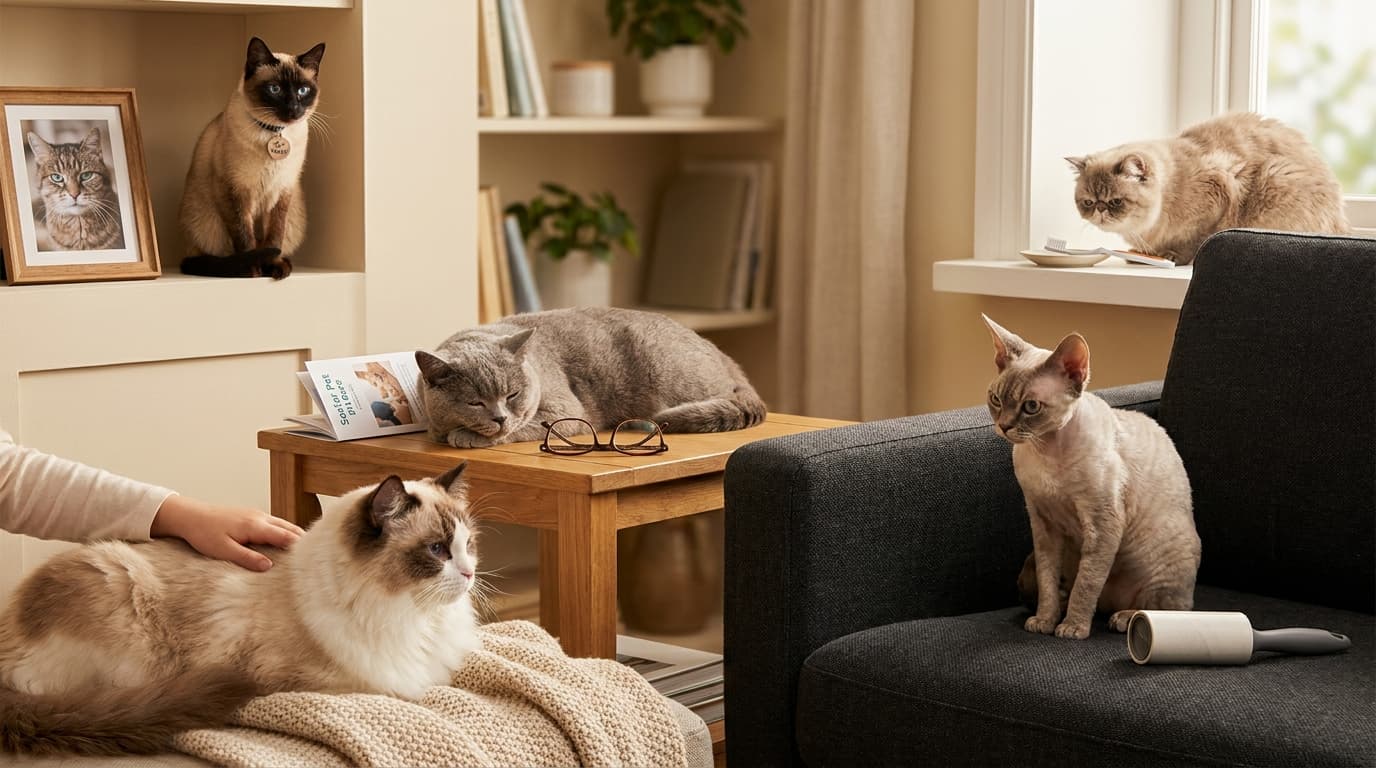
The indoor versus outdoor living environment is the single variable with the largest measurable impact on feline lifespan across all breeds. Indoor cats average 12 to 18 years. Cats with regular outdoor access average 2 to 12 years. The drivers of that gap are specific and well-documented: vehicle collisions, predation, territorial fights that transmit FIV and FeLV, exposure to toxins from plants and rodenticide bait, and the cumulative infectious disease load from contact with unvaccinated outdoor cat populations. None of these risks are breed-specific. All are eliminated or near-eliminated by indoor living.
Within the indoor population, breed genetics produce genuine lifespan variation. The Siamese and its closely related breeds — Balinese, Oriental Shorthair — have some of the longest recorded lifespans among pedigreed cats, with averages of 15 to 20 years and documented individuals in their mid-20s. These are also relatively outbred lines compared to extreme-appearance breeds, carrying fewer concentrated recessive health genes. The Burmese breed has produced the longest verified individual lifespans in the domestic cat population, though this reflects individual variation rather than a consistent breed-wide pattern.
Ragdolls average 12 to 17 years with the primary hereditary health risk being hypertrophic cardiomyopathy — a thickening of the cardiac muscle walls that impairs heart function. HCM in Ragdolls is inherited through a specific genetic mutation (MYBPC3) that reputable breeders now test for; a cat with two copies of the mutation has significantly elevated lifetime cardiac risk. Maine Coons carry a different MYBPC3 mutation conferring similar risk. For both breeds, adopting from breeders who provide genetic HCM screening documentation on parent animals is the most meaningful lifespan-protective step an owner can take before the cat arrives home.
Brachycephalic breeds — Persians, Exotic Shorthairs, British Shorthairs — have complex longevity profiles. Average lifespans are reported variously as 12 to 17 years, but this range includes both healthily-bred individuals from lines tested for PKD and HCM, and individuals from lines where genetic testing was not performed. Polycystic kidney disease in Persians historically affected an estimated 36 to 49 percent of the breed before genetic screening became standard; a PKD-positive cat may appear healthy for years before kidney function decline becomes clinically apparent, often around age 7 to 10. British Shorthairs have high HCM prevalence; cardiac screening is as important for this breed as for Ragdolls.
The owner behaviors with the largest measurable impact on lifespan across breeds are: maintaining indoor-only living, annual veterinary examinations that include cardiac auscultation and blood pressure measurement, dental management that prevents oral bacteria from entering the bloodstream, and weight management — obesity is consistently associated with reduced longevity through increased strain on cardiac, renal, and musculoskeletal systems. These are modifiable by owner choice regardless of the breed's genetic baseline.
**Key insights:
- Maintain indoor-only living as the highest-impact single lifespan variable — the difference between indoor and outdoor average lifespan is larger than any breed-specific genetic advantage.
- Request HCM genetic screening documentation for Ragdolls, Maine Coons, and British Shorthairs before adoption — this single step most directly addresses the primary hereditary cause of premature death in these breeds.
- Request PKD genetic screening documentation for Persians, Exotic Shorthairs, and related brachycephalic lines — PKD is common in historically unscreened lines and is now easily tested for.
- Schedule annual vet examinations that include cardiac auscultation from age 5 onwards regardless of breed — HCM is often detected by murmur before clinical symptoms appear.
- Manage weight actively throughout the cat's life — obesity in cats is associated with reduced lifespan through cardiac, renal, and diabetic pathways across all breeds.
What Are the Calmest Cat Breeds for Seniors?
The breed characteristics that genuinely suit a senior owner are more specific than 'calm' or 'low-energy,' and understanding the distinction prevents a mismatch that becomes difficult to manage. What most senior owners benefit from is a cat with a settled, predictable daily temperament — one that is content in close proximity without requiring constant active engagement, is not prone to anxiety-driven behavior like nighttime vocalization or destructive activity, and has manageable care requirements that do not depend on high physical capacity from the owner. These traits are not identical to low energy. A low-energy cat that is also aloof provides little of the companionship value that drives the health benefits of pet ownership in older adults.
The British Shorthair meets this profile more consistently than most alternatives. British Shorthairs are placid, contact-tolerant without being demanding, and show a steady temperament that does not vary significantly with household activity level. They are not a cat that will follow an owner room to room with vocal demands, but they are reliably present and seek proximity on their own terms — settling near rather than on, maintaining contact without requiring engagement. Their size and dense coat make them physically reassuring to hold. The primary health consideration for seniors adopting this breed is HCM risk; annual cardiac monitoring should be part of the care plan.
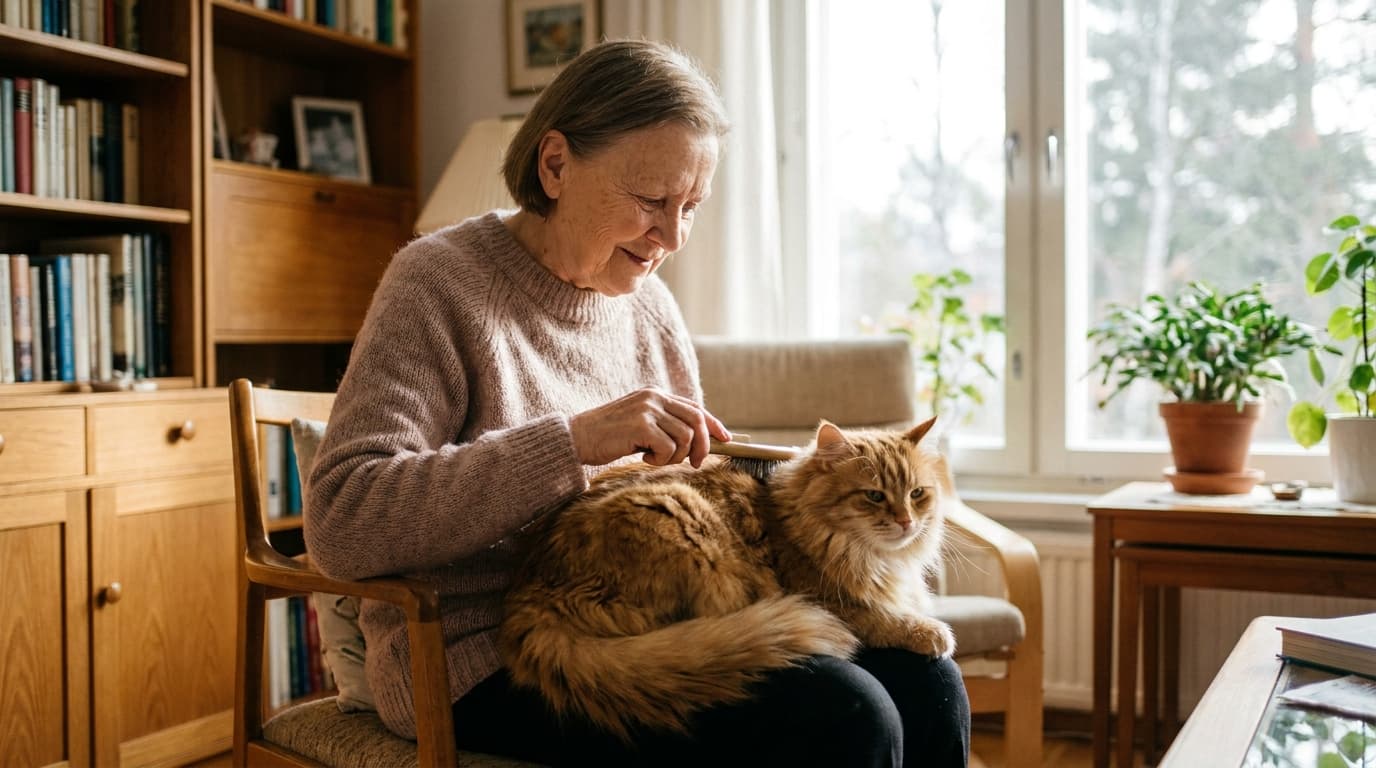
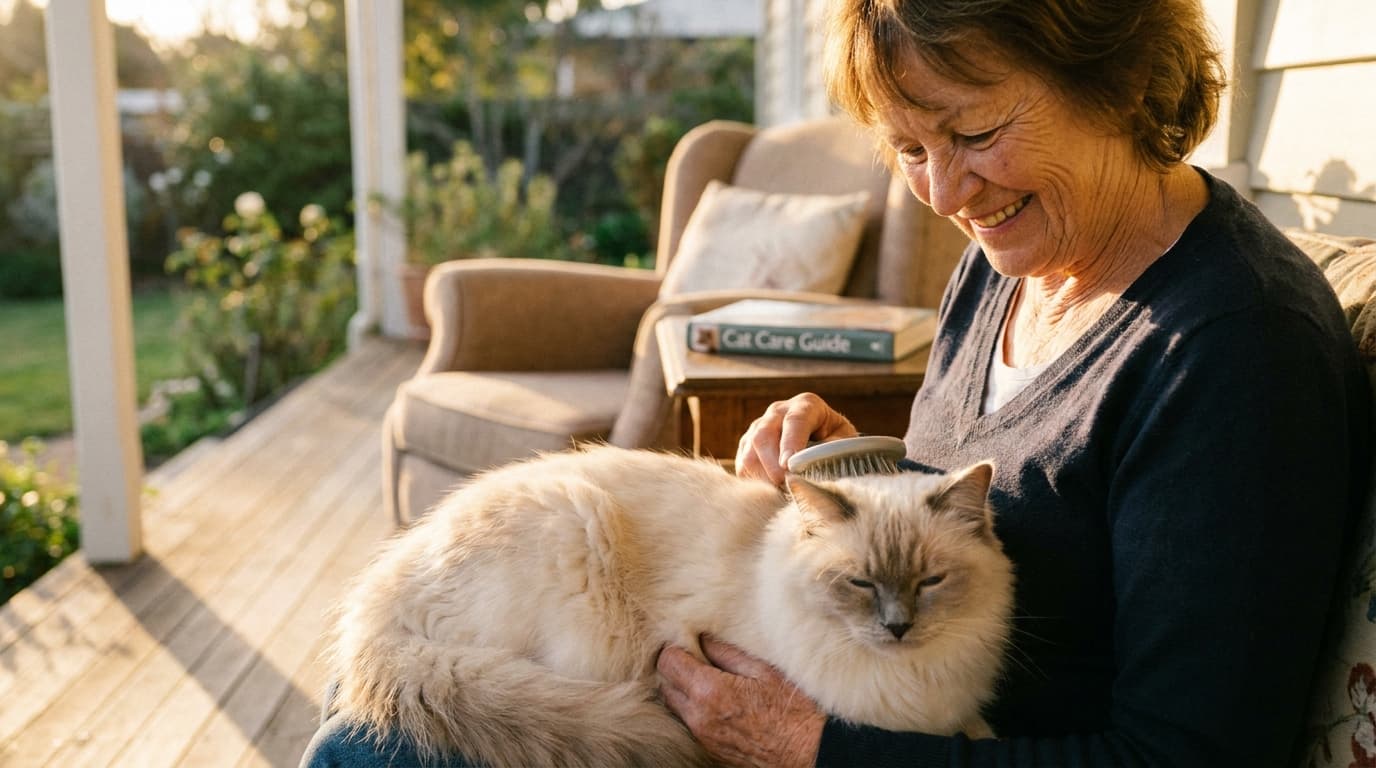
The Birman offers a slightly warmer temperament profile — more actively affectionate than the British Shorthair, with a tendency to seek lap contact and follow owners between rooms, but without the high-demand vocalization of Siamese or the physical energy of Maine Coons. Birmans are also semi-longhaired, which requires regular grooming to prevent matting, particularly in the collar and armpit regions. For owners who find grooming a positive bonding activity, this is an asset. For owners with limited hand mobility or dexterity, it is a care commitment that needs honest assessment before adoption.
Adopting an adult or senior cat rather than a kitten deserves specific consideration for senior owners. A cat that is three to five years old has an established, observable temperament rather than a developmental one — you can assess calmness, lap-seeking behavior, tolerance for handling, and activity level directly rather than predicting it from breed averages. Adult cats from shelters are frequently overlooked relative to kittens but represent a substantially more predictable match. The tradeoff is a shorter expected companionship duration, but for an owner who is themselves in their 70s or 80s, a cat with 10 remaining years is a more realistic commitment than a kitten with 18.
The health monitoring requirements for senior-suitable breeds are not trivial and should be part of the adoption decision. British Shorthairs need annual cardiac monitoring. Birmans are generally healthy but benefit from routine kidney panels from age 8 onwards. Any cat adopted as an adult from a shelter should receive a comprehensive baseline examination including bloodwork before the adoption is finalized, establishing a health baseline and identifying any pre-existing conditions the new owner will be managing.
**Key insights:
- Distinguish 'calm and present' from 'low-energy and aloof' when evaluating senior-suitable breeds — the companionship value of pet ownership requires actual contact, not just cohabitation.
- Consider adopting an adult cat aged 3 to 5 years rather than a kitten — temperament is observable rather than predicted, and the commitment duration is more proportionate for older owners.
- Request HCM screening documentation for British Shorthairs and annual cardiac monitoring as a planned care expense — this is the breed's primary hereditary health risk.
- Honestly assess grooming requirements against physical capacity before adopting a semi-longhaired breed like the Birman — regular mat prevention requires consistent hand dexterity.
- Request a comprehensive baseline health examination including bloodwork for any adult shelter cat before finalizing adoption — this establishes what pre-existing conditions the new owner is taking on.
Connecting the Traits: What Breed Selection Actually Commits You To
Breed selection is a commitment to a specific care profile, not just a preference for a particular appearance or personality trait. Every characteristic that makes a breed attractive — the flat face of a Persian, the passive temperament of a Ragdoll, the minimal shedding of a Cornish Rex, the long lifespan of a Siamese — exists alongside a specific health or care implication that the owner takes on simultaneously. The flat face means dental management. The passive temperament means cardiac screening. The minimal shedding means skin maintenance. The long lifespan means a 20-year care investment rather than a 12-year one.
The owners who have the best outcomes over a cat's full lifespan are consistently those who understood these paired commitments before adoption rather than discovering them reactively. A Persian owner who begins annual dental cleanings at age two rather than age seven is managing a structural vulnerability before it becomes disease. A Ragdoll owner who has HCM genetic screening results before adoption knows whether their cat carries elevated cardiac risk. A senior owner who adopts a three-year-old British Shorthair from a shelter with a clean health exam is beginning a relationship with known parameters rather than unknown variables.
The genetics determine the baseline. The care determines whether the cat reaches it. These are not competing explanations — they are complementary parts of the same system, and understanding both is what the breed selection conversation is actually about.
**Key insights:
- Treat each attractive breed trait as paired with its corresponding care requirement — the flat face comes with dental management, the passive temperament comes with cardiac screening.
- Request genetic health screening documentation from breeders as a standard, non-negotiable step — reputable breeders provide this proactively; those who do not are a signal to look elsewhere.
- Use HEPA filtration and regular hand washing regardless of breed to manage the Fel d 1 allergen load all cats produce.
- Research indoor versus outdoor living implications before finalizing any adoption — environment is a larger lifespan variable than breed genetics for most cats.
Frequently Asked Questions
No, and the term is used loosely enough in cat marketing to be genuinely misleading. Every cat produces Fel d 1 — the primary allergenic glycoprotein — in their sebaceous and salivary glands. No breeding program has eliminated this production, and no currently available breed consistently produces zero allergenic response in sensitized humans. The correct framing is lower-allergen rather than hypoallergenic, and even this applies only to specific breeds and with significant individual variation.
The two distinct lower-allergen mechanisms are worth distinguishing. Low-shedding breeds — Cornish Rex, Devon Rex, Oriental Shorthair — produce the same Fel d 1 concentration but distribute it less widely because less saliva-coated hair is deposited across surfaces. Lower-production breeds — most notably the Siberian — produce measurably lower salivary Fel d 1 concentrations at the glandular level, representing a fundamentally different kind of allergy mitigation. For someone with significant cat allergies, spending time with the specific individual cat before adopting is more informative than relying on breed category alone, because Fel d 1 production varies substantially between individuals even within a breed.
The lifespan gap between indoor and outdoor cats — roughly 12 to 18 years indoors versus 2 to 12 years with regular outdoor access — reflects the cumulative effect of specific, well-documented mortality risks rather than any fundamental difference in biological aging rate. Vehicle collisions are the leading cause of premature death in outdoor cats in urban and suburban environments. Predation, territorial fighting that transmits FIV and FeLV, toxin ingestion from rodenticide bait and certain plants, and infectious disease exposure from unvaccinated outdoor cat populations account for most of the remainder.
Indoor living does not merely add years arithmetically — it changes the risk profile that determines whether a cat reaches its genetic lifespan potential at all. A Maine Coon with HCM genetic risk managed through annual cardiac monitoring in an indoor environment may live 14 years. The same cat with outdoor exposure may not survive a traffic injury at age 3 to develop cardiac disease at all. The environmental variable is not competing with the genetic variable — it determines whether the genetic variable has time to become relevant.
The traits that predict genuine child-suitability are more specific than 'friendly' or 'social.' Look for low startle threshold — the cat does not bolt or defensively bite in response to sudden loud sounds or unexpected physical contact. Look for low reactive aggression — when the cat has had enough stimulation, it disengages by leaving rather than by biting or scratching. Look for recovery behavior — after an overstimulating interaction, the cat returns to contact rather than avoiding the child for extended periods. These behaviors distinguish breeds that are reliably safe in family settings from breeds that are pleasant with adults but unpredictable with children.
Ragdolls and Maine Coons consistently demonstrate all three traits. The Ragdoll's characteristic passive-limpness response to being picked up reflects genuine low reactive aggression — this is the physical behavior that makes the breed reliable with children who handle roughly. Beyond breed selection, establishing household rules for interaction from day one matters as much as breed choice. A child who is taught to allow the cat to approach, to stop petting when the cat moves away, and to never pursue a retreating cat will have better outcomes with any breed than a child who handles roughly and pursues a cat that is attempting to disengage — regardless of how tolerant the breed is rated.
Hairless cats require different grooming rather than less grooming, and for many owners the actual time commitment is higher than for a shorthaired cat. In a coated cat, the fur coat absorbs the sebaceous oils the skin continuously produces and distributes them along the hair shaft. Without a coat, those oils accumulate directly on the skin surface. The practical result is a cat that feels greasy to the touch within days of bathing, develops visible skin discoloration in skin folds, and is susceptible to bacterial or yeast overgrowth in fold areas if not regularly cleaned. Weekly bathing or thorough wiping down with a damp cloth is standard maintenance for Sphynx cats.
The allergen point is worth repeating in this context. Hairless cats distribute allergen differently — less through shed hair, more through direct skin contact and surface deposits from skin oils — but they produce the same Fel d 1 protein as any other cat. An allergy sufferer who adopts a Sphynx expecting to be allergy-free will be exposed to allergen through direct contact, through surfaces the cat rests on, and through the bathing process itself. The allergen distribution pattern changes; the total production does not.
Conclusion
What every topic in this guide points to is the same underlying principle: breed selection is the first care decision, and it sets the parameters for every care decision that follows. The Persian owner who knows about dental crowding before adoption budgets for annual cleanings and begins a home brushing routine in kittenhood rather than discovering the need after the first periodontal diagnosis. The Ragdoll owner who requests HCM screening documentation knows whether their cat carries elevated cardiac risk before the relationship is 10 years deep. The senior owner who adopts a five-year-old British Shorthair from a shelter with a clean health baseline is making a realistic, well-informed commitment rather than a hopeful one.
The genetics establish what is likely. The care environment — indoor living, annual monitoring, weight management, dental maintenance — determines whether the cat reaches its genetic potential or is cut short by preventable conditions. These are not competing explanations for how long a cat lives or how healthy it remains. They are complementary, and understanding both is what distinguishes a breed match that works across a full lifespan from one that works at the point of adoption and produces surprises later.
The practical next step is straightforward: identify the two or three breeds whose temperament and care requirements genuinely match your household, research the specific genetic health screenings those breeds require, and make health documentation a non-negotiable requirement in any adoption conversation — whether from a breeder or a rescue. A few hours of research before adoption is the highest-leverage investment you can make in the 15 to 20 years that follow it.
Send it to someone who should read it next.

PurrScript Editorial Team
Editorial Team
PurrScript's in-house editorial team. We research, write, and review every guide using established veterinary and behavioral resources, and update articles as best practices evolve.
View all articles