The Best Cat Breeds for First-Time Owners
Breed selection is a trade between attractive characteristics and the care commitments they require. This guide explains what actually distinguishes beginner-friendly breeds, the two mechanisms behind lower-allergen cats, what makes a breed genuinely senior-suitable, and the specific health risks of Munchkin cats most buyers never hear.

PurrScript Editorial Team
Editorial Team
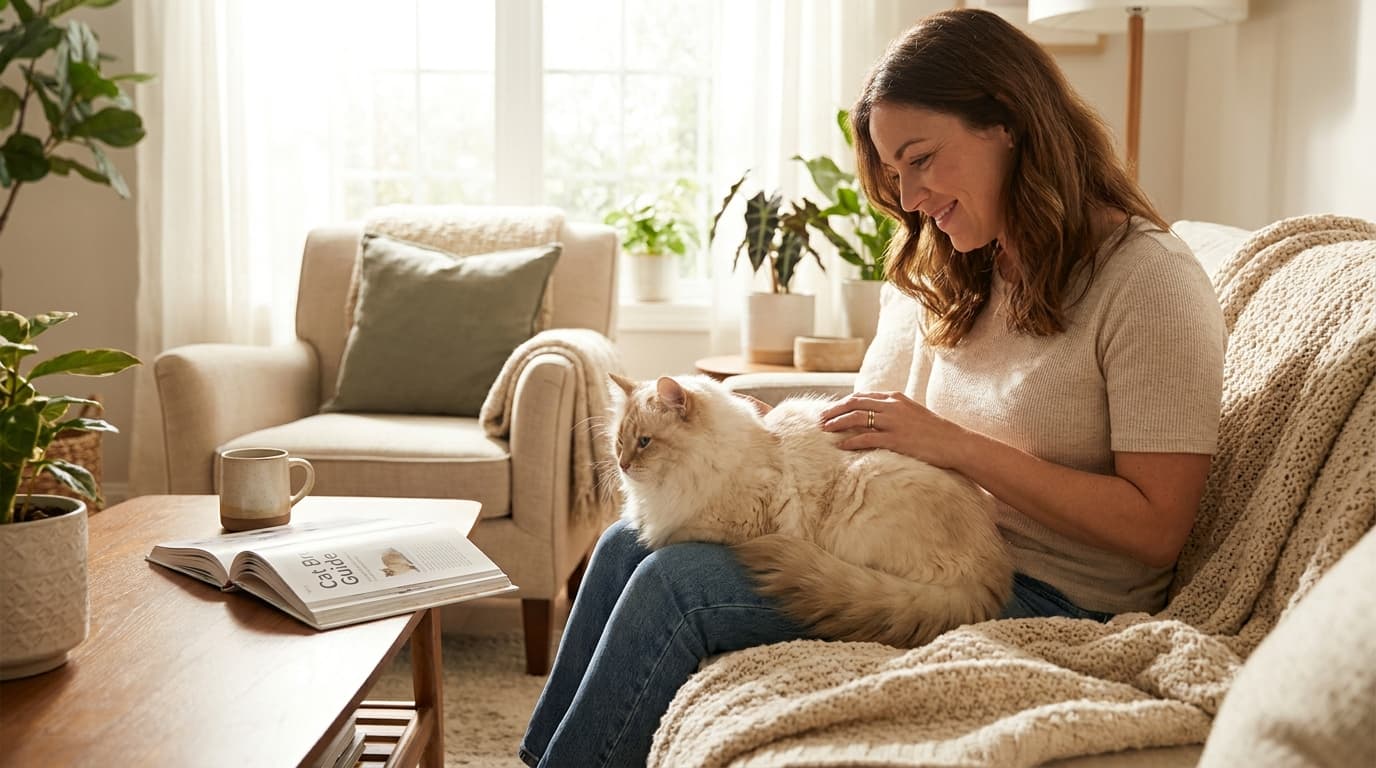
Finding the Right Match: Best Cat Breeds for First Time Owners and Allergy Sufferers
Finding the best cat breeds for first-time owners requires understanding that breed temperament is a probability range, not a guarantee — and that the care investment required by specific breeds varies enormously in ways that affect whether the match works long-term. A breed described as low-maintenance for an experienced owner who understands the commitment may be higher-maintenance than expected for someone who has never owned a cat. The mismatch between expected and actual care requirements is the primary driver of early rehoming.
This guide covers five breed-related questions with real stakes attached: which breeds genuinely suit beginners and why, how to identify breed heritage visually and its limitations, the mechanics of feline allergens and which breeds actually reduce exposure, what makes a breed genuinely suitable for seniors rather than just marketed as calm, and the specific health risks of Munchkin cats that prospective owners rarely hear about before purchase.
Each section explains the reasoning behind the recommendations rather than just the conclusions — because understanding why the Exotic Shorthair is recommended for beginners, or why the Siberian is lower-allergen than most breeds, or what specifically goes wrong medically in Munchkin cats, is what allows you to evaluate your specific situation rather than just following a list.
One principle applies throughout: temperament and care requirements are paired. Every attractive breed characteristic comes with a corresponding care commitment, and that commitment determines whether the adoption produces the relationship you were hoping for or an expensive mistake. Understanding the commitment before adoption is the only way to make an informed choice.
What Are the Best Cat Breeds for First-Time Owners?
The breeds most consistently recommended for first-time owners share three characteristics: forgiving temperament, manageable grooming requirements, and adaptability to varied household activity levels. Forgiving temperament means the cat does not develop persistent behavioral problems from minor handling errors, inconsistent routine, or the typical mistakes of someone still learning what a cat needs. Manageable grooming means the care requirements do not demand daily attention that many first-time owners do not yet have the habit of providing. Adaptability means the cat remains content across the range of household activity levels a working adult produces — sometimes very present, sometimes absent for ten hours.
The Exotic Shorthair fulfills all three criteria reliably. The breed is structurally similar to the Persian — brachycephalic (flat-faced) skull, cobby body, dense coat — but with a shorter coat that requires weekly rather than daily brushing. Their temperament is consistently described as placid and contact-tolerant: they seek proximity but do not demand constant interaction, are comfortable with extended periods of alone time, and do not typically develop the loud attention-seeking behavior that high-energy breeds exhibit when under-stimulated. The flat-faced structure does require specific care — daily eye wiping to prevent the tear-staining produced by the facial anatomy — but this is a two-minute daily task rather than a significant care burden.
The Burmese is a strong alternative for first-time owners who want more interactivity. Burmese cats are genuinely people-oriented — they follow household members through the home, seek lap contact, and show interest in whatever activity is happening. They are significantly more engaging than the Exotic Shorthair's passive presence. The trade-off is that they are more likely to show behavioral responses to extended periods of alone time if not adequately stimulated. For a work-from-home owner or a household with multiple people, the Burmese's interactive nature is an asset. For someone who works long hours away from home, the Exotic Shorthair's lower-demand companionship may be more practical.
The Scottish Fold deserves specific mention because it is frequently recommended and frequently misrepresented. Scottish Folds are indeed calm, quiet, and contact-tolerant. However, the folded ear trait is caused by a cartilage mutation — the same genetic variant that causes ear cartilage to fold also affects cartilage throughout the body, producing a progressive degenerative joint condition (osteochondrodysplasia) that causes chronic pain in a significant proportion of affected cats. Reputable veterinary organizations in multiple countries have issued statements against Scottish Fold breeding on welfare grounds. An owner who genuinely researches this breed will encounter this information, and it is worth weighing the temperament benefits against the probability of managing a cat with chronic pain across a 12 to 15-year lifespan.
The financial and temporal commitment deserves explicit acknowledgment for first-time owners. Exotic Shorthairs from reputable breeders typically cost $1,000 to $5,000. The lifespan is 12 to 16 years. Annual veterinary costs for a healthy adult cat average $300 to $500 before any unexpected illness or injury. The total commitment of owning a cat acquired at market price is not a minor undertaking, and first-time owners who are surprised by these figures have typically not researched the commitment adequately before acquiring the animal.
**Key insights:
- Prioritize breeds with forgiving temperament, manageable grooming, and activity adaptability — these three factors determine whether the match works for a first-time owner's learning curve.
- Consider the Exotic Shorthair for low-demand, consistent companionship and weekly grooming, or the Burmese for more interactive, person-oriented engagement.
- Research the Scottish Fold's osteochondrodysplasia risk thoroughly before considering this breed — the temperament benefits come with a meaningful probability of managing chronic pain.
- Budget for the full commitment: breed-specific purchase price, annual veterinary costs, and a lifespan of 12 to 16 years before acquiring any cat.
- Spend time with the specific cat before committing — individual temperament variation within breeds is real, and the individual animal is what you will actually live with.
The Exotic Shorthair: What the 'Lazy Person's Persian' Label Gets Right and What It Misses
The 'lazy person's Persian' label is accurate in the sense that it correctly captures the grooming reduction relative to the Persian. But it can create an expectation of zero-maintenance that leads to surprises. The Exotic Shorthair's brachycephalic structure produces the same physiological challenges as the Persian: the flattened facial anatomy causes tear overflow (epiphora) because the tear duct alignment is disrupted by skull compression. Without daily eye wiping, brown tear stains develop under the eyes and skin irritation can follow. This is not a significant care burden, but it is a daily requirement that the 'lazy' label does not communicate.
The weight management issue is another aspect of Exotic Shorthair care that surprises first-time owners. Their placid, low-activity temperament means they burn fewer calories than active breeds and are prone to weight gain if fed free-choice or with excessive treat use. Obesity in brachycephalic cats compounds the breathing challenges already present from the flat-face anatomy. Measured feeding, puzzle feeders to increase activity around mealtimes, and regular weight monitoring are appropriate standard care for this breed.
**Key insights:
- Plan for daily eye wiping as a non-optional care requirement for Exotic Shorthairs — the tear overflow from brachycephalic anatomy does not resolve without regular cleaning.
- Use measured feeding rather than free-choice for Exotic Shorthairs — their low activity level makes them prone to obesity, which compounds their breathing challenges.
- Weekly brushing of the dense plush coat prevents matting — the coat is easier than a Persian's but is not truly self-maintaining.
How to Tell Your Cat's Breed Just by Looking
The honest starting point is that most cats in the United States are random-bred domestic cats with no traceable breed lineage — often called Domestic Shorthair, Domestic Longhair, or Domestic Medium Hair depending on coat length. These are not breeds; they are catch-all descriptors for the vast genetic mixing that occurs in free-breeding cat populations. Approximately 95 to 97 percent of cats owned in the United States fall into these categories. Visual identification of specific breed lineage in a random-bred cat is speculative rather than reliable — what looks like Persian heritage may be recombinations of coat and face genes that have no historical connection to Persian breeding.
That said, specific breed characteristics are observable in cats with recent breed ancestry, and visual assessment can narrow the possibilities meaningfully even if it cannot confirm specific lineage. The most diagnostically useful physical features are skull shape, ear architecture, coat texture and structure, and body type. Skull shape is the most distinctive: brachycephalic (flat-faced) cats with the characteristic Persian/Exotic skull have a specific facial profile that differs dramatically from mesocephalic (medium-length) faces. Dolichocephalic (long, wedge-shaped) skulls with large, low-set ears are characteristic of Siamese and Oriental lineage. These skull profiles are not produced by random mixing at high frequency, so their presence suggests breed influence.
Ear architecture distinguishes several specific breeds at a glance. Scottish Folds have distinctive forward-folded ears produced by the cartilage mutation. American Curls have ears that curve backward. Maine Coons and Norwegian Forest Cats have lynx-tipped ears (tufts at the ear tips) combined with large, rectangular body frames and heavy semi-longhaired coats. Hairless coats (Sphynx) and specific coat textures — the extremely fine, tight, wavy coat of the Cornish Rex, or the slightly less extreme wave of the Devon Rex — are observable characteristics that strongly suggest specific breed lineage when present.
DNA testing for cats provides more reliable breed identification than visual assessment and is available from several commercial providers at $60 to $100. The tests identify genetic variants associated with specific breed populations and can differentiate between actual breed ancestry and random genetic recombinations that produce similar appearances. For a cat with unknown history that you suspect has specific breed lineage — relevant because it affects expected health risks and care requirements — a DNA test provides more actionable information than visual guesswork.
**Key insights:
- Assume a cat without breeding papers is a random-bred Domestic Shorthair or Longhair unless specific breed-characteristic features are strongly present.
- Focus visual identification on skull shape, ear architecture, coat texture, and body type — these are the most breed-specific observable traits.
- Recognize that visual identification is speculative for random-bred cats — similar appearances can arise from genetic recombination without specific breed ancestry.
- Consider a DNA test for a cat with unknown history whose suspected breed lineage would affect care or health management decisions.
- Note that some breed-characteristic features (Scottish Fold ears, Munchkin legs) indicate genetic mutations with known health implications — identifying these matters beyond aesthetic categorization.
Hypoallergenic Cat Breeds for People with Allergies
The term 'hypoallergenic' in the context of cat breeds is technically a relative statement rather than an absolute one — it means less likely to trigger a significant allergic response, not incapable of triggering one. The primary feline allergen is Fel d 1, a glycoprotein produced primarily in the sebaceous glands of the skin and in the salivary glands. When a cat grooms itself, saliva deposits Fel d 1 onto the coat. As hair sheds or dander flakes off, Fel d 1 becomes airborne and settles on surfaces throughout the home. The allergic response is driven by Fel d 1 exposure, not by hair per se — this is the reason hairless cats are not allergen-free.
Two distinct mechanisms produce lower allergen exposure in specific breeds, and they are worth distinguishing because they point to different solutions. Lower-shedding breeds reduce allergen distribution — they produce the same Fel d 1 concentration but deposit less of it into the environment because less hair is shed. The Cornish Rex is the most extreme example: the coat consists only of a fine, wavy secondary undercoat without the primary guard hairs that most cats carry. The result is minimal shedding and therefore minimal hair-distributed allergen in the environment. The Devon Rex has a similar but less extreme coat structure.
The second mechanism is lower Fel d 1 production at the source. The Siberian is the most documented example: multiple studies have found that Siberian cats produce measurably lower salivary and skin Fel d 1 concentrations than the domestic average, with some individual Siberians producing as little as 20 to 30 percent of average Fel d 1 levels. This is functionally different from the low-shedding mechanism — a Siberian sheds a substantial coat but produces less allergen per unit of shed material. For a cat-allergic person, this distinction matters: the Siberian may be more tolerable despite significant shedding, while the Cornish Rex may be less tolerable despite minimal shedding if the individual is highly sensitive to even small Fel d 1 quantities.
The practical recommendation for any allergy sufferer considering a cat: spend at least 30 minutes with the specific individual cat in an enclosed space before making any commitment. Fel d 1 production varies significantly between individual cats within the same breed — a Siberian that produces low Fel d 1 and a Siberian from the same breed that produces average Fel d 1 are both 'Siberians,' but the allergic response they produce can be dramatically different. Breed averages are population statistics. Your response to a specific cat is what determines whether the adoption will be livable.
Environmental management is a parallel priority regardless of breed choice. HEPA filtration captures Fel d 1 particles before they settle; standard air filters do not. Creating a cat-free bedroom provides an 8-hour allergen-reduced window that significantly reduces total daily exposure. Washing hands after contact prevents transfer to mucous membranes. These environmental interventions reduce allergen load from any cat, including those with higher Fel d 1 production, and they are the difference between manageable and unmanageable symptoms in borderline cases.
**Key insights:
- Distinguish lower-shedding breeds (Cornish Rex, Devon Rex) from lower-Fel d 1-production breeds (Siberian) — these address allergen exposure through different mechanisms and suit different allergy profiles.
- Spend at least 30 minutes with the specific individual cat before any adoption commitment — Fel d 1 production varies between individuals within breeds, and breed average does not predict your response.
- Install HEPA filtration in main living areas and maintain a cat-free bedroom regardless of breed choice — environmental management reduces total exposure from any cat.
- Never rely on hair length as a proxy for allergen level — a long-haired low-Fel d 1 Siberian may produce less allergic response than a short-haired standard domestic cat.
- For Sphynx and other hairless cats, maintain a regular bathing schedule — the sebaceous oils that distribute Fel d 1 are normally absorbed by fur but accumulate on hairless cat skin, requiring active removal.
Why Coat Length Is Not the Right Variable for Allergy Management
The persistent belief that short-haired cats are automatically safer for allergy sufferers stems from the intuitive but incorrect assumption that hair is the allergen. Hair is the delivery vehicle — Fel d 1 coats the hair through grooming, and shed hair distributes the allergen through the environment. A cat with shorter hair that produces and distributes the same Fel d 1 concentration as a longer-haired cat produces approximately the same allergen exposure. A cat with longer hair but lower Fel d 1 production produces less allergen despite more hair.
This is why the research on Siberians is particularly interesting: they are a heavily coated, substantial-shedding breed that a coat-length analysis would categorize as high-risk for allergy sufferers. Yet individuals who react to standard domestic cats frequently report tolerance for Siberians at the individual level. The mechanism is Fel d 1 concentration, not coat volume. For allergy sufferers, Fel d 1 production level — tested by spending time with the specific cat — is a more useful variable than coat length.
**Key insights:
- Test individual Fel d 1 response rather than relying on coat-length categorization when selecting a cat as an allergy sufferer.
- Consider Siberians specifically if you have not previously tolerated cats — their lower average Fel d 1 production makes them a candidate despite their substantial coat.
- Remember that within-breed individual variation means testing the specific cat is more informative than breed reputation.
Sweet and Slow: Best Lap Cat Breeds for Seniors
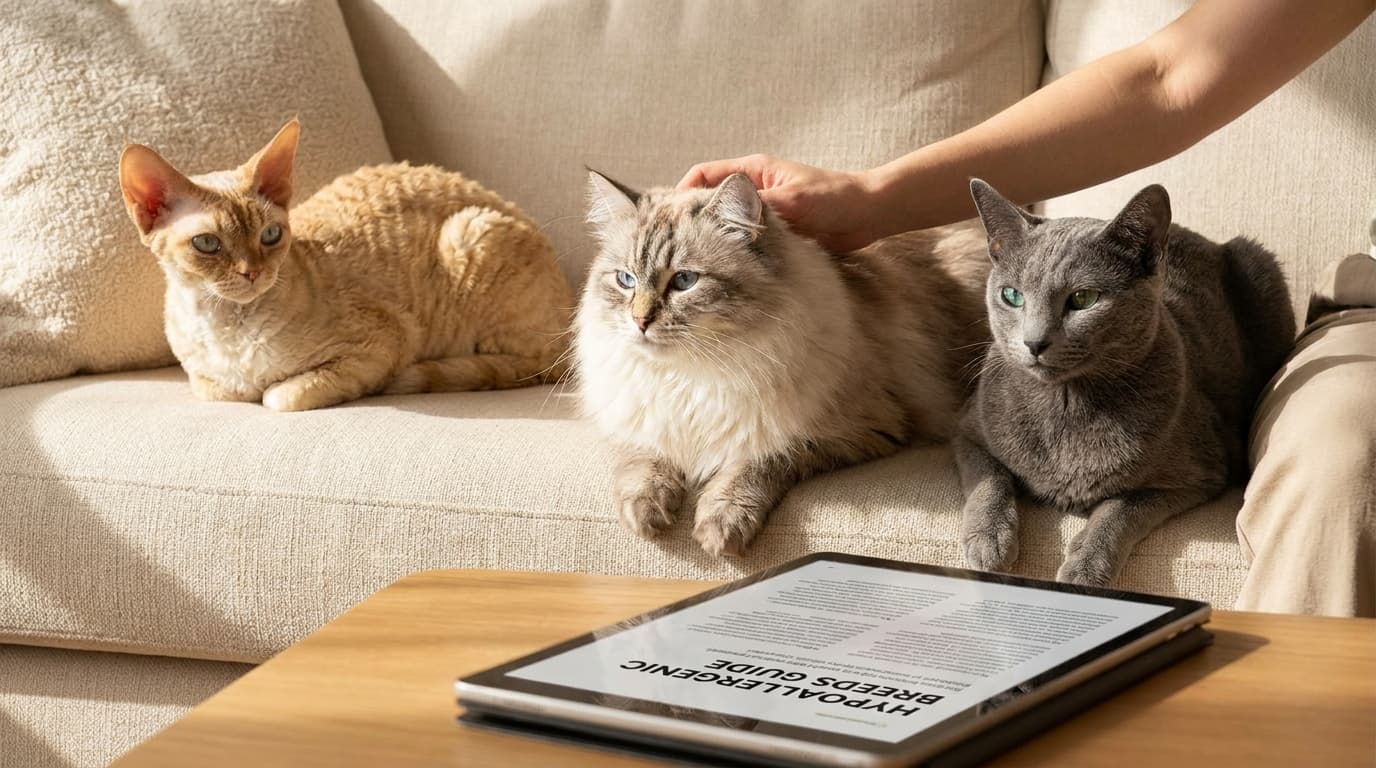
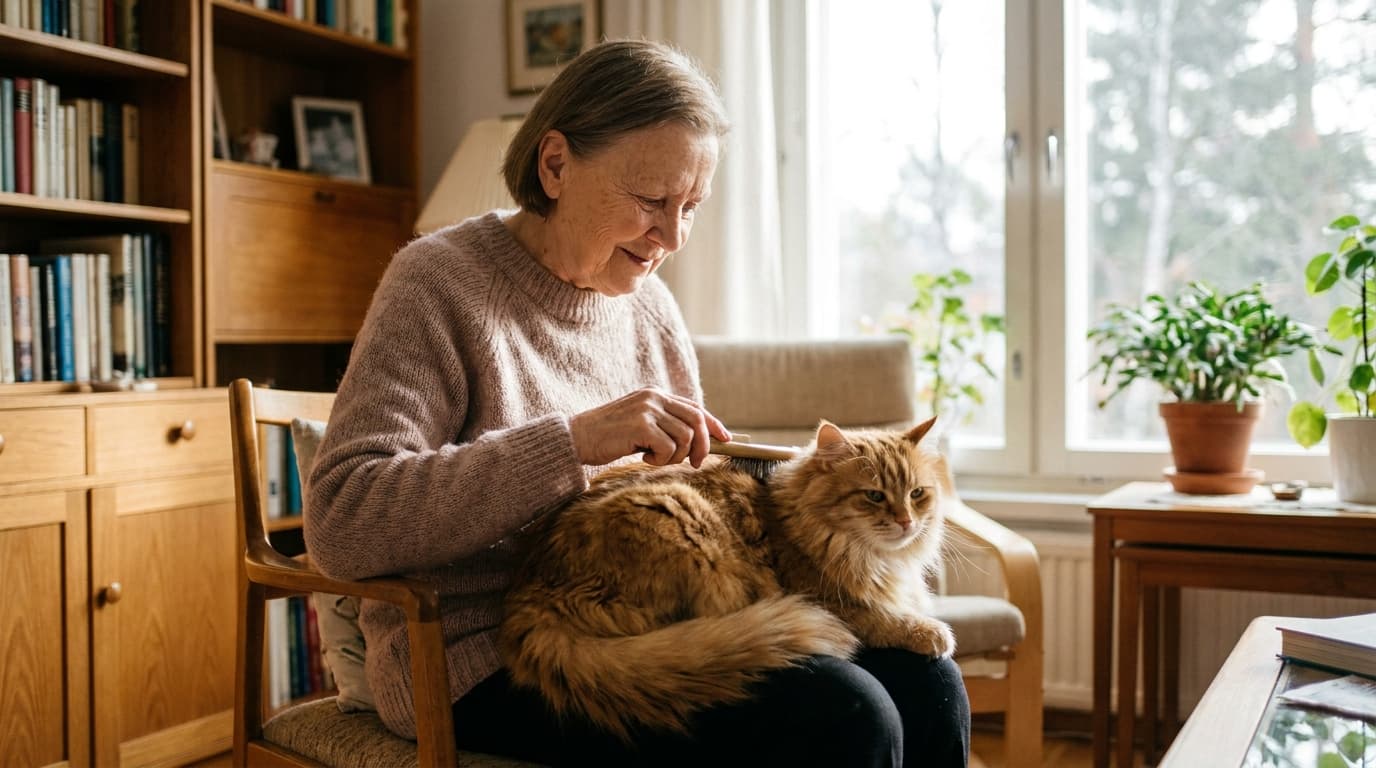
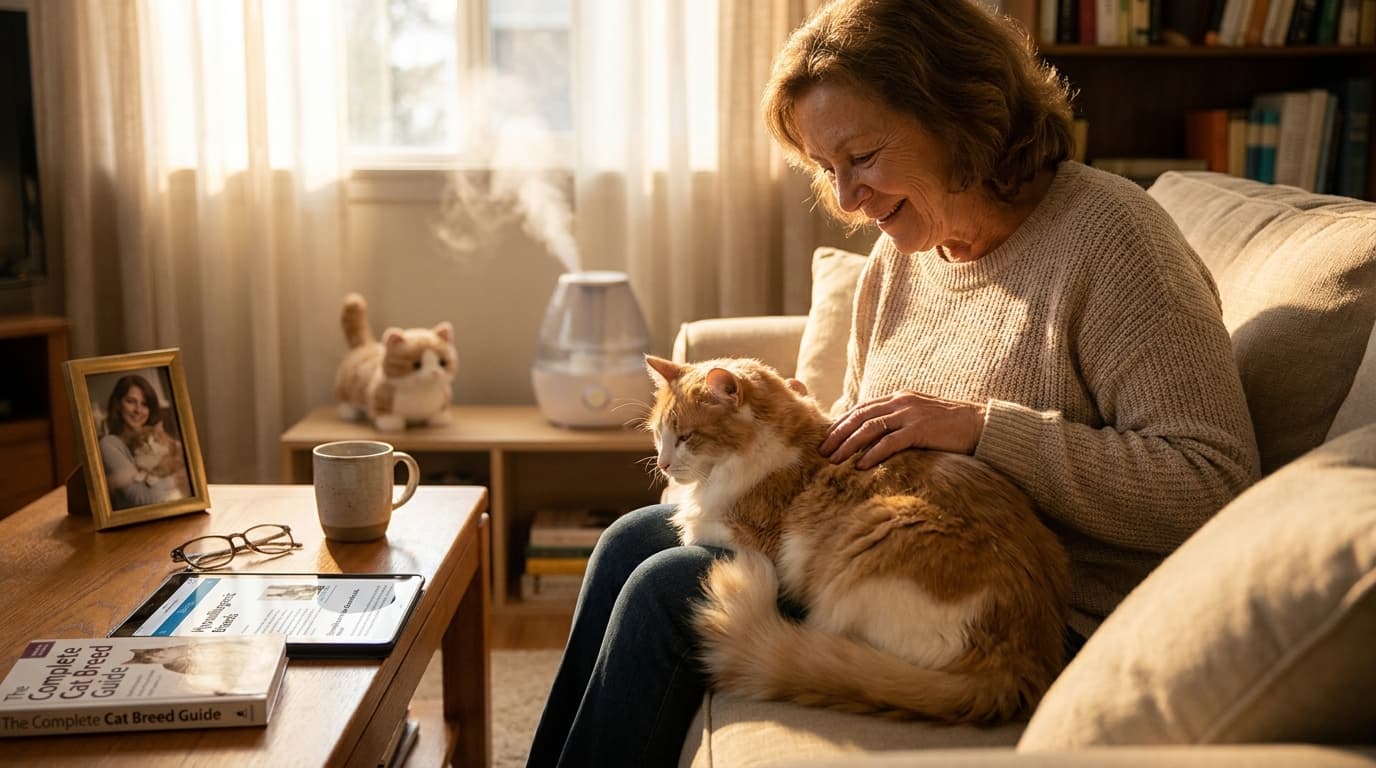
The characteristics that make a cat genuinely well-suited for a senior owner are more specific than 'calm' — a cat can be low-energy without being lap-seeking, and it can be affectionate without being the kind of companion that provides the physical and social presence that benefits older adults. The characteristics that actually matter for senior-suitability: consistent proximity-seeking without demanding high-activity engagement, tolerance for being held and handled by someone who may not move with the agility of a younger person, low vocalization (a constantly vocalizing cat adds stress rather than comfort), and manageable care requirements that remain practical across a range of physical capability levels.
The Ragdoll is the breed that most consistently delivers on all four criteria. The name is behaviorally descriptive: Ragdolls go physically limp when picked up, a characteristic associated with very low reactive aggression and extremely high handling tolerance. They actively seek human contact — following household members through the home, settling into laps during any seated activity, and returning to contact after overstimulation rather than retreating and becoming avoidant. Their semi-longhaired coat requires more grooming than a shorthaired breed, but the coat texture is relatively tangle-resistant compared to Persians or Maine Coons, and twice-weekly combing is generally adequate. Ragdolls are large cats — males commonly reach 15 to 20 pounds — which makes them substantial and reassuring to hold.
The Birman offers a slightly warmer, more actively affectionate alternative to the Ragdoll's passive presence. Birmans are lap-seeking, follow owners between rooms, and show interest in household activity without the high-demand vocalization of Siamese or the physical energy of Maine Coons. Their coat is semi-longhaired with a texture that is easier to maintain than the Persian, typically requiring two to three combing sessions per week. The main health consideration for Birmans is a relatively high prevalence of hypertrophic cardiomyopathy — annual cardiac auscultation is appropriate from middle age onward.
The strongest practical recommendation for senior owners is to consider adopting an adult or senior cat rather than a kitten, regardless of breed. An adult cat of three to five years old has an established, observable temperament — you can assess lap-seeking behavior, tolerance for handling, noise level, and activity level directly rather than predicting from breed averages. The kitten phase that produces both the behavioral chaos and the developmental health vulnerabilities is entirely bypassed. For a senior owner, an adult cat whose personality is already known is a significantly more reliable match than any breed prediction.
The care capacity question deserves honest consideration in advance. Cats can live 18 to 20 years. A 70-year-old adopting a kitten may be managing that cat into their late 80s or early 90s. The care requirements that are manageable today may not be manageable as the owner ages. Including a contingency plan — a named individual who agrees to care for the cat if the owner can no longer do so — is a responsible component of senior cat adoption that most adoption conversations do not address.
**Key insights:
- Prioritize breeds with consistent proximity-seeking, high handling tolerance, low vocalization, and manageable grooming — these four characteristics determine daily quality of the match for a senior owner.
- Consider a Ragdoll for passive lap-seeking presence with high handling tolerance, or a Birman for warmer active affection.
- Adopt an adult cat of three to five years from a shelter — established temperament is more reliably assessed than predicted from breed averages, and the kitten phase is bypassed entirely.
- Honestly assess care capacity across the expected lifespan — a cat acquired at one year old may need care for 18 or more years.
- Include a contingency plan for the cat's care in the event the owner can no longer provide it — this is responsible planning rather than pessimism.
The Truth About Munchkins: Do Munchkin Cats Have Health Problems?
Munchkin cats have short legs because of a naturally occurring autosomal dominant genetic mutation affecting the fibroblast growth factor receptor 3 (FGFR3) gene, which regulates long bone growth. The mutation produces pseudoachondroplasia — a condition in which the long bones of the limbs fail to reach their normal length while the rest of the skeleton develops comparably normally. This is the same class of mutation that produces dwarfism in dogs (dachshunds, basset hounds, corgis) through the same FGFR3 pathway.
The critical health issue that the Munchkin's cute appearance obscures is spinal disease. Because the mutation affects the relationship between body length and limb length, Munchkin cats with short legs have a longer trunk relative to limb support than normal-proportioned cats. This predisposes them to lordosis — an exaggerated concave curvature of the lumbar spine — and to thoracic kyphosis, which can compress the chest cavity. Lordosis in severe cases is not just an abnormal posture; it is a progressive condition causing chronic spinal pain and, in extreme cases, paralysis. Pectus excavatum — a concave deformity of the sternum and anterior chest wall — affects some Munchkins and can restrict lung expansion.
The ethical dimension of Munchkin breeding has produced significant disagreement in veterinary and cat breeding communities. The Governing Council of the Cat Fancy (GCCF) in the UK does not recognize the Munchkin as a breed specifically on welfare grounds. The International Cat Association (TICA) does recognize the breed, but with increasingly acknowledged concerns about the health implications of selecting for the mutation. The genetic reality is that homozygous Munchkins — those inheriting two copies of the mutation — do not survive to birth, which means all living Munchkins carry only one copy and all litters involve pairing with non-Munchkin cats. This prevents the mutation from being 'bred pure.'
The practical considerations for anyone considering a Munchkin: the spinal risks are real but variable. Not all Munchkins develop severe lordosis or thoracic problems. Reputable breeders who screen parent animals and monitor kittens carefully are more likely to produce healthier individuals, but the screening for spinal issues in cats is not as developed as for hip dysplasia in dogs, and early radiographic assessment of spine and chest is not yet standard practice in most breeding programs. The honest answer to 'do Munchkin cats have health problems' is: they carry elevated risk of spinal and thoracic disease compared to non-mutant cats, the severity is variable and partially unpredictable, and ongoing veterinary monitoring for mobility changes is a standard care requirement for this breed throughout its life.
**Key insights:
- Understand the FGFR3 mutation mechanism before adopting a Munchkin — the short legs are a long bone growth disorder, not an aesthetic trait without structural consequences.
- Specifically ask about lordosis and pectus excavatum screening in any Munchkin kitten you are considering — reputable breeders should be able to discuss their screening approach.
- Plan for regular veterinary assessment of spinal health and mobility throughout the cat's life — early detection of progressive spinal changes allows supportive management that improves quality of life.
- Avoid purchasing Munchkins from breeders who minimize or deny the health risks — the ethical and medical literature on this breed's structural concerns is well-established.
- Consider whether the aesthetic appeal of the breed's appearance is worth the elevated care complexity and the probability of managing mobility-related health issues across the cat's lifespan.
Frequently Asked Questions
There is no single correct answer, but the Exotic Shorthair and the Burmese are the two most consistently recommended for different first-time owner profiles. The Exotic Shorthair suits owners who want consistent, non-demanding companionship — a cat that is reliably present and calm without requiring daily high-energy engagement. They work well for working adults who are home in evenings and want a peaceful co-occupant rather than an interactive partner. Their weekly grooming requirement and daily eye wiping are specific but manageable tasks.
The Burmese suits first-time owners who specifically want interaction and responsiveness — a cat that actively seeks company, follows household members, and engages with daily activity. They form strong bonds and are more vocal and presence-demanding than Exotic Shorthairs. For a person who works from home or has household members available throughout the day, the Burmese's social orientation is a feature rather than a demand. For someone who is away for long hours regularly, the Exotic Shorthair's lower-demand companionship is more practical.
The most impactful single environmental intervention is HEPA filtration. Standard household air filters capture particles above a certain size threshold — Fel d 1 particles are small enough to pass through most standard filters and recirculate into the air. HEPA-rated air purifiers and vacuum cleaners capture particles down to 0.3 microns and trap Fel d 1 before it resettles on surfaces. Running a HEPA air purifier continuously in the main living area and using a HEPA vacuum for regular floor cleaning measurably reduces airborne allergen load within two to three weeks.
A cat-free bedroom is the second most impactful change. Spending eight hours in a Fel d 1-free environment allows the immune system recovery time that significantly reduces daytime symptom severity for many allergy sufferers. This requires consistent enforcement — allowing the cat into the bedroom occasionally negates most of the benefit. Washing hands after handling the cat before touching the face prevents the most direct mucosal exposure route. Regular bathing of the cat (weekly for hairless breeds, less frequently for coated cats that tolerate bathing) directly reduces the Fel d 1 load on the animal.
Hairless cats are not hypoallergenic, and the Sphynx specifically illustrates why the hair-length assumption is incorrect. Fel d 1 is produced in the sebaceous glands of the skin and the salivary glands. In coated cats, the coat absorbs much of the sebaceous Fel d 1 and distributes it through shedding. In hairless cats, the oils — and their Fel d 1 content — accumulate on the skin surface rather than distributing through a coat. The result is a higher local concentration of Fel d 1 on surfaces the cat contacts and on the cat's skin itself, which is directly contacted during petting.
Many allergy sufferers who expect the Sphynx to solve their allergy problem discover that direct skin-to-skin contact with a hairless cat actually produces a stronger immediate reaction than petting a coated cat, because the allergen is directly on the skin surface rather than distributed through a hair coat. Regular bathing — weekly for Sphynx cats — is essential to manage sebaceous accumulation and reduce Fel d 1 load. Spending time with a specific Sphynx before adoption is as important as for any other cat — individual Fel d 1 production variation applies to hairless cats as well.
Burmese cats typically live 14 to 16 years, with many individuals reaching 18 or older. They are a relatively robust breed with fewer hereditary structural health issues than brachycephalic breeds, and their active, social nature tends to maintain behavioral health well into senior years. The primary hereditary health concerns in Burmese are hypokalemia (low blood potassium), which can cause episodic muscle weakness and is more common in some Burmese lines, and a head defect that affects a small proportion of kittens from certain pairings.
The longevity of Burmese cats is relevant to adoption decisions in both directions. For a young adult adopting a Burmese, a 16-year commitment is a significant life decision — it spans major life changes in career, relationships, housing, and family. For a senior adopter specifically, the lifespan of the cat relative to the owner's own trajectory is worth considering honestly. The Burmese's combination of longevity, social orientation, and moderate care requirements makes it well-suited for many first-time owners when the commitment length is genuinely understood.
Conclusion
Every breed match is ultimately a trade between the characteristics that attract you to a breed and the care commitments those characteristics require. The Exotic Shorthair's flat face and placid temperament come paired with daily eye care and weight management. The Siberian's lower allergen production comes paired with a substantial coat requiring regular maintenance. The Ragdoll's passive lap-seeking behavior comes paired with a large, semi-longhaired cat that needs space and twice-weekly grooming. The Munchkin's distinctive appearance comes paired with elevated probability of spinal and thoracic disease requiring lifelong veterinary monitoring. Understanding these pairings before adoption is what separates a good match from an expensive mistake.
The most consistent practical recommendation across all categories of cat selection — beginner, allergy sufferer, senior owner — is to spend real time with the specific individual animal before committing. Breed temperament and allergen profile are population averages with meaningful individual variation. The specific cat you will live with may confirm the breed's typical characteristics or deviate significantly from them. That deviation only becomes apparent through direct interaction, and discovering it after adoption is too late to be useful.
Two practical steps before any cat adoption: research the specific hereditary health conditions associated with the breed you are considering and understand what ongoing veterinary monitoring those conditions require across the cat's lifespan. Then visit the specific cat or cats you are considering and spend at least 30 minutes in direct interaction — enough time to observe actual behavior and, for allergy sufferers, to assess actual response. These two steps take a few hours and are the most consequential preparation available before a commitment that may span two decades.
Send it to someone who should read it next.
PurrScript Editorial Team
Editorial Team
PurrScript's in-house editorial team. We research, write, and review every guide using established veterinary and behavioral resources, and update articles as best practices evolve.
View all articles