Finding Your Purrfect Match: Which Cat Breed Actually Fits Your Life?
Have you ever brought home a cat expecting a snuggle buddy only to find a tiny athlete sprinting across your curtains at three in the morning? While people often think...

PurrScript Editorial Team
Editorial Team
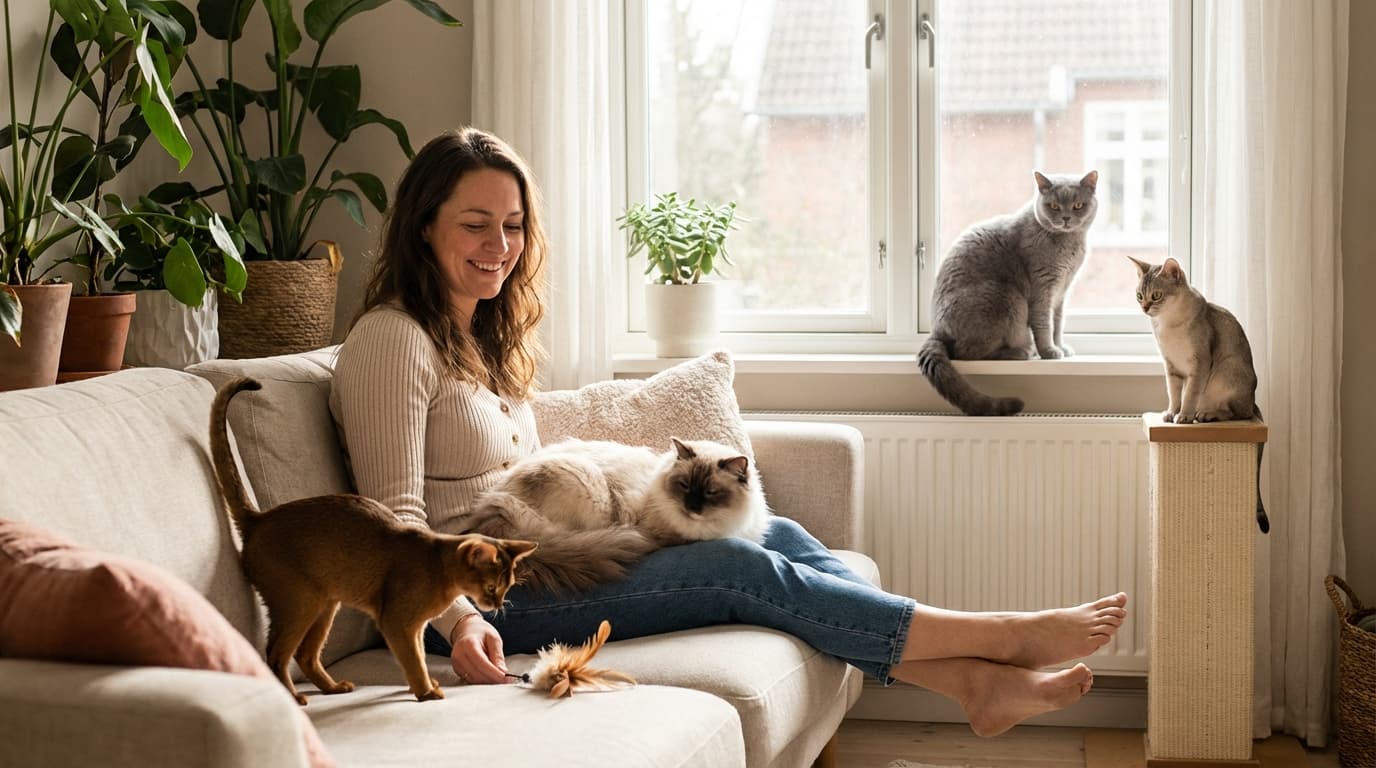
Finding Your Purrfect Match: Which Cat Breed Actually Fits Your Life?
Have you ever brought home a cat expecting a snuggle buddy only to find a tiny athlete sprinting across your curtains at three in the morning? While people often think all cats are aloof, the truth is that every breed has a unique personality that can make or break your daily routine. Finding the most affectionate cat breeds for emotional support or a calm companion for a small flat is not just about looks. It is about matching their natural instincts to your actual life.
Choosing the right feline friend means looking at more than just a cute face. Whether you need the best cat breeds for indoor only lifestyles or active cat breeds for high energy owners, understanding these traits helps ensure both you and your pet stay happy. You might even be searching for the quietest cat breeds for apartment living to keep your neighbors happy or the smallest cat breeds that stay kitten sized for a tiny home.
In this guide, we will look at which cats love to cuddle, which ones need a job to do, and how to set up your home for success. From the floppy Ragdoll to the busy Abyssinian, you will find the facts you need to pick the right partner. Let's find out which breed is the best fit for your space and your heart.
Ever heard the myth that cats are cold and aloof? It is just not true. Picking a cat is a lot like finding a roommate; you want someone whose vibe actually matches yours. This matters because matching a breed to your daily routine makes life better for everyone. Whether you are looking for the most affectionate cat breeds for emotional support or a high-energy playmate, the secret is looking past the cute face to the personality underneath.
For instance, the British Shorthair is calm and independent, making it one of the best cat breeds for indoor only lifestyles in smaller spaces. Meanwhile, the Maine Coon is a famous gentle giant that loves social time. The reality is that a cat’s happiness depends more on thoughtful enrichment and your attention than the actual square footage of your home.
We will look at everyone from the snuggly Ragdoll, which famously goes limp with trust when held, to the energetic Abyssinian. Whether you need a quiet lap cat for a studio or a social buddy for a busy family, your perfect match is out there. It is all about finding the right balance of energy and affection for your specific home.
Key insights:
- A cat's happiness in an apartment depends on vertical space and interactive toys rather than total square footage.
- Breeds like Ragdolls and Scottish Folds are highly versatile and adapt well to various indoor environments.
- Affectionate behavior varies wildly, from the 'always-on' energy of an Abyssinian to the quiet companionship of a Persian.
The Snuggle Squad: Most Affectionate Breeds for Emotional Support
When we talk about affectionate cats, we aren't just talking about a pet that tolerates your presence for a meal. We're talking about the velcro cats - those special souls that seek out your touch and seem to sense exactly when you have had a rough day. Recent research from the Purina editorial team highlights breeds like the Abyssinian, Burmese, and Siamese as top contenders for the friendliest felines. But what truly defines affection? It is more than just sitting on a lap; it is a consistent desire for proximity. These cats do not just live in your house; they live in your personal bubble, offering a type of emotional support that is hard to find elsewhere.
For many owners, these high-contact companions provide vital emotional benefits. The simple act of a cat leaning into your hand or purring against your chest can significantly lower stress levels. Think of it as a living, breathing stress-relief system. This matters because the bond with an affectionate cat is unique - they offer a steady presence that eases loneliness without the high-intensity demands of some other pets. Whether it is the quiet companionship of a Persian or the vocal devotion of a Siamese, these breeds prioritize your company above almost everything else.
But wait - are you actually ready for a velcro cat? While the idea of a constant companion is sweet, these breeds require significant engagement. They can be prone to distress if left alone for long stretches. If you are someone who spends most of the day out of the house, you might find a high-energy affectionate breed a bit much to handle. However, if you work from home or have a busy family life where someone is always around to offer a lap, these cats will thrive. It is all about matching your daily rhythm to their need for connection.
The Ragdoll is often considered the gold standard for gentle, indoor companionship, and their name tells you exactly why. These cats are famous for literally going limp in your arms when you pick them up, showing a level of trust and relaxation that is rare in the animal kingdom. This floppy nature makes them perfect for quiet indoor lives where they can focus entirely on their humans. Because they are so social, they can struggle if they feel ignored in a busy household. You do not need a massive house for a Ragdoll, but you do need a big heart and plenty of time for chin scratches. They do not just want to live with you; they want to be part of every quiet moment.
On the other end of the size scale, the Maine Coon is widely known as the gentle giant of the cat world. Don't let the massive paws and tufted ears fool you; they possess a surprisingly mellow temperament and a dog-like loyalty that makes them incredible for emotional support. They tend to follow their favorite humans from room to room, participating in family life without being overly demanding. While they might take up a bit more room on the sofa, their sweet nature and social personality more than make up for it. Balancing their large size with their soft hearts is easy once you realize they just want to be where the action is, offering a steady, calming presence to everyone in the home.
Key insights:
- Affectionate behavior ranges from high-energy interaction in Abyssinians to low-energy lap time with Persians.
- Ragdolls and Scottish Folds are highly versatile, adapting well to various indoor lifestyles and apartment spaces.
- A cat's well-being in small spaces depends more on mental enrichment and attention than actual square footage.
- True emotional support breeds require owners who can commit to frequent physical contact and social interaction.
Why Ragdolls Go Limp in Your Arms
Ever wonder how a cat can turn into a literal beanbag the second you pick them up? That is the Ragdoll for you. They get their name from this famous floppy habit of going totally limp in your arms. It is not just a weird quirk. This physical relaxation shows how much they actually trust you. Because they are so incredibly mellow, they are often seen as the gold standard for gentle indoor companionship.
But here is the thing. While they are one of the most affectionate cat breeds for emotional support, they are not just fuzzy furniture. These cats crave your company. If you live in a busy household, you have to manage their need for attention. They do not need a giant house to be happy, but they do need you to be present. It is a small price to pay for a cat that treats every hug like a vacation.
The Maine Coon: A Giant Heart in a Large Body
Have you ever met a cat that acts like a golden retriever? That is the Maine Coon for you. These massive fluff-balls are famously called "gentle giants" for a reason. While their size might look intimidating at first, they are actually one of the most affectionate cat breeds for emotional support. They don't just live in your home; they actively want to be part of your day and follow you from room to room.
Experts often rank them as one of the friendliest breeds because of their dog-like loyalty. They are surprisingly good for indoor only lifestyles too. Even though they are big, their well-being depends more on your love and some vertical space than the actual square footage of your apartment. They offer a grounding, calm presence and a sweet heart that makes any house feel more like a home.
Key insights:
- Maine Coons are known as 'gentle giants' because they balance a large physical presence with a very mellow personality.
- Their social nature and loyalty make them a top choice for families seeking emotional support animals.
- Environmental enrichment like climbing shelves allows these large cats to thrive in smaller indoor spaces.
Living Small: The Quietest Breeds for Apartment Life
Living in an apartment means your neighbors are basically your roommates, and thin walls make vocalization levels a big deal. You might worry about noise, but the key is finding a cat that is truly calm rather than just lazy. These quietest breeds for apartment living are emotionally steady and do not feel the need to shout for attention. Even in a small home, they stay happy and safe as long as you provide enough window perches and climbing spots to keep them engaged with the world around them.
The British Shorthair is widely considered the king of chill. Known for their thick, plush coats and independent spirits, they are perfect for people who work long hours. They do not mind being alone and usually spend their day napping or looking out the window rather than getting into trouble. Because they have low maintenance grooming needs and a very even temper, they fit into a busy lifestyle without any drama. They are the definition of a steady, low energy companion who is happy to just exist in your space.
For something a bit more expressive but just as quiet, the Scottish Fold is a great choice. You will recognize them immediately by those famous folded ears and big, round faces. They are incredibly soft spoken and observant, preferring to watch the world go by rather than demand center stage. They adapt well to smaller square footage because they prioritize comfort and closeness over constant activity. This makes them one of the best cat breeds for indoor only lifestyles where peace and quiet are the top priorities.
Key insights:
- A cat's well-being in a small apartment depends more on environmental enrichment like vertical climbing space than total square footage.
- Quiet breeds like the British Shorthair and Scottish Fold are ideal for thin-walled apartments because they are naturally soft-spoken and observant.
- British Shorthairs are particularly well-suited for busy owners because their independent nature allows them to stay calm while home alone.
The British Shorthair: The King of Chill
Ever feel like your cat is actually the most relaxed member of the household? That is the British Shorthair in a nutshell. Often called the king of chill, these cats are famous for their thick, plush coats and famously even-tempered spirits. They stand out as one of the quietest cat breeds for apartment living because they rarely feel the need to make a fuss or climb the curtains.
Imagine coming home after a stressful day to a pet that doesn't demand you immediately pull out the laser pointer. Because they are so independent, they don't mind being alone while you are at work. They fit perfectly into indoor only lifestyles because they have low-maintenance grooming needs and a naturally low activity level. It is basically low-stress companionship in a very soft package.
Key insights:
- Their independent nature makes them a top choice for owners with a busy nine-to-five schedule.
- A calm temperament ensures they thrive in small apartments without needing constant vertical space or high-intensity play.
Scottish Folds: Sweet, Quiet, and Round
Ever see a cat that looks like a tiny, furry owl? That is the Scottish Fold. With those famous ears tucked close to their round heads and big, wide eyes, they look sweet and curious. It is no wonder experts call them one of the friendliest breeds around.
If you live in a smaller place, you will love how soft-spoken they are. They fit the bill for the quietest cat breeds for apartment living because they prefer observing the world over making a racket. They do not demand your constant focus, but they will happily follow you around just to be near.
These cats are incredibly versatile. Since they have such a calm demeanor, they do not need huge square footage to be happy. As long as you provide some vertical spots to climb and plenty of love, these round-faced companions are perfectly content in any cozy home.
Energy to Burn: Breeds for High-Activity Owners
Some people want a cat that naps all day, but you might be looking for a partner in crime. If your home is a hub of activity, a 'lap ornament' just won't cut it. You need a breed that thrives on movement and constant interaction. Active cat breeds for high energy owners aren't just pets; they are active participants in your daily life. But here is the thing: high energy usually means high intelligence, and a bored smart cat is often a recipe for shredded curtains.
The Purina editorial team famously describes the Abyssinian as the cat friend you wish you had in human form. They are 'always on.' While some breeds are content with a quiet window view, an Abyssinian wants to know why you are opening that drawer and if they can help. They are often listed among the most affectionate cat breeds for emotional support because their bond is built through shared play and a constant, curious presence in every room you enter.
Living with an active breed means thinking beyond the basic scratching post. These cats need vertical space, climbing shelves, and mental puzzles to stay happy. A bored Abyssinian will find their own fun, and you probably won't like what they choose to investigate. Try clicker training or even teaching them to fetch. Because they are so social, they genuinely enjoy the 'work' of learning new tricks. It keeps their brain busy and your home intact.
The interesting part is that you don't need a mansion for these high-octane felines. Even in a small apartment, an active breed can thrive if you focus on enrichment rather than square footage. As long as you provide window perches and interactive toys that challenge them, they will adapt beautifully to an indoor-only lifestyle. What matters most to them isn't the size of the room, but the quality of the attention you're willing to give.
Key insights:
- Abyssinians prioritize interaction over relaxation, making them ideal for owners who want a 'dog-like' cat experience.
- Mental stimulation through clicker training is just as important as physical play for preventing destructive behavior.
- Vertical space is a requirement, not a luxury, for high-energy breeds living in smaller indoor environments.
Abyssinians: The Cat Friend You Wish Was Human
Ever wanted a roommate who is always up for an adventure? The team at Purina suggests that the Abyssinian is basically the cat friend you wish you also had in human form. These cats do not just watch from a distance. They want to be right in the middle of the action, whether you are folding laundry or typing on your laptop. If you want a pet that actually interacts with you instead of just napping on the couch, this is your match.
As one of the most active cat breeds for high energy owners, they need plenty of mental stimulation to stay happy. You can actually train them to play fetch or solve food puzzles to keep their busy minds occupied. Since they are naturally curious, they thrive when they have a job to do. This makes them a top choice for anyone seeking a social and engaged indoor companion who acts more like a partner than a traditional pet.
Key insights:
- Abyssinians prioritize social interaction and participation over independent lounging.
- Mental stimulation through training and puzzle toys is vital to prevent boredom in this active breed.
Pocket-Sized Pals: Breeds That Stay 'Kitten-Sized'
Ever looked at your cat and wished they could stay a tiny kitten forever? You are not alone. There is something about that wide-eyed, small-framed look that pulls at the heartstrings. Some breeds naturally keep this diminutive size throughout their lives without any health compromises. It is not about stunted growth but a unique genetic history that keeps them small and sturdy.
These pocket-sized pals are a dream for anyone looking for the best cat breeds for indoor only lifestyles. While a giant like the Maine Coon needs floor space, a smaller cat can turn a tiny studio into a personal playground. But here is the thing. A smaller frame does not mean a quieter life. Many of these cats have massive personalities that far outweigh their physical size. You might find that your tiny companion is actually the one running the household.
The Singapura is the star here. Often called the smallest cat breed in the world, they are famous for their big ears and huge eyes. They usually weigh only four to eight pounds. But do not let the size fool you. They are high-energy explorers who love to be right in the middle of the action. If you want smallest cat breeds that stay kitten sized, this is a top pick.
Living with a tiny cat in a multi-pet home requires safe handling, especially with larger dogs. Also, well-being depends more on enrichment than square footage. Adding vertical space like climbing shelves keeps them stimulated. Even quiet breeds like the Scottish Fold need this mental exercise to stay happy.
These permanent kittens bring a special joy to any home. Just be ready for a huge personality in a small package. It is the best of both worlds: the kitten look with the wisdom of an adult cat.
Key insights:
- Small size does not equal low energy; breeds like the Singapura are very active.
- Environmental enrichment matters more for small-space living than total square footage.
- Multi-pet homes must prioritize safe handling for smaller-framed breeds.
The Charm of the Smallest Breeds
Ever wish your cat would just stay a kitten forever? Some smallest cat breeds that stay kitten sized come pretty close. The Singapura is the star here, usually weighing just four to eight pounds. But don't let those tiny paws fool you into thinking they're just lap ornaments. These little guys are often surprisingly high-energy and curious, proving that a small frame doesn't mean a low-key life.
In a multi-pet home, these tiny felines need a bit of extra care. Safe handling is key so they don't get overwhelmed by bigger siblings. Remember, a cat’s happiness isn't about square footage. Even the smallest cats need vertical spots like shelves and perches to feel confident. It’s all about making their world feel big, even if they stay small.
Key insights:
- Small size does not equal low energy; many tiny breeds are incredibly active and curious.
- Vertical enrichment like climbing shelves is vital for small cats to feel secure in homes with larger pets.
It’s Not the Size, It’s the Setup: Optimizing for Indoor Life
You might worry that a small apartment isn't enough for a cat, especially if you're eyeing a larger breed. But here's the thing: square footage is a human metric, not a feline one. As the team at Plato Pet Treats points out, a cat’s well-being doesn’t depend on square footage but on thoughtful enrichment and attention. Even a Maine Coon, often called the gentle giant of the cat world, can thrive in a compact home if the environment is designed with their needs in mind. It isn't about how many rooms you have, but how much of that space is actually usable for a cat.
Think of your home as a 3D playground rather than a flat floor plan. By adding vertical space like wall-mounted shelves or floor-to-ceiling cat trees, you’re effectively doubling or tripling the territory your cat can explore. This taps into their natural instinct to climb and observe from a height, which helps them feel secure and confident. When you satisfy these hunting and climbing urges, the size of your living room starts to matter a whole lot less because your cat is living in the entire volume of the room, not just on the carpet.
For the indoor only lifestyle to work, you have to bring the excitement of the outdoors inside. The most essential tool in your kit is a simple window perch. This is often called Cat TV for a reason. Having a front-row seat to the neighborhood provides vital mental stimulation that prevents boredom and anxiety. It’s a safe, easy way to keep their brain active while they stay protected within your four walls. Watching birds or even rustling leaves can keep a curious cat occupied for hours.
You can also use interactive toys and food puzzles to mimic the outdoor hunting experience. This is especially helpful for breeds like the British Shorthair, which is known for its calm and independent nature, making it ideal for apartment life. Likewise, versatile breeds like the Ragdoll or Scottish Fold adapt beautifully to indoor environments because they prioritize comfort and companionship over wide-open spaces. By focusing on these small details, you create a world that feels vast and engaging, ensuring your cat stays happy and healthy without ever needing to step foot outside.
Key insights:
- Vertical space effectively doubles a cat's territory in small apartments.
- Environmental enrichment is more important for feline health than total square footage.
- Window perches and puzzle feeders are essential tools for mimicking outdoor stimulation safely.
The 'Indoor Only' Secret: Window Perches and Puzzles
Keeping a cat inside doesn't mean they have to be bored. For the best cat breeds for indoor only lifestyles, like the calm British Shorthair or the floppy Ragdoll, your home is plenty of space. The secret isn't really about square footage. It is about what you put in it. Think of a window perch as 'Cat TV.' It gives your pet a front-row seat to the world, providing the mental stimulation they need to stay sharp without the risks of the outdoors.
Interactive toys also help active cat breeds for high energy owners stay happy and tired out. Even a 'gentle giant' like the Maine Coon can thrive in a small apartment with vertical climbing spots and food puzzles. As the team at Plato Pet Treats says, well-being depends on thoughtful enrichment and attention, not just floor space. By turning your walls into a playground, you create a safe world where your cat can truly flourish.
Key insights:
- Window perches provide essential mental stimulation by acting as 'Cat TV' for indoor pets.
- Enrichment and vertical space are more important for a cat's happiness than the actual size of the home.
Frequently Asked Questions
Yes, they usually do, but that attention looks different depending on the cat. While breeds like the Ragdoll or Maine Coon are famously social, how they want to spend time with you varies. Some want to be your shadow while others just want a warm lap to nap on.
If you choose a breed known for being friendly, you should plan on spending a few solid chunks of time each day interacting with them. It is not just about petting. It is also about playing and making them feel like part of the family. If they are left alone too long, these social cats can get pretty lonely.
They definitely can, because a cat's happiness is more about what is in the room than how big the room is. Abyssinians are very active, but they love to climb. If you provide vertical space like wall shelves or tall cat trees, a small apartment suddenly feels much bigger to them.
The key is mental stimulation and enrichment. You will want to provide plenty of interactive toys and maybe a nice window perch where they can watch birds. As long as you keep their minds busy and give them places to explore, they will thrive in an apartment just as well as they would in a large house.
If you have a lively house with kids, you should check out the Maine Coon or the Ragdoll. These cats are known for being incredibly patient and do not get spooked easily by loud noises or sudden movements.
Ragdolls are especially famous for going limp and relaxed when held, which is why they have that name. Maine Coons are often called gentle giants because they are big but very sweet and social with everyone in the family. Also, the British Shorthair is a solid choice because they are calm and do not mind a busy environment.
Just remember that even the friendliest cat needs a quiet place to hide when things get too loud. Giving them a high shelf or a separate room to retreat to helps them stay happy in a busy home.
Sometimes they can be, but it usually comes down to the specific breed and its genetics. While being small does not automatically mean a cat will be sick, some breeds that stay tiny are prone to joint issues or heart conditions.
Take the Scottish Fold as an example. Their unique ears are a result of a cartilage trait that can sometimes lead to other health problems as they get older. It is also common for smaller cats to have dental issues because their teeth are crowded into a smaller jaw.
Because of this, it is important to keep up with regular vet visits and focus on good nutrition. Even for tiny cats, things like climbing shelves and interactive toys help keep them strong and healthy regardless of their size.
Conclusion
So, what does all this mean for your search? Choosing a cat is about more than just picking a cute face. It is about matching their natural energy to the rhythm of your home. Whether you need the quiet presence of a British Shorthair for your apartment or the constant playfulness of an Abyssinian to keep you busy, the right breed makes life better for both of you. You are not just looking for a pet. You are looking for a roommate who actually fits your daily life.
Your next step is to look beyond the labels and see how these traits show up in person. While a breed gives you a great head start on what to expect, every cat has its own unique personality. Think about how much time you have for play and how much vertical space you can offer for climbing or quiet naps. Also, remember that even the most affectionate cat breeds need their own space sometimes.
Finding your purrfect match takes a bit of planning, but the reward is a bond that lasts a lifetime. When you find that right mix of heart and habit, you will know it immediately. Happy hunting for your new feline best friend.
Send it to someone who should read it next.
PurrScript Editorial Team
Editorial Team
PurrScript's in-house editorial team. We research, write, and review every guide using established veterinary and behavioral resources, and update articles as best practices evolve.
View all articles