How to Groom a Cat That Hates Baths Without Losing Your Mind (or Skin)
Ever felt like you're entering a wrestling match with a tiny furry tiger just to brush out a few tangles? It's a common struggle because cat skin is actually paper-thin...

Mia Torres
Cat Lifestyle Writer
How to Groom a Cat That Hates Baths Without Losing Your Mind (or Skin)
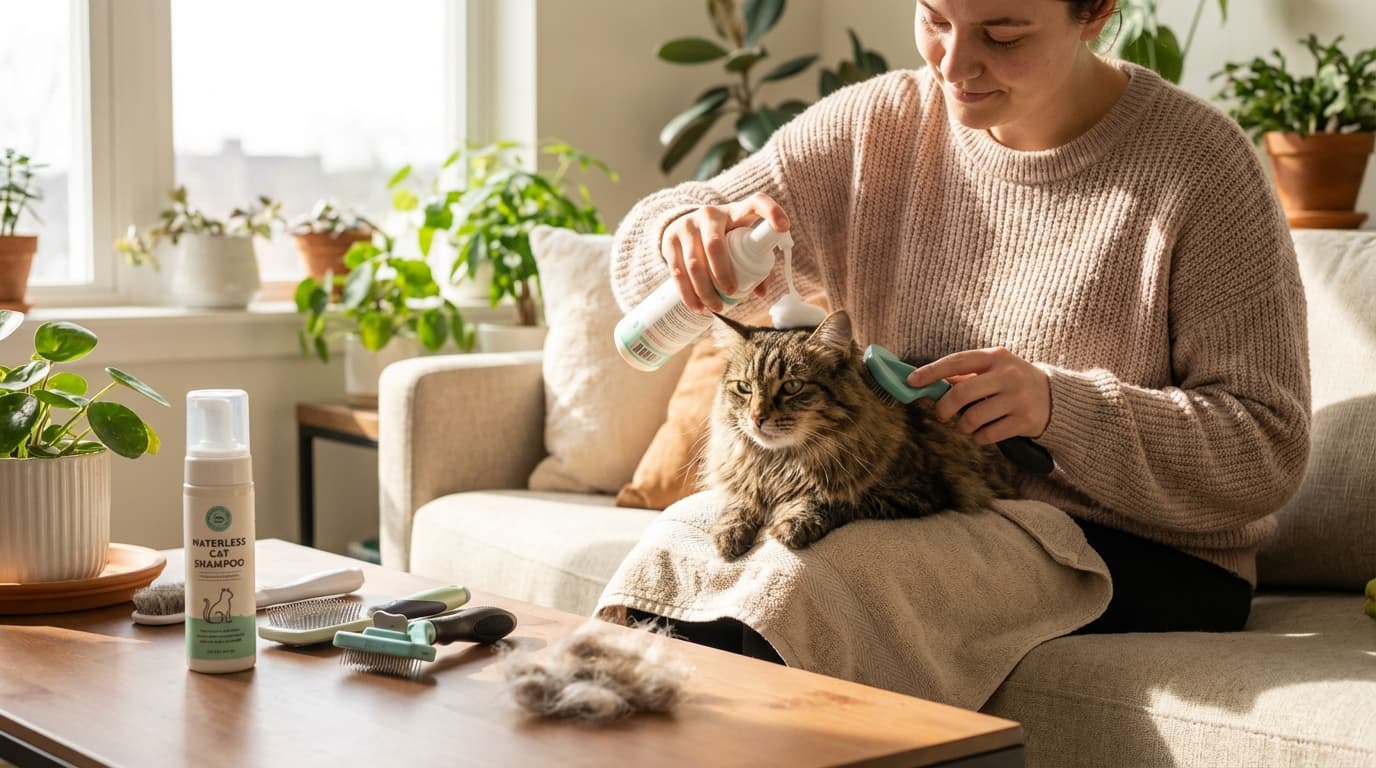
Ever felt like you're entering a wrestling match with a tiny furry tiger just to brush out a few tangles? It's a common struggle because cat skin is actually paper-thin and very easy to hurt. If your cat treats the bathtub like a torture chamber, you aren't alone. Most cats hate standing water, but keeping them clean doesn't have to mean a trip to the emergency room for you or a stressful day for them.
In this guide, we'll look at how to safely groom a cat with sensitive skin using methods that won't trigger a feline meltdown. We'll explore waterless grooming solutions for cats that hate baths and check out the best feline undercoat deshedding tools for those heavy shedders. Whether you have a domestic shorthair cat deshedding all over your couch or a sensitive soul who flinches at every brush stroke, there's a way to make this work.
You'll learn professional feline styling at home tricks like the Treat-Clip-Treat method and how to stop hairballs before they start. By the time we're done, you'll have a grooming routine that feels less like a battle and more like the bonding experience nature intended. Let's get started on making your cat fluffy and happy without the drama.
Why Your Cat’s Skin Is More Sensitive Than You Think
Ever wonder why your cat goes from purring to swatting your hand in three seconds flat? It is not just feline moodiness. Your cat’s skin is actually paper-thin and far more delicate than our own thick human hide. This means that using a generic brush or a human hairbrush can lead to something called brush burn. It is a painful irritation that happens when the wrong tool scrapes against that thin epidermis. Because their skin is so fragile, specialized tools are a safety requirement rather than a luxury.
Think of these tools as essential health gear. While you might find a budget slicker brush for about six dollars, high-end deshedding tools can cost over thirty dollars. The difference is not just about the price tag. Quality tools are designed to reach through the topcoat to remove loose hair without scratching the skin. The Cornell Feline Health Center points out that regular brushing is your best defense against hairballs. Preventing these blockages through grooming is a much cheaper and safer alternative to a surgical bill later on.
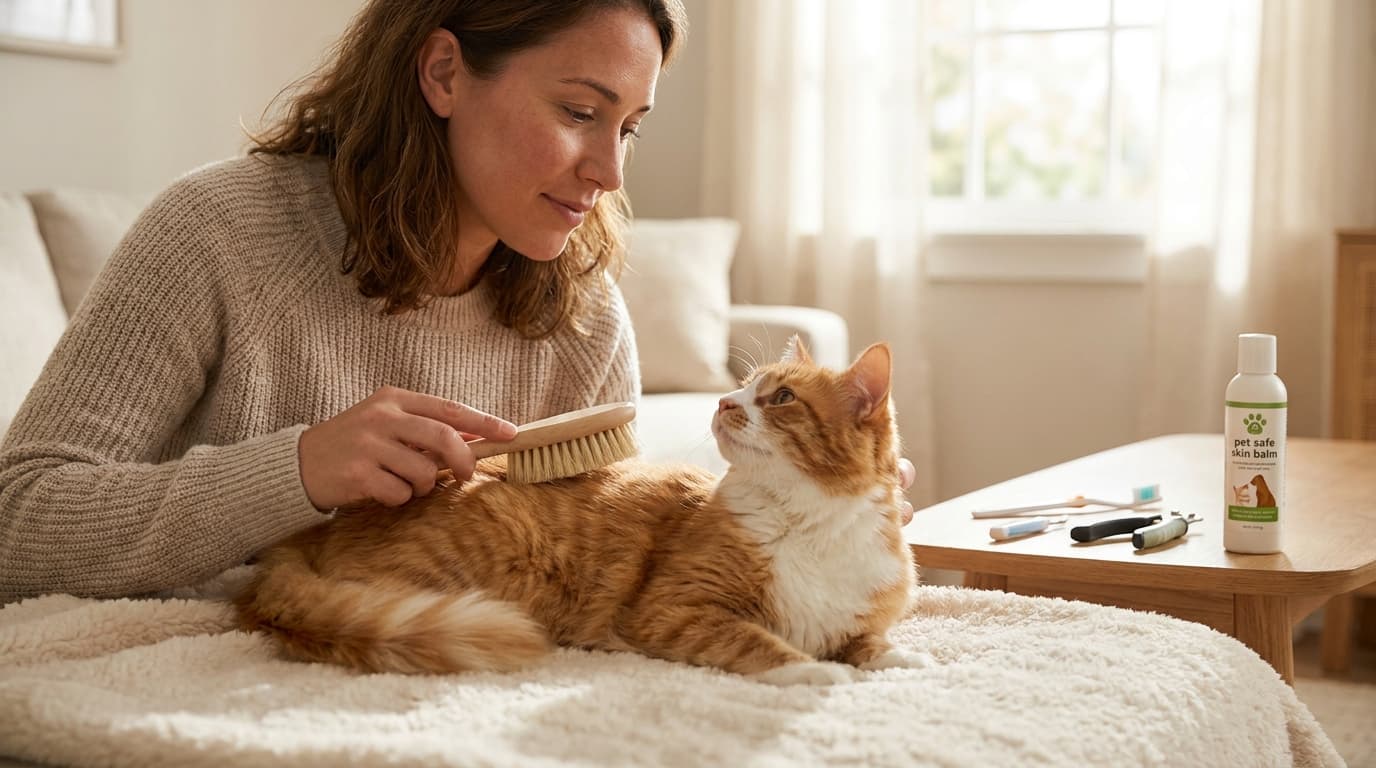
Beyond just looking good, grooming is your secret early warning system. The American Veterinary Medical Association notes that this close physical contact helps you find fleas, ticks, or strange lumps before they become big problems. When you use the right tool, like a soft boar bristle brush for sensitive cats, you are not just cleaning fur. You are speaking their language. In the wild, cats groom each other to show they are family. When you do it right, you are building that same bond and trust.
But how do you know if you are overdoing it? You have to watch for the stop signals. If you see skin redness or your cat flinches when the brush passes a certain spot, the pressure is likely too high or the bristles are too sharp. A simple test is to run the brush against the inside of your own wrist. If it feels scratchy or uncomfortable there, it is definitely too abrasive for your cat’s fragile skin. Also watch for a twitching tail or flattened ears, as these are clear signs your cat is hitting their limit.
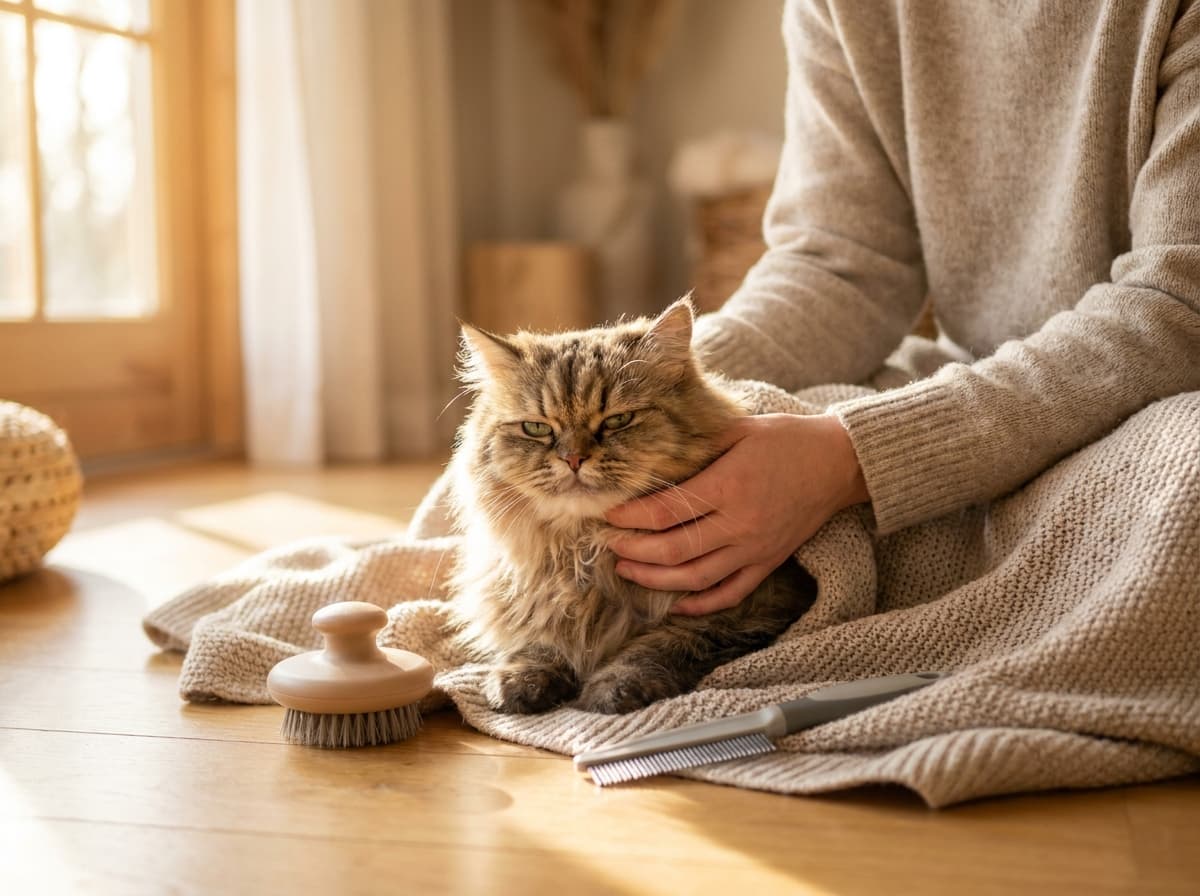
If your cat hates being brushed, look for tools with rounded tips or rubber textures. These mimic the sensation of petting rather than scraping. Modern brushes often include self-cleaning buttons to make the process faster, which is great because for a sensitive cat, every second counts. The goal is a peaceful bonding session, not a battle with a tiny tiger. Finding the right tools is often the only difference between a happy, healthy cat and a stressed one that hides the moment the brush comes out.
Key insights:
- Cat skin is paper-thin and requires specialized tools to avoid painful brush burn.
- Grooming acts as a critical early detection system for medical issues like lumps or parasites.
- Tool texture is the primary factor in helping cats with grooming anxiety feel comfortable and safe.
Spotting the Signs of Grooming Stress
Ever notice your cat flinch or twitch their back during a brush session? It is easy to assume they are just being moody, but the reality is that feline skin is paper-thin. This makes them very prone to painful brush burn if you use an abrasive human brush or a stiff metal slicker. If you see redness or your cat starts batting at the tool, take it as a clear signal to stop immediately.
Finding the right gear is often the only thing standing between a peaceful bonding session and a battle with a tiny tiger. For safely grooming a cat with sensitive skin, tool texture is the most important factor. You might try a soft boar bristle brush or a rubber tool like the Kong ZoomGroom to help a nervous cat get used to the feeling without the scratchiness.
This matters because regular brushing is a much cheaper alternative to the surgical removal of hairballs. It also acts as an early warning system for fleas or strange lumps. When you get the rhythm right, you are not just cleaning fur; you are speaking their language and building real trust.
Key insights:
- Flinching and skin twitching are early warning signs of physical discomfort.
- Rubber and boar bristle tools are best for desensitizing grooming-averse cats.
- Grooming serves as a vital health check for lumps, bumps, and parasites.
The 'No-Bath' Revolution: Waterless Solutions for Grumpy Cats
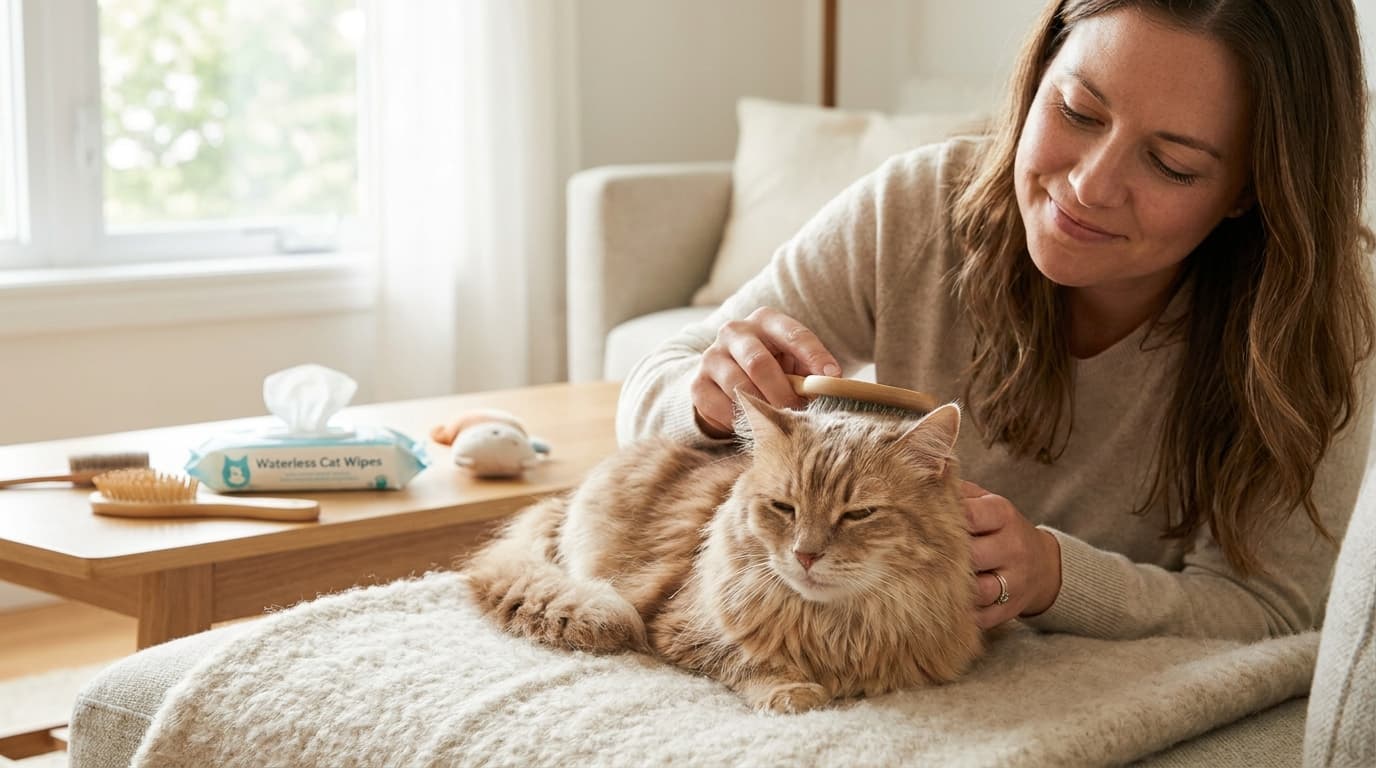
Ever tried to give a cat a bath? It usually ends with someone bleeding and a very soggy, resentful pet. Most cats hate standing water because it makes their coat heavy and strips away their sense of control. But here is the good news: you do not actually need a tub to keep them clean. Waterless foams and wipes are a total shift in how we handle hygiene for grumpy felines. These products work by breaking down surface oils and trapping dander without soaking the skin. It is a much kinder way to handle a cleaning session while keeping your own skin intact.
Beyond just cleaning, grooming is actually a social language. In the wild, cats groom each other to say we are family, a behavior known as allogrooming. When you use a waterless solution, you are maintaining that deep bond without the trauma of a splashing faucet. Since cat skin is paper-thin, you have to be careful not to cause brush burn with rough tools. Using a soft rubber brush or a boar bristle tool can help a sensitive cat relax because tool texture is the primary factor in managing grooming anxiety. Finding the right gear is often the only difference between a peaceful bonding session and a battle with a tiny tiger.
Regular grooming is also about basic healthcare. The Cornell Feline Health Center confirms that minimizing the fur your cat swallows is the best defense against digestive blockages. Think of it this way: a few minutes of brushing is a much cheaper alternative to the surgical removal of hairballs. By catching that loose fur before they lick it off, you are protecting their gut and your wallet. It is much easier to brush a cat today than to deal with a medical emergency later because of a preventable blockage.
When should you skip the soap entirely? Often, a simple damp microfiber cloth is more than enough for a quick refresh. It picks up surface dust and loose hair without the need for any chemicals. This is important because we do not want to over-strip the natural oils that protect their delicate skin. Think of it as a light touch-up. It keeps the coat shiny and the cat calm. Using a soft cloth or a grooming glove that mimics petting helps desensitize scared cats to the feeling of being handled, which makes your life much easier in the long run.
Key insights:
- Waterless foams provide a stress-free alternative to traditional baths by cleaning the coat without heavy saturation.
- Maintaining the allogrooming bond through gentle touch reinforces the social connection between you and your cat.
- Using a damp microfiber cloth preserves natural skin oils while effectively removing loose fur and allergens.
- Regular grooming is a cost-effective way to prevent hairballs and avoid expensive surgical procedures.
When to Skip the Soap Entirely
Most cats treat a bathtub like a torture chamber, but you usually do not need soap to keep them clean. Over-washing often strips away the natural oils that keep their coat healthy and shiny. Think of these oils as a built-in shield. Using harsh shampoos too often breaks down that defense and can leave their skin feeling dry and itchy.
A damp microfiber cloth is a perfect waterless grooming solution for cats that hate baths. It mimics the texture of a cat tongue and picks up surface dirt without the stress of a running faucet. Because cat skin is paper thin, this gentle approach is much safer than a heavy scrub. It also lets you feel for any strange lumps or skin issues early on while you wipe them down.
This simple method also helps stop hairballs. The Cornell Feline Health Center confirms that minimizing the fur a cat swallows is the best defense against digestive blockages. Using a cloth or a soft rubber brush catches loose hair before they lick it up. It is a much cheaper and kinder alternative to dealing with medical issues later, and it keeps your skin safe from scratches too.
Key insights:
- Natural oils act as a protective barrier for a cat's sensitive skin.
- Microfiber cloths provide a stress-free way to clean without using water or soap.
- Regular surface cleaning helps prevent the ingestion of fur that leads to hairballs.
Picking the Right Tool: From Slicker Brushes to Magic Gloves
Finding the right brush isn't just about grabbing the first thing you see at the pet store because not all tools are equal. Experts actually spent 150 hours testing 45 different brands to figure out what really works for cats. You might see a specialized deshedding tool for over 33 dollars and wonder if it is actually better than a 7 dollar budget slicker brush. The truth is that the right choice depends on your cat's specific coat and how much they tolerate being handled. Because cat skin is paper-thin, using generic or human brushes can cause painful brush burn. This turns a bonding moment into a battle, which is the last thing you want when trying to keep your cat calm.
Even if your cat has short hair, you are not off the hook when it comes to grooming. Domestic shorthairs can be heavy shedders, especially during the peak shedding seasons. Cornell Feline Health Center experts point out that stopping your cat from swallowing loose fur is the best way to prevent digestive blockages. Regular brushing stops hairballs from forming, which is a much cheaper and safer alternative to an expensive surgery. For these cats, a quality slicker brush with fine wire pins helps reach the deep undercoat. Many modern versions even have a button to pop the hair right off, making the cleanup process fast and easy.
For cats that run away the moment they see a metal brush, grooming gloves are a total game changer. These tools are winning in 2026 because they mimic the natural feeling of being petted. Instead of a scary metal object, your cat feels your hand moving over them, which reduces anxiety and builds trust. It is like speaking their language since cats in the wild groom each other to show they are family. This tactile approach is perfect for sensitive cats that hate traditional tools. Also, grooming is a great time to check for lumps or fleas, acting as an early warning system for their health according to veterinary experts.
If your cat is truly terrified of grooming, you might want to look into rubber brushes or boar bristle options. These are much softer and help desensitize scared cats to the feeling of being brushed. The goal is to move from a fight with a tiny tiger to a peaceful bonding session. Whether you go with a premium tool or a budget option, the real value is in the health benefits and the relationship you build. It is about finding that sweet spot where they feel safe and you keep the fur off your clothes and out of their stomach.
Key insights:
- Grooming acts as a critical early detection system for medical issues like fleas, ticks, or strange lumps.
- Cat skin is paper-thin, making them susceptible to brush burn if generic or human brushes are used.
- Regular brushing stops the formation of hairballs, which is a cheaper alternative to surgical removal.
The Domestic Shorthair Strategy
You might think a domestic shorthair is low maintenance, but these heavy shedders often leave more fur on your couch than a Persian. Their dense undercoats cycle constantly. When you do not brush them, they do the job themselves, which leads to hairballs. The Cornell Feline Health Center notes that minimizing ingested fur is the best defense against digestive blockages. A $10 brush is much cheaper than surgery to remove a hairball.
Since cat skin is paper-thin, you must watch out for brush burn. Generic brushes are often too scratchy for their delicate bodies. For cats that hate the feeling of metal, try a rubber brush or soft boar bristles to ease them into it. If they are more tolerant, a self-cleaning slicker brush makes cleanup easy. Prices range from about $7 for basic tools to $33 for pro-level deshedders.
This is also about health. Brushing lets you spot fleas or strange lumps early. It is basically allogrooming, the way cats say they are family.
The Magic of Grooming Gloves
Ever feel like you are entering a boxing ring just to brush your cat? You are not alone. Because feline skin is paper-thin, traditional metal brushes often cause painful brush burn, turning a bonding moment into a battle. This is why tactile solutions like grooming gloves are winning over pet parents in 2026. Instead of waving a scary plastic wand, you are simply wearing a glove that mimics the natural, soothing sensation of petting.
It is a clever hack for allogrooming, the way cats groom each other to say they are family. Using your hands speaks their language and lowers their anxiety almost instantly. This also saves you money in the long run. Regular brushing stops hairballs from forming, which the Cornell Feline Health Center notes is the best defense against dangerous digestive blockages that might otherwise require expensive surgery.
Finding the right tool is the only difference between a peaceful afternoon and a fight with a tiny tiger. Choosing soft, tactile gear helps you safely groom a cat with sensitive skin without the usual stress. It turns a necessary chore into a simple, relaxing extension of the love you already show your pet every day.
Key insights:
- Tactile gloves mimic allogrooming to reduce grooming-related anxiety.
- Soft rubber textures protect paper-thin feline skin from brush burn.
- Regular grooming is a cost-effective alternative to surgical hairball removal.
Professional Styling Tricks You Can Do at Home
Ever wonder why some cats purr during a brush while yours acts like you are wielding a tiny torture device? It often comes down to the tool and the technique. In the wild, cats groom each other to show they are family. You can speak this same language at home by using the Treat-Clip-Treat method. This simple trick involves giving a snack, doing a quick brush, and immediately rewarding them again. It builds a positive loop so they stop seeing the brush as an enemy. Since cat skin is actually paper thin, using the wrong human brush can cause painful burns. Choosing specialized tools makes the job safer for everyone involved.
Handling the undercoat is where most owners get stuck. You want to remove the loose fur that causes expensive hairballs without pulling on the topcoat. Specialized deshedding tools reach through the outer layer safely to grab that hidden fuzz. Also, self-cleaning brushes are a total game changer for busy owners. With the push of a button, the fur pops right off the pins, which makes the whole process less messy. It is worth the effort because regular brushing is a much cheaper alternative to a vet visit for digestive blockages. Getting close to your cat also lets you spot lumps or fleas early, which is a key part of their long term health.
When you find a mat, please avoid the scissors. Because feline skin is so delicate, it is way too easy to cause an accidental cut that requires a trip to the vet. Instead, try using a boar bristle brush to slowly desensitize the area. These softer bristles help a scared cat get used to the feeling of being touched without any pulling. For the actual tangle, hold the hair at the base so you do not pull the skin and gently tease it apart with a metal comb. It takes more time, but it keeps the trust you have built with your cat intact.
Key insights:
- Tool texture is the most important factor in managing cats with grooming anxiety.
- Regular grooming acts as a critical early detection system for skin abnormalities or pests.
- Self-cleaning mechanisms are now a standard feature in high-quality brushes to encourage consistent routines.
The Art of the Gentle Untangle
Ever felt the urge to reach for scissors when you spot a mat? Stop right there. A cat's skin is paper-thin, making them highly susceptible to accidental nicks or brush burn if you use generic tools. Instead of cutting, try a patient approach with a boar bristle brush. These soft bristles are perfect for desensitizing a nervous kitty because they mimic the gentle, familiar sensation of being licked by another cat.
This routine is actually a clever health hack. Every loose hair you remove is one they won't swallow while cleaning themselves. Since the Cornell Feline Health Center links minimizing ingested fur to preventing dangerous blockages, regular brushing is a much cheaper alternative to the stress and cost of surgical hairball removal.
Whether you are looking for the best brushes for domestic shorthair cat deshedding or specialized tools for heavy shedders, the right texture changes everything. It turns a potential battle into a peaceful bonding session where you finally speak your cat's language.
Key insights:
- Boar bristle brushes help scared cats get used to the feeling of being groomed.
- Regular brushing is a preventative health measure that avoids expensive surgeries.
- Cat skin is delicate, so tool choice is the primary factor in preventing injury.
The Hidden Health Benefits of a Good Brush Session
Ever wonder why your cat spends half their life licking themselves? It is not just about vanity. When cats groom, they swallow a lot of loose fur. This leads to those nasty wet clumps you find on the carpet at 2 AM. Experts at the Cornell Feline Health Center say that keeping that fur out of their stomach is the best way to stop digestive blockages. By stepping in with a brush, you are essentially stopping a hairball before it even starts. Think of it as a much cheaper alternative to a surgical visit.
Beyond the hairballs, a regular brush session acts like a mini checkup. Cat skin is actually paper-thin and very sensitive. Because you are getting up close, you will notice things like tiny lumps, ticks, or dry patches long before they become big problems. The American Veterinary Medical Association points out that this close contact is the best way to spot abnormalities. It is much easier to treat a small skin irritation than a full-blown infection that stayed hidden under a thick coat for weeks.
There is also a sweet social side to this. In the wild, cats groom each other to show they are family. When you find the right tool, like a soft bristle brush or a gentle slicker, you are basically speaking their language. You are not just cleaning them. You are bonding. It turns a chore into a way to say you are safe with me. Plus, spending a few dollars on a decent brush is a lot better than spending hundreds at the vet later on. It is a simple win for both your wallet and your cat's comfort.
Key insights:
- Grooming serves as a vital early detection system for hidden medical issues like lumps or parasites.
- Regularly removing loose fur is the primary defense against expensive surgical hairball removals.
- Brushing mimics natural feline social behaviors to strengthen the bond between you and your pet.
Frequently Asked Questions
Conclusion
So what does all this mean for you and your tiny tiger? It means grooming does not have to be a battle of wills or a trip to the emergency room. When you understand how to safely groom a cat with sensitive skin, you stop fighting their nature and start working with it. By swapping the scary bathtub for waterless grooming solutions for cats that hate baths, you turn a stressful chore into a calm bonding moment.
Your next move is to find the right gear for your specific pet. Whether you pick up the best feline undercoat deshedding tools for heavy shedders or a simple grooming glove, the goal is consistency over perfection. Even a quick domestic shorthair cat deshedding session once a week can stop those pesky hairballs and keep your furniture fur-free without any drama.
At the end of the day, using professional feline styling techniques for home groomers is really just about speaking your cat's language. Keep the treats handy, stay patient, and remember that a happy cat is a fluffy cat. You have got this, and your skin will definitely thank you later.
Send it to someone who should read it next.
About the author

Mia Torres
Cat Lifestyle Writer
Cat mom of four and writer covering the joys, quirks, and everyday adventures of living with cats.
View all articles