How to Keep Your Long-Haired Cat Clean Without the Litter Box Mess
Have you ever gone to pet your fluffy friend only to find a gross litter box surprise stuck to their fur? It is the one downside of owning a majestic...

PurrScript Editorial Team
Editorial Team
How to Keep Your Long-Haired Cat Clean Without the Litter Box Mess
Have you ever gone to pet your fluffy friend only to find a gross litter box surprise stuck to their fur? It is the one downside of owning a majestic long-haired cat, and it usually leads to a frantic cleanup for both you and your carpet.
The good news is that a quick sanitary clip for cats can solve this problem for good. By trimming long hair on cat hindquarters, you help with keeping cat fur clean after litter box visits while preventing painful mats or skin issues. It is a simple part of basic feline hygiene tips that every owner of a forest cat or Persian should know.
In this guide, we will walk through the tools you need and how to practice cat grooming scissors safety to avoid any nicks. You will see how a little bit of maintenance makes life much easier for you and a lot more comfortable for your cat.
The Struggle of the Fluffy Butt: Why Hygiene Matters
If you own a long-haired cat, you know the feeling of seeing your majestic furball trot out of the litter box with an unwanted souvenir stuck to their backside. We call it the fluffy butt struggle, and while it sounds funny, it is a mess nobody wants to clean up from the living room rug. It usually happens because that beautiful, flowing fur is just too long to stay out of the way when nature calls.
Keeping the hindquarters clear is not just about avoiding a smelly house; it is a big part of feline hygiene. When waste gets trapped in long hair, it can lead to painful matting, skin irritation, or even infections. A quick sanitary clip for cats helps prevent these issues before they start. It keeps your pet comfortable and saves you from those frantic, late-night baths that neither of you enjoy.
So, how do you handle this without a trip to the expensive groomer? We are going to look at how to trim long hair on cat hindquarters safely at home. You will learn about cat grooming scissors safety and how to keep your cat calm during the process. It is about making hygiene a stress-free part of your routine so your cat stays happy and your floors stay clean.
Key insights:
- Hygiene trims prevent painful skin infections caused by trapped waste.
- Keeping hindquarters clear reduces the need for stressful full-body baths.
- Trimming is a health necessity for long-haired breeds, not just a cosmetic choice.
What Exactly Is a Sanitary Clip?
Have you ever noticed your long-haired cat walking out of the litter box with a little souvenir stuck to their fluffy pants? It is not exactly the kind of gift any pet owner wants to find on the rug. This is where the sanitary clip comes in. Often called a butt cut or hygiene trim, it is a simple grooming technique where you shorten the fur around your cat's back end. The goal is to keep things tidy so they can do their business without the mess sticking to their beautiful coat.
This trim focuses on the area right under the tail and down the back of the thighs. By clearing away that extra fluff, you are doing more than just saving your carpet. Long hair in these spots can easily trap moisture and waste, which leads to painful mats and even skin infections. Think of it as a little bit of maintenance that makes your cat feel much fresher. It is a game-changer for breeds like Persians or Maine Coons who have more fur than they can realistically keep clean on their own.
But wait, a true sanitary trim actually goes a bit further than just the tail area. We also need to look at the belly and the inner thighs. Why? Because when a cat squats in the litter box, their belly fur often touches the litter or gets splashed. If that hair is too long, it acts like a sponge for smells and bacteria. You will know the hair is too long if it starts dragging on the floor or if you notice your cat constantly licking at tangles in their groin area. Keeping these spots short helps your cat stay dry and happy.
When you are working with cat grooming scissors, safety is the top priority. Cats have very thin, stretchy skin that can easily get caught if you are not careful. Always keep a comb between the skin and the blades to act as a shield. If your cat is too wiggly, it is perfectly okay to do a little bit at a time or even ask a pro for help. A quick trim every few weeks is usually enough to keep the litter box mess away for good.
Key insights:
- A sanitary clip prevents painful matting caused by trapped moisture and waste.
- The belly and inner thighs are just as important as the rear to prevent odors.
- Using a comb as a guard is the best way to ensure cat grooming scissors safety.
It is Not Just About the Rear
While we often focus on the immediate danger zone under the tail, your cat’s belly and inner thighs are just as likely to collect unwanted souvenirs from the litter box. Long, wispy fur in these areas acts like a broom, sweeping up stray clay or crystals as your cat squats. If you notice your kitty finding little clumps of litter stuck to their legs, it is time to expand your grooming routine beyond just the rear.
You might wonder how much hair is actually too much. There is no magic length, but a good rule of thumb is to look for drag. If the fur is long enough to touch the litter while they are doing their business, it is probably too long. You are looking for a balance where they still feel protected but stay dry. Trimming just an inch or two off the belly fluff can make a massive difference in how clean they stay.
Think of this as a functional tidy-up rather than a full haircut. Keeping the inner thighs clear helps your cat move more comfortably and prevents those painful tangles that happen when fur rubs together. A quick check once a week helps you stay ahead of the mess so you spend less time cleaning the floor and more time enjoying your pet.
Key insights:
- Trim the belly fur if it is long enough to touch the litter during use.
- Focusing on inner thighs prevents painful mats caused by friction.
- A functional tidy-up is better than a full shave for maintaining comfort and hygiene.
Tools You Actually Need (and Some to Avoid)
Walking into a pet store can feel like a trap because of all the gadgets on the shelves. But when you are staring at a messy cat backside, you really only need a few reliable items to get the job done. The big debate usually comes down to electric clippers versus scissors. Clippers are often faster and reduce the risk of skin nicks, but many cats absolutely hate the buzzing sound and vibration. If your cat is the jumpy type, a quiet pair of scissors might be your best bet as long as you use them with a lot of caution.
Whatever you do, please leave your own hair-cutting shears or kitchen scissors in the drawer. Human skin is much thicker than a cat's skin, so tools designed for us are often too sharp or poorly shaped for feline hygiene. A cat has skin that is almost like tissue paper, and it is very easy to accidentally cut them with sharp, pointed tips meant for human hair. You also want to gather your support squad before you start. This means having a pile of high-value treats, a thick towel to keep them still, and ideally a second person to help with the distracting while you do the trimming.
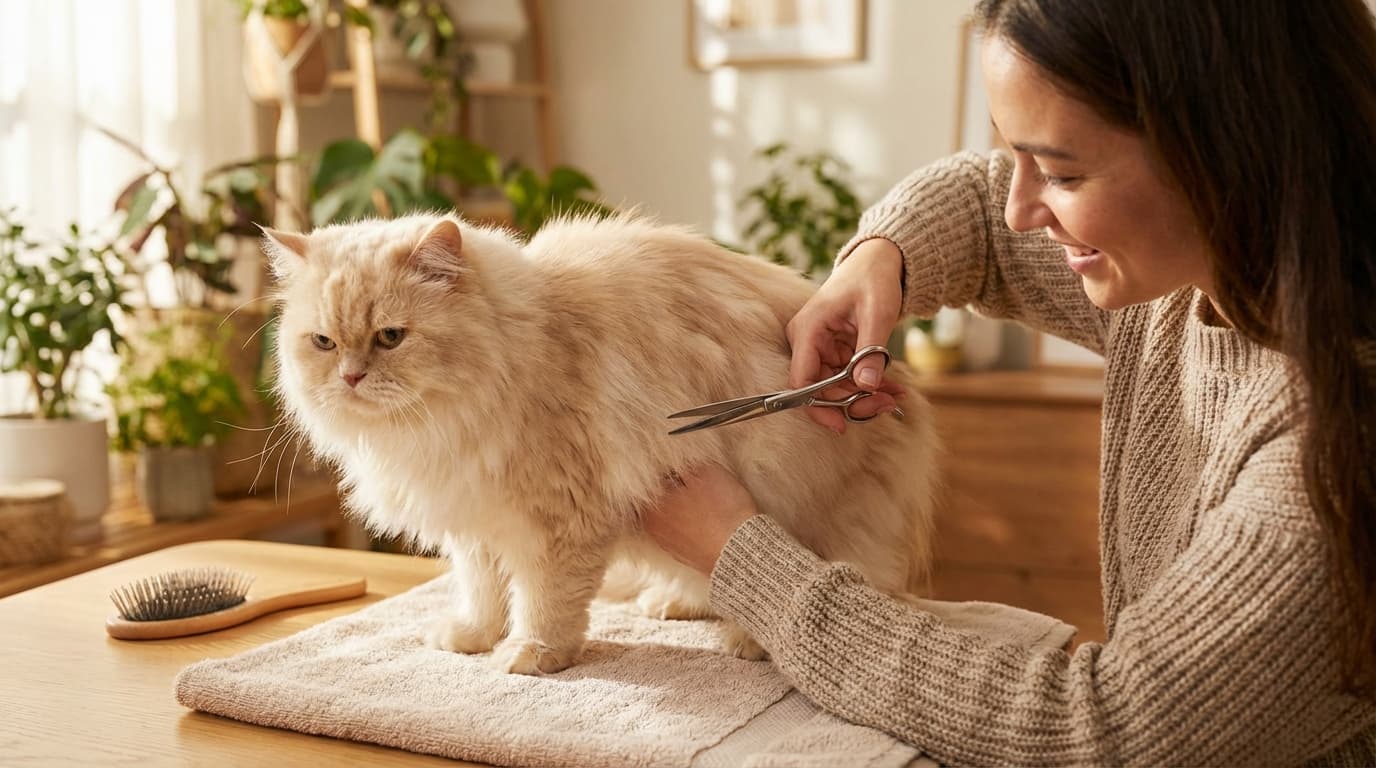
If you decide to use scissors, blunt-nosed safety scissors are the only way to go for beginners. These have rounded tips so you won't poke your cat if they suddenly wiggle or try to jump off the table. One of the best ways to protect their skin is by using the comb trick. You simply slide a fine-tooth comb between the cat's skin and the fur you want to cut. This creates a physical barrier so the blades never even get close to the skin. It takes a little longer to line up, but the peace of mind is worth it.
Think of the comb as a shield for your pet. If the scissors slip, they hit the plastic or metal teeth of the comb instead of your cat. It might feel a bit clunky at first to hold both tools at once, but it is the safest way to handle those tricky spots near the hindquarters. Taking it slow and using small, controlled snips will always give you better results than trying to rush through a large clump of fur. When you finish a small section, give them a treat immediately so they associate the tools with something positive.
Don't forget that the environment matters just as much as the tools. A slippery countertop can make a cat feel insecure and more likely to bolt during a trim. Laying down a rubber mat or a heavy towel gives them traction and makes them feel grounded. When they feel stable and safe, they are much less likely to fight you. This makes the whole process faster and keeps everyone's stress levels down.
Key insights:
- Always choose blunt-nosed scissors to avoid accidental puncture wounds.
- The comb trick acts as a physical safety guard between the blade and the skin.
- Human grooming tools are too sharp and dangerous for thin feline skin.
- A second person and high-value treats are just as important as the cutting tools.
Staying Safe with Scissors
Let's be real for a second. Trimming around your cat's sensitive backside can feel like you're trying to diffuse a tiny, furry bomb. One sudden wiggle and things could go south fast. Because cat skin is incredibly thin and stretchy, it is way too easy to catch it by mistake if you aren't careful. This is why you should never use pointed kitchen scissors or sewing shears for this job. You need blunt-nosed safety scissors. These have rounded tips that won't poke your cat if they decide to launch into a mid-grooming zoomie. It is the simplest way to keep the experience stress-free for both of you.
Once you have the right tool, you need a solid technique. Have you heard of the comb trick? It is a total lifesaver for nervous pet parents. You just slide a fine-toothed comb between your cat’s skin and the long hair you want to trim. The comb acts as a physical shield. You cut on the outside of the comb, so the blades never even get close to the skin. This trick is great because it takes the guesswork out of the process. It gives you a nice, even finish without the constant fear of an accidental nick. Plus, it makes the whole process feel much more professional and controlled.
Key insights:
- Blunt-nosed scissors are non-negotiable for beginners to prevent puncture wounds.
- The comb trick creates a physical safety barrier between the blades and your cat's skin.
A Step-by-Step Guide to a Stress-Free Trim
Ever tried to give a cat a haircut while they are wide awake and full of energy? It is basically like trying to fold a live octopus into a grocery bag. If you want to keep those cat hindquarters tidy without ending up with scratches, you need a plan that works with their mood rather than against it. A little preparation goes a long way in making this a calm experience for both of you.
The first secret is all about timing. You want to catch your cat when they are in that deep, post-nap daze. When they are purring and barely opening their eyes, they are much less likely to care about a pair of grooming scissors near their tail. If they start twitching their tail or looking annoyed, just stop. You can always come back later when they are dreaming about birds again because a sleepy cat is a cooperative cat.
For the cats who simply cannot stay still, there is the classic burrito method. Gently wrap your cat in a thick towel so only the area you need to trim is sticking out. This keeps their paws tucked away and helps them feel secure instead of exposed. It is not about trapping them, it is about creating a cozy boundary that says it is time to relax. Most cats settle down quickly once they feel the gentle pressure of the towel.
Remember that you do not have to finish the whole sanitary clip in one sitting. Trimming long hair on a cat can be a big job. If you only get one side done before your cat decides they have had enough, that is a win. Take a break and try the other side tomorrow. Keeping the experience short and sweet prevents your cat from dreading the sight of the grooming kit and keeps your stress levels low too.
When you actually get down to the trimming, focus on the technique. Use your fingers to hold the skin taut but do not pull on it. You want a flat surface so you can see exactly where the fur ends and the skin begins. Always trim in the same direction the hair grows. This gives you a much smoother result and helps you avoid any accidental nicks while you work through the thickest parts of the coat.
Finish every session with a high-value treat or some extra chin scratches. You want your cat to think that a little trim leads to the best snacks in the house. Over time, they might even start looking forward to these sessions because they know a reward is coming. It is all about building that positive association while keeping their coat clean and free of litter box messes.
Key insights:
- Wait for the post-nap window when your cat is most relaxed and least likely to wiggle.
- Use a thick towel to create a secure environment that protects you from sharp claws.
- Prioritize safety by holding the skin flat and always cutting in the direction of hair growth.
- Break the grooming process into multiple short sessions to keep your cat from feeling overwhelmed.
- End every session with treats to build a long-term positive connection with grooming tools.
The Technique: How to Handle the Fur
So, you have your cat settled and your tools ready. Now comes the part that makes most owners a little nervous. The secret to a safe sanitary clip for cats is all about how you handle their skin. You want to use your non-dominant hand to hold the skin taut, almost like you are smoothing out a piece of fabric.
But be careful not to pull or pinch. Long hair on cat hindquarters can hide how thin their skin really is. Keeping it flat helps you see exactly where the fur ends and the cat begins. It also prevents the skin from bunching up near your blades.
When you start cutting, always trim in the direction the hair grows. It might feel tempting to go against the grain for a closer finish, but that often leads to nicks or tugging that will make your cat jump. If you are using cat grooming scissors safety is your main goal.
Go slow and take small snips. It is much better to take three small passes than one big one that might catch a sensitive area. This approach keeps things smooth and prevents that choppy, uneven look. Think of it as a slow and steady race to a cleaner cat.
Keep some high-value treats nearby. This is not just about keeping cat fur clean after the litter box. It is about making sure your cat does not hate you for it later. Give a treat after every few snips to keep them happy.
If they stay still, tell them they are doing a great job. By rewarding progress, you build a positive association with the grooming kit. Eventually, they might even purr through the process because they know a snack is coming. It makes life easier for both of you.
Keeping Things Clean Between Grooming Sessions
Have you ever noticed your cat walking out of the litter box looking like they have been rolling in sand? For long-haired breeds, the pants area, which is the fluffy fur on their hindquarters, is basically a magnet for debris. The secret to a clean house is not just about the big grooming days. It is about the small habits you build. A quick five-second check after they use the box can save you an hour of bathing later. If you spot a small clump early, you can usually flick it away before it gets matted deep into the coat. This matters because once a mess dries, it is much harder to remove without a struggle.
Your choice of litter makes a massive difference here. Fine, sandy clay litter is the enemy of long fur because it clings to every strand and turns into a sticky paste. Instead, look for litters with larger particles like pine pellets, paper crumbles, or heavy crystals. These types are much less likely to get tangled in those long tresses or tracked across your sofa. It is a simple switch that drastically improves feline hygiene tips without requiring extra work from you. Think of it as choosing the right tool for the job. You want something that stays in the box, not something that hitches a ride on your cat.
Even with the best litter, life happens. This is where pet-safe wipes become your best friend. Keep a pack near the litter box so you can give their back end a quick swipe if things look a little messy. It is much easier than a full bath and keeps the fur fresh between deeper grooming sessions. Also, keep an eye on the hair length. If you notice the fur is getting too long, consider a sanitary clip for cats to keep things manageable. Trimming long hair on cat hindquarters while keeping cat grooming scissors safety in mind can prevent most messes from ever happening. Keeping cat fur clean after litter box visits is mostly about staying one step ahead of the fluff.
Key insights:
- Switching to large-particle litter like pine or crystals prevents fur sticking.
- A five-second post-box check stops small messes from becoming deep mats.
- Sanitary trims and pet wipes are the best defense against frequent baths.
When to Put Down the Scissors and Call a Pro
Let's be honest, trying to give your cat a sanitary clip can feel a bit like diffusing a bomb. You want to keep those hindquarters clean after the litter box, but there is a fine line between a quick trim and a trip to the vet. If you notice your cat has particularly thin or loose skin, it might be time to put the scissors away. Feline skin is way more delicate than ours, and one wrong move with cat grooming scissors can cause a nasty tear before you even realize what happened.
The real trouble starts when you find a mat that is clamped tight against the skin. These aren't just messy clumps of fur; they actually pull on the skin, making it even more sensitive. If you cannot see the base of the hair or get a comb safely between the mat and your cat, do not try to cut it out yourself. Professionals have specialized clippers that can slide under these tangles without nicking the skin. It is much better to pay a groomer than to deal with the guilt and cost of stitches.
Also, pay close attention to how your cat is acting. Some cats are chill, but others see a pair of scissors and immediately go into fight-or-flight mode. If your cat is growling, hissing, or breathing with its mouth open, they are telling you they have had enough. Forcing the issue just makes them hate grooming even more. Sometimes the best feline hygiene tip is knowing when to quit and let a pro handle the heavy lifting while your cat stays calm and safe.
A Cleaner Cat, A Happier Home
Taking care of those fluffy feline pants might feel like a chore at first, but the payoff is huge for both of you. When you keep your cat’s fur clean after the litter box, you aren't just saving your rugs and furniture from unwanted tracking. You're giving your pet a life free from the constant discomfort of mats and sticky messes. A simple sanitary clip for cats can truly change the energy in your home, turning a stressful cleanup routine into a quick, manageable task.
If you're nervous about trimming long hair on cat hindquarters, remember that it gets much easier with practice. You'll both get used to the rhythm of the routine. The most important thing is focusing on cat grooming scissors safety by moving slowly and keeping your cat calm. If you stay relaxed, your cat will likely mirror that peace. These feline hygiene tips aren't just about chores; they're about making sure your best friend feels their best every single day.
At the heart of it all, grooming is a genuine act of love and care. It is a quiet moment where you are looking out for their comfort and health. A clean cat is a much more relaxed cat, and a home without litter box messes makes for a much happier human. Keep at it, stay patient, and enjoy those extra-clean cuddles on the couch.
Frequently Asked Questions
Most cat owners find that a quick trim every four to six weeks is the sweet spot for keeping things fresh. It really depends on how fast your kitty grows their fluffy pants and how much effort they put into cleaning themselves. If you have a super fluffy Maine Coon or a Persian, you might be reaching for the grooming tools more often than someone with a sleek shorthair.
Here is the thing: you will know it is time when you start seeing little bits of litter or waste getting caught in the fur. Keeping a regular schedule helps prevent those gross surprises and makes the whole process feel like a normal, low-stress part of your cat's life.
Nope, your cat won't sprout a whole new look! The hair grows back exactly the same color and texture as it was before. It might feel a bit prickly for a few days, kind of like a human's five o'clock shadow, but that is just because the hair ends are blunt from the cut.
As the hair gets some length, it will soften right back up. While some people worry about the coat changing, that usually only happens with very close medical shaves. For a simple hygiene trim around the hindquarters, everything will return to normal pretty quickly.
First, try to stay calm because your cat will react to your stress. If it is a small nick, apply gentle pressure with a clean cloth or use a bit of styptic powder to stop the bleeding. Most tiny scratches heal up just fine on their own as long as you keep them clean.
Here is the thing to remember: cat skin is very thin and moves easily, so these little accidents happen even to pros. But if the cut looks deep or if the bleeding does not stop after a few minutes of pressure, you should call your vet. Just keep an eye on the spot for a few days to make sure it does not get red or puffy.
It is usually a bad idea to use your own trimmers on your cat. Human beard trimmers are built for different hair types and they tend to get hot very quickly. Since cat skin is so delicate, a hot blade can cause a nasty burn before you even notice it is happening.
Also, human clippers are often much louder than pet-specific ones. A loud, vibrating tool near a cat's hindquarters is a recipe for a very grumpy or scared pet. Pet clippers are designed to stay cool and run quietly, which makes the whole sanitary clip much easier for both of you.
Conclusion
So what does all this mean for you and your fluffy roommate? Dealing with a litter box surprise is never fun, but a quick sanitary clip for cats changes the whole game. It is not just about looks. It is about keeping your cat comfortable and your home clean. By using the right feline hygiene tips and staying safe with your tools, you can handle the mess before it even starts.
If you are feeling nervous, remember that it gets easier every time you try. You might start by just trimming a tiny bit of long hair on cat hindquarters while they are sleepy. Use those cat grooming scissors safety tricks we talked about and keep the treats handy. You will soon find a rhythm that works for both of you.
The goal is a happy cat and a stress-free home. Taking these small steps now saves you from big headaches later. After all, a clean cat makes for much better snuggles on the couch.
Send it to someone who should read it next.

PurrScript Editorial Team
Editorial Team
PurrScript's in-house editorial team. We research, write, and review every guide using established veterinary and behavioral resources, and update articles as best practices evolve.
View all articles