How to Trim Your Cat's Nails Without the Drama (or the Scratches)
Most cat owners know the struggle of the murder mitten sinking into a favorite sofa or a bare arm. While cat nail trimming often feels like a high-stakes wrestling match,...

PurrScript Editorial Team
Editorial Team
How to Trim Your Cat's Nails Without the Drama (or the Scratches)
Most cat owners know the struggle of the murder mitten sinking into a favorite sofa or a bare arm. While cat nail trimming often feels like a high-stakes wrestling match, it really does not have to involve drama or scratches. Understanding the choice between cat nail clippers vs human trimmers and learning how to find the quick are the first steps toward a much calmer grooming routine.
Keeping those claws short is about more than just saving your upholstery. It is a necessary part of feline health that prevents painful snags and keeps your pet comfortable as they move. Whether you need kitten nail trimming tips for a new addition or you are trying to desensitize an older cat who treats the sight of clippers like a threat, the right technique changes everything.
This guide walks you through the entire process from start to finish. We will look at the best tools for the job, how to handle dark claws, and why keeping styptic powder for cats nearby is a smart safety move. You are about to turn a stressful chore into a simple, bonding moment for you and your feline friend.
Cat Clippers vs. Your Own Trimmers: The Honest Truth
You might wonder if special tools are actually necessary for your cat. While you can use human trimmers in a pinch, they are made for flat surfaces, not the round shape of a cat claw. Using the wrong tool often crushes the nail instead of slicing it, which can be quite painful for your pet. Since the quick contains sensitive nerves and blood vessels, you really need a tool that offers better control and a cleaner cut.
Scissor-style clippers are usually the best choice for most owners. They offer great visibility so you can see the pink quick clearly through the clear part of the nail. Many of these tools also have safety guards to keep you from cutting too deep by accident. A sharp, curved blade ensures a clean snip that feels like nothing to your cat, which is the secret to a grooming session without any drama.
The big problem with human clippers is their flat blades. They squeeze the curved nail as they close, which often leads to painful splitting or jagged edges. They are also much harder to aim accurately when a cat is wiggling. If you must use them, keep some styptic powder or cornstarch nearby. If you hit the quick, these powders stop the bleeding fast and help your cat feel better right away.
Key insights:
- Specialized cat clippers prevent nail crushing by matching the natural curve of the claw.
- Safety guards on professional tools provide a physical limit to prevent over-cutting into the quick.
- Styptic powder or cornstarch should always be on hand to manage accidental nicks during the process.
Why 'Scissor Style' Clippers Are Usually the Winner
Ever wonder why pros skip human trimmers? It comes down to what you can see. Scissor-style clippers give you a clear view of the nail. This is vital when you're trying to spot the quick, that pink triangular area full of sensitive nerves. Hitting it is no fun for anyone.
These tools also have safety guards to keep you from taking off too much. Because they’re sharp, they provide a clean snip rather than a dull crush. If you do get too close, keep some styptic powder nearby just in case. It makes the clip fast so you can get back to the treats.
Key insights:
- Sharp blades ensure a clean cut that doesn't pinch or split the cat's claw.
- The scissor design offers better visibility to help you avoid the vascular quick.
- Built-in safety guards provide a physical limit to help prevent over-trimming.
The Problem with Human Nail Trimmers
Ever grab your own nail clippers to trim your cat? It seems easy, but it often backfires. Human clippers have flat blades designed for flat nails, but cat claws are curved and cylindrical. When you use flat blades, they crush the claw before they actually cut it. This often causes painful splitting and unnecessary discomfort for your pet.
It is also much harder to aim these clippers accurately. This matters because you need to avoid the quick, which is the sensitive area full of nerves and blood vessels. Dr. Jennifer Coates points out that trimming is already stressful for many owners. Using the wrong tool makes it even tougher to get a clean, painless snip.
Key insights:
- Flat blades crush rounded claws instead of cutting them cleanly.
- Improper tools increase the risk of splitting the nail and hitting the sensitive quick.
What Exactly Is the 'Quick' (And Why Does It Matter?)
Ever wonder why your cat acts like a drama queen during a manicure? It usually comes down to the quick. This is the vascular center of the claw, packed with nerves and blood vessels that support the nail's health. Think of it as the living core inside a protective shell. While the clear tip of the nail is totally painless to trim, the quick is incredibly sensitive. As Dr. Jennifer Coates points out, avoiding this area is what makes the job feel so high-stakes for most owners.
Here is a weird fact: the quick actually grows along with the nail. If you let your cat's claws get long and curly, that sensitive core follows right behind. This means you cannot just chop off a long nail in one go without hitting blood. Regular, tiny trims actually encourage the quick to recede over time, making future grooming much easier for both of you.
If your cat has light-colored claws, you are in luck. You can usually spot the quick as a distinct pink triangle near the base of the nail. This is your stop sign. The safe zone is the translucent area well in front of that pink bit. If you are struggling to see it, try using a bright lamp or natural sunlight. Good lighting changes everything and takes the guesswork out of the process.
Dark or black claws are a bit more of a challenge because you cannot see the internal structure at a glance. Many pros use a flashlight trick by backlighting the nail to reveal the shadow of the blood vessel inside. If the nail is too thick for light to pass through, use the shave method. Take off tiny, paper-thin bits at a time. When you start to see a small, dark grey or black dot appearing in the center of the cut edge, you have reached the danger zone and should stop right there.
Accidents happen even to the best of us. If you do nick the quick, do not panic. Having styptic powder nearby is a lifesaver for stopping the bleeding instantly. Some brands even include a local anesthetic to dull the sting. If you are in a pinch and do not have the professional stuff, a little cornstarch from the kitchen works as a solid emergency substitute.
Key insights:
- The quick is a living part of the claw that recedes if you trim the nails regularly.
- Lighting is your best tool for identifying the no-cut zone on both light and dark nails.
- Keep cornstarch or styptic powder on hand to quickly stop bleeding if a nick occurs.
Spotting the Pink Triangle on Light Nails
Ever looked closely at your cat’s clear claws? You’ll see a tiny, pinkish triangle near the base. That’s the quick, a sensitive bundle of nerves and blood vessels you want to avoid.
Think of the clear part in front of that pink area as the safe zone. It has no nerves, so it is painless to trim. If you struggle to see where the tissue ends, try using a small flashlight. Good lighting makes the quick pop, so you can clip with confidence and keep the styptic powder tucked away.
Key insights:
- The clear tip of the nail is a painless safe zone for clipping.
- Bright lighting or a flashlight reveals the sensitive quick inside light-colored nails.
The Flashlight Trick for Dark-Colored Claws
Ever feel like you are flying blind with dark claws? It is a common worry because you cannot see the quick, which is the sensitive area containing blood vessels. Here is a simple trick: grab a small flashlight. By shining light through the side of the nail, you can often see the shadow of the tissue inside.
If that fails, try the shave method. Take tiny, thin slices off the tip. Watch the center of the cut for a small, dark circle. That is your signal to stop. Keep styptic powder or cornstarch nearby just in case of a nick. Better safe than sorry!
Key insights:
- Backlighting with a flashlight reveals the hidden quick in dark nails.
- A dark center circle on the cut surface is your signal to stop clipping.
Making Peace with the Paw: The Art of Desensitization
Grabbing a cat’s paw out of nowhere is a recipe for scratches. Cats are naturally protective of their feet, so forcing it just breaks their trust. Instead, think of this as a slow process of building confidence. You want them to associate the clippers with treats and love, not a fight. When you turn grooming into a bonding moment, the drama usually disappears.
Try the Touch and Treat method by gently handling their paws while they are relaxed. Every time they stay calm, give them a high-value snack. This rewires their brain to enjoy the attention. Next, let them hear the clipper’s click without actually cutting anything. Reward that calmness too. Since the clear part of the nail is painless to trim, focus there and avoid the pink quick where the nerves and blood vessels live.
Timing is everything. Do not try this when your cat has the zoomies or is ready to play. A sleepy, groggy cat is your best friend here. If they get restless, stop immediately. It is better to clip one nail a day than to have a stressful blowout. If you do have a tiny accident, keep some styptic powder or cornstarch nearby to stop any bleeding quickly. This matters because a calm environment makes the next session much easier.
Key insights:
- Positive reinforcement turns a grooming chore into a rewarding habit for your cat.
- Catching your cat while they are sleepy prevents the zoomies from ruining your progress.
- Stopping early when your cat gets restless protects the bond you are trying to build.
The 'Touch and Treat' Method
Ever notice how cats treat their paws like private property? To get them on board with grooming, use the Touch and Treat method. Start by gently massaging a single paw while your cat is relaxed. If they do not pull away, give them a high-value snack right away. This builds a positive link between your touch and something tasty, making the process much easier for both of you.
Once they are comfortable with the handling, introduce the sound of the clippers by clicking them nearby without actually cutting. This helps prevent stress when you finally trim near the quick, which is the sensitive area full of nerves and blood vessels. If a mistake happens, keep some styptic powder or even cornstarch nearby to stop any bleeding fast. Patience is the secret to a scratch-free experience.
Key insights:
- Positive reinforcement creates a long-term habit of calm grooming.
- Desensitizing your cat to the sound of clippers reduces their flight response.
- Keeping emergency supplies like cornstarch on hand can manage accidental nicks to the quick.
Timing Is Everything
Catching your cat when they are basically a puddle of fur is the secret. A sleepy, post-nap cat is the perfect candidate because they are relaxed. If they have the 'zoomies,' just forget it. Pushing through a high-energy moment usually leads to scratches and unnecessary stress.
Remember, this is about building trust. If your cat gets grumpy or pulls away, stop and try again tomorrow. You do not have to finish every claw in one sitting. Keeping things calm ensures they will let you try again later.
Step-by-Step: Your First Scratch-Free Session
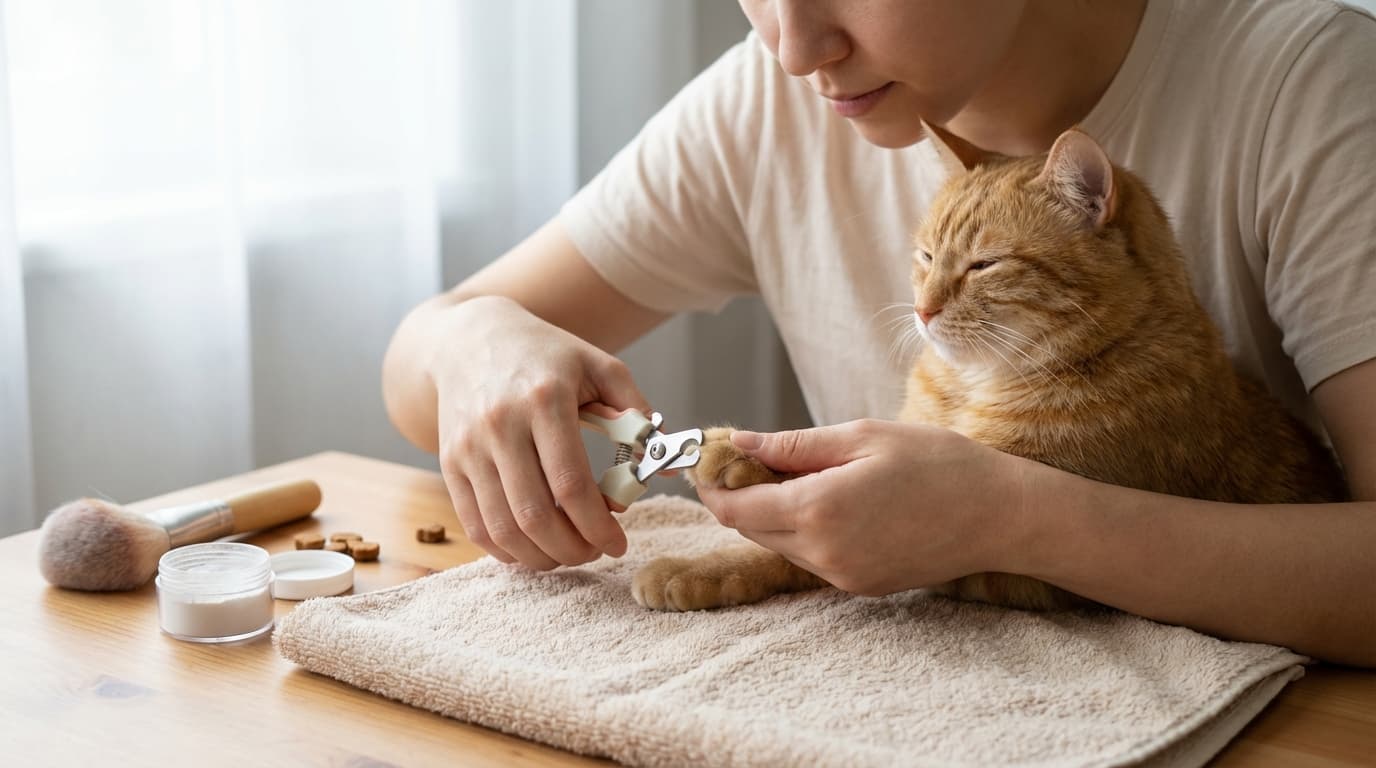
Think of this as a bonding moment rather than a chore. To get started, pick a quiet corner where your cat usually naps, away from loud noises, barking dogs, or the hum of the vacuum. If you are calm and breathing deeply, they are more likely to stay relaxed too. Sit on the floor or a low chair where you can comfortably support their weight without feeling cramped. To see what you are doing, gently squeeze the top and bottom of a toe pad to extend the claw. It is a bit like a tiny mechanism popping out. This is the moment you will see the 'quick.' As Jennifer Coates, DVM, points out, this area contains the blood vessels and nerves that support the nail. In light-colored nails, it looks like a small pink triangle at the base. The clear part in front of it is painless to cut, so that is your target zone.
If your cat is a bit of a wiggler, the 'purrito' method is a total lifesaver. Wrap them snugly in a soft, thick towel so only the paw you are working on is exposed. This limits their movement and helps them feel secure rather than exposed. You could also try the lap-cuddle, where the cat sits in your lap facing away from you, leaning against your chest for support. For the first few tries, it really helps to enlist a helper. One person can focus on the clipping while the other offers high-value treats or a chin scratch. This kind of positive reinforcement and gradual habituation is critical for long-term success. If your cat associates the clippers with their favorite snack, they will eventually stop trying to bolt the moment the grooming kit comes out.
When you are ready for the actual snip, keep your clippers positioned to cut from top-to-bottom. Cutting from the sides can sometimes crush or splinter the nail, which is uncomfortable for your cat and can lead to jagged edges. Always leave at least a 2mm safety buffer before the pink quick to avoid any accidents. Using sharp, professional-grade clippers with safety guards can also help you feel more confident about how much nail you are removing. If you are dealing with dark nails where the quick is hidden, try using a small flashlight to see the silhouette through the side of the claw. If that doesn't work, just take very small, conservative nips off the very tip. Accidents happen to the best of us, so keep some styptic powder nearby to stop bleeding instantly. If you don't have any, cornstarch is a great emergency substitute. Finish up by smoothing any rough edges with a file, and always end the session with a big reward.
Key insights:
- The 'purrito' towel wrap provides security for nervous cats and protects you from stray swats.
- Always cut top-to-bottom with a 2mm safety buffer to prevent splintering and hitting the sensitive quick.
- Positive reinforcement with treats during the process helps desensitize your cat to paw handling over time.
- A small flashlight can help you locate the quick in dark-colored nails where it isn't easily visible.
The 'Purrito' and Other Gentle Holds
Ever feel like you need eight hands to hold your cat still? You are not alone. One of the best tricks for a squirmy pet is the Purrito approach. You wrap your cat snugly in a soft towel, leaving only one paw out at a time. This limits the wiggling and keeps those back claws safely tucked away. It also makes it much easier to see the quick, which is that sensitive pink area inside the nail. Since the quick contains blood vessels and nerves, keeping your cat calm helps you avoid a painful mistake.
If the towel feels like too much, try the lap-cuddle. Sit on the floor and tuck your cat firmly in your lap or the crook of your arm. It is also smart to ask a friend to help during your first few tries. One person can offer treats as positive reinforcement while the other clips. Always keep some styptic powder or cornstarch nearby to stop any accidental bleeding fast. A few treats and some praise go a long way in making this a regular, drama-free routine.
Key insights:
- The Purrito method uses a towel to limit movement and protect you from scratches.
- Enlisting a helper allows one person to focus on the nails while the other provides distraction and treats.
- Keeping styptic powder or cornstarch on hand is essential for quickly stopping blood flow if you nick the quick.
The Snip: Angle and Depth
When you’re finally ready to make the cut, position your clippers to snip from top-to-bottom instead of side-to-side. This simple change prevents the nail from splintering or crushing, which is much more comfortable for your cat. You want to aim for the clear part of the claw, staying well away from that pink, triangular area called the quick. Since that spot is packed with nerves and blood vessels, hitting it is the fastest way to turn a calm grooming session into a messy one.
Accuracy matters, so try to leave a 2mm safety buffer before the quick starts. If the edges feel a bit jagged afterward, a quick pass with a file can smooth things out, though many professional clippers leave a clean edge on their own. Accidents happen even to the pros, so keep some styptic powder or even a bit of cornstarch nearby. It stops bleeding fast and keeps the vibe relaxed. What happens if you're still nervous? Just take it one tiny tip at a time.
Key insights:
- Cutting top-to-bottom prevents painful nail splintering.
- The quick is a sensitive zone full of nerves; always leave a 2mm buffer.
- Styptic powder or cornstarch is a must-have safety net for accidental nicks.
Oops! What to Do if You Hit the Quick
It happens to the best of us. You’re trimming along, your cat wiggles, and suddenly there’s a tiny red spot. Your heart might skip a beat, but here is the big secret: stay calm. If you start panicking, your cat will pick up on that energy and think something truly terrible is happening. Hitting the quick - the sensitive part of the nail with blood vessels and nerves - is basically the feline version of a bad paper cut. It’s a bit of a shock, but it isn’t the end of the world. As Dr. Jennifer Coates points out, while the quick supports the nail, a small nick is a manageable mishap, not a disaster. Your main job is to stop the bleeding and offer some comfort. Take a breath, keep your voice low, and remember that this heals quickly.
Styptic Powder: Your Grooming Kit Essential. For a stress-free experience, keep a jar of styptic powder nearby. These hemostatic agents work by quickly constricting blood vessels to halt the flow almost instantly. Many owners prefer brands like Kwik-Stop because they contain benzocaine, which acts as a local anesthetic. This helps numb the area and takes the initial sting out of the injury, making the whole ordeal much less dramatic for your kitty. When using it, don't just tip the jar over the paw. Instead, press the powder firmly against the nail with a moistened cotton swab or dip the claw directly into the lid. Hold it for a few seconds to let the seal form.
Kitchen Cabinet Substitutes for Emergencies. If you’re caught without professional supplies, your pantry is a lifesaver. Cornstarch and flour are excellent emergency substitutes that help the blood clot in a pinch. You can also try the soap bar trick by gently pushing the bleeding nail into a damp bar of mild soap to create a temporary plug. While most minor nicks stop bleeding quickly, keep a close watch. If the bleeding continues for more than ten minutes despite steady pressure, or if the nail looks inflamed the next day, a quick call to the vet is the smartest move. Most of the time, a little pressure and a favorite treat are all it takes to get things back on track.
Key insights:
- Keeping your own heart rate down prevents your cat from associating grooming with fear.
- Styptic powders with benzocaine provide immediate pain relief alongside clotting.
- Cornstarch is a safe, non-toxic alternative if you run out of professional grooming supplies.
Styptic Powder: Your Grooming Kit Essential
Accidents happen, even when you’re careful. If you nick the quick, which is the sensitive area full of nerves, styptic powder is your best friend. It is a hemostatic agent that stops bleeding almost instantly. Think of it as a powdered bandage that keeps a tiny mistake from turning into a mess.
Products like Kwik-Stop are great because they include benzocaine to numb the sting. In a pinch, use cornstarch. To apply it, just press a pinch of powder firmly against the nail. Having this ready makes grooming feel much safer for everyone.
Kitchen Cabinet Substitutes for Emergencies
Hitting the quick is a stressful moment for everyone. Since this area is full of nerves and blood vessels, a tiny nick will bleed. If your styptic powder is empty, head to the kitchen. A pinch of cornstarch or flour pressed against the nail works wonders to stop the flow.
Another simple fix is the soap bar trick. Gently press the bleeding claw into a bar of soap to create a plug. It usually does the trick! But keep watch. If the bleeding persists for ten minutes or the nail looks torn, call your vet. Sometimes professional help is the safest bet.
Key insights:
- Cornstarch and flour act as effective, non-toxic hemostatic substitutes in a pinch.
- Seek veterinary care if bleeding lasts over ten minutes or if the nail is physically damaged.
Starting Young: Special Tips for Kitten Claws
Think of kittenhood as the Golden Age for grooming. It is much easier to teach a tiny, curious kitten that paw handling is normal than to try and convince a skeptical ten-pound adult later on. Since those tiny claws feel like literal needles, starting early saves your skin and your sofa from accidental shredded threads.
Because kittens grow so fast, their nails do too. You will likely need to trim them every week or two. Luckily, kitten claws are usually clear, making the pink quick easy to see. Just stay in the clear zone to keep it painless. If a slip-up happens, a little styptic powder or even kitchen cornstarch stops any bleeding quickly.
The trick is to keep sessions short and load up on treats. If you pair the clippers with their favorite snacks now, they will grow up viewing grooming as a reward rather than a chore. What starts as a training exercise today becomes a stress-free routine for the rest of their lives.
Key insights:
- Start during the Golden Age to build lifelong trust and cooperation.
- Expect to trim every 1-2 weeks to keep up with rapid kitten growth.
- Use the clear visibility of kitten nails to practice identifying the quick safely.
- Always pair handling with high-value treats to create positive associations.
Frequently Asked Questions
Most cats need a trim every two to three weeks, but there is no set rule because every cat wears down their claws differently. If you start hearing that click-click sound on the hardwood floor or they keep getting stuck in your favorite blanket, it is definitely time for a clip.
The goal is not to cut deep. You just want to take off the very tip of the nail. Since the quick contains sensitive nerves and blood vessels, keeping the trims frequent but shallow is much safer than waiting a long time and trying to do a major overhaul.
It is totally normal for a cat to be protective of their paws, so do not feel discouraged if they pull away at first. You will want to start by just gently petting their legs and feet during their calmest moments, like when they are sleepy in your lap. The trick is to give them a high-value treat every single time you touch a paw so they start linking the two things together.
Once they are okay with a quick touch, try gently pressing on a toe pad to pop the nail out, then let go and give another treat. You are not even using clippers yet. This slow desensitization makes the eventual trim way less stressful for both of you because the scary part of being handled is already out of the way.
You certainly can use a nail grinder, and many people prefer it because it sands the nail down slowly rather than making one quick snip. This gives you a bit more control and reduces the risk of accidentally hitting the quick, which is that sensitive pink area inside the claw that carries blood and nerves.
Grinders are also really helpful for smoothing out those jagged edges that clippers sometimes leave behind. But here is the thing: some cats are sensitive to the sound and vibration of the tool. If you go this route, you will want to introduce the grinder slowly with lots of treats so your cat learns that the buzzing sound is nothing to worry about.
If you skip the trims entirely, your cat's nails can grow so long that they start to curl back and pierce their own paw pads. This is not just uncomfortable, it can cause painful infections and make it hard for them to walk normally.
Beyond the health risks for your cat, overgrown nails are much more likely to get snagged on carpets, blankets, or your favorite sweater. While some cats manage their nail length by using scratching posts, many indoor cats need a little extra help to keep their claws from becoming a hazard. Keeping them trimmed is a simple way to avoid a stressful trip to the vet for a torn or embedded nail.
Conclusion
Clipping claws does not have to be a battle of wills. When you combine the right tools, like dedicated cat nail clippers, with a solid understanding of how to find the quick, the whole process loses its edge. It is less about just getting the job done and more about building a predictable routine that keeps everyone safe. By focusing on desensitizing those paws early on, you turn a potential scratch-fest into a calm moment of care.
The real secret is just patience and a steady supply of high-value treats. Even if you hit a snag or need to reach for the styptic powder, staying calm yourself keeps your cat from panicking. Over time, these sessions become a simple part of your bond rather than a source of stress for the household.
So, grab a cozy towel, find a quiet corner, and try for just one or two nails today. You do not need to be a professional groomer to keep those murder mittens in check. Your furniture, your skin, and your cat will all be much happier for it.
Send it to someone who should read it next.

PurrScript Editorial Team
Editorial Team
PurrScript's in-house editorial team. We research, write, and review every guide using established veterinary and behavioral resources, and update articles as best practices evolve.
View all articles