Why Does My Cat Meow at Night? (And How to Get Your Sleep Back)
Indoor cats live longer — but only if you actively provide what outdoor living would have given them. This guide explains the mechanisms behind nighttime meowing, weight gain, boredom, dry skin, and litter box problems, with interventions that actually work.

PurrScript Editorial Team
Editorial Team
Indoor Cats: Why Does My Cat Meow at Night and Top Care Tips
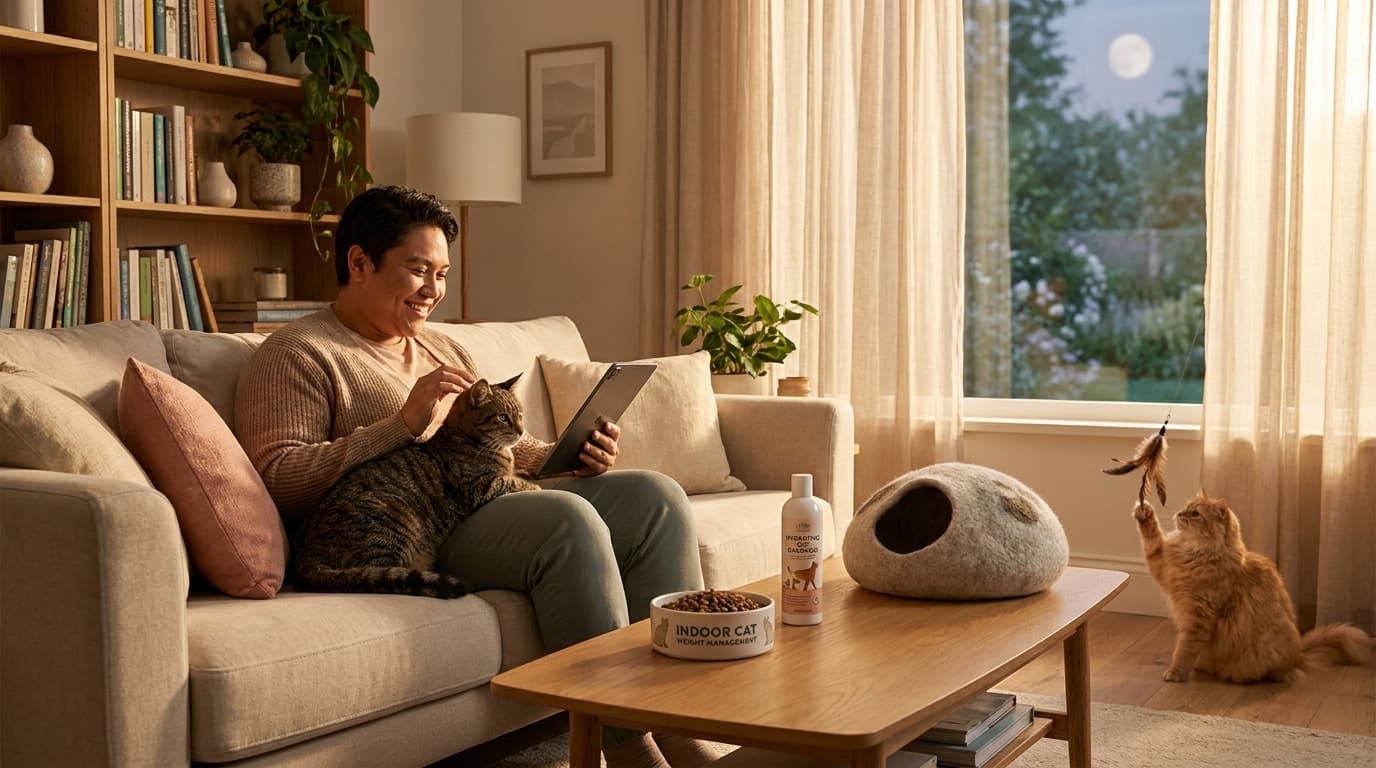
Why does my cat meow at night is one of the most common indoor cat complaints, and the answer is almost always the same: the cat has predatory drive that went undischarged during the day and is expressing it during the hours when its biology is most active. Cats are crepuscular — peak activity at dawn and dusk — and an indoor cat that naps through the day accumulates behavioral pressure that surfaces at exactly the hours when its owner wants to sleep. The solution is not a quieter cat; it is a cat that has genuinely worked for its rest before bedtime.
Night vocalization is one of several care challenges specific to indoor living. Indoor cats live significantly longer than outdoor cats — studies consistently show the indoor average at 12 to 18 years versus 2 to 12 for outdoor cats — but that lifespan extension comes with the responsibility to provide what the outdoor environment would have provided naturally: physical exercise, mental stimulation, appropriate body weight, skin and coat maintenance, and sanitary living conditions. When any of these falls short, the result is a specific behavioral or health problem that is predictable and addressable.
This guide covers six specific indoor cat care topics: what drives nighttime vocalization and how to address it structurally, how to approach weight loss in a sedentary indoor cat, how to provide the enrichment that prevents boredom-driven behavioral problems, how to manage dry skin from indoor climate control, how to clean a wool cat cave without ruining it, and how to use litter box hygiene as a health monitoring tool.
Each section addresses the mechanism behind the problem rather than just the surface recommendation — because understanding why the intervention works is what allows you to adapt it when your specific cat does not respond exactly as expected.
Why Does My Cat Meow at Night? Solving the Midnight Concert
Nighttime vocalization in cats has a biological foundation that makes it resistant to correction-based approaches: cats are crepuscular animals whose nervous systems are calibrated for peak activity at dawn and dusk. An indoor cat that has limited physical and mental activity during the day arrives at the evening activity peak with accumulated behavioral pressure that has nowhere to go. Vocalization, movement, and demand for interaction are the outputs of that accumulated pressure. The cat is not being deliberately disruptive; it is expressing a biological drive at its natural timing.
The reinforcement dynamic that makes nighttime meowing a persistent problem in many households is inadvertent. The owner, awoken by meowing, gets up to feed, pet, or engage with the cat. The cat's nervous system registers: meowing at night produces results. The behavior is reinforced. Each subsequent night, the meowing may start earlier, last longer, or escalate in volume because the cat has learned the strategy is effective. Breaking this cycle requires both addressing the underlying energy need and maintaining consistent non-response to vocalization — the second without the first produces an extinction burst that often causes owners to give in.
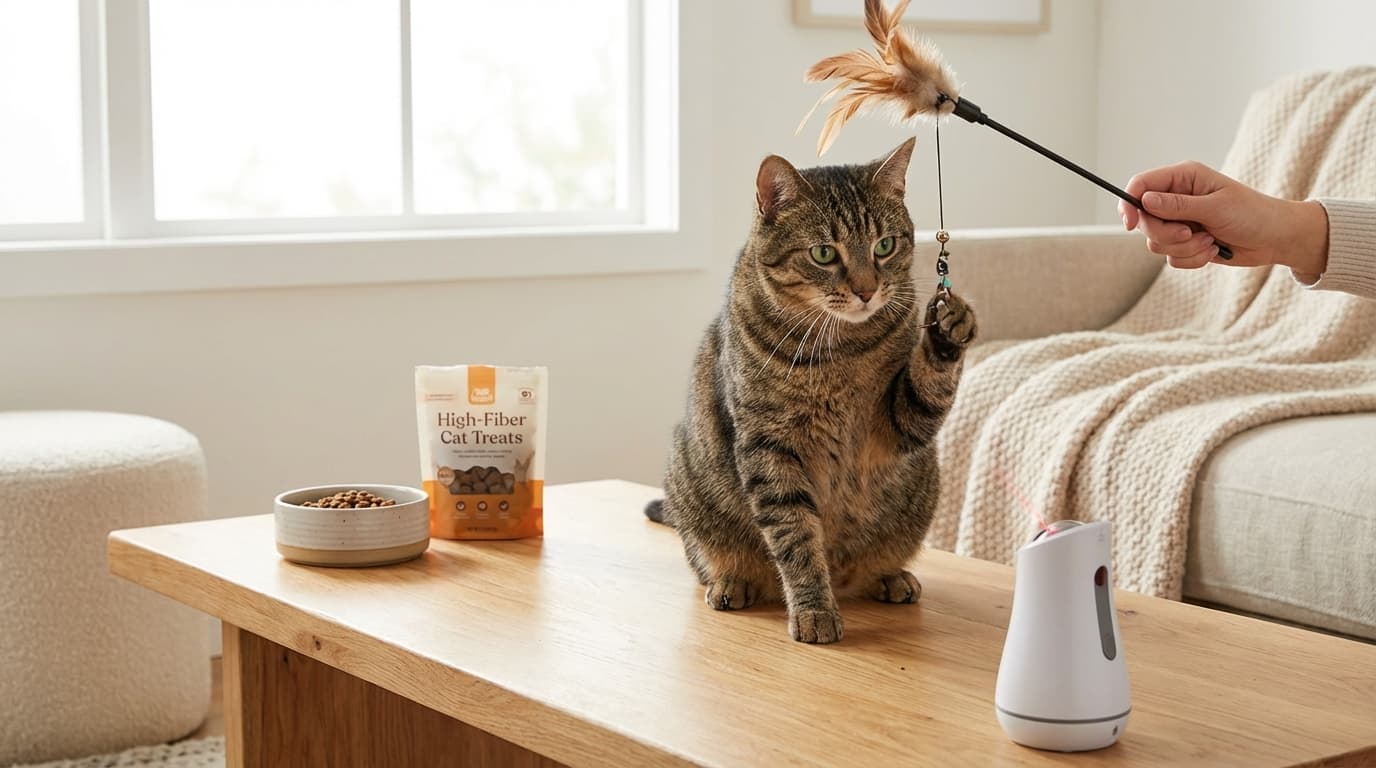
The structural intervention that resolves nighttime vocalization most reliably is a high-intensity play session in the 30 to 60 minutes before the owner's bedtime. The session needs to engage the full predatory sequence — stalk, chase, catch, kill — not just chase. A wand toy moved in genuinely unpredictable prey-mimicking patterns, ending with the cat catching and biting the lure, followed immediately by a small food reward, completes the neurological sequence that signals a successful hunt. A cat that has completed this sequence is physiologically oriented toward the post-hunt rest phase, which aligns with the owner's sleep schedule.
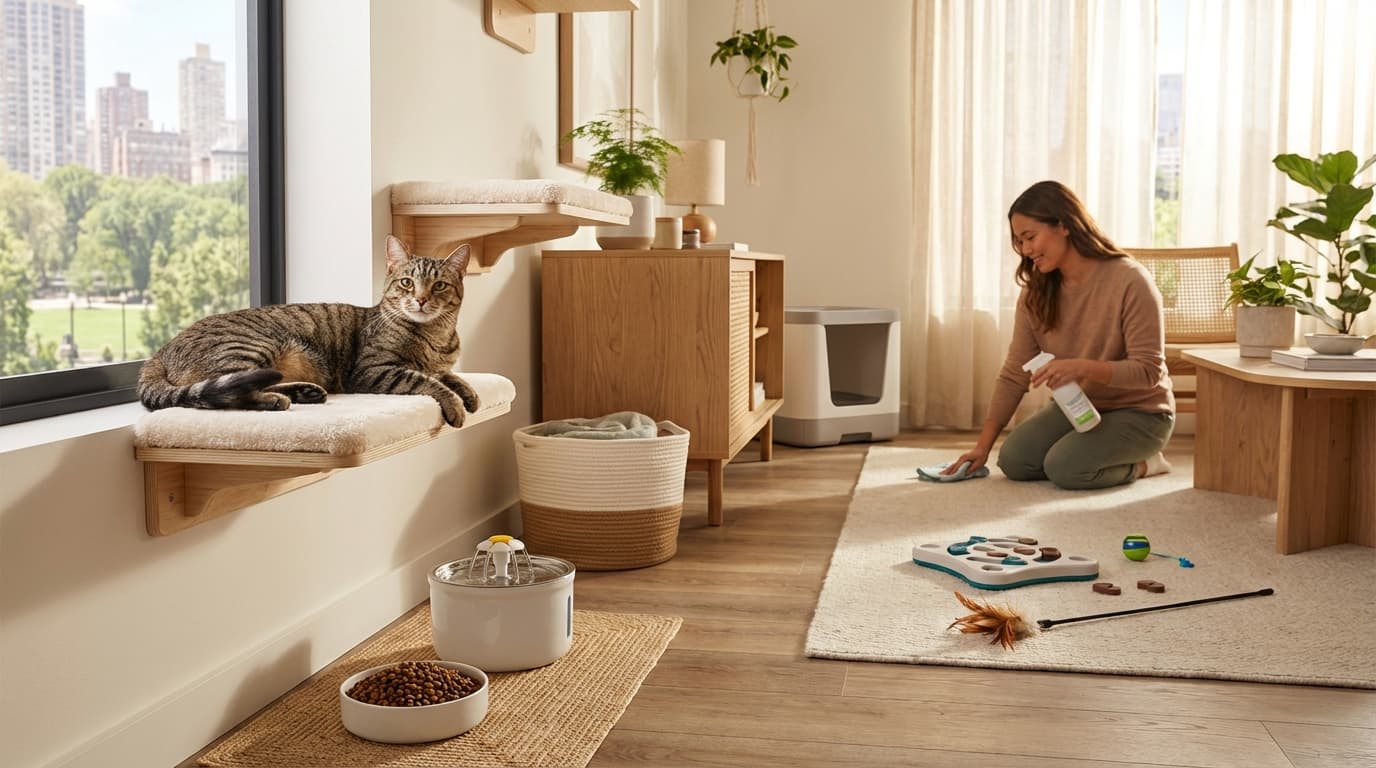
Daytime environmental enrichment reduces the pressure that accumulates toward the evening peak. A cat that has had passive stimulation throughout the day — bird watching from a window perch, interaction with puzzle feeders, access to vertical territory — arrives at the evening play session with less accumulated pressure than one that has had no stimulation for 12 hours. The window perch with an external bird feeder is among the highest-impact, lowest-cost daytime enrichment additions: it provides hours of passive visual tracking that engages the cat's assessment systems without requiring owner participation.
In cats over 10 years old, sudden-onset nighttime vocalization that was not previously present warrants veterinary assessment before any behavioral management. Hyperthyroidism causes central nervous system hyperarousal that produces restlessness and increased vocalization. Feline Cognitive Dysfunction Syndrome produces nighttime disorientation and distress vocalization. Systemic hypertension can cause sudden vision loss that produces the disoriented yowling owners describe as coming from nowhere. These are medical conditions that training does not address, and they are significantly more common in senior cats than owners typically expect.
**Key insights:
- Conduct a 15 to 20-minute high-intensity play session in the 30 to 60 minutes before your bedtime — this is the highest-impact single change for nighttime vocalization.
- End every play session by allowing the cat to catch a physical toy followed immediately by a small food reward — completing the predatory sequence is what triggers the post-hunt rest transition.
- Never respond to nighttime meowing — any response reinforces the behavior; wait for silence and respond then.
- Add a window perch adjacent to a bird feeder for passive daytime stimulation — this reduces accumulated behavioral pressure without requiring owner participation.
- For cats over 10 with new-onset nighttime yowling, see a vet before applying behavioral management — hyperthyroidism, FCDS, and hypertension all present this way and require medical treatment.
Why Environmental Enrichment Reduces Nighttime Vocalization
The connection between daytime enrichment and nighttime behavior is a pressure regulation problem. An indoor cat with no enrichment during the day accumulates behavioral pressure from unmet drives — territorial surveillance, predatory engagement, problem-solving — across the entire waking day. That pressure does not evaporate at the owner's bedtime. It surfaces during the hours when the cat's crepuscular biology creates a second activity peak, which coincides with the early morning hours that owners find most disruptive.
Environmental enrichment reduces the pressure that accumulates toward these peaks by providing partial discharge throughout the day. A cat that has watched birds from a window perch for two hours, investigated a new cardboard box, and worked for 15 minutes on a puzzle feeder has engaged predatory, territorial, and problem-solving drives at a low level throughout the day. The accumulated pressure at the evening peak is lower, the pre-bedtime play session discharges it more completely, and the result is a cat that is genuinely tired and ready to rest.
**Key insights:
- Position a cat tree or perch at the window most likely to have bird, squirrel, or outdoor movement — passive visual engagement during the day meaningfully reduces evening behavioral pressure.
- Introduce new cardboard boxes, paper bags, or rearranged furniture weekly — novelty reactivates investigatory behavior and provides enrichment without owner participation.
- Use puzzle feeders for at least one meal per day — foraging activity engages the predatory behavioral sequence and provides cognitive engagement that bowl feeding cannot.
Finding the Best Food for Indoor Cat Weight Loss
Indoor cats have lower caloric requirements than outdoor cats for a straightforward reason: they move less. An outdoor cat ranges over territory, engages in sustained predatory activity, thermoregulates in variable temperatures, and interacts with other animals — all of which require energy expenditure that indoor living eliminates. Feeding an indoor cat the same caloric density as an outdoor cat produces weight gain at a rate proportional to the activity deficit. The indoor-specific formulas that most major pet food manufacturers offer are calorie-reduced relative to standard formulas, which is the primary functional difference they provide.
The clinical significance of even modest weight gain in cats is disproportionate to the visual appearance. A two-pound excess in a ten-pound cat is a 20 percent weight excess — the equivalent of a 180-pound human carrying 36 extra pounds. At this level, the mechanical load on joints increases, hepatic fat accumulation begins, the risk of type 2 diabetes rises significantly, and the inflammatory environment that contributes to cardiac and renal disease is amplified. VCA Animal Hospitals' documentation supports this: even small weight excesses create meaningful medical risk in cats, and the condition is both very common and chronically under-recognized.
For weight loss specifically, the most effective dietary approach is high protein, moderate fat, very low carbohydrate — with wet food as the primary format. The reason protein is prioritized is muscle preservation: weight loss in cats on low-protein diets produces muscle catabolism alongside fat loss, worsening the metabolic profile rather than improving it. High-protein diets support fat mobilization while preserving lean mass. Wet food contributes to satiety through volume and moisture content without the caloric density of dry food, and the added moisture supports kidney function, which is increasingly important in overweight cats who are at higher risk for renal disease.
Portion control is the intervention with the most direct impact on weight loss outcomes, and it requires measurement rather than visual estimation. The amount that looks like a reasonable serving in a bowl is almost universally an overestimate when weighed. Using a kitchen scale to measure wet food portions and comparing against the feeding guidelines on the food label — adjusted for current body weight, not ideal body weight — produces the caloric deficit needed for weight loss. Weight loss in cats should be gradual: no more than 0.5 to 1 percent of body weight per week. Faster weight loss risks hepatic lipidosis.
**Key insights:
- Use a kitchen scale to measure portions against label guidelines for current body weight — visual estimation consistently overestimates appropriate serving sizes.
- Prioritize wet food as the primary diet format for weight loss — the moisture and protein content supports fat loss while preserving muscle, and the volume supports satiety.
- Target weight loss of no more than 0.5 to 1 percent of body weight per week — faster rates risk hepatic lipidosis, particularly in cats who are already overweight.
- Choose formulas with named animal proteins in the first position and low grain or starch content — protein quality is the primary driver of muscle preservation during caloric restriction.
- Schedule a vet weigh-in every four to six weeks during a weight loss program — progress tracking allows dietary adjustments before plateaus become permanent.
5 Practical Ways to Entertain an Indoor Cat
The behavioral drives that require outlet in indoor cats are specific and consistent: predatory engagement (stalking, chasing, catching), territorial surveillance (elevated vantage points, area monitoring), investigatory behavior (novel objects, scents, spatial arrangements), and foraging (working for food access). An enrichment approach that addresses all four is more effective than one that addresses only the most obvious — interactive play — because the accumulated pressure from unmet drives in any category contributes to the behavioral problems owners are trying to prevent.
Interactive play with a wand toy operated by a person who varies the movement pattern is the highest-quality form of enrichment for predatory engagement because it is genuinely unpredictable. Battery-powered toys on fixed circuits become predictable within one to two sessions and lose their engagement value. A person controlling a wand toy can dart, freeze, hide behind furniture, creep slowly, and burst unexpectedly — mimicking the variable movement of real prey in a way no automated toy does. Two 10 to 15-minute sessions daily, one in the early evening and one close to bedtime, address the crepuscular activity peaks when behavioral pressure is highest.
Vertical territory is the environmental resource most consistently underestimated. Cats use elevation for security, surveillance, and territorial confidence — from height, the cat can monitor its environment without being approachable from above. A cat with no elevated options in a home lives in a state of continuous low-level territorial exposure that contributes to stress-driven behaviors. A floor-to-ceiling cat tree near a window, or wall-mounted shelves in a step pattern, provides navigable vertical territory that produces measurable reductions in stress-related behavior. In multi-cat households, vertical space also provides escape routes that reduce forced confrontation between cats.
Puzzle feeders convert the most passive daily activity — eating — into active cognitive engagement. A cat that spends 15 minutes working kibble out of a puzzle feeder has engaged the problem-solving and olfactory search systems that would normally be occupied by hunting. The starting difficulty should be minimal — a flat tray with shallow compartments, a muffin tin, or an egg carton — and increased gradually as the cat engages confidently. A cat that cannot solve the feeder walks away frustrated, which is the opposite of the enrichment goal. The objective is productive challenge, not defeat.
Novelty through rotation is more effective than novelty through purchase. The investigatory response that makes a new object interesting is triggered by unfamiliarity rather than by the object's inherent properties. A toy stored for a week and reintroduced registers as novel and re-engages the investigatory system. Twelve toys available continuously register as familiar background and produce almost no engagement. Three toys on a weekly rotation produce more engagement than twelve on permanent display, at no additional cost.
**Key insights:
- Schedule two 10 to 15-minute wand toy sessions daily at the cat's natural activity peaks — early evening and pre-bedtime — rather than a single longer session at an arbitrary time.
- Install at minimum one elevated option reaching near ceiling height, positioned near a window — vertical territory addresses security needs that no floor-level enrichment can substitute.
- Start puzzle feeders at the simplest possible format and increase difficulty only after consistent successful engagement — starting too hard produces feeder abandonment.
- Rotate three to five toys weekly on a storage cycle — novelty is what drives engagement, and rotation restores it more reliably than buying new toys.
- Leave delivery boxes accessible for a week before discarding — they provide concealment, novel texture, and investigation opportunity that commercial toys rarely replicate.
Managing Itchy Fur: Choosing a Shampoo for Cats with Dry Skin
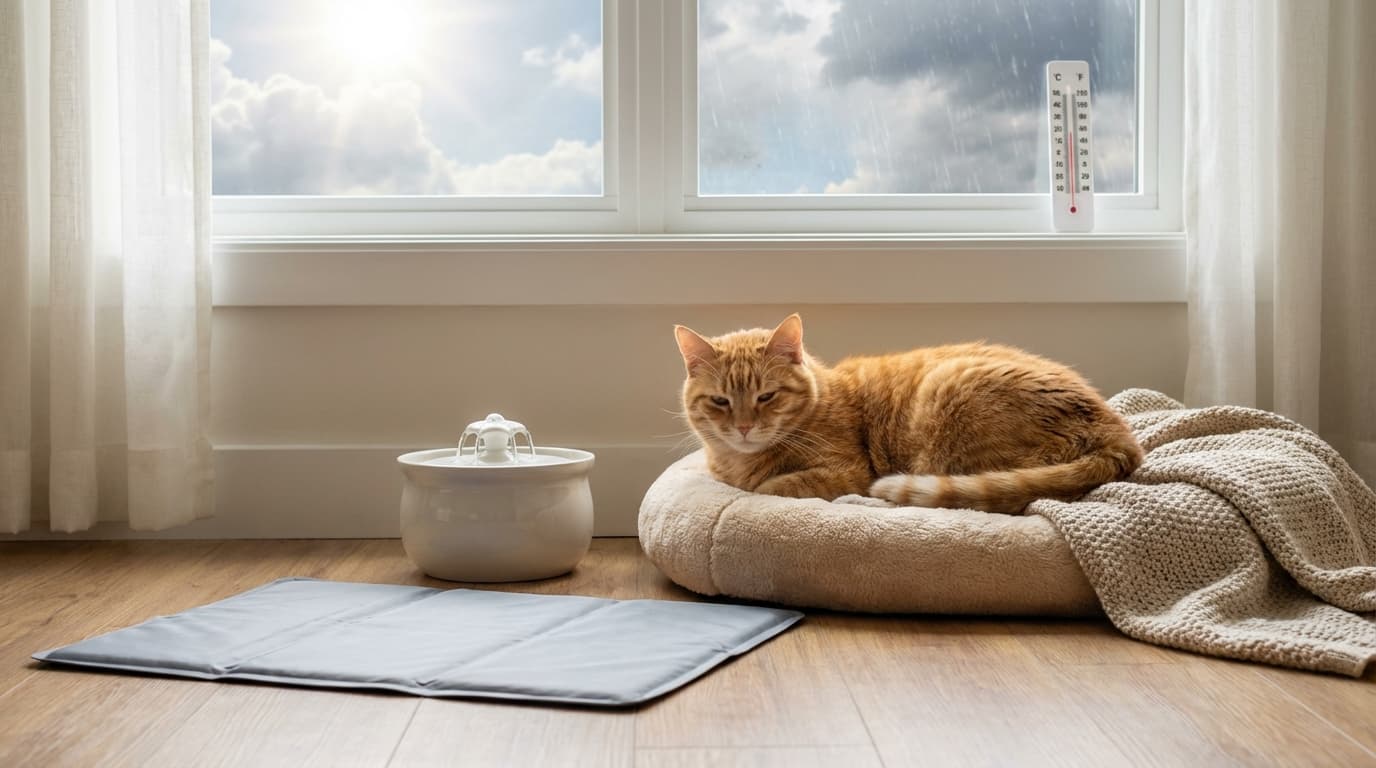
Indoor climate control — forced air heating in winter, air conditioning in summer — reduces ambient humidity to levels that accelerate transepidermal water loss in cats. Relative humidity in climate-controlled indoor environments commonly drops to 20 to 30 percent in winter, well below the 40 to 50 percent range that supports normal skin barrier function. The result is drier skin, reduced sebaceous oil production, and a coat that loses luster and develops the white flaking that owners notice on dark furniture. This is an environmental skin condition, not a primary dermatological disease.
Bathing as a first-line intervention for dry skin is counterproductive unless done correctly with the right product. Frequent bathing with the wrong shampoo strips the residual sebaceous oils that the skin is already struggling to produce, worsening the condition it is attempting to address. Cat skin has a neutral pH (approximately 7) compared to the mildly acidic pH (5.5) of human skin, and products formulated for human use disrupt the feline skin barrier by being too acidic. The appropriate product is pH-balanced for cats (neutral range), soap-free (uses surfactants that clean without stripping oils), and free of fragrances (which are among the most common feline contact irritants).
Enzymatic formulations like the Zymox LP3 Enzyme System have clinical support for managing skin conditions associated with secondary microbial colonization of compromised skin barriers. The enzyme system provides antimicrobial activity through a mechanism that does not require the harsh surfactants that damage the skin surface. For cats with dry skin that has progressed to secondary inflammation or itching, these formulations address both the barrier compromise and the microbial component without the further stripping that occurs with standard cleansing shampoos.
Environmental humidity management is more effective than any topical product for preventing indoor-climate-driven dry skin. A humidifier maintaining 40 to 50 percent relative humidity in the rooms where the cat spends most time directly reduces transepidermal water loss and supports normal sebaceous function. This is the correct preventive intervention; bathing is a treatment for established dryness rather than a prevention strategy. Diet also contributes: omega-3 fatty acid supplementation at appropriate feline doses produces measurable improvement in skin barrier function and coat quality within four to six weeks, addressing the internal component of skin health that topical products cannot reach.
**Key insights:
- Use a humidifier in main living areas during winter to maintain 40 to 50 percent relative humidity — this is the most effective prevention for indoor-climate-driven dry skin.
- Choose shampoos that are pH-balanced for cats, soap-free, and fragrance-free — these three features protect the feline skin barrier that human-pH or fragrance-containing products disrupt.
- Never use human shampoo on a cat — the pH difference strips the sebaceous oils that are already depleted in a dry-skin cat.
- Consider veterinarian-recommended omega-3 supplementation for persistent dry skin — the internal barrier support complement topical management and produces visible coat improvement in four to six weeks.
- Bathe only when genuinely necessary — frequent bathing without indication worsens the sebaceous depletion that causes dry skin.
The Busy Owner's Guide on How to Clean a Wool Cat Cave
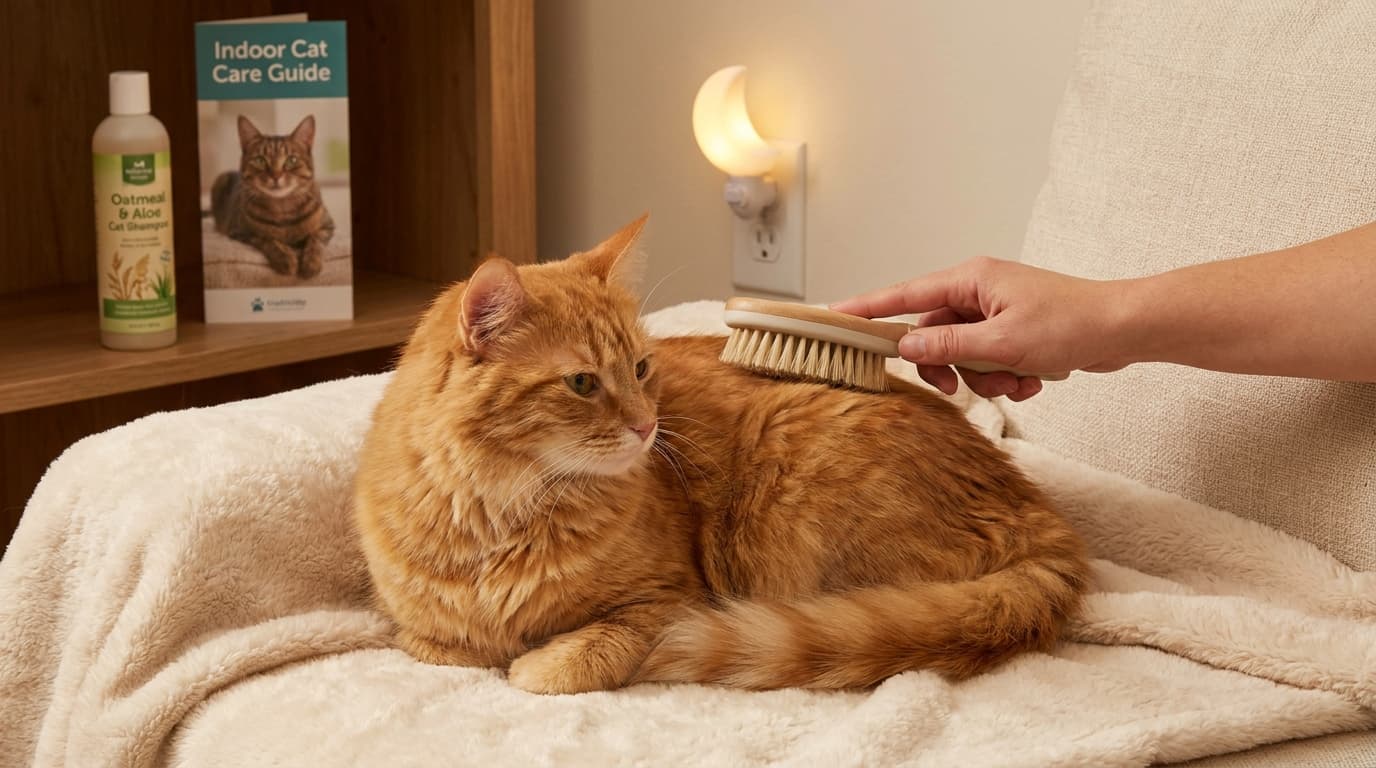
Wool cat caves require hand cleaning rather than machine washing because of the specific properties of felted wool fiber. Wool felts — the individual fibers interlock under heat, agitation, and moisture — which is how the structure of a felted cave is created in the first place. A washing machine replicates exactly the conditions that produce felting: heat, mechanical agitation, and moisture. The result is a cave that has shrunk, stiffened, lost its shape, or fused into a solid mass. This is irreversible. The same process that makes felted wool durable makes it incompatible with machine washing at any temperature.
The hand-washing protocol that maintains both cleanliness and structural integrity uses cool water, minimal agitation, and a soap that preserves the natural lanolin in wool. Lanolin is the natural oil within wool fiber that provides dirt resistance, water repellency, and the soft texture that cats find appealing. Harsh detergents strip lanolin, leaving the wool dry, brittle, and more prone to further felting under use. Wool-safe detergents — products formulated specifically for wool and silk — are pH-neutral and surfactant-gentle, cleaning without stripping.
The sequence: remove loose hair and debris with a lint roller or vacuum before introducing any moisture — wet hair is much harder to remove than dry hair and can felt into the surface under handling. Fill a sink or basin with cool (not warm) water and a small amount of wool-safe detergent. Submerge the cave and gently compress it several times to allow the solution to penetrate — do not rub, scrub, or wring, as all of these introduce the agitation that causes felting. Rinse by draining and refilling with clean cool water, pressing gently to release suds. Do not wring to remove water — instead, press gently between clean towels. Reshape the opening and interior while damp and allow to air dry completely in a well-ventilated area away from direct heat.
For day-to-day maintenance between full washes, a lint roller used twice weekly removes the hair accumulation that traps dander and produces odor before it penetrates the wool fibers. Airing the cave in a well-ventilated location for a few hours weekly allows any accumulated moisture from the cat's breathing and body heat to evaporate. These maintenance steps extend the interval between full washes and preserve the structural integrity of the wool significantly longer than washing in response to visible soiling.
**Key insights:
- Never machine wash a felted wool cave — the heat and agitation that produce felting are exactly the conditions washing machines create.
- Remove all loose hair with a lint roller before introducing moisture — wet hair embeds into wool fibers and is significantly harder to remove.
- Use cool water only and wool-safe detergent — warm water accelerates fiber felting and standard detergents strip the lanolin that gives wool its durability and texture.
- Press and compress rather than rubbing, scrubbing, or wringing — any mechanical agitation while wet risks permanent felting and shape loss.
- Reshape while damp and air dry completely before the cat uses it — heat sources (radiators, dryers) cause felting during drying just as they do during washing.
Litter Box Hygiene and Health Monitoring
Litter box hygiene is a practical care requirement with a behavioral health dimension that most owners underestimate. Cats are fastidiously clean animals with an olfactory sensitivity approximately 14 times greater than human capacity. A box that smells acceptable by human standards may smell strongly aversive to the cat using it. The behavioral consequence of a consistently aversive litter box is avoidance — the cat finds alternative elimination locations. Once alternative locations are established and scent-marked, behavioral aversion to the box persists even after cleaning, because the cat's previous negative experience created an association that cleaning does not erase. Prevention is significantly easier than remediation.
The maintenance schedule that prevents behavioral litter box avoidance: scoop at minimum once daily, replace all litter and wash the box with mild soap and water every one to two weeks, and replace the physical box annually. The replacement interval matters because plastic litter boxes develop microscopic surface scratches from repeated scooping. These scratches trap bacteria and urine compounds that conventional washing does not remove, producing a persistent odor source that olfactorily sensitive cats detect and avoid even in a recently cleaned box. Switching to a new box annually costs less than the veterinary management of behavioral litter box problems.
The health monitoring value of consistent litter box observation is practically significant. Changes in elimination frequency, volume, consistency, color, or odor are among the earliest observable indicators of systemic illness in cats — often appearing before appetite changes, behavioral shifts, or other commonly recognized signs. Urinary frequency changes can indicate urinary tract infection, diabetes, kidney disease, or hyperthyroidism. Stool consistency changes indicate gastrointestinal inflammation, parasitic infection, or dietary intolerance. Blood in urine or stool is always a same-day veterinary contact. An owner who cleans the box daily and observes output during that cleaning is positioned to catch these changes at an early, more treatable stage.
Smart litter boxes — devices that weigh the cat at each visit, measure elimination volume, and track frequency — convert passive box observation into systematic health data. Weight trends detectable through these devices can identify disease trajectories weeks before clinical symptoms appear. For multi-cat households where identifying which cat produced which output is difficult, smart boxes provide the individual-level tracking that conventional observation cannot. These are not essential for all households, but for senior cats or cats with known health conditions, the additional monitoring granularity has practical clinical value.
**Key insights:
- Scoop at minimum once daily — the olfactory aversion threshold for cats is much lower than for humans, and a box that smells tolerable to you may be actively avoided by your cat.
- Replace the physical box annually — plastic scratches trap bacteria and urine compounds that washing does not remove.
- Observe litter box output during daily scooping — changes in frequency, volume, consistency, or color are among the earliest indicators of systemic illness.
- Contact your vet same-day for blood in urine or stool regardless of other symptoms.
- Maintain at minimum one box per cat plus one additional in a multi-cat household — resource competition over box access is a primary driver of behavioral litter box avoidance.
Frequently Asked Questions
It is common but not something that needs to be accepted as a permanent feature of indoor cat ownership. Cats are crepuscular — biologically most active at dawn and dusk — and a cat with insufficient daytime activity arrives at the early morning activity peak with accumulated behavioral energy that surfaces as vocalization, movement, and demands for interaction. The 3 AM timing is not random; it corresponds to the natural activity peak of a species that evolved to hunt in low light.
The structural fix is a high-intensity play session in the 30 to 60 minutes before your bedtime, ending with the cat catching a physical toy and receiving a small food reward. This completes the predatory sequence neurologically and orients the cat toward the post-hunt rest phase that aligns with your sleep schedule. In cats over 10 with new-onset nighttime yowling, see a vet first — hyperthyroidism and Feline Cognitive Dysfunction Syndrome both produce this presentation and require medical treatment rather than behavioral management.
The most reliable visual and tactile assessment is the rib check: run your fingers along the cat's ribcage with light pressure. You should be able to feel individual ribs easily — they should be palpable but not visually prominent. If you must press firmly to find ribs under a layer of fat, the cat is overweight. From above, a healthy-weight cat has a visible waist narrowing behind the ribcage. A cat that looks like an unbroken oval from above — no waist definition — is carrying excess weight.
The clinical significance of the finding matters: even two pounds excess in a ten-pound cat represents a 20 percent weight excess with real medical consequences — increased joint load, elevated diabetes risk, and amplified inflammatory burden on cardiac and renal systems. If your rib check confirms excess weight, a vet appointment for a starting weight and a structured weight loss plan is more effective than dietary adjustment alone, because the rate of loss needs to be monitored to avoid hepatic lipidosis.
High-protein wet food, portioned by weight against the feeding guidelines for the cat's current body weight, is the most evidence-supported approach. The protein priority is functional: weight loss diets that are low in protein produce muscle catabolism alongside fat loss, worsening the metabolic profile. High-protein formulas preserve lean mass while mobilizing fat reserves. Wet food's moisture content supports satiety without caloric density and supports kidney function, which is important in cats at elevated obesity-related renal risk.
Measure rather than estimate portions — a kitchen scale and the label's per-kilogram feeding guidelines produce significantly more accurate portions than visual estimation. The weight loss target should be no more than 0.5 to 1 percent of body weight per week. Faster loss risks hepatic lipidosis. Schedule vet weigh-ins every four to six weeks to confirm progress and adjust portions as body weight changes — the appropriate portion decreases as the cat loses weight, and adjusting this prevents plateaus.
Choose a shampoo that is pH-balanced for cats (neutral, approximately pH 7), soap-free, and fragrance-free. These three features collectively describe a product that cleans without disrupting the feline skin barrier, which human-pH or fragrance-containing products do. The 'hypoallergenic' label is unregulated and does not reliably indicate these properties — look for the specific formulation descriptors rather than the marketing category.
For dry skin associated with secondary inflammation or itching, enzymatic formulations like those using the LP3 Enzyme System have clinical support for managing compromised skin barriers with microbial colonization. Before committing to a bathing regimen, address the environmental cause: run a humidifier in rooms where the cat spends most time to maintain 40 to 50 percent relative humidity. Environmental humidity management prevents the dryness more effectively than topical treatment of established dryness.
The highest-impact, lowest-cost changes: position a cat tree or perch at the window with the most outdoor movement and place a bird feeder in the sightline. This provides hours of passive stimulation daily without any owner involvement. Convert at least one meal to a puzzle feeder — even an egg carton with kibble in the cups provides foraging engagement that bowl feeding cannot. Conduct one interactive play session close to bedtime with a wand toy moved in unpredictable patterns and ending with a catch.
Rotate three to five toys on a weekly storage cycle rather than leaving all toys available continuously. Novelty drives engagement, and novelty is restored by absence as effectively as by purchasing new toys. Deliver cardboard boxes from packages to the cat for a week before discarding — they provide concealment, investigation, and novelty that purpose-built cat furniture rarely matches. These four additions address predatory, territorial, investigatory, and foraging drives at minimal cost.
The useful lifespan of a well-maintained felted wool cave is typically one to two years with regular hand washing and lint rolling maintenance. The indicators that replacement is warranted: the wool has thinned or pilled significantly in high-contact areas, the structure no longer holds its shape after washing, or persistent odor remains after proper cleaning. The last indicator most commonly reflects urine absorption into the wool fibers — enzymatic cleaners can address surface urine, but deep absorption into thick felted wool is difficult to fully remediate.
Extending the useful life requires preventive maintenance rather than reactive washing. A lint roller used twice weekly removes hair before it embeds in the fibers. Weekly airing in a ventilated area dissipates moisture from the cat's body heat and breathing. Full hand washing should be reserved for visible soiling or odor, not conducted on a fixed schedule — unnecessary washing removes lanolin and reduces the structural integrity that makes the cave last.
No. The pH difference is the specific problem. Human skin has a mildly acidic pH (approximately 5.5) and human shampoos are formulated to maintain this. Feline skin has a neutral pH (approximately 7). Applying human-pH shampoo to cat skin shifts the surface pH toward acidity, disrupting the acid mantle that protects against microbial colonization and stripping the sebaceous oils that maintain barrier function. The result is skin that is drier, more irritated, and more susceptible to secondary infection after washing than before — the opposite of the intended effect.
For a cat with dry skin, the correct product is specifically formulated for cats, pH-balanced to the neutral feline range, soap-free, and fragrance-free. Beyond product choice, addressing the environmental cause — low indoor humidity from climate control — is more effective than any topical intervention. A humidifier maintaining 40 to 50 percent relative humidity in the cat's primary rooms prevents the moisture loss that produces dry skin, rather than treating the symptoms after they develop.
Conclusion
The indoor cat's longer lifespan — 12 to 18 years versus 2 to 12 for outdoor cats — is the result of protection from the specific mortality risks of outdoor living. It does not automatically produce a healthy, behaviorally content cat. The biological drives that outdoor living would satisfy — predatory engagement, territorial surveillance, physical activity, foraging — remain fully present in indoor cats and require deliberate provision. When they are not met, the result is the specific behavioral and health problems this guide covers: nighttime vocalization, weight gain, boredom-driven destruction, skin dehydration from climate control, and hygiene problems from insufficient litter box maintenance.
The pattern across all of these is that small, consistent interventions outperform large occasional ones. A 15-minute pre-bedtime play session every night is more effective than a 45-minute session on weekends. Daily litter box scooping prevents the behavioral aversion that requires professional intervention to remediate. Weekly toy rotation maintains engagement that purchasing new toys cannot replicate. Humidifier use in winter prevents dry skin that bathing cannot cure. These are not demanding changes — they are brief routines that, maintained consistently, prevent most of the problems indoor cat ownership produces.
One action from each section to implement today: schedule a 15-minute play session for tonight 30 minutes before your bedtime. Check your cat's current food label for protein content and whether it specifies a caloric reduction for indoor cats. Roll lint off the cat cave. Scoop the litter box and note the output. These five minutes address the core variables in indoor cat health more directly than any single product purchase.
Send it to someone who should read it next.

PurrScript Editorial Team
Editorial Team
PurrScript's in-house editorial team. We research, write, and review every guide using established veterinary and behavioral resources, and update articles as best practices evolve.
View all articles