Is Your Cat's Coat Trying to Tell You Something? A Guide to Safe Dematting
Have you ever reached down to pet your cat only to feel a hard, crunchy clump of fur instead of soft fluff? It is a common surprise for many owners,...

PurrScript Editorial Team
Editorial Team
Is Your Cat's Coat Trying to Tell You Something? A Guide to Safe Dematting
Have you ever reached down to pet your cat only to feel a hard, crunchy clump of fur instead of soft fluff? It is a common surprise for many owners, but those tangles are more than just a messy look for your pet.
Knowing how to cut out cat mats safely is vital because a cat's skin is thin and delicate. These tight knots cause real skin irritation from mats and can even make it painful for your kitty to jump or play.
You do not have to be a pro to help, but you do need the right gear. Using electric clippers for cats is much safer than scissors, and having the best dematting tools for felines makes the work faster.
This guide explains how to remove mats at home using rewards and patience. You will also learn tips to stop tangles before they start and when to see a professional groomer for those extra tough cases.
The Struggle with the Snag: Getting Those Cat Mats Under Control
Ever reach down to pet your cat and feel a sudden, crunchy patch of fur? It happens to even the most dedicated owners. These mats are more than just a messy look; they actually hurt. When fur clumps up, it pulls tight against the skin and blocks airflow. This can lead to painful irritation or even stop your cat from jumping and playing like usual. Sometimes, a messy coat is even a sign that an older cat has joint pain and can no longer reach those tricky spots to groom themselves.
If you are tempted to grab the kitchen scissors to fix it, stop right there. Experts like Dr. Heather Berst explain that electric clippers are much safer because cat skin is paper-thin and very easy to snip by accident. We are going to walk through how to handle these tangles without the stress. You will learn which tools actually work and why a few treats go a long way in keeping your feline friend comfortable and tangle-free.
Key insights:
- Matted fur can be a hidden sign of health issues like arthritis in older cats.
- Bathing a cat with existing mats usually makes the knots tighter and harder to remove.
- Electric clippers are the gold standard for safety because scissors risk cutting thin feline skin.
Why Mats Are More Than Just a Bad Hair Day
Ever look at a clump of tangled fur and think it is just a messy look? It is actually much more serious than a simple grooming fail. When those mats get thick, they act like a heavy, airtight blanket against the skin. This blocks fresh air from reaching the surface, which creates a damp and warm environment where bacteria love to grow. Before you know it, your cat is dealing with itchy, irritated, or even infected skin hidden right under that bad hair day.
Mats do not just sit there because they actually pull. Think about how a tight ponytail feels after a few hours, then imagine that sensation all over your body. These tangles often show up in high-friction spots like the armpits, belly, and around the tail. Because the skin there is so thin, every step or stretch becomes a struggle. If a mat is bad enough, your cat might stop jumping or even struggle to use the litterbox because moving simply hurts too much.
There is also a deeper health story here to consider. If your medium or long-haired cat suddenly stops keeping up with their grooming, it might not be laziness. Research shows that matting is often a secondary sign of health issues like osteoarthritis. If it hurts for a cat to twist and reach their back or hindquarters, they will just stop trying. The fur tangles, the pain doubles, and a cycle starts that only you can help break.
Dr. Heather Berst points out that mats are often full of nasty stuff that irritates the skin, but the physical sensation is the real kicker. Every time your cat tries to play, those clumps tug at the skin like a million tiny pinches. It is a constant, low-level stress that can make even the sweetest cat feel defensive. Whatever you do, do not try to wash the problem away yet. Getting a mat wet usually just locks the knot in tighter, making the eventual removal much tougher on your pet.
Key insights:
- Thick mats create a breeding ground for bacteria by trapping moisture and blocking airflow to the skin.
- Matting in sensitive areas like the belly can physically prevent cats from jumping or exercising normally.
- Sudden matting is often a red flag for underlying pain like arthritis that prevents a cat from self-grooming.
- Bathing a matted cat is a mistake because water causes the fur fibers to tighten and become harder to remove.
The Pain Factor: What Your Cat Feels
Imagine your hair being pulled back just a little too tight. Now, imagine that sensation every time you move. For a cat, mats are constant skin-tuggers. Every jump or stretch becomes a chore because that clump of fur is relentlessly yanking on their skin. It is not just a cosmetic issue; it is a source of daily physical discomfort.
It gets worse under the surface. Dr. Heather Berst notes that mats are often full of nasty stuff that irritates the skin and can even signal deeper health issues like osteoarthritis. Since these tangles usually pop up in tender spots like the belly or chest, they block airflow and trap moisture. This is a recipe for infection and can even stop a cat from being active.
Also, do not try to wash the problem away. Bathing a matted cat actually makes the knots tighter and harder to remove. It is a bit of a trap. Your cat needs a gentle hand and the right tools to find relief, not a soak in the tub.
Key insights:
- Mats in sensitive areas like the belly can physically restrict a cat's ability to jump or use the litterbox.
- A sudden increase in matting might be a sign of osteoarthritis, as the cat may be too sore to groom themselves properly.
- Water acts like glue for mats, so always skip the bath until the fur is completely detangled.
The Golden Rule: Put the Scissors Down
It is so tempting to just grab a pair of scissors when you spot a nasty clump of fur on your cat, but please, put them back in the drawer. Here is the thing: cat skin is incredibly thin, almost like damp tissue paper or a delicate silk scarf. When you pull a mat upward to get a better angle with scissors, the skin often 'tents' up right into the path of the blades. This is a recipe for disaster. One tiny slip can lead to a deep gash and a frantic, expensive trip to the emergency vet. Dr. Heather Berst points out that using an electric pet clipper is significantly safer because it is faster and drastically reduces the chance of accidental cuts.
Beyond the risk of injury, those mats are often more than just a bad hair day. They can actually be quite painful, trapping dirt and blocking airflow to the skin, which leads to irritation or even infection. If you notice your cat suddenly stop grooming, it might not be laziness. In many cases, mats are a red flag for underlying health issues like osteoarthritis. If it hurts for them to move, they stop licking. So, while you might think you are just tidying up their coat, you are actually managing their physical comfort and mobility.
The reality is that matted fur frequently forms in sensitive spots like the belly, chest, or butt. These mats can physically restrict your cat's movement, making it hard for them to jump or even use the litter box comfortably. Many owners think a bath will help, but bathing actually makes the situation worse because water causes the hair fibers to swell and tighten the knot further. Instead of reaching for the suds or the shears, stick to the safer buzz of a clipper to provide your feline friend some much needed relief.
If you are doing close-to-the-skin work, electric clippers are the only way to go. Why? Because cats are not exactly known for sitting still for long. Clippers allow you to work quickly, removing the mat before your cat loses their patience and decides the session is over. It is all about speed and safety. By choosing the right guard size, you create a protective barrier that keeps the blades away from the skin while still getting close enough to lift the mat away. This protects that tissue paper skin while effectively clearing the tangle.
Think of it as a fear-free approach to grooming. Instead of a long, stressful struggle with a comb or the danger of scissors, a quick buzz provides instant relief. It is part of a growing trend where owners learn professional-grade safety techniques to keep their pets happy at home without the trauma of a skin injury. Just remember to keep the sessions short, use a calm assistant if possible, and offer plenty of treats to keep the vibes positive throughout the process.
Key insights:
- Cat skin is extremely thin and prone to 'tenting,' which makes using scissors for mat removal dangerous.
- Mats are often a secondary symptom of health issues like osteoarthritis that prevent a cat from self-grooming.
- Electric clippers with guards are the safest tool for close-to-skin work because they minimize the risk of lacerations.
- Never bathe a matted cat, as water typically causes the mats to tighten and become more difficult to remove.
Why Electric Clippers Win Every Time
Using scissors near a wiggly cat is nerve-wracking. It is far too easy to accidentally nick their thin skin, especially when mats pull tight against the body. This is where electric clippers for cats really shine. They are much safer because you are not tugging at the fur to get a cut, which Dr. Heather Berst points out is both painful and risky. Clippers are also incredibly fast. You can usually clear a problem spot and finish the job before your cat loses patience and decides the grooming session is over.
The secret to success is using the right guard size. Think of the guard as a safety shield that keeps the blades a safe distance from the skin while still clearing the mess. This matters because thick mats block airflow and can cause painful skin infections if left alone. Try to keep things light and move quickly. If you pair the buzzing sound with their favorite treats, the whole process becomes a lot less scary for everyone involved.
Key insights:
- Electric clippers are significantly safer than scissors for removing mats close to the skin.
- Using a guard size provides a physical buffer that prevents accidental cuts during sudden movements.
- Speed is essential for cats with low grooming tolerance to avoid stress and potential injury.
Your Home Dematting Toolkit
Before you reach for the shampoo, here is a golden rule: never get a mat wet. It sounds like a good idea to wash your cat first, but bathing actually locks those tangles in and makes them almost impossible to remove later. Instead, start with a quality detangling spray. The secret is to soak the knot and wait at least ten to fifteen minutes. This gives the spray time to work into the fur so you can gently separate the hair with your fingers before you even touch a tool. Think of it like soaking a stubborn dish before you try to scrub it clean.
Choosing the right tool depends on the mess you are dealing with. A sturdy metal comb is your best friend for most jobs, but a dematting rake is better for those thick, stubborn clumps. If the mat is tight against the skin, put the scissors away. Dr. Heather Berst points out that electric clippers for cats are much safer because scissors can easily snag delicate skin. Since mats often pop up in sensitive spots like the belly and chest, using the right gear keeps the experience from becoming a literal pain for your feline friend. It also prevents thick mats from blocking airflow, which can lead to nasty skin infections.
When you start working with that metal comb, remember the 'hold the base' trick. Grip the fur right at the skin so the comb pulls against your fingers instead of the cat's scalp. Use tiny, short strokes rather than long yanks. This keeps things calm and prevents skin irritation. If you notice your cat is getting mats more often, it might not just be laziness. Sometimes it is a sign of health issues like osteoarthritis making it hard for them to reach certain spots. Taking it slow and using treats can turn a stressful chore into a bonding moment that keeps your cat moving comfortably.
Key insights:
- Electric clippers are much safer than scissors for removing mats close to the skin.
- Bathing a cat before removing mats will make the tangles tighter and harder to fix.
- Holding the base of the fur prevents the comb from painfully pulling on the cat's skin.
- Matted fur can be a sign that a cat is struggling with joint pain or other health issues.
The Proper Way to Use a Metal Comb
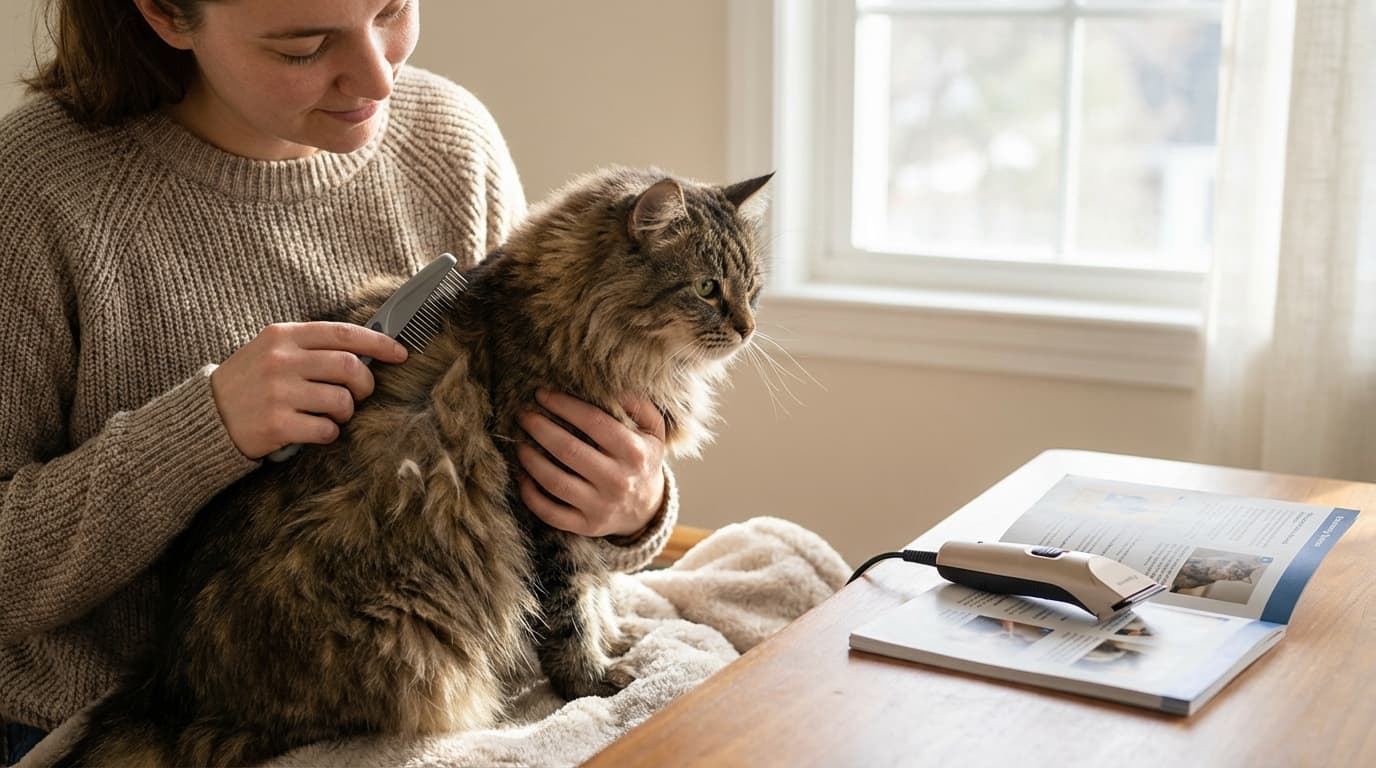
When you pick up a metal comb, think of it as a precision tool rather than a standard brush. To keep your cat calm, use the 'hold the base' technique. Just pinch the fur between the mat and your cat's skin. This creates a buffer so you aren't tugging on their sensitive scalp while you work.
Instead of long yanks, use tiny, gentle strokes. It is like teasing out a knot in your own hair. If the mat is stubborn, let a detangling spray soak in for ten minutes first. This makes the hair slippery and much easier to separate. Keep these sessions short and offer treats to keep things positive. If a mat is too tight or sits on the belly, stop and use electric clippers instead.
A Step-by-Step Guide to Stress-Free Mat Removal
Think about where you and your cat feel most relaxed. Is it the sunny patch on the rug or the kitchen counter? Before you even touch a comb, pick a quiet spot and recruit a helper. Having an extra set of hands to offer chin scratches or a steadying hold makes a world of difference for safety. Since mats often hide in sensitive areas like the belly, chest, or under the tail, you really need that assistant to keep your cat still while you work.
Now, let's talk about the power of the bribe. This is not the time for standard kibble. We are talking about the high-value stuff like squeeze treats or tiny bits of plain chicken. You want your cat to associate the grooming tools with a five-star dining experience. If they are busy licking a treat, they are much less likely to notice you working on a knot. It is all about creating positive vibes so they do not run for the hills the next time they see a brush.
Before you start tugging, remember that water is the enemy here. Bathing a cat while they have mats actually makes the knots tighter and much harder to remove. Instead, try a detangling spray. Soak the mat and let it sit for about ten or fifteen minutes to loosen things up. When you finally go in with a comb, use one hand to hold the base of the fur right against the skin. This prevents the comb from pulling on their sensitive scalp, which can be very painful for them.
The golden rule of home grooming is to put the scissors away. Dr. Heather Berst points out that electric clippers are much safer because they are faster and less likely to nick the skin. Cat skin is paper-thin and it is way too easy to accidentally cut them if you are trying to snip a mat out. If a mat is too tight for a comb, a small pet clipper is your best friend. It is a simple tool that prevents a very expensive and stressful trip to the vet for stitches.
Finally, keep it short. Why try to win a thirty-minute wrestling match when you could do three five-minute sessions instead? If your cat starts getting wiggly or annoyed, just stop. Give them a final treat and try again later. Removing mats is a marathon, not a sprint. Also, if you notice the mats keep coming back, it might be a sign of something like osteoarthritis making it hard for them to groom. A quick vet check can help rule out any underlying pain.
Key insights:
- Always hold the base of the fur to prevent painful skin pulling.
- Electric clippers are the safest choice for removing tight mats near the skin.
- Never bathe a matted cat as water makes the knots significantly worse.
- Short, reward-based sessions are more effective than forcing a single long grooming event.
When to Wave the White Flag and Call a Professional
Sometimes you hit a wall despite your best intentions. If your cat’s fur has started 'pelting' - where mats form a hard, armor-like shell over large parts of the body - it is time to stop. These thick layers block airflow and can quickly lead to skin infections or hidden sores. Dr. Heather Berst notes that mats are often painful and full of 'nasty stuff' that irritates the skin. If the coat feels like a solid rug, trying to fix it at home usually causes more distress than relief.
Location is also a big factor in when to see a professional groomer. If mats are tucked into 'danger zones' like the armpits, groin, or the thin skin of the belly, put the tools down. This skin is paper-thin and incredibly easy to nick. While using electric clippers for cats is much safer than reaching for scissors, one wrong move in a sensitive spot leads to a vet visit. Heavy matting in these areas can even physically restrict your cat from jumping or using the litter box comfortably.
Think about your cat’s temperament, too. If they turn into a whirlwind of claws the moment they see a brush, you are both at risk. Professionals have the experience to handle 'spicy' cats safely using specialized dematting tools for felines. Also, keep in mind that if a senior cat suddenly stops grooming, it might be due to osteoarthritis pain. A pro gets the job done fast, and a vet can check for underlying issues. Just remember: do not bathe them first. Water only tightens those knots and makes the professional’s job much harder.
Key insights:
- Pelting creates a solid shell that requires professional shaving to avoid skin tears.
- Mats in high-friction areas like armpits can cause significant mobility issues.
- Sudden lack of self-grooming in older cats often signals underlying health problems like arthritis.
Keeping the Mats Away for Good
Preventing mats doesn't have to be a marathon session. A daily brushing habit that takes less than two minutes can save you hours of stress later. If you pair it with a few treats, your cat might actually start looking forward to it. Learning how to cut out cat mats safely is a useful skill, but stopping them early is always the better choice.
Grooming also happens from the inside out. A shiny, slip-resistant coat relies on a good diet and plenty of water. When a cat is dehydrated, their fur becomes brittle and tangles much faster. Remember that thick mats do more than just look messy. They block airflow to the skin, which leads to skin irritation from mats. While you might use electric clippers for cats to handle existing clumps, the goal is to keep the skin healthy so you do not need dematting tools for felines as often.
If your usually tidy cat suddenly stops grooming, pay attention. A messy coat is often a sign of health issues like osteoarthritis. If it hurts to move, they will not reach for those tricky spots on their belly or back. A sudden change in habits always warrants a vet visit or a consultation with a professional groomer. It is about making sure your friend stays comfortable and pain-free.
Key insights:
- Daily two-minute brushing sessions prevent the need for stressful dematting later.
- Hydration and diet are the foundation of a coat that resists tangling naturally.
- A sudden lack of self-grooming is a medical red flag, often linked to joint pain or mobility issues.
Common Questions About Cat Mats
Ever wonder why your cat suddenly hates being touched in certain spots? It might not just be a mood swing. When fur tangles into tight clumps, it pulls on the skin and makes every movement uncomfortable. You might think a quick bath will loosen things up, but that is actually the worst thing you can do. Water makes those fibers swell and then shrink, turning a small knot into a rock-hard brick that is even harder to remove.
So, how do you handle them safely? Many people reach for scissors, but that is a risky move. A cat's skin is incredibly thin and it is easy to accidentally snip them if they wiggle even a little bit. Dr. Heather Berst points out that electric pet clippers are much safer because they work faster and reduce the chance of an accidental cut. If the mat is sitting right against the skin, clippers are definitely the way to go.
It is also worth asking why the mats are there in the first place. While long-haired breeds are naturally more prone to them, mats can also be a red flag for health issues like osteoarthritis. If your cat stops grooming their belly or back because it hurts to move, the fur will tangle quickly. These clumps also block airflow to the skin, which can lead to itchy irritations or even infections if they stay trapped for too long.
Success usually comes down to patience rather than power. Try using a detangling spray and letting it sit for about fifteen minutes before you even touch a comb. When you do start, hold the base of the hair with your fingers so you aren't tugging on their sensitive skin. Keep the sessions short and use plenty of treats to keep things positive. If a mat is just too thick or your cat is getting too stressed, that is your signal to call a professional groomer.
Key insights:
- Never bathe a matted cat as water tightens the knots further.
- Electric clippers are safer than scissors for removing mats near the skin.
- Sudden matting can be a sign of underlying pain or mobility issues like arthritis.
- Use a 'hold the base' technique to prevent painful pulling during grooming.
Frequently Asked Questions
It is really best to avoid using human clippers on your cat. While they might look similar to pet versions, they often run much hotter and can easily burn your cat's sensitive skin before you even realize it.
Human clippers are also designed for human hair and might pull or snag a cat's very fine fur instead of cutting it cleanly. Using a dedicated electric pet clipper is a much safer choice because it reduces the chance of accidental nicks and makes the whole process faster for both of you.
You can usually tell a mat is too close if you can't see any space or skin between the knot and the body. If the mat feels like a hard lump stuck right against the skin, it is probably too tight to handle safely on your own.
When mats are that tight, they block airflow and can lead to hidden infections or irritation. If you can't gently slide a comb or your finger behind the mat without pulling the skin, it is a sign you should see a professional groomer or a vet to avoid a painful accident.
It is super frustrating when you are doing the work but still seeing those clumps. Usually, this happens because mats love to hide in high-friction spots like the belly, chest, and armpits where a standard weekly brush might miss the deep layers of fur.
But here is the thing you might not expect. Sometimes mats are actually a sign that your cat is in pain. If your cat has something like osteoarthritis, they might stop grooming themselves because it hurts to reach certain spots. Dr. Heather Berst notes that mats can be a signal for underlying health issues, so if the coat quality changes suddenly, it is worth a chat with your vet.
Also, remember that thick mats can block airflow to the skin. This leads to irritation or even infections, which makes the whole situation even more uncomfortable for your furry friend. If you notice your cat is jumping less or struggling to use the litterbox, those mats might actually be physically restricting their movement.
You definitely want to stick to sprays specifically made for cats that are labeled non-toxic. Since cats are professional self-cleaners, they will almost certainly lick whatever you put on their fur, so safety is the top priority.
When you use a spray, the secret is patience. You should soak the mat thoroughly and then let it sit for 10 to 15 minutes. This gives the formula time to actually loosen the hair so you can gently separate it with your fingers or a metal comb without pulling on their skin. Using one hand to hold the base of the hair close to the skin helps prevent painful tugging on the scalp.
If the mat is too tight for spray to work, skip the scissors. Dr. Berst recommends using electric pet clippers instead because they are much faster and way less likely to accidentally cut your cat's skin. It is all about keeping the experience as stress-free as possible by using rewards and short sessions.
Conclusion
So what is the takeaway for you and your fluffy roommate? Dealing with mats is about much more than just looking good. It is about stopping that constant skin pulling and preventing real skin irritation from mats. When you swap out those dangerous scissors for proper dematting tools for felines or quiet electric clippers for cats, you are choosing your pet's comfort over a quick fix.
Moving forward, the goal is to make grooming a part of your bond instead of a battle. Learning how to cut out cat mats safely at home is a great skill, but knowing when to see a professional groomer is just as important for your cat's well-being. If a mat feels too tight or your cat is getting stressed, there is no shame in calling for backup.
Your cat might not say thank you in words, but a soft, tangle-free coat makes every nap and jump much better. Keep those treats handy and take it slow. A happy cat is a mat-free cat, and you both deserve a stress-free life together.
Send it to someone who should read it next.

PurrScript Editorial Team
Editorial Team
PurrScript's in-house editorial team. We research, write, and review every guide using established veterinary and behavioral resources, and update articles as best practices evolve.
View all articles