Living With a Sphynx: The Truth About Skin Care, Sweaters, and Snuggles
Imagine a cat that feels like a warm, fuzzy peach or a piece of soft chamois leather. It's an addictive texture that makes snuggling irresistible, but that unique skin comes...

PurrScript Editorial Team
Editorial Team
Living With a Sphynx: The Truth About Skin Care, Sweaters, and Snuggles
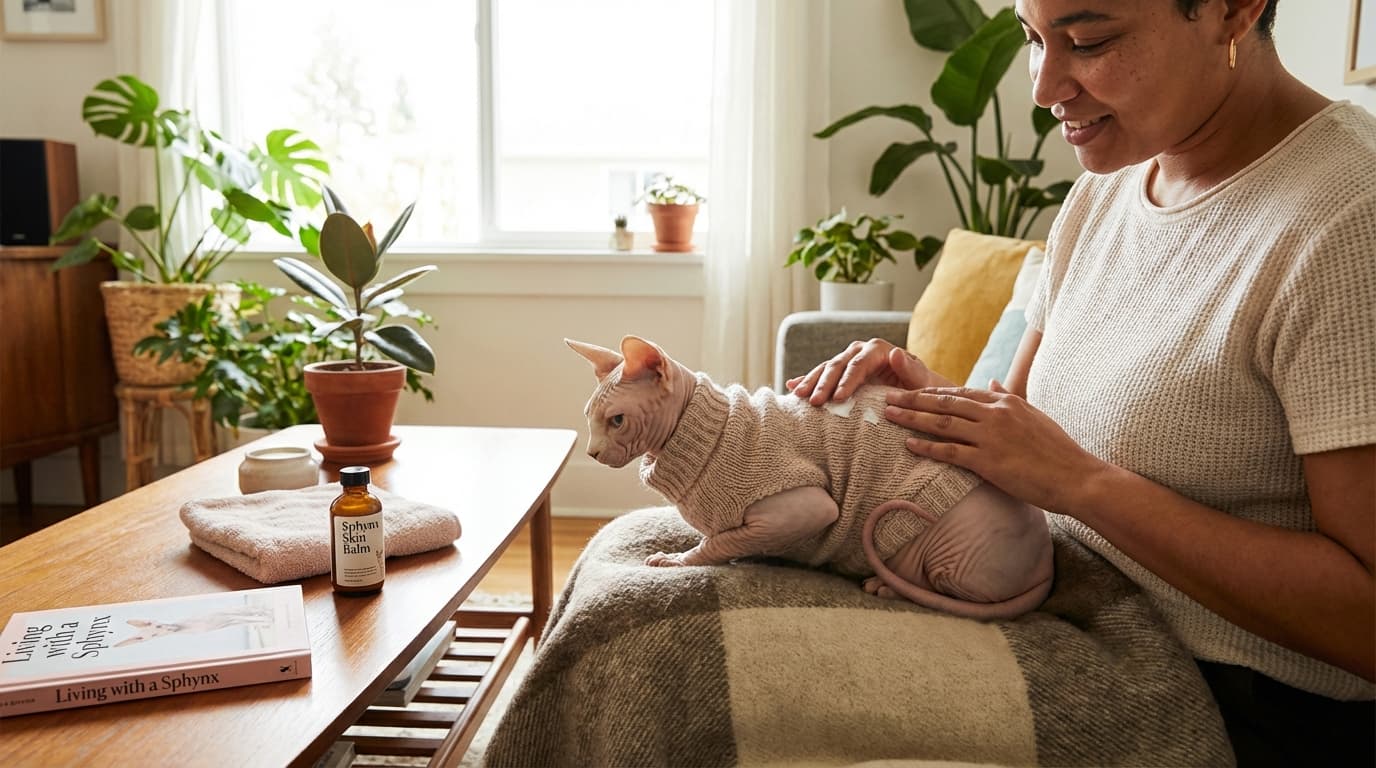
Imagine a cat that feels like a warm, fuzzy peach or a piece of soft chamois leather. It's an addictive texture that makes snuggling irresistible, but that unique skin comes with a surprising amount of daily work.
Many people assume that no fur means no grooming, but the reality of hairless cat maintenance is actually the opposite. Without a coat to absorb natural oils, these naked felines require consistent care to stay healthy and comfortable in their own skin.
We're going to look at what it's really like to live with a Sphynx, from the essential weekly bath rituals to picking out the right sweaters for temperature control. You'll also learn why their high metabolism makes them so energetic and why they're famously known as Velcro cats for their social nature.
Whether you're curious about Sphynx cat skin care or wondering if they're truly hypoallergenic, this guide covers everything you need to know before bringing one of these unique companions into your home.
More Than Just the Sphynx: Meeting the Hairless Family
When most people think of a hairless cat, they picture the classic Sphynx. It makes sense, given they’ve been the recognized favorite for the look since the 1960s. But the world of naked cats has expanded quite a bit lately. It isn't just about one breed anymore. Now, we have designer hybrids and unique Russian imports that bring their own flair and their own specific care needs to the table. If you're looking for a cat that feels like warm chamois leather, you have more options than you might realize.
Take the Bambino, for example. This little cat is a cross between the hairless Sphynx and the short-legged Munchkin. Founded in 2005, they are often called experimental, and they definitely spark some debate among cat enthusiasts regarding the ethics of breeding for multiple mutations. But for those who love them, they’re often seen as worth the 2,000 to 2,800 dollar price tag. They are tiny, energetic powerhouses that refuse to let their short legs slow them down. As breeder April Arguin points out, these cats truly desire a lot of interaction and attention from their human companions. They aren't the type to sit in a corner because they want to be right in the middle of whatever you’re doing. Think of them as permanent kittens that never quite grow out of their mischievous phase. This matters because you will need to provide plenty of toys and vertical space to keep their active minds busy.
Then there’s the Donskoy, which often gets confused with the Sphynx but is actually quite different under the surface. While the Canadian Sphynx’s hairlessness comes from a recessive gene, the Russian Donskoy’s trait is dominant. This leads to four distinct skin types that range from Rubber Bald, which is totally hairless, to the Brush variety, which actually has a bit of wiry fur. You might also find Flocked or Velour textures that feel like a soft peach. It’s a fascinating bit of genetics that changes how the cat feels and how you’ll need to manage their skin oils. Unlike the Sphynx, some Donskoys can actually grow a winter coat and then shed it when the weather warms up. This unique adaptability is a hallmark of the breed's Russian roots. However, even with that bit of fuzz, they still need protection from the cold and regular skin maintenance to stay healthy.
Choosing between these breeds is about more than just looks. Whether you go for the classic Sphynx or a modern hybrid, you're signing up for a high maintenance lifestyle. These cats don't just lose heat faster. They also produce oils that their missing fur can't absorb. This means weekly baths and a high calorie diet to keep their internal heaters running. It’s a lot of work, but for the right person, the payoff is a social and vocal companion that feels like a living hot water bottle. If you are cold, your cat is cold too, so be prepared to invest in a wardrobe of soft sweaters to keep your hairless friend comfortable.
Key insights:
- The Bambino is a rare Munchkin-Sphynx cross that costs up to 2,800 dollars due to its designer status.
- Donskoy cats possess a dominant hairless gene, unlike the recessive gene found in the Canadian Sphynx.
- Donskoy skin varieties range from the totally hairless Rubber Bald to the wiry Brush texture.
- Hairless breeds require high-calorie diets to maintain body heat and manage oily skin production.
The Bambino: A Tiny, Expensive Powerhouse
Imagine a cat that looks like a permanent kitten with the wrinkled skin of a friendly alien. That is the Bambino. This mix between the hairless Sphynx and short-legged Munchkin first appeared in 2005. They are a big hit for people who want a unique designer pet, but that rarity comes with a high price tag. You can expect to pay anywhere from $2,000 to $2,800 for one of these tiny powerhouses.
Some people call them an experimental breed, which sparks a bit of debate among cat fans. While critics worry about their specific physical traits, owners focus on their massive charm. These cats are incredibly vocal and outgoing. They do not just sit in the corner. They want to be in the middle of everything you do. Breeder April Arguin says they truly crave interaction with their humans. They are definitely not independent loners.
Living with a Bambino means you are always on duty. Since they have no fur, they rely on you to keep them warm. If you are cold, they are cold too. This is why you will see so many of them wearing tiny sweaters or curled up in heated beds. It is a high-maintenance life, but the reward is a social companion that feels like warm chamois leather against your skin.
Key insights:
- Bambinos are a designer cross between Munchkins and Sphynx cats created in 2005.
- Expect to pay a premium price between $2,000 and $2,800 for this rare breed.
- They are highly social pets that require constant attention and extra help staying warm.
Donskoy Varieties: From 'Rubber Bald' to 'Brush'
You might think 'hairless' means just one look, but the Russian Donskoy actually comes in four distinct textures. These range from the completely smooth 'Rubber bald' to the 'Brush' variety, which features actual wiry hair. In between, you will find 'Flocked' and 'Velour' types that feel like soft suede or velvet. It is a surprising range of feels for a cat that most people assume is just bare skin.
The real magic happens under the surface. While they look similar to the Canadian Sphynx, the genetics are totally different. The Sphynx’s hairlessness comes from a recessive gene, but the Donskoy’s unique look is driven by a dominant gene. This means these two breeds are not just from different parts of the world; they are biological opposites in how they lost their fur.
Why does this matter for you? Each texture carries its own vibe and care needs. A Rubber bald cat might feel a bit sticky to the touch, while a Brush coat might actually keep some of its hair for life. No matter the texture, they all share that signature warmth. Think of them like a living, purring hot water bottle that is always ready for a snuggle.
Key insights:
- Donskoy cats have four coat types: Rubber bald, Flocked, Velour, and Brush.
- The gene for hairlessness in Donskoys is dominant, unlike the recessive gene in Sphynx cats.
- Texture affects the tactile experience, ranging from sticky-smooth to wiry and coarse.
The Sunday Scrub: Why Bath Time is Non-Negotiable
If you are used to fluffy cats that groom themselves, living with a hairless breed like a Sphynx or a Bambino is going to be a bit of a shock. You might think no fur means no grooming, but it is actually the opposite. Without hair to soak up natural sebum, these cats get greasy fast. If you skip the weekly wash, that oil ends up on your furniture, your clothes, and your skin. Think of them more like a person who needs a regular shower than a typical feline. It is a non-negotiable part of their life because that buildup can lead to skin irritation and a pretty unpleasant smell.
When it is time for the Sunday scrub, forget the harsh chemicals. You want to use warm water and a soap-free, natural shampoo - look for ingredients like oatmeal, aloe, or coconut oil to keep their sensitive skin from drying out. The trick is to be quick but thorough. Once the scrub is done, wrap them in a warm towel immediately. Since they do not have a coat to hold in heat, they will get chilled in seconds. As the breeder April Arguin points out, a Sphynx feels like warm chamois, and keeping that skin healthy is what makes them so perfect for cuddling on chilly mornings.
You might also notice little black spots on their chin or tail, which is actually cat acne. This happens when oils get trapped in the pores, much like a human teenager. Instead of picking at them, use a soft cloth with warm water and a tiny bit of mild antibacterial soap. It is a gentle way to keep their skin clear without causing a breakout. Just remember to avoid any human-grade acne products, as those are way too harsh for a cat’s pH balance. Keeping their skin clear is about consistency, not intensity.
While you have them in the tub, you need to look at their ears. Most cats have hair inside their ears to block dirt, but hairless breeds are wide open to the elements. This leads to a massive amount of dark, waxy buildup that can actually cause blockages or infections if left alone. A soft wet wipe or a cloth for the outer crevices works wonders. Many owners find that doing this right after a bath is easiest because the steam and warm water help soften the wax, making it much easier to wipe away without a struggle.
Then there is the dirty nail dilemma. Grime loves to lodge itself in those hairless nail folds, creating a dark, oily crust around the base of the claw. Frequent clipping helps, but you will also need to wipe down each toe to keep things hygienic. It's a lot of work, but keeping these areas clean prevents infections and keeps your social, vocal companion feeling their best. Whether you have a classic Sphynx or a newer hybrid like the Bambino - a cross between a Sphynx and a Munchkin - staying on top of this grime is the secret to a happy, healthy hairless cat.
Key insights:
- Weekly baths are essential because hairless cats lack fur to absorb skin oils.
- Always use soap-free, natural shampoos to avoid drying out their sensitive skin.
- Ear wax buildup is much heavier in hairless breeds and requires manual cleaning.
- Cat acne is common but manageable with mild antibacterial soap and warm water.
- Immediate drying with a warm towel is vital to prevent the cat from losing body heat.
Aural Hygiene and Nail Beds
Ever notice how a Sphynx feels like soft chamois? It is one of the best parts of owning one, but that lack of fur comes with a hidden chore list. Take their ears, for example. Most cats have internal hair that acts like a natural filter for dust and debris. Without that barrier, hairless breeds like the Sphynx or the short-legged Bambino produce a massive amount of dark, thick wax. If you do not stay on top of it, those ears can get blocked or even infected. It is best to tackle this right after a warm bath when the wax is soft. Use a soft cloth for the outer part and a Q-tip for those tiny internal crevices.
Then there is the dirty nail dilemma. Because these cats have hairless nail folds, skin oils and household dust mix together to create a sticky black grime that settles right where the claw meets the skin. It is not just a cosmetic issue. It can get pretty uncomfortable if left alone. You will find yourself needing to wipe down each individual toe and clip their nails more often than you would with a furry cat. It is a bit of a reality check for anyone who thought hairless meant no grooming. In truth, keeping these cats clean is a daily commitment that goes way beyond just a quick bath.
What does this mean for you as an owner? It means you are basically a full-time spa technician for your cat. While you might save time on vacuuming fur, you will spend it with wipes and cotton swabs. These cats truly desire a lot of interaction, and luckily, these grooming sessions are a great way to bond. Just remember that their skin health is directly tied to how consistent you are with these small details.
Key insights:
- Lack of ear hair means wax builds up quickly and requires manual removal after baths.
- Hairless nail folds collect oily grime that needs frequent cleaning to prevent discomfort.
- Grooming a hairless cat is more about skin and aural health than aesthetics.
Keeping Your Nude Cat Cozy: The Reality of Temperature Control
Think about the last time you stepped out of a hot shower into a drafty room. That quick chill is basically how a hairless cat feels most of the time without a little help. Because they do not have a fur coat to trap heat, these cats rely entirely on their environment and your choices to stay comfortable. There is a simple rule of thumb that every owner lives by: if you are feeling a bit nippy and reaching for a sweatshirt, your cat is definitely already cold. While their skin feels warm like soft chamois leather, that heat is actually escaping their bodies constantly.
This is where functional pet fashion comes in, but it is not just about looking cute for social media. When picking out hairless cat sweaters, you have to be picky about the fabric. Their skin is sensitive and prone to oil buildup, so scratchy wool is a bad idea. Look for soft, breathable cottons or high-quality fleeces that will not irritate them. Since these cats have a higher metabolism to try and stay warm, they might also eat more than your average feline. Keeping them dressed helps them burn fewer calories just to maintain their body temperature, which is a win for their health and hairless cat maintenance.
Beyond clothing, you should create a warmth map in your home. Heated cat igloos and thermal blankets are lifesavers, especially in winter. You will often find your Sphynx or Bambino cat - that adorable cross between a Sphynx and a Munchkin - hunting for the sunniest patch of floor or hovering near a radiator. Just be careful with heating pads because their bare skin can burn easily, so always use pet-safe versions with low-heat settings and plenty of padding. Providing these cozy retreats ensures they can self-regulate whenever they feel a draft.
The best heater for a hairless cat is actually you. These breeds are famously social and will jump at any chance to crawl under your covers or sit on your lap. It is a practical way for them to steal your body heat, but it also builds that intense bond they are known for. So, while maintaining their temperature takes a bit of extra work compared to a fluffy cat, the reward is a tiny, warm living hot water bottle that wants nothing more than to snuggle with you all morning.
Key insights:
- Hairless cats have a higher metabolism because their bodies work harder to stay warm.
- Natural fabrics like cotton are better for sweaters to avoid skin irritation and oil trapped against the body.
- Heated beds must be pet-specific to prevent skin burns on hairless breeds.
The 'Velcro Cat' Personality: Why They Crave Your Attention
Ever wonder why hairless cats are often called velcro cats? It is because they basically want to be glued to your side. Unlike many breeds that enjoy a bit of solo time, these guys thrive on being right in the middle of whatever you are doing. They are known as some of the most vocal and social cats out there. If you are looking for a quiet pet that hides under the bed, a Sphynx or a Bambino is definitely not the right choice for you.
This intense need for attention is not just a quirk. It is a core part of who they are. April Arguin, a breeder who founded LiLNudists Cattery, points out that these cats truly desire a huge amount of interaction from their humans. They struggle when they are left alone for long periods. Because they lack a fur coat to keep them warm, they often seek out your body heat too. As Arguin describes it, a Sphynx feels like chamois leather. This makes them incredibly warm to the touch and perfect for a snuggle on a cold morning.
Their high energy also comes from a very fast metabolism. They burn through fuel quickly just to keep their body temperature up. This drives a playful and almost dog-like behavior that lasts well into their adult years. You will notice they are constantly moving, jumping, and looking for a game to play. Just keep in mind that this high-octane lifestyle means they need more frequent meals than your average house cat to stay healthy and warm.
While they are fun and loving, owning one is a big commitment. For example, a Bambino cat can cost between 2,000 and 2,800 dollars. Beyond the price, you have to be ready for a cat that follows you from room to room. They are not just pets. They are active members of the family who will let you know exactly when they feel ignored. If you can handle the constant chatter and the shadow following you around, you will find they are some of the most rewarding companions you could ever have.
Key insights:
- Hairless breeds like the Sphynx and Bambino are far more social and vocal than typical domestic cats.
- Their high metabolism requires more frequent feeding to help them maintain body heat.
- They are best suited for households where someone is home often to provide constant interaction.
Health and Nutrition: Fueling a High-Speed Engine
Ever notice how a Sphynx feels like a warm heating pad? That’s because their bodies are working overtime. Without a fur coat to trap heat, these cats have a metabolism that runs at full throttle just to stay warm. You’ll find they eat significantly more than your average tabby. It’s not just because they’re greedy; they are literally fueling a high-speed engine to keep their body temperature stable. As the saying goes, if you’re cold, your Sphynx cat is also cold, and that extra food is their primary way of keeping the internal furnace burning.
What goes into your cat’s bowl shows up directly on their skin. Because hairless breeds don't have fur to absorb natural oils, those oils sit right on the surface. A low-quality diet often leads to an explosion of grease, which means more oily stains on your furniture and more frequent baths for your feline friend. Choosing high-quality, nutrient-dense food can actually help manage those oil levels. It makes the skin feel less like a piece of fried food and more like the soft chamois leather breeders often describe when talking about that unique Sphynx texture.
While we love their quirky looks, there is a serious side to their health that every owner needs to track. Sphynx cats are genetically prone to hypertrophic cardiomyopathy, or HCM. This is a condition where the heart muscle thickens, making it harder for the heart to pump blood effectively. It’s one of those things you can’t see from the outside, which is why regular vet screenings are non-negotiable. Since hybrid breeds like the Bambino - a cross between a Sphynx and a Munchkin - are still relatively new, staying on top of these genetic risks is a huge part of being a responsible owner.
Caring for these cats is an investment in both time and money. With price tags often ranging between $2,000 and $2,800, the initial cost is just the beginning. You aren't just buying a pet; you're committing to a specific lifestyle of premium meals and proactive medical care. It might sound like a lot of work, but for those who love the breed, that extra effort is just a small price to pay for such a vocal, social, and warm companion that truly desires your attention.
Key insights:
- A high-quality diet directly reduces the amount of oily residue left on furniture and clothes.
- Hairless cats require more calories than furred cats to compensate for the lack of natural insulation.
- Regular cardiac screening is essential due to the breed's genetic predisposition to HCM.
The Hypoallergenic Myth: Is a Hairless Cat Right for Your Allergies?
You have probably heard the rumor: if you want a cat but your nose starts running the moment you see a whisker, just get a hairless one. It sounds like the perfect solution, right? But here is the catch. Most people are not actually allergic to cat fur itself. The real troublemakers are proteins found in a cat's saliva and dander. These are the tiny flakes of skin that every cat has, whether they are fluffy or bald. So, while a Sphynx will not leave a trail of hair on your couch, they still produce the stuff that makes you sneeze.
Does this mean a hairless cat is a total dealbreaker? Not necessarily. For some people with mild allergies, these cats can be a lot easier to live with. Because they require weekly baths to manage their oily and sweaty skin, you end up washing away a lot of that dander before it can float around your house. It is also true that their lack of ear hair leads to wax build-up, so keeping their ears clean is just as important for their health as it is for your comfort. It is not a silver bullet, but it can make a world of difference if you are willing to put in the work.
If you decide to take the plunge, remember that living with a Sphynx is a very hands-on experience. They feel like warm chamois cloth and love to cuddle, which is great for bonding but means you will be in direct contact with their skin oils. To keep things comfortable, focus on keeping their bedding clean and using high-quality, soap-free shampoos. Since they are incredibly social and will want to be right in your face anyway, having a solid grooming routine is the best way to keep both your cat happy and your allergies in check.
Key insights:
- Allergies are triggered by proteins in saliva and skin, not the hair itself.
- Regular weekly bathing helps reduce allergen buildup on the skin.
- Direct skin contact means allergy sufferers should spend time with the breed before adopting.
Frequently Asked Questions
Yes, they definitely can. Since hairless cats like the Sphynx do not have fur to absorb their natural skin oils, those oils just sit on the surface. If you do not give them a bath about once a week, that buildup can start to smell a bit like mushrooms or even oily potato chips.
It is not just about the scent, though. That grease can also leave brown spots on your light colored sofa or sheets. Keeping up with a regular bathing routine using a mild, soap free shampoo helps keep both your cat and your house smelling fresh. Just remember to dry them off quickly so they do not get a chill.
You will want to wash their sweaters quite often, usually after just two or three days of wear. Think of their clothes like our own undershirts. Because these cats produce a lot of oil and sweat, the fabric picks up all that grime quickly.
If you let them wear a dirty sweater for too long, it can actually lead to skin issues like clogged pores or acne. A good rule of thumb is to have a small collection of soft sweaters so you can swap them out regularly. It keeps their skin healthy and ensures they stay warm without getting greasy.
You can, but you have to be really careful. Because they don't have a coat to block UV rays, Sphynx cats can get a nasty sunburn just like we do. It is usually best to keep them as indoor pets or only let them out in very shady spots for a few minutes at a time.
Think of their skin like yours. If it is a hot day and you would burn without protection, they definitely will too. While some people use cat-safe sunscreen, most owners find it easier to keep them inside where the temperature is controlled. Also, remember that if it feels chilly to you, your Sphynx is likely freezing, so they really do best in a cozy indoor environment.
It is actually because they are missing those tiny hairs inside the ear that most cats have. Usually, those hairs help catch dirt and funnel wax out naturally, but since your hairless buddy doesn't have them, the gunk just stays put and builds up fast. You will probably notice it looks darker and thicker than what you would see in a fuzzy cat.
To keep things clean, you should make ear cleaning a regular part of their routine. It is easiest to do right after a bath when the wax is soft and loose. Just use a soft cloth or a damp wipe for the outer parts and be really gentle. Because there is no hair to act as a barrier, they are much more prone to blockages if you let it go too long.
Conclusion
Bringing a Sphynx home is a big shift from owning a fluffy cat. You trade vacuuming fur for the routine of bathing a Sphynx and picking out cozy hairless cat sweaters. But hairless cat maintenance is about more than just chores. It is the price you pay for a unique bond. When that warm, suede-like body curls up against you, the effort of Sphynx cat skin care feels like a small task for such a huge amount of love.
So what does all this mean? If you can handle the social Sphynx cat personality, you get a companion that treats you like their whole world. Just remember that while people often look for hypoallergenic hairless cats, they still produce dander and need consistent care. The real draw is not the lack of fur, but their high-energy spirit and those constant, skin-to-skin snuggles.
Your next move is to spend time with one of these nude wonders to see if their social needs match your lifestyle. Whether you choose a breeder or a rescue, be ready for a pet that is half-cat, half-toddler, and entirely devoted to you. Life with a Sphynx is busy and occasionally loud, but it is never boring.
Send it to someone who should read it next.
PurrScript Editorial Team
Editorial Team
PurrScript's in-house editorial team. We research, write, and review every guide using established veterinary and behavioral resources, and update articles as best practices evolve.
View all articles