Living with the World's Tallest Cat: Is a Savannah Right for You?
Imagine a cat so tall it can rest its chin on your kitchen counter without even trying. That is exactly what life was like for the owners of Arcturus, an...

PurrScript Editorial Team
Editorial Team
Living with the World's Tallest Cat: Is a Savannah Right for You?
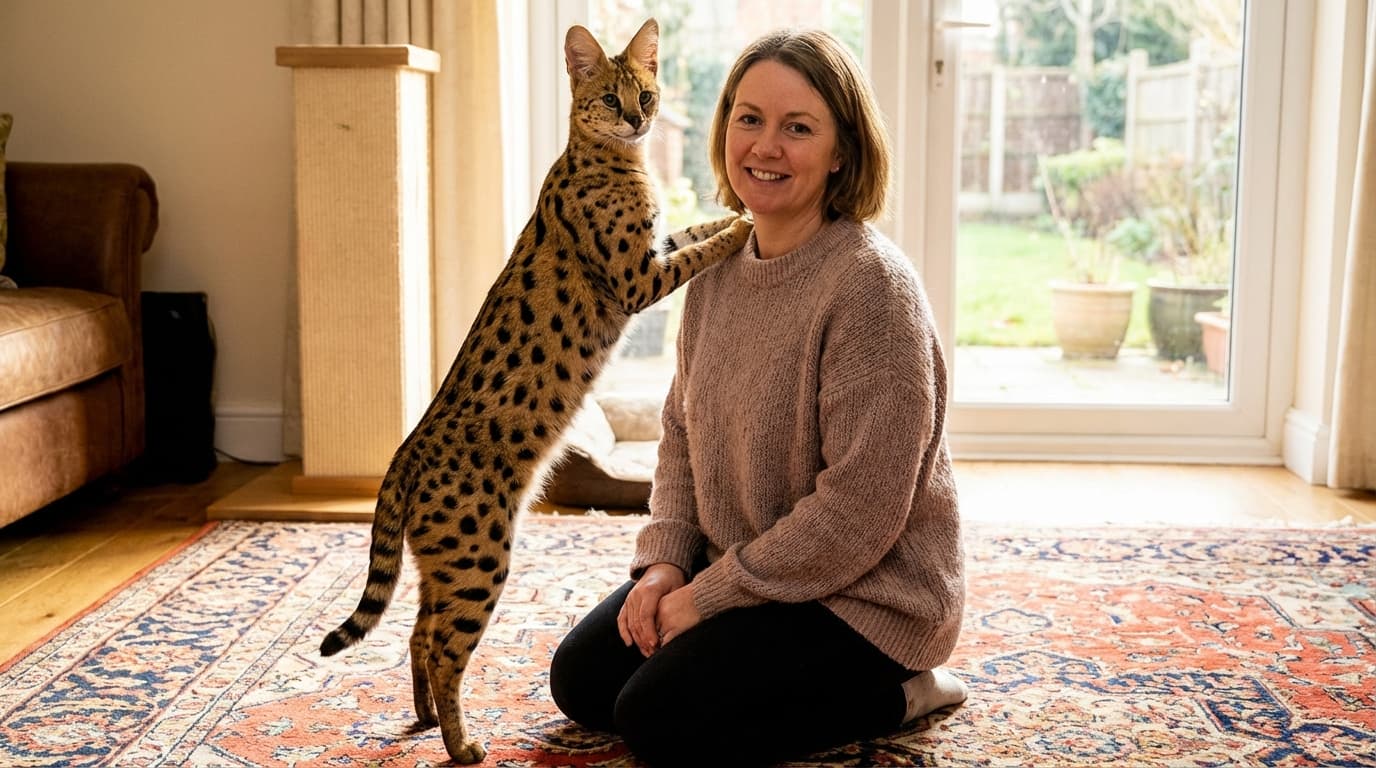
Imagine a cat so tall it can rest its chin on your kitchen counter without even trying. That is exactly what life was like for the owners of Arcturus, an F2 Savannah cat who holds the world record at over 19 inches tall. These stunning creatures look like miniature leopards wandering through your living room, but owning the tallest domestic cat breed is about much more than just having a cool looking pet.
As serval hybrid cats, Savannahs bring a wild energy that most people are not used to seeing in a house pet. They are famous for their loyalty and dog like personalities, but they also come with a high price tag and a long list of specific needs. Before you go looking for one of these expensive cat breeds, you need to know if your lifestyle can handle a feline that treats your refrigerator like a simple stepping stone.
We are going to look at everything from the Savannah cat jumping ability to the complicated Savannah cat legal status in different states. This guide covers the real costs, the personality quirks, and the physical space these animals require. By the end, you will know if you are ready for one of these high-energy pet cats or if you should stick to a more traditional breed.
Imagine a cat standing nearly 20 inches tall at the shoulder. That was Arcturus Aldebaran Powers, a Savannah cat who set the world record for height. It is easy to see why people are drawn to these animals. They look like miniature leopards walking through a living room, blending wild elegance with a domestic history that started back in 1986. While they are stunning to look at, they are much more than just a pretty face with spots.
Owning a Savannah is a long-term commitment since they can live up to 20 years. They are famous for being dog-like, often following their owners around or even learning to play fetch. But that high energy means they need a lot of attention. As one expert breeder put it, lazy owners are not advised. These cats are tall, slim, and incredibly athletic, which gives them a presence unlike any other breed.
You also have to consider the practical side of things like legal rules and genetics. Because they are hybrids, F1 Savannahs are restricted or even illegal in more than 10 states. The generation of the cat also changes everything from their size to their price tag. This guide will help you understand if your lifestyle matches the needs of these record-breaking felines.
Key insights:
- Early generations like F1 and F2 are the largest and most expensive because they have more wild DNA.
- Their tall and slim build often makes them look much larger than their actual weight suggests.
- Savannahs are highly social and require much more daily interaction than a typical domestic cat.
Half Wild, All Heart: The Science Behind the Hybrid
It all started on April 7, 1986. That is the day the first Savannah cat was born, a unique mix of a male African Serval and a female Siamese. This was not just a new breed; it was a bridge between the wild and the living room. When you look at a Savannah, you are seeing a genetic snapshot of that original cross. The amount of wild DNA in your pet depends entirely on how many generations they are removed from that first Serval ancestor. This percentage changes everything from how big they get to whether they are even legal to own in your city.
You will often hear people talk about high-generation cats, referring to F1 and F2 individuals. These cats are the closest to their wild roots and can weigh up to 25 pounds or more. In fact, an F2 named Arcturus Aldebaran Powers holds the record for the tallest domestic cat at over 19 inches tall. Because they carry such a high percentage of Serval DNA, these early generations behave differently than your average tabby. They are incredibly high-energy and can live for up to 20 years, making them a serious long-term commitment that requires plenty of space and patience.
Understanding the labels is key if you are looking to bring one home. An F1 is a first-generation cross with 50 percent Serval DNA, while an F2 is a second-generation cat. As you move down to F4 or F5, the cats become more domestic in size and temperament. Then there is the SBT, or Stud Book Traditional. These are purebred Savannahs bred only to other Savannahs for at least three generations. If you want a cat that can compete in TICA shows, you are looking for an F4 or later SBT cat, a status the breed finally earned in 2012.
Why are these cats so expensive? It mostly comes down to how hard they are to breed. Nature has a way of protecting its boundaries, and in the case of Savannahs, almost all male kittens from the F1 through F4 generations are born sterile. This means breeders have to wait until the F5 generation to find fertile males or continue outcrossing with domestic cats. This genetic hurdle is why early generations remain rare and why the legal status of these hybrids varies so much. In some states, owning an F1 is actually illegal without a permit.
Think of it this way: living with an F1 or F2 is like having a very athletic roommate who never grew out of their toddler phase. They will headbutt you for attention and might even learn to play fetch, but they also need much more from you than a bowl of kibble and a window perch. As the experts at F1Hybrids say, you only get out what you put into these cats, and lazy owners should probably look elsewhere. It is a big responsibility, but for the right person, the bond is unlike anything else in the cat world.
Key insights:
- F1 and F2 generations are the largest and most expensive because they have the highest percentage of wild DNA.
- Male infertility in the first four generations makes breeding Savannahs incredibly difficult and keeps prices high.
- SBT status is the gold standard for show cats, requiring at least three generations of Savannah-to-Savannah breeding.
Decoding the Lingo: What F1, F2, and SBT Actually Mean
Ever feel like you need a math degree just to pick out a pet? When you shop for Savannahs, you will see labels like F1 or F2 everywhere. The F stands for filial. This is just a simple way to track how many generations the cat is away from its wild serval ancestor. An F1 is a direct cross between a serval and a domestic cat. By the time you get to an F2, you are looking at a grand-kitten of a serval. These early generations are usually the largest and most expensive because they carry the most wild DNA. In fact, an F2 named Arcturus holds the world record for the tallest domestic cat, standing at over 19 inches tall.
Then there is the term SBT, which stands for Stud Book Traditional. Think of these as the purebreds of the Savannah world. An SBT cat has at least three generations of Savannah-to-Savannah breeding in its family tree. This matters if you want a show cat. TICA only started giving championship status to F4 and later generations in 2012. Using SBT cats helps breeders make sure the cats have a predictable look and a friendly personality instead of the more unpredictable traits of a first-generation hybrid.
You might wonder why these cats cost so much. The reality is that breeding them is very hard because of a biological quirk. Male Savannahs in the F1 through F4 generations are almost always sterile. This creates a huge bottleneck for breeders. They often have to wait until the F5 generation to get a fertile male or use outcrosses with other breeds. It is a slow and difficult process that requires a lot of patience, which is why those early generations remain so rare and sought after.
Key insights:
- F1 and F2 generations are the largest and most expensive due to their high percentage of wild serval DNA.
- SBT status is required for Savannah cats to compete in TICA championship shows.
- Male infertility in early generations (F1-F4) makes breeding Savannah cats exceptionally difficult.
Just How Big is the Tallest Domestic Cat Breed?
Imagine walking into a room and seeing a cat that looks more like a small, lithe leopard than a house pet. That is the reality of living with a Savannah cat. If you are used to typical domestic breeds, the sheer scale of these cats can be a bit of a shock. Many owners describe the experience as expecting a cat but getting a small dog instead. They have an athletic, lanky build that creates a bit of an optical illusion. Because they are so tall and slim, they often look much heavier than they actually are on the scale.
The numbers behind their height are genuinely impressive. An F2 male named Arcturus Aldebaran Powers actually holds the Guinness World Record for the tallest domestic cat, standing at 19.1 inches tall. To put that in perspective, that is nearly the height of a standard kitchen chair seat. While a typical house cat might weigh ten pounds and stand eight inches tall, an F1 or F2 Savannah can reach up to 40 pounds, though most stay between 10 and 25 pounds. They carry that weight on a frame designed for power and agility rather than bulk.
When you look at their profile, you will notice they are leggy, lean, and definitely larger than life. Their hind legs are actually longer than their front legs, which gives them a unique tilted appearance and incredible jumping power. This physical structure comes directly from their African serval ancestors. The first Savannah was born back in April of 1986 when a male serval was crossed with a Siamese domestic cat, and those wild genes still dominate the look of the early generations today.
Beyond just height, these cats have striking features like 'tear-streak' markings and ocelli. Ocelli are the eye-like spots on the back of their ears that help them look like they are watching predators even when their back is turned. It is these wild traits that make them so captivating, but they also come with responsibilities. Because of their high percentage of wild DNA, F1 Savannah cats are actually illegal or require special permits in more than 10 U.S. states. You are not just getting a tall cat; you are bringing home a piece of natural history.
Think of it this way: if a normal cat is a cozy sedan, a Savannah is a high-performance off-road vehicle. They are loyal and often described as dog-like because they love to play fetch and walk on leashes, but their size means your home needs to be ready for an athlete. They can easily clear a six-foot fence or reach the top of your refrigerator in a single bound. It is a big commitment for a very big cat, but for the right person, there is nothing else like it.
Key insights:
- The Savannah's height is its most famous trait, with record holders reaching over 19 inches tall.
- Early generations (F1 and F2) are the largest and most expensive due to their higher percentage of serval DNA.
- Their lanky build is an optical illusion that makes them look heavier and larger than their actual weight suggests.
- Ownership is restricted in many areas, so checking local laws regarding hybrid cats is a vital first step.
Leggy, Lean, and Larger Than Life
Walking into a room with an F1 or F2 Savannah cat feels less like owning a pet and more like hosting a small mountain lion. These cats are famous for being incredibly leggy, often standing much taller than your average tabby. Take Arcturus Aldebaran Powers, for example. He set the world record for the tallest domestic cat at over 19 inches tall. While most early generation males weigh between 10 and 25 pounds, some reach up to 40 pounds. Because they are so slim, they look much larger than they really are.
Their wild look comes from specific markings passed down from their African serval ancestors. You will notice dark tear-streaks running from the corners of their eyes down their snout, which helps reduce glare. If you look at the back of their large, rounded ears, you will see ocelli. These are bright white spots that look like extra eyes to keep predators away while the cat is distracted. These features make them look like they just stepped off the savanna.
Have you ever noticed how a Savannah seems to be perpetually ready to pounce? That is because their hind legs are slightly longer than their front legs, creating a unique tilted profile. This build is not just for show but is the secret behind their incredible jumping ability. When you see one in person, it is easy to understand why they are considered the tallest domestic breed in the world.
Key insights:
- The slim build of a Savannah makes them appear much larger than their actual weight suggests.
- Ocelli on the ears and tear-streaks on the face are direct traits inherited from the African serval.
- Longer hind legs give the breed a distinct tilted profile and superior jumping power.
The 'Dog-Like' Personality: Expect a Shadow, Not a Lap Cat
If you are looking for a cat that spends eighteen hours a day napping on a sun-drenched rug, a Savannah might give you a bit of a shock. These are not your typical "leave me alone" felines. Ever since the first Savannah was born back in April 1986 - a unique cross between a wild African serval and a domestic Siamese - this breed has been rewriting the rules on what it means to live with a cat. They do not just inhabit your home; they participate in your life. Most owners describe them as "shadows" because they will literally follow you from the kitchen to the bathroom, chirping and offering headbutts as a constant social check-in. It is a level of engagement that feels more like a partnership than traditional pet ownership.
It is this intense loyalty that often earns them the "dog-like" label. You can actually train these cats to walk on a leash or play a high-stakes game of fetch in the hallway. They do not just sit there when you come home; they greet you at the door with the kind of enthusiasm you would expect from a Golden Retriever. Because they can live for 12 to 20 years, you are signing up for a two-decade partnership with a creature that has the brain of a hunter and the heart of a companion. And they are not small, either. While they look lean and lanky, an F1 or F2 Savannah can weigh up to 24 pounds, with some rare record-breakers like Arcturus Aldebaran Powers standing nearly 19 inches tall. Imagine a cat that can look you in the eye while you are sitting on the sofa - that is the Savannah reality.
But here is the catch: that intelligence and size come with a massive energy bill. If you are not prepared to be an active part of their day, things can get messy fast. As the experts at F1Hybrids Savannah Cats put it, you really only get out what you put into this breed. For a lazy owner, a bored Savannah is a recipe for disaster. They are high-energy hybrids that do not just "turn off" when you are tired. Without enough mental stimulation, they will find their own fun, which usually involves opening your cabinets, clearing off your bookshelves, or figuring out how to turn on the kitchen faucet while you are at work. They need puzzles, climbing walls, and interactive play to keep that wild curiosity satisfied.
This high-octane lifestyle is why certain enthusiasts should probably look elsewhere. Beyond the daily play requirements, there is the legal side to consider. Before you get your heart set on an F1 hybrid, you need to check your local laws, as these cats are actually illegal or require special permits in more than ten U.S. states. Owning one is less like having a pet and more like having a very smart, very athletic roommate who never learned about personal space. If you are ready to put in the work, the reward is a bond unlike any other in the cat world, but if you want a low-maintenance lap warmer, you will likely find a Savannah to be more than you bargained for. Think of it this way: you are not just buying a cat; you are adopting a lifestyle.
Key insights:
- Generation matters: F1 and F2 cats are the largest and most active due to higher serval DNA.
- Expect a long-term commitment with a lifespan reaching up to 20 years.
- Legal restrictions are real; always check state and city ordinances before adopting a hybrid.
- Mental stimulation is just as important as physical exercise to prevent destructive behavior.
Why Lazy Owners Should Look Elsewhere
Let’s be real: if your idea of the perfect pet is a quiet companion that spends eighteen hours a day napping on a sunlit rug, a Savannah cat will be a rude awakening. These aren't your average domestic cats. Because they carry the DNA of the African serval, they operate on a completely different frequency than a typical tabby. Think of them more like a high-energy working dog trapped in a sleek, spotted body. They don't just want your attention; they demand your participation in their world every single day.
The reality of living with a hybrid is that 'boredom' is a dangerous word. Without enough mental stimulation and physical play, these cats will find their own entertainment, which usually involves reorganizing your high bookshelves or testing the structural integrity of your curtains. As the experts at F1Hybrids put it, you should only expect to get out what you put into this type of cat. If you’re willing to play fetch, go for leash walks, and provide complex puzzles, you’ll have a loyal friend for a lifespan of up to 20 years. If you’re not? Well, your house might pay the price.
It’s not just about their incredible jumping ability or the fact that some, like the record-breaking Arcturus, can stand nearly 19 inches tall. It’s about the daily intensity. These cats are famous for being 'dog-like' in their loyalty, but that means they need the same level of commitment as a high-drive canine. Before bringing one home, ask yourself if you have the stamina to keep up with a pet that treats your refrigerator as a climbing wall. For the right active owner, it’s an incredible adventure, but for someone looking for a low-maintenance roommate, it is a total mismatch.
Key insights:
- Savannahs require active daily engagement to prevent destructive behaviors caused by boredom.
- Their 'dog-like' reputation means they need physical exercise and mental puzzles, not just a full food bowl.
- Early generations (F1-F2) possess the highest energy levels and the most demanding social needs.
The Red Tape: Is It Even Legal to Own One?
Imagine finding your dream cat, a stunning mini-leopard with legs for days, only to realize your zip code makes owning one a crime. It sounds dramatic, but for Savannah cat fans, the legal situation is a total patchwork. Because these beauties are a cross between a wild African serval and a domestic cat, many lawmakers treat them more like exotic wildlife than house pets. You might live in a state where they are perfectly fine, while your friend three towns over could face a hefty fine just for having one in their living room.
The big sticking point usually comes down to filial generations, or how much wild DNA is still in the mix. F1 Savannah cats, which are 50% serval, are the ones that usually trigger the red tape. Currently, more than 10 U.S. states either flat-out ban F1s or require you to jump through hoops for a special permit. However, things often get easier as you move down the family tree. Many places that ban an F1 will happily allow an F4 or F5. This is because by the fourth generation, the cats are considered domestic enough that TICA even allows them in championship competitions.
But here is where it gets even trickier: state law is only half the battle. Even if your state says go for it, your specific city or county might have its own ideas. Some local ordinances are way stricter than state rules, sometimes banning any hybrid cat regardless of its generation. Before you drop thousands on one of these expensive cat breeds, you absolutely have to call your local animal control. Don't just take the breeder's word for it. A quick phone call can save you from the heartbreak of having to rehome your new best friend because of a hidden city code.
Key insights:
- Check both state and city laws, as local ordinances often override broader state permissions.
- F1 and F2 generations face the most restrictions due to their higher percentage of wild serval DNA.
- Generations F4 and later are more widely accepted and were granted TICA championship status in 2012.
The Savannah Cat Jumping Ability: Nowhere is Off-Limits
Think about your kitchen for a second. Most cats might eye the counter, but a Savannah cat is looking at the top of your refrigerator - and they can actually get there. With a vertical leap that can reach a staggering 8 feet, these cats don't just jump; they launch. This incredible athleticism comes from their African serval heritage. When you realize that the tallest domestic cat on record stood nearly 19 inches tall, it makes sense that 'up' is their favorite direction. If you leave a snack on top of the fridge thinking it is safe, you are in for a surprise.
Living with such a high-energy athlete means you have to rethink your interior design. We call it 'cat-ifying' your home. Since they crave height, providing tall cat trees, wall-mounted shelves, or even cleared-off tops of sturdy armoires is essential. Without these outlets, they might find their own path across your curtain rods or kitchen cabinets. It is all about giving them a legal way to express that wild DNA. As experts from F1Hybrids Savannah Cats point out, this isn't a breed for lazy owners. You have to stay one step ahead of their curiosity.
Safety is the other side of the coin when your pet can reach the ceiling. Open windows and high balconies are major risks because a Savannah might see a bird and jump before thinking about the drop. Screened-in 'catio' spaces or heavy-duty window guards are non-negotiable for these high-flyers. You also need to be aware of local laws, as their hybrid nature means they are restricted or require permits in over ten U.S. states. Keeping them safe and stimulated is a big commitment, but watching them move with such grace makes every bit of effort worth it.
Key insights:
- A Savannah's 8-foot vertical leap means standard 'out of reach' spots like the top of the fridge are easily accessible.
- Providing dedicated vertical spaces like wall shelves prevents them from using furniture or curtains as climbing frames.
- High-altitude safety is critical; window screens must be reinforced to handle the weight and force of a jumping hybrid cat.
The Price of Beauty: Why They Are So Expensive
When you see a price tag ranging from $1,000 to $20,000, it is natural to do a double-take. Why does a Savannah cat cost as much as a new car? It is not just about the exotic spots or the fact that an F2 male named Arcturus holds the world record for height at over 19 inches. The real cost starts long before the kitten arrives at your home. Breeding these cats is incredibly difficult and expensive. Because F1 through F4 males are usually sterile, breeders face a massive challenge in keeping the lineage going. They often have to wait until the F5 generation for fertile males or deal with complex outcrossing just to keep the breed alive.
Then there is the specialized care required during those early stages. Vet bills for exotic hybrids are not like your standard domestic cat checkup. Breeders invest heavily in high-quality diets and massive amounts of space to make sure these active cats grow up healthy. Since the first Savannah was born back in 1986 from a serval and a Siamese, the goal has been to balance that wild look with a friendly personality. But that balance comes with a literal price. Early generations like the F1 and F2 are the most expensive because they have the highest percentage of wild DNA. This makes them the largest and most impressive cats in the lineage.
Buying the cat is really just the entry fee. You are signing up for a commitment that lasts between 12 and 20 years. These are not low-maintenance pets that sleep on the sofa all day. As the experts at F1Hybrids Savannah Cats say, lazy owners are not advised. You will need to budget for a high-protein diet and enough vertical space to satisfy their amazing jumping ability. Between the initial cost and two decades of premium care, owning one is a big financial choice. It is a case of getting exactly what you put in, both in terms of your money and the high-energy loyalty you get back.
Key insights:
- Breeding challenges like male sterility in early generations drive up the initial purchase price.
- Owners should prepare for a 20-year financial commitment covering specialized diets and vet care.
- The high price reflects the rarity of F1 and F2 generations which carry the most wild DNA.
Common Questions About Savannah Cats
Thinking about bringing a Savannah cat into your home? You aren't alone. Ever since the first Savannah was born in 1986 from a cross between a male serval and a Siamese cat, they have fascinated people who want a wild look in a domestic package. But before you dive in, you probably have a few questions about what life is actually like with the world's tallest cat breed. For starters, yes, they really are that big. An F2 male named Arcturus holds the world record at over 19 inches tall, though most Savannahs just look larger than they are because of their long legs and lean frames. Think of them as the supermodels of the cat world: tall, slim, and striking.
One of the biggest hurdles for new owners is the legal landscape. The Savannah cat's legal status varies wildly depending on where you live. Because they are hybrids, F1 generations are actually illegal or require special permits in more than 10 U.S. states. This is why understanding 'filial generations' matters. An F1 is 50% serval, while an F5 has much less wild DNA. If you want a cat that is recognized for competitions, look for 'SBT' status. This means the cat has at least three generations of Savannah-to-Savannah breeding, a standard TICA officially recognized for championship status in 2012.
What is their personality like? Imagine a cat that acts more like a loyal dog. Savannahs are famous for following their humans around, giving headbutts, and even learning to walk on a leash. But don't expect a lazy companion who sleeps all day. As the team at F1Hybrids puts it, you should only expect to get out what you put in, and lazy owners are not advised. These cats have massive energy and a lifespan of 12 to 20 years, so you are signing up for a long-term, high-intensity commitment. They need mental puzzles, vertical space for jumping, and plenty of social interaction to stay happy.
You might also wonder why early generations come with such high price tags. Beyond their size - some F1s can weigh up to 40 pounds - breeding them is a massive challenge. Hybrid infertility is a real issue, specifically for males. Most males from the F1 through F4 generations are sterile, meaning breeders often have to wait until the F5 generation to find fertile males. This makes the breeding process slow and expensive, but it ensures that the cats being produced are healthy and carry those distinctive traits like the 'ocelli' spots on their ears and those beautiful facial tear-streaks.
So, is a Savannah right for you? It really comes down to your lifestyle. If you want a decorative pet that sits quietly on the sofa, this isn't it. But if you want an active, intelligent partner who will challenge you and keep you on your toes, there is nothing quite like them. Just be sure to check your local laws first and find a breeder who focuses on SBT status if you want a cat with a more predictable domestic temperament.
Key insights:
- Generation matters: F1 and F2 cats are the largest and most expensive, but they also face the most legal restrictions.
- Not for lazy owners: These cats require significant exercise and mental stimulation compared to typical domestic breeds.
- Record-breaking height: Their tall, slim build often makes them appear much heavier than their actual weight.
- Breeding challenges: Most early-generation males are sterile, which contributes to the high cost of the breed.
Is Your Home Ready for a Savannah?
Are you truly ready for a pet that could live up to 20 years and stand nearly 20 inches tall? It sounds like a dream, but your first step is a legal check. F1 Savannahs are actually illegal or require specific permits in over 10 U.S. states. Before falling for those spots, make sure your local laws allow them.
The bond is incredible but intense. These cats are famous for being dog-like and loyal, but they are not for everyone. As the experts say, lazy owners need not apply. You are looking at a high-energy athlete that might weigh 24 pounds or more. They need interaction, play, and a lot of your time.
If you are set on this journey, research is your best friend. Look for breeders who work with TICA-registered cats to ensure you get a healthy, well-socialized companion. A good breeder will interview you just as much as you interview them. This is a big commitment, so take the time to find the right match for your lifestyle.
Key insights:
- Check local state and city laws regarding hybrid cat permits before buying.
- Expect a 12 to 20 year commitment with a high-energy, social companion.
- Prioritize TICA-registered breeders to ensure health and breed standards.
Frequently Asked Questions
Not in the way most people imagine. They aren't aggressive wild animals looking for a fight, but they are definitely a lot of cat to handle. Because they're a mix of a domestic cat and an African serval, they have way more energy and curiosity than your average tabby.
Here's the thing: they can weigh up to 40 pounds in the early generations, so a playful pounce feels much heavier. While they're known for being loyal and even dog-like, they need a ton of interaction. If you're a lazy owner, that's when you might see behavior issues. Also, keep in mind that F1 generations are actually illegal or require special permits in over 10 states, mostly because of their size and heritage.
They are basically the high-jump champions of the cat world. It's not uncommon for a Savannah to leap eight feet straight up from a standing position. Their long legs and powerful back ends, which are often higher than their shoulders, give them a massive physical advantage.
You'll find that no shelf or top of a fridge is truly off-limits for them. This jumping ability comes directly from their serval ancestors who hunt birds in tall grass. In fact, a Savannah named Arcturus holds the world record for being the tallest domestic cat, standing at over 19 inches tall. If you're bringing one home, you'll definitely want to clear off your high mantels and bookshelves.
You will find that while they do not strictly require raw meat to survive, many breeders and owners highly recommend it. Because they are part serval, their bodies often do better with high protein and fewer fillers than what you see in standard store bought kibble.
It really depends on the generation of your cat. Early generations like an F1 or F2 often thrive on a carefully balanced raw diet or a very high quality grain free wet food. Just remember that if you go the raw route, you have to do it right with the correct vitamins or you could cause health issues. It is definitely more work than just opening a bag of dry food, so lazy owners are not advised.
It mostly comes down to their wild ancestry and how different states classify hybrid animals. Since Savannah cats are a cross between a domestic cat and an African serval, some lawmakers view them as wild animals rather than typical house pets.
States often worry about the impact these high energy cats might have on local wildlife if they get loose. You will see that F1 and F2 cats face the most rules because they have the highest percentage of serval DNA. In more than 10 states, they are either banned or require special permits. Always check your local city laws because sometimes a city has stricter rules than the state does.
Conclusion
Owning a Savannah is like bringing a piece of the wild into your living room. You get the height of the tallest domestic cat breed combined with a personality that acts more like a loyal dog than a typical feline. It is a big change for any home, especially when you realize that no shelf is high enough to escape that famous Savannah cat jumping ability.
Before you fall in love with those spots, remember that these serval hybrid cats come with real homework. You have to check your local Savannah cat legal status and be ready for a high-energy pet that needs constant play. They are among the most expensive cat breeds for a reason, so the commitment of time and space is just as big as the price tag.
If you have the energy and the room to let them roam, your next step is finding a responsible breeder who puts health and personality first. Living with a Savannah is a wild ride, but for the right person, it is a deeply rewarding bond. Get ready for a life where your cat is always right by your side.
Send it to someone who should read it next.
PurrScript Editorial Team
Editorial Team
PurrScript's in-house editorial team. We research, write, and review every guide using established veterinary and behavioral resources, and update articles as best practices evolve.
View all articles