Signs of Depression, Why They Pee Outside the Box, and Play
Indoor cat depression, litter box avoidance, and constant meowing are behavioral signals, not personality quirks. This guide explains the mechanism behind each problem and what actually fixes it.

PurrScript Editorial Team
Editorial Team
Signs of Depression, Why They Pee Outside the Box, and Play
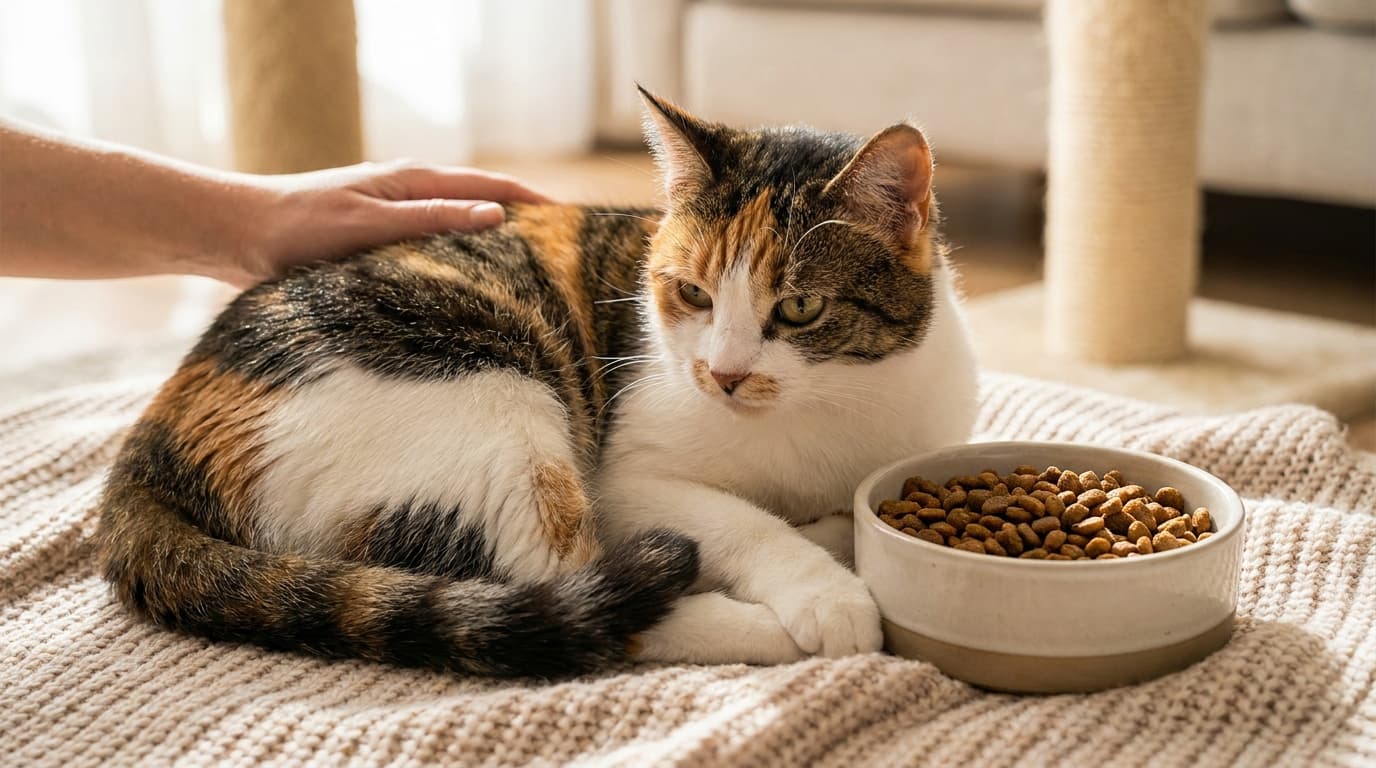
Signs of depression in indoor cats are easy to attribute to personality rather than recognize as behavioral signals — and that misread has real consequences. A cat withdrawing from contact, losing interest in food, or abandoning their grooming routine is not having a bad day. They are communicating a problem that, if unaddressed, compounds into entrenched behavioral patterns and preventable health conditions.
The same applies to litter box avoidance, constant meowing, and restlessness. These are not personality quirks or attention-seeking theatrics. They are outputs of an environment that is not meeting an indoor cat's biological and psychological needs. The gap between what indoor cats require and what most home environments provide by default is where almost every common behavioral problem originates.
Most guides on indoor cat behavior give you a symptom list and a checklist of quick fixes. This one explains the mechanism behind each problem — why the behavior is happening, what it is communicating, and what interventions actually address the root cause rather than managing the surface symptom. Understanding the reasoning is what allows you to adapt when your specific situation does not match the standard scenario.
By the end you will understand how to identify depression before it becomes entrenched, why litter box problems are almost never about spite, what drives constant vocalization and how to stop reinforcing it, how much and what kind of exercise actually matters, and which toy strategies produce lasting engagement rather than three days of interest followed by permanent indifference.
What Are the Most Common Signs of Depression in Indoor Cats?
Feline depression presents behaviorally rather than emotionally, and the clearest indicators are changes from baseline — what the cat used to do that they have stopped doing. Sustained withdrawal from social contact, abandonment of preferred resting spots in favor of isolated or enclosed locations, and loss of interest in activities that previously produced engagement are the three most consistent early signals. These changes are meaningful precisely because they represent a departure from established patterns, not because they look dramatic in isolation.
Grooming changes are among the most reliable physical indicators, and they manifest in both directions. Under-grooming produces a dull, oily, or matted coat — most visibly at the lower back and base of the tail where the cat's reach is limited. Over-grooming from anxiety produces symmetrical hair loss, typically on the belly, inner thighs, or flanks. A healthy cat maintains a reasonably consistent grooming routine. Significant deviation in either direction, sustained over more than two to three days, is worth investigating rather than waiting out.
Appetite changes carry a specific urgency in cats that does not apply to most other animals. Hepatic lipidosis — fatty liver disease — can develop within 48 to 72 hours of inadequate food intake, particularly in overweight cats. The liver begins metabolizing fat reserves faster than it can process them, and the condition can become life-threatening without treatment. A cat that skips two consecutive meals should prompt a vet contact regardless of what else is or is not happening behaviorally. This is not a wait-and-see situation.
The connection between emotional stress and physical illness in cats is direct and well-documented. Feline Idiopathic Cystitis — bladder inflammation without any bacterial infection — is caused or triggered by environmental stress in a substantial proportion of cases. A cat showing behavioral signs of depression that also begins avoiding the litter box may not have two separate problems. The same stressor is driving both responses simultaneously, which is why treating only the litter box issue without identifying and addressing the underlying stress source produces temporary improvement followed by recurrence.
The most common triggers for depressive behavioral changes in indoor cats are loss of a companion — human or animal — significant environmental disruption such as moving or renovation, chronic under-stimulation, undiagnosed physical pain, and territorial stress from visible outdoor cats. Of these, undiagnosed pain is the most frequently missed because cats mask physical discomfort effectively and owners attribute the behavioral change to mood rather than medical cause. A vet assessment should precede any behavioral intervention to rule this out.
**Key insights:
- Schedule a vet visit for any sustained behavioral change — physical pain and hyperthyroidism both produce symptoms that closely resemble depression and must be ruled out first.
- Keep a three-day log of eating, grooming, and litter box use before the appointment — this gives the vet concrete patterns rather than your best estimate of recent behavior.
- Watch for over-grooming as carefully as under-grooming — bald patches on the belly or inner thighs are anxiety signals that owners frequently overlook.
- Identify whether any significant change in the household — schedule, residents, furniture, another animal — coincides with when the behavioral shift began.
- Do not wait out a cat that has skipped more than two consecutive meals — fatty liver disease develops quickly and requires veterinary intervention.
Why Grooming and Appetite Changes Are the Most Actionable Early Signals
Grooming and appetite are the two behavioral systems most directly observable on a daily basis, which makes them the most practical early warning indicators available to cat owners. Changes in either system are not subtle — a coat that was consistently clean and now looks dull, or a cat that reliably finished meals and now regularly leaves food — are departures that do not require veterinary training to notice. The challenge is recognizing them as signals rather than dismissing them as temporary phases.
The three-day log is the single most useful tool for any owner who suspects a problem but is uncertain whether it is significant. Documenting meals eaten or skipped, grooming observed or absent, and litter box use across three days transforms a vague impression into concrete data. Vets report that owners who arrive with written behavioral records consistently enable faster and more accurate assessments than those who rely on memory. The log costs nothing and takes under a minute per day.
**Key insights:
- Start a three-day log today if anything about your cat's eating or grooming seems off — written records produce better vet appointments than recalled impressions.
- Check the lower back and base of the tail specifically for matting or dullness — this is where grooming decline shows first because it is hardest for the cat to reach.
- Offer a different food texture, not just a different flavor, if appetite seems reduced — a cat rejecting wet food may accept pâté when it refuses chunks.
Why Is My Indoor Cat Peeing Outside the Litter Box?
Litter box avoidance is the most frequently reported feline behavior problem in veterinary practice, and its causes divide cleanly into two categories: medical and environmental. The correct starting point is always medical. Urinary tract infections, bladder stones, and Feline Idiopathic Cystitis all cause pain during urination, and a cat that experiences pain in the litter box rapidly develops a conditioned aversion to it — the box becomes the location the cat's nervous system associates with the painful sensation. This aversion can outlast the underlying condition by weeks, which is why house soiling sometimes continues even after a UTI resolves. Behavioral intervention applied to a cat in physical pain does not work and delays appropriate care.
Once medical causes are ruled out, the assessment shifts to the litter box setup itself. The standard veterinary behaviorist recommendation is N+1 boxes — one per cat plus one additional, placed in separate locations that cannot be simultaneously monitored or blocked by one cat. In a two-cat household, this means three boxes. The reason is resource guarding: a dominant cat can control access to a single litter box location without ever making physical contact with the subordinate cat — a sustained stare or body positioning near the entrance is sufficient to create avoidance. The subordinate cat finds an alternative. The owner discovers the alternative and addresses the symptom without identifying the cause.
Box size is consistently underestimated as a factor. Most commercially sold litter boxes are sized for retail display convenience rather than feline anatomy. A cat should be able to turn a full circle, scratch, and crouch without touching any wall of the box. For most adult cats, this requires a box significantly larger than standard retail options. Large plastic storage containers with one side cut down to allow entry are used by many owners and veterinary staff as a practical, inexpensive alternative that actually fits the cat.
Litter type preference is individual but follows consistent patterns. Most cats prefer fine, unscented, clumping litter. Scented litters are marketed to owners and actively avoided by many cats — the fragrance compounds that make a litter smell clean to a human register as an aversive chemical signal to an animal with an olfactory system fourteen times more sensitive. If litter box avoidance began shortly after a litter brand change, that correlation is almost certainly causal. Return to the previous litter and assess within a week.
Spraying and inappropriate urination are two distinct behaviors that require different responses and should not be conflated. Spraying is a territorial marking behavior: the cat backs up to a vertical surface and deposits a small amount of urine while the tail quivers. The volume is small and the surface is vertical. Inappropriate urination is a full bladder void on a horizontal surface — rugs, laundry, bath mats. Identifying which behavior is occurring determines whether you are dealing with a setup problem, a medical problem, or a territorial response to an external stressor. A neutered cat that begins spraying near windows when a visible outdoor cat is present is not having a litter box problem. Blocking the sightline with frosted window film at cat-eye level typically resolves the spraying within days.
**Key insights:
- See a vet before attempting any behavioral or environmental intervention — medical causes produce behavior that looks identical to environmental causes and must be excluded first.
- Apply the N+1 rule in multi-cat homes and place boxes in locations that cannot all be monitored from one position — guarding happens subtly and often goes completely unwitnessed.
- Use unscented, fine-clumping litter as the default — if you recently changed litters and avoidance followed, return to the previous type before anything else.
- Clean all accident sites with an enzymatic cleaner, not standard detergent — uric acid crystals survive standard cleaning and remain detectable to the cat as a designated elimination site.
- Distinguish spraying from inappropriate urination by surface orientation — vertical marks near windows in a previously reliable cat indicate territorial stress, not a litter box problem.
Spraying vs. Inappropriate Urination: Why Getting This Wrong Wastes Weeks
Treating spraying as a litter box problem and treating litter box avoidance as territorial marking are two of the most common and most costly mistakes in managing feline house soiling. Each requires a different intervention, and applying the wrong one produces no improvement while consuming the owner's goodwill and patience. The physical distinction is straightforward: vertical surface, small volume, tail quivering posture — spraying. Horizontal surface, full void, no characteristic posture — inappropriate urination.
Spraying in neutered cats is almost always driven by a perceived territorial threat. The most common trigger in indoor-only cats is a visible outdoor cat, particularly one that approaches the home regularly. The indoor cat cannot access or confront the intruder, so they mark the interior boundary — the wall nearest the window, the curtains, the baseboard in the intruder's sightline. The correct intervention removes or reduces the triggering stimulus: frosted window film at cat-eye level, rearranging furniture to reduce window access, or synthetic pheromone diffusers (Feliway Classic) positioned near the affected windows. Adding more litter boxes does nothing for this presentation.
**Key insights:
- Identify the surface before deciding on a response — vertical marks near windows indicate territorial stress, not a litter box setup problem.
- Apply frosted window film at cat-eye level if spraying correlates with a visible outdoor cat — addressing the trigger is faster and more effective than managing the symptom.
- Use enzymatic cleaner on vertical marks and allow full drying before the cat can return to the area — residual scent drives re-marking even after the territorial stressor is removed.
My Indoor Cat Is Constantly Meowing for Attention — What Is Actually Going On?
Adult cats do not meow at other cats. The behavior exists in adult domestic cats specifically as a communication directed at humans — kittens meow at their mothers, and cats that live with people retain and extend this behavior into adulthood because it produces results. Persistent attention-seeking vocalization is therefore not an expression of need in the abstract. It is a learned behavior that has been reinforced, often inadvertently, to the point where the cat has established it as a reliable strategy for producing a desired response.
The reinforcement mechanism is the most important concept for any owner dealing with persistent meowing. The sequence is: cat vocalizes, owner responds — with food, eye contact, verbal reply, or even a frustrated attempt to quiet the cat — cat's nervous system registers that vocalization produced a result, vocalization frequency increases. Every response, including negative ones, confirms to the cat that the strategy is working. An extinction attempt — consistently not responding — initially produces an extinction burst, where the behavior escalates in frequency and intensity before it declines. Most owners give in during the extinction burst, which teaches the cat to vocalize louder and longer to achieve the same result. The intervention only works if it is applied with complete consistency through the burst.
The timing of vocalization provides diagnostic information. Cats are crepuscular — most active at dawn and dusk — and a cat that vocalizes predominantly at night or in the early morning hours is expressing unmet activity needs during their natural peak period. If daytime enrichment is insufficient to discharge predatory drive, that drive does not disappear — it surfaces during the hours when the cat's biological activity cycle is at its peak. Two 15-minute interactive play sessions daily, with one session timed close to the owner's usual bedtime, produce measurable reduction in nighttime vocalization in most cases within one to two weeks.
In cats over 10 years old, sudden increases in vocalization should be assessed medically before any behavioral intervention is applied. Hyperthyroidism — among the most common endocrine disorders in older cats — increases vocalization as a primary symptom. Cognitive dysfunction syndrome, the feline equivalent of dementia, produces disorientation-associated vocalization particularly at night that is qualitatively different from attention-seeking calls and does not respond to behavioral modification. Applying behavioral training to a medical symptom delays appropriate care without producing improvement.
**Key insights:
- Never respond to vocalization — not to feed, not to shush, not with eye contact — any response confirms the strategy works; wait for a moment of quiet and respond then.
- Schedule a 15-minute interactive play session within an hour of your usual bedtime — this discharges crepuscular energy during the day and reduces nighttime activity peaks.
- Expect an extinction burst when you stop responding — the behavior will intensify briefly before declining; any response during this phase resets the training.
- Introduce puzzle feeders at one meal per day — foraging engagement reduces the unmet stimulation that drives between-meal vocalization.
- For cats over 10, see a vet before any behavioral intervention — hyperthyroidism and cognitive dysfunction both produce vocalization changes that require medical treatment.
How Much Exercise Does an Indoor Cat Actually Need Each Day?
The standard veterinary recommendation is 20 to 30 minutes of active play daily, divided into two or three sessions rather than one continuous block. The session structure matters because cats are sprint hunters, not endurance animals — their predatory behavior in the wild consists of short, intense bursts of stalking, chasing, and catching, followed by rest. A single 30-minute session of continuous low-intensity play is less effective at discharging predatory drive than two 15-minute sessions of genuinely intense, prey-mimicking engagement. The goal is not cardiovascular exercise in the human sense. It is completion of the predatory behavioral sequence.
The predatory sequence is the key concept: detect, stalk, chase, catch, kill, consume. Toys and play sessions that allow the cat to progress through this full sequence produce the neurological satisfaction that reduces between-session restlessness, attention-seeking, and stress-driven behavior. Toys that only trigger the chase phase — a ball rolling in a straight line, a laser pointer — activate the sequence without completing it, which leaves the predatory drive partially discharged and sometimes produces frustration rather than satisfaction. This is the specific problem with laser pointers as a primary play tool: the cat can never catch the dot, so the sequence never completes.
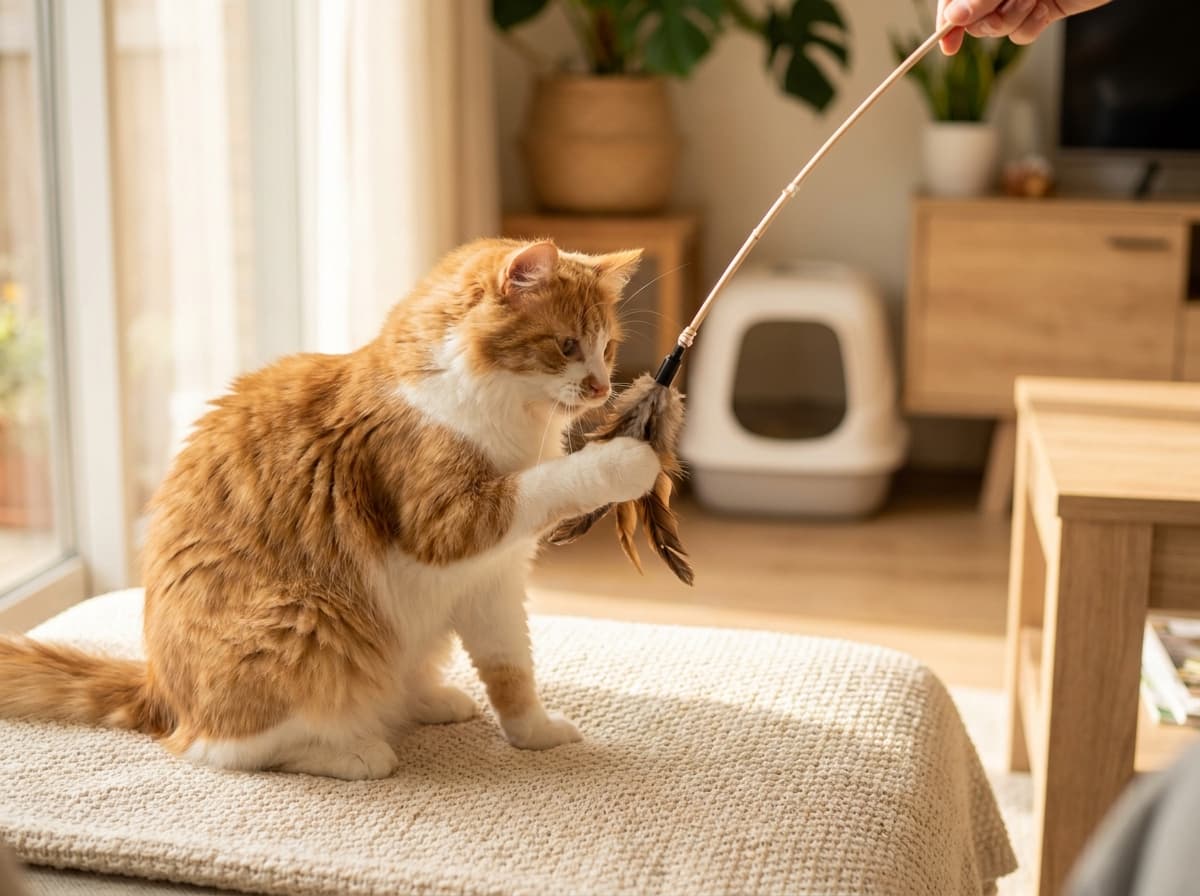
The quality of movement during a play session determines its effectiveness more than its duration. A wand toy moved by a person who varies the speed, direction, and trajectory unpredictably — darting quickly, freezing, creeping slowly, hiding behind furniture, then bursting out — mimics prey behavior in a way that a battery-powered toy on a fixed circuit cannot. The unpredictability is what sustains engagement. A cat that can predict exactly where the toy will go next loses interest within minutes. A cat that cannot predict the toy's next movement stays locked in predatory focus for the full session.
Age and physical condition significantly affect what adequate exercise looks like. A two-year-old cat and a twelve-year-old cat with early arthritis need fundamentally different play approaches. For older or less mobile cats, ground-level toys requiring minimal jumping, shorter sessions with longer recovery periods between them, and puzzle feeders that provide cognitive engagement without physical strain are appropriate substitutes for athletic wand toy play. The behavioral goal — a cat whose predatory drive is regularly engaged and discharged — is the same. The format needs to match what the cat's body can actually do.
**Key insights:
- Aim for two 10 to 15-minute sessions daily rather than one long session — sprint-pattern play discharges predatory drive more effectively than continuous low-intensity movement.
- Move wand toys unpredictably — vary speed, direction, hiding, and freezing — the unpredictability is what keeps the cat engaged, not the toy itself.
- End every session by allowing the cat to catch and bite the toy, then offer a small treat — completing the predatory sequence prevents frustration.
- If using a laser pointer, always land the dot on a physical toy or treat at the end — give the cat something catchable to complete the sequence.
- Adjust expectations for older cats — puzzle feeders and ground-level toys count as meaningful activity when jumping is no longer comfortable.
The Best Interactive Toys for Indoor Cats to Beat Boredom
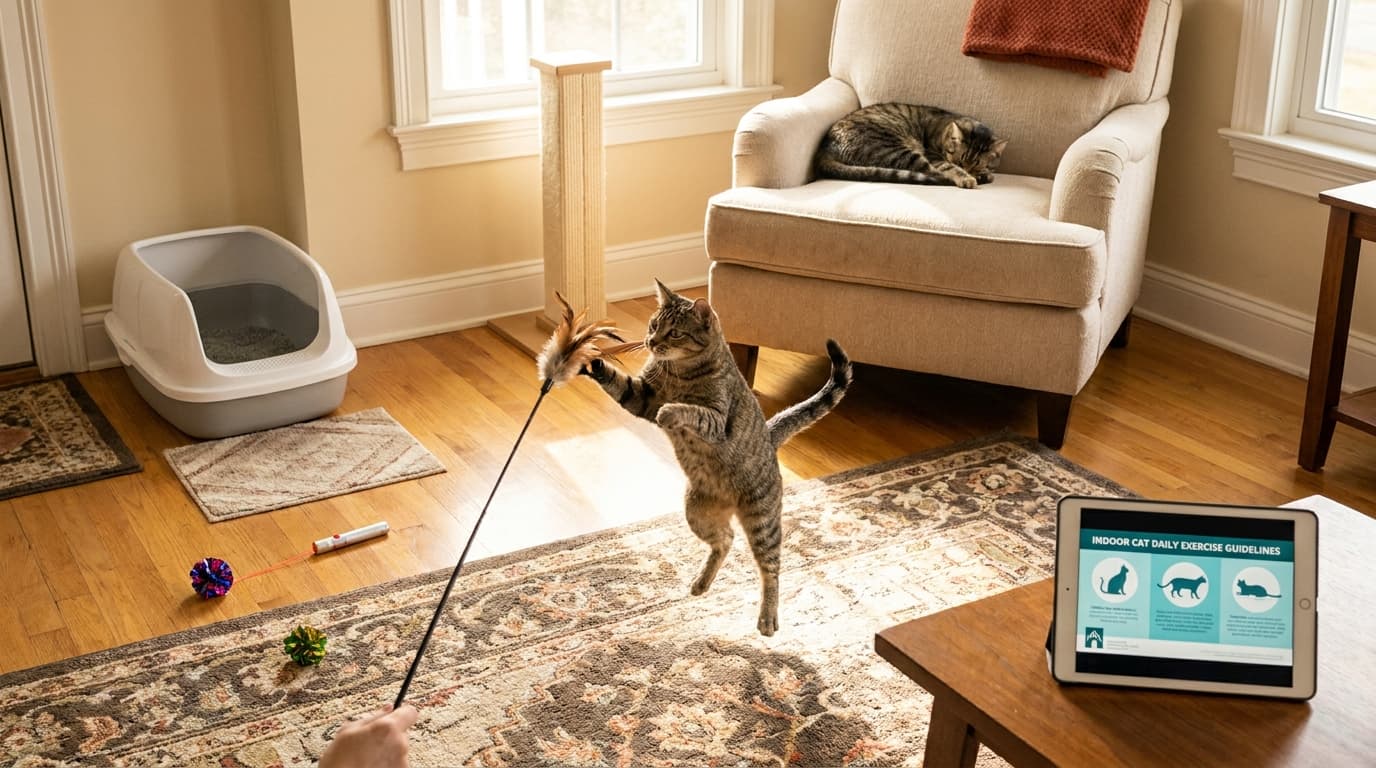
The toy market for cats is large, heavily marketed, and largely disconnected from what actually drives feline engagement. Most toys are designed to appeal to owners browsing a store — they look impressive, involve batteries, and produce lights and sounds. The toys that produce consistently high engagement in cats are almost all either human-operated, designed to allow a physical catch, or structured to mimic the specific characteristics of prey movement. Unpredictability is the common factor: prey moves irregularly, pauses unexpectedly, and behaves in ways that cannot be anticipated. A toy that moves in a fixed pattern — oval, circle, predictable circuit — loses a cat's serious attention within minutes to days.
The rotation principle is the highest-leverage, lowest-cost adjustment most owners can make to their toy strategy. When all toys are permanently available, they register as environmental fixtures rather than prey. A toy that disappears into a drawer and reappears a week later is novel again — the cat's brain re-registers it as something worth investigating. Three toys on a weekly rotation sustain higher and more consistent engagement than twelve toys available continuously. This is not a trick; it is a direct consequence of how feline prey-detection cognition works. Prey that never leaves cannot be hunted.
Wand toys operated by a person who genuinely varies the movement pattern are the category that produces the most complete predatory engagement. The physical lure — feather, fur, crinkle material — matters less than the movement quality. A swivel attachment between the lure and the string allows the feather to spin and flutter during movement, producing rotational unpredictability that fixed-attachment lures cannot replicate. This is why wands with swivel-attached feather lures consistently outperform fixed-lure alternatives in sustained engagement.
Puzzle feeders address cognitive engagement rather than physical exercise, and for most indoor cats — who are significantly more cognitively under-stimulated than their owners realize — this addresses a distinct unmet need. Converting one meal per day to a Level 1 puzzle feeder extends mealtime from 30 seconds to 10 or more minutes and provides active mental work in place of passive consumption. The appropriate starting point is the simplest possible format: a flat tray with shallow compartments, or a muffin tin. Introducing too-difficult feeders causes the cat to give up and walk away, which is the opposite of the enrichment goal. Increase difficulty only after the cat solves the current level comfortably.
Kicker toys — long, stuffed fabric toys the cat can grab with the front paws and kick with the rear legs — allow the bunny-kicking behavior that represents the final stage of the predatory sequence: subduing captured prey. This is a full-body workout that many cats initiate independently, without owner participation, making it the category most reliably associated with self-directed play. A single well-made kicker toy left accessible will often be used spontaneously multiple times per day, which is more than can be said for most battery-powered alternatives.
**Key insights:
- Rotate three to five toys on a weekly schedule — store them out of sight between rotations so they register as novel when reintroduced.
- Invest in one quality wand toy with a swivel-attached lure and use it for active sessions — vary your movement pattern deliberately rather than dragging it in a straight line.
- Start puzzle feeders at the simplest possible format and increase difficulty only after consistent successful use — a frustrated cat abandons the feeder entirely.
- Add a kicker toy for self-directed play between sessions — cats often initiate bunny-kicking behavior independently, which extends enrichment beyond supervised play time.
- Never leave wand toys accessible unsupervised — the string is an ingestion and entanglement hazard; store it after every session.
When the Real Problem Is the Home Environment, Not the Cat
A large proportion of behavioral problems attributed to individual cat temperament are actually household design problems. Cats are territorial animals whose sense of security depends on uncontested access to resources — food, water, resting locations, elimination areas, and navigable paths through their territory. When those resources are concentrated, insufficient in number, or positioned in ways that allow one cat to control access, the resulting competition produces chronic low-level stress that manifests as the full range of behavioral symptoms covered in this article: depression, litter box avoidance, vocalization, and inter-cat aggression.
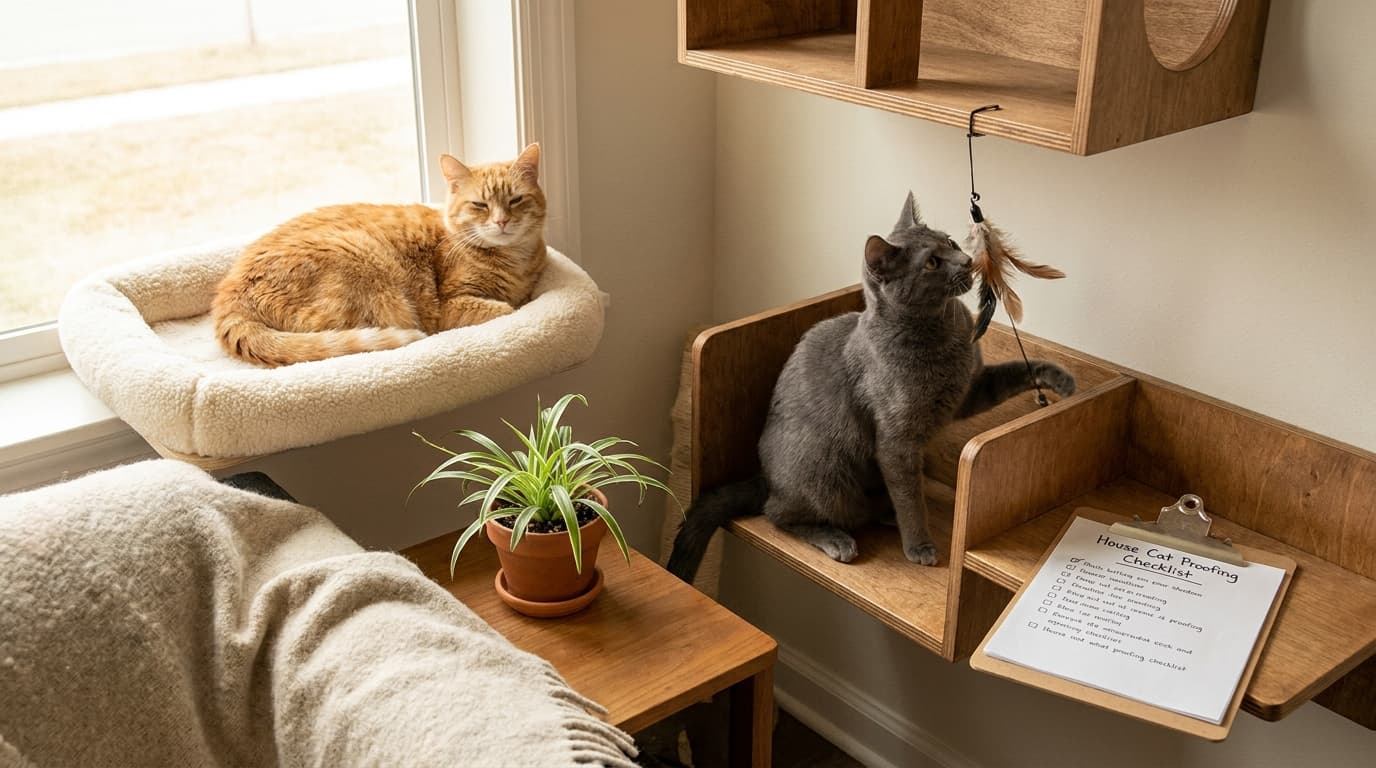
Vertical space is the most consistently underestimated resource in indoor cat environments. In the wild, height provides security — elevation allows a cat to survey territory and monitor threats without being accessible. In a flat environment, a subordinate cat displaced from floor-level resources by a more dominant housemate has nowhere to go. A cat tree reaching close to ceiling height, wall-mounted shelves at staggered elevations, or cleared high shelf space creates what behavioral ecologists call vertical territory — routes and resting locations that do not require a subordinate cat to cross a dominant cat's established ground territory to access. This single environmental addition resolves a significant proportion of multi-cat tension problems without any behavioral modification effort.
Feeding station design is another area where small changes produce disproportionate results. Bowls placed side by side force cats to eat in proximity, which is inherently stressful for a solitary hunter that does not share food in any natural context. Moving feeding stations to separate rooms, or at minimum to locations where neither cat can be approached from behind by the other while eating, eliminates a daily compulsory stress event. A cat that eats defensively — standing over the bowl, eating rapidly, vomiting immediately after — is almost always responding to resource competition rather than a digestive problem.
**Key insights:
- Add vertical space as a first intervention in any multi-cat home with behavioral tension — elevated territory gives subordinate cats routes and resting spots that do not require confronting a dominant cat.
- Separate feeding stations into different rooms or corners where neither cat can be approached from behind while eating — defensive eating behavior is almost always social, not digestive.
- Watch for subtle resource guarding — a cat sitting in a doorway, near a food bowl, or in the path to the litter box without using those resources may be blocking another cat's access.
- Use Feliway Multicat diffusers specifically in multi-cat homes — the formulation differs from the single-cat Classic version and targets inter-cat tension rather than general anxiety.
- For persistent multi-cat conflict that environmental changes do not resolve, consult a veterinary behaviorist — this goes beyond what enrichment modifications alone can address.
Frequently Asked Questions
Yes, and it is one of the most reliably documented triggers for behavioral change in cats. Cats build their sense of security almost entirely on olfactory familiarity — their own scent markings, the accumulated smell of their home environment, the scent of their people embedded in furniture and textiles. A move removes all of this simultaneously. The new environment smells of strangers and unknown animals, and the cat's threat-detection system treats that uncertainty as a potential hazard that requires vigilance rather than relaxation.
The most effective approach is to set up a single scent-familiar base room before allowing access to the whole house — a smaller space containing the cat's existing bedding, litter box, food, water, and an item of clothing with the owner's scent. This provides an olfactory anchor from which the cat can expand exploration at their own pace rather than being overwhelmed by an entirely unfamiliar space. A Feliway Classic diffuser in that room for the first two weeks helps signal safety through synthetic facial pheromone analogs. Most cats adjust meaningfully within two to six weeks. If significant behavioral problems persist beyond that, a vet conversation is warranted to rule out Feline Idiopathic Cystitis and other stress-triggered physical conditions.
Soft surface preference in cats with litter box aversion is not random. Soft, absorbent materials feel similar to natural outdoor substrates — soil, leaf litter, grass — and absorb urine without splashing, which eliminates the negative sensation that a painful urination produces when it contacts hard surfaces. A cat that has developed a box aversion through pain, an aversive litter type, an inadequate size box, or social blocking is not targeting your laundry specifically. They are seeking the substrate profile that feels most comfortable and safest for a vulnerable moment.
The solution is almost never about the laundry. It is about diagnosing and correcting the litter box situation that drove the cat away from it. Start with a vet visit to rule out a UTI, cystitis, or bladder stone. Then assess the box for size, cleanliness, litter type, and location. A cat with a history of painful urination may need a transitional period where a litter box is temporarily placed in or near the location they have been using, then gradually repositioned over weeks. Clean all affected fabric with an enzymatic cleaner — standard detergent does not break down uric acid crystals, and the residual scent the cat can still detect marks the location as an established elimination site.
The honest answer is that the surface presentations overlap significantly enough that a vet visit is the appropriate first step for any significant behavioral change, regardless of whether it looks medical or behavioral. Cats are biologically adapted to conceal illness — a visibly sick cat in the wild is a vulnerable cat — and by the time behavioral changes are apparent to an owner, an underlying condition may already be well established. Lethargy, reduced appetite, decreased social contact, and litter box changes all occur in both boredom and illness, and there is no reliable behavioral test that distinguishes them definitively.
The most practically useful distinction is onset pattern. Gradual behavioral changes developing over weeks in an otherwise consistent cat are more likely to be environmental in origin. Sudden changes — a cat that was behaviorally normal yesterday and is significantly different today — almost always have a physical cause and warrant a same-week vet appointment. When genuinely uncertain, a single diagnostic appointment to exclude medical causes is less costly in time, money, and the cat's welfare than weeks of behavioral intervention applied to a cat that is actually in pain.
Laser pointers are effective for generating physical activity but problematic as a sole play format because they structurally prevent completion of the predatory sequence. The predatory drive that the laser activates — the stalk and chase components — requires a catchable target to resolve satisfyingly. Because the dot cannot be caught, the sequence remains perpetually incomplete. Some cats handle this without apparent difficulty. Others show specific post-session frustration behaviors: continued frantic searching for the dot, redirected agitation toward objects or people, and a restlessness that persists rather than the satisfied calm that follows a completed hunt.
The practical fix is simple: end every laser session by landing the dot on a physical toy — a crinkle ball, a kicker toy, a feather — that the cat can actually catch, bite, and carry. This completes the sequence and avoids the frustration response. Used this way, laser pointers are a useful warm-up or supplementary tool for cats that respond well to the chase phase. Used alone as the only play format, they leave the predatory system chronically activated without resolution, which contributes to the restlessness and attention-seeking behavior they are meant to address.
Conclusion
The pattern running through everything covered here is that indoor cat behavioral problems are almost never about what they appear to be on the surface. Depression is not a mood — it is a communication. Litter box avoidance is not spite — it is pain avoidance or resource competition. Constant meowing is not neediness — it is a reinforced learned behavior combined with unmet stimulation needs. Restlessness is not a personality trait — it is a predatory drive with no adequate outlet. Recognizing these behaviors as information rather than problems to suppress changes every decision that follows.
The sequence that produces the best outcomes is consistent: rule out medical causes first, then address the environmental root cause, then establish the routines that prevent recurrence. Skipping the medical step wastes weeks applying behavioral interventions to cats in physical pain. Addressing the symptom without the root cause produces temporary improvement and recurring problems. The environmental changes required are almost always modest — an extra litter box, a cat tree, a twice-daily play session, puzzle feeders at one meal — but they need to be maintained consistently rather than applied intensively for a week and abandoned.
Two things to do today: if you have a multi-cat home without N+1 litter boxes in separate locations, add one. If play sessions are irregular or absent, set a phone reminder for the same two times daily and keep it for two weeks before evaluating whether anything has shifted. Small, consistent environmental improvements produce more durable results than any single dramatic intervention. Your cat is telling you something specific with every behavior in this article. The job is to understand what it is and respond to the cause rather than the symptom.
Send it to someone who should read it next.

PurrScript Editorial Team
Editorial Team
PurrScript's in-house editorial team. We research, write, and review every guide using established veterinary and behavioral resources, and update articles as best practices evolve.
View all articles