The Lykoi Cat: Why Everyone Is Obsessed With These Tiny Werewolves
Imagine a cat that looks like it walked straight out of an old folklore legend. With their patchy fur and intense eyes, the Lykoi has quickly become one of the...

PurrScript Editorial Team
Editorial Team
The Lykoi Cat: Why Everyone Is Obsessed With These Tiny Werewolves
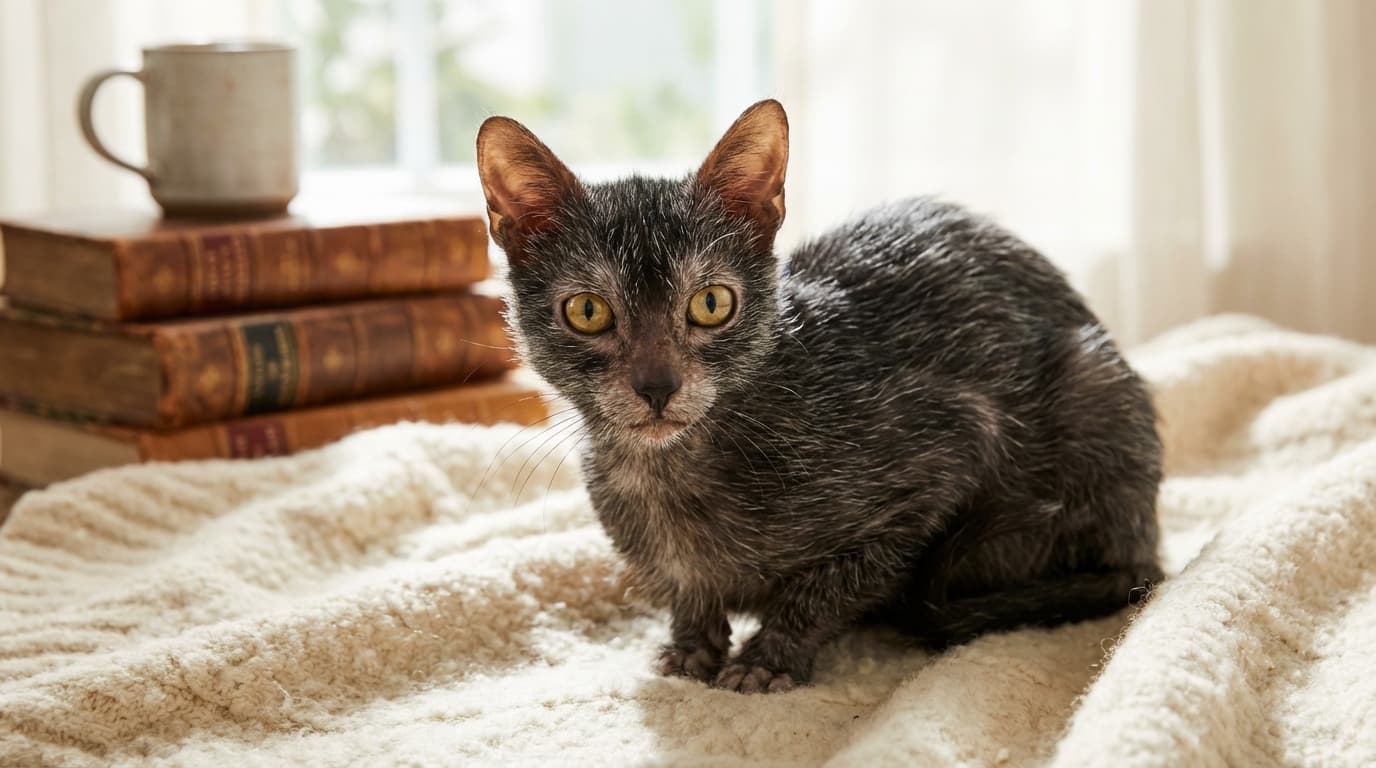
Imagine a cat that looks like it walked straight out of an old folklore legend. With their patchy fur and intense eyes, the Lykoi has quickly become one of the most talked-about animals in the world. This isn't a science experiment gone wrong but a rare cat breed that occurred naturally through a unique genetic mutation.
Most people are drawn to the Lykoi cat appearance because they look like tiny, real-life werewolves. But there is so much more to this werewolf cat breed than just a spooky face. They have a fascinating history and a Lykoi temperament that many owners describe as being more like a loyal dog than a typical independent cat.
In this guide, we will look at how these cats were discovered and what it is like to live with one. We will also talk about the Lykoi molting process so you know why they sometimes lose their hair. Whether you are a fan of unique looking cats or thinking about getting one, you are in the right place to learn the truth about these wolf cats.
Imagine seeing a cat that looks like it stepped right out of a folklore legend. That is the immediate "wow" factor of the Lykoi, the werewolf cat breed that has the entire cat fancy world talking. Since their discovery in Virginia back in 2010, these cats have sparked incredible fascination among pet lovers everywhere.
People have even stood in long lines at shows just to catch a glimpse of their patchy, roan-patterned coats and distinct facial masks. It is a look unlike anything else in the feline world, but the story behind it is just as interesting as the cats themselves.
But wait, is it just about the spooky look? Not even close. While their appearance comes from a natural recessive mutation, they are far from being human-made designer experiments. Whether you are drawn to their wild appearance or their sweet temperament, there is so much to learn. Let’s look at the history, the hair, and the heart behind these tiny werewolves.
Key insights:
- The Lykoi is a natural mutation rather than a human-engineered breed.
- Public fascination is so high that the breed has seen unparalleled excitement in recent cat fancy history.
- Initial health concerns were debunked through extensive genetic and medical testing.
A Natural Wonder: The Surprising History of the Lykoi
Imagine stumbling upon a kitten that looks like a miniature werewolf. That is exactly what happened in Virginia back in 2010. While it looked like something out of a spooky legend, this was a real, living cat. Just a year later, more of these unique felines popped up in Tennessee. These were not sick strays or a strange hybrid. They were the beginning of the Lykoi breed, a name that comes from the Greek word for wolf.
On September 14, 2011, a kitten named Daci made history as the first intentionally bred Lykoi. This was a huge milestone because it proved that this werewolf look could be passed down consistently. People were instantly fascinated, and for good reason. It is not every day a brand new look appears in the cat world without humans tinkering with DNA in a lab. Despite what some skeptics thought, this was not a human-made designer breed. It was a complete accident of nature, a natural mutation that happened all on its own.
When these cats first appeared, breeders and scientists were skeptical. Could a cat that looks this different actually be healthy? They ran extensive genetic tests to make sure the patchy coat was not a sign of skin disease or a weak immune system. The results were a relief. The cats were perfectly healthy and their appearance was not a result of any known feline illness. They just happened to carry a very specific, rare recessive gene that makes the magic happen.
This unique gene is what creates that signature look. It is totally different from the genes that cause hairlessness in Sphynx cats or the curls in Rex breeds. Because the gene is recessive, both parents have to carry it for a kitten to get that distinct roan coat and facial mask. It is a rare genetic lottery win that gives us a cat that looks like it stepped right out of a folklore story. Think of it as Mother Nature showing off her creative side by giving us a pet that is both wild looking and wonderfully sweet.
Key insights:
- The Lykoi is a natural mutation, not a human-engineered or hybrid breed.
- Extensive medical and genetic testing confirmed the breed's unique look is not caused by disease.
- The first intentional breeding occurred in 2011 with the birth of a kitten named Daci.
- The 'werewolf' appearance is caused by a unique recessive gene unrelated to any other known cat mutations.
Mother Nature's Creation, Not a Lab Experiment
When you first see a Lykoi, it’s easy to assume they’re a high-tech lab experiment or a weird designer hybrid. But here’s the reality: these "werewolf" cats are 100% natural. First discovered in Virginia in 2010, they aren’t the result of human tinkering. They’re what happens when Mother Nature decides to get creative with the domestic shorthair.
At first, their patchy fur and bare skin made people nervous. Was it a disease? A skin condition? Thankfully, genetic testing cleared those concerns right away. Scientists discovered that the look comes from a specific recessive gene that’s totally unique. It’s not related to the Sphynx or the Rex - it’s its own thing entirely.
By the time the first planned kitten, Daci, was born in late 2011, the world was hooked. These cats even started appearing spontaneously in places like Tennessee. Think of it this way: you aren't looking at a "made-up" breed, but a rare biological surprise that just happens to look like it stepped out of a legend.
Key insights:
- Genetic testing confirmed they aren't hybrids or human-engineered animals.
- The unique "roan" coat is caused by a natural recessive mutation unrelated to other breeds.
- Initial health fears were debunked through rigorous medical and skin screenings.
Decoding the Look: Roan Fur and the Famous Mask
When you first see a Lykoi, you might think you have stepped into a miniature monster movie. They have this striking, patchy look that earned them the 'werewolf cat' nickname, but that rugged appearance is not an accident or a sign of poor health. It is all down to a unique coat pattern called 'roan.' While roan is a familiar term for horse lovers, the Lykoi is currently the only cat breed that naturally displays this look. It happens when white hairs are scattered through a solid base color, creating a salt-and-pepper effect that looks both ancient and wild.
Then there is the famous mask. If you look closely at their face, you will notice the skin around their eyes, nose, and muzzle is often hairless. This gives them an intense, piercing expression that makes it look like they stepped right out of a legend. This is not just a random trait; it is a core part of their genetic identity. Unlike most cats, Lykoi lack an undercoat entirely. When you pet one, it feels different than you would expect - not quite fluffy, but not quite hairless either. It is a texture that is entirely their own.
The science behind this look is fascinating because it is a natural mutation rather than something humans engineered in a lab. This specific recessive gene was first discovered in Virginia in 2010 and later in Tennessee. It is completely unrelated to any other known feline mutations, which explains why the Lykoi looks so distinct. Even the first intentionally bred kitten, a little girl named Daci born in 2011, showed off this unique trait from the start. It is a true 'creation of Mother Nature' that stood up to rigorous medical testing to prove it was not the result of a disease.
The interesting part is how much the hairiness varies between individual cats. No two Lykoi wear this coat exactly the same way. Some might be almost fully covered in fur, while others are nearly bald. They even go through molting cycles where they lose most of their hair before it grows back in. This unpredictability is part of the charm. Despite early skepticism about their health, these cats have generated unparalleled excitement in the cat fancy world, with people often waiting in long lines just to see one of these tiny werewolves in person.
Key insights:
- The roan pattern is a mix of solid base colors and white hairs, a trait unique to the Lykoi in the feline world.
- The distinct facial mask and lack of an undercoat are results of a natural recessive mutation discovered in 2010.
- Lykoi cats can vary significantly in their level of hairiness and even molt their coats periodically.
The Science of the Roan Coat
Ever wonder why these cats look like they’re caught in a moonlit transformation? It comes down to their unique roan coat. While this pattern is common in horses, the Lykoi is currently the only cat breed that sports it. The look happens when white hairs mix evenly into a solid base color. This isn't some human-engineered experiment. Nature simply decided to try something new. Genetic testing confirmed that a unique recessive mutation is responsible, and it is completely unrelated to any other known feline genes.
The interesting part is that no two Lykois look exactly the same. Some are almost entirely hairless, while others have a much thicker coat. This variation is just part of the breed's natural charm. When they were first discovered in Virginia back in 2010, many people worried the cats were actually sick. But extensive medical screenings proved they are perfectly healthy. They just happen to carry a gene that creates that signature werewolf mask and patchy fur. It is a wild, natural look that has cat fans lining up just to get a glimpse.
Key insights:
- The Lykoi is the only cat breed with a true roan coat pattern.
- Their unique appearance comes from a natural recessive mutation, not human engineering.
- Individual cats vary significantly in how much hair they actually have.
The Great Molt: Why Your Cat Might Suddenly Go Bald
Imagine waking up to find your cat looking like they just lost a fight with a lawnmower. For most cat owners, seeing patches of skin would be a reason to rush to the vet, but with a Lykoi, it is just another Tuesday. These cats are famous for the great molt, a phase where they can go almost entirely bald. This happens because of a unique recessive gene that scientists have confirmed is a natural mutation. It is not a disease or a skin condition, but a built-in cycle that keeps their coat looking like it stepped out of a legend.
The roan pattern and facial mask are what give them that werewolf vibe, but those features can shift throughout the year. When they were first found in Virginia in 2010, and later in Tennessee in 2011, people were skeptical about their health. Testing eventually proved these cats are perfectly healthy and not human-engineered. They are a true creation of Mother Nature herself. They just have a hair cycle that is different from any other breed. One month they might look fuzzy and full, and the next, they are showing off their skin. It is a wild transition to watch, but it is exactly what makes them so fascinating to the public.
But wait, how do you tell a normal molt from a skin issue? A healthy Lykoi molt leaves the skin looking clean and smooth, not red or itchy. These cycles happen at different times for every cat, so there is no set schedule to mark on your calendar. Some might lose their hair once a year, while others go through the process more often. If the skin looks irritated or the cat is scratching a lot, that is when you should worry. Otherwise, just enjoy the show as their appearance shifts.
During these patchy stages, you can help by gently wiping their skin with a warm cloth to manage oils. Since they lack a full coat to soak up natural oils, a little extra grooming goes a long way. Think of it as a seasonal wardrobe change that just happens to be a bit more extreme than most. What does this mean for you? It means you get a cat that looks different every few months, keeping the werewolf mystery alive in your own living room. It is all part of the charm of owning one of the rarest breeds in the world.
Key insights:
- The molting process is a natural result of a unique recessive gene.
- Lykoi skin should remain smooth and healthy-looking during hair loss.
- Regular skin cleaning is essential when the cat is in a balding phase.
- The breed's appearance was confirmed as a natural mutation, not a disease.
Don't Panic: It's Just Their Hair Growing Back
Ever wake up to find your werewolf cat looking a little... naked? Don't stress. Because of that unique recessive gene first found back in 2010, Lykois go through intense molting cycles where they lose most of their coat. Sometimes they're fuzzy, and other times they're almost entirely bald. It's just part of their natural charm!
You can tell it's a normal molt if the skin underneath looks healthy and pink rather than red, crusty, or flaky. These cycles happen a few times a year, shifting that signature roan pattern around. When they get patchy, keep things simple. A gentle wipe with a soft, damp cloth helps manage skin oils since they don't have full fur to absorb them. They aren't sick; they're just resetting their legendary look.
Personality Check: Are They as Spooky as They Look?
Don't let that werewolf mask fool you. While they look like they might vanish into a moonlit forest, Lykoi cats are actually some of the most social and grounded creatures you will ever meet. They aren't just spooky for the sake of it. These cats are a natural mutation first spotted in Virginia back in 2010. People were initially worried about their health because of that patchy coat, but testing proved they are just as healthy as any other cat. As Patrick Barnes says, the Lykoi looks like it stepped right out of a legend.
What really surprises new owners is how much they act like hunting dogs. They have a high prey drive and a brain that never seems to turn off. The excitement around their discovery has been unparalleled in recent history, with reports of people standing in long lines just to get a glimpse of them. If you have other pets, you will be happy to know they are generally very social, but they definitely want to be the leader of the pack. They are smart enough to figure out complex puzzles and will watch your every move with those big, glowing eyes. It is not creepy. It is just high-level curiosity from a cat that wants to know exactly what you are doing.
If you have ever wanted a pet that fetches like a Golden Retriever but fits on your lap, this is it. Lykoi owners often call them dogs in cat suits because of their fierce loyalty and bonding style. They don't just sit around waiting for food. They follow you from room to room, wanting to be part of every chore and conversation. They form deep bonds that feel more like a partnership than a typical cat-owner relationship. They are not your average lap cats who sleep twenty hours a day.
But here is the thing. You cannot just leave them to nap all day. These cats need a job. Because of their high intelligence, they require constant mental stimulation to stay happy. Without interactive play or training, they might find their own tasks, like unrolling the toilet paper or raiding the kitchen cabinets. They thrive on activity and love showing off their athletic skills. Think of them as tiny, furry athletes who just happen to look like they belong in a classic monster movie. They are always ready for the next challenge.
Key insights:
- Lykoi behavior is surprisingly similar to that of a hunting dog.
- They are a natural mutation rather than a designer breed made by humans.
- Their high energy and intelligence mean they need active play to stay happy.
The 'Dog in a Cat Suit' Reputation
You might expect a cat that looks like a tiny werewolf to be aloof or mysterious, but the Lykoi is actually a total social butterfly. They have earned a reputation as the 'dog in a cat suit,' and it is not just because of their unique face. These cats are famous for following their owners from room to room, showing a bonding style and loyalty that feels much more canine than feline. It is the kind of connection where they truly want to be part of every single thing you do.
It is not rare to find a Lykoi ready for a game of fetch or waiting by the door when you get home. But here is the thing: they are not just lazy lap cats. Because they are a natural mutation rather than a human-engineered breed, they have kept a high-energy, active drive. They really need a 'job' to do, like solving a puzzle toy or learning a new trick, to keep their busy minds satisfied. What does this mean for you? Expect a companion that plays hard and loves even harder.
Key insights:
- Lykois often exhibit dog-like behaviors such as playing fetch and following their owners.
- Unlike many breeds, they are a natural mutation, which contributes to their high-energy and active personality.
- They require mental stimulation and 'jobs' to prevent boredom and stay happy.
Living with a Lykoi: Practical Care and Health
Owning a Lykoi is a bit like sharing your home with a tiny, purring werewolf, but that striking roan coat comes with some specific chores. Because they are partially hairless and go through a unique molting process, their skin is much more exposed than your average tabby. You will need to keep an eye on oil buildup, which sometimes requires a gentle wipe-down or a bath. Think of it as a specialized skincare routine for your cat. Since they lack a full protective layer, these cats are strictly indoor companions. A sunny windowsill might be their favorite spot, but without enough fur to block the rays, they can actually get sunburned just like we do.
When these cats were first discovered in Virginia around 2010, people actually worried they were sick. It is easy to see why the patchy look caused skepticism, but the reality is fascinating. This appearance is caused by a natural recessive mutation, not a disease or a human-engineered experiment. Extensive genetic and medical testing has shown that Lykois are quite hardy. They do not have any breed-specific respiratory or heart issues linked to their look. They generally enjoy a standard feline lifespan of 12 to 15 years, provided they stay tucked away from harsh weather.
What is the bottom line for a future owner? You get a pet that looks like it stepped out of a myth but behaves with a high-energy, dog-like loyalty. You just have to be comfortable with a bit of extra grooming and ensuring they stay warm and shaded. They might look like they belong in a spooky forest under a full moon, but they are much happier and healthier safe inside on your lap.
Key insights:
- Lykois require regular skin cleaning to manage oils that their partial fur cannot absorb.
- Their unique look is a natural genetic mutation, not a sign of poor health or disease.
- Indoor-only living is essential to protect their sensitive skin from sunburn and temperature shifts.
Common Questions About Lykoi Cats
You have probably seen photos of a cat that looks like it stepped right out of a Victorian folklore book. The Lykoi, or werewolf cat, has a look that stops people in their tracks. When they were first discovered in Virginia in 2010, many people actually worried they were sick. It is easy to see why. Their patchy fur and bare skin around the eyes make them look a bit fragile at first glance. But here is the truth: they are perfectly healthy. Mother Nature simply decided to try something new with a unique recessive gene that is not related to any other known cat mutations.
Think of the Lykoi as a natural wonder rather than a human experiment. These are not designer cats made in a lab. After those first sightings in Virginia, more cats with the same look were found in Tennessee in 2011. Breeders soon realized this was a natural gift from the feline gene pool. The very first kitten bred intentionally was named Daci, born in September 2011. Since then, the breed has caused what experts call unparalleled excitement. In the early days, people would stand in long lines at cat shows just to see one of these tiny wolves in person.
What about that famous coat? It is called a roan pattern, which is something you usually only see in horses. It is a mix of solid colored hair and white hair scattered throughout. They also have a distinct facial mask where the hair is very thin around their eyes and muzzle. You might notice they go through a molting process where they lose a lot of their fur, but do not worry because it always grows back. Underneath that wild hair is a cat that is recognized as a formal shorthair breed by the CFA, proving they are much more than just a social media trend.
Living with a Lykoi is a lot like having a very smart, high energy companion who never wants to stop playing. While their appearance might be a bit startling to some, their personality is incredibly sweet. They are known for being very aware of their surroundings and acting a bit like hunting dogs when they spot a toy. Because they are still a rare cat breed, finding one can be a challenge, but their mix of legendary looks and playful spirit makes them one of the most interesting pets you could ever bring home.
Key insights:
- The Lykoi is a natural mutation, not a human-engineered designer breed.
- Their unique look comes from a specific recessive gene that is unrelated to other hairless cats.
- Initial health concerns were debunked through extensive genetic and medical testing.
Final Thoughts: Is a Lykoi Right for You?
Bringing home a cat that looks like it stepped out of a legend is a wild experience, but is it the right move for you? When the Lykoi was first discovered in Virginia back in 2010, people were skeptical about their health because of that patchy, werewolf look. But we now know this is not a human-made designer breed; it is a natural recessive mutation that Mother Nature came up with all on her own. If you want a cat that stops people in their tracks, this is it.
Living with one is about more than just the aesthetic. These cats are high-energy and incredibly smart. Since the first intentionally-bred kitten, Daci, was born in 2011, owners have realized these little wolves behave more like hunting dogs than lazy lap cats. They are active, curious, and need plenty of interaction to stay happy. Think of them as tiny, furry athletes with a penchant for mischief and a need for constant play.
The fascination surrounding them is unparalleled in recent history, and for good reason. You are not just getting a pet; you are getting a piece of living folklore. If you can handle the molting and the high activity levels, the joy of owning such a rare, striking companion is well worth the effort. It is a big commitment, but for the right person, the Lykoi offers a bond that feels truly special.
Key insights:
- The Lykoi is a natural mutation, not a human-engineered designer breed.
- Expect high energy levels similar to a hunting dog rather than a typical lap cat.
- Their unique look comes from a rare recessive gene first identified in 2010.
Frequently Asked Questions
Actually, no, Lykoi cats are not hypoallergenic. It is a common mistake to think they are because of their thin coats and bald patches, but they still produce the same dander and proteins that cause allergies in most people.
In fact, because these cats go through regular shedding cycles where they lose a lot of hair, they can sometimes be tougher on allergy sufferers than other breeds. If you usually react to cats, you will likely have the same experience with a Lykoi, so it is best to spend some time with one before deciding to bring it home.
This is just the natural Lykoi molting process and it is totally normal for the breed. These cats are famous for losing their hair and then growing it back, which is part of why people call them werewolf cats.
Sometimes they might look almost completely bald, and other times they will have a fuller coat with that signature roan pattern. It can be a bit of a shock the first time you see it happen, but as long as their skin looks healthy, it is just their unique genetics doing their thing. You will find that their coat can even change in texture or color slightly after each molt.
Actually, no. Even though they both have that striking, partially hairless look, the Lykoi isn't related to the Sphynx at all. You might think they share some DNA because of the skin showing through, but the Lykoi comes from a completely different genetic path. It's a natural recessive mutation that scientists have confirmed is unrelated to any other known cat breeds.
Think of it as nature doing its own thing. While the Sphynx was developed through specific breeding lines, the Lykoi was first found as a natural mutation in Virginia back in 2010. Extensive testing has shown they aren't hybrids or 'designer' cats, but a unique breed all their own.
It's a fair question because their patchy 'werewolf' coat can look a bit startling at first. When they were first discovered, even experts were skeptical and worried they might be sick. But after plenty of medical tests, it turns out they are perfectly healthy. Their unique look isn't caused by a disease or a skin condition, it's just how their genes work.
That said, because they have less fur and go through a molting process where they can lose a lot of hair, their skin is more exposed than your average house cat. You'll want to be careful about sunburn if they sit in windows, and they might need occasional cleaning since skin oils can build up without fur to soak them up. So, they don't have 'problems' per se, but they do need a little extra skincare attention.
Conclusion
So what is the real deal with these tiny werewolves? The Lykoi is more than just a rare cat breed with a striking roan coat and a famous mask. They combine a wild look with a personality that people often describe as a dog in a cat suit. It is this mix of a rugged appearance and a loyal temperament that makes them so special to the people who love them.
Living with one means you have to be okay with the Lykoi molting process and the fact that your cat might look different from month to month. They are high energy and very smart, so they need plenty of play to stay happy. If you want a quiet lap cat that blends into the background, this probably is not the right fit for your home.
But if you want a unique companion that is as clever as it is unusual, the Lykoi is a great choice. Your next step should be finding a responsible breeder who puts health first and understands the genetics of the breed. These cats prove that beauty comes in many forms, even if that form looks like a little werewolf.
Send it to someone who should read it next.
PurrScript Editorial Team
Editorial Team
PurrScript's in-house editorial team. We research, write, and review every guide using established veterinary and behavioral resources, and update articles as best practices evolve.
View all articles