Why Cats Groom So Much (And When It Is Actually a Sign of Stress)
Did you know your cat spends up to half their waking life licking themselves? It might seem like vanity, but for a feline, grooming is a full-time job that is...

PurrScript Editorial Team
Editorial Team
Why Cats Groom So Much (And When It Is Actually a Sign of Stress)
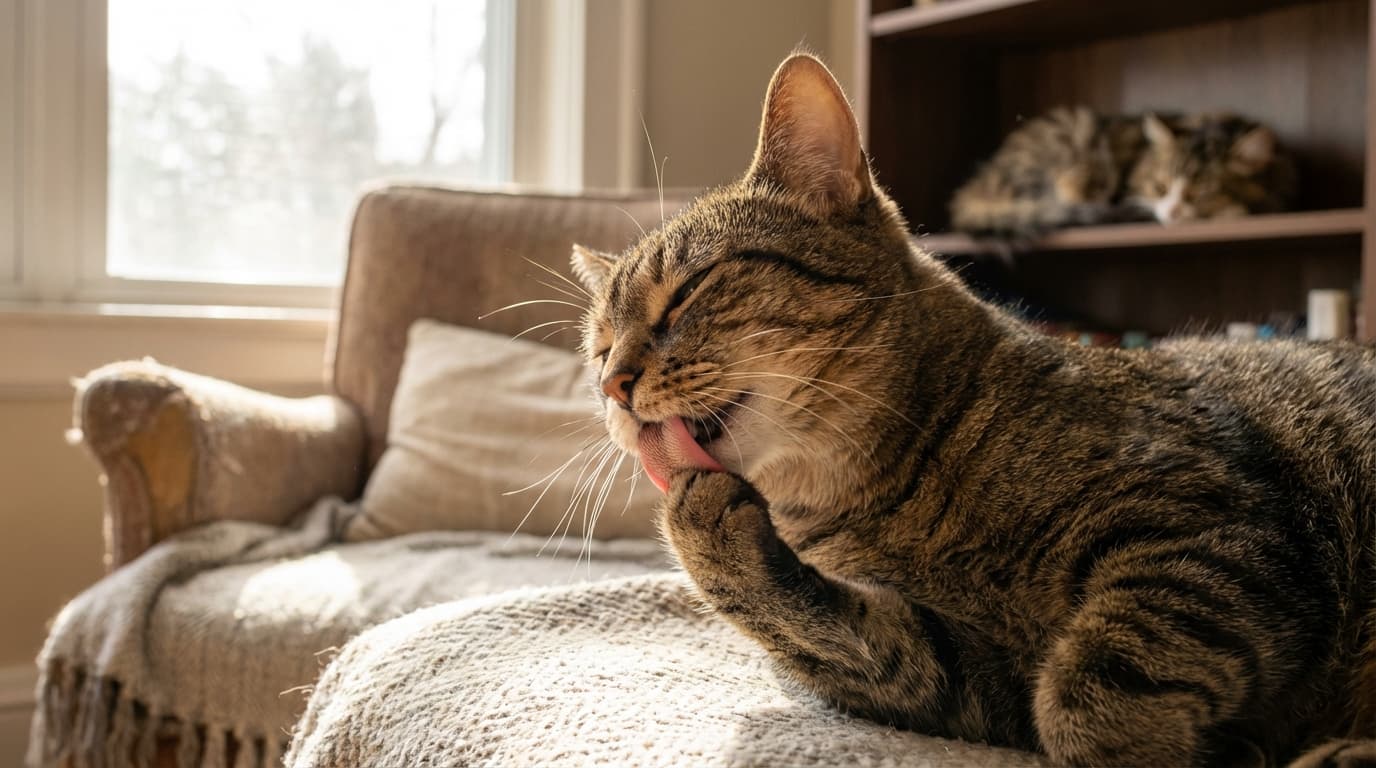
Did you know your cat spends up to half their waking life licking themselves? It might seem like vanity, but for a feline, grooming is a full-time job that is as much about survival as it is about staying pretty.
Whether they are using their unique barbed cat tongue anatomy to stay cool or engaging in mutual grooming (allogrooming) to bond with a housemate, cat grooming behavior is a complex window into their health. There is a thin line between a clean coat and a medical issue though. Understanding why cats groom themselves and recognizing over-grooming in cats, often called psychogenic alopecia, can help you catch stress or illness early.
We will look at the science behind that sandpaper tongue and what it means when your cat licks you. You will also learn how to spot the signs a cat has stopped grooming or started doing it too much, so you can help your pet stay balanced and happy.
The 50% Rule: Why Your Cat Is Obsessed With Staying Clean
Ever feel like your cat spends more time licking their fur than playing? You aren't imagining it. Most cats spend between 30% and 50% of their waking hours grooming. It might look like vanity, but it is actually a survival instinct they learn from their mothers as early as two weeks old. For a cat, staying clean is a full-time job that keeps them safe and comfortable.
Their secret weapon is a tongue covered in tiny, backward-facing barbs called papillae. These are made of keratin, the same stuff in your fingernails. These barbs act like a natural comb to pull out dirt and loose hair. But grooming also helps them stay cool. Since cats only sweat through their paw pads, spreading saliva across their coat acts as a vital cooling mechanism through evaporation.
Licking also triggers endorphins, which are natural chemicals that provide a soothing sensation. This makes grooming a key way for cats to handle stress. Because of this, their coat is a perfect window into their health. Whether they are over-grooming or have stopped cleaning altogether, their fur usually tells the story of how they feel mentally and physically.
Key insights:
- Grooming is a cooling mechanism because cats only sweat through their paws.
- The act of licking releases endorphins that help cats manage daily stress.
- A cat's coat quality is one of the most reliable indicators of their overall health.
The Sandpaper Secret: A Look at the Barbed Cat Tongue
Have you ever let a cat lick your hand and wondered why it feels like a piece of rough sandpaper? That unique texture comes from hundreds of tiny, backward-facing barbs called papillae. These aren't just random bumps. They are made of keratin, which is the same tough protein found in your own hair and fingernails. This clever design turns a cat's tongue into a precision tool that is far more advanced than any plastic brush you can buy at a pet store.
For a cat, grooming is a serious time commitment. They actually spend between 30% and 50% of their waking hours cleaning themselves. Those hooked barbs act as a natural comb, snagging loose fur and clearing away dirt or tiny pests before they can cause skin issues. Beyond just tidying up, the physical pressure of the tongue stimulates glands at the base of their hair follicles. This releases sebum, a natural oil that they spread across their body to keep their coat waterproof and shiny.
But the tongue does more than just keep them looking good. It also works as a built-in air conditioner. Since cats only have sweat glands in their paw pads, they can't cool down the way we do by sweating through their skin. Instead, they rely on the evaporation of saliva. When a cat grooms during a hot afternoon, they are spreading moisture across their fur that pulls heat away from their body as it dries. This is why you will notice your cat licking themselves much more often when the temperature spikes in the summer.
There is also a hidden emotional side to this behavior. The act of licking triggers the release of endorphins in a cat's brain. These are natural feel-good chemicals that provide a comforting and soothing sensation. This explains why a cat might suddenly start grooming after a stressful event, like an awkward fall or a run-in with a loud neighbor. It is a self-soothing mechanism that helps them reset their mood and feel secure in their environment again.
The state of a cat's coat can actually tell you a lot about their overall health. A happy, healthy cat will usually have a sleek and clean coat because they are keeping up with their daily routine. However, if a cat stops grooming, it is often a major red flag that they are feeling unwell or are in pain. On the flip side, licking too much in one spot can be a sign of stress or allergies. Understanding this balance helps you keep a better eye on your pet's well-being.
Key insights:
- Grooming is a vital cooling mechanism because cats only sweat through their paws.
- The keratin barbs on the tongue act as a natural comb to distribute skin oils.
- Licking releases endorphins, making it a primary way for cats to self-soothe during stress.
- Cats spend nearly half their waking lives engaged in grooming activities.
Nature's Built-in Air Conditioner
Ever wonder why your cat spends so much time licking themselves when it gets hot? It isn't just about looking good. While we have sweat glands everywhere, cats are much more limited. They actually only sweat through their tiny paw pads. Imagine trying to cool your whole body through just your feet - it just doesn't work very well.
To fix this, cats use a clever trick called saliva evaporation. Using those rough, backward-facing barbs on their tongue - called papillae - they spread saliva deep across their coat. As that moisture evaporates, it pulls heat away from their skin. It’s a built-in air conditioner that explains why you will see grooming sessions ramp up during those sweltering summer months.
This cooling routine is so vital that cats often spend between 30% and 50% of their waking hours doing it. Beyond just temperature control, the licking also triggers a release of calming endorphins in their brain. So, when you see your cat grooming on a sunny ledge, they are not just being vain - they are running a sophisticated biological system to stay chill.
More Than a Bath: The Surprising Reasons for All That Licking
Have you ever noticed your cat suddenly start licking their paw right after they miss a jump or trip over a rug? It looks like they are trying to play it cool, and in a way, they actually are. Cats spend between 30% and 50% of their waking hours grooming, but it is rarely just about getting rid of a stray piece of dust. This behavior is a built-in stress reliever. When a cat licks their fur, it triggers a release of endorphins in the brain. These are the same natural feel-good chemicals that help humans relax, providing the cat with a soothing and comforting sensation whenever life gets a little too hectic.
This is what behaviorists call a displacement behavior. If a cat feels awkward or frustrated, a quick grooming session helps them reset their mood. But the benefits are physical as well as emotional. Those rough, backward-facing barbs on a cat's tongue are called papillae, and they are made of the same keratin found in your own fingernails. As these barbs sweep through the fur, they stimulate sebum production at the base of the hair follicles. The cat then spreads this oil across their coat, which keeps their skin healthy and creates a vital waterproof barrier against the elements.
While most grooming is a solo act, things get interesting when cats start licking each other. This social behavior is known as allogrooming, and it is a major sign of feline friendship. It is not just about helping a buddy reach that tricky spot behind their ears that they cannot lick themselves. Allogrooming helps establish a group scent within a household. By mixing their saliva and smells, cats create a collective identity that makes the whole colony feel secure. It is their way of signaling that everyone in the group belongs together and is safe.
You might even find your cat trying to groom your hair or lick your arms while you are relaxing on the couch. While a sandpaper tongue on your skin might feel a bit scratchy, it is actually a massive compliment. Your cat is trying to include you in that group scent. They are treating you like a member of their family and making sure you smell like home. It is a deep bonding ritual that proves just how much they trust you. So, the next time you get a few licks on the hand, just know you have officially been accepted into their inner circle.
Key insights:
- Grooming acts as a psychological reset button, helping cats manage stress through the release of calming endorphins.
- The act of licking spreads sebum, which is essential for keeping a cat's coat waterproof and their skin healthy.
- Social licking, or allogrooming, is a tool used to create a shared family smell that reduces tension in the home.
The 'BFF' Lick: What Allogrooming Is All About
Ever see your cats huddled together, licking each other’s ears like they are at a spa? That is not just about staying clean. It is a behavior called allogrooming. Think of it as the feline version of a secret handshake. While cats spend up to half their day cleaning themselves, doing it for a friend serves a much bigger purpose than just removing loose fur.
According to experts like Dr. Elizabeth Fowler, this social grooming helps create a group scent. In the wild, having a shared smell is vital for colony security because it helps cats recognize who belongs and who is an intruder. It also feels great. Licking triggers a release of endorphins in the brain, so it is a natural way for cats to soothe one another and strengthen their bond.
But what if your cat starts licking your hair or arms? You should take it as a huge compliment. Your cat is essentially welcoming you into their tribe by trying to get you on the same scent profile. It is a sign of deep trust and affection. Just remember that their tongues are covered in tiny keratin barbs called papillae. So while the sentiment is sweet, that sandpaper feeling on your skin is just part of the package.
When Licking Goes Too Far: Spotting Over-Grooming
Did you know your cat spends nearly half their waking life grooming? It is a huge part of being a cat. But sometimes, that rhythmic licking shifts from a spa day into something a bit more worrying. Veterinarians call this compulsive behavior psychogenic alopecia. It is basically a cat's way of dealing with stress or boredom, like how some people bite their nails when they are nervous. Because licking triggers a release of feel-good endorphins in their brain, it becomes a soothing loop they just can't quit.
The tricky part is that you might never actually catch them in the act. Many cats are closet groomers who only go overboard when they are alone or tucked away in a quiet corner. Instead of seeing the licking, you will see the aftermath. Look for racing stripes of thinning hair along their back or legs. If you run your hand over their skin and it feels like sandpaper or a prickly five o'clock shadow, that is a sign the fur has been licked down to the stubble rather than falling out on its own.
Now, how do you tell if your cat is stressed out or just really itchy? It is a bit of a detective game. If the fur loss is concentrated at the base of the tail, fleas are usually the culprit. If they are scratching and licking around their neck and ears, it might be ear mites. Even pollen allergies can cause a cat to chew on their paw pads. These are medical issues, not mental ones, and they require a different kind of fix than a behavioral problem.
Here is the most important thing to remember: never punish a cat for over-grooming. If the cause is stress, a squirt bottle or a loud no will only make them more anxious, which leads to... you guessed it, more licking. Think of it as a cry for help rather than a bad habit. Whether it is a trip to the vet for an allergy check or adding some extra playtime to beat boredom, the goal is to find the root cause so your kitty can go back to being their usual, fluffy self.
Key insights:
- Psychogenic alopecia is often a displacement behavior used to self-soothe during stressful events.
- Specific fur-loss patterns, like the base of the tail or the neck, are often the best clues to distinguish medical issues from stress.
- Punishment is counterproductive because it increases the very anxiety that triggers the compulsive licking.
Is It Stress or Is It Itchy?
It is often hard to tell if your cat is dealing with a pesky flea or a case of the blues. Since cats naturally spend up to half their waking hours grooming, a little extra licking might not seem weird at first. But when the fur starts thinning, you have to play detective. Medical issues usually leave a clear trail. For instance, if your cat is obsessed with the base of their tail, fleas are the likely culprit. If they are constantly rubbing their neck or ears, ear mites might be the reason for the itch.
When a vet rules out bugs or pollen allergies, you are likely looking at psychogenic alopecia. This is the medical term for compulsive grooming caused by psychological stuff like stress or boredom. Think of it as a feline coping mechanism. Licking actually triggers a release of endorphins in a cat's brain, which provides a comforting and soothing sensation. It is their version of a security blanket. The tricky part is that many cats are 'closet groomers' who only do it when they are alone, so you might only see the resulting bald patches.
Here is the most important thing to remember: never scold or punish your cat for over-grooming. If the behavior is driven by anxiety, shouting or using a spray bottle will only crank up their stress levels. Since stress is what started the licking in the first place, punishing them just creates a loop that makes the problem worse. Instead of focusing on the missing fur, try to find what is making them nervous in their daily life. Helping them feel safe is the best way to get their coat back to normal.
Key insights:
- Flea allergies often cause fur loss at the base of the tail, while mites target the neck.
- Compulsive licking releases endorphins that help a stressed cat feel calm.
- Punishment backfires because it increases the stress that causes the behavior.
The Silent Alarm: What Happens When a Cat Stops Grooming?
We all know cats are the undisputed champions of self-care. In fact, they spend between 30% and 50% of their waking hours licking, smoothing, and perfecting their coats. It is not just vanity; it is a full-time job. Their tongues are basically built-in combs, covered in tiny keratin barbs called papillae that scrub away dirt and loose fur. So, when a cat suddenly stops this ritual, it is like a silent alarm going off in your home. It is one of the clearest ways your cat tells you that something is seriously wrong.
You will notice the change pretty quickly. Instead of that soft, sleek fur you love to pet, your cat might start looking a bit unkempt. Their coat gets greasy, develops stubborn mats, or even starts to smell a bit funky. This happens because grooming isn't just about looks. It also spreads natural oils and helps them stay cool since they only sweat through their paw pads. If they aren't licking, those oils build up and the fur clumps together. This physical state is a reliable diagnostic tool for their overall health.
Why would a cat give up on being clean? Often, it comes down to pain. Think about the flexibility required to reach every spot on their body. If a cat has arthritis, reaching their back or hindquarters becomes an agonizing chore, so they just stop trying. Dental pain is another huge factor. If their mouth hurts, the last thing they want to do is use their tongue as a scrub brush. While it might look like they have just gotten lazy, the reality is usually a medical hurdle they cannot clear on their own.
The state of a cat’s coat is basically a health report card you can read at a glance. If you see localized matting or a sudden lack of interest in self-care, it is time to check in with a vet. They will look for things like hyperthyroidism or dental issues that might be hiding under the surface. It is easy to miss at first, but paying attention to these grooming shifts can catch health problems before they become emergencies. After all, a tidy cat is usually a happy, healthy cat.
Key insights:
- Grooming cessation is a major indicator of systemic illness or physical pain.
- Arthritis and dental issues are common reasons cats stop reaching certain spots.
- A greasy or matted coat is a visible sign that a cat’s natural cooling and oil-distribution systems are failing.
Helping Your Cat Find Their Balance
It is easy to think of a cat losing fur as just a skin allergy or a flea problem. But modern vet care is shifting toward seeing over-grooming as a mental health signal rather than just a physical one. This condition, known as psychogenic alopecia, is often a way for cats to cope with stress or flat-out boredom. Think of it as a displacement behavior. When a cat feels anxious, they lick because the action actually triggers a release of endorphins in their brain. It is their way of self-soothing, but it can quickly cross the line into a compulsive habit that leaves them with bald patches.
So, how do we help them find that balance again? The first step is often looking at their environment. If a cat does not have enough to do, they might turn to their own fur for entertainment. Adding interactive toys, vertical climbing spaces, or even just a window perch can make a huge difference in reducing boredom-based licking. It is all about giving them a better outlet for that energy. Also, if you catch them in the act, resist the urge to scold them. Experts at Jacksonville Vet point out that punishing your cat only spikes their stress levels, which usually makes the licking even worse.
You should also keep an eye on where the fur is missing because specific patterns can tell a story. For example, if they are chewing at their paw pads, it might be a pollen allergy, while thinning hair at the base of the tail often points to fleas. If you notice your cat coat looking greasy or if they have stopped grooming altogether, that is a major red flag for their systemic health. When in doubt, call your vet for a professional diagnostic check. They can run tests to rule out things like hyperthyroidism or skin infections so you can focus on the right solution for your feline friend.
Key insights:
- Over-grooming is often a hidden behavior that happens when owners are out of the room.
- Licking acts as a natural stress-reliever by releasing calming chemicals in the brain.
- Environmental enrichment is a primary tool for breaking the cycle of compulsive licking.
Frequently Asked Questions
It is a bit of a shock when a sweet grooming session turns into a nip, but this is usually just a case of overstimulation. Your cat is showing you affection through allogrooming, which is their way of bonding and sharing a group scent. But the repetitive texture of their barbed tongue can eventually feel like too much for them. Think of it as a sudden sensory overload where they do not know how else to tell you they have had enough.
Sometimes these love bites are just a play reflex triggered by the physical closeness. If it happens a lot, try to watch for subtle signs like a twitching tail or flattened ears. That is usually your cue to give them some space before the teeth come out.
Believe it or not, that is actually right in the sweet spot for a healthy cat. Most cats spend anywhere from 30% to 50% of their waking hours cleaning themselves. Since they are awake for a good chunk of the day, five hours of licking and smoothing their fur is totally standard behavior.
They are not just doing it to look good, either. Grooming helps them stay cool because they only sweat through their paw pads, so the saliva evaporating off their fur acts like a built-in air conditioner. Also, the act of licking releases endorphins that help them stay relaxed. You only need to worry if you start seeing bald patches or red skin, which might mean they have crossed over into compulsive grooming due to stress or allergies.
It really comes down to the why and how much. Most cats spend about a third to a half of their day cleaning themselves, which is totally normal behavior. But psychogenic alopecia is a specific medical term for when a cat grooms compulsively because they are stressed, bored, or anxious. It is a bit like how some people bite their nails when they are nervous.
Here is the tricky part: cats often do this in secret when you are not around. Because licking triggers a release of feel-good chemicals called endorphins in their brain, they use it to soothe themselves. You might not see the licking happen, but you will definitely see the results, like thinning fur or bald patches that appear out of nowhere.
When a senior cat stops grooming, it is usually a red flag that they are not feeling their best. One of the most common reasons is arthritis. If it hurts for your cat to bend or reach certain spots, they will just stop trying, which leads to greasy fur and those painful mats. A cat's coat is a great window into their overall health, so a messy coat often means something internal is going on.
It could also be that they are just feeling too tired or sick to keep up with the work. Since grooming is a big part of their daily routine, skipping it is a clear sign they need some help. You can step in with a soft brush to help them out, but it is also a good idea to chat with your vet to make sure they are not in any pain.
Conclusion
Your cat's grooming habit is way more than just a daily bath. Between that unique barbed cat tongue acting as a built-in comb and the clever way they use saliva to stay cool, cat grooming behavior is a survival masterpiece. Whether they are bonding with a buddy through allogrooming or just relaxing after a long nap, those sandpaper licks are a sign of a cat trying to stay balanced and comfortable in their world.
But because grooming is so tied to how they feel, it is also your best window into their mental health. If you start seeing bald patches from psychogenic alopecia or notice a greasy coat because they have stopped grooming altogether, it is time to pay attention. Your next move should be a quick check-in with the vet to rule out things like allergies or hidden stress, ensuring your furry friend feels as good as they look.
At the end of the day, a well-groomed cat is usually a happy cat. Keep an eye on those licking patterns, offer plenty of love, and enjoy the fact that your pet is a self-cleaning marvel. After all, a little extra fluff on the sofa is a small price to pay for a content, purring companion.
Send it to someone who should read it next.
PurrScript Editorial Team
Editorial Team
PurrScript's in-house editorial team. We research, write, and review every guide using established veterinary and behavioral resources, and update articles as best practices evolve.
View all articles