Why Is My Older Cat Less Active and Why Is My Indoor Cat Bored?
A senior cat sleeping more or an indoor cat acting out are not personality problems — they are behavioral signals. This guide explains the mechanisms behind cognitive decline, boredom, overgrooming, and nervous cat adjustment, and what actually fixes each.

PurrScript Editorial Team
Editorial Team
Why Is My Older Cat Less Active and Why Is My Indoor Cat Bored?
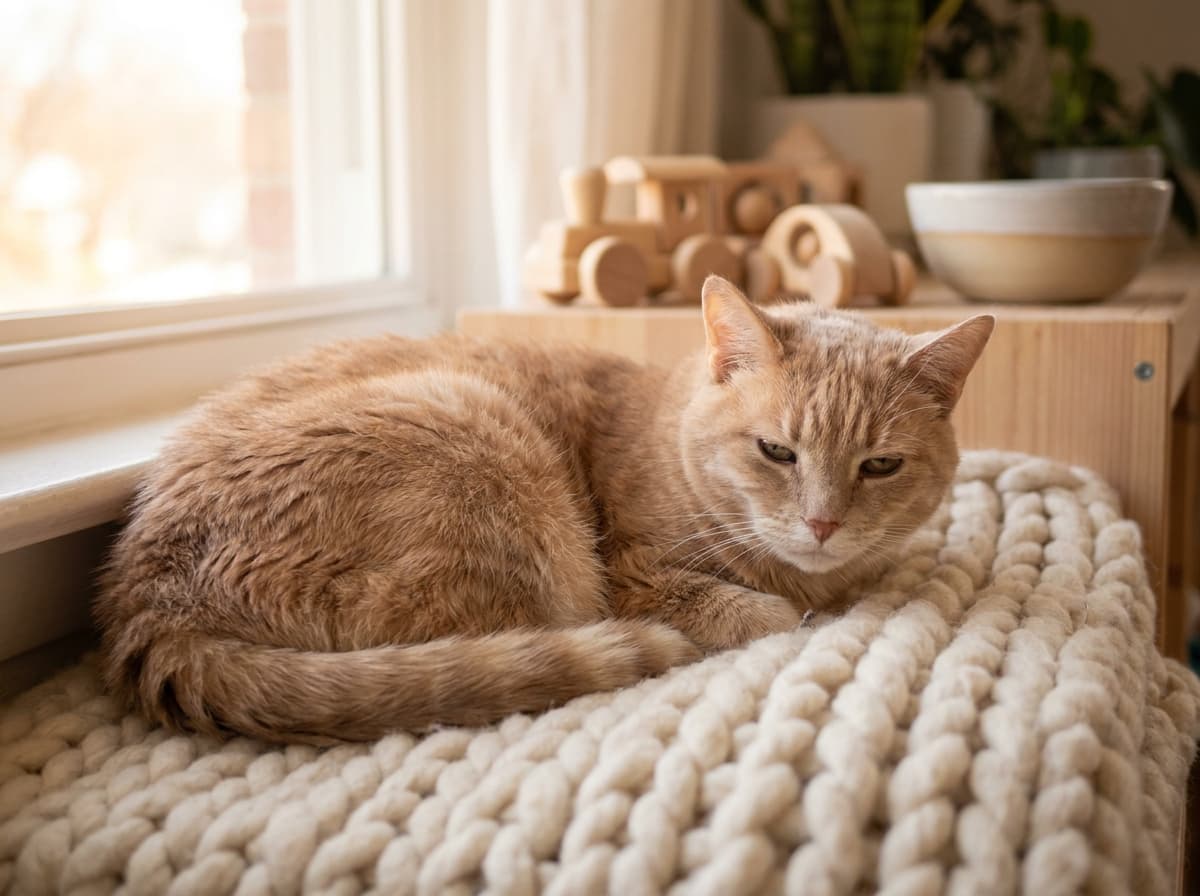
Why is my older cat suddenly less active is a question that deserves a more precise answer than 'they are just slowing down.' A sharp reduction in activity in a senior cat is a clinical signal — it can indicate Feline Cognitive Dysfunction, undiagnosed arthritis, hyperthyroidism, or the early stages of organ disease. Attributing it to normal aging delays diagnosis of conditions that are manageable when caught early and significantly harder to address once they are advanced.
Indoor cat boredom, overgrooming, and adjustment difficulties in nervous cats are related problems with a common thread: the gap between what a cat's biology requires in terms of stimulation, territory, and behavioral outlets, and what most indoor home environments provide by default. The behaviors that frustrate owners — the 3 AM activity, the sofa shredding, the repetitive licking — are not personality flaws. They are predictable outputs of an environment that is not meeting the animal's needs.
This guide covers each of these behavioral and health topics with the underlying mechanism rather than just the symptom checklist. Understanding why senior cognitive decline produces the specific behaviors it does changes how you respond to them. Understanding why indoor cats overgroom allows you to distinguish anxiety-driven from medically-driven behavior. Understanding the territory psychology behind nervous cat adjustment determines whether your first two weeks go backward or forward.
By the end you will know how to distinguish cognitive decline from arthritis in an older cat, what environmental changes produce the most measurable behavioral improvement for bored indoor cats, why overgrooming requires a vet visit before any behavioral intervention, and the specific sequence that helps a nervous cat build territorial confidence in a new home.
Why Is My Older Cat Suddenly Less Active?
A cat sleeping more than usual is not inherently concerning — cats sleep 12 to 16 hours daily throughout their lives. What warrants investigation is a change from established baseline: a cat that was reliably active in the evenings and now is not, a cat that previously greeted arrivals and has stopped, a cat that used to play for 10 minutes and now disengages after 30 seconds. The change is the signal. Duration of sleep alone is not.
Feline Cognitive Dysfunction Syndrome (FCDS) — sometimes called feline dementia — is significantly more prevalent in older cats than most owners realize. Research cited by the ASPCA indicates that over 55 percent of cats aged 11 to 15 show at least one sign of cognitive decline, and that number rises to approximately 80 percent by age 16. The behavioral presentation of FCDS includes disorientation in familiar environments, changes in sleep-wake cycles (particularly increased nighttime wakefulness and vocalization, known as sundowning), reduced social interaction, and loss of previously reliable house training. These are not behavioral problems in the conventional sense — they are neurological symptoms produced by progressive brain changes equivalent to what occurs in human Alzheimer's disease.
The most important diagnostic priority is distinguishing FCDS from arthritis, because the two conditions present with overlapping behavioral signs — reduced activity, withdrawal, reluctance to jump or access elevated spaces — but require completely different management. A cat with arthritis is in pain, and pain is the specific reason for inactivity. Puzzle feeders and play sessions will not resolve this; pain management will. A cat with FCDS may have normal joint function but reduced neurological capacity to initiate activity. Environmental simplification, predictable routine, and in some cases medication are the appropriate responses. Your vet can differentiate these through physical examination and X-rays, which is why a senior wellness examination should precede any behavioral intervention for a less-active older cat.
Hyperthyroidism, chronic kidney disease, and cardiac disease are three additional conditions common in cats over 10 that frequently present as reduced activity before any other obvious symptom. Hyperthyroidism is paradoxical — it can initially produce increased vocalization and restlessness, but as the condition progresses, affected cats often become lethargic and lose weight. Kidney disease produces lethargy, reduced appetite, and increased water consumption. Annual bloodwork panels after age 10 — ideally every six months after 14 — are the only way to catch these conditions at a stage where intervention is genuinely effective.
For cats confirmed to have FCDS without significant concurrent pain, environmental management produces the most consistent improvement in quality of life. The principle is reducing cognitive load rather than increasing stimulation: keeping furniture, food bowls, and litter boxes in consistent locations so that navigation does not require active spatial problem-solving; adding litter boxes with low entry sides in locations closer to where the cat spends most time; installing nightlights in hallways and the approach path to the litter box; and maintaining a predictable daily schedule that reduces the disorientation that comes with unpredictability. These changes do not reverse cognitive decline, but they significantly reduce the distress it produces.
**Key insights:
- Schedule a senior wellness examination — including bloodwork — before attributing reduced activity to normal aging; arthritis, FCDS, hyperthyroidism, and kidney disease all present similarly.
- Track changes from the cat's specific baseline rather than comparing to general norms — a change in established pattern is more diagnostically meaningful than total sleep hours.
- Add litter boxes with low entry sides near the cat's primary resting locations — mobility-limited or cognitively affected cats may not reliably navigate to a single distant litter box.
- Install nightlights along the paths the cat uses most at night — disorientation in FCDS worsens in low light and is a primary driver of nighttime vocalization.
- Keep furniture, feeding stations, and litter box locations consistent — spatial predictability directly reduces the confusion and anxiety that FCDS produces.
- Ask your vet specifically about FCDS management options including selegiline (a medication with evidence for slowing cognitive progression in cats) and environmental pheromone diffusers.
Distinguishing Cognitive Decline From Arthritis: Why It Matters
Cognitive decline and arthritis produce behavioral presentations that overlap significantly enough to be confused, and the confusion matters because the interventions are different and in some cases the wrong intervention makes the underlying problem worse. A cognitively declining cat that is also in arthritic pain is in a genuinely difficult situation — pain increases anxiety, and anxiety accelerates the distress associated with cognitive confusion. Identifying both conditions simultaneously is the goal of a thorough senior examination.
Behavioral clues that suggest cognitive origin over pain: the cat vocalizes or appears disoriented in the evening or night specifically (sundowning pattern), gets stuck in corners or appears confused about direction in familiar spaces, fails to recognize familiar people or objects intermittently, or shows changes in social interaction that are not obviously explained by a painful area of the body. Behavioral clues that suggest pain origin: reluctance to jump or access specific elevations the cat previously used, guarding specific body areas, changes in gait, or aggressive response to touch in a localized area. Any combination of these warrants a thorough veterinary assessment rather than home management.
**Key insights:
- Note the specific time pattern of behavioral changes — sundowning (evening/night worsening) points toward cognitive origin; consistent reluctance to access height points toward joint pain.
- Ask your vet to check blood pressure during the senior examination — hypertension is common in older cats and independently causes neurological symptoms including disorientation.
- Request X-rays of the spine and hips if reduced activity is the primary complaint — feline arthritis is significantly underdiagnosed because cats do not limp as reliably as dogs.
Why Is My Indoor Cat Always Bored?
Domestic cats retain the neurological wiring of solitary ambush predators who would naturally spend several hours per day engaged in active hunting behavior. The indoor environment eliminates the triggers for that behavior — no prey, no territory to patrol in any meaningful sense, no variable stimuli that require active assessment and response — without eliminating the drive itself. The drive does not disappear when its natural outlets are removed. It redirects into whatever behavioral channel is available: destructive activity, attention-seeking vocalization, obsessive object manipulation, or the overgrooming covered in its own section below.
The behaviors that most commonly signal boredom-driven stress in indoor cats are specific and distinguishable from other behavioral problems. Pica — the ingestion of non-food materials including plastic bags, fabric, and rubber — is a compulsive behavior associated with chronic under-stimulation and anxiety. Redirected aggression toward owners or other household animals, occurring in the absence of any obvious trigger, often reflects accumulated predatory drive with no appropriate outlet. Midnight activity bursts are the most direct expression of crepuscular biology — cats are naturally most active at dawn and dusk, and if daytime enrichment is insufficient to discharge that drive, it surfaces during natural peak-activity windows regardless of whether they align with the owner's schedule.
The conceptual framework that produces the most consistent improvement is treating the home environment as the cat's territory rather than a space the cat happens to inhabit. Territory for a cat is not just square footage — it is a navigable space with meaningful variation across vertical as well as horizontal dimensions, with resources distributed in a way that requires some form of activity to access, and with sufficient sensory input to engage the assessment systems that would normally be occupied by hunting. An environment that meets these criteria is one where a cat has elevated vantage points, some form of food puzzle that requires effort to solve, varied sensory stimulation, and opportunities for predatory play.
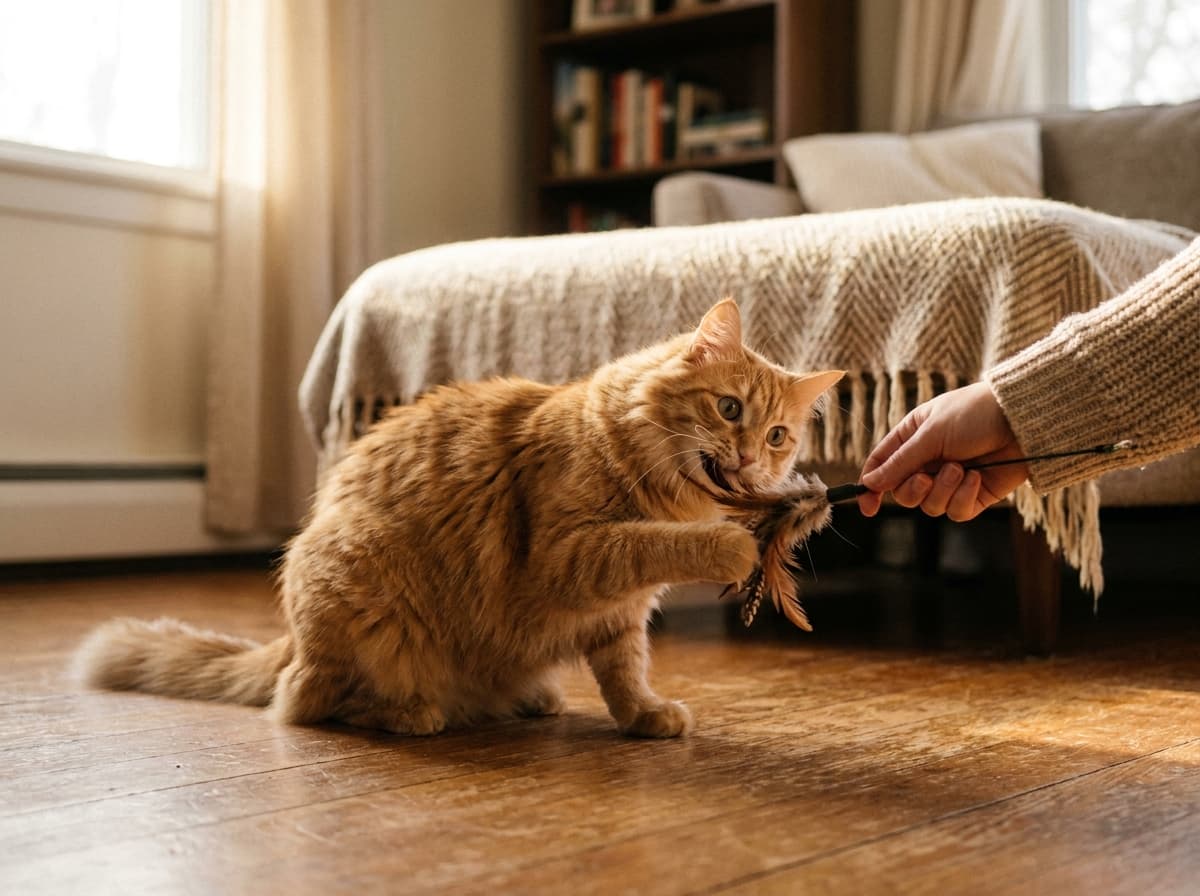
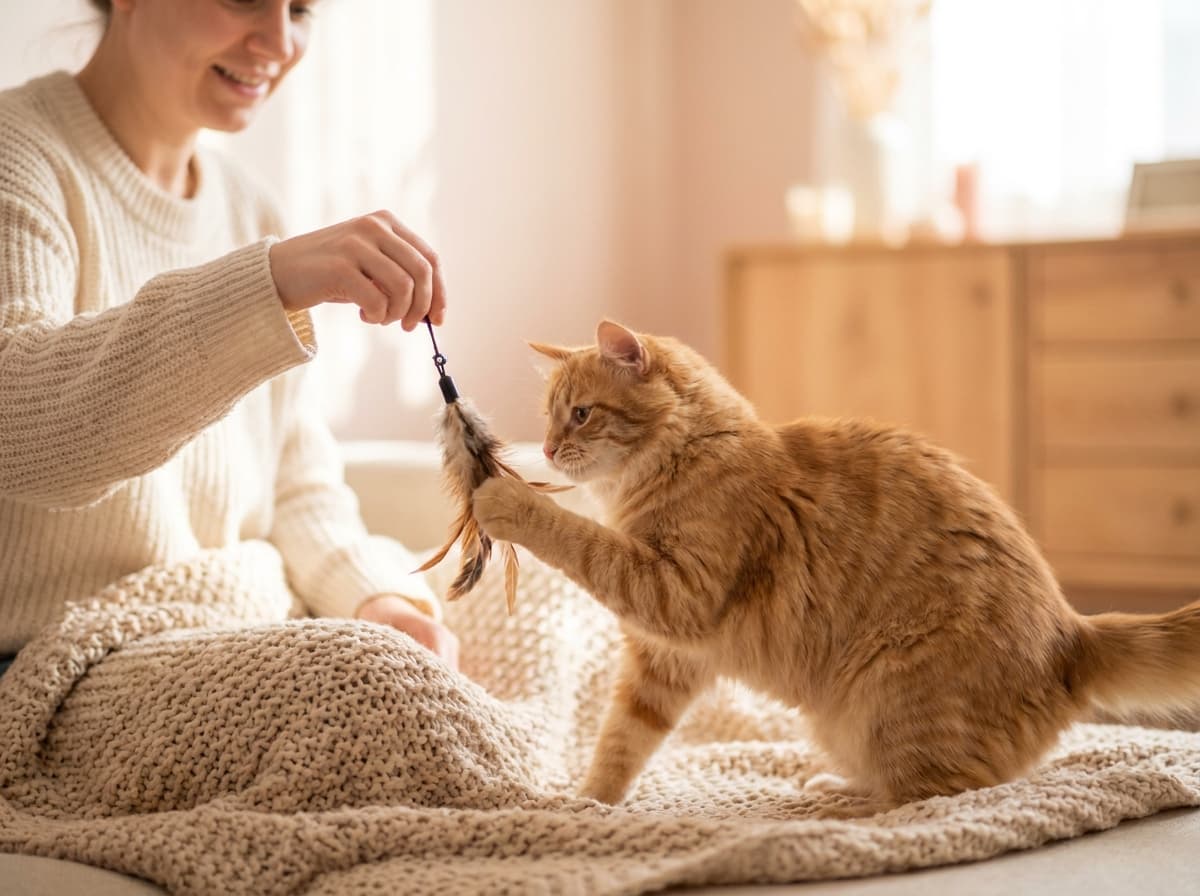
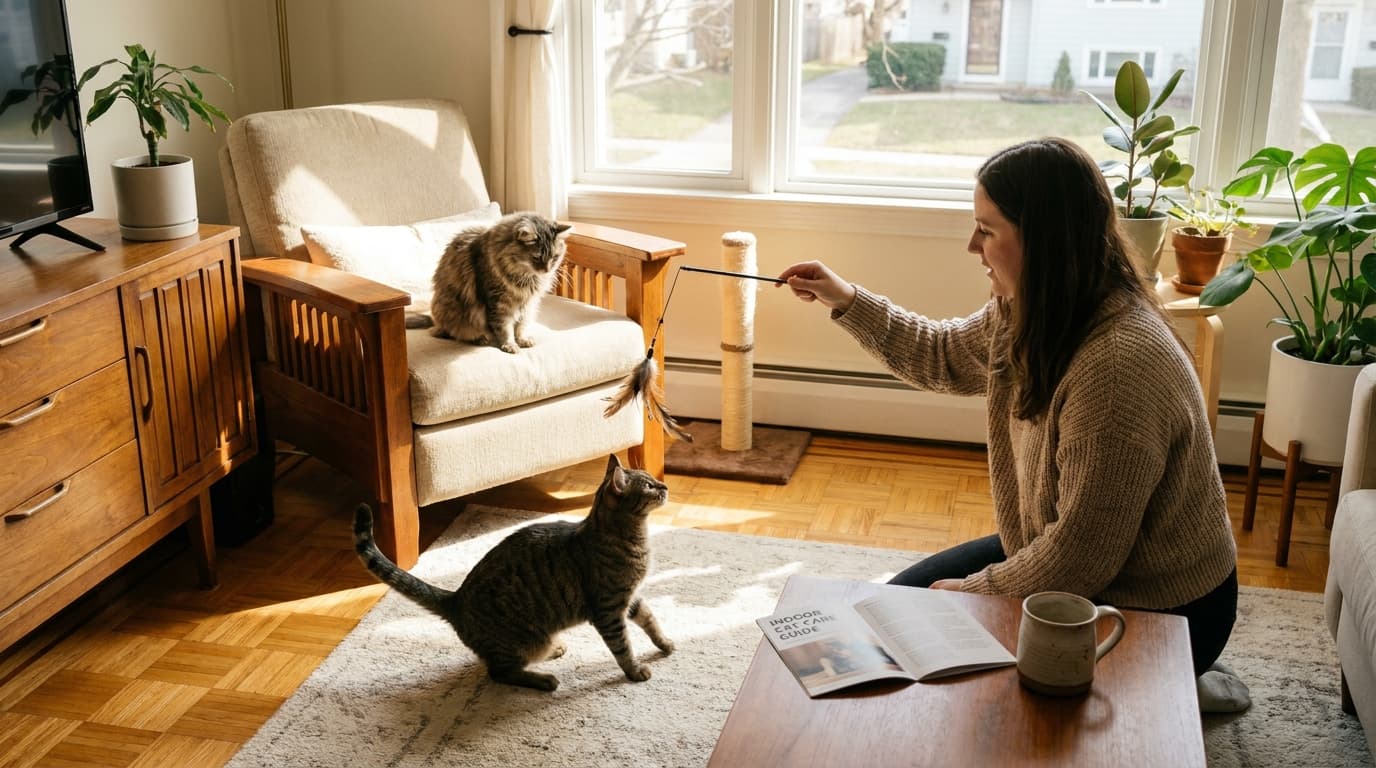
Two 15-minute interactive play sessions daily, timed to the cat's natural activity peaks in early morning and evening, address the most acute boredom-driven pressure. The sessions need to use toys that allow the complete predatory sequence — stalk, chase, catch, kill — rather than just the chase phase. A toy that the cat can catch and bite at the end of the session completes the neurological sequence; one that is perpetually uncatchable (like a laser pointer used exclusively) leaves the sequence incomplete and produces frustration rather than satisfaction. Ending sessions with a small food reward reinforces the sequence completion and allows the cat to transition to a resting state.
**Key insights:
- Replace at least one meal per day with a puzzle feeder — converting feeding from passive consumption to active foraging addresses the single most consistent unmet behavioral need in indoor cats.
- Schedule two 15-minute interactive play sessions daily at the cat's natural activity peaks — early morning and early evening — using toys that allow the full predatory sequence including a catchable endpoint.
- Monitor sleep duration as a boredom indicator — a cat sleeping significantly more than 16 hours per day in an otherwise healthy adult is more likely under-stimulated than well-rested.
- Add vertical territory through cat trees or wall-mounted shelving — elevation access changes a two-dimensional environment into a three-dimensional one and reduces inter-cat tension in multi-cat homes.
- Rotate toys on a weekly schedule — permanent availability converts toys into environmental furniture; reintroduced toys register as novel and re-engage investigatory behavior.
How Much Exercise Does an Indoor Cat Need?
The practical target for indoor cat physical activity is 20 to 30 minutes of moderately intense movement daily, structured in two or three short sessions rather than one continuous block. The session format matters because cats are biologically sprint hunters — they engage in short, high-intensity predatory bursts followed by rest, not sustained aerobic activity. A 10-minute session with genuine prey-mimicking toy movement is more physiologically appropriate and more effective at discharging predatory drive than a 30-minute session of low-engagement movement.
The quality of movement in a play session is what determines its effectiveness, not its duration. Prey-mimicking movement is unpredictable: it changes direction abruptly, pauses, accelerates suddenly, hides behind objects, and retreats. A wand toy moved in straight lines or simple circles provides the chase phase of the predatory sequence without the cognitive engagement produced by genuine unpredictability. A cat that can predict where the toy will go next disengages within minutes. A cat confronted with genuinely variable movement stays in focused predatory attention for the full session and is demonstrably calmer afterward.
Vertical movement is qualitatively different from horizontal movement in terms of caloric expenditure and behavioral benefit. A cat that jumps to successive elevated platforms, descends, and repeats is engaging muscle groups and balance systems that flat-floor activity does not address. It also satisfies the territorial drive to access elevated vantage points — a behavior with specific psychological significance for cats, who use height to assess their environment and feel secure. A cat tree that reaches near ceiling height in a main living area provides both physical exercise and a psychological resource that has no equivalent at floor level.
Window access with outdoor visual stimulation — birds, squirrels, insects — provides passive mental engagement during hours when the owner is not available for interactive play. This is not equivalent to active exercise, but it addresses the sensory monitoring needs that an outdoor environment would naturally fulfill. A window perch positioned at a bird feeder provides hours of low-intensity engagement that reduces the behavioral pressure that builds toward boredom-driven acting out. For cats that cannot access windows with wildlife activity, bird feeder videos played on a tablet or television produce some of the same engagement without the same fidelity.
**Key insights:
- Aim for two 10 to 15-minute sessions of high-quality interactive play daily rather than one longer session — sprint-pattern play matches feline hunting biology more effectively than sustained activity.
- Move wand toys with genuine unpredictability — vary speed, direction, hiding, and freezing — the variability is what sustains predatory focus, not the toy itself.
- Install at minimum one floor-to-ceiling cat tree in a main living area — vertical movement engages different physiological systems than horizontal movement and provides territory security benefits beyond exercise.
- Position window perches at locations with outdoor wildlife activity — passive visual monitoring reduces accumulated behavioral pressure during non-play hours.
- End every play session with a catchable physical target and immediately follow with a small food treat — completing the predatory sequence prevents post-session frustration and allows the cat to transition to rest.
Catification: Why Vertical Space Is Not Optional
Catification — designing the home environment to include navigable vertical space — addresses a specific territorial need that horizontal floor space cannot fulfill. In their natural environment, cats use elevation to survey territory, monitor potential threats, and access resting locations that feel secure because they cannot be approached from below. A cat with no elevated options lives in an environment that is, from their perceptual standpoint, consistently exposed — there is no safe vantage point from which to monitor the space. This chronic low-level territorial insecurity is a measurable contributor to stress-driven behaviors including overgrooming and inter-cat aggression.
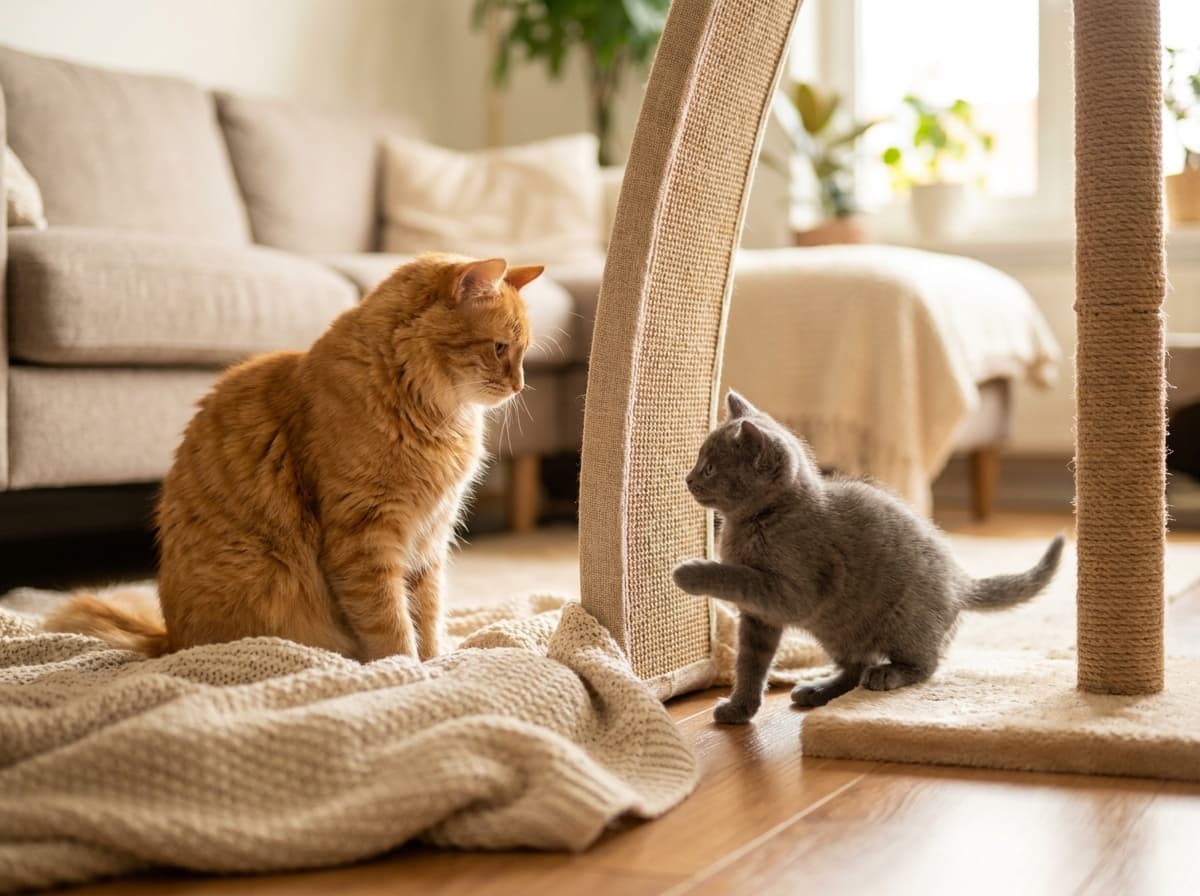
In multi-cat households, vertical space serves an additional function: it creates navigable territory that a subordinate cat can use without crossing a dominant cat's established ground-level territory. A subordinate cat that can route through the home via elevated paths has access to all household resources without the daily stress of forced confrontation. Adding staggered wall shelves or a multi-level cat tree to a two-cat household often resolves chronic tension with no other intervention.
**Key insights:
- Install wall shelves at staggered heights in a main living area — this creates navigable elevated routes that function as territory independent of floor-level space.
- Place the highest resting location near a window with outdoor visibility — this combines the territorial security of elevation with the passive stimulation of outdoor movement.
- In multi-cat homes, ensure elevated routes connect all main areas — a subordinate cat that can navigate the home via height avoids the forced confrontations that generate chronic inter-cat stress.
Why Does My Cat Overgroom Its Fur?
Overgrooming — licking to the point of producing bald patches, skin irritation, or open sores — has two fundamentally different origin categories that require different responses: medical and behavioral. The medical causes include ectoparasites (fleas, mites), food or environmental allergies, fungal skin infection, and neuropathic pain that produces a localized itching or tingling sensation the cat attempts to relieve through licking. The behavioral causes include anxiety-driven compulsive behavior and the psychogenic alopecia that develops in cats with chronically elevated stress or insufficient environmental enrichment. Applying behavioral interventions to a cat that is licking because of flea allergy dermatitis or neuropathic pain will not resolve the licking and delays appropriate treatment for a condition that is causing physical suffering.
The correct sequence is always: veterinary examination first, behavioral assessment second. A thorough physical examination including skin scraping, flea combing, and assessment for food allergy indicators must precede any assumption that overgrooming is behavioral in origin. A vet who finds no medical cause after a complete workup is essentially confirming behavioral origin by exclusion — that is a different and more informative conclusion than assuming behavioral origin at the outset. This sequence matters because the two categories of cause can coexist: a cat with a mild food allergy and a chronically under-stimulating environment may be licking for both reasons simultaneously, and addressing only one produces partial improvement.
Behavioral overgrooming — psychogenic alopecia — is a compulsive behavior that develops when a cat's stress response is chronically activated without adequate outlet or resolution. The grooming action itself stimulates the release of endorphins, creating a self-reinforcing loop: stress activates the behavior, the behavior provides temporary relief, the relief reinforces the behavior, and the behavior becomes progressively more automatic over time. The distribution of hair loss in behaviorally-driven overgrooming tends to be bilateral and symmetrical — both inner thighs, or both flanks, or a stripe along the ventral abdomen — because these are areas the cat can reach easily and repetitively. Asymmetric or localized hair loss is more suggestive of a dermatological or parasitic cause.
Identifying the specific stress triggers that precede or accompany overgrooming episodes is the most practically useful diagnostic step an owner can do at home. Keep a log: when does the overgrooming occur — at specific times of day, in response to specific sounds or events, after specific interactions? A cat that begins licking intensively when a vacuum cleaner runs, when certain visitors arrive, or after interactions with another household animal has identifiable, potentially modifiable triggers. A cat that overgrooms continuously without any apparent correlation is more likely experiencing a generalized chronic stress state that requires broader environmental assessment.
The environmental interventions with the most consistent effect on behaviorally-driven overgrooming are: increasing the predictability of the daily schedule (unpredictability is a primary driver of baseline anxiety in cats), adding secure hiding locations that are genuinely inaccessible to other animals and humans, introducing puzzle feeders to occupy the active hours that previously produced licking behavior, and using synthetic pheromone diffusers (Feliway Classic) in the rooms where grooming most frequently occurs. These address the underlying anxiety state rather than the grooming behavior directly — they work by reducing the stress that drives the behavior rather than by blocking it.
**Key insights:
- See a vet before any behavioral intervention — medical causes including flea allergy dermatitis, food allergy, and neuropathic pain must be excluded first.
- Note the bilateral symmetry of hair loss — symmetrical patterns on inner thighs, flanks, or ventral abdomen suggest behavioral origin; asymmetric or localized loss suggests dermatological or parasitic cause.
- Keep a trigger log for two weeks — documenting when and in what context overgrooming occurs identifies modifiable environmental stressors more reliably than general observation.
- Add secure hiding locations that are inaccessible to other animals — a cat without a genuinely safe retreat has no way to exit stressful situations, maintaining the elevated anxiety state that drives the behavior.
- Use Feliway Classic diffusers in the primary grooming areas — synthetic facial pheromone analogs reduce baseline anxiety in the spaces where the compulsive behavior most frequently occurs.
How to Help a Nervous Cat Adjust to a New Home
A nervous cat's failure to adjust to a new home is almost always a territory problem rather than a personality problem, and the distinction changes everything about the correct approach. Cats build their sense of safety on olfactory familiarity — their own scent markings distributed through an environment over time are what convert a space from threatening to secure. A new home contains none of the cat's scent and is saturated with the scent of previous occupants, other animals, and unfamiliar people. Every square foot of the new space registers as unknown territory requiring assessment before it is safe to occupy.
The single most effective intervention is contraction rather than expansion: start the cat in one small room rather than giving access to the full home. This principle, sometimes called 'base camp' introduction, works because it allows the cat to saturate a small, manageable space with their own scent within days rather than weeks. Once a space smells like the cat, it registers as their territory, and territory is the foundation of felt safety. An expanded territory is built from this secure base, one room at a time, rather than starting from a state of full exposure.
The base room should contain everything the cat needs: litter box, food, water positioned in separate areas, scratching surface, and at least two hiding options that are genuinely enclosed — not just a space to crouch behind, but a box, carrier, or covered bed where the cat is visually concealed on all sides. Visibility on all sides is the specific sensation that prevents a nervous cat from relaxing. A cat that can see the entire room from wherever they are resting does not feel safe — they feel exposed. The hiding option does not need to be elaborate: a cardboard box with a hole cut in the side is functionally adequate.
The owner's role during the base room period is to be a consistent, non-demanding presence. Sitting in the room reading or working without attempting contact allows the cat to acclimate to the owner's scent and movement at their own pace. Attempting to initiate contact — reaching toward, pursuing, or picking up a hiding cat — resets the acclimatization progress by confirming to the cat that approach from humans produces an unpredictable outcome. The criterion for successful base room adjustment is the cat initiating contact or consistently eating and moving around the room normally while the owner is present.
Territory expansion after base room success should be incremental. Open one additional door and allow the cat to explore at their own pace, with the option to retreat to the base room at any time. Do not close the base room door during expansion — it remains the secure anchor from which the cat can investigate and to which they can return. Most cats with a successful base room foundation expand through a new home within two to four weeks. Cats that were given full access immediately and shut down — hiding persistently, refusing to eat in open spaces, avoiding all contact — often require a restart: confining back to a base room and repeating the process, which is slower than doing it correctly the first time.
**Key insights:
- Start in one room, not the whole house — scent saturation of a small space converts it to territory faster than gradual exploration of a large space does.
- Provide at least two genuinely enclosed hiding options — visual concealment on all sides is what allows a nervous cat to fully relax, and a crouching-behind option does not provide this.
- Sit in the room without initiating contact — non-demanding consistent presence allows scent familiarization without the stress of forced interaction.
- Use the cat initiating contact or eating normally while you are present as the criterion for advancing — time elapsed in the room is not a reliable proxy for psychological readiness.
- Keep the base room door accessible during territory expansion — the cat needs the option to retreat to their secure anchor space, not just forward-only access to new areas.
Frequently Asked Questions
The distinction is behavioral pattern rather than total sleep hours. A genuinely well-rested cat that is not bored will show periods of alert engagement, exploratory behavior, and active interest in environmental stimuli during waking hours. A bored cat's waking hours are characterized by restlessness without directed activity, repeated object manipulation or destruction, attention-seeking vocalization, and the kind of diffuse irritability that produces redirected aggression — swatting at passing legs without obvious provocation.
Total sleep duration provides a rough indicator: healthy adult cats sleep 12 to 16 hours daily. A cat sleeping 20 or more hours per day in an otherwise healthy adult who has been screened medically is more likely under-stimulated than unusually rested. The more informative observation is what happens during waking hours. A cat that wakes, eats, engages briefly with toys or a perch, and returns to sleep is meeting its needs. A cat that wakes, moves restlessly, vocalizes for attention, and cannot settle without engagement from the owner is showing a pattern consistent with chronic under-stimulation.
Nighttime vocalization in older cats is one of the most consistent behavioral presentations of Feline Cognitive Dysfunction Syndrome. The underlying mechanism is disorientation — in low light, with reduced sensory input, a cognitively affected cat loses spatial orientation and vocalizes in distress. The phenomenon is called sundowning, named for its equivalence to the evening confusion seen in human dementia patients. The cat is not trying to wake the owner or demand attention in the normal behavioral sense. They are experiencing genuine disorientation and distress.
Practical environmental responses that reduce the frequency and intensity of nighttime vocalization include nightlights along the paths the cat uses most frequently — particularly between resting areas and the litter box — and maintaining the cat's sleeping location close to where the owner sleeps. Proximity to a familiar person reduces the disorientation-driven anxiety that produces the vocalization. Your vet should be involved: selegiline is a medication with evidence for slowing cognitive progression in cats and is most effective when introduced early in the course of FCDS rather than after the syndrome is advanced.
Yes, and the reason relates to how cats use space differently from dogs or humans. Cats care proportionally more about vertical territory than horizontal territory — a small apartment with floor-to-ceiling cat trees, wall-mounted shelves, and a window perch with outdoor visibility provides a richer functional environment than a large apartment with nothing at floor level and no elevation access. The ceiling height of most homes represents substantially more usable territory than most cat owners make available.
The exercise needs that floor space cannot fulfill are met through interactive play rather than free roaming. Two daily 15-minute sessions with a wand toy that the owner actively controls — varying speed, direction, and hiding — delivers more physiologically appropriate exercise than hours of unsupervised pacing. Puzzle feeders address the cognitive engagement component of territory use. A small home that is well-catified and includes regular interactive play sessions provides a more enriched environment than a large home with ample floor space but no vertical territory, no puzzle feeding, and no interactive play.
No, and assuming anxiety as the default cause is the error that most delays effective treatment. Overgrooming has a medical differential that must be excluded before any behavioral interpretation is applied. Flea allergy dermatitis — an allergic reaction to flea saliva that can produce intense licking from a single flea bite with no visible infestation — is the most commonly missed medical cause because owners do not see fleas and conclude the cat is clean. Food allergy produces overgrooming in a distribution pattern similar to psychogenic alopecia and is distinguishable only through an elimination diet trial. Neuropathic pain at specific spinal levels produces localized licking that looks identical to stress-driven behavior but does not respond to environmental enrichment.
After medical causes are excluded, anxiety and chronic under-stimulation are the primary behavioral drivers, and they often coexist. The age consideration is also relevant: Feline Cognitive Dysfunction Syndrome in cats over 11 can produce anxiety-driven compulsive behavior as a symptom of neurological change rather than environmental stress. An older cat that begins overgrooming may be developing FCDS in addition to or instead of responding to environmental stressors. A vet who knows the cat's age and history can help distinguish these possibilities and recommend appropriate management.
Conclusion
The thread connecting every topic in this guide is the same principle: behavioral changes in cats are informative rather than arbitrary. A senior cat that is suddenly less active is providing a diagnostic signal about pain, cognitive change, or systemic illness. A bored indoor cat that overgrooms or destroys furniture is providing feedback about an environment that is not meeting its behavioral needs. A nervous cat that hides for weeks is showing you that the introduction was structured in a way that produced territory overwhelm rather than territory confidence. In each case, understanding what the behavior is communicating changes the response from frustration management to genuine problem-solving.
The hierarchy of responses is consistent across all of these situations: medical causes first, then environmental, then behavioral modification. A cat whose reduced activity is driven by undiagnosed arthritis will not benefit from play sessions until the pain is managed. A cat overgrooming from flea allergy dermatitis will not benefit from puzzle feeders until the allergy is treated. A nervous cat given full house access before territory confidence is established in a base room will not respond to enrichment until the territory foundation is rebuilt. The sequence matters as much as the intervention.
One change to implement today: if you have a senior cat over 10 who has not had bloodwork in the past year, schedule that appointment. If you have an indoor cat showing boredom-driven behaviors, replace one meal with a puzzle feeder this week. If you are introducing a nervous cat, restrict access to one room today regardless of how many weeks the cat has been in the home. Each of these is a small action with a disproportionate impact on the trajectory of the problem it addresses.
Send it to someone who should read it next.

PurrScript Editorial Team
Editorial Team
PurrScript's in-house editorial team. We research, write, and review every guide using established veterinary and behavioral resources, and update articles as best practices evolve.
View all articles