How to Introduce New Kitten to Resident Cat Without the Drama
Most people make the mistake of putting two cats in a room and hoping for the best, but that is a recipe for a feline feud that can last years....

PurrScript Editorial Team
Editorial Team
How to Introduce New Kitten to Resident Cat Without the Drama
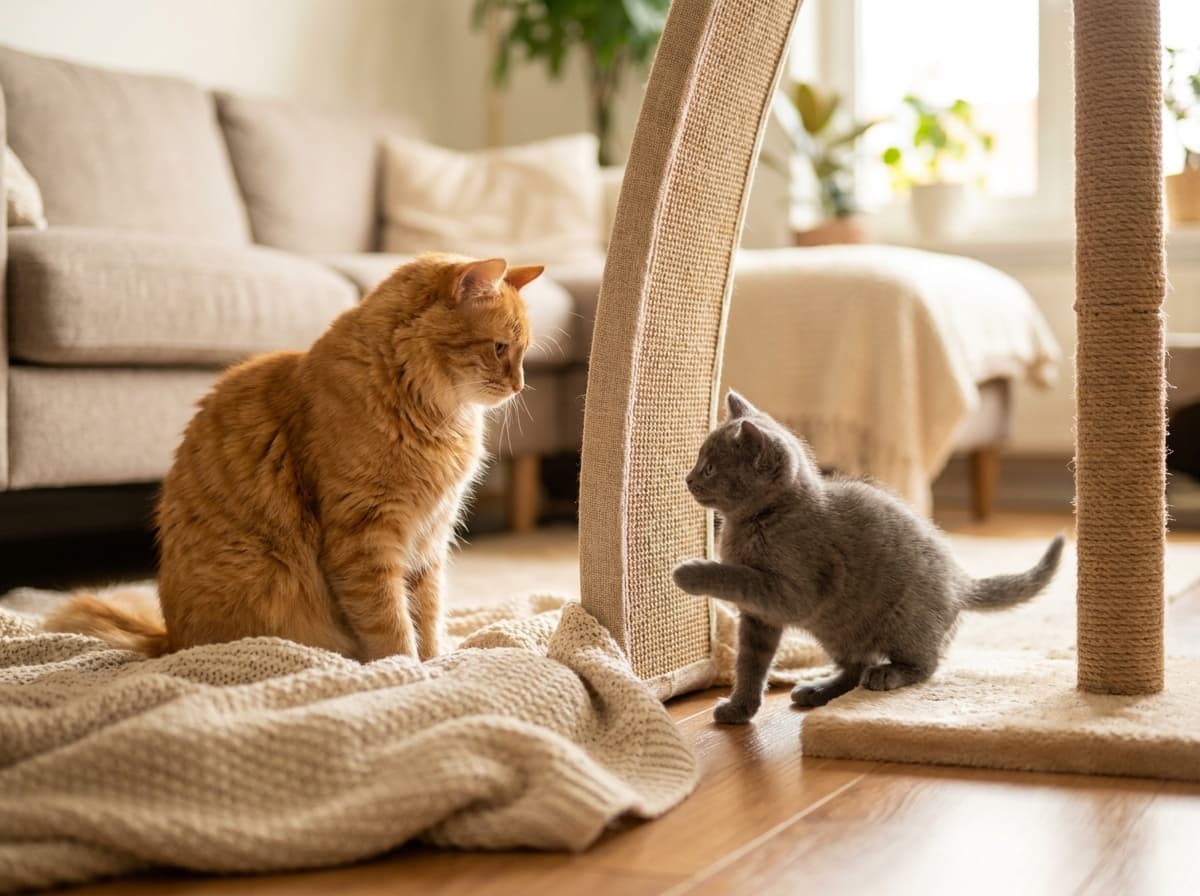
Most people make the mistake of putting two cats in a room and hoping for the best, but that is a recipe for a feline feud that can last years. Learning how to introduce new kitten to resident cat successfully means focusing on their noses before their eyes. Scent is a cat's primary language, and ignoring it is the fastest way to turn your home into a battleground.
The stakes are higher than a few hissed warnings. When introductions go poorly, it leads to chronic stress that causes health issues, litter box avoidance, and destroyed furniture. Many owners are surprised when their cat starts scratching the sofa suddenly, but this is usually a displacement behavior from a cat who feels their territory is under attack. Plus, with the new legal microchipping deadline in England coming in June 2024, managing a multi-cat home safely has never been more important.
Most generic advice tells you to just use a crate, but experts warn that this can actually make your new cat feel trapped and terrified. This guide is different because we focus on the scent-first strategy and the power of vertical space to keep the peace. We cover the specific physical requirements for scratching posts and how to use positive reinforcement to build a real bond between your pets.
By the time you finish reading, you will have a clear seven-step roadmap to manage scent swapping, visual contact, and physical activity so your cats can coexist happily without the drama.
The Scent-First Strategy: How to Introduce New Kitten to Resident Cat
Scent is a cat's primary language and their most reliable tool for identifying friends versus foes. To introduce a new kitten to a resident cat successfully, you must focus on their noses long before their eyes by swapping smells for at least 48 hours. This strategy bypasses the immediate stranger danger reflex and allows their brains to process a new presence without the adrenaline spike that usually comes with a sudden visual confrontation.
Humans are visual creatures, so we often assume seeing is believing, but for cats, seeing a stranger without first knowing their scent is a declaration of war. A sight-first introduction triggers a deep-seated fight-or-flight response that can take weeks of behavioral work to undo. This is especially critical if you have a senior cat, as older cats often view newcomers as territorial intruders rather than potential playmates. By focusing on scent, you are essentially giving them a digital handshake before the physical meeting occurs.
Imagine trading a piece of bedding between the kitten's safe room and the main living area. You take a fleece blanket the kitten has slept on and place it near the resident cat's favorite scratching post. To make this even more effective, place a small, high-value treat on that towel or blanket. You are not just letting them smell the kitten; you are teaching their brain that this new smell equals delicious rewards. This is a great way to start making your home their favorite place to be for both feline residents while they are still in separate rooms.
One thing most guides get wrong is suggesting you put the new kitten in a crate in the middle of the living room for the first meeting. As expert Jackson Galaxy points out, this is often counterproductive because the crated cat feels surrounded with no way to escape, which causes massive anxiety. Instead of a zoo exhibit style meeting, use a solid door or a high barrier. You want to foster curiosity rather than a feeling of being trapped, and scent swapping is the most low-stakes way to build that initial familiarity without the stress of a cage.
Once both cats are calm about the other's scent, you can graduate to the sheet-and-gate method for the first visual contact. Install a sturdy baby gate that is at least 36 inches high to prevent any Olympic-level jumping attempts between the two areas. Drape a thick sheet over the gate so they can hear and smell each other but cannot see. This adds a crucial layer of safety while you prepare for the big reveal, ensuring that neither cat can launch a surprise attack during the transition.
Start by lifting the sheet just a few inches for short 30-second intervals while using a cheerful Happy Cats verbal cue. While the sheet is up, toss high-value treats like freeze-dried chicken to both cats at the same time to reward calm behavior. This creates a positive association where the sight of the other cat is linked to happy voices and snacks. If either cat shows signs of stress like pinned ears or hissing, simply drop the sheet and go back to scent-swapping for another day. The slower you go now, the faster they will eventually become friends.
Key insights:
- Start scent swapping at least 48 hours before any visual contact occurs.
- Trade bedding between the safe room and main areas to create a communal scent.
- Use a 36-inch baby gate to allow safe visual contact without the risk of jumping.
- Reward calm behavior with the Happy Cats cue and high-value treats.
- Avoid using crates for introductions as they make cats feel trapped and defensive.
Using the Sheet-and-Gate Method for Visuals
The sheet-and-gate method is the safest bridge between smelling a new friend and actually seeing them. You start by installing a baby gate that is at least 36 inches high to stop any surprise jumps. Drape a sheet over it so they can only see each other when you decide it is time. By lifting the sheet for tiny 30-second bursts, you control the interaction completely and keep everyone safe.
This method works because it prevents the staring contest that usually leads to a fight. In the cat world, a long stare is a challenge. By breaking the visual contact after just half a minute, you stop that tension from building up. You are teaching them that the other cat is just a fleeting part of their day that comes with great perks like snacks and praise.
Imagine your resident cat sitting on one side of the gate and the new kitten on the other. When you lift the sheet and say your cue, they catch a glimpse of each other. Before they can even think about hissing, you drop a few treats for both of them. This creates a win-win scenario where both cats feel rewarded just for being in the same room together.
Do not fall into the trap of thinking silence equals success. Some cats, particularly older ones, might just freeze instead of hissing when they are overwhelmed. If you notice one cat won't take a treat or has a twitching tail, they are still too stressed. You might need to focus more on making your home their favorite place to be by adding more vertical space before trying the gate again.
Key insights:
- Use a 36-inch gate to prevent cats from jumping over during the reveal.
- Keep visual sessions to 30 seconds to avoid overstimulating either cat.
- Say Happy Cats as a verbal cue to signal that something good is happening.
- Reward both cats simultaneously so they associate each other with treats.
- Drop the sheet immediately if you see pinned ears or hear a growl.
The Furniture Crisis: Why Is My Cat Scratching Furniture Suddenly?
Your cat is not suddenly being bad or forgetting their training. When a resident cat starts shredding your sofa out of nowhere, it is almost always a physical manifestation of stress called displacement behavior. They are reacting to the massive life change of a new kitten by finding a high-energy outlet for their anxiety. Beyond just burning off nervous energy, scratching serves as a vital communication tool. It leaves behind both visual marks and pheromones from the scent glands in their paws, effectively signing their name on the furniture to reclaim their territory.
What this actually means is that your cat is trying to self-soothe. In the feline world, a scratched surface is a permanent no trespassing sign. When a new kitten arrives, the resident cat feels their status is under threat. Most owners overlook the fact that scratching is not just about grooming claws; it is about making a room feel familiar again. Research shows that a senior cat is often set in its ways and views a new arrival as a territorial intruder rather than a playmate. By marking the most prominent items in your living room, they are creating a scent-based security blanket to cope with the intruder.
Imagine your resident cat, Oliver, watching from a distance as the new kitten explores the rug. Oliver does not hiss or growl, which makes you think he is fine. But the moment the kitten gets within three feet, Oliver trots over to the arm of your favorite leather chair and begins a vigorous, frantic scratching session. He is performing for the kitten, showing off his size and leaving a fresh scent trail. This is a classic example of a cat choosing a hotspot near the newcomer to assert dominance without having to resort to an actual physical fight.
The biggest mistake people make here is reaching for a squirt bottle or shouting. Punishing the cat only adds another layer of fear to an already stressful situation. If the scratching is caused by anxiety, making the environment more hostile will actually increase the frequency of the behavior. You have to address the root cause, territorial insecurity, rather than just the shredded fabric. This is also a good time to check if they are showing other signs of stress like meowing at night or hiding more than usual.
To fix this, you need to provide a better billboard for their message. A scratching post must be tall enough for a cat to stretch the full length of its body vertically to be effective. If the post is too short or wobbly, they will go right back to the sturdy, tall sofa. You are trying to make the right choice the easiest choice for them while they adjust to their new roommate. Providing these outlets helps in making your home their favorite place to be instead of a source of constant conflict.
Key insights:
- Place temporary cardboard scratching pads directly in front of the furniture hotspots they are currently targeting.
- Ensure your primary scratching post is tall and sturdy enough for the cat to fully extend their back muscles.
- Rub a soft cloth on the resident cat's cheeks and then on the new post to transfer their familiar scent to the legal spot.
- Reward your cat with high-value treats immediately whenever you see them using a post instead of the furniture.
- Avoid all forms of physical punishment or scolding, as this increases the stress that triggers the scratching behavior.
Towering Support: Best Scratching Posts for Large Indoor Cats
Large indoor cats don't just scratch to sharpen their claws. They do it to stretch their entire bodies. If you have a big cat like a Maine Coon or a hefty Ragdoll, a standard 20-inch post is basically a paperweight. To get the job done right, the post must be tall enough for your cat to stand on their hind legs and fully extend their front paws upward without reaching the top. A good rule of thumb is to measure your cat from their nose to the base of their tail. That measurement is the minimum height your scratching post should be to provide a satisfying stretch.
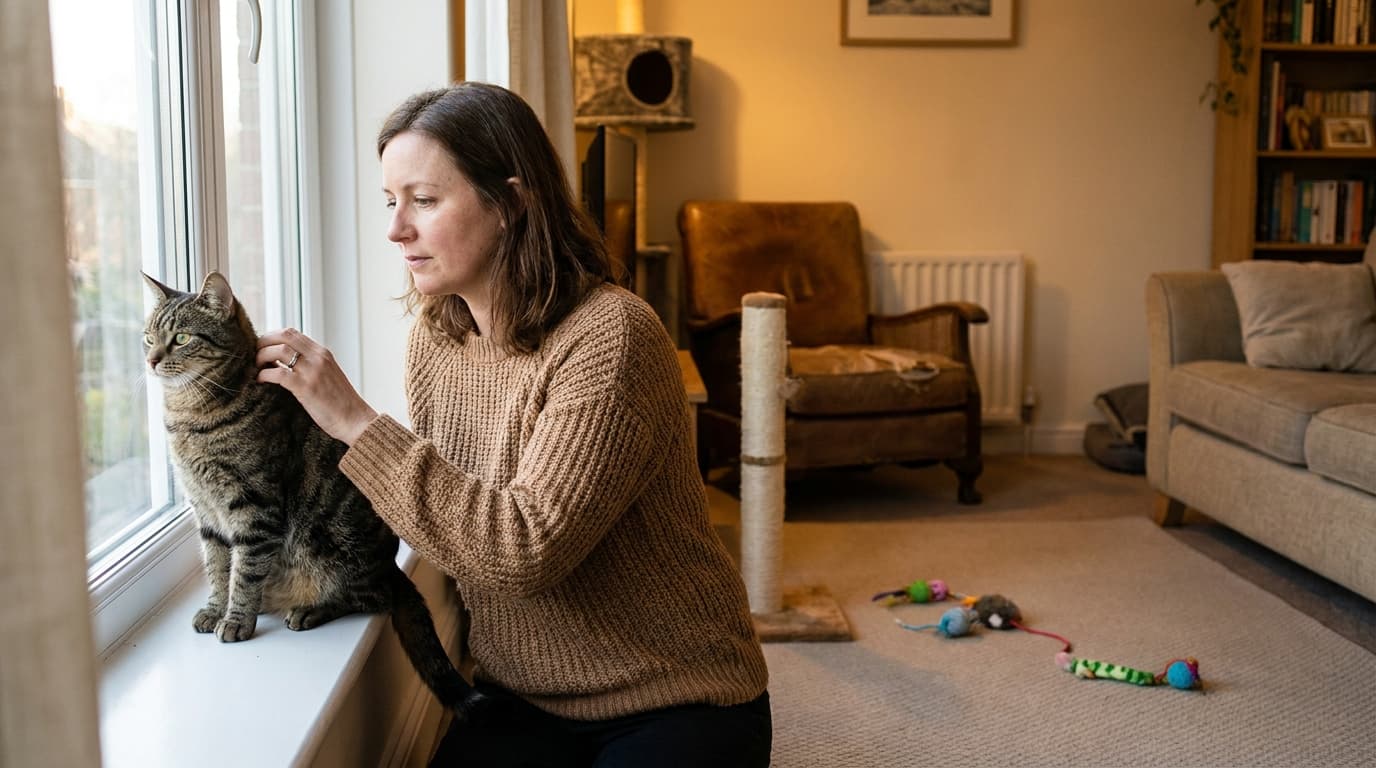
What this actually means is that verticality is a form of enrichment that most owners underestimate. In the wild, cats use trees for scratching, lookouts, and escape routes. When you bring a tall, sturdy post into your home, you are catifying your space by adding essential territory. This is especially important if your cat is bored or frustrated. If you feel like your indoor cat acts like a zoo animal, it might be because they lack these vertical outlets to express their natural instincts.
The pattern here is that vertical space reduces social friction. In a house with multiple cats, territory is measured in three dimensions. By providing a tall tower, you allow cats to occupy different altitudes in the same room. A more dominant cat might claim the top, while a shy cat stays below. This hierarchy prevents hissing matches over floor space. It is a critical part of making your home their favorite place to be because it gives every cat a way to feel secure without a fight.
Imagine a 16-pound Maine Coon mix named Barnaby who has outgrown his kitten furniture. Every time he tried to use his old, flimsy post, it would wobble or slide across the floor. Because it didn't feel stable, Barnaby started using the corner of a heavy oak dining table instead. His owners finally invested in a 32-inch sisal tower with a weighted wooden base. The first time Barnaby leaned his full weight into it and felt that rock-solid resistance, he let out a huge stretch and never looked at the table again. He needed that physical feedback to feel safe.
One thing most guides get wrong is focusing only on height while ignoring the base. A tall post with a narrow, lightweight base is a tipping hazard. If a large cat pulls it over once, they may never trust a scratching post again. The catch is that you need a base that is wide and heavy enough to act as an anchor. Also, look for sisal fabric rather than wound rope if your cat is a heavy shredder. Sisal fabric allows the claws to sink in deeper, which provides a better workout for those big back muscles.
If your cat is still showing signs of territorial stress even with a good post, check for other signs of stress like meowing at night. Providing the right tools is the first step toward a peaceful, drama-free home.
Key insights:
- Measure your cat from nose to tail-base to determine the minimum post height.
- Look for a heavy, wide base to ensure the tower never wobbles or tips.
- Choose sisal fabric over carpet for a more satisfying and durable scratching texture.
- Place the post in high-traffic areas where your cat already likes to mark territory.
- Reward your cat with high-value treats immediately after they use the new post.
Burn Off the Zoomies: How to Keep Indoor Cats Physically Active
Stop thinking of the zoomies as just a funny late-night sprint across the sofa. For indoor cats, especially when a new kitten is in the mix, high-energy play is the most effective tool to stop redirected aggression before it starts. When a resident cat has pent-up energy and no outlet, that frustration often gets aimed at the new, smaller intruder. You need to provide structured exercise that mimics a real hunt to keep the peace and ensure everyone feels safe in the shared space.
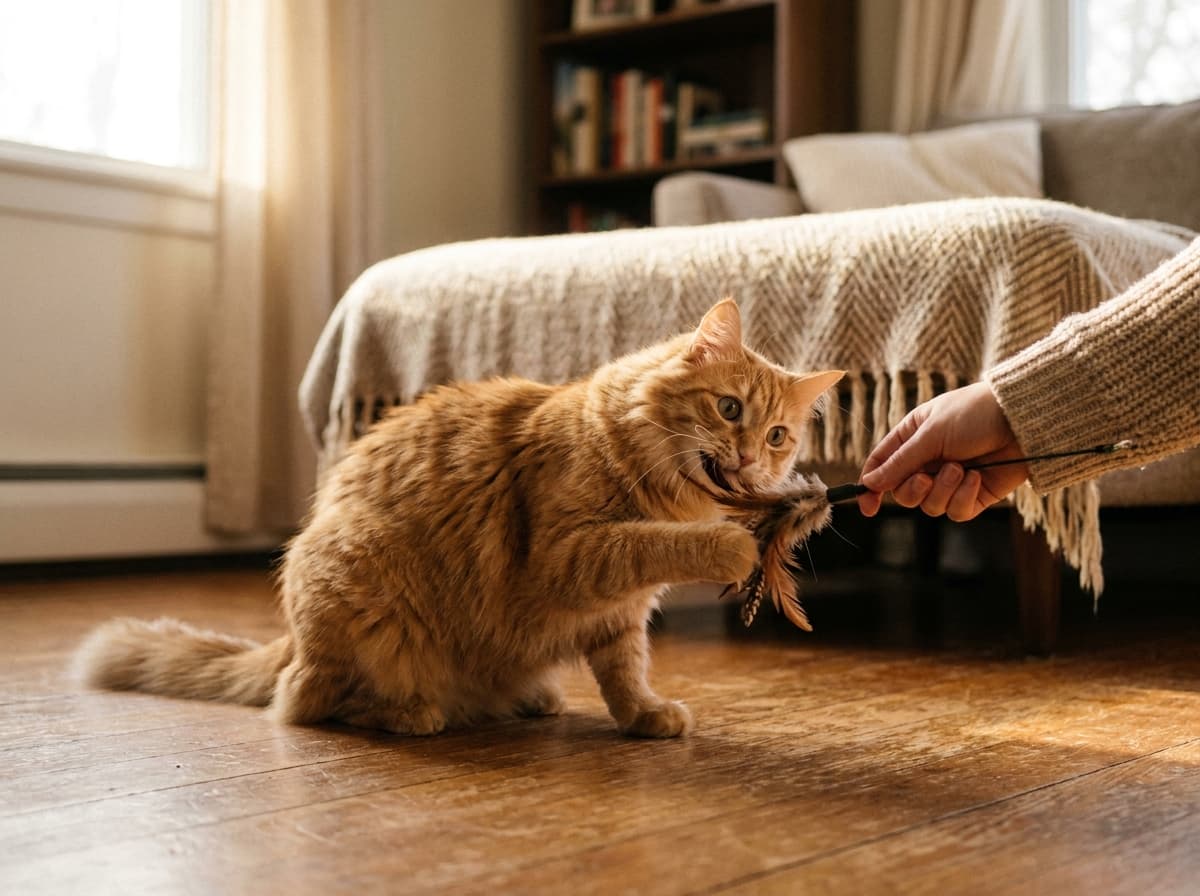
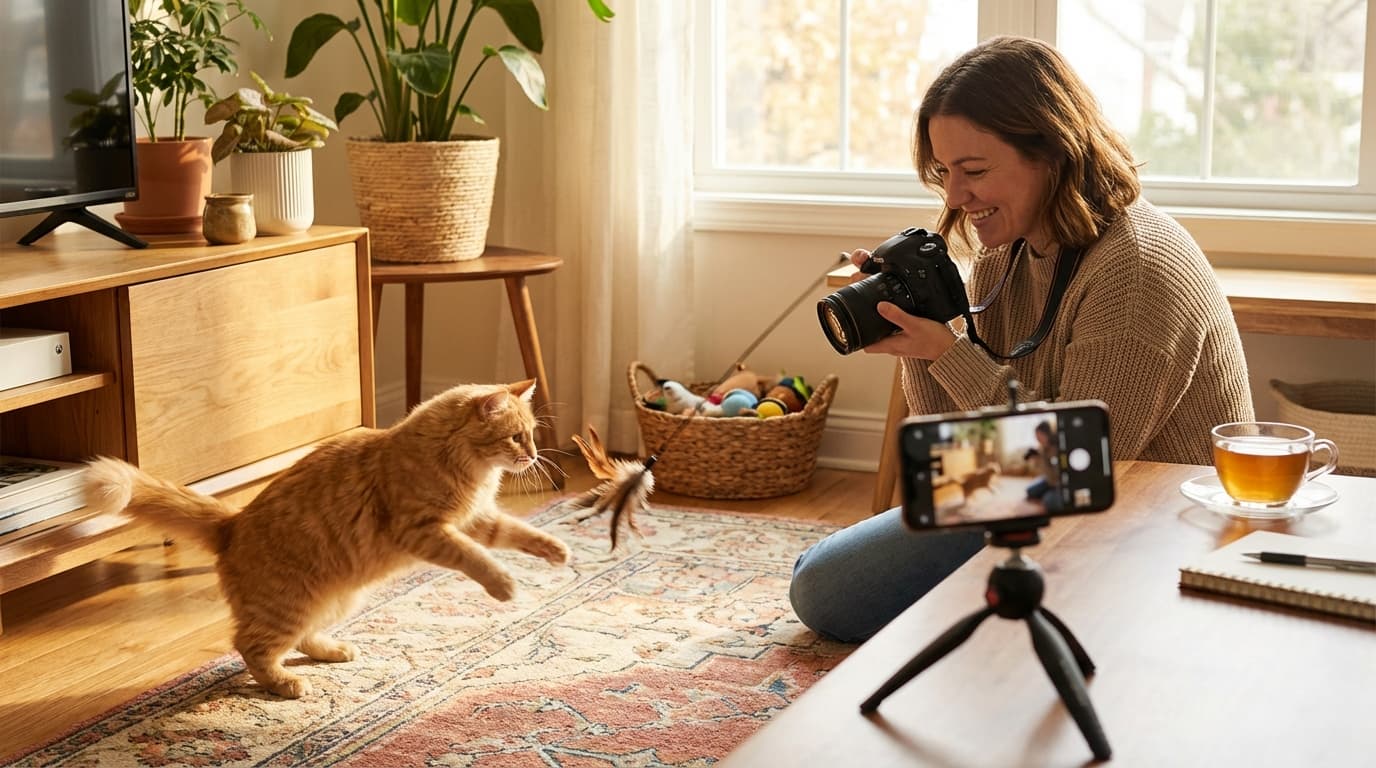
Most owners toss a plush mouse on the floor and wonder why their cat is still bored. The truth is that self-play toys are rarely enough to build a bond or burn significant calories because they lack the 'life' of a real target. Interactive play with a wand toy is far superior because it allows you to control the prey and trigger your cat's natural instincts. This is also why your indoor cat acts like a zoo animal when they are under-stimulated; they have a biological drive to hunt that a stationary toy just cannot satisfy. By being the one at the other end of the string, you become a source of excitement rather than a boring furniture provider.
Imagine you have a three-year-old resident cat who keeps swatting at the new kitten whenever they enter the room. Instead of scolding, you grab a laser pointer. You lead the older cat on a frantic chase across the rug and up the cat tree, but you don't stop there. Just before the final pounce, you swap the laser for a physical kicker toy or a feather wand. This allows the cat to actually sink their claws into something, completing the predatory hunt cycle. Without that physical catch, the cat stays in a state of high arousal and frustration, which is exactly when they might turn and pounce on the kitten instead.
One thing most guides get wrong is assuming every cat needs to be an Olympic high-jumper. The catch is that senior cats often view a new arrival as a territorial intruder rather than a playmate, and their aging joints cannot handle the same vertical leaps as a kitten. For an older cat, play should look more like a scavenger hunt. Hide high-value treats around their vertical territory or use a puzzle feeder to encourage movement. This keeps them mentally sharp and physically active without the risk of injury. It is about working with their current mobility, not forcing them to keep up with a hyperactive youngster.
The timing of these sessions is just as important as the activity itself. Cats are crepuscular, meaning they are naturally most active at dawn and dusk. By scheduling two 15-minute play sessions right before mealtime, you align with their natural hunt-catch-kill-eat-groom-sleep cycle. This routine helps your cat feel like they have earned their dinner, leading to a much calmer household afterward. Remember that kittens require 4 to 6 small meals a day to support their growth, so you have plenty of opportunities to fit these short bursts of activity into your schedule.
Key insights:
- Use wand toys to mimic the unpredictable movement of birds or mice to engage their hunting brain.
- Always end a laser pointer session by letting the cat catch a physical toy to prevent frustration.
- Schedule play sessions 15 minutes before breakfast and dinner to sync with their natural energy cycles.
- Create vertical tracks using wall shelves to give cats a high-speed path off the floor.
- Transition senior cats to low-impact scent games and puzzle feeders to keep them moving safely.
Reading the Room: Signs of Stress in New Cat at Home
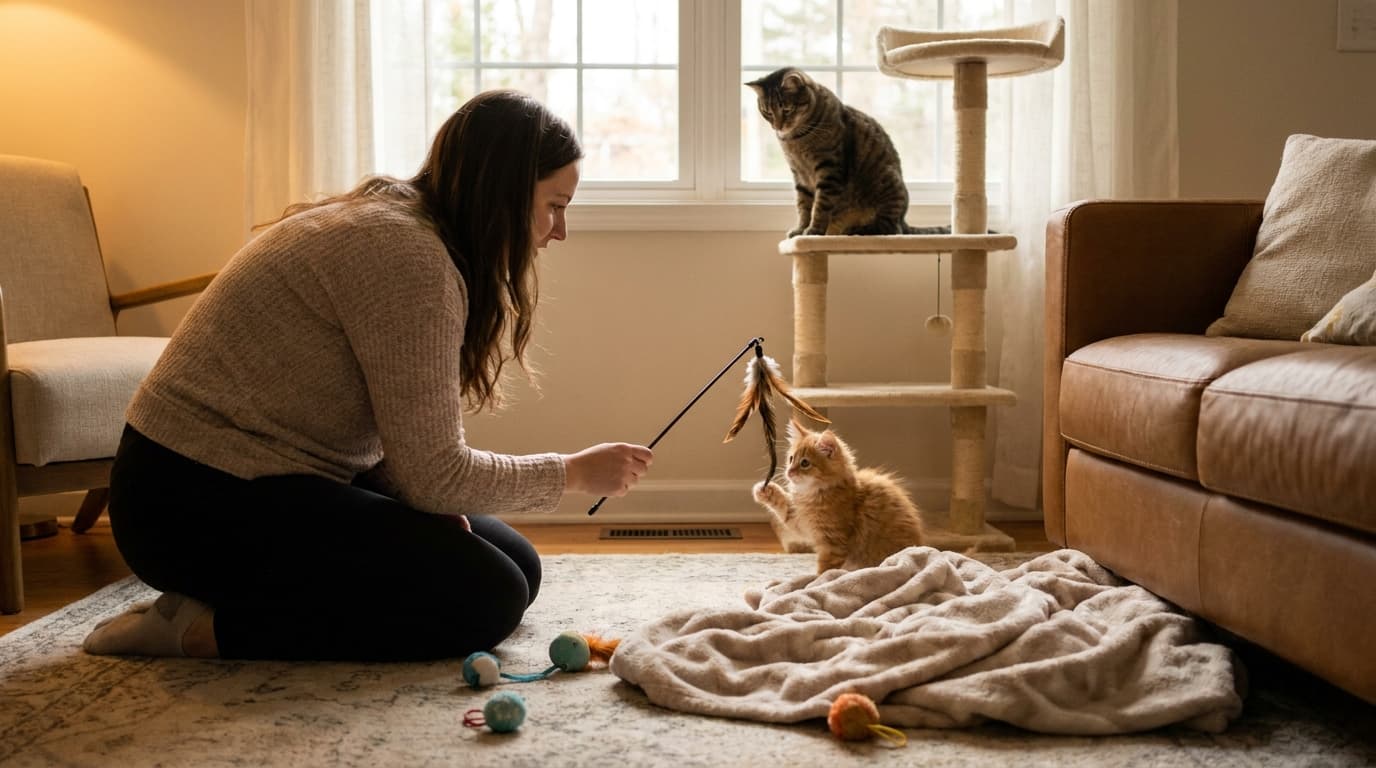
Stress in a new cat does not always look like an angry cartoon with arched backs and loud hissing. Most of the time, feline anxiety is quiet and invisible. You should look for subtle shifts like a complete lack of appetite, sleeping in the litter box, or a cat that simply refuses to move from a single corner for hours. These are clear signals that your new pet feels overwhelmed by their environment rather than comfortable in it. If they are not exploring, they are likely stuck in a state of high alert.
We often mistake a quiet cat for a good cat, but the freeze response is just as serious as the fight response. While an aggressive cat is actively trying to manage their space, a frozen cat has essentially shut down because they feel they have no escape route. This is why using a crate to introduce cats is often a mistake. Jackson Galaxy points out that a crated cat feels trapped by unfamiliar animals with nowhere to run, which can spike cortisol levels and lead to long-term behavioral issues. True comfort only comes when a cat feels they have the autonomy to hide or climb away from a threat.
Imagine you have just brought home a tiny kitten. They are eating their four to six small daily meals and using the litter box, so you assume everything is great. However, if that kitten has not left the dark space under your guest bed in three days, they are not settling in. They are surviving. They are waiting for the predators - which in their mind includes you and your resident cat - to leave before they feel safe enough to even stretch. This state of hyper-vigilance prevents them from forming a real bond with your home and can even lead to indoor cats having sensitive stomachs or digestive upset due to chronic stress.
The signs change significantly if you are bringing a kitten home to a resident senior cat. Older cats are often less tolerant of environmental changes and might view a newcomer as a territorial intruder rather than a friend. Instead of hiding, a stressed senior might become a resource guarder, sitting near the litter box or food bowl to block the kitten's access. They might also start over-grooming their belly or legs until the fur thins out. It is a slow-burn stress that looks more like grumpiness or a need for a diet reality check, but it is actually a cry for a more predictable routine.
Beyond behavioral signs, physical safety plays a role in reducing environmental tension. In England, for example, making sure your cat is microchipped is becoming a legal requirement for cats over 20 weeks old by June 10, 2024. Knowing your pet is identifiable can lower your own anxiety, which cats definitely pick up on. If you are using tools like the sheet-and-gate method, ensure your baby gate is at least 36 inches high. If it is too low and the resident cat jumps over it unexpectedly, the resulting scare can set your progress back by weeks.
Key insights:
- Keep a stress log for the first week to track eating, hiding, and litter box habits to identify patterns.
- Look for resource guarding where a resident cat blocks access to the litter box or food bowls.
- Maintain a strict feeding schedule of 4 to 6 small meals to provide a sense of security and routine.
- Provide vertical escape hatches like tall scratching posts or shelves so the cat can observe from a safe height.
- Watch for over-grooming or sudden changes in coat quality as a sign of chronic, long-term stress.
Safety and Logistics: Feeding, Gates, and Legal Requirements
Setting up a peaceful home for two cats starts with getting the physical logistics right before they even meet. In England, this actually starts with a legal check: by June 10, 2024, all cats over 20 weeks old must be microchipped. Beyond following the law, your biggest physical tool is a sturdy baby gate that stands at least 36 inches high. This height is the sweet spot because it is tall enough to discourage most cats from jumping over, yet it allows the essential airflow needed for cats to sniff each other out safely from opposite sides of the door.
The way you handle food is just as important as the physical barriers you install. Kittens require 4 to 6 small meals throughout the day to support their fast growth, but this frequent schedule does more than just fill their bellies. By providing food at regular, predictable intervals, you lower the overall stress level in the house. When a resident cat sees that food is abundant and arriving often, they are far less likely to feel the need to guard their bowl or view the new kitten as a competitor for resources. It turns mealtime from a potential battleground into a boring, reliable routine.
What most people overlook is that these logistics are really about managing 'scent corridors' rather than just blocking movement. Scent is a cat's primary way of gathering information, and a gate allows them to process the new arrival without the high-stakes pressure of a face-to-face encounter. If you rush this or use a crate, you strip away their ability to retreat. As expert Jackson Galaxy points out, a crated cat feels like they are surrounded by unfamiliar animals with no escape route, which is a recipe for long-term anxiety. Using a gate with a sheet over it allows you to control the visual flow while keeping the scent communication wide open.
Imagine you have a grumpy senior cat who has owned the living room for a decade. If you just drop a kitten in the middle of the rug, the senior cat sees an intruder. But if you use the 'Sheet-and-Gate' method, you can slowly lift the cover for a few seconds while offering high-value treats. This creates a scenario where the resident cat associates the kitten’s scent and sight with something delicious rather than a threat to their throne. It is about building a positive history one tiny, controlled interaction at a time.
One common mistake is switching a new kitten’s food the moment they arrive to match what your resident cat eats. You must keep dietary transitions slow, ideally over 7 to 14 days, to prevent stress-induced stomach issues. If you don't, you might find that your indoor cats have sensitive stomachs or digestive upset that makes the whole introduction process much messier. Getting the environment right ensures your indoor cats are making your home their favorite place to be instead of a source of constant tension.
Remember that the slower you go, the faster the actual bond will form. Rushing the physical logistics often leads to a 'fight or flight' response that can take weeks of scent-swapping to fix. By focusing on high gates, frequent meals, and slow food changes, you are giving both cats the predictability they need to feel safe.
Key insights:
- Check your microchip registration details before the June 2024 legal deadline to ensure your cat is identifiable.
- Install a baby gate at least 36 inches high to prevent jumping while allowing for critical scent exchange.
- Feed 4 to 6 small meals daily to keep kittens calm and prevent resident cats from feeling the need to guard food.
- Transition any new diets slowly over 7 to 14 days to avoid vomiting or diarrhea caused by transition stress.
- Use breakaway collars for all cats during introductions so they can wear ID tags safely without the risk of getting snagged.
Frequently Asked Questions
Most people want their cats to be best friends by the end of the first weekend, but you're usually looking at two weeks to a few months for everyone to feel truly comfortable. It depends on your cats' personalities and how you handle those first meetings. If you rush the process, you might deal with hissing and swatting for much longer than if you had just taken it slow from the start. As the experts at Humane World for Animals suggest, the slower the process, the better your chances are for a successful introduction.
Here's the thing: scent is how cats communicate. Swapping smells before they ever see each other reduces that initial aggression. You can pet one cat with a cloth and place it near the other cat's food dish so they associate the new scent with something good like eating. Also, when you do start visual meetings, use a sturdy baby gate at least 36 inches high to keep them safe while they check each other out. This gives them a chance to see one another without the risk of a physical fight, making the transition much smoother for everyone involved.
It's definitely stressful when your favorite sofa becomes a target, but your cat isn't doing this to be mean or naughty. Scratching is a natural way for cats to mark their territory using the scent glands in their paws. When a new kitten moves in, your resident cat suddenly feels like their space is being invaded, so they start 'claiming' the furniture to signal that they're still the boss of the house. It's basically a visual and scent-based message to the kitten that this specific area is already taken.
To stop the scratching, you need to offer a better deal. A scratching post has to be tall enough for a cat to stretch their full body length vertically or they'll just keep using the couch. Try placing new posts right next to the spots they're currently scratching to redirect that energy. Remember that a senior cat is often set in its ways and views a new arrival as a territorial intruder. Adding vertical space like shelves or window perches can really help because it expands their territory without taking up more floor space, making them feel more secure.
You really should skip using a crate for introductions in a shared living area. While it might seem like a safe way to let them see each other, it is actually quite stressful for the cat inside. As expert Jackson Galaxy points out, from the cat's perspective, they are suddenly surrounded by unfamiliar animals with absolutely no way to escape or hide. Cats feel safest when they have the option to retreat or climb to a high spot, and being stuck in a cage in the middle of the room takes those options away.
Instead of a crate, a much better approach is the sheet and gate method. You can use a sturdy baby gate that is at least 36 inches high to prevent any jumping over it. By covering the gate with a sheet, you control when they see each other while still letting them sniff around. This gives both cats the physical space they need to feel in control of the situation. It is all about making the process slow and predictable so nobody feels cornered or threatened.
New cats rarely tell you they are stressed by acting out loudly. Instead, you will usually notice more subtle signs like hiding under the bed for days, refusing to eat, or grooming themselves so much they get bald patches. You might also see them avoiding their litter box or staying low to the ground instead of using the cat trees or shelves you have set up. It is also important to remember that dietary changes should be made gradually over a 7 to 14 day period to prevent stomach upsets, which can add physical stress to their emotional transition.
Here is the thing most owners miss: stress often looks like being a quiet cat when it is actually a sign of shut down. If your new arrival isn't exploring or showing interest in scent swapping, they are likely feeling overwhelmed. You can help them by expanding their vertical territory with wall shelves or window perches. This gives them a safe high ground where they can observe the house without feeling like they are in the line of fire. Keeping things predictable and giving them plenty of places to hide will go a long way in helping them settle in.
Conclusion
Bringing a new kitten home is less like a playdate and more like a slow-motion merger of two tiny, furry kingdoms. The big takeaway here is that knowing how to introduce new kitten to resident cat successfully means putting their noses to work long before they ever lock eyes. When things feel rushed, you will likely see signs of stress in new cat at home or wonder why is my cat scratching furniture suddenly when they used to be so well-behaved. It is all about territorial security. By prioritizing scent swapping and giving them plenty of vertical space with the best scratching posts for large indoor cats, you are telling your resident cat that their kingdom is expanding, not being invaded.
Looking forward, the patience you show now is an investment in a quiet house for the next decade. A slow start prevents those long-term grudges that lead to hiding or redirected aggression. Also, keep in mind that being a responsible cat parent means staying on top of the legal side too, so double-check those microchip registrations before the June 2024 deadline hits. If you want to take one helpful step right this second, go ahead and swap their blankets. Put the kitten-scented towel near your older cat's food bowl with a few extra-tasty treats to start building that positive association. You should also look into how to keep indoor cats physically active during this transition so they have a healthy outlet for all that extra nervous energy.
Your goal does not have to be a pair of best friends who nap together every afternoon. If they can share a room without a fuss and respect each other's space, you have done a great job. Real feline friendship takes time to grow, but a safe environment is something you can provide starting today. Stay calm, stay patient, and remember that a happy home is built one sniff at a time.
Send it to someone who should read it next.

PurrScript Editorial Team
Editorial Team
PurrScript's in-house editorial team. We research, write, and review every guide using established veterinary and behavioral resources, and update articles as best practices evolve.
View all articles