Why Some Cats Go "Floppy" (And Which Breeds Are Actually the Best for Families)
Have you ever picked up a cat only to have them turn into a pile of warm, heavy noodles in your arms? It's a strange and sweet experience that defines...

PurrScript Editorial Team
Editorial Team
Why Some Cats Go "Floppy" (And Which Breeds Are Actually the Best for Families)
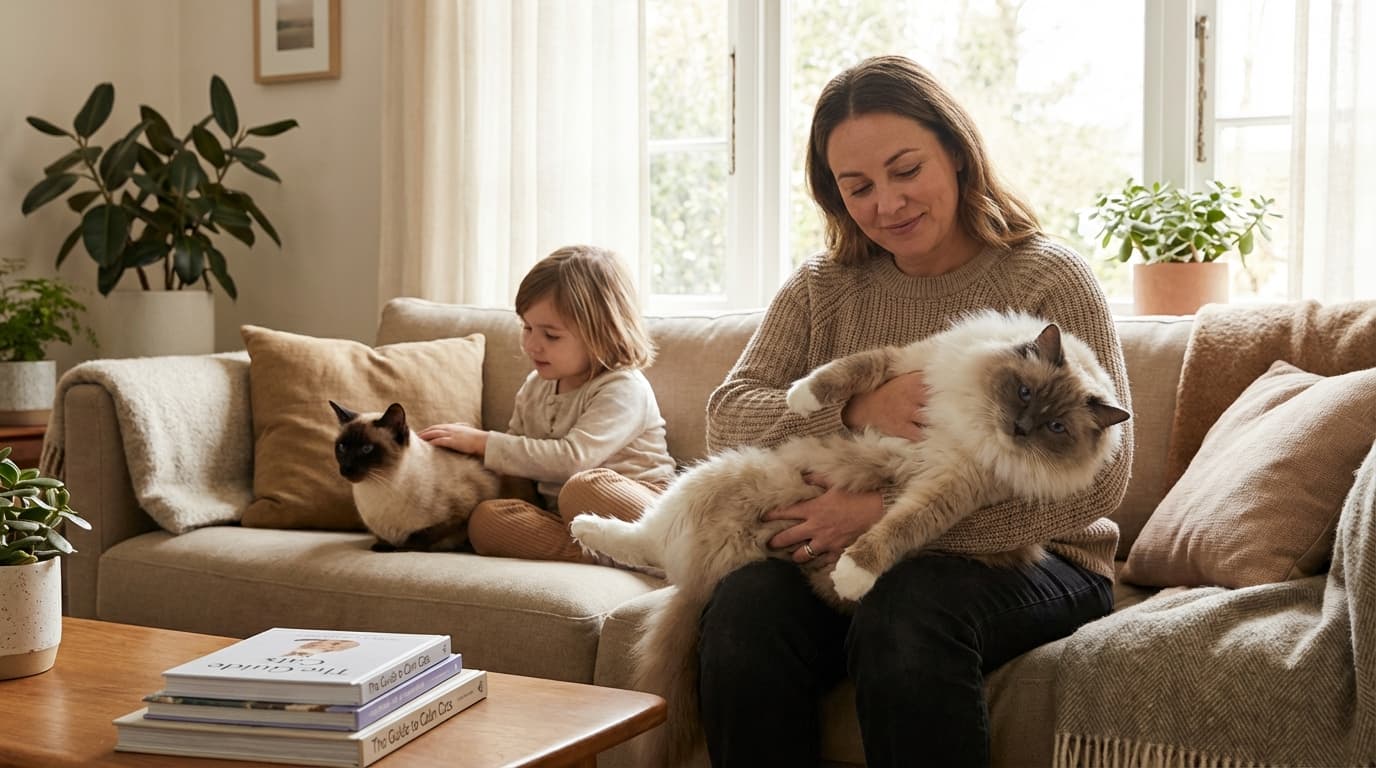
Have you ever picked up a cat only to have them turn into a pile of warm, heavy noodles in your arms? It's a strange and sweet experience that defines the floppy cat breed. With 66% of U.S. homes now including a pet, more families are searching for these mellow companions that actually enjoy a good cuddle instead of hiding under the sofa.
Whether you are a first-time owner or just want a pet that won't climb your curtains, choosing the right temperament is key. You might be curious about blue-eyed cat breeds or how the Ragdoll vs Siamese debate plays out for busy households. We'll look at why some felines are so docile and why certain point-colored cats belong to the best indoor-only cat breeds.
This guide covers everything from the history of these puppy-like cats to the reality of grooming their soft coats. You'll find out which gentle giants make the best therapy animals and how to pick a feline friend that fits your home. Let's see why these calm cat breeds for families are winning so many hearts.
The Magic of the "Floppy" Cat: Why Some Breeds Just Melt in Your Arms
Have you ever picked up a cat and felt them completely give way, turning into a heavy, happy pile of fur in your arms? This unique floppy trait is the hallmark of the Ragdoll, a breed famously developed in 1960s California. Feline specialist Stephen Quandt points out that these cats get their name because they adorably go limp when cuddled, behaving more like a child’s toy than a typical aloof pet.
It is no wonder these mellow personalities are such a hit. Recent findings show that 66% of U.S. households, or about 86.9 million homes, now share their space with at least one pet. As our lives get busier, there is a clear shift toward calmer companions. Families are increasingly looking for puppy-like cats that actually want to be part of the daily flow without the constant high-energy chaos of more independent breeds.
Choosing a cat that truly wants to cuddle means looking past just the coat color or those striking blue eyes. You want a breed known for a docile temperament, like the Ragdoll or even the gentle Maine Coon. These cats do more than just tolerate being held. They actively seek it out and often follow their owners from room to room. If you want a companion that melts into your lap after a long day, understanding this floppy nature is the best way to find a perfect match.
The Ragdoll: The Original "Puppy-Like" Feline
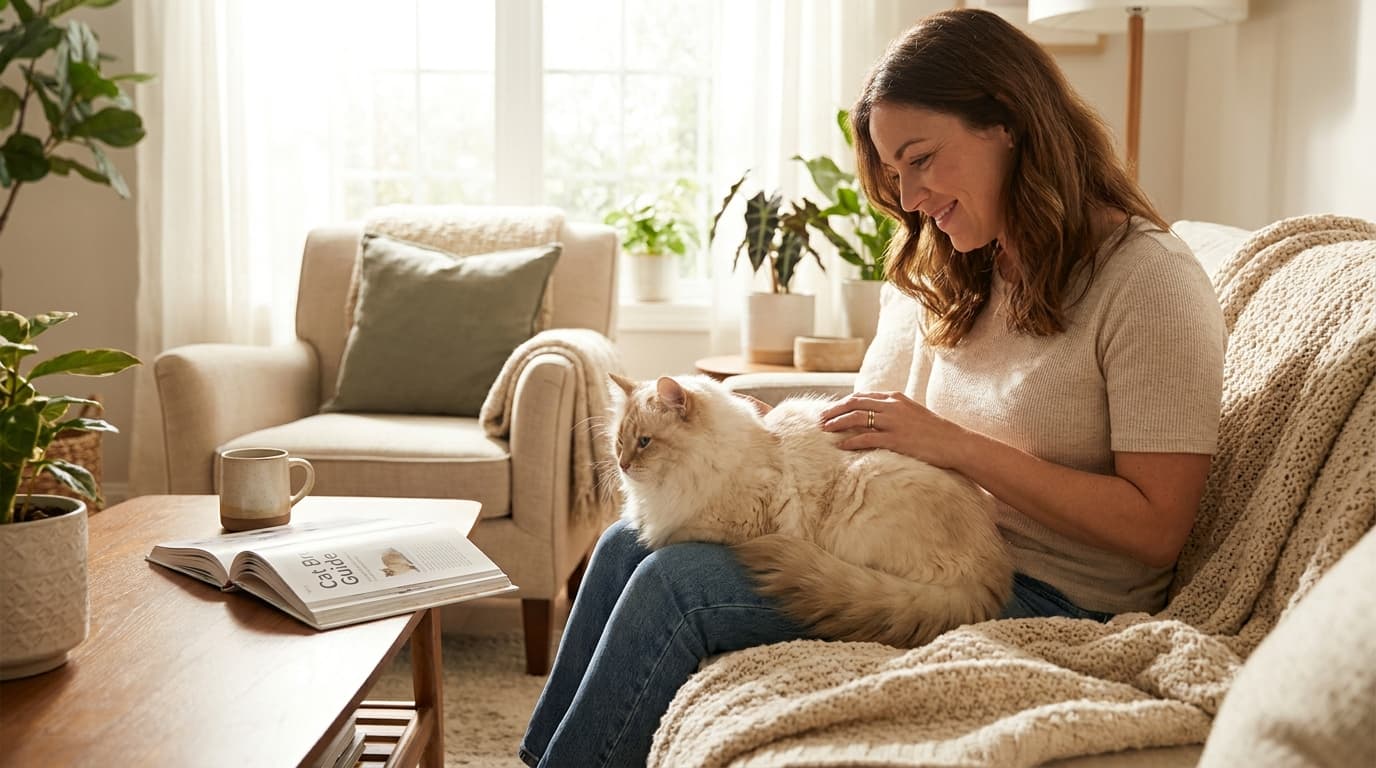
Have you ever picked up a cat and felt them turn into a sack of flour in your arms? That is exactly how the Ragdoll got its name. Back in the 1960s, a breeder in California named Ann Baker started this specific line of cats and she noticed something unusual. When held, they did not tense up like most felines. Instead, they went completely limp, just like a child’s floppy ragdoll toy. This reaction is a mix of selective breeding and a naturally docile temperament that has made them a top choice for families for decades.
It is not just a party trick. Feline behaviorist Stephen Quandt points out that these cats are undeniably among the sweetest out there. While some breeds are prized for their hunting skills or independence, the Ragdoll was built for companionship. In a world where 66% of U.S. households now share their homes with a pet, people are looking for a deep emotional connection. The Ragdoll delivers that by being one of the most relaxed, blue-eyed beauties you will ever meet. They are the definition of a gentle giant in the cat world.
If you have ever wanted a dog but do not have the time for three walks a day, the Ragdoll might be your perfect match. Experts often call them puppy-like because they tend to ditch the usual aloof cat stereotype. Instead of hiding under the bed when you get home, a Ragdoll is likely to meet you at the door and follow you from room to room. They want to be where the action is, whether you are folding laundry or working at your desk. They do not just live in your house, they participate in your life.
This social nature comes with a unique trait because they often lack a strong fight instinct. In a safe home, they are incredibly trusting. This is why many owners keep them as indoor-only pets. They do not see the world as a series of threats to hide from. Instead, they see every family member as a potential friend. Think of it this way: while some breeds are so calm they are like furniture with hair, a Ragdoll is your shadow. They are interactive, social, and constantly looking for a lap to land in.
Key insights:
- Ragdolls were specifically bred in the 1960s for their unique floppy physical reaction and docile nature.
- The breed is famous for following owners from room to room, earning them the puppy-like nickname.
- Due to a lack of defensive instincts, these cats are best suited for indoor-only lifestyles in safe environments.
Why Experts Call Them "Puppy-Like"
Ever wonder why some cats act more like Golden Retrievers than feline royalty? While most people picture cats as aloof or independent, the Ragdoll flips that script entirely. Experts call them puppy-like because they do not just tolerate your presence, they actively seek it out. Imagine walking to the kitchen to grab a snack and having a fluffy shadow trailing right at your heels. That is the daily reality for Ragdoll owners.
This behavior is not an accident. When Ann Baker developed the breed in 1960s California, she specifically selected for a docile and social temperament. It led to their famous floppy trait, where they go limp like a child's toy the moment you pick them up. But there is a catch to this sweetness. Because they lack a strong fight instinct and rarely show aggression, these cats are usually safer staying indoors. They simply do not have the defensive edge that other cats use to stay safe in the wild.
It is a big reason why they fit so well into the 86 million U.S. households that now share their homes with pets. Instead of being furniture with hair, as some people call more sedentary breeds, these cats want to be part of the action. They want to play, they want to be held, and they genuinely enjoy human company. If you are looking for a cat that actually misses you when you leave the room, this floppy breed is likely your best bet.
Key insights:
- Ragdolls earned their puppy-like reputation by following their owners from room to room like a dog.
- The breed lacks a typical feline fight instinct, making them incredibly gentle but better suited for indoor-only life.
- The floppy trait was a result of selective breeding in the 1960s to prioritize a docile, social temperament over independence.
Ragdoll vs Siamese: Which Point-Colored Cat Fits Your Life?
Ever wondered why some cats look like they are wearing a fancy mask and matching socks? That iconic look, known as point-coloring, is what makes breeds like the Ragdoll and Siamese so famous. While they both sport those striking blue eyes and dark ears, paws, and tails, that is usually where the similarities end. Choosing between them is not just about picking a color pattern. It is about deciding if you want a chatty roommate who jumps on top of the fridge or a quiet shadow that follows you from room to room.
So, what creates those dark spots? It is actually a form of temperature-sensitive color expression where the fur stays dark on the cooler parts of the body like the nose and tail. You see this in the Siamese, of course, but also in the Birman, often called the Sacred Cat of Burma. But here is the thing: do not let the coat fool you. Just because a cat looks like a Siamese does not mean it will act like one. Feline experts often find that appearance is secondary to the actual temperament when it comes to family life.
If you are looking for a floppy friend, the Ragdoll is in a league of its own. Developed in California during the 1960s by Ann Baker, these cats were specifically bred to be docile. They actually get their name from their habit of going limp when you pick them up, much like a child's toy. Feline specialist Stephen Quandt points out that they are undeniably one of the sweetest cats around. They are often called puppy-like because they will follow you around and wait for you at the door. If you want a dedicated lap warmer, this is your cat.
On the flip side, the Siamese is an athlete. They are high-energy talkers who want to be part of every single conversation. While a Ragdoll is often happy being relaxed and social, a Siamese wants to be active and engaged. Because Ragdolls are so mellow and sometimes lack defensive instincts, they usually need to stay indoors for their own safety. With about 66% of U.S. households now owning pets, finding the right fit for your specific home is more important than ever. Think about your daily rhythm. Do you want the high-speed energy of an athletic partner or the gentle, indoor-only vibe of a floppy companion?
Key insights:
- Ragdolls were selectively bred in the 1960s specifically for their docile and limp physical reaction.
- Point-coloring is a physical trait found in several breeds, including the Birman and Siamese, but it does not dictate personality.
- Siamese cats are generally more vocal and athletic, while Ragdolls are known for a puppy-like and social nature.
- Docile breeds like the Ragdoll often require an indoor-only lifestyle because they may lack strong defensive behaviors.
Understanding the Point-Colored Look
Ever wonder why some cats look like they are wearing dark socks and a matching mask? That is the point-colored look, where the ears, paws, and tail contrast against a lighter body. While the Ragdoll is the famous face of this style, other blue-eyed cat breeds like the Birman, also known as the Sacred Cat of Burma, have been charming owners since the early 20th century. It is a classic, elegant aesthetic that many families find totally irresistible.
But here is the thing: a coat does not always predict a cat’s vibe. You might see those pointed markings and expect a vocal Siamese, but Ragdolls are famously puppy-like and social. This floppy cat breed was developed in California in the 1960s and earned its name because these cats literally go limp when you hold them. It is a unique trait that makes them one of the best calm cat breeds for families because they are so patient and relaxed.
Even though 66% of U.S. homes now have pets, finding the right fit means looking past the blue eyes. Experts suggest that physical traits are often secondary to temperament when choosing a companion. So, while you might fall for the point-colored look, make sure the personality matches your lifestyle. After all, the best part of a Ragdoll is not just the fur because the real prize is the sweet, docile nature hidden underneath.
Key insights:
- Point-colored markings are a genetic trait, but they do not dictate a cat's individual personality.
- The Ragdoll name comes from their unique physical reaction of going limp when held by their owners.
- Temperament is a more reliable factor than appearance when choosing a family-friendly pet.
The "Furniture with Hair": Why Persians and Other Calm Breeds Win Over Families
Ever heard a cat described as furniture with hair? It sounds a bit silly, but feline behavior specialist Stephen Quandt uses this phrase to describe the ultra-relaxed Persian. These cats aren't just lazy. They are the gold standard for a peaceful home. While some breeds treat your living room like an Olympic hurdle course, the Persian is perfectly content just being part of the decor. This level of calm is a big reason why they have become a staple in so many of the 86.9 million U.S. households that share their lives with pets.
For families with toddlers, boring is actually a huge compliment. High-energy cats can be unpredictable when a small child gets too close, but low-energy breeds like the Persian or the Ragdoll are often the safest bet. Ragdolls even get their name from their habit of going totally limp when picked up, just like a child’s favorite toy. Because they lack a strong fight reflex, they tend to handle the clumsy hugs of a three-year-old with a level of patience that is hard to find elsewhere.
There is a quiet joy in owning a cat that does not feel the need to scale your curtains or knock your coffee off the counter at 3 AM. While breeds like the Abyssinian are built like tiny wildcats ready for action, calm breeds focus on companionship. It is important to remember, though, that this docile nature usually means they should stay indoors. They do not always have the street smarts or defensive instincts to handle the outside world, so keeping them on the couch, which is usually their favorite spot anyway, is actually the best way to keep them safe.
When you are picking a family pet, it is easy to get caught up in looking for specific traits like blue eyes or soft fur. But the real magic is in the temperament. Whether it is a puppy-like Ragdoll following you from room to room or a Persian acting as a living rug, these breeds offer a predictable and gentle presence. They are more than just pets. They are anchors of calm in a busy household.
Key insights:
- Persians are nicknamed furniture with hair due to their incredibly sedentary and relaxed lifestyle.
- Low-energy breeds are generally safer for toddlers because they are less likely to react with aggression when handled.
- The Ragdoll gets its name from its unique tendency to go limp and relaxed when picked up by owners.
- Temperament is a much more important factor than physical appearance when selecting a cat for a family environment.
Why Some Breeds Are Strictly "Indoor-Only"
Have you ever picked up a cat and felt them completely give in to your touch? It is a famous trait of the Ragdoll, a breed started in California back in the 1960s. They literally go limp, which is how they got their name. While this floppy nature makes them world-class cuddle buddies, it also means they lack the sharp defensive instincts most cats use to survive. If a Ragdoll faces a territorial stray or a loose dog, they often do not fight back or run. They just stay relaxed, which makes them easy targets in a world that isn't always kind.
This sweet, docile temperament is why many experts insist these breeds stay strictly indoors. It is not just about Ragdolls, either. Consider the Persian. They are so sedentary that behaviorist Stephen Quandt says they are sometimes called furniture with hair. When a cat is that relaxed, they are not exactly scanning the horizon for danger. Because they lack that street-smart edge, the safety of your home is the only place they can truly thrive. With 66% of U.S. households now owning pets, more families are choosing these gentle souls, but that choice comes with the responsibility of being their full-time bodyguard.
But wait, does an indoor life mean a boring life? Not at all. Since these cats aren't out hunting or climbing trees to escape predators, you have to create a rich world for them inside. Think of it this way: they still have those feline instincts, but they have traded their weapons for a quiet life. You can keep them happy with tall perches and puzzle toys that mimic the hunt without the actual risk. They might act like puppy-like shadows following you around, but they still need to jump and explore.
The reality is that for breeds like the Ragdoll or the Birman, the world is just too big and too fast. Their lack of aggression is a gift for families with children, but it is a liability in the backyard. By keeping them inside, you are not just protecting them from cars or fleas; you are protecting a personality that simply was not built for the fight. It is about matching their environment to their incredibly gentle soul.
Key insights:
- Ragdolls and Persians lack the defensive drive to protect themselves from outdoor predators or traffic.
- The term 'floppy' refers to a genetic tendency to relax completely, which signals a lack of fight-or-flight response.
- Indoor environments must be intentionally enriched with climbing and 'hunting' games to replace the stimulation of the outdoors.
Big, Gentle Giants: The Maine Coon's Role as a Therapy Animal
Ever stood next to a cat that looks more like a small bobcat than a house pet? That is the Maine Coon for you. These cats are famous for their massive frames, but their real magic lies in how they use that size to comfort people. Take Stewie, for example. He was not just a record-breaker for being the longest cat in the world; he was a dedicated therapy animal. He showed that having a huge physical presence can actually make a cat better at providing emotional support.
You might wonder why such a big animal is a top choice for senior centers and hospitals. It comes down to their incredibly soft temperament. While some cats are flighty, Maine Coons tend to be patient and steady. This makes them perfect for environments where things might be a bit slow or predictable. They do not just sit nearby; they engage. In recent years, we have seen a huge trend toward using these social, interactive cats for emotional support because they handle the attention so well.
Balancing that heavy, muscular build with a mellow soul is what earns them the 'gentle giant' nickname. Think about it this way: when a sixteen-pound cat leans against you, you feel it. That physical weight can be incredibly grounding for someone dealing with anxiety or loneliness. It is a unique kind of therapy that smaller breeds just cannot provide in the same way. They are living proof that sometimes, bigger really is better when it comes to a comforting presence.
Key insights:
- Maine Coons like Stewie prove that record-breaking size can be paired with a record-breaking heart for therapy work.
- Their 'dog-like' social needs make them more interactive than many other breeds in clinical or care settings.
- The physical weight of a Maine Coon provides a grounding sensory experience for people needing emotional support.
Maintenance Reality Check: Caring for Semi-Longhair Coats
You see those beautiful photos of Ragdolls looking like pristine clouds and think you want that in your living room. Since about 66% of U.S. households now share their homes with pets, many people are discovering that high-end fluff comes with a bit of a workload. These floppy breeds are famous for their relaxed nature, but their semi-longhair coats still need regular attention to stay mat-free. The reality is that while they definitely shed, it is not usually the constant blizzard you might expect from other long-haired cats.
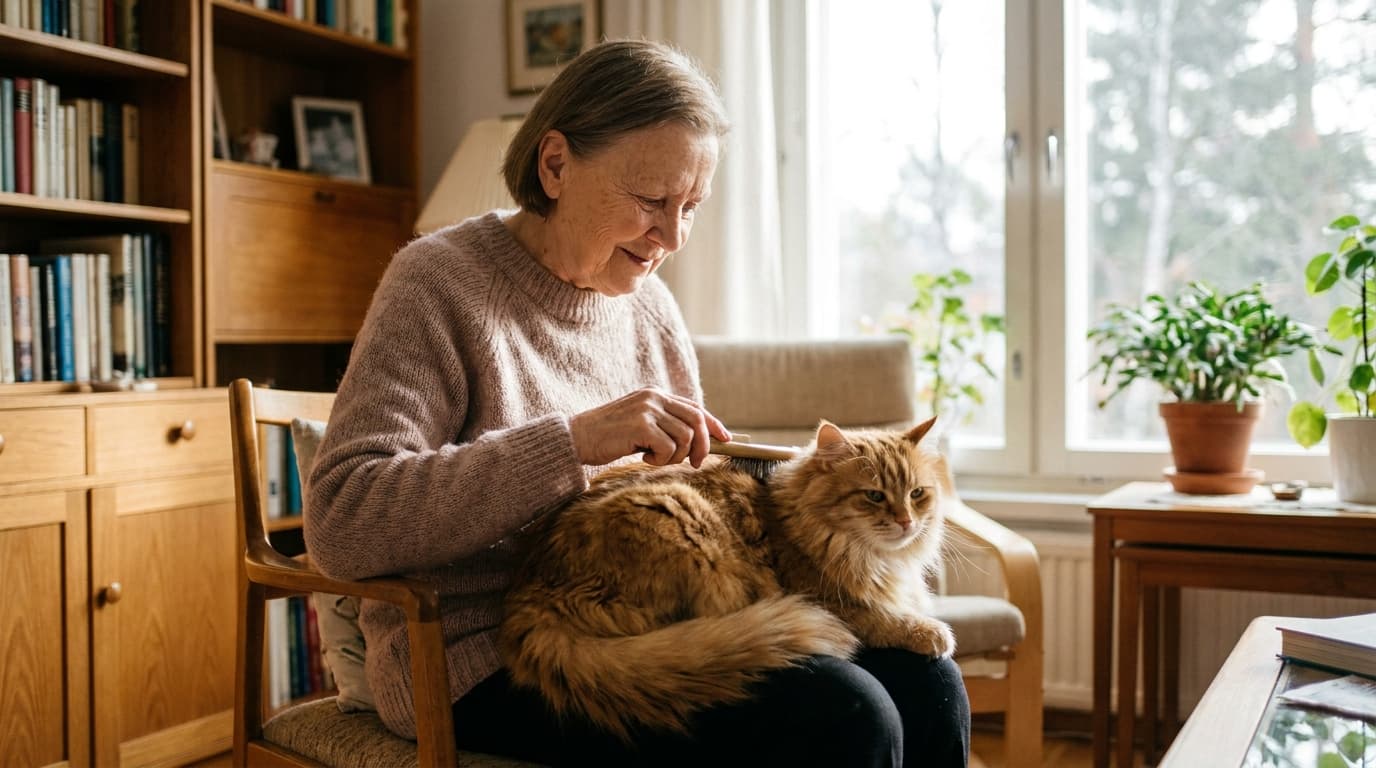
If you are stuck choosing between a Ragdoll and a Persian, your schedule will probably prefer the Ragdoll. Persian cats are so mellow they are sometimes called furniture with hair, but their thick undercoats can be a full-time job to manage. Ragdolls have a silky texture that lacks that dense, woolly undercoat, which makes them much easier to brush out. A quick session twice a week is usually enough to keep them looking sharp and prevent those painful knots from forming near their legs or belly.
To keep a point-colored coat looking bright, you really only need a couple of simple tools. A stainless steel comb is your best friend for reaching through the fur to catch tangles before they turn into mats. You can also use a soft slicker brush to smooth the top layer and bring out that signature glow. Because these cats are so social and puppy-like, they usually grow to love the grooming time. It ends up being a nice bonding moment instead of a struggle, which is great because keeping that light fur clean is the only way to really show off their beautiful colors.
Key insights:
- Ragdolls lack the dense undercoat of Persians, making them significantly easier to groom.
- Twice-weekly brushing is the sweet spot for preventing mats in semi-longhair breeds.
- A simple stainless steel comb is more effective for point-colored coats than complex grooming gadgets.
How to Choose: Is Your Home Ready for a Chill Cat?
About 66% of U.S. households now share their home with at least one pet. If you are thinking about joining those 86 million homes, you might be dreaming of a cat that just hangs out and relaxes. But before you bring home a new friend, take a good look at your daily life. Is your house a high-energy hub with kids and loud music, or a quiet sanctuary? A chill cat breed sounds perfect, but they thrive best when their environment matches their low-key soul.
It is easy to get distracted by blue-eyed cat breeds or unique point-colored cats. But temperament matters way more than looks when you want a family-friendly pet. While people often compare the Ragdoll vs Siamese because of their similar markings, the personality difference is huge. Ragdolls were first bred in California during the 1960s specifically for their sweet nature. They actually go limp like a toy when you pick them up. Behavior specialist Stephen Quandt even points out that Persians are so relaxed they are sometimes called furniture with hair.
There is a big trend right now for dog-like cats that follow you around. Many families want interactive pets like the Maine Coon or the Birman. These breeds are famous for being gentle. Some even work as therapy animals. The thing is, their sweet nature often means they need to stay as indoor-only cat breeds. They do not always have the defensive instincts of more active cats. Matching a cat's energy to your home isn't just about your comfort. It is about keeping your new best friend safe and happy.
Key insights:
- Temperament is more important than physical traits like blue eyes or folded ears for a happy home match.
- Docile breeds like Ragdolls often lack defensive instincts and usually require an indoor-only lifestyle.
- Assess your home's noise and activity levels first to ensure you choose a breed with a compatible energy level.
Frequently Asked Questions
Most of them do, and that is exactly how they got their name. When you lift a Ragdoll, they usually go limp and relaxed in your arms just like a stuffed toy. It is one of the most famous things about the breed and a big reason why people love them.
This happens because they were specifically bred starting in the 1960s to be extremely docile and trusting. While most Ragdolls will show this behavior, remember that every cat has its own personality. Some might be a bit more tense than others, but the floppy trait is a very common part of their DNA. Because they are so relaxed and sometimes lack defensive instincts, they are usually best kept as indoor cats where they stay safe.
Ragdolls are often the top choice for families with kids because they are so patient and social. They are frequently called puppy-like because they love to follow their owners around and join in on the household action without getting stressed out.
If you want a cat that is even more laid back, Persians are famous for being incredibly chill. They are so quiet and still that people sometimes call them furniture with hair. For a slightly more active but still very gentle option, the Maine Coon is a wonderful pick. They are known as gentle giants and are so calm that they have even been used as therapy animals.
It is a common worry, but it really depends on the specific breed and their coat color. While some white cats with blue eyes have a higher risk of hearing loss, many popular blue-eyed breeds like Ragdolls and Birmans are generally just fine. For most families, a cat's temperament is actually a much bigger deal than their eye color when picking a new pet.
Here is the thing to keep in mind. Most expert guides focus on how these cats behave with kids rather than just their physical traits. So, if you see a blue-eyed beauty at a shelter or a breeder, do not automatically assume there is a health issue. Just ask about their history and enjoy those stunning eyes.
The easiest way to tell them apart is by how they act when you pick them up. Ragdolls are famous for going completely limp and relaxed, almost like a child's toy. This is actually how they got their name. They were first bred in California back in the 1960s to be the ultimate chill companions.
Birmans have a much older story and are often called the Sacred Cat of Burma. While both breeds have beautiful long hair and blue eyes, Ragdolls are often described as being more puppy-like because they love to follow their owners around the house. Also, both will need some regular brushing to keep their coats from getting tangled, but the Ragdoll's floppy personality is truly one of a kind.
Conclusion
Choosing a cat is about more than just finding a pretty face with blue eyes. Whether you are drawn to the Ragdoll because they melt in your arms or you prefer the quiet, rug-like nature of a Persian, it all comes down to how a pet fits into your daily rhythm. These breeds are not just pets; they are specialized companions that trade outdoor survival skills for a level of affection and trust that is rare in the animal kingdom.
So what does this mean for your living room? It means recognizing that choosing a floppy cat breed is a decision to prioritize peace over high-energy antics. If you want a partner for movie marathons or a gentle friend for your kids, these docile breeds are hard to beat. Just remember that their unique lack of a fight instinct means they rely entirely on you to keep their world safe and strictly indoors.
Your next move is to look past the coat color and spend some time with these cats in person to see if their energy matches your home. Finding the right fit is less about picking a specific look and more about finding a soul that wants to be wherever you are. After all, life is just a little bit better when you have a ten-pound ball of fur happily turning into a puddle in your lap.
Send it to someone who should read it next.
PurrScript Editorial Team
Editorial Team
PurrScript's in-house editorial team. We research, write, and review every guide using established veterinary and behavioral resources, and update articles as best practices evolve.
View all articles