Why Your Cat Craves the High Life: A Guide to Vertical Space
Ever notice your cat staring longingly at the top of the fridge like it is the Holy Grail? It is not just a weird quirk. Cats are biologically wired to...

PurrScript Editorial Team
Editorial Team
Why Your Cat Craves the High Life: A Guide to Vertical Space
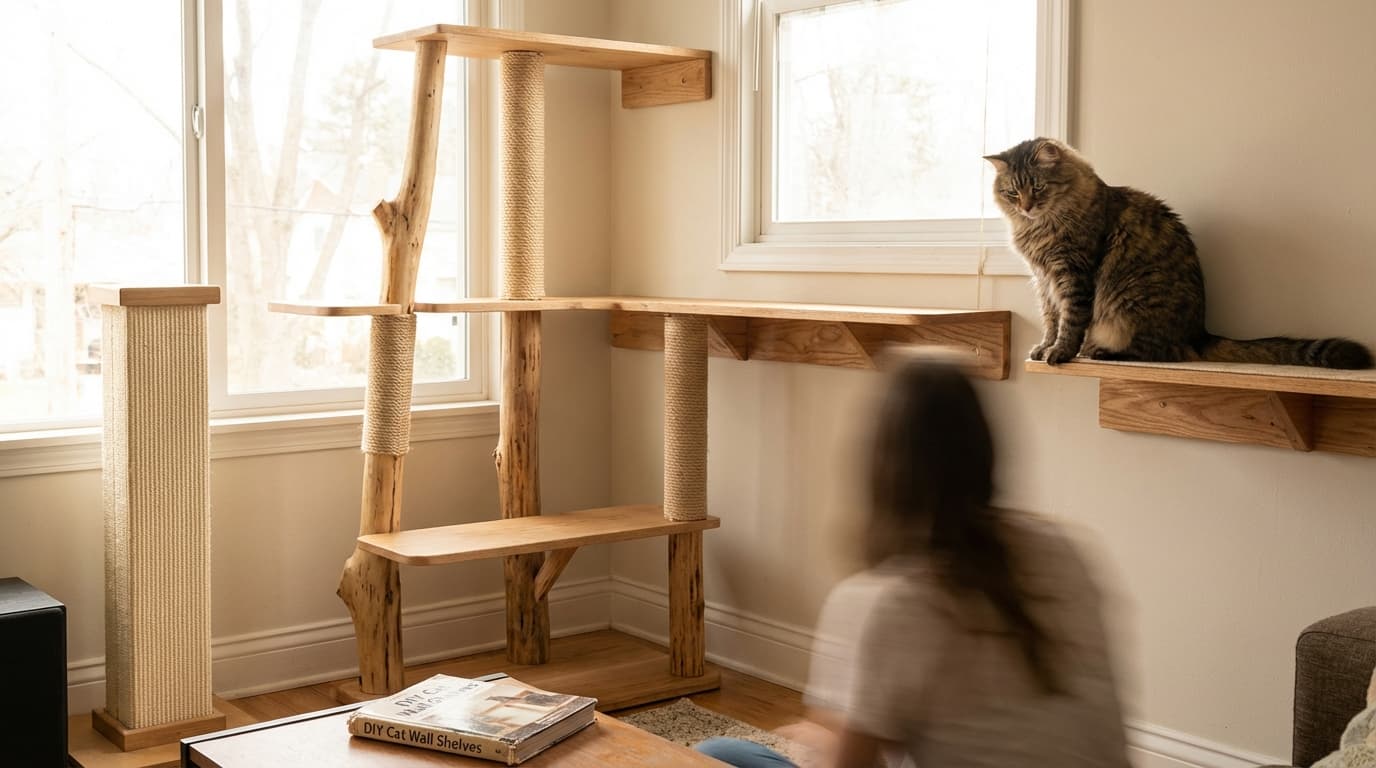
Ever notice your cat staring longingly at the top of the fridge like it is the Holy Grail? It is not just a weird quirk. Cats are biologically wired to seek out high ground to stay safe and survey their kingdom. Creating vertical space for indoor cats is one of the best ways to make a small apartment feel like a palace.
Whether you are looking at floor-to-ceiling cat trees or considering some cat wall shelves DIY projects, giving your pet a way to climb up changes their whole world. It helps with stress, keeps the peace in multi-cat homes, and gives them a workout. It is about giving them the territory they naturally need to feel confident.
We will look at how to choose the right multi-level cat furniture and how to plan for safe jumping heights for cats so your pet stays safe. You will also get tips on tall scratching posts and even how to keep your high-altitude plants safe. We will show you how to turn your boring walls into a fun feline playground.
Ever wondered why your cat prefers the top of the fridge to that expensive bed on the floor? It isn't just a quirk. For indoor cats, height equals safety and a better view of their kingdom. Even in a tiny apartment, adding vertical space can make a small room feel massive to a feline.
You can build this world using modular pieces like cat wall shelves DIY style or floor-to-ceiling cat trees. Think beyond just a single perch. Modern systems include bridges, hammocks, and even cat ladders that act as functional walkways. It is essentially interior design for pets, often called catification.
But it isn't just about looks. While these setups help manage multi-cat drama by giving everyone their own territory, safety is a big deal. You will need to think about sturdy mounting for drywall and even which house plants you keep nearby, since sixteen common ones are actually toxic to cats.
It is Not Just a Luxury - It is a Feline Instinct
Ever wonder why your cat insists on staring at you from the top of the fridge? It is not just because they like looking down on everyone. For a cat, height is a basic need, not a luxury. In the wild, being up high meant they could spot a meal from a distance while staying safe from anything trying to eat them. Even though your living room does not have many apex predators, your cat’s brain is still wired to find the highest point in the room to feel secure. This is their kingdom, and they need a watchtower to oversee it.
This biological drive is why vertical space is such a powerful tool for managing stress and common behavior issues. When things get a bit too loud - maybe the kids are running around or the vacuum is out - a cat needs an escape route that goes up. By using modular pieces like cat cubbies, bridges, or wall-mounted hammocks, you are giving them a way to move through the house without ever touching the floor. It effectively turns a small apartment into a multi-layered playground where they always have a way out of a sticky situation.
Setting up these high-altitude spots does take a bit of planning. You will want to think about things like drywall integrity and proper mounting to make sure everything stays sturdy during a high-speed zoomie session. It is also a great time to check your greenery. While you are catifying your walls, keep in mind that while 20 common house plants are safe, about 16 others are actually toxic to cats. Keeping those safe plants on high shelves is a smart way to mix your decor with feline safety while keeping the dangerous ones out of reach.
Then there is what we can call the Multi-Cat Peace Treaty. If you have more than one cat, you know that territory is everything. Vertical space acts like a pressure valve for feline tension. Instead of two cats bumping into each other in a narrow hallway and starting a spat, one can take the high road across a series of shelves or a floor-to-ceiling tree. This shared but elevated space allows them to be in the same room together without feeling like their personal bubble is being invaded.
This is especially helpful when you are bringing a new cat into the mix. Having vertical territory helps a newcomer integrate much faster because they can observe the rest of the household from a safe distance. It gives them a sense of ownership over the room without having to fight for floor space. Think of it as adding extra square footage to your home without actually moving any walls. It is the easiest way to keep the peace and make sure every cat feels like they have a spot of their own.
Key insights:
- Height provides an essential psychological safety net for cats in busy households.
- Modular systems like ladders and bridges allow cats to traverse rooms without floor-level conflict.
- Vertical territory is a primary tool for introducing new cats and reducing multi-cat household stress.
- Proper installation and safety checks for toxic plants are vital when designing a cat-friendly wall.
The Multi-Cat Peace Treaty
Ever feel like your living room is a feline battleground? When you have more than one cat, floor space becomes a limited resource they fight over. This is where vertical territory steps in as a genuine peace treaty. By adding modular pieces like cat bridges, ladders, and hammocks, you are not just decorating. You are giving each cat a way to pass one another without a confrontation. It turns a cramped hallway into a multi-level highway.
Introducing a new cat to the pack? Height is your best friend. A new cat can watch the household from a safe distance, usually from a high shelf or cubby, which helps them integrate much faster. This concept of cat socialization works because they can share the same room while staying out of each other's bubble. It is a primary tool for managing common behavior issues and providing much-needed enrichment. Plus, modern wall systems look like part of your home design rather than just pet utility.
Key insights:
- Vertical territory allows cats to share space without physical conflict.
- Elevated spots provide a safe observation deck for new cats during introductions.
- Modular components like bridges and ladders create functional walkways that expand usable territory.
From Shelves to Trees: Choosing Your Cat’s New Playground
Ever feel like your cat is just bored with the floor? You are not alone. Catification has turned from a niche hobby into a full-blown interior design category. We are seeing a huge shift toward modular layouts that actually look good in a modern living room. When you start, you have to choose between permanent wall installations or portable furniture. It is about creating a vertical world that fits your home style while giving your cat a place to rule their kingdom.
If you have a cat that loves to climb, a floor-to-ceiling tree is a great choice. These tall scratching posts let them get a full-body stretch which is excellent for their muscle tone and overall health. But you have to be careful about the setup. Always do a stability check to make sure the tree does not become a falling hazard during a midnight zoomie session. If you live in a smaller apartment, corner designs are a lifesaver because they save floor space while still offering that high-altitude view.
For those who want to go all out, modular wall systems are the way to go. Some people call this the Mario Complex style because it creates a vertical obstacle course. You can use ladders to create functional walkways across your walls, connecting bridges to cozy hammocks. The beauty of these systems is that they grow with you. You can use replacement parts to keep the wall feeling new or add sections over time. Just keep in mind that these require some technical work, like checking your drywall and following mounting instructions to keep things safe.
This extra room is a primary tool for managing common behavior issues, especially in homes with more than one cat. It gives everyone their own territory to reduce conflict. While you are designing this new playground, remember the small details. For example, there are 16 plants identified as toxic to cats but 20 that are perfectly safe. If you plan to put greenery on those high shelves, make sure you choose the safe ones so your cat can lounge in peace. What does this mean for your living room? It means your walls are about to become the most exciting part of the house.
Key insights:
- Vertical space is essential for multi-cat households to reduce territory disputes and stress.
- Modern cat furniture is now designed as stylish interior decor rather than just pet utility.
- Modular systems allow for easy expansion and part replacement to keep the environment fresh.
- Safety checks for stability and wall mounting are non-negotiable for high-climbing setups.
The Magic of Floor-to-Ceiling Cat Trees
Ever wonder why your cat treats your bookshelf like a mountain range? It is because height equals safety and confidence in their world. Floor-to-ceiling cat trees tap into this instinct perfectly. Unlike standard short posts, these towering structures allow for a full-body vertical stretch. This movement is not just about scratching furniture; it is vital for building muscle tone and keeping feline shoulders limber. Think of it as a built-in gym that doubles as a private lookout tower.
But let's be real: a giant tower is only a good idea if it stays upright. Stability is everything when your cat is doing high-speed zoomies. You want a system that uses sturdy tension mounts or wall-anchored modular components like ladders and bridges to keep things safe. If you are worried about your living room feeling crowded, corner designs are a total lifesaver. They tuck away neatly into unused space while still offering the high-altitude territory cats crave.
The real magic happens when you realize that vertical space is a primary tool for managing behavior issues. When cats have their own high-up spots to lounge and leap, they feel less stressed and are less likely to pick fights with housemates. It turns a small apartment into a multi-level playground where your cat can finally rule their kingdom in peace.
Key insights:
- Tall scratching posts are essential for feline muscle tone and full-body stretching.
- Corner-mounted trees provide maximum vertical territory without sacrificing valuable floor space.
- Proper stability through tension rods or wall anchors is non-negotiable for safety.
- Adding vertical height is a proven way to reduce stress and conflict in multi-cat households.
Modular Wall Systems: Bridges, Ladders, and Hammocks
Ever wonder why your cat stares at the ceiling? They aren't seeing ghosts; they’re eyeing prime real estate. Modular wall systems turn boring drywall into a high-stakes playground. Think of cat ladders as more than just a way up. These steps create a functional walkway that lets your cat cross the room mid-air. By linking shelves with bridges, you build a 'Mario Complex' style course - a vertical obstacle course that keeps their minds and muscles sharp.
The beauty of these systems is their flexibility. Since they are modular, you can start small and expand your cat wall over time. If a sisal pole gets worn out or you want a new look, you simply use replacement parts to keep things fresh. It’s less like a bulky pet accessory and more like a custom interior design project that fits your specific room dimensions. This approach allows you to catify your apartment without sacrificing your own style.
This matters because vertical space is a key tool for managing cat behavior. In multi-cat homes, these walkways provide much-needed territory to reduce conflict and stress. You’re giving them a safe, stylish spot for every leap, climb, and nap while keeping them away from toxic house plants or floor-level chaos. What starts as a simple shelf often becomes the most important territory in your home.
Key insights:
- Modular systems allow for easy expansion and customization based on your specific room layout.
- Using replacement parts is a cost-effective way to maintain safety and keep the environment engaging.
- Vertical walkways are essential for multi-cat households to minimize territorial disputes.
DIY Cat Walls: Building Safely Without the Stress
So, you are ready to pick up a drill and turn your living room into a feline jungle gym? That is great, but let us get real for a second. DIY cat walls are more than just a simple weekend craft project. Because catification is now a big interior design trend, more people are moving away from bulky floor trees toward modular wall systems. But before you start mounting those bridges and cubbies, you have to consider your walls. Drywall is not always as tough as it looks. A cat launching off a shelf puts a lot of pressure on those anchors. You will want to follow mounting instructions exactly to keep things safe. Also, think about the future. Learn how to patch drywall now because eventually those shelves might come down. You will want a plan to fix the holes so your home looks as good as it did before.
When you are planning the layout, height is everything. You have to figure out the right distance between steps based on your cat. A kitten or an older cat needs things closer together than a young athlete does. One big mistake to avoid is the dead end. Every path needs an exit route so no one gets cornered high up. This is especially important in houses with more than one cat where territory matters. Vertical space is a primary tool for managing behavior, but a path with no escape can actually cause more stress. You should also watch where those new paths lead. With 16 common plants being toxic to cats, you want to make sure your new shelves do not give your pet a direct bridge to a dangerous snack on a high mantle.
To keep landings safe, add some grip to the surface. Using carpet or cork on the shelves makes a huge difference for high speed leaps. It gives them the traction they need to feel steady and prevents sliding during a jump. Think of these ladders and shelves as a functional walkway that builds confidence. Modern systems are great because they are modular, meaning you can expand and customize the layout as you go. It is all about creating a space where they can climb and nap without any scary slips. When you treat cat furniture like a part of your home design rather than just a pet utility, it becomes a win for both you and your cat.
Key insights:
- Modular parts like bridges and ladders allow you to customize your cat wall for your specific room dimensions.
- Adding traction with cork or carpet is essential to prevent injuries during high-speed landings.
- Drywall integrity is a major safety factor, requiring specific anchors and a plan for future repairs.
Safe Jumping Heights and Layout Planning
How high can your cat actually leap? When planning your layout, the distance between levels is everything. While a spry kitten might handle a big gap, older cats need steps spaced much closer together to stay mobile. You want to calculate these safe jumping heights based on your cat's specific life stage, ensuring they can move easily between modular parts like hammocks, bridges, and shelves without straining themselves.
But wait - don't build a "dead end." If one cat corners another on a high shelf with no way out, you are asking for a feline standoff. Every path needs an exit strategy. Adding a cat ladder or a floor-to-ceiling tree creates a functional walkway that keeps traffic moving and reduces conflict in multi-cat homes. It is about creating a flow that mimics how they move in the wild.
Also, think about the landing. A cat coming in hot on a slippery wooden surface is a recipe for a wipeout. Adding grip with cork or carpet is essential for those high-speed landings. Since these DIY cat wall shelves require solid mounting and sometimes drywall repair later, keeping the landings secure protects both your cat and your home. After all, a confident cat is a happy cat.
Key insights:
- Always provide at least two ways off a high perch to prevent territory disputes and 'dead ends.'
- Adding texture like cork or carpet is a safety must-have for high-speed landings and confident climbing.
The Green Zone: Keeping Your High-Altitude Garden Safe
Ever notice how your cat treats a bookshelf like a personal snack bar? When you start building upward with cat wall shelves DIY projects or floor-to-ceiling cat trees, you are essentially creating a highway through your home. But here is the catch. If that highway passes right by your favorite potted ivy, your cat is going to take a bite. It is just what they do. This is why we have to talk about the shelf-level danger. Anything within reach of a landing spot is fair game for a curious feline.
Safety is not just about sturdy mounting or checking for safe jumping heights for cats. It is also about what is growing in those pots. Recent findings show there are 16 common plants specifically identified as toxic to cats, while 20 others are perfectly safe to keep around. If you are serious about catification, you might need to swap those lilies for spider plants or Boston ferns. Think of it as curated interior design that does not end in an emergency vet visit.
The interesting part is how you can actually build greenery into your modular cat furniture. Many modern systems let you mix cat cubbies and bridges with actual planters. You can create a literal Green Zone where your cat feels like they are stalking through a jungle canopy. Just remember that these installations require some technical care. You want to make sure your drywall can handle the weight of both the soil and a leaping cat. When done right, it turns a simple wall into a functional walkway that looks like a high-end design piece.
What does this mean for you? Well, vertical space is a primary tool for managing behavior and providing enrichment. A cat who has a safe, high place to explore is a confident cat. By choosing the right plants and secure layouts, you are giving them the innovative spaces for every leap, climb, and nap that they crave. It is about making your home a shared territory where everyone stays healthy and happy.
Key insights:
- Audit your vertical paths to remove the 16 plants known to be toxic to climbing cats.
- Utilize modular furniture to integrate 20 varieties of cat-safe greenery into your wall design.
- Ensure drywall and mounting points are reinforced to handle the combined weight of plants and active pets.
Maintenance: Keeping the Clouds Clean
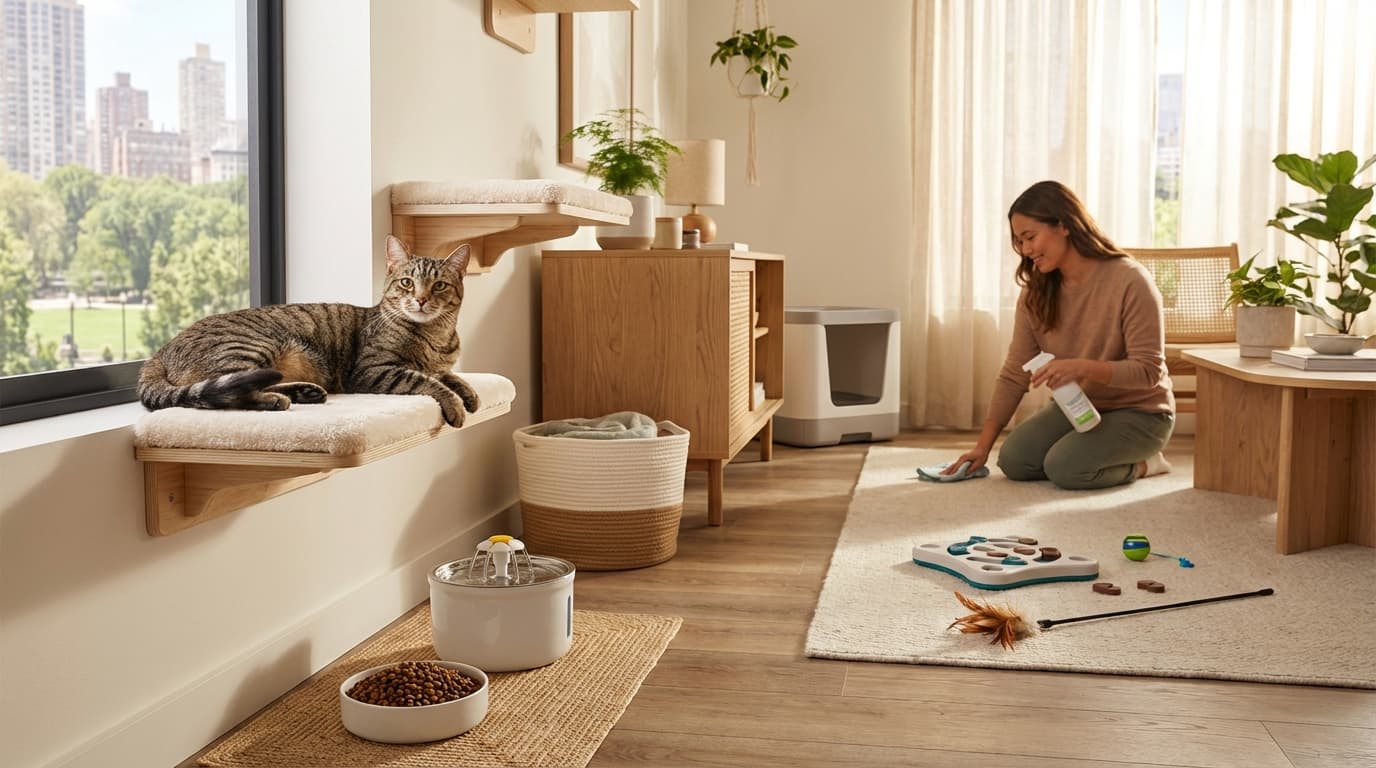
Let’s be honest: those sleek wall-mounted shelves and cozy hammocks won’t stay pristine forever. Between the shedding and the occasional zoomies kick-off, your cat’s vertical playground can quickly start looking a bit lived-in. To keep things fresh, a simple 6-step cleaning routine works wonders. Start by vacuuming the fabric surfaces to grab loose fur, then use a damp cloth for any spots. Since modern catification often uses modular components like bridges and ladders, you can usually detach specific parts for a deeper scrub without taking down the whole system.
Fur has a way of hiding in those hard-to-reach corners where shelves meet the wall. A small lint roller or even a toothbrush can help flick out those stubborn tufts. While you are up there, it is the perfect time for a quick safety check. Because cats put a lot of force into their leaps, wall mounts can loosen over time. Give each shelf a gentle wiggle once a month to ensure the drywall anchors are still holding firm and the wood isn't showing signs of wear.
Think of this as a quick pit stop for your feline’s highway. Checking for frayed fabric or loose screws ensures no one takes a tumble during a midnight sprint. A few minutes of tightening and dusting keeps the high life safe and stylish. After all, a clean, sturdy perch is much more inviting for that next long afternoon nap.
Key insights:
- Modular systems allow for easier cleaning by letting you remove individual fabric sections or shelves.
- Monthly safety checks on wall mounts are vital to prevent drywall damage from high-impact jumps.
- Deep-cleaning fur from corners helps maintain the aesthetic of your home and reduces allergens.
Final Thoughts: Watching Your Cat Reclaim Their Space
Once the tools are put away and the drywall is patched, the real reward begins. You will notice a shift in your cat almost immediately. They stop skulking along the floor and start moving with a new kind of swagger. Seeing a formerly shy cat claim a high perch is one of the best rewards for any owner. This is why catification has become such a popular gift for dedicated cat dads and pet parents lately. It is more than just decor. It is a primary tool for managing behavior and giving them a sense of safety in their own home.
You do not have to turn your entire living room into a jungle gym overnight. Modern modular systems are great because they grow with you. Maybe you start with one sturdy shelf or a simple ladder to see how they react. As you learn their climbing style, you can add bridges, hammocks, or cubbies. Just keep safety in mind, like double-checking that your house plants are part of the 20 cat-safe varieties rather than the toxic ones. Starting small makes the process easy for you and exciting for them.
Key insights:
- Vertical space acts as a confidence booster that can transform a shy cat's personality.
- Modular cat furniture allows you to expand your cat's territory at your own pace.
- Safe catification involves balancing fun climbing structures with technical safety and non-toxic greenery.
Frequently Asked Questions
You'll want to aim for a height that challenges your cat without making the jump dangerous, which usually means starting around five or six feet for an average adult cat. The most important thing is to look at your cat's specific abilities because a senior cat will need much lower and closer steps than a frisky kitten.
Here's a good rule of thumb: make sure there's always an easy way down. You can use modular pieces like ladders or bridges to create a functional walkway so they don't have to leap blindly from high places. If you're going for those really tall spots near the ceiling, just ensure the path up and down is steady and clear.
It won't ruin your walls, but you should expect to do some minor patching if you ever remove the furniture. Since these shelves need to hold a jumping cat's weight, they require sturdy mounting into studs or high-quality anchors, which leaves behind small holes.
The good news is that drywall repair is a pretty straightforward process that anyone can do with a bit of spackle and paint. Many owners find the trade-off worth it because vertical space is such a huge tool for managing behavior issues and making multi-cat homes more peaceful. Also, modern cat furniture is designed to look like stylish home decor rather than just a pet utility.
When you are setting up your cat shelves, you have to be really picky about your greenery. You will find that there are about 20 common houseplants that are totally safe for cats, like spider plants or Boston ferns, but you need to stay away from the 16 specific types known to be toxic. Since these plants are right in your cat's path, it is best to stick with the safe ones so you do not have to worry about a curious nibble.
It is also a good idea to choose sturdy pots that will not tip over when your cat brushes past them. While we all love the look of a lush indoor jungle, safety comes first when your cat is leaping around. Just remember that even safe plants can cause a messy stomach if eaten in large amounts, so keep an eye on how your cat interacts with them.
It is totally normal for some cats to be a bit shy about a big new piece of furniture. You can make the tree more inviting by placing their favorite treats or a bit of catnip on the lower levels to help them build confidence. Sometimes it just takes a little bit of time for them to realize that the high ground is actually a great spot for a nap.
Here is the thing: ladders create a functional walkway that makes the climb feel much less scary for a nervous cat. If your cat is not a big jumper, adding modular parts like bridges or ladders gives them a steady path to the top. You might also try rubbing a soft cloth on your cat and then on the tree so it smells familiar to them right away.
Conclusion
Adding vertical space for indoor cats is about more than just home decor. It is about respecting their natural instincts. When you set up floor-to-ceiling cat trees or try some cat wall shelves DIY, you are giving them a way to feel safe and in control. This turns a small room into a big kingdom where they can climb and watch over everything.
You do not need to do everything at once. Maybe start with one tall scratching post or a single shelf to see what your cat likes best. Just keep safe jumping heights for cats in mind and double check that your plants are cat-safe. The goal is to build a home that works for both of you.
There is nothing quite like seeing your cat finally reach the top of their new multi-level cat furniture and look down with pure satisfaction. It is a simple change that makes a huge difference in their daily life. So go ahead and start small, but start today. Your cat is ready to see the world from a brand new perspective.
Send it to someone who should read it next.

PurrScript Editorial Team
Editorial Team
PurrScript's in-house editorial team. We research, write, and review every guide using established veterinary and behavioral resources, and update articles as best practices evolve.
View all articles