Why Your Indoor Cat Needs an Outdoor Adventure (And How to Do It Safely)
Does your cat spend hours staring longingly out the window at a passing moth? It's a common sight, but that window screen doesn't have to be the end of their...

PurrScript Editorial Team
Editorial Team
Why Your Indoor Cat Needs an Outdoor Adventure (And How to Do It Safely)
Does your cat spend hours staring longingly out the window at a passing moth? It's a common sight, but that window screen doesn't have to be the end of their world. While keeping cats inside keeps them safe from traffic and predators, it can also lead to a major boredom slump for your feline friend.
Safe outdoor exploration for indoor cats is a growing movement because it gives pets the mental boost they crave without the risks of roaming free. You don't need a massive backyard to let your kitty sniff the grass. With the right gear, like the best escape-proof cat harness or a sturdy cat walking backpack, you can turn your living room tiger into a confident explorer.
This guide covers how to leash train a cat from scratch, even if they act like a statue the moment you put a vest on them. From kitten harness training to handling the famous flop and roll, here is how to expand your cat's horizons one step at a time.
Is Your Cat Bored? Why the Great Outdoors Might Be the Answer
We often assume our indoor cats are perfectly content watching birds through a window. But for many felines, staring at the same four walls every day eventually leads to boredom. Think about it this way: your cat has deep instincts for climbing and exploring that a living room just cannot satisfy. Getting them outside is more than just a walk. It is a massive brain boost.
When a cat smells fresh grass or hears a rustling leaf, they are hit with a sensory experience that indoor life cannot match. These sights and sounds support their mental well-being and build real confidence. Because cats are naturally cautious, you have to be smart about it. It is not about forcing them out, but rather letting them discover the world at their own pace.
We are going to show you how to turn your pet into a safe adventure cat. You will learn about picking the right gear, like an escape-proof harness, and how to use positive reinforcement for training. From the first sniff of the leash to your first successful walk, we have you covered. Let's get started on making those outdoor dreams a reality.
Key insights:
- Outdoor scents and sounds provide vital mental stimulation that prevents indoor boredom.
- Positive reinforcement is the most effective way to build a cat's confidence with new gear.
The 'Adventure Cat' Movement: More Than Just a Cute Trend
You have probably seen the photos on social media: a fluffy tabby perched on a mossy rock or a kitten peeking out of a cat walking backpack. It looks like a fun trend, but there is a lot more going on than just a photo opportunity. For an indoor cat, the world outside your window is a high-definition sensory experience they are biologically wired to crave. It is not just about looking cute. It is about meeting a biological requirement that many pet owners overlook.
We often think of adventure as a luxury, but for felines, sensory stimulation is a basic need. Inside, the air is usually still and the textures underfoot rarely change. Outside, every breeze carries a story. RC Pets, a Canadian company that builds specialized adventure gear, notes that the outdoors offers a rich tapestry of sights and sounds that indoor life simply cannot match. Think of it this way: it is the difference between watching a movie about a forest and actually feeling the bark under your claws.
The conversation around cat safety has shifted lately. For years, the debate was stuck between the safety of being indoor only and the freedom of outdoor roaming. Today, we have a middle ground. Using a high-quality, escape-proof cat harness allows for safe outdoor exploration for indoor cats without the dangers of traffic or predators. This is not just a stroll. It is a confidence-building exercise. When a cat gets to stalk through tall grass or climb a low-hanging branch, they are acting on instincts that have been dormant. That boost in confidence often follows them back inside, leading to a calmer pet.
Leash training a cat is a bit different than walking a dog. You are not going for a brisk three-mile jog. Instead, you are going on a sniffing safari. Whether you are starting with kitten harness training or working with an adult cat, the process is all about positive reinforcement. Using gear like the Adventure Kitty Harness ensures they are comfortable while they learn that the outdoors is a playground. This middle-ground solution satisfies their wild side while keeping them safely within your reach.
If your cat has started over-grooming or seems to have a never-ending case of the midnight zoomies, they might be trying to tell you they are bored. Indoor life is safe, but it can be stagnant. This is where the adventure cat movement becomes a tool for mental health. Believe it or not, a 15-minute walk in the garden is often more exhausting for a cat than an hour of chasing a laser pointer. This is because the walk requires focus, decision-making, and sensory processing.
Laser pointers are fun, but they can be a bit of a tease since there is no physical prey to catch at the end. Outdoor time allows for the expression of instincts that are often dulled in a living room. When a cat sniffs a patch of clover or watches a beetle crawl through the dirt, they are engaging their brain in a way that plastic toys cannot replicate. It is a behavioral intervention that tackles the root of boredom before it turns into anxiety.
The impact on daily fulfillment is huge. Every cat explores at their own pace, and for some, just sitting on the porch in a harness is enough of a victory. The goal is not to hike a mountain. It is to provide that mental enrichment that keeps their mind sharp. By letting them be a cat in the wild, even if that wild is just your backyard, you are giving them a level of satisfaction that a four-walled environment struggles to provide. It turns a restless pet into a satisfied explorer simply by changing the scenery.
Key insights:
- Outdoor adventures provide critical sensory stimulation that supports mental and physical well-being.
- Leash walking serves as a middle ground between the safety of indoors and the stimulation of the outdoors.
- Engaging in natural behaviors like climbing and stalking can significantly boost a cat's daily confidence.
- A short walk is often more mentally taxing and fulfilling for a cat than long sessions with a laser pointer.
Boosting Mental Health Through Exploration
Ever caught your cat staring blankly at a wall or over-grooming their belly? That is often just plain boredom. Even though staying inside keeps them safe, their minds still crave the variety of the outdoors. RC Pets, a Canadian company that makes specialized gear, notes that the outside world provides a sensory mix of sights and scents that no indoor environment can truly replicate.
Here is a thought: a quick 15-minute walk on a harness can be way more fulfilling than an hour spent chasing a laser pointer. Why? Because lasers offer no physical catch and that can eventually lead to frustration. Real exploration lets a cat engage in natural behaviors like stalking and climbing. These actions build confidence and satisfy their predatory drive in a way that plastic toys simply cannot.
This is not just about exercise. It is a mental health reset. Tapping into those natural instincts helps reduce stress and stops common boredom-related habits before they start. When a cat gets to sniff the wind and feel the grass, they return to the couch feeling much more fulfilled and relaxed. It is about quality of life rather than just passing the time.
Key insights:
- Outdoor time acts as a behavioral intervention for indoor boredom and stress.
- Short, high-quality sensory walks provide more mental fulfillment than long, repetitive indoor play.
- Allowing cats to engage in stalking and climbing behaviors builds their confidence and fulfillment.
Picking the Right Gear: Finding an Escape-Proof Harness
Ever seen a cat turn into a liquid? It is impressive until it happens while they are wearing a collar on a sidewalk. Standard collars are great for holding ID tags, but they are a disaster for walking. Cats have narrow heads and incredibly flexible shoulders that let them slide right out the moment they get startled and pull backward. To keep your feline friend safe, you need a harness that wraps securely around the chest and torso rather than the neck. This shifts the pressure away from their throat and makes it much harder for them to pull a disappearing act.
Finding that perfect fit is a bit of a balancing act. You want the harness snug enough to prevent a great escape, but comfy enough for them to actually enjoy the grass under their paws. This is where the two-finger rule comes in handy. If you cannot fit two fingers under the straps, it is too tight. If you can fit three, they are probably going to wiggle out. Specialized gear like the RC Pets Adventure Kitty harness is a game changer here because it is built for the specific way cats move. It uses soft, breathable mesh so they do not overheat while they are busy being explorers.
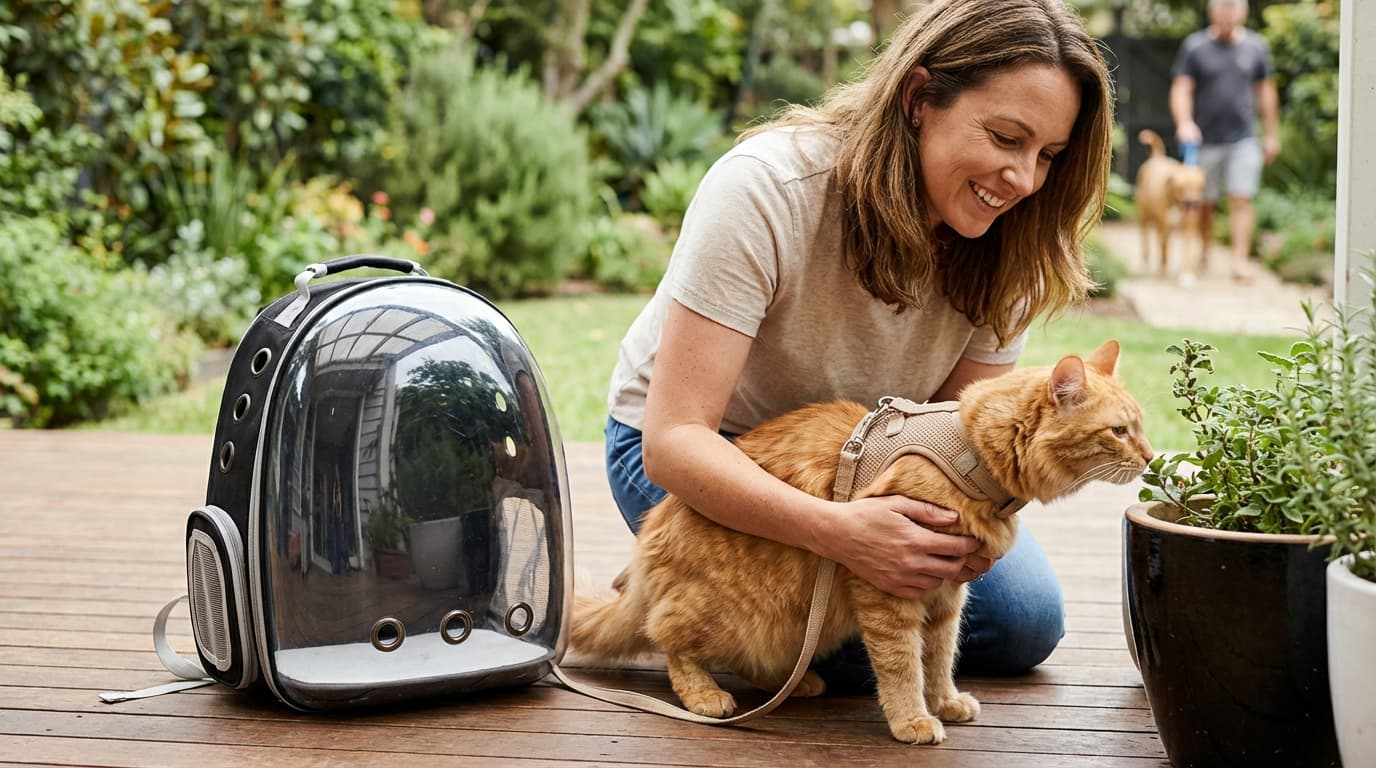
But what happens when the trail gets a little too loud or a big dog appears? That is when a cat walking backpack becomes your best friend. Think of it as a mobile safe home base where your cat can retreat if things get spooky. Hiking trails and busy parks are much less intimidating when your cat knows they have a private cabin to hide in. Just make sure the backpack has plenty of mesh for airflow and a big window. Most cats are naturally cautious and love to watch the world go by from a safe distance before they decide to step out and explore.
Picking the right gear is really about building trust between you and your cat. When they feel held but not trapped, their confidence grows. They start focusing on the interesting smells and sights instead of trying to escape the harness. This kind of outdoor time provides the sensory stimulation that keeps their brains sharp and satisfies their natural instincts to climb or stalk. It is a small investment in gear that leads to a much bigger reward: a happy, adventurous, and fulfilled cat at the end of the day.
Key insights:
- Standard collars are unsafe for walking because feline anatomy allows cats to easily slip out when spooked.
- The two-finger rule is the best way to ensure a harness is secure without being uncomfortable.
- Backpacks provide a necessary psychological safety net for cats in high-traffic or unpredictable outdoor environments.
- Specialized feline gear like mesh harnesses accounts for a cat's 'liquid' ability to compress their body.
Why Feline Anatomy Changes Everything
Ever wonder how your cat can fit through a gap that looks half their size? It is because cats are basically liquid. Their collarbones are not attached to other bones the way ours are, which lets them squeeze through tight spots or slip right out of a standard dog harness. Using dog gear on a cat is usually a recipe for an escape artist's success story. Because cats move more like a slinky than a sturdy pup, they need gear built specifically for their unique skeletal structure.
Getting the fit right is the difference between a fun stroll and a panicked chase. You want the harness snug but comfortable. A good rule of thumb is the two-finger rule: if you can slide two fingers between the harness and your cat’s fur, you have hit the sweet spot. Specialized gear, like the Adventure Kitty harnesses from RC Pets, is designed with this feline anatomy in mind. This Canadian company uses lightweight mesh that will not weigh down a smaller cat but stays durable enough to handle a sudden dash after a moth.
It is not just about safety; it is about confidence. A heavy, bulky harness often makes a cat feel pinned down, which triggers their natural freeze and flop instinct. By choosing materials that balance durability with a barely there feel, you help your cat focus on the sights and sounds of the outdoors rather than the weight on their back. When the gear fits properly and feels light, your cat can actually enjoy the sensory buffet of the backyard without feeling trapped.
Key insights:
- Cats can escape dog harnesses because their shoulders are not fixed like a canine's.
- The two-finger rule ensures the harness is secure without being restrictive.
- Lightweight, mesh materials prevent the weight-induced freeze response in sensitive cats.
When to Use a Cat Walking Backpack
Think of a cat walking backpack as your pet's personal mobile fortress. While we love the idea of our cats strutting confidently on a leash, the big outdoors can be unpredictable. Cats are naturally cautious and highly sensitive to their surroundings, so a sudden loud noise or a passing dog can easily trigger their flight instinct. Having a backpack ready gives them an immediate safe home base to retreat to when things get a little too intense.
This gear is a total game-changer for longer hiking trails or navigating busy city parks where foot traffic is high. It is not about trapping them inside but rather providing a high vantage point where they feel secure. Most cats want a clear view of the world and plenty of ventilation so they can catch all those interesting outdoor scents. RC Pets, a Canadian company that specializes in adventure gear, designs these carriers to support a cat's need for security while they soak up the mental stimulation of the world around them.
Using a backpack allows you to bridge the gap between a scary environment and a fun exploration. It turns a potentially stressful outing into a confidence-building session. If your cat gets tired or spooked, they simply hop in, reset, and keep watching the birds from safety. It is a simple way to ensure their outdoor time stays positive and fulfilling without pushing them too far too fast.
Key insights:
- Backpacks serve as a vital safety net for cautious cats in high-traffic areas.
- Proper ventilation and visibility are the top priorities for a cat's comfort in a carrier.
- Using a mobile 'home base' helps build confidence during the desensitization process.
Leash Training Without the Drama: A Step-by-Step Guide
Think about the first time you tried to put a sweater on a cat. It probably didn't go well. Leash training can feel the same way if you rush it, but the secret is simple: slow and steady wins the race every single time. Instead of heading straight for the back door, start the whole process in your living room. This is your cat's home turf where they feel most confident. By leaving the harness on the floor for them to sniff and explore, you're removing the scary new object factor. Pair these sessions with their favorite treats or a round of play to build a rock-solid positive association. You want them to see the gear and think of fun, not fear.
The best way to handle the actual training is by using Positive Reinforcement, or R+. This method, which is a staple in the force-free dog training world, works wonders for cats too. The trick is all in the timing. You need to reward the tiny wins immediately, like the second they let you clip the harness or take a single step forward. If your cat suddenly turns into a statue and refuses to budge, don't worry. This is a common feline response to feeling something on their back. Rather than pulling the leash, use a toy to encourage a natural movement. Using an escape-proof cat harness designed for feline anatomy, like those from RC Pets, ensures they feel secure and comfortable while they learn that they can still jump and stalk just like usual.
Is it ever too late to start? While kittens have a prime socialization window that makes them more open to new things, older cats can absolutely learn to love the outdoors too. The approach just changes slightly. For an adult cat, you will spend more time on desensitization, letting them set the pace entirely. You have to manage your expectations because every feline personality is different. One cat might take to a kitten harness training routine in days, while a more cautious senior might prefer viewing the world from the safety of a cat walking backpack first. The reality is that outdoor access serves as a great intervention for indoor boredom, boosting their confidence through the sights and scents of the real world, no matter their age.
Key insights:
- Starting in a familiar indoor environment prevents the cat from feeling overwhelmed by too many changes at once.
- Positive reinforcement (R+) focuses on rewarding desired behaviors rather than forcing movements, which is essential for sensitive felines.
- The 'statue cat' behavior is a natural reflex that can be overcome with lure-based play and patience.
- While kittens learn faster, adult cats benefit significantly from the mental stimulation of safe outdoor exploration.
The Magic of Positive Reinforcement (R+)
Ever tried to tell a cat what to do? Usually, they just blink at you. But here is a secret: the same positive reinforcement (R+) techniques that dog trainers use work wonders for cats too. Since cats are naturally cautious and sensitive to change, we should not force them into a harness. Instead, we use treats and praise to make them think the harness was their idea all along. It is about building a bridge between their indoor safety and the big, exciting world outside.
Timing is everything here. If you give a treat three minutes after your cat sniffs the leash, they will not make the connection. You want to reward the exact second they show curiosity. This builds confidence, which is vital because engaging in natural behaviors like stalking or climbing actually fulfills them mentally. Think of it as a behavioral intervention for boredom. When they realize that the harness means snacks and praise, that initial hesitation starts to melt away.
But what happens if your cat turns into a statue the moment the buckles click? We have all seen it - the dramatic flop or the refusal to move a single paw. Do not panic and do not pull. This is where gradual desensitization comes in. Start by leaving gear like an Adventure Kitty harness on the floor for them to sniff. RC Pets suggests letting them set the pace because every cat explores differently. If they freeze, just go back a step. Outdoor adventures offer a tapestry of scents and sounds that indoor life just cannot match, but we have to get there on their terms.
Key insights:
- Borrowing R+ methods from dog training helps cats associate the harness with rewards rather than fear.
- Precision timing with treats is the fastest way to build your cat's confidence during gear introduction.
- The statue cat response is a sign to slow down and use gradual desensitization instead of force.
Kitten vs. Adult Training: Is It Ever Too Late?
You might wonder if you missed the boat if your cat is already past the kitten stage. While it's true that kittens have a socialization window where they accept new things almost instantly, adult cats can still learn to love the outdoors. Think of kittens as tiny explorers with no baggage, while older cats are more like seasoned travelers who need to check the reviews first. If you're starting with a youngster, kitten harness training is often a breeze because they are naturally curious and less set in their ways.
For the older, more cautious feline, the secret is gradual desensitization. Since cats are naturally sensitive to changes in their environment, you cannot just strap on gear and head for the woods. Start by leaving a specialized harness, like those designed for feline anatomy by RC Pets, on the living room floor for them to sniff and observe. This force-free approach, often borrowed from positive reinforcement dog training, builds a foundation of trust. It is about making the gear a normal part of their world before you ever click the buckle.
The reality is that every cat explores at their own pace. Some might take to a cat walking backpack immediately, while others might only ever want to sit on the porch. That is okay. Even small doses of outdoor time provide sensory stimulation through new sights and scents that indoor life simply cannot match. By focusing on what makes your specific cat feel confident - whether that is stalking through grass or just watching birds - you are helping them beat boredom and live a more fulfilled life.
Key insights:
- Kittens adapt faster due to a natural socialization window, but adult cats can still learn with extra patience.
- Gradual desensitization is non-negotiable for older cats to ensure they do not feel overwhelmed by new gear.
- Mental enrichment from outdoor scents and sounds is a powerful tool to reduce indoor boredom and boost feline confidence.
Cat Walking vs. Dog Walking: Spoiler, They Aren't the Same
If you have ever seen someone walking a dog, you know the drill: the dog follows along, maybe stops for a quick sniff, but generally keeps a steady pace. Now, throw that image out the window. Walking a cat is a completely different game. In fact, you aren't really walking the cat at all - they are walking you. While a dog might see a walk as a way to get from point A to point B, your cat sees it as a high stakes mission to investigate every single leaf and pebble in a five foot radius.
This is where the sniff and stay session comes in. Cats are naturally cautious and incredibly sensitive to changes in their environment. Because of this, a typical cat walk involves a lot of standing still. They need time to process the sights, sounds, and scents that indoor life simply cannot match. It might feel like you are just standing on the sidewalk, but for them, engaging in natural behaviors like stalking a bug or sniffing the breeze is a massive boost to their confidence and mental well-being.
Then there is the infamous flop and roll maneuver. You put the harness on, and suddenly your cat acts like their legs have stopped working. Do not worry, because it is a common reaction to new gear. The key is patience and using the right equipment, like an Adventure Kitty Harness designed specifically for feline anatomy. The best approach is to introduce the gear slowly by letting them sniff it on the floor first and using positive reinforcement to build a happy association. As the team at RC Pets notes, every cat explores at their own pace.
Think of it this way: you are not training a marathon runner, you are being a bodyguard for a tiny explorer. It takes consistency, but seeing your indoor cat finally feel comfortable enough to climb a log or jump over a flowerbed makes the slow pace totally worth it. It is not about the distance you cover, but the enrichment they gain from the experience.
Key insights:
- Cat walking is about sensory exploration and mental health rather than physical distance.
- The flop and roll is a natural response to gear that requires slow, positive desensitization.
- Using species-specific gear like adventure harnesses ensures safety and comfort during outings.
Safety First: Navigating the Real World Together
Think about your living room for a second. It is predictable and safe, but for a cat, it can also be a bit repetitive. Stepping outside changes the game because cats are naturally cautious and highly sensitive to any change in their surroundings. While the new sights and scents provide great mental stimulation, they also bring hidden risks. Before you let your cat explore a patch of green, think about what might be on those leaves. Local hazards like pesticides or toxic garden plants are easy to miss. It helps to scan the area first and stick to spots you know are pet-friendly so your cat can sniff around without worry.
Then there is the unexpected factor. Even the calmest cat can be startled by a sudden loud noise or an off-leash dog running toward them. This is why picking the best escape-proof cat harness is the most important step in your prep work. Since feline anatomy is so flexible, a standard collar is not enough if they try to twist away in a panic. Companies like RC Pets create gear like the Adventure Kitty Harness specifically to handle these quick movements and keep your pet secure. If a car backfires or a dog barks, you want to know your cat is held safely while you help them stay calm.
Every outing needs a solid exit strategy. Never wander too far without a clear plan for how to get back to a safe spot in a hurry. Many owners now use a cat walking backpack as a mobile safe house. If the environment gets too loud or your cat feels overwhelmed, they can jump into the bag and feel protected immediately. This is a big part of positive reinforcement training. You are teaching your cat that they have a choice and a way out. When they know they can retreat if they feel scared, they actually become much more confident explorers over time.
You might wonder if all this gear and planning is worth the effort. The reality is that outdoor time acts as a powerful intervention for indoor boredom. When a cat gets to engage in natural behaviors like stalking through tall grass or jumping on a log, it boosts their mental fulfillment. It is not exactly like walking a dog. It is about letting them experience the world at their own speed. By being their lookout and providing the right gear, you turn a potentially scary situation into a rewarding adventure that keeps them healthy and happy.
Key insights:
- Safety gear should be designed specifically for cat anatomy to prevent escapes during sudden scares.
- A cat walking backpack serves as an essential mobile safety zone for cats feeling overwhelmed.
- Scanning for pesticides and toxic plants is a vital part of preparing a safe exploration area.
- Positive reinforcement helps cats build confidence by giving them a sense of control over their environment.
Common Questions About Taking Your Cat Outside
You might be seeing more adventure cats on your social media feeds and wondering if your own indoor kitty is missing out. It is a valid question because we usually think of cats as homebodies who prefer the couch over the trail. But the reality is that the outdoors offers a tapestry of sights and smells that even the best indoor environment cannot replicate. This sensory boost supports their mental well-being and lets them act on instincts like climbing or stalking that often get dull indoors.
One of the most frequent concerns is whether it is actually safe. Cats are naturally cautious and very sensitive to changes in their environment, so your worry is normal. Safe exploration starts with the right equipment. You need gear designed specifically for feline anatomy, like an escape-proof cat harness or a sturdy walking backpack. Companies like RC Pets create items like the Adventure Kitty Harness specifically to keep cats secure while they explore.
So how do you actually leash train a cat without causing a meltdown? The secret is a method called Positive Reinforcement, or R+. This involves using treats and praise to build a happy connection with the gear. A great first step is simply leaving the harness on the floor for your cat to sniff and explore on their own terms. Gradual desensitization is the goal here. If you rush the process, you might end up with a cat that freezes or panics the moment they feel the straps.
You might wonder what to do if your cat seems scared once you finally get outside. The truth is that every cat explores at their own pace. Some might be ready to hit the backyard in a week, while others might take months just to feel okay sitting on the porch. The key is to stay consistent and patient. If your cat seems overwhelmed, just head back inside. This is about their fulfillment and confidence, not about hitting a specific mileage on a hiking trail.
Think of it this way: you are providing a controlled adventure. Start with tiny steps, like sitting by an open door while they wear their gear. You are looking for signs of curiosity, like a tail held high or a focused sniff at a blade of grass. By following their lead and using the right tools, you turn the big, scary outside world into a manageable and enriching playground for your pet.
Key insights:
- Use Positive Reinforcement (R+) to create a happy association with gear.
- Start by letting your cat sniff the harness on the floor before trying to put it on.
- Choose gear like the Adventure Kitty Harness that is designed for cat anatomy.
- Let your cat set the pace and go back inside if they show signs of stress.
Final Thoughts: Your Cat’s World Just Got Bigger
Taking your cat outside is about so much more than just a change of scenery. It opens up a rich world of scents and sounds that a windowsill simply cannot match. When you help your cat engage in natural behaviors like climbing or stalking in a safe way, you are doing more than just providing exercise. You are building a deeper bond based on trust. You become their partner in every new discovery, and that shared experience is something truly special.
It is completely normal to feel a bit nervous about starting this journey. Cats are naturally cautious and very sensitive to changes in their environment. The secret is to keep things low pressure. Think of harness training as a slow conversation rather than a chore. Using positive reinforcement techniques, like offering favorite treats when they sniff their gear, makes the process feel like a fun game. As the team at RC Pets often reminds us, every cat explores at their own pace. Some might be ready for the backyard in a week, while others may prefer sitting on the porch for a month. Both are big wins.
Why not start the journey today? You do not have to head for the trails right away. Simply placing a harness on the floor for your cat to investigate is the first step toward a more confident and fulfilled pet. Outdoor time is a brilliant way to beat indoor boredom and let those natural instincts shine. Your cat’s world is about to get a whole lot bigger, and you get to be right there to see it happen.
Key insights:
- Outdoor adventures provide vital sensory stimulation that supports mental well-being.
- Positive reinforcement is the most effective way to build a cat's confidence with new gear.
- Patience is essential because every cat has a different comfort level with the outdoors.
Frequently Asked Questions
It usually starts with a lot of curiosity. You might see your cat hanging out by the door or staring intently through the window at birds and leaves. Since cats are naturally cautious, they will not always tell you directly. But if they seem bored or restless indoors, the extra sensory stimulation from the outdoors can be a huge boost for their mental health.
The best way to tell is to see how they react to new things. If they are generally bold and recover quickly from loud noises, they might love a backyard adventure. Just remember that every cat moves at their own pace, so you should never force the process if they seem scared or overwhelmed.
For a slender cat, you really want a harness designed specifically for feline anatomy rather than a downsized dog version. The Adventure Kitty Harness is a solid choice because it accounts for how flexible and thin cats can be. It is built to stay secure even when they try to wiggle out of it during a sudden spook.
Fit is only half the battle. Even with the right gear, you need to use positive reinforcement to make sure they are comfortable. Start by leaving the harness on the floor so they can sniff it and get used to its presence. When they associate the gear with treats and fun, they are much less likely to try a disappearing act.
Yes, they absolutely can. Cats are naturally flexible and can wiggle out of a harness if it isn't fitted right or designed for their specific body shape. Since they are cautious and sensitive to changes in their environment, a sudden noise might make them try to bolt.
To keep them safe, you'll want to use gear like the Adventure Kitty harness which is built specifically for feline anatomy. It's much safer than using a standard dog harness because it accounts for how cats move. Just remember that a secure fit is the best way to prevent a disappearing act.
There isn't a one size fits all answer because every cat explores at their own pace. Some might be ready to walk in a week, while others might need a few months to feel brave enough for the outdoors.
The trick is using gradual desensitization and positive reinforcement. Start by leaving the gear on the floor so they can sniff it and get comfortable. If you keep things fun and low pressure, your cat will eventually associate the harness with the exciting sights and sounds of the outside world.
Conclusion
So what does this all mean for your favorite feline? Taking your indoor cat outside is about more than just a cute photo. It is about giving them the smells, sounds, and sights their instincts crave while keeping them safe. When you pair a good escape-proof cat harness with a bit of patience, you open up a whole new world for them. You are not just walking a cat; you are giving them a richer life.
Your next move does not have to be a mountain hike. Start in your living room with some treats and a kitten harness training session. Even if you only make it to the back porch in a cat walking backpack, that extra stimulation makes a huge difference. Remember that every cat is different, so let them set the pace and follow their lead.
Safe outdoor exploration for indoor cats is one of the best ways to bond with your pet. It takes some practice to learn how to leash train a cat, but the reward is a happy, confident kitty who is tuckered out from a big day of sniffing. Go ahead and start slow. Your cat's world is about to get a lot more interesting.
Send it to someone who should read it next.

PurrScript Editorial Team
Editorial Team
PurrScript's in-house editorial team. We research, write, and review every guide using established veterinary and behavioral resources, and update articles as best practices evolve.
View all articles