From Tiny Fluff to Big Cat: Your Kitten Feeding Roadmap
Your new kitten might look like a delicate ball of fluff, but those tiny paws belong to a high-energy machine. Kittens actually need more fuel than full-grown cats, requiring about...

PurrScript Editorial Team
Editorial Team
From Tiny Fluff to Big Cat: Your Kitten Feeding Roadmap
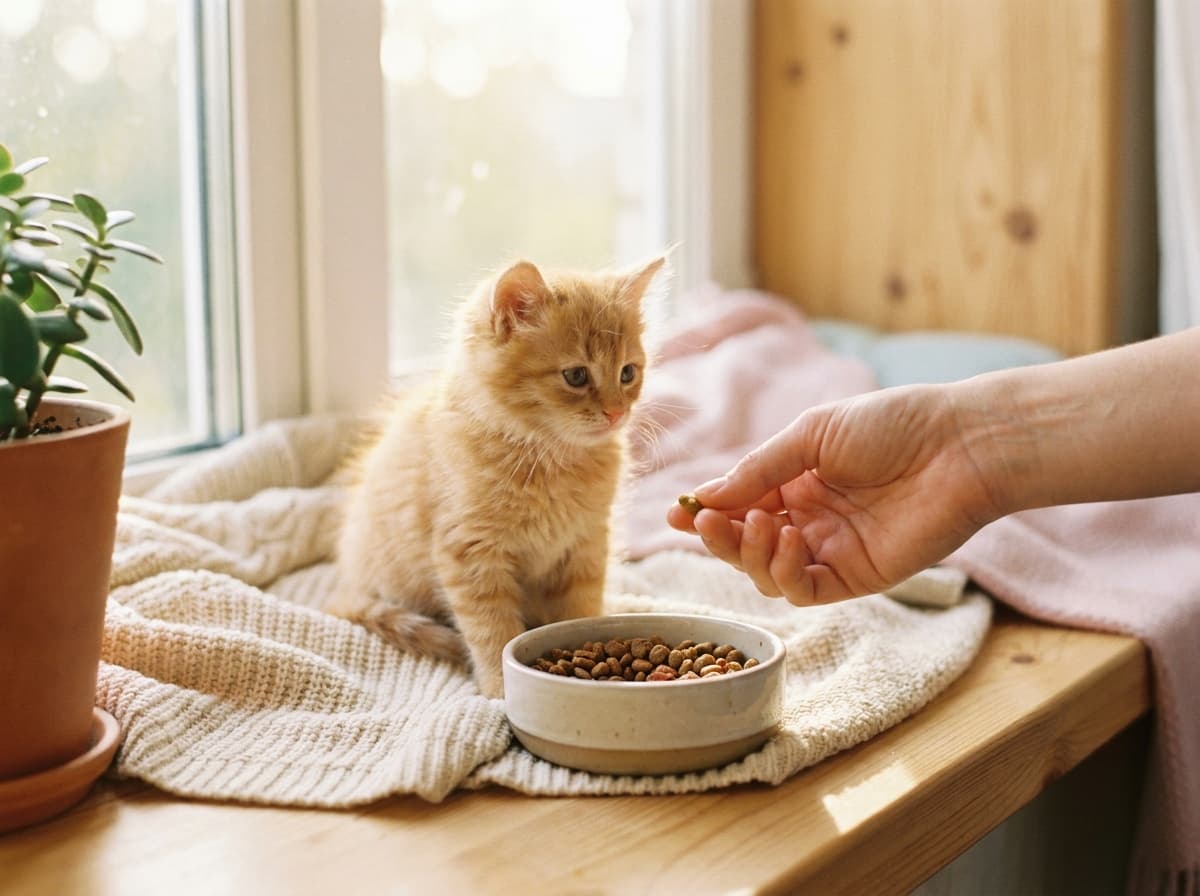
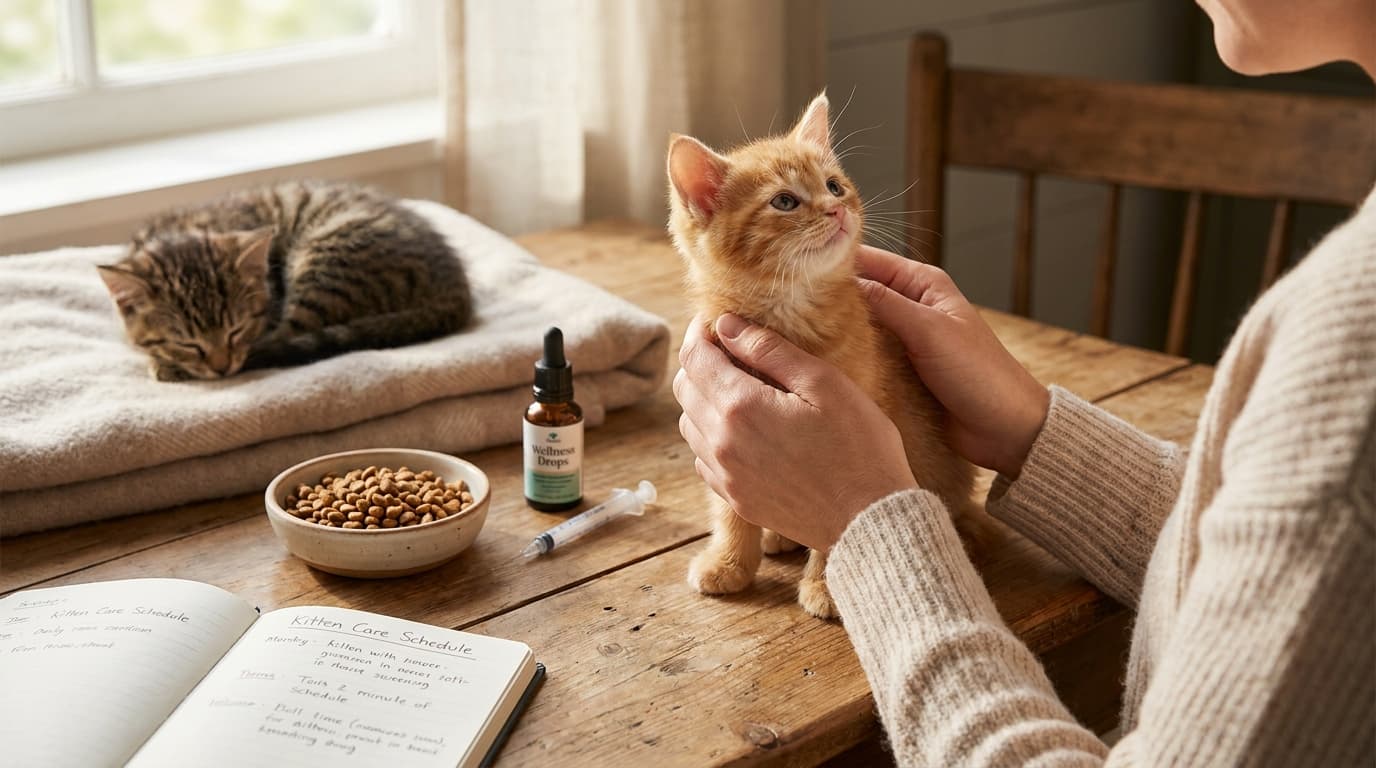
Your new kitten might look like a delicate ball of fluff, but those tiny paws belong to a high-energy machine. Kittens actually need more fuel than full-grown cats, requiring about 250 to 280 calories a day to support their rapid development. This often leaves new owners wondering exactly how much to feed a kitten to keep them healthy without overdoing it.
Getting the menu right is the foundation for a long, happy life. Between handling sudden kitten growth spurts and picking between wet vs dry kitten food, the choices can feel a bit overwhelming at first. You want to provide plenty of protein and DHA for their growing brains while avoiding the messy tummy troubles that come with the wrong snacks.
We'll cover everything from specific calorie requirements to the truth about giving goat milk for kittens. You'll also learn the best way to handle switching to adult cat food when the time is finally right. By the end, you'll have a clear plan to help your tiny fluff grow into a strong, happy big cat.
Bringing home a new kitten is a whirlwind of purrs and pounces, but it also brings up a big question: how do you fuel all that energy? From two to twelve months old, your furball is doing some serious growing. They aren't just playing. They are building the foundation for a long, healthy life. What they eat today determines how strong and happy they will be as adults.
You might be surprised to learn that a tiny kitten needs more daily fuel than a full grown cat. While a typical adult needs about 200 calories, a kitten requires 250 to 280 calories to keep up with their constant growth spurts. Since their stomachs are still very small, they cannot handle one or two big feedings. Instead, you will want to offer four to seven mini meals throughout the day to keep their energy levels steady.
In this guide, we will cover how to transition from milk to solids, why cow's milk is actually a bad idea for their digestion, and how to spot the right time to switch to adult food. Getting the routine right now makes life easier for both of you. Let's look at how to turn that tiny fluff into a healthy, thriving big cat.
Key insights:
- Kittens require significantly more calories per pound than adult cats to support rapid development.
- Frequent feedings are necessary because a kitten's small stomach cannot process large amounts of food at once.
- The transition to solid food should be a gradual process to avoid digestive upset.
Why Your Little Hunter Needs More Fuel Than an Adult
Have you ever watched a kitten zoom across the room at three in the morning? It looks like pure chaos, but that tiny body is actually a high-performance machine running at full throttle. Because they are growing so fast, kittens between two and twelve months old need a surprising amount of energy. While a chill adult cat might only need about 200 calories to get through the day, your little hunter is burning through 250 to 280 calories. They are not just playing. They are literally building bones, muscles, and organs from scratch every single day.
This is why grabbing a standard bag of adult cat food usually does not cut it. Think of it this way: an adult cat's diet is designed for maintenance, like keeping a house in good repair. A kitten's diet is a full-scale construction project. They need much higher levels of protein and fat to support that rapid physiological development. If they do not get these concentrated nutrients, they might struggle to hit their growth milestones. Also, keep in mind that many kittens are lactose intolerant, so skipping the saucer of cow's milk and sticking to nutrient-dense kitten food is the best way to avoid an upset stomach.
It is not just about physical size, though. A huge part of a kitten's development happens where you cannot see it: inside their head. This is where Docosahexaenoic acid, or DHA, comes into play. It is a specific type of fatty acid that acts like high-octane fuel for the brain and eyes. When you look at the back of a food bag, you want to see DHA listed because it helps with everything from learning how to hunt a feather toy to seeing clearly in the dark. It is basically a brain boost that helps them become the sharp and observant hunters they are meant to be.
Many modern pet food brands are now making very specific formulas that prioritize these essential nutrients. You might see these labeled as growth formulas or specific kitten lines that focus on those first twelve months. These recipes ensure your kitten gets the right balance of vitamins and minerals without the fillers that might be okay for an older cat but useless for a growing one. By choosing a formula rich in DHA and high-quality proteins, you are giving your kitten the best possible start for a long and healthy life.
Key insights:
- Kittens require significantly more calories than adult cats to support their rapid growth phases.
- DHA is a critical nutrient found in kitten-specific formulas that directly supports brain and vision development.
- Adult cat food lacks the nutrient density and fat content necessary for a kitten's high-energy lifestyle.
The Brain Boost: Why DHA Matters
Ever wonder why your kitten seems to have a sudden burst of energy or how they learn to hunt a toy so quickly? It is not just luck. Their little brains are working overtime during those first twelve months of life. This is where Docosahexaenoic acid, or DHA, comes into play. Think of DHA as high-speed internet for a kitten's developing brain and eyes. It is an essential omega-3 fatty acid that helps them stay sharp and process the world around them as they grow.
Because kittens need roughly 250 to 280 calories every day to support this rapid development, you cannot just feed them standard adult food. Adult cats usually only need about 200 calories and their food often lacks the specific nutrients kittens crave. When you are shopping, look for labels that focus on lifestage-specific nutrition. These formulas are much more nutrient-dense and packed with the protein and fats needed for those big growth spurts. Choosing a food that prioritizes DHA ensures your tiny fluff has everything they need to become a smart and healthy adult cat.
Key insights:
- DHA acts as a building block for healthy vision and cognitive function in growing kittens.
- Kitten-specific diets are formulated with higher calorie counts and essential fats that adult cat foods lack.
Wet Food vs. Dry Kibble: Which One Wins?
When you bring a new kitten home, the food aisle can feel like a maze. Should you go for the cans or the crunch? Many experts now lean toward a wet-start approach for young cats. Why? Because kittens aren't always great at drinking enough water on their own. Canned food naturally keeps them hydrated while they are growing fast. Think of it as a built-in water bottle that happens to taste like chicken or salmon. It's also much easier for their tiny mouths to chew, and the strong scent helps picky eaters get excited about mealtime.
Dry kibble has its own perks that make it a staple in most homes. It is easy to leave out for a bit if your kitten likes to graze throughout the day, and the hard texture can help keep those tiny teeth clean as they grow. But here is the secret: you don't actually have to choose just one. Mixing both textures gives your kitten a well-rounded palate and ensures they get the benefits of both. This matters because growing kittens are little athletes. They need about 250 to 280 calories a day to fuel their constant energy, which is significantly more than the 200 calories an average adult cat needs. If they only eat dry food, they might miss out on moisture, so a blend is often the winning strategy.
Think of kitten food as high-performance fuel. It is way more nutrient-dense than the stuff you would feed an older cat. It's packed with extra protein, healthy fats, and DHA for brain development. Since the kitten life stage lasts until they are about 12 months old, you will want to keep them on this specialized diet for a full year. If you switch to adult food too early, they might miss out on the building blocks they need for strong bones and a shiny coat. It is all about providing the right density of vitamins and minerals while their bodies are basically under construction.
Moving from milk to solid food is a big milestone that usually happens between five and eight weeks. It is a delicate window of time. You can't just drop a bowl of hard kibble on the floor and hope for the best. Instead, try making a soft mush by mixing high-quality wet food with kitten milk replacer. This creates a bridge between the liquid diet they know and the solid food they are learning to eat. Whatever you do, avoid cow's milk. Most kittens are actually lactose intolerant, and giving them dairy is a fast track to an upset stomach.
At first, your kitten will need to eat very often. We are talking four to seven small meals every single day. Their stomachs are about the size of a walnut, so they simply cannot eat much at once. By the time they hit six months, they are usually ready to transition to about two meals a day. If you are introducing a new flavor or brand, do it over a full week. Start with just 20% new food and slowly increase the amount each day. This gradual shift keeps their digestion smooth and helps them adjust without any stress or messy surprises in the litter box.
Key insights:
- Kittens require nearly 30% more calories than adult cats to support their rapid growth and energy levels.
- A wet-start diet is highly recommended to ensure kittens stay hydrated and find their food palatable.
- The transition to solids should happen gradually between 5 and 8 weeks using a mixture of wet food and milk replacer.
- Avoid cow's milk entirely because it often causes digestive distress in lactose-intolerant kittens.
- Stick to kitten-specific formulas until the 12-month mark to ensure they get essential nutrients like DHA.
Introducing Solids Without the Stress
Between five and eight weeks, your kitten’s world starts to shift from nursing to nibbling. It’s a big milestone, but you do not need to overthink it. This is the window where they transition from milk to mush, and it usually works best if you keep things soft and familiar. Think of it as a bridge between being a baby and a big cat.
Try making a 'kitten porridge' by mixing high-quality wet food with kitten milk replacer. This softens the texture for their tiny teeth and makes the scent more inviting. Just stay away from the saucer of cow's milk you see in old cartoons. Most kittens are actually lactose intolerant, so dairy can lead to some pretty unpleasant bathroom surprises. Stick to the milk replacer to keep their tummies happy.
The interesting part is how much fuel these tiny hunters actually need. Growing kittens require roughly 250 to 280 calories a day, which is more than the 200 calories an average adult cat eats. Because their bellies are small, you will want to offer four to seven mini-meals throughout the day. It is basically a constant refueling station for all those zoomies and growth spurts.
Key insights:
- Use kitten milk replacer instead of cow's milk to avoid digestive issues.
- Kittens need more daily calories than adult cats to support their rapid growth.
- Feeding four to seven small meals daily helps manage their tiny stomach capacity.
The Growing Pains: Navigating Kitten Growth Spurts
Have you ever woken up to find your kitten looks an inch longer than they did yesterday? It is not your imagination. Kittens go through intense growth spurts where they suddenly seem like bottomless pits. One minute they are napping, and the next, they are screaming at their bowl like they have not eaten in years. This happens because their bodies are working overtime. Between two and twelve months, a kitten is basically a tiny construction site, building bones and muscles at a record pace.
During these peaks, your little fluff ball needs a lot of fuel. While a typical adult cat stays healthy on about 200 calories a day, a growing kitten often needs between 250 and 280 calories to keep up. That is a huge difference for such a small body. To manage this without causing a tummy ache, it is best to stick to four to seven small meals throughout the day. Think of it like fueling a race car. You want frequent pit stops rather than one giant tank of gas that might lead to a sluggish engine or a very round belly.
But how do you know if they are getting too chunky? It is a fine line. You want them to be sturdy, not soft. A good trick is to feel their ribs. You should be able to find them under a thin layer of fat, but they should not be poking out. If they start looking more like a literal loaf of bread than a cat, it might be time to slightly trim the portions. Also, remember that while they might beg for your milk, most kittens are actually lactose intolerant. Stick to high-protein kitten food that includes DHA for their brain. It gives them exactly what they need to grow into a strong, healthy adult without the digestive drama.
So, keep an eye on that scale and that appetite. As they approach six months, you will notice their needs start to shift again. They will eventually settle into a more predictable routine of two meals a day, but for now, enjoy the high-energy chaos of their growth. Just keep the food nutrient-dense and the meals frequent, and you will set them up for a long, happy life.
Key insights:
- Kittens need significantly more calories (250-280) than adult cats to support rapid bone and muscle development.
- Feeding four to seven small meals daily prevents digestive upset while meeting high energy demands.
- Avoid cow's milk due to lactose intolerance; focus on DHA-enriched kitten food instead.
- Use the 'rib test' to ensure growth is healthy muscle rather than excess fat.
The Truth About Milk: Is Goat Milk or Cow's Milk Okay?
We have all seen the classic image of a tiny kitten happily lapping up a saucer of white milk. It looks adorable, right? But in reality, that saucer of cow's milk is usually a recipe for a messy litter box and a very unhappy tummy. The truth is that most kittens and adult cats are actually lactose intolerant. Their bodies simply lack the enzymes needed to break down the sugars found in dairy. This means that while they might love the taste, their digestive systems definitely do not.
When a kitten drinks cow's milk, the undigested lactose sits in their gut and ferments, leading to gas, bloating, and painful diarrhea. This is especially dangerous for little ones because diarrhea can cause dehydration fast. Even if your kitten seems to beg for a taste, it is better to be safe than sorry. That creamy treat just is not worth the digestive distress that follows. Think of it this way: just because they want it does not mean it is good for them.
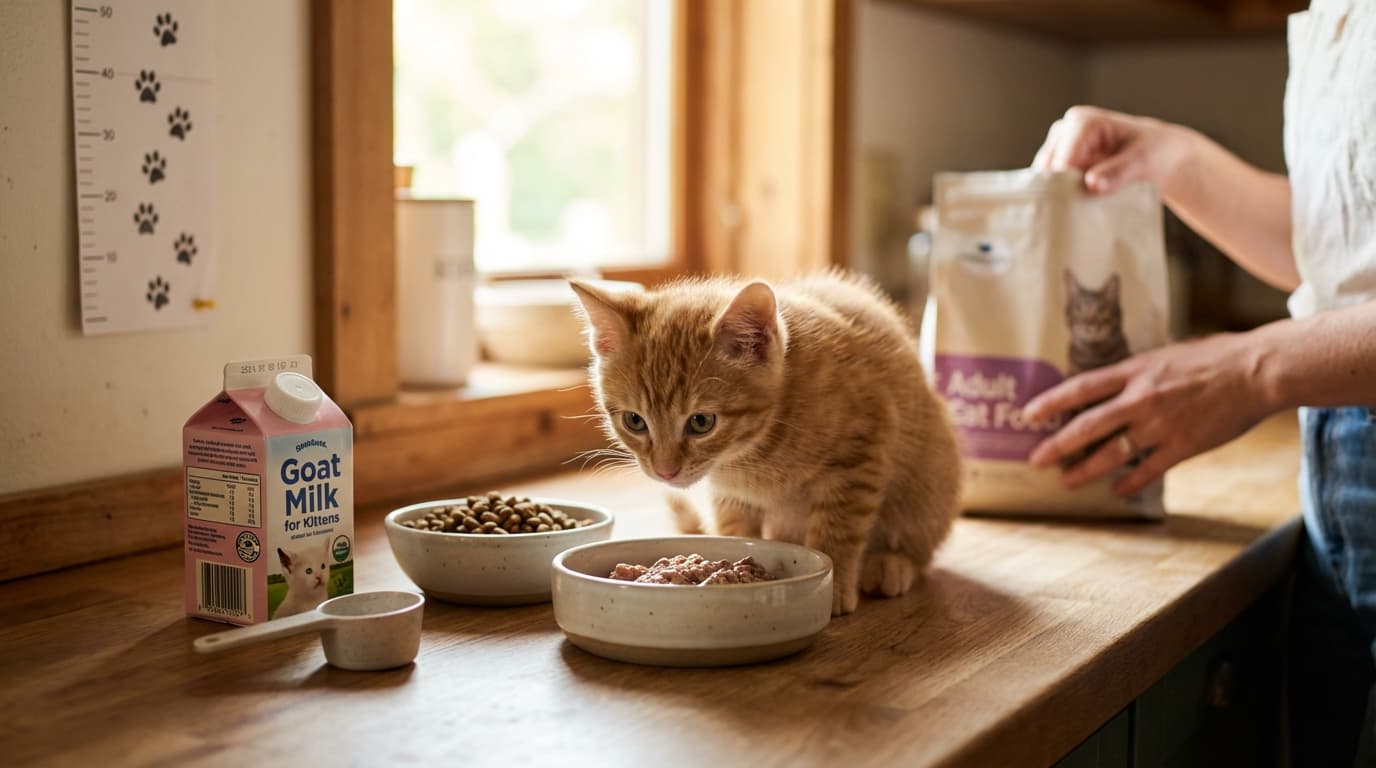
You might have heard that goat milk is a better alternative. While it is true that goat milk has slightly less lactose and smaller fat globules than cow's milk, it still is not a perfect substitute for mother's milk or a proper kitten formula. It might be easier on the stomach for some, but it still lacks the precise balance of protein, fat, and DHA that a growing kitten needs to thrive. It is okay as an occasional tiny treat for some, but it should never replace their main source of nutrition.
Here is the thing to remember: growing kittens are like tiny athletes. They need a massive amount of energy - about 250 to 280 calories a day - to support their constant zooming and growing. Filling them up on milk can actually spoil their appetite for the nutrient-dense kitten food they actually need. If they are full of dairy, they might skip the meals that provide the vitamins and minerals essential for their brain and bone development.
So, what should you keep in their bowl? Stick to fresh, clean water and high-quality kitten food. Once they are weaned, water is the only liquid they truly need to stay hydrated. If you really want to treat them, look for specially formulated cat milk at the pet store, which is made to be lactose-free. But honestly? A little extra bit of wet food is a much better way to show your love without the tummy ache.
Key insights:
- Most kittens lose the ability to digest lactose shortly after weaning, making dairy a common trigger for illness.
- Goat milk is slightly more digestible than cow's milk but still lacks the complete nutritional profile of kitten-specific food.
- A kitten's high caloric needs (250-280 calories) are best met through protein-rich wet and dry food rather than liquid supplements.
The 7-Day Secret to Switching Foods Without a Mess
Ever tried swapping your kitten's dinner only to end up with a very unhappy cat and a messy litter box? we have all been there. Going cold turkey on a new food brand is basically a recipe for digestive disaster. Kittens have sensitive stomachs, and their gut bacteria need time to adjust to new ingredients. If you rush it, you are likely looking at a kitten who refuses to eat or, worse, a stomach upset that leaves you cleaning the floor.
The secret is a simple seven day stretch. Think of it like a slow introduction between new friends. On the first two days, mix about 80% of the old food with just 20% of the new stuff. By days three and four, move to a 70/30 split, and keep tilting the scales until the old food is gone. This gradual shift lets their system catch up without the drama. It is the easiest way to ensure they get the nutrients they need, like DHA and high protein, without the tummy aches.
What if your kitten turns their nose up at the new menu? Do not panic. You can try warming the wet food slightly to release the aroma or slowing down the transition even further. If they are stuck on a specific ratio, stay there for an extra day or two. Also, remember that while they might love a treat, stay away from cow's milk because most cats are actually lactose intolerant. Adding dairy to help them eat will only make their digestion worse.
Somewhere between six and twelve months, your tiny fluff ball officially hits the adult milestone. This is a big deal for their diet. While a growing kitten needs about 250 to 280 calories a day to fuel those growth spurts, an adult cat usually only needs around 200. If you keep them on high calorie kitten growth formulas for too long, they will start packing on unhealthy weight that is hard to lose later.
You will know it is time to switch when they reach that six month mark and their rapid growth starts to level off. You will also notice their feeding schedule changes. While young kittens need four to seven tiny meals a day, six month old cats are usually ready to settle into a routine of just two meals. Transitioning to a lower calorie adult maintenance diet ensures they stay lean and healthy as they leave the kitten phase behind.
Key insights:
- Use a 7-day ratio mix starting at 80/20 to prevent stomach issues.
- Kittens need nearly 80 more calories per day than adult cats to support development.
- Avoid cow's milk during food transitions as it often causes digestive upset.
- Transition from multiple small snacks to two main meals daily by the six-month mark.
Making the Jump to Adult Cat Food
Your tiny ball of fluff won't stay small forever. Between six and twelve months, most kittens officially graduate to adulthood. This is a big milestone, but it also means their nutritional needs are shifting. While a growing kitten burns through about 280 calories a day to build bone and muscle, a typical adult cat only needs around 200. If you keep feeding them that high-energy kitten food, you might notice your sleek cat getting a bit too round.
Knowing when to switch to adult cat food depends on your specific pet, but the SHEBA® Kitten Feeding Guide suggests you can start the process as early as six months. You will know they are ready when those intense growth spurts slow down and they start acting more like a settled adult. Do not just swap the bags overnight. A sudden change can lead to an unhappy stomach. Instead, use a seven-day plan by mixing 20% adult food with their kitten kibble, then slowly increase the ratio each day until the transition is complete.
Adult food contains less DHA and protein than kitten recipes because their bodies are mostly done developing. If your cat seems less interested in their frequent small meals, it is likely a sign they are ready for a standard two-meal-a-day adult schedule. It is all about matching their energy intake to their new, slightly calmer adult lifestyle.
Key insights:
- Adult cats require roughly 80 fewer calories per day than growing kittens to maintain a healthy weight.
- A seven-day gradual mixing process is the best way to prevent digestive upset during a food switch.
- Kittens typically transition from many small snacks to two main meals by the six-month mark.
Setting a Schedule That Works for Both of You
Ever feel like your kitten is a bottomless pit? In those first few months, it really seems that way. Between two and twelve months old, they are basically tiny athletes in a constant state of construction. Because their stomachs are small but their energy is massive, they need to eat way more often than you might think. It is not just about hunger; it is about fueling a body that is growing at lightning speed.
Initially, you are looking at four to seven small meals every single day. This frequency mimics how they would eat in the wild and keeps their energy levels from crashing. Expert guides suggest that once your feline hits six months, it is time to start the transition toward an adult schedule of about two meals a day. This shift helps them get used to a routine that fits into a human workday while still meeting their nutritional needs.
You might be tempted to leave a bowl of dry food out all day, often called free feeding. While it is convenient, it can make it harder to track exactly how much they are eating. Scheduled mealtimes, on the other hand, create a predictable rhythm that reduces begging. When a kitten knows exactly when breakfast and dinner are served, they are less likely to treat your kitchen movements like a signal for a snack. It also makes it easier to spot if they lose their appetite, which is often the first sign of a health issue.
The reality is that kittens are caloric powerhouses. A growing kitten needs about 250 to 280 calories daily, which is significantly more than the 200 calories an average adult cat requires. Their food is specifically formulated with higher protein and DHA to support brain development. If you are changing their routine or food type, use a seven-day transition. Start with a mix of 80% old food and 20% new, slowly tipping the scales until they are fully adjusted. This gradual approach prevents the digestive upset that often comes with sudden changes.
Key insights:
- Kittens require 250-280 calories daily to support rapid growth, compared to 200 for adults.
- Feeding frequency should shift from 4-7 small meals to 2 meals by six months of age.
- Scheduled feeding is often superior to free feeding for monitoring health and reducing begging.
- A slow, 7-day transition ratio helps prevent digestive issues when changing diets.
Common Kitten Feeding Questions
You have just brought home a tiny, purring ball of energy, and suddenly your search history is nothing but questions about how much to feed them. It is a valid worry. Even though they are small, kittens are essentially little athletes in a constant state of construction. They actually need more fuel than the lazy adult cat napping on your sofa. While a typical adult cat gets by on about 200 calories a day, a growing kitten often needs between 250 and 280 calories to keep those growth spurts going. Think of it as fueling a marathon runner versus someone out for a casual stroll.
One of the biggest surprises for new owners is just how often these little guys need to eat. Because their stomachs are roughly the size of a walnut, they cannot handle one or two big meals. Early on, you are looking at serving up four to seven small meals every single day. It might feel like you are constantly washing dishes, but this frequent refueling is what keeps their blood sugar steady and their energy up. By the time they hit the six-month mark, you can usually scale back to two meals a day, but those early months require a more hands-on schedule.
There is a classic image of a kitten lapping up a saucer of cow’s milk, but that is one myth we really need to retire. The reality is that many kittens are lactose intolerant, and giving them dairy is a quick way to cause stomach upset and dehydration. Instead, focus on the transition to solid food which usually happens between five and eight weeks. You can make a mush by mixing quality wet food with kitten milk replacer. It is a messy process, but it helps them learn how to chew and swallow something other than liquid.
You might wonder why you cannot just grab a bag of standard cat food and call it a day. Kitten-specific diets are much more nutrient-dense, packed with higher levels of protein, fat, and DHA for brain development. It is essentially a concentrated growth formula. When you do eventually switch their food, do not do it all at once. Use a seven-day bridge where you slowly increase the ratio of new food. Start with just 20% of the new stuff and work your way up. This slow-and-steady approach saves you from dealing with a kitten who has a very unhappy digestive system.
So, when does the kitten stage actually end? Most experts define this period as lasting from two months up to a full year. However, you should start the conversation about adult food around the six-month mark. It is a bit of a balancing act because you want to support their development without letting them get overweight as their metabolism begins to level out. Pay attention to their activity levels and body shape rather than just following the bag's instructions blindly. Your kitten will usually show you when they are ready for the next step.
Key insights:
- Kittens need significantly more calories than adult cats to support rapid growth and high energy levels.
- Cow's milk is a no-go because most kittens cannot digest lactose properly.
- A seven-day gradual transition is the golden rule for changing food types without causing digestive distress.
- Kitten food contains specific nutrients like DHA that are not found in the same concentrations in adult formulas.
Final Thoughts: Growing Up Healthy
Watching a kitten grow is like watching a fuzzy whirlwind. This stage only lasts from 2 to 12 months, so it moves fast. These little guys need a ton of energy - roughly 250 to 280 calories a day, which is actually more than a full-grown cat. Feeding them four to seven small meals might feel like a full-time job at first, but it powers all those high-speed pounces.
The move to solid food usually happens between five and eight weeks. Just remember to skip the cow's milk since most kittens are lactose intolerant and need specialized kitten milk replacer instead. Once they hit six months, you can start the shift toward an adult diet. But here is the thing: every kitten is an individual. Use a slow, seven-day transition when changing foods to keep their digestion on track.
It is all about finding what works for your specific cat. Every kitten has their own personality and their own pace for hitting milestones. Enjoy this wild growth phase while it lasts because they truly do grow up in the blink of an eye.
Key insights:
- Kittens require more daily calories than adult cats to support their rapid physiological development.
- A seven-day gradual food mix is the safest way to avoid stomach upset during diet changes.
Frequently Asked Questions
A typical 3-month-old kitten needs about 250 to 280 calories every single day. It might surprise you to learn that this is actually more than a full-grown adult cat needs, but your kitten is doing the hard work of building bones and muscles at a very fast pace.
Because their tummies are still quite small, it is best to spread those calories across four to seven tiny meals. Make sure you are using a specific kitten formula food too. These are designed to be way more nutrient-dense than adult cat food so they get the protein and DHA they need in every bite.
It is usually best to avoid goat milk and stick to fresh water or a proper kitten milk replacer. While goat milk is sometimes called a universal milk, many kittens are lactose intolerant and dairy can cause some pretty uncomfortable digestive issues or even diarrhea.
If your kitten is being picky about water, here is a helpful trick. Try feeding them more wet food because it has a high water content that keeps them hydrated naturally. You can even mix a little extra warm water into their wet food to turn it into a tasty soup that most kittens find hard to resist.
It is totally normal for your little furball to act like they have never seen food before. Kittens are basically tiny growing machines, and they burn through energy much faster than older cats. Even though they are small, they actually need about 250 to 280 calories every day to keep up with their development. That is significantly more than a typical adult cat needs.
Here is the thing: their stomachs are still quite small, so they cannot always eat enough in one sitting to stay full for long. That is why you will see experts suggesting four to seven small meals a day. If they seem extra hungry, they are likely just hitting a growth spurt and need that extra fuel to build strong muscles and bones.
If you stick with kitten food for too long, you will likely notice your cat putting on some extra weight. Kitten food is basically rocket fuel because it is packed with much higher levels of protein, fat, and minerals like DHA to support rapid growth. Once your cat hits the one year mark, they stop growing so fast and their caloric needs drop to about 200 calories a day.
Continuing that high calorie diet once they are adults means all those extra nutrients will start turning into body fat instead of helping them grow. It is usually best to start a gradual seven day transition to adult food around their first birthday. This helps avoid any tummy troubles while making sure they stay at a healthy weight.
Conclusion
Feeding a growing kitten is about much more than just filling a bowl. It is about fueling those sudden growth spurts and making sure their developing brains get the DHA they need to stay sharp. Whether you decide on wet food for extra hydration or dry kibble for convenience, the real secret is a steady routine that keeps up with their high calorie requirements.
As your little fluffball gets bigger, you will see their personality shine right along with their appetite. Just remember that cow milk usually causes more trouble than it is worth, and even goat milk for kittens should be a rare treat rather than a meal. Stick to high-quality kitten food until they hit that one-year milestone. That is when you can start the slow switch to adult cat food without any tummy issues.
Your best next move is to just keep a close eye on their weight and energy as they grow. This phase goes by in a blink, so enjoy the zoomies and the messy faces. By following this feeding plan, you are giving your tiny hunter the best possible start for a long and happy life.
Send it to someone who should read it next.

PurrScript Editorial Team
Editorial Team
PurrScript's in-house editorial team. We research, write, and review every guide using established veterinary and behavioral resources, and update articles as best practices evolve.
View all articles