How Often Should Kittens Be Dewormed? A Simple Schedule
More than 75 percent of kittens carry roundworms at birth — including indoor-only ones. This guide explains the biology behind the deworming schedule, food transition diarrhea, newborn feeding, Maine Coon nutrition, and how to find screened kittens.

PurrScript Editorial Team
Editorial Team
Kittens: How Often Should Kittens Get Dewormed and Other Care Tips
Kittens should be dewormed starting at two to three weeks of age and every two weeks thereafter until 12 weeks — and this schedule applies to every kitten, including indoor-only ones who have never been outside. More than 75 percent of kittens carry roundworms at birth, transmitted through the placenta or maternal milk before the kitten ever encounters soil or other animals. The deworming schedule is not a precaution for high-risk kittens; it is a standard care protocol for all kittens.
Parasite management is one of five foundational kitten care topics that new owners most commonly encounter in the first 12 weeks: deworming schedules, managing diarrhea after food transitions, feeding newborns who require around-the-clock care, selecting appropriate food for large-breed kittens like Maine Coons with extended growth timelines, and finding healthy kittens through sources that have already performed basic health screening.
Each of these topics has specific, evidence-based guidance that makes the difference between a complication and a manageable situation. This guide covers the reasoning behind each recommendation rather than just the protocol, because understanding why the deworming interval is two weeks rather than one or four, why food transitions take seven to ten days rather than overnight, and why chilling is life-threatening in a neonatal kitten is what allows you to make good decisions when your specific situation does not match the standard scenario.
One principle applies across all of these topics: the first 12 weeks of a kitten's life are the period with the highest concentration of critical decisions and the narrowest margin for error. Getting these basics right during this window produces a foundation that carries through to adult health. Getting them wrong produces problems that are significantly harder to address after the developmental window closes.
How Often Should Kittens Get Dewormed to Stay Healthy?
The deworming schedule for kittens is: begin at two to three weeks of age, repeat every two weeks through 12 weeks, then transition to monthly parasite prevention. This protocol is based on the biology of roundworm transmission and development rather than on convenience or arbitrary intervals. Roundworms (Toxocara cati) are transmitted transplacentally and through nursing — the larvae migrate through the queen's tissues to infect fetuses before birth and are shed in the queen's milk during nursing. This means kittens can be born with roundworm larvae already present in their tissues, making pre-birth infection possible regardless of the queen's own parasite prevention history.
The two-week interval reflects the roundworm life cycle. After a deworming dose eliminates adult worms and late-stage larvae, earlier-stage larvae that were present but not yet susceptible to the medication continue developing. Within approximately two weeks, these larvae have matured to a stage that the medication can affect. A single dose therefore does not eliminate the entire parasite burden — it eliminates the susceptible-stage parasites at the time of treatment. Repeating at two weeks addresses the population that was below the treatment threshold at the first dose.
Negative fecal test results in kittens should not delay treatment. Fecal egg counts detect roundworm eggs in the stool, but eggs are only shed by adult female worms during active reproduction. A kitten with larvae in tissue migration phase or immature developing worms may produce a negative fecal result while carrying a significant parasite burden. This is the reason vets recommend treating all kittens under 16 weeks regardless of fecal results — the test result is informative but not sufficient to exclude active infection in this age group.
The visible signs that indicate significant roundworm burden: a distended, pot-bellied abdomen disproportionate to body size; visible worms or worm segments in the stool or perianal area (roundworms resemble spaghetti, tapeworm segments resemble dried rice grains); a dull, rough coat in a kitten that should have glossy, soft fur; and reduced growth rate or weight gain relative to expected parameters. These signs indicate an established infection rather than the early-stage infections that routine deworming is designed to prevent before they become apparent.
Product selection for neonatal kittens requires age-appropriate formulations. Most standard deworming products are labeled safe from six to eight weeks onward. Products appropriate for kittens under six weeks are a specific subset — fenbendazole (Panacur) is commonly used for younger kittens and is generally considered safe from two weeks. Never use over-the-counter dog dewormers, ivermectin, or combination products not specifically labeled for young kittens — the dosing and active compound profiles differ from species to species and age to age in ways that produce toxicity at doses appropriate for other animals.
**Key insights:
- Begin deworming at two to three weeks of age with a product labeled safe for neonatal kittens — fenbendazole is commonly used for this age group.
- Repeat every two weeks through 12 weeks regardless of fecal test results — the test cannot reliably detect larvae in tissue migration phase.
- Transition to monthly broad-spectrum parasite prevention after 12 weeks — this addresses both intestinal parasites and, depending on the product, fleas and heartworm.
- Bring a fresh stool sample to the first veterinary appointment but proceed with treatment even if results are negative.
- Never use dog dewormers, over-the-counter combination products, or ivermectin in kittens under 12 weeks — these carry significant toxicity risk at doses appropriate for other animals.
Recognizing Active Parasite Burden vs. Routine Prevention
The distinction between routine preventive deworming and treatment of established infection matters because the latter warrants more urgency and veterinary oversight. Routine prevention follows the schedule above without waiting for signs. An established infection producing visible signs — distended abdomen, visible worms, poor coat quality, failure to gain weight at the expected rate — indicates a burden sufficient to cause clinical effects and warrants a same-week veterinary appointment.
Tapeworms specifically require a different medication than roundworms. Fenbendazole and pyrantel — the most common kitten dewormers — are effective against roundworms and hookworms but not tapeworms. Tapeworms require praziquantel. If you see rice-grain segments in the stool or perianal area, inform your vet specifically — the product used for treatment needs to match the parasite identified.
**Key insights:
- Treat routine deworming as a schedule, not a response to symptoms — waiting for signs means the infection is already established and causing effects.
- Identify the parasite type when visible worms are present — roundworms (spaghetti-like) and tapeworms (rice-grain segments) require different medications.
- A kitten with visible parasites and poor body condition should be seen by a vet rather than home-treated — the infection severity and hydration status need professional assessment.
Kitten Diarrhea After Switching Food: Treatment and Prevention
Diarrhea following a food transition in kittens is caused by intestinal microbiome disruption — the bacterial population adapted to the previous food does not match the enzymatic and substrate requirements of the new food, producing osmotic imbalance and accelerated gut transit. This is not an allergy or intolerance in most cases; it is a predictable physiological adjustment that occurs in most cats during any food change and is most pronounced in young kittens whose microbiome and intestinal enzyme profiles are still developing. The mechanism is the reason the seven-to-ten-day transition protocol exists: it allows the microbiome to shift composition incrementally rather than all at once.
The transition protocol: begin with 75 percent current food and 25 percent new food for three days, then 50/50 for three days, then 25 percent current and 75 percent new for three days, then 100 percent new food. Each interval allows partial microbiome adaptation before the ratio shifts further. Kittens with established sensitive digestion may benefit from a two-week rather than one-week transition. Abrupt food changes that produce diarrhea should not prompt an immediate second abrupt change back to the old food — this compounds the disruption. Reverse transition gradually using the same protocol.
When diarrhea persists beyond 48 to 72 hours after completing a gradual transition, or when it is accompanied by blood, mucus, lethargy, or complete appetite loss, the cause is likely not the food transition. Giardia, cryptosporidium, and bacterial enteritis all present as persistent diarrhea in kittens and require veterinary diagnosis and specific treatment. Roundworm and hookworm infections produce diarrhea as a direct effect of intestinal mucosal damage. A kitten that has been on the deworming schedule and still has persistent diarrhea warrants fecal testing for protozoan parasites rather than additional food adjustments.
Dehydration is the primary acute risk of kitten diarrhea and develops faster in kittens than in adult cats due to smaller fluid reserves. The skin tent test — gently pinching the skin between the shoulder blades and observing whether it returns to position immediately — provides a rough home assessment. Skin that snaps back immediately indicates adequate hydration. Skin that returns slowly (takes more than one second) or stays tented indicates dehydration requiring veterinary attention. Gum moisture assessment is a secondary check: pink, moist gums are normal; dry or tacky gums indicate dehydration regardless of gum color.
**Key insights:
- Transition between any two foods over seven to ten days using a 25/75 to 50/50 to 75/25 ratio progression — abrupt changes produce predictable diarrhea regardless of the quality of the new food.
- Add a kitten-appropriate probiotic (Purina Fortiflora is the most widely evidenced) during the transition and for three to five days after — this supports microbiome adjustment.
- Check for dehydration using the skin tent test during any diarrhea episode lasting more than 24 hours — slow return or tenting indicates veterinary-level fluid management.
- Seek veterinary assessment for diarrhea lasting more than 48 to 72 hours, or for any diarrhea with blood, mucus, or behavioral change — persistent cases usually indicate parasitic or infectious cause rather than food adjustment.
- Rule out roundworms and hookworms before attributing diarrhea to food sensitivity — intestinal parasites damage the gut lining and produce diarrhea independently of diet.
How Much to Feed a Newborn Kitten: A Survival Guide
Neonatal kittens — those under four weeks old — require approximately 8 milliliters of kitten milk replacer (KMR) per ounce of body weight per day, divided into feedings every two to three hours around the clock including overnight. A one-week-old kitten weighing 100 grams (approximately 3.5 ounces) needs roughly 28 ml per day, or approximately 4 ml per feeding at seven-feeding intervals. These volumes are not suggestions — underfeeding in this age range produces hypoglycemia within hours, while overfeeding produces aspiration and fatal pneumonia. Precision matters in a way it does not for older animals.
The warmth requirement is a non-negotiable prerequisite to feeding. Neonatal kittens cannot thermoregulate — they lack the brown adipose tissue (brown fat) and shivering capacity that allow older animals to generate body heat. Normal kitten body temperature in week one is approximately 35 to 36 degrees Celsius (95 to 97 degrees Fahrenheit), rising to adult normal by week four. A kitten whose body temperature has dropped below this range cannot digest food — the enzymatic processes of digestion require temperatures near normal body temperature to function. Feeding a hypothermic kitten does not provide nutrition; it provides undigested material in the stomach that ferments and produces life-threatening bloating.
Warming protocol before feeding: hold the kitten against your skin under a shirt for 15 to 20 minutes, or use a warming pad set to low covered with a layer of fabric to prevent direct heat contact. The kitten should feel warm to the touch before any formula is offered. Do not use microwaves to warm a kitten — the uneven heat distribution produces hot spots.
The emergency formula — 8 oz evaporated milk, one egg yolk, two tablespoons Karo or corn syrup, strained and warmed to body temperature — is explicitly a bridge formula for use when commercial KMR is unavailable. It lacks the balanced amino acid profile, fatty acid ratios, and immunoglobulin content of commercial replacers, and should not be used for more than 24 hours if a commercial product can be obtained. Evaporated cow's milk has a different protein and fat ratio than queen's milk, and the egg yolk adds caloric density but not the taurine that is essential for feline development. It keeps a kitten alive overnight; it is not nutritionally complete for longer-term use.
Feeding position is as important as formula composition. The kitten must be on its stomach (ventral recumbency) throughout feeding — never on its back in a cradle position. The difference is anatomical: in ventral position, the trachea and esophagus are geometrically oriented so that gravity keeps liquid in the esophagus and away from the airway. In dorsal (back) position, the relationship reverses and liquid aspirated into the trachea during a strong suck produces aspiration pneumonia. The nipple on the feeding bottle should produce a slow drip when inverted — if formula streams freely, the hole is too large and the kitten will swallow faster than it can control, increasing aspiration risk.
**Key insights:
- Warm the kitten to body temperature before any feeding — a hypothermic kitten cannot digest food and feeding a cold kitten is life-threatening, not helpful.
- Feed 8 ml of KMR per ounce of body weight daily, divided into feedings every two to three hours — use a kitchen scale and a measured syringe for the first week to ensure accuracy.
- Keep the kitten in ventral position (on its stomach) throughout the entire feeding — never feed on its back, as this position increases aspiration risk.
- Use commercial KMR rather than homemade formula whenever possible — the emergency recipe is a 24-hour bridge, not a nutritionally complete alternative.
- Stimulate elimination after every feeding by gently wiping the perianal area with a warm damp cloth — neonatal kittens cannot eliminate independently until three to four weeks old and will develop fatal constipation without this stimulation.
The Emergency Formula: When to Use It and Its Limitations
The emergency kitten formula — 8 oz evaporated (not condensed) milk, one egg yolk, two tablespoons corn syrup — is documented in feral cat caretaking guides as a temporary measure when commercial KMR is unavailable during off-hours. It is not a substitute. The formula provides caloric density sufficient to prevent acute hypoglycemia for a single overnight period, but it lacks taurine, appropriate fatty acid ratios, and the colostrum-derived immune factors that commercial KMR formulations attempt to replicate. A kitten maintained on this formula for more than 24 to 48 hours will begin to show nutritional deficits.
The most common sources for emergency KMR outside of pet stores: 24-hour Walmart or similar large retailers that carry pet supplies, local emergency veterinary clinics (which often stock it), and local cat rescue groups who may be willing to provide a portion if contacted by phone. If the kitten was found outside, contacting a local rescue organization should be a parallel priority alongside immediate care — they may have a nursing queen who can provide natural nutrition and antibodies that no formula replicates.
**Key insights:
- Use the emergency formula for a maximum of 24 hours while sourcing commercial KMR — it prevents acute hypoglycemia but lacks the nutritional profile for sustained development.
- Never use condensed milk, which contains added sugar — use evaporated milk specifically.
- Contact local rescue organizations when you find a neonatal kitten — they may have nursing mothers available and have experience managing neonatal care at a level most owners do not.
Finding the Best Dry Food for Maine Coon Kittens
Maine Coons have an extended growth period relative to standard domestic cats — most cats reach full size by 12 to 18 months, while Maine Coons continue skeletal and muscular development until age three to five. This distinction has direct nutritional implications. A standard kitten formula is calorie-dense and mineral-concentrated for the rapid growth that occurs in the first year of life. A Maine Coon fed standard kitten formula through its entire growth period receives front-loaded nutrition that is appropriate for the first year but potentially imbalanced for years two through four, when the skeletal framework is still developing but at a slower rate.
The nutritional priority for Maine Coon kittens is controlled skeletal development — adequate calcium and phosphorus in appropriate ratios (approximately 1.2:1 calcium to phosphorus is the general guideline from NRC recommendations) to support bone density without accelerating growth faster than ligament and cartilage development can accommodate. Large-breed kitten formulas are specifically calibrated for this growth pattern. They contain appropriate mineral ratios and moderately reduced caloric density relative to standard kitten formulas, preventing the accelerated growth rate that places excessive mechanical load on developing hip and elbow joints.
Kibble size matters specifically for large-breed cats in a way that is rarely discussed. Standard kitten kibble is sized for small-mouthed juvenile cats. A Maine Coon's jaw architecture at even six months is significantly larger than a standard kitten of the same age, and small kibble pieces are swallowed without meaningful chewing. Larger kibble pieces require the bite-and-crack action that provides the mechanical plaque removal that constitutes dry food's primary dental benefit. Large-breed formulas typically use correspondingly larger kibble, which serves both the mechanical plaque reduction purpose and the slower intake rate that reduces the risk of rapid eating-associated regurgitation in a breed that tends to eat enthusiastically.
DHA and omega-3 fatty acid content is the other nutritional parameter worth specifically checking for Maine Coon kittens. DHA (docosahexaenoic acid) is a long-chain omega-3 fatty acid critical for brain and retinal development. Maine Coons' extended developmental period means this requirement persists longer than in standard breeds. Many adult-appropriate large-breed formulas reduce DHA content relative to kitten formulas once standard development is expected to be complete. For Maine Coons, choosing a large-breed kitten formula that explicitly includes DHA through year two or three better matches the actual developmental timeline of the breed.
**Key insights:
- Choose a large-breed kitten formula specifically — standard kitten formulas are front-loaded for the rapid growth phase that Maine Coons do not complete until age three to five.
- Verify calcium-to-phosphorus ratios on the label or contact the manufacturer — appropriate ratios support bone density without accelerating growth faster than soft tissue development.
- Select formulas with larger kibble sizes — this provides meaningful mechanical plaque removal and slows intake rate in a breed that eats quickly.
- Prioritize formulas that include DHA explicitly — the extended developmental period of Maine Coons means DHA requirements persist longer than in standard breeds.
- Maintain the deworming schedule regardless of diet quality — parasites directly intercept the nutrients your Maine Coon needs for its extended growth period.
Where to Find Free Kittens Near Me (The Right Way)
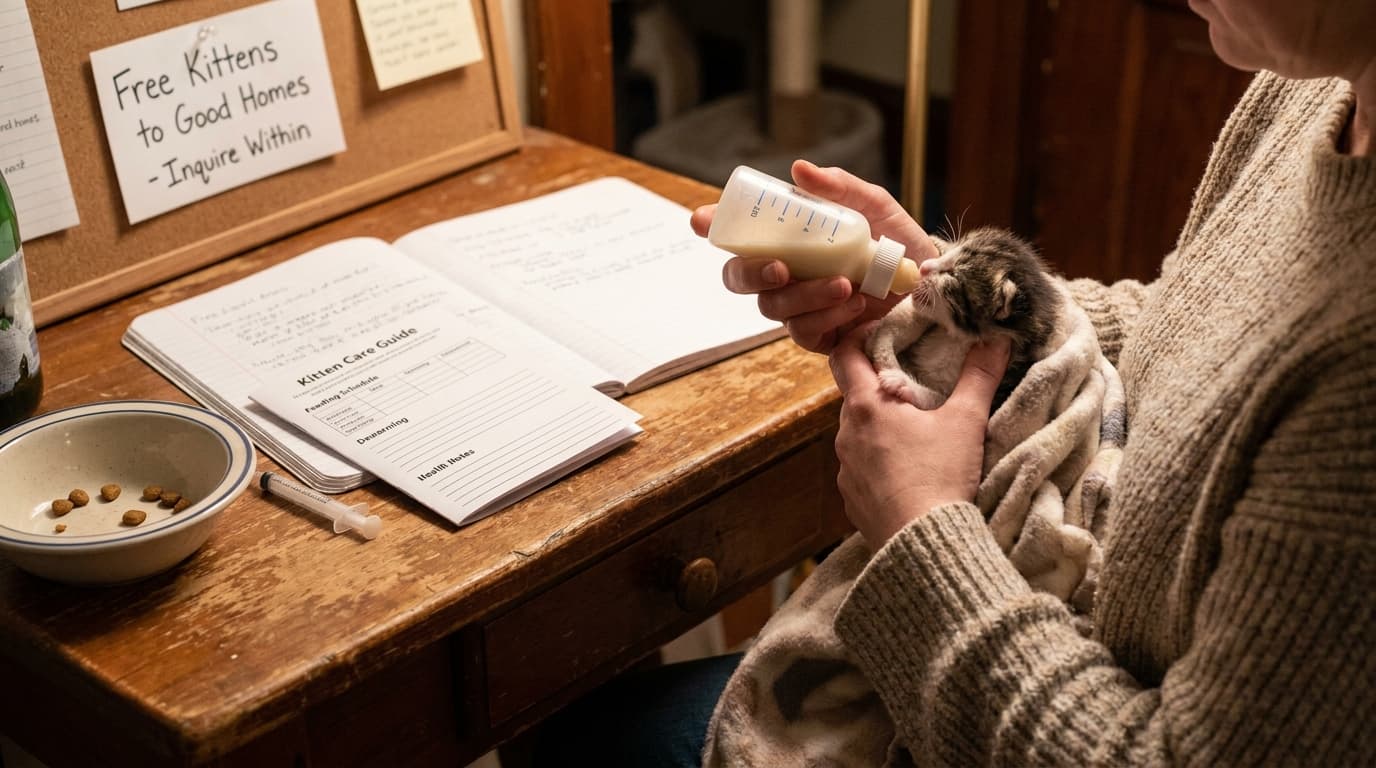
The 'free to good home' category of kitten acquisition carries specific health risks that are worth understanding before choosing a source. Kittens offered free through social media, classified ads, or informal neighborhood networks have almost universally received no veterinary screening. They have not been assessed for fecal parasite burden, tested for FIV or FeLV, or had any deworming. They may have been weaned too early — before eight weeks — which produces persistent behavioral problems and immune deficiencies that affect adult health. None of this is the kittens' fault, and many of these kittens are perfectly healthy. But the owner absorbs all of the diagnostic and treatment costs of finding this out.
Rescue organizations and shelters perform a specific set of screenings before adoption that reduce the new owner's immediate veterinary burden. Standard practices at reputable rescues include fecal testing and deworming treatment, age-appropriate vaccination, FIV/FeLV testing for kittens old enough to test reliably, flea treatment, and a general health examination. The adoption fee at a rescue — typically $50 to $150 — covers these services and is almost universally less than paying for them independently at a veterinary clinic. The cost differential makes rescue adoption economically advantageous compared to acquiring a 'free' unscreened kitten, even before accounting for the reduced risk of finding an undetected illness.
The age threshold of eight weeks is a non-negotiable minimum for adoption, and it is worth asking specifically about at any source. Before eight weeks, kittens are still receiving immune education through queen's milk antibodies and social learning through sibling interaction. Kittens separated before eight weeks show higher rates of play aggression, fearfulness, and immune challenges in adult life. The behavioral and health consequences of early weaning are well-documented, and the additional two to three weeks of foster care required to reach the appropriate age is a standard responsibility of ethical rescue programs.
When evaluating any kitten source — rescue, shelter, or private rehoming — the specific health questions to ask: Has the kitten been dewormed, and what products were used on what dates? Has a fecal examination been performed, and what were the results? What vaccinations have been given and when are boosters due? Has the kitten been tested for FIV/FeLV? At what age was the kitten weaned? Reputable sources answer these questions readily and provide written documentation. Sources that cannot answer these questions are providing a kitten without medical history, which means the first veterinary appointment becomes a baseline assessment rather than a follow-up.
**Key insights:
- Use Petfinder, Adopt-a-Pet, or direct contact with local rescues to find screened kittens — the adoption fee covers health services that cost more than the fee if paid individually.
- Require written documentation of deworming dates, products used, and vaccination history before completing any adoption.
- Do not adopt kittens under eight weeks from any source — early weaning causes immune and behavioral problems that affect adult health.
- Ask specifically about FIV/FeLV testing results — these are common feline viruses with no cure, and a negative test result at adoption prevents introducing infected cats to existing healthy cats.
- For found stray kittens, check whether the mother is present before intervening — a mother cat who is temporarily absent provides immune, nutritional, and behavioral development that no formula replicates.
Building a Healthy Foundation in the First 12 Weeks
The first 12 weeks of a kitten's life are the period with the highest density of critical care decisions. Deworming, vaccination, nutrition, socialization, and environmental adjustment all occur simultaneously during a developmental window that does not reopen. The decisions made during this window — or not made — produce the health and behavioral baseline that the cat carries into adulthood.
The single most impactful structural investment is a veterinary relationship established in the first week of bringing the kitten home. A first wellness examination within the first week establishes a health baseline, initiates the vaccination and deworming schedule under veterinary guidance, identifies any issues that require early intervention, and establishes the vet-owner relationship that supports good care decisions across the kitten's life. Vets who see kittens from the beginning have significantly more context for interpreting subtle health changes than those who first see a cat as an adult.
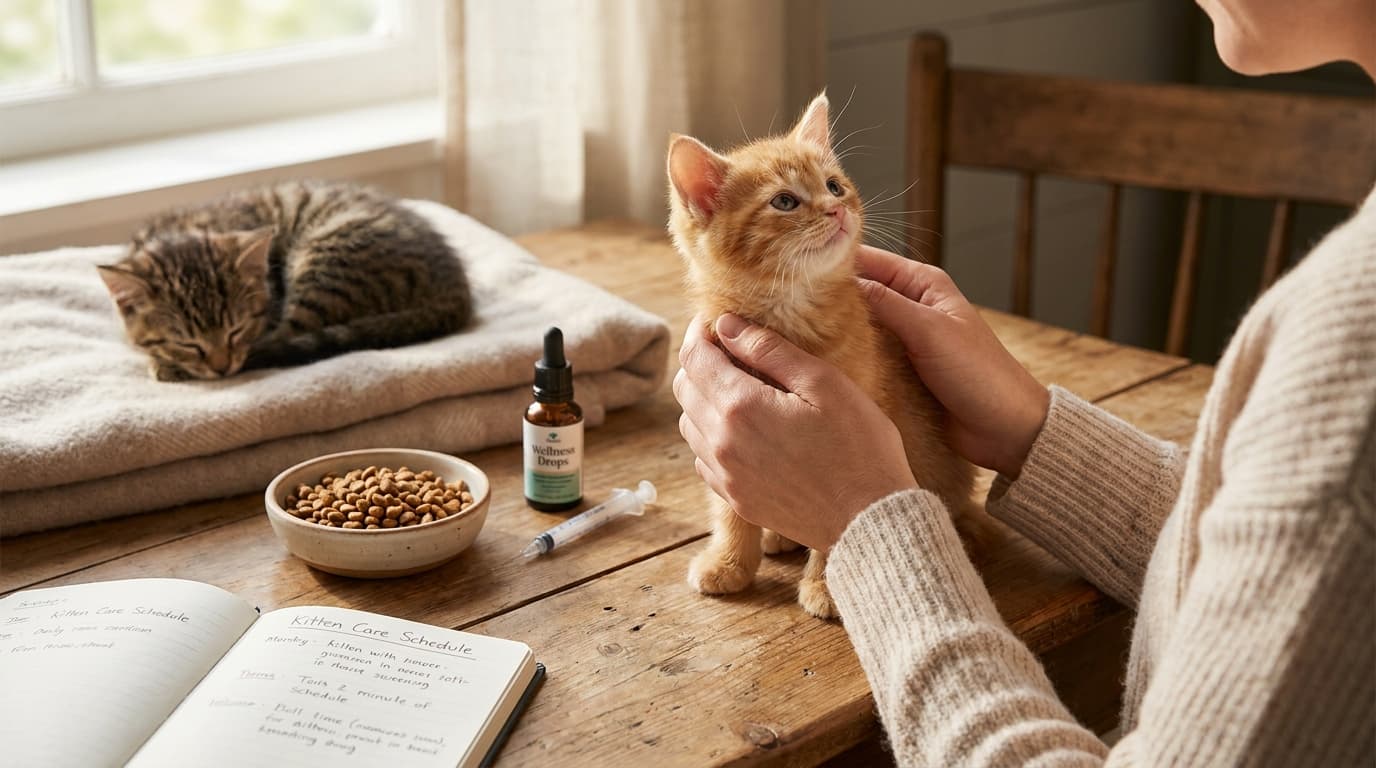
A practical calendar for the first 12 weeks: vet visit week one, deworming week two to three, deworming week four to five, FVRCP first booster weeks six to eight, deworming week six to seven, FVRCP second booster weeks nine to twelve, deworming week nine to ten, FVRCP third booster (and rabies if locally required) weeks twelve to sixteen, transition to monthly prevention. This calendar handles the core medical requirements. Behavioral development runs in parallel: socialization to handling and novel stimuli during weeks three through nine is the primary behavioral window, and exposure to varied people, sounds, surfaces, and gentle handling during this period produces adult cats that are comfortable in the human environments they will occupy.
**Key insights:
- Schedule the first vet appointment within the first week of bringing the kitten home — this establishes baseline health status before any problems develop.
- Use a written calendar to track deworming dates, vaccine due dates, and transition dates — the first 12 weeks involve multiple scheduled care events happening close together.
- Prioritize socialization handling between weeks three and nine — gentle, positive handling by multiple people during this window produces adult cats that are comfortable with examination and contact.
- Watch for weight gain of approximately 100 grams per week in healthy kittens — consistent weight gain is the most reliable indicator of nutritional adequacy in this age group.
- Keep all deworming and vaccination records — future vets, boarding facilities, and household decisions about introducing other animals all require this documentation.
Frequently Asked Questions
Yes, and this is the most important conceptual correction for indoor kitten owners. The primary transmission routes for roundworms — transplacental infection and transmission through nursing — occur entirely before or during the kitten's first weeks of life, regardless of the home environment the kitten enters afterward. More than 75 percent of kittens carry roundworms as a consequence of these transmission routes. Indoor living after birth does not retroactively prevent infections that were established before or at birth.
Secondary transmission routes also reach indoor environments: roundworm eggs are shed in infected cat feces and can survive in soil for years. These eggs are transmitted to humans and indoor environments on shoes, clothing, and gardening equipment. While a kitten living strictly indoors with no soil contact has a lower secondary exposure risk than a free-roaming outdoor cat, the primary transmission risk from the queen is the dominant route in kittens under 12 weeks, making indoor status largely irrelevant to the deworming schedule decision for this age group.
Wait and observe before intervening. Queens frequently leave their litters for extended periods — up to several hours — to hunt, rest, or move the litter to a new location. A kitten that appears healthy, is not injured, and is in a location where the mother could return is not an orphan requiring intervention during normal waiting periods. Alley Cat Allies recommends a waiting period of several hours with distant observation before concluding the mother has abandoned the litter.
If the kitten is clearly injured, if the waiting period has passed without maternal return, or if the kitten is in immediate danger, the intervention priorities in sequence are: warm the kitten before anything else, then assess hydration and energy status, then source KMR or an emergency formula, then contact a local rescue organization. Rescue organizations often have nursing queens available for fostering, which is significantly better for the kitten's immune development and social learning than bottle feeding. Contacting them early in the process is better than after a feeding routine is established.
The mechanism is digestive enzyme inactivation. Digestive enzymes — the biochemical catalysts that break down proteins, fats, and carbohydrates in food — are temperature-sensitive and function optimally at normal body temperature. When a neonatal kitten's body temperature drops below the normal range (35 to 36 degrees Celsius in week one), enzymatic activity slows dramatically. Formula introduced into a cold stomach does not get digested — it sits, ferments from bacterial action, and produces gas accumulation that causes bloating, pain, and in severe cases, intestinal rupture.
The second mechanism is aspiration risk. A hypothermic kitten has reduced muscle tone and coordination, including the musculature controlling swallowing and airway protection. The suck-swallow-breathe sequence that allows safe bottle feeding requires coordinated muscular control. A cold, weakened kitten cannot reliably coordinate this sequence, making aspiration of formula into the trachea and lungs more likely. Aspiration pneumonia in a neonatal kitten is almost universally fatal without intensive veterinary intervention.
Two home assessments provide useful information. The skin tent test: gently pinch the skin between the shoulder blades, lift slightly, and release. In a well-hydrated kitten, the skin returns to position immediately — within less than one second. In a dehydrated kitten, the skin returns slowly or remains tented for a moment before flattening. Mild dehydration produces a return time of one to two seconds; moderate dehydration produces two to four seconds; the skin staying tented beyond four seconds indicates severe dehydration requiring immediate veterinary care.
The gum assessment: the gums should be pink and moist. Press a finger firmly against the gum surface, release, and observe the white blanch return to pink — this should occur within one to two seconds (capillary refill time). Tacky or dry gum surface indicates dehydration. Very pale or white gums indicate anemia or shock. Blue-tinged gums indicate oxygen deficiency and are an emergency regardless of hydration status. For kittens under 12 weeks, any dehydration assessment that suggests more than mild dehydration (skin return slower than one second) warrants same-day veterinary contact — their fluid reserves are small enough that moderate dehydration becomes severe quickly.
Conclusion
The core principle running through every topic in this guide is that the first 12 weeks of kitten life are not the period to delay, estimate, or improvise. The deworming schedule is specific because worm biology is specific. The food transition protocol is seven to ten days because that is the microbiome adaptation timeline. Newborn feeding requires precise volumes because too little produces hypoglycemia and too much produces aspiration. Large-breed kittens need large-breed formulations because their growth timeline differs from standard cats. These specifics are not arbitrary rules — they are grounded in physiological realities that produce predictable consequences when ignored.
The practical outcome of getting these basics right is a kitten that enters adulthood with adequate immune development, appropriate skeletal and muscular foundation, a healthy gut microbiome, and behavioral patterns established during the socialization window that make the cat comfortable in human environments. These foundations are established in the first 12 weeks or not at all, which is what makes this developmental period disproportionately important relative to its brevity.
Two concrete next steps: if you have a kitten under 12 weeks and are not on a documented deworming schedule, contact your vet today to initiate one. If you are considering adopting and have not yet done so, contact a local rescue organization and ask specifically for their health screening documentation practices — the answer will tell you what care you are taking on and what they have already handled. Both of these take under 10 minutes and directly affect the kitten's health trajectory.
Send it to someone who should read it next.

PurrScript Editorial Team
Editorial Team
PurrScript's in-house editorial team. We research, write, and review every guide using established veterinary and behavioral resources, and update articles as best practices evolve.
View all articles