When Do Kittens' Eyes Change Color? A Guide to Those Early Milestones
Did you know all kittens are born with their eyes shut tight and a secret hidden behind those lids? When they finally peek out at the world around day seven,...

PurrScript Editorial Team
Editorial Team
When Do Kittens' Eyes Change Color? A Guide to Those Early Milestones
Did you know all kittens are born with their eyes shut tight and a secret hidden behind those lids? When they finally peek out at the world around day seven, every single one of them starts with a signature shade of baby blue. It is one of the most magical parts of watching a tiny ball of fur grow up, but that blue is rarely there to stay.
If you are wondering when do kittens eyes change color from blue to their permanent hue, you are likely seeing your pet hit some big milestones. This transition usually starts around week seven as their bodies begin producing pigment. Understanding these shifts helps you track their health, from Ragdoll kitten coat color development to knowing exactly when they are ready for their first bowl of real food.
We are going to walk through the timeline of those changing eyes and help you figure out how to tell kitten gender at home. You will also find tips on weaning kittens from formula to wet food and picking the best cat litter for kittens under 6 months. It is everything you need to know to keep your little one thriving through these fast-paced early weeks.
The Big Kitten Glow-Up: Tracking Those First Major Milestones
Watching a kitten grow is like watching a movie on fast-forward. One day they are tiny, helpless puffballs weighing as little as 50 grams, and the next, they are exploring every corner of your living room. These early weeks are a blur of milestones, but for most new owners, nothing is more fascinating than the mystery of their changing eyes. It is a rapid glow-up that happens right before your eyes.
Every single kitten starts life with those signature cloudy blue eyes. This is not because they are all destined to be blue-eyed adults, but because their eyes lack pigment at birth and refract light differently. You will see them start to peek at the world between 7 and 10 days, though their vision stays pretty fuzzy at first. The real magic happens around the 7-week mark. That is when the blue starts to fade and their true, permanent eye color begins to show up.
As their eyes settle, their bodies are busy with other big moves, like weaning from formula to wet food by week six. While they might see shadows early on, they do not actually get full visual clarity until they are about 16 weeks old. Tracking these shifts helps you stay ahead of their needs as they transform from a tiny neonate into a confident, healthy cat.
Key insights:
- Kittens are born with blue eyes because melanin has not yet developed in the iris.
- True eye color typically begins to emerge at 7 weeks and stabilizes by 16 weeks.
- Weight and dental growth are often more reliable than eye color for guessing a kitten's exact age.
The Blue Eye Phase: Why Every Kitten Starts the Same
Every kitten starts life with a bit of a mystery in their gaze. If you have ever looked at a litter of newborns, you have seen those signature cloudy blue eyes. But here is the thing, those eyes are not actually blue because of pigment. At birth, kittens are incredibly tiny and usually weigh between 50 and 150 grams, which is about the same as a small lemon. They are born with their eyes tightly shut to protect their developing vision from the light. At this stage, they are essentially blank slates that lack any of the melanin that will eventually define their adult look.
So, why the blue? It is all about physics and how light moves. Think of it like the sky or a deep pool of water. When a kitten finally opens their eyes, which usually happens between day 7 and 10, light hits the clear structures of the eye and scatters. Because there is no pigment to absorb the light yet, the blue wavelengths are the ones that bounce back at you. It is a beautiful optical illusion that lasts only a few weeks while the body focuses on more important growth milestones like gaining weight in predictable increments of about 100 grams per week.
As the Kitten Lady often notes, these early days involve massive transformations. While the blue eyes are the most visible change, the kitten is also developing their senses and starting to explore their surroundings. This blue eye phase is just the beginning of a very busy developmental schedule that eventually leads to the permanent color you will see in your adult cat. For now, it is a vision-first situation where the body cares more about basic functionality than aesthetics.
Around the seven-week mark, the ink finally starts to flow into the iris. This is when specialized cells called melanocytes begin their work of producing melanin. If your kitten is destined to have green eyes, these cells produce a small amount of pigment. If they are going to have copper or gold eyes, the melanocytes ramp up production and create a much higher density of melanin. It is a gradual shift, and you might notice the blue getting muddy or greyish before the final hue breaks through. This transition happens right around the time they are finishing their weaning onto wet food.
By the time a kitten reaches 16 weeks, the color is usually set for good. This timing is no accident because this is also when they achieve full ocular functionality. Dr. Marta Vidal-Abarca points out that it is a vision-first and color-second situation for cats. While they can see shadows and movement at one month, they do not have that sharp predatory focus until this four-month milestone. It is a fascinating overlap where their physical beauty and their survival instincts reach the finish line at the exact same time.
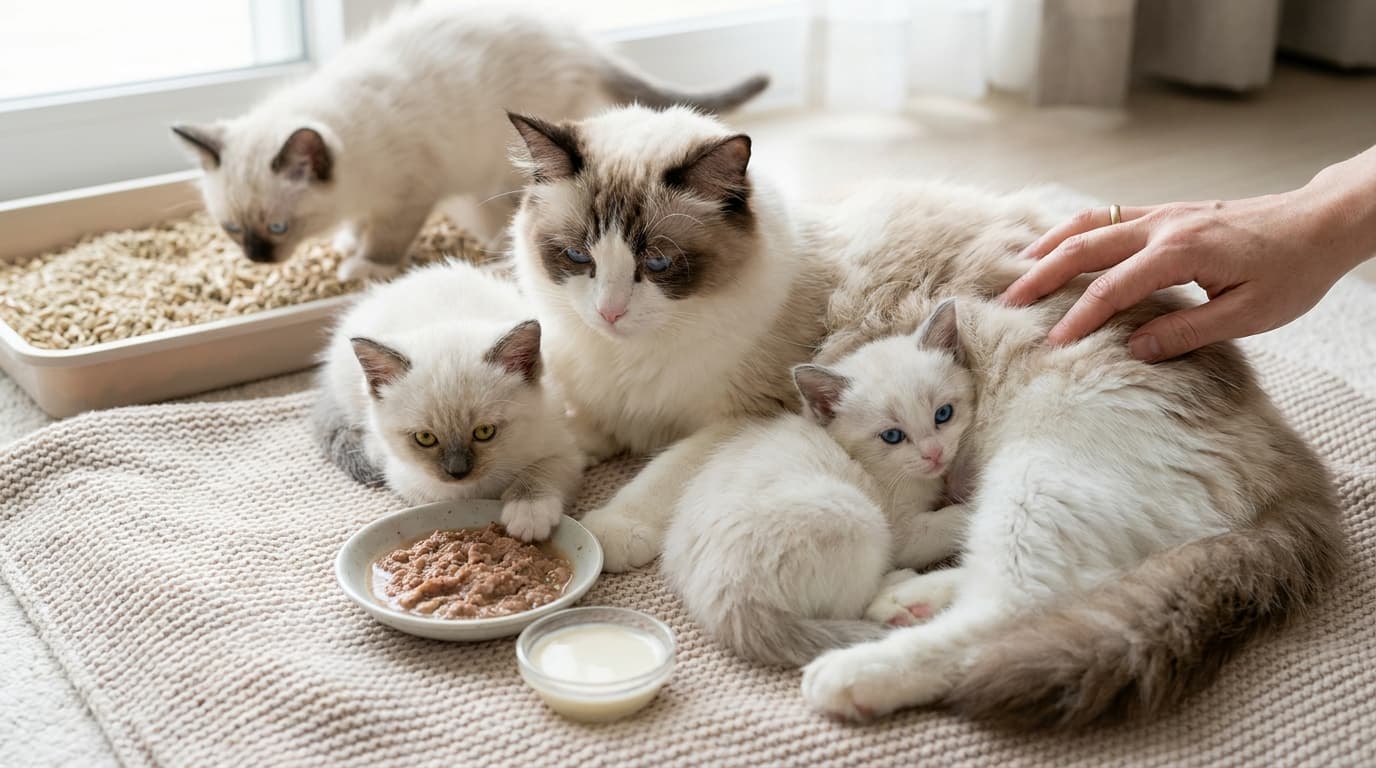
But wait, what about the cats that never lose that baby blue? Breeds like Ragdolls, Siamese, and Birmans are the famous exceptions to the rule. Their permanent blue eyes are not a sign of developmental delay. Instead, they are actually a result of specific genetics related to albinism. In these breeds, the genes that limit melanin production in the coat also limit it in the eyes, ensuring they keep that sapphire look for life rather than transitioning to gold or green.
Temperature plays a surprising role in how these cats look as they grow. You will notice Ragdolls develop points, which are darker patches of fur on their ears, paws, and tails, because those areas are slightly cooler than the rest of their body. Their blue eyes stay blue because the pigment-producing cells never fully colonize the iris due to these specific genetic traits. It is a striking trade-off that makes these breeds stand out in the feline world while their coat color continues to develop alongside their eyes during those first few months.
Key insights:
- Vision development precedes the stabilization of eye color in kittens.
- Adult blue eyes in specific breeds like Ragdolls are a result of albinism traits rather than developmental delay.
- Weight and dental eruption are the most reliable indicators for determining a kitten's age during the first 8 weeks.
The 7-Week Switch: When the Real Color Shows Up
Around week seven, the 'baby blue' phase starts to wrap up. This is when melanocytes - the cells responsible for pigment - finally get to work. Before this, your kitten’s eyes looked blue mostly because of how light hits the eye without any pigment there to stop it. It is a bit like looking at a clear sky; the blue is a trick of the light rather than an actual color. Once those cells wake up, the real transformation begins.
The actual shade depends entirely on how much melanin these cells produce. Think of it as a slow-motion reveal. A small amount of pigment creates green eyes, while a heavier concentration results in those rich copper or gold tones. It is a 'vision-first, color-second situation,' as Dr. Marta Vidal-Abarca explains. Their eyes need to be fully functional before the final 'paint job' is finished, making the wait even more exciting for new pet parents who are eager to see their kitten's true look.
But do not expect a sudden overnight swap. While the transition kicks off at week seven, the color is not truly 'set' until about 16 weeks. By then, your kitten has reached full ocular functionality and their adult appearance. So, if you are watching those eyes and wondering when do kittens eyes change color from blue for good, just be patient. You have until that four-month milestone to see the final, permanent result that stays with them for life.
Key insights:
- Melanocytes begin producing pigment around the 7-week mark.
- The intensity of melanin determines if eyes turn green, gold, or copper.
- Eye color is generally considered permanent by 16 weeks of age.
The Ragdoll Exception: Why Some Cats Stay Blue-Eyed
Ever wonder why some cats skip the eye color change phase entirely? While most kittens swap their baby blues for gold or green starting around seven weeks, Ragdolls are a major exception. They keep those striking blue eyes because of a specific form of temperature-sensitive albinism. This genetic quirk limits the production of melanin - the pigment responsible for coloring both fur and eyes - keeping the iris light even as the kitten matures.
The way this works is actually tied to their body heat. Ragdoll kittens are usually born white, but their "points" - the ears, tail, and paws - darken as they grow. This happens because those extremities are cooler than the rest of the body, which allows the pigment to finally develop in those spots. However, because the eyes stay at a consistent, warm internal temperature, the pigment-producing cells never get the signal to darken the iris. The blue you see is actually just light refracting through the clear layers of the eye.
So, while other breeds are busy transitioning to their permanent adult shades, Ragdolls stay blue-eyed for life. As Dr. Marta Vidal-Abarca points out, it is a "vision-first, color-second" situation. Even though their eyes reach full visual functionality by 16 weeks, that deep blue remains a permanent hallmark of the breed rather than a developmental delay. It is a beautiful example of how genetics can override the typical feline growth timeline.
Key insights:
- Ragdolls retain blue eyes due to albinism-related genes that limit melanin production.
- Coat points darken in cooler body areas while eyes stay blue due to internal warmth.
- Adult blue eyes in this breed are a genetic trait, not a sign of immature vision.
Moving to the Big Kid Bowl: The Weaning Journey
Just when you have finally mastered the art of the bottle, your kittens will likely start showing interest in your own dinner plate. This marks the start of the 'mush phase,' a messy but necessary bridge between liquid formula and solid food. While some kittens might try to nibble earlier, the sweet spot for starting this transition is usually between 5 and 6 weeks of age. By this point, their bodies are ready for more than just milk, and their tiny mouths are finally catching up to their appetites.
The timing of this switch is not random; it is tied directly to their physical development. If you take a peek inside their mouths, you will see premolars emerging right around week five, followed by molars at week six. These new teeth are the tools they need to handle actual textures. According to developmental milestones, weight and dental eruption are the most reliable indicators of age during these first two months. Since kittens typically gain about 100 grams per week, they need the nutrient density that high-quality wet food provides to keep up with their growth spurts.
One thing many owners overlook during this switch is hydration. When kittens are on a strictly liquid diet, they get all their water from their formula. Once they start eating solids, they might not realize they need to visit a water bowl separately. To help them out, follow the current trend of wet-food-first weaning. By keeping their new food very moist, you ensure they stay hydrated while their digestive systems adjust to the big kid bowl. Think of it as a transition from soup to stew before they ever see a piece of dry kibble.
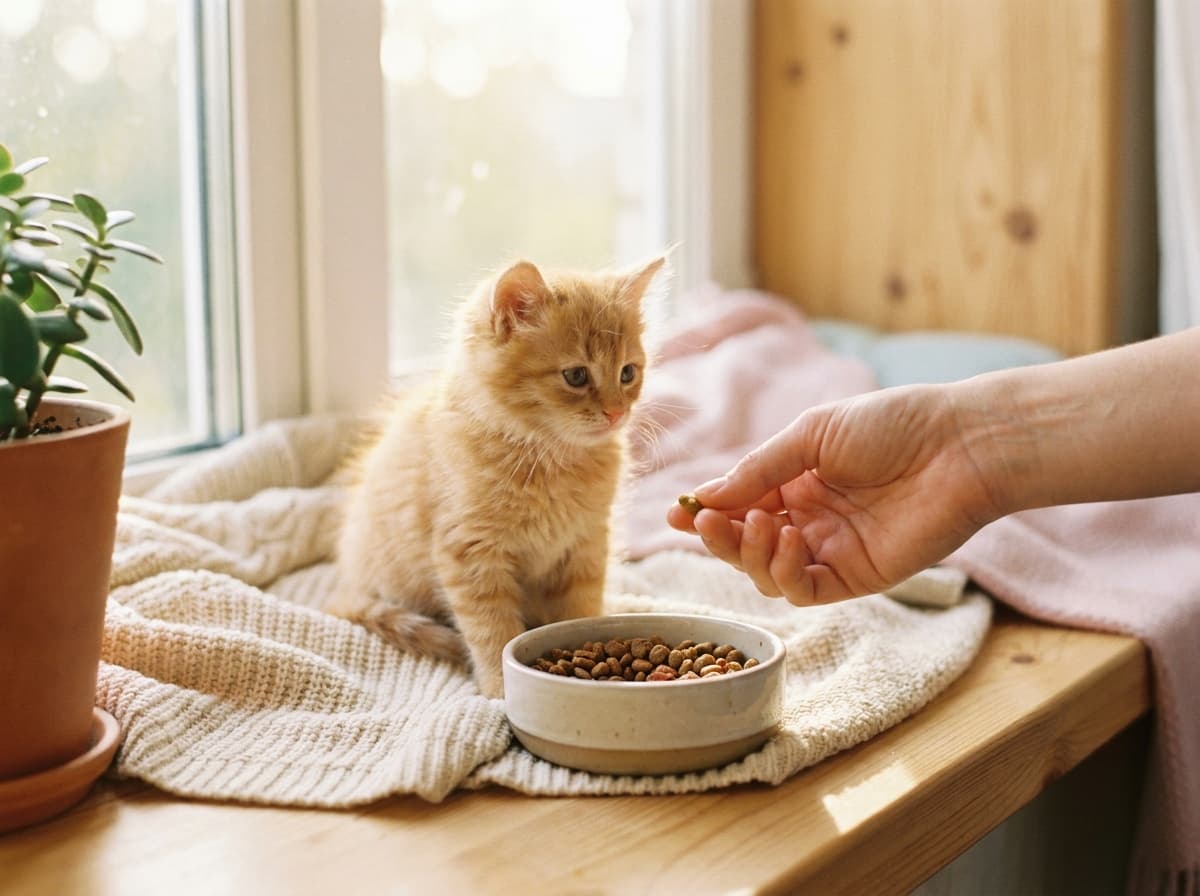
When you are ready to make that first batch of 'gruel,' think of it more as an art than a science. You want to mix a high-quality kitten wet food with their familiar warm formula until it reaches the consistency of thin oatmeal. This familiar scent helps them feel safe trying something new. Don't be surprised if they walk right through the bowl or end up with more food on their forehead than in their belly. If you have a messy eater who seems confused, try offering a bit of the mixture on your finger first. Once they get a taste of that new texture, they usually dive right in, even if they choose to wear half of it.
Key insights:
- Dental milestones, specifically the appearance of premolars at 5 weeks, are the best signal that a kitten is ready for solid food.
- Maintaining a high moisture content in early solid meals prevents dehydration as kittens move away from a 100% formula diet.
- Consistent weight gain of approximately 100 grams per week is the gold standard for tracking healthy weaning progress.
The 'Gruel' Method: Making the First Batch
Your kitten is likely five weeks old and starting to act like a tiny cat. Their eyes might still be blue, but their appetite is definitely changing. This is when we start weaning kittens from formula to wet food. It is a messy transition because kittens do not just eat the food, they usually wear it too. Think of this as the gruel stage where you bridge the gap between liquid and solid meals.
To make the first batch, mix their formula with a bit of high-quality wet food until it looks like thin oatmeal. Use a shallow plate so they do not have to dive their whole face in. Since most kittens are fully weaned by six weeks, this step is vital for getting them the calories they need to hit those 100-gram weekly weight gains.
Why do this now? Around five weeks, those little premolars are starting to pop through. Their bodies are ready for more fuel even if their permanent eye color is still a few weeks away from appearing. If you have a messy eater, try dabbing a bit of the mix on their nose. Once they lick it off, they usually dive in. It is all part of the big milestones before they reach full visual function at sixteen weeks.
Key insights:
- Weaning typically begins around week five when premolars emerge.
- The gruel method helps kittens transition to solids while maintaining hydration.
- Steady weight gain of 100 grams per week is a key indicator of weaning success.
Boy or Girl? How to Tell Without a Vet Trip
So, you have a tiny ball of fluff and you are dying to know if it is a boy or a girl? It is a classic kitten owner dilemma. When they are newborns, weighing only about 50 to 150 grams, everything is so small that it is mostly guesswork. While their eyes start opening around day 10, you really want to wait until they are at least 3 or 4 weeks old before you try to play detective. By this point, they have grown enough that the physical differences actually start to show up clearly.
The easiest way to tell is by looking for punctuation marks. Lift the tail gently and look at the distance between the two openings. A male kitten usually looks like a colon (:), with a notable gap between the anus and the penile opening. This space is where his testicles will eventually drop. A female kitten, on the other hand, looks more like a semicolon (;) or an upside-down exclamation point. Her openings are much closer together, with the lower one appearing as a small vertical slit.
One of the biggest mistakes new owners make is looking for parts that just are not there yet. Male anatomy does not become obvious for quite a while, so if you are waiting to see something prominent, you will just end up confused. Also, try not to rush it. Since kittens do not even start their eye color transition until 7 weeks and are not fully weaned until 6 weeks, you have plenty of time to figure it out. If you are not sure today, just wait a week. As they put on their typical 100 grams of weight per week, the punctuation becomes much easier to read.
Key insights:
- Male kittens show a wider gap between openings, resembling a colon.
- Female kittens have openings closer together, resembling a semicolon.
- Waiting until 3-4 weeks of age makes identification significantly more accurate.
Litter Box Basics for Tiny Paws
You have probably noticed your kitten’s eyes are still that misty blue and they are just starting to wobble around on tiny legs. At this stage, choosing the right litter is a safety decision rather than just a cleaning preference. While clumping litter is great for adult cats, it is a big risk for kittens under 6 months old. Kittens are like tiny toddlers who explore everything with their mouths. If they swallow clumping clay, it can expand inside their small bodies and cause dangerous blockages. This is why sticking to safer materials is so important during these first few months of life.
So, what should you use instead? The best cat litter for kittens under 6 months involves non-clumping options like paper pellets or pine. These do not swell up if a curious kitten takes a nibble, and they are much gentler on sensitive paws. You also need to make sure they can actually get into the box. Since a newborn kitten weighs as little as 1.8 ounces and grows in small 100-gram increments, those high-walled boxes look like mountains to them. A low-entry box or even a shallow plastic tray helps those short legs climb in without any trouble.
This phase moves quickly. By the time they hit 6 weeks, they are usually weaning from formula to wet food and their permanent eye color is about to start peeking through. You can even check their teeth to guess their age. If you see those tiny premolars at 5 weeks, you know you are just a few months away from being able to switch to standard litter safely. For now, keep things simple and low to the ground so your kitten can focus on the big job of growing up and staying healthy.
Key insights:
- Weight and dental growth are the most reliable ways to track a kitten's age and readiness for new litter types.
- Non-clumping paper or pine pellets prevent internal blockages caused by the natural curiosity of young kittens.
- Low-entry boxes are essential for kittens who are still developing the coordination and strength to climb.
Age Detection: Using Teeth and Weight as a Ruler
Ever wonder how old that tiny ball of fur actually is? While eye color is a famous clue, it is not always the most precise tool in your kit. If you really want to know where a kitten stands in their development, you have to look at two things: their weight and those microscopic teeth. Think of these as the ruler for neonatal growth. For most kittens, weight is the gold standard because it follows a remarkably steady pattern during those first two months of life.
Here is a simple rule of thumb to remember: a healthy kitten usually gains about 100 grams every single week. Since they start life weighing between 50 and 150 grams, you can do some quick math to estimate their age. If a kitten weighs around 400 grams, they are likely four weeks old. This is not just for curiosity. Tracking weight is the best way to catch health issues early. If that scale does not budge for a day or two, it is a big signal that something is wrong, even before they start acting sick.
But what if you do not have a scale handy? That is where the tiny rice teeth come in. If you gently peel back their lips, you might see small incisors poking through around week three. By week four, those sharp little canines - the vampire teeth - make their debut. By the time they have premolars at five weeks and molars at six, they are usually ready to start the transition from formula to wet food. It is a fast-paced journey, but these physical markers make it easy to tell if your kitten is hitting those big milestones on time.
Key insights:
- A steady weight gain of 100 grams per week is the most reliable indicator of a healthy, growing kitten.
- Dental milestones are predictable: incisors appear at 3 weeks, while canines emerge at 4 weeks.
- Weight and teeth provide a more accurate age estimate than eye color alone during the first two months.
Wrapping It Up: Enjoying the Fast-Paced Kitten Days
Those first four months go by in a blur of tiny paws and big changes. You start with a newborn weighing barely five ounces, and suddenly their eyes have shifted from that initial blue to their permanent adult shade. By week 16, they’ve reached full visual functionality. It's a lot to track, from the first tooth appearing at three weeks to the day they finally trade formula for wet food around week six.
With everything moving so fast, regular vet visits are essential. It is about more than just shots; it is about making sure growth stays on track. Tracking their weight - which usually jumps by about 100 grams every week - is one of the best ways to catch health issues early. Your vet can also confirm their dental eruption is on schedule, as those tiny teeth tell a clear story about their development.
The work you put into weaning and daily care does more than just help them grow; it builds a bond that lasts a lifetime. These early milestones are the foundation of your life together. Take plenty of photos while they are still small because they certainly won't stay this size for long!
Frequently Asked Questions
Usually, the answer is no. By the time your kitten reaches 6 months old, their eye color is almost always permanent. Most of the magic happens much earlier, starting around 7 weeks when the blue they were born with begins to fade and their adult color settles in.
By about 16 weeks, their eyes are fully functional and the color is stable. If you see a major color shift after the 6 month mark, it is actually a good idea to check in with your vet. While coat colors on some breeds can keep changing, eyes generally stay put once they hit that half-year milestone.
Then you likely have a cat with heterochromia, and it is honestly pretty striking! This happens when the pigment called melanin does not spread evenly to both eyes. It is most common in white cats or specific breeds, and it usually means one eye stays blue while the other turns green, gold, or copper.
As long as your kitten is acting normal and hitting their growth goals, there is no need to worry. It does not affect their vision at all. It just gives them a unique look that makes them stand out from the crowd.
Actually, you want to see that scale moving up, not down. While a tiny plateau might happen for a day as they switch from formula to wet food, a healthy kitten should generally gain about 100 grams every single week. If they start losing weight, it is usually a sign that they are not getting enough calories or might be feeling sick.
Remember that weaning is a big change for their bodies. If your kitten is not interested in the new food, try mixing a bit of warm water or formula into the wet food to make it more appealing. Keeping a close eye on their weight is the best way to make sure they are hitting those important growth milestones.
It is a good idea to wait until your kitten is at least 4 months old before you try clumping litter. Before that age, kittens are very curious and often try to eat their litter. Because clumping litter is designed to expand and harden when it gets wet, it can cause a dangerous blockage in their tiny stomachs if they swallow it.
Until they are a bit older and past the phase where they taste-test everything, stick with non-clumping options like paper or pine pellets. It is much safer for their developing systems and gives you one less thing to worry about while they are still small.
Conclusion
Watching a kitten grow is like watching a movie on fast-forward. One minute they are tiny, blue-eyed bundles, and the next they are figuring out how to eat wet food and use a litter box for the first time. Knowing when do kittens eyes change color from blue is just one part of the story. These early milestones, from those first tiny teeth to the way a Ragdoll kitten develops its coat color, all point to one thing: your kitten is becoming a real cat.
These weeks are often messy and a bit chaotic, but they are also when the most important growth happens. Whether you are checking for gender at home or making that first batch of weaning gruel, you are doing more than just chores. You are building a foundation of health and trust. It is fun to see their true eye color finally set, but it is even better to see their unique personality start to shine through.
Your best move now is to keep a camera ready and a scale handy to track their weekly gains. Enjoy these fleeting days of wobbly steps and messy faces while they last. The baby blue eyes might fade by week sixteen, but the bond you are creating right now is going to last a lifetime.
Send it to someone who should read it next.

PurrScript Editorial Team
Editorial Team
PurrScript's in-house editorial team. We research, write, and review every guide using established veterinary and behavioral resources, and update articles as best practices evolve.
View all articles