Why Is My New Kitten Not Eating and Other Red Flags to Watch For
A healthy kitten needs to gain between 10 and 15 grams of weight every single day, and missing even one day of growth is a major red flag. If you're...

PurrScript Editorial Team
Editorial Team
Why Is My New Kitten Not Eating and Other Red Flags to Watch For
A healthy kitten needs to gain between 10 and 15 grams of weight every single day, and missing even one day of growth is a major red flag. If you're currently asking why is my new kitten not eating, you should know that these tiny animals have almost zero physical reserves to fall back on. A small issue can turn into a fatal situation in just a few hours.
The stakes are incredibly high because a kitten's blood sugar can drop to lethal levels if they skip just two meals. Most people don't realize that a simple cold can kill their sense of smell, making them stop eating entirely and leading to a rapid physical crash. If your kitten isn't gaining weight or seems less active than usual, you're dealing with a potential emergency.
This article goes beyond basic tips to explain the biology of why kittens fail to thrive and how to spot silent signs of distress that most owners miss. We use data from veterinary studies and emergency care protocols to help you tell the difference between new home nerves and serious medical red flags.
By the end of this guide, you will know how to track your kitten's health with a kitchen scale and exactly when you need to rush to the vet.
Why Is My New Kitten Not Eating and When Should I Worry?
If your new kitten isn't eating, you have a very short window before things get dangerous. Unlike adult cats who can go a day or two without food, a kitten's high metabolism means their blood sugar can drop to lethal levels after missing just two meals. You should worry the moment they skip a single feeding or if they seem lethargic, because these tiny animals have almost zero physical reserves to fall back on. This rapid decline is often called a crash, and it can happen in just a few hours if their caloric intake stops completely.
What this actually means is that waiting it out is the worst thing you can do for a young kitten. The pattern we see in neonatal care is that a minor lack of appetite quickly turns into a life-threatening emergency. According to PetMD, a healthy kitten should gain 10 to 15 grams every single day after their first day of life. If that growth stops, even for 24 hours, it is a clear sign that something is wrong internally, whether it is a viral infection or a condition like fading kitten syndrome which is most common before weaning.
Most people overlook the fact that a kitten's appetite is tied directly to their nose. If a kitten has an Upper Respiratory Infection, which is extremely common in new rescues, their nose gets congested and they lose their sense of smell. Since cats rely on scent to trigger their hunger, a stuffy nose makes food look like cardboard to them. This is why you might see a kitten sniff their bowl and then walk away. They are likely interested in eating, but their brain isn't getting the smell signal it needs to start the meal.
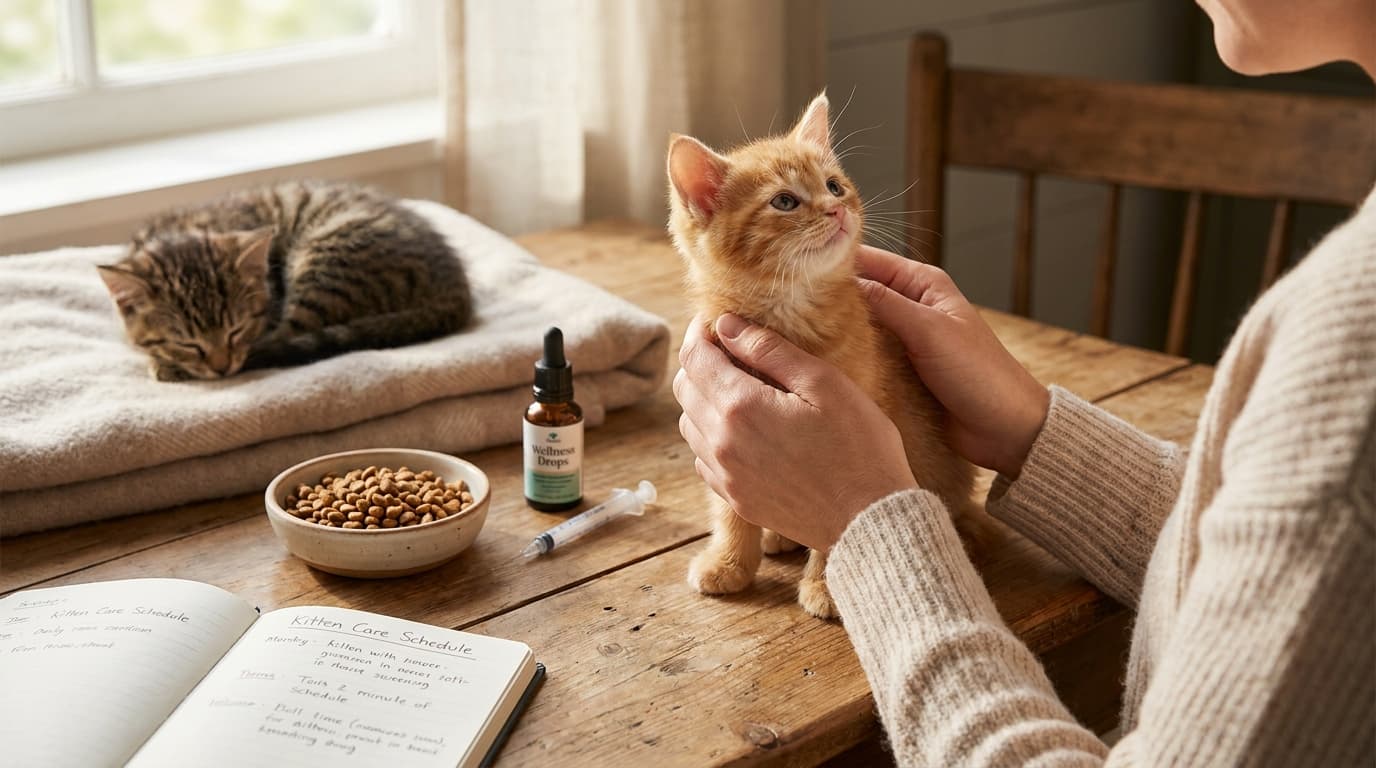
To catch these problems before they become visible, you should use the daily weight check technique. Forget about just looking at them or feeling their ribs, because a fluffy coat can hide a lot of weight loss until it is too late. Get a digital kitchen scale and weigh your kitten in grams at the same time every morning before their first meal. If the number stays flat or drops for a full 24 hour period, that is your early warning system. It is much easier for a vet to treat a kitten who has lost 5 grams than one who has already become too weak to stand.
Imagine you just brought home a tiny tuxedo kitten. He was playing an hour ago, but now he just stares at his bowl and walks away. You might think he is just picky or stressed from the move, but if you warm up some wet food for young kittens to body temperature and he still won't bite, it is time to call the vet. In this case, the warmth of the food might release enough aroma to bypass mild congestion, but if it doesn't work, he is likely dealing with a fever or nausea that requires medical intervention.
One thing most guides get wrong is the idea that a kitten will eventually eat when they get hungry enough. This is a dangerous myth that can lead to hypoglycemia. A kitten's body will actually start shutting down before they feel hungry enough to overcome a fever or a total loss of smell. While a little bit of new home stress is normal, it should never result in a total strike against food. If you are unsure, it is always better to be safe and call your vet for advice specific to your kitten's age and weight, as individual circumstances vary.
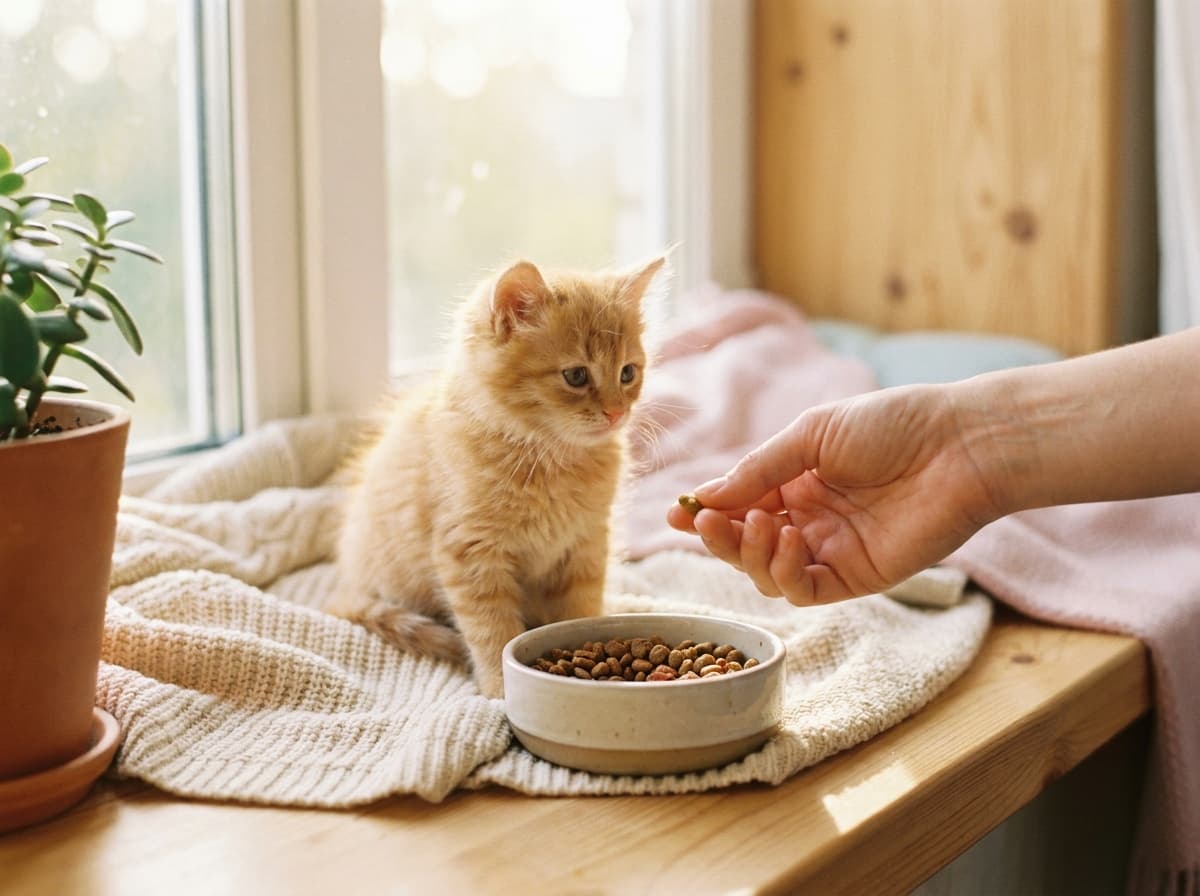
You should also keep an eye out for other red flags like sore gums from biting everything which can make eating painful during teething. If the kitten is active but hesitant, try offering food on a flat saucer instead of a deep bowl to see if that helps. However, if the lack of appetite is paired with unusual crying or hiding, those are behavioral shifts that signal real physical distress. Always consult a professional if you notice your kitten is acting unusually clingy or vocal, as these are often the first signs of pain in a small animal.
Key insights:
- Warm up wet food to body temperature to make it smell more appealing to a congested kitten.
- Use a digital kitchen scale to track weight in grams every morning at the same time.
- Call a vet immediately if a kitten skips two consecutive meals or if their weight drops for 24 hours.
- Try offering meat-only baby food without any onion or garlic powders as a high-value bribe to jumpstart their appetite.
- Check for clear or colored nasal discharge which often indicates a viral or bacterial infection that needs antibiotics.
The Daily Weight Check Technique
Using a digital kitchen scale to track your kitten's weight in grams every single morning is the most reliable way to monitor their health. This technique allows you to catch the start of fading kitten syndrome before any physical symptoms actually appear. Because kittens are masters at hiding discomfort, the numbers on a scale serve as an early warning system that something is wrong. Since individual circumstances vary, it is always worth checking with your vet for advice specific to your kitten's age and weight.
What this actually means is that weight is a leading indicator of health, while visible lethargy is a lagging indicator. By the time a kitten looks sick, they may have already lost significant ground. According to research cited by PetMD, a healthy kitten should gain 10 to 15 grams every day after their first day of life. If that number stays flat or drops for 24 hours, their high metabolism is already working against them, and they lack the physical reserves to bounce back without medical intervention.
Imagine a kitten that looks perfectly fluffy and is still batting at a feather toy in the living room. To the naked eye, he seems completely fine and active. But when you put him on the scale, you realize he has lost 8 grams since yesterday morning. Because kittens are so small, that tiny drop is a massive red flag that something is wrong internally, even if he hasn't started sneezing a lot or acting lethargic yet.
One thing most guides get wrong is focusing only on the visual look of the kitten. A kitten's fur can easily mask extreme weight loss, especially in long-haired breeds where you can't see the ribs or spine. The catch is that you must weigh them at the same time every day to account for natural fluctuations after eating or using the litter box. Don't panic over a tiny 1-gram difference, but do take action if the trend is downward or stagnant over a full twenty-four-hour period.
Key insights:
- Use a digital kitchen scale that measures in grams for the most precise tracking.
- Record the weight in a notebook or phone app every morning before the first feeding.
- Call your veterinarian immediately if the kitten's weight drops or fails to increase for 24 hours.
- Watch for invisible weight loss in fluffy kittens by relying on the scale rather than your eyes.
Subtle Signs of Illness in a Young Kitten You Might Miss
When a kitten is sick, they do not always show it with obvious symptoms like vomiting or diarrhea. Instead, look for subtle behavioral shifts that feel slightly out of character. A kitten that suddenly becomes extra cuddly or starts hiding in strange places like the litter box or under a heavy couch is often signaling physical distress. These changes are easy to overlook because they might seem like a cute personality quirk or just a sleepy day, but they are frequently the first indicators of a health crisis in a very small animal.
Kittens are biologically programmed to hide any sign of vulnerability to protect themselves from predators. Because of this, what looks like unusual clinginess is often actually a desperate search for comfort due to internal pain or a high-pitched cry for help. You have to realize that kittens have almost no physical reserves compared to adult cats. According to PetMD, a healthy kitten should gain 10 to 15 grams of weight every single day. If that growth stops or if their energy suddenly wilts, they can crash in just a few hours. This rapid decline is why monitoring behavior is just as important as checking their food bowl.
Imagine your usually playful kitten, who normally spends the afternoon chasing shadows in the sun, is suddenly nowhere to be found. You eventually find them curled up in the back of a dark closet or sleeping inside their litter box instead of their usual soft bed. This is not just a new favorite nap spot. It is a classic sign that the kitten is trying to isolate themselves because they feel weak or cold. In the wild, a sick animal hides to stay safe, and in your living room, that same instinct is a flashing red light that something is wrong.
A common mistake is thinking a kitten is safe once they have survived their first week of life. However, Fading Kitten Syndrome can strike anytime between birth and weaning, which is usually around 4 to 5 weeks of age. Many owners also miss the danger of common household items that an adult cat might handle better. For instance, a tiny nibble of a lily can cause total kidney failure, and a heavy flea infestation can cause life-threatening anemia because kittens have so little blood to lose. While doing home checks is helpful, these are strictly tools to help you decide when to seek professional help. If your kitten acts off or fails a basic health check, you should contact a vet immediately rather than waiting to see if they improve on their own.
It is important to remember that these signs are often the only warning you will get before a situation becomes critical. Because kittens have such high metabolisms, they can go from slightly lethargic to a medical emergency in the time it takes you to work a full shift. Always trust your gut if something feels wrong with your new pet's energy levels or social habits. Professional guidance is always the safest route when dealing with the fragile health of a young cat.
Key insights:
- Perform a pinch test on the scruff of the neck; if the skin does not snap back immediately, the kitten is dehydrated and needs a clinic visit for fluids.
- Track your kitten's weight daily using a digital kitchen scale to ensure they are gaining the required 10 to 15 grams every 24 hours.
- Watch for vocalizations that sound higher-pitched or more persistent than usual, as constant crying often indicates pain or thermal distress.
- Check for cold ears or paws, which can signal that the kitten's body temperature is dropping dangerously low and they need external heat support.
- Remove all lilies and toxic plants from the home immediately, as even trace amounts of pollen can be fatal to a small kitten.
Why Does My Kitten Cry Constantly at Night?
Your kitten is not crying just to keep you awake or test your patience. Most of the time, constant nighttime vocalization comes down to three basic needs: warmth, food, or company. Because kittens are essentially neonates, their cries are a survival mechanism designed to alert their mother that something is wrong. They are especially vulnerable during the first few weeks of life, a period often associated with fading kitten syndrome, where they lack the physical reserves to handle even minor environmental stress.
One of the most critical factors is thermal distress. Kittens cannot regulate their own body temperature effectively until they are several weeks old. In the wild, a cold kitten is a dying kitten, so they cry instinctively to find a heat source. If your home drops even a few degrees at night, your kitten might feel like they are in a life-threatening situation. This is not just loneliness in the human sense. It is a biological panic rooted in the need to stay warm enough to keep their metabolism functioning.
What many owners overlook is the deep connection between crying and metabolic growth. A healthy kitten should gain 10 to 15 grams of weight every single day after their first day of life. If they are not eating enough to fuel this incredibly rapid growth, they will cry from hunger almost immediately after their last meal. This constant vocalization is often the first sign of physical distress before more obvious symptoms like lethargy appear. What this actually means is that the cry is a diagnostic tool for you. If the weight is not going up, the crying is not just noise. It is a red flag that their body is struggling to keep up. Individual circumstances vary, so it is worth checking with your vet for advice specific to your situation.
Imagine you just put your kitten to bed in their new crate. The second you walk away, the screaming starts. You go back, pick them up, and they fall asleep in your hands within seconds. The moment you put them back down, the siren goes off again. This is not a behavior problem or a spoiled pet. It is a clear sign that the kitten is seeking the security and warmth of a littermate or mother. This is one reason why two kittens are actually easier than one, as they provide each other with the constant heat and heartbeat they crave to feel safe.
One thing most guides get wrong is assuming that all crying is just for attention. The catch is that crying can sometimes mask a genuine medical emergency that moves faster than you think. While most night crying is about comfort, a kitten with a distended, hard belly who will not stop screaming might be suffering from a heavy worm burden or painful gas. Similarly, if the crying is accompanied by any signs of weakness during the day, it could be a sign of flea-induced anemia. Because kittens lack the physical reserves of adult cats, these issues can escalate into life-threatening emergencies in just a few hours. Do not assume it is always just why your kitten goes wild at 2 am. If the cry sounds pained or high-pitched rather than demanding, you need to act fast.
Key insights:
- Use a snuggle puppy toy that has a simulated heartbeat to provide comfort and reduce separation anxiety at night.
- Place a safe, low-voltage heating pad under a layer of blankets to help the kitten maintain their body temperature while sleeping.
- Track your kitten's weight daily with a kitchen scale to ensure they are gaining at least 10 grams a day as a sign of health.
- Feed a small, high-calorie meal right before bedtime to prevent hunger-related wake-ups during the night.
- Check the kitten's belly for hardness or bloating, which can indicate painful gas or parasites requiring veterinary attention.
Why Is My Kitten Sneezing a Lot and Is It Just Allergies?
Sneezing in kittens is rarely just a reaction to a dusty corner or a bit of stray perfume. In the vast majority of cases, those cute little sneezing fits are actually the first sign of a Feline Upper Respiratory Infection, or URI. Most kittens are exposed to feline herpesvirus or calicivirus very early in life, often from their mother or littermates in a shelter environment. While these viruses can stay dormant for a long time, the massive life change of moving into a new home is exactly the kind of stressor that triggers a flare-up.
What this actually means is that your kitten isn't just catching a new cold from your living room. They are dealing with a viral load that has been waiting for their immune system to dip. Unlike adult cats, kittens have incredibly small physical reserves and high metabolisms, meaning a simple respiratory issue can spiral into pneumonia or permanent eye scarring in a matter of days. Most people overlook the fact that these viruses are essentially for life. Once a kitten has herpesvirus, it stays in their nerve cells, and future stress, like a vet visit or a new pet, could cause the sneezing to return. This is why managing their environment is just as important as medical treatment.
Imagine you just brought home a tiny, fluffy bundle of energy. For the first two days, everything is perfect. But by day three, you notice a few sneezes while they are playing with their toys. By day four, their eyes look a little watery and they aren't quite as interested in their best wet food for young kittens. This is the classic new home URI pattern. It isn't a sign that you have a dirty house or that the kitten is allergic to your laundry detergent. It is a sign that the kitten's body is struggling to manage its internal viral load while adjusting to a new environment. This is one reason why two kittens are actually easier than one, as having a buddy can significantly lower the stress and anxiety of a new home.
The catch is that many owners assume a kitten cold is as harmless as a human sniffle. This is a dangerous misconception that can lead to long-term health issues. While clear nasal discharge is often just a sign of a viral flare-up that might resolve with rest, any shift toward yellow or green discharge signals a secondary bacterial infection. At that point, the kitten's body is fighting on two fronts, and they likely need antibiotics to prevent the infection from reaching their lungs. If you notice your kitten squinting or if their eyes look red and inflamed, you need to act immediately. URIs are a leading cause of vision loss and corneal ulcers in young cats, which can happen much faster than you might expect.
Beyond the sneezing, you should keep a very close eye on their overall vitality and growth. A healthy kitten is a growing machine, and PetMD notes that they should be gaining 10 to 15 grams of weight every single day after their first day of life. If the sneezing is making them too congested to smell their food, they might stop eating entirely, which leads to a dangerous drop in blood sugar. Because their condition can deteriorate so quickly, it is always worth checking with your vet if the sneezing is accompanied by lethargy or a lack of appetite. You can also check out the no stress guide to kitten vaccinations to see how early shots can help manage these viral risks and keep your new friend healthy.
Key insights:
- Bring the kitten into a steamy bathroom for 10 minutes twice a day to help loosen mucus and clear their nasal passages.
- Track their weight daily with a digital kitchen scale to ensure they are still gaining at least 10 grams a day despite the congestion.
- Check the color of any nasal or eye discharge because clear is usually viral, but yellow or green requires a vet visit for antibiotics.
- Minimize stress by keeping their environment quiet and consistent while they are recovering from a viral flare-up.
- Seek emergency care immediately if the kitten is mouth-breathing, as this indicates they are struggling to get enough oxygen.
Choosing the Best Dry Kibble for Sensitive Kitten Stomachs
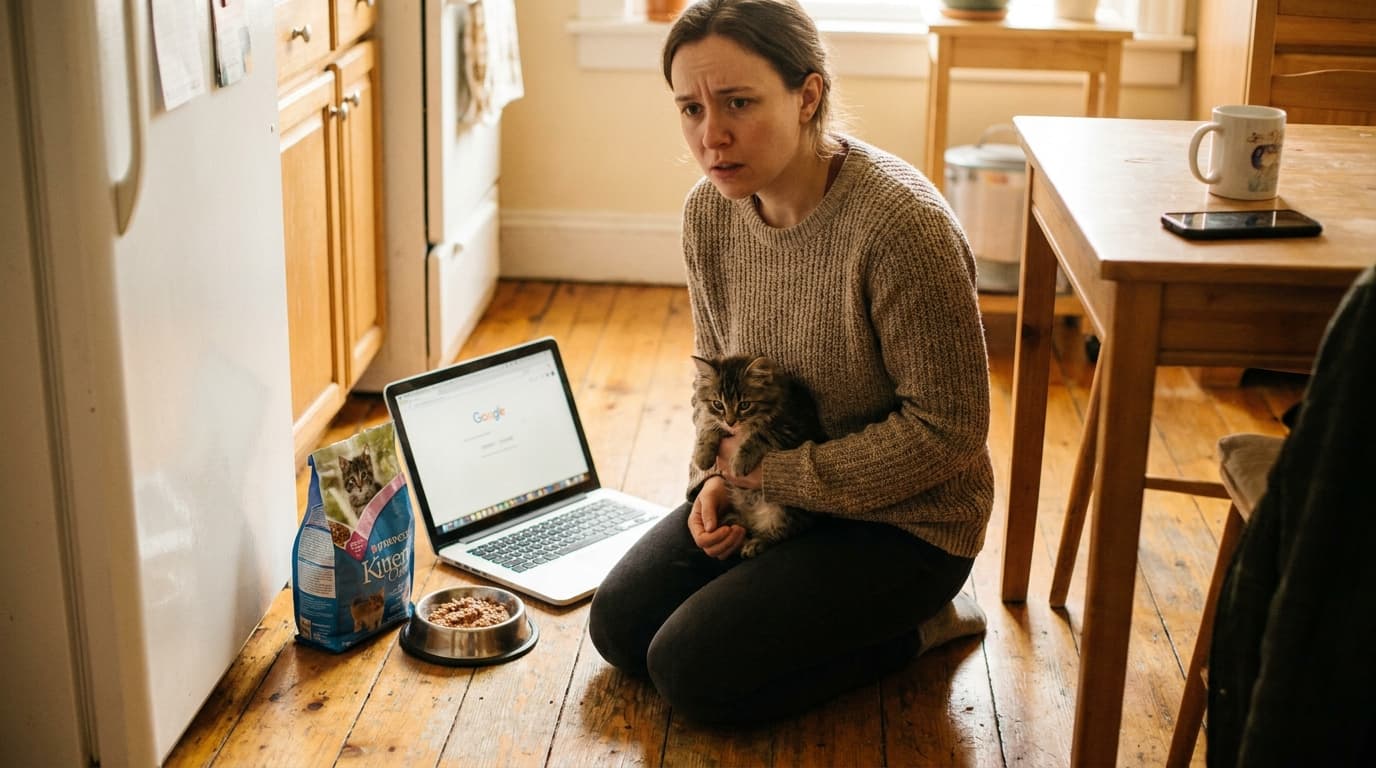
When your kitten has a sensitive stomach, the problem usually isn't a lifelong allergy but an immature digestive system struggling to keep up with the transition to solid food. Most sensitive stomach kibbles focus on highly digestible proteins and limited ingredients to prevent the gut from working too hard. You want to look for formulas that skip heavy fillers like corn or soy, which can be tough for a tiny system to break down during those first few critical weeks when they are most vulnerable.
What this actually means is that a 'sensitive' stomach is often just a gut biome that hasn't fully adapted yet. Since a healthy kitten should gain 10 to 15 grams of weight every day, any digestive upset that stops them from absorbing nutrients is a major red flag. If they aren't hitting those growth milestones, their physical reserves can vanish in a matter of hours. This is why high-quality kibble with added prebiotics is so important - it doesn't just feed the kitten; it feeds the good bacteria in their gut, helping them build a stronger immune system while they are still in the weaning phase. It's always worth checking with your vet for advice specific to your kitten's growth rate if they seem to be lagging behind.
Imagine you just brought home a fluffy new friend and decided to switch them from the breeder's cheap brand to a premium 'sensitive' formula the very first night to give them the best start. By morning, you’re likely dealing with 'blowout' diarrhea that leaves the kitten lethargic and dehydrated. This isn't necessarily a problem with the new food itself, but rather a shock to the system caused by a sudden change. Because kittens are so small and have such high metabolisms, this kind of rapid fluid loss can escalate into a life-threatening emergency faster than you might think, making a slow transition non-negotiable.
The catch is that many owners think 'grain-free' or 'high protein' automatically means it is easier on the stomach. In reality, some high-protein bargain brands are actually too dense for a kitten's gut to process, leading to gas and soft stools. You also need to look beyond just digestion; check for DHA, which is essential for brain development, and avoid kibble with heavy artificial coloring that provides no nutritional value. While you're focusing on their tummy, don't forget that their environment matters too - even a tiny nibble of a household lily can cause total kidney failure, which can be mistaken for a simple stomach bug until it becomes fatal.
According to the Advanced Veterinary Medical Center, 'a single misstep can lead to a fall, a taste of something toxic, or a sudden illness that escalates in hours.' This highlights just how fragile these little ones are. Monitoring their weight daily with a digital scale is the most effective way for you to catch health problems before they become visible to the naked eye. If the scale stays flat or drops for more than twenty-four hours, it is time to call the vet, regardless of what food you are using.
Key insights:
- Transition new foods over 7 to 10 days by starting with a mix of 75% old food and 25% new food.
- Look for kibble labels that specifically mention prebiotics and DHA for digestive and brain support.
- Avoid brands with heavy artificial dyes or vague 'meat by-product' descriptions that can irritate the gut.
- Track your kitten's weight daily to ensure they are gaining at least 10 grams every 24 hours.
- Keep all household toxins like lilies and string far away, as these cause emergencies that mimic stomach issues.
The Emergency Checklist: When to Call the Vet Immediately
If your kitten stops playing or skips a meal, the clock starts ticking immediately. While an adult cat might be fine for a day or two with a minor stomach upset, a kitten’s tiny body has almost no physical reserves to fall back on. You should call the vet right away if you notice heavy breathing, a sudden drop in body temperature, or if they haven't eaten in over six hours. Because their metabolism is so high, a kitten can go from seemingly fine to critically ill in under 12 hours, making speed the most important factor in their survival.
The core issue is that kittens lack the fat stores and liver capacity of grown cats. This means common household hazards like a nibble on a lily or a bad flea infestation aren't just problems - they are life-threatening crises. For instance, lilies are extremely dangerous to kittens because even a tiny amount of pollen can cause total kidney failure. What most people overlook is that because a kitten weighs so little, the concentration of toxins or the loss of even a few milliliters of blood from fleas can cause fatal anemia before you even realize they are sick. The pattern here is simple: their small size magnifies every health threat.
Imagine you’re watching your male kitten in the litter box. He’s crouching, straining, and lets out a small, sharp cry, but nothing is happening. You might think he’s just constipated from his new kibble, but this is a classic sign of a urinary blockage. In male cats, this can become fatal within only a few hours if left untreated. This isn't a wait and see situation; it’s a dash to the emergency room. If he’s also unusually vocal or crying at night in a way that sounds like distress rather than play, trust your gut and get him to a professional immediately.
One of the most misunderstood emergencies is Neonatal Isoerythrolysis. This happens when a mother cat has a different blood type than her kittens, and her first milk actually contains antibodies that attack the kitten's red blood cells. To an owner, it looks like the kitten is just fading or getting sleepy, but they are actually experiencing a rapid internal breakdown of their blood. This is why daily weight tracking is so vital; a healthy kitten should double its birthweight by the time it is 1 to 2 weeks old. If they aren't gaining 10 to 15 grams every single day, they are likely suffering from fading kitten syndrome, which requires clinical supportive care like IV fluids and dextrose.
Even if you are a pro at kitten vaccinations, medical emergencies can happen in the blink of an eye. Being prepared isn't about being paranoid; it's about having the right tools ready so you don't panic when every minute counts. Individual circumstances vary, so it is always worth checking with your vet for advice specific to your kitten's health and history.
Key insights:
- Keep a Kitten First Aid Kit with a syringe for water, a heating pad, and Karo syrup for emergency sugar boosts.
- Program the number and address for the nearest 24-hour emergency vet into your phone today.
- Check your kitten’s gums regularly; they should be bubblegum pink rather than pale, white, or yellow.
- Monitor weight with a digital scale every morning to catch a fading kitten before symptoms become visible.
- Avoid keeping lilies or toxic plants in any room where a kitten might explore or climb.
Frequently Asked Questions
For a tiny kitten, going without food for even 6 to 12 hours is a major emergency. Unlike adult cats who can skip a meal and be fine, kittens have very little body fat to fall back on. Their metabolism runs at high speed, so when they stop eating, their blood sugar can drop to dangerous levels almost instantly. This is why missing even two scheduled feedings is a reason to call the vet immediately.
According to PetMD, a healthy kitten needs to gain 10 to 15 grams of weight every day to stay on track. If that weight gain stops because they aren't eating, it could be a sign of fading kitten syndrome. Most people don't realize how quickly a kitten can go from playful to critical. If your little one is refusing food and feels cool to the touch or seems extra sleepy, get them to a clinic right away. Your vet can provide the quick support they need to get their strength back and check for any underlying issues.
It is actually quite common to see a kitten sneezing while they still seem perfectly happy and energetic. Most of the time, this is just a reaction to dust, strong perfumes, or a mild case of a feline upper respiratory infection. Think of it like a human toddler getting a little cold from daycare. Kittens have developing immune systems, so they pick up sniffles easily as they explore every dusty corner of your home.
Here is what many owners miss: the sneezing itself is not usually the problem, but it can lead to a blocked nose. Since cats rely on their sense of smell to trigger their appetite, a stuffy nose can lead to them refusing to eat. You should also watch for any change in their behavior or the color of their discharge. If the snot turns yellow or green, or if they start acting tired, it is definitely time to call your vet. They can check for infections and make sure your kitten stays hydrated and well fed while they recover from their cold.
It is actually very common for a brand new kitten to cry throughout the night, mostly because they just left their mom and littermates for the first time. They are feeling a bit lonely and overwhelmed by all the new smells and sounds in your house. It is their way of calling out for comfort in a space that does not feel like home yet. However, you should definitely keep a close ear on the type of crying you hear. While some meowing is just a sign they are lonely, constant or frantic vocalization can actually be an early signal of physical distress or pain.
Here is the thing most people miss: subtle behavioral changes like being unusually vocal or clingy are often the first signs of a serious health issue. According to the Advanced Veterinary Medical Center, unusual vocalization is a primary way kittens signal they are in pain. If your little one is crying and also feels cold to the touch or refuses to eat, it is a major red flag. While it might just be nerves, a quick call to your vet is the best way to make sure your new friend is truly okay.
Telling the difference between a sleepy kitten and a lethargic one can be tricky since healthy kittens spend nearly 20 hours a day napping. A healthy, tired kitten will usually wake up quickly and look alert if you offer a favorite toy or a smelly treat. Lethargy, on the other hand, looks like a kitten that is flat or limp and does not have the energy to lift its head or respond to your voice. Because kittens have such high metabolisms and very small body reserves, a little bit of sluggishness can turn into a life-threatening emergency in just a few hours.
The most effective way to catch health problems before they become visible is by tracking their weight daily with a kitchen scale. A healthy kitten should gain 10 to 15 grams of weight every day after their first day of life. If you notice they are not gaining weight or they seem too weak to stand, do not wait for the next morning to see if they improve. Your vet can provide supportive care like fluids or heat support, which is often the only way to help a failing kitten pull through.
Conclusion
Bringing home a tiny furball is pure joy, but kittens are surprisingly fragile. Unlike adult cats, these little guys have no physical reserves, so a skipped meal or a sneezing fit is a serious signal. Since a healthy kitten should double its birthweight by two weeks of age, any stall in growth is a major red flag. If your kitten stops eating or seems lethargic, act fast; their quick metabolism means they need help immediately.
Your best tool is a simple digital kitchen scale. Tracking weight daily is the best way to catch issues like fading kitten syndrome early. Look for a steady gain of 10 to 15 grams every day. If that number dips or stays flat for twenty-four hours, call your vet. Being a proactive protector ensures your tiny friend stays on the right track during these critical early weeks.
Trust your instincts if something feels off and keep that scale handy for peace of mind. Watching them hit those healthy milestones is incredibly rewarding, so stay vigilant and enjoy every tiny purr as your new best friend grows up happy and strong.
Send it to someone who should read it next.

PurrScript Editorial Team
Editorial Team
PurrScript's in-house editorial team. We research, write, and review every guide using established veterinary and behavioral resources, and update articles as best practices evolve.
View all articles