Why Your Cat Goes Wild at 3 AM: The Science of the Midnight Crazies
It is 3 AM and you are jolted awake by what sounds like a herd of elephants sprinting through your hallway. You turn on the light only to see your...

PurrScript Editorial Team
Editorial Team
Why Your Cat Goes Wild at 3 AM: The Science of the Midnight Crazies
It is 3 AM and you are jolted awake by what sounds like a herd of elephants sprinting through your hallway. You turn on the light only to see your pet staring back with giant pupils before they bolt under the sofa. If you have ever lived with a feline, you know the cat midnight crazies all too well. This frantic behavior can be baffling, especially when it involves your cat racing around like they have just seen a ghost in the middle of the night.
While it looks like they have lost their mind, there is actually a fascinating scientific explanation for these feline random activity periods. From their natural crepuscular instincts to the strange victory lap some take after using the litter box, these bursts of energy are a normal part of cat nocturnal behavior. Understanding why these zoomies happen is the first step toward reclaiming your sleep and making sure your pet stays happy and healthy.
In this guide, we will break down the biology behind the zoomies and help you tell the difference between a playful spirit and potential medical issues. You will also find practical tips for burning off kitten energy so everyone in the house can finally get some rest. Let us look at what is really going on inside your cat’s head during those late-night marathons.
The Mystery of the Midnight Sprint
You are sound asleep when a sudden thundering sound erupts from the hallway. It sounds like a herd of elephants, but it is just your thundering feline hitting top speed at 2 AM. Most of us call this the midnight crazies, but scientists have a fancier name for it called Frenetic Random Activity Periods, or FRAPs. These sudden bursts of energy are a normal part of cat behavior, even if they always seem to happen right when you have finally drifted off.
Think of it as a pressure valve for burning off kitten energy or pent-up zoomies from a day of napping. Since cats are crepuscular, they are naturally wired to be active during the low light of dawn and dusk. We will explore why your cat runs after using the litter box and when you should actually worry about these sprints. Here is how to handle the chaos and finally get some sleep.
Key insights:
- FRAPs is the scientific term for the sudden, high-speed energy bursts often called the zoomies.
- Cats are crepuscular animals, which means their natural hunting instincts peak at dawn and dusk.
- Nighttime sprints are usually a healthy way for indoor cats to release stored physical energy.
What Exactly Are the 'Zoomies'?
You are sitting on the couch, minding your own business, when suddenly your cat transforms into a furry blur, ricocheting off the walls like a pinball. We usually call this the midnight crazies, but scientists have a much fancier name for it: Frenetic Random Activity Periods, or FRAPs. It is that specific moment when your cat internal engine redlines, and they have no choice but to burn off every ounce of stored energy in one glorious, chaotic sprint.
It is easy to confuse this with regular play, but there is a distinct difference. As Dr. Elizabeth Stelow from UC Davis points out, zoomies often look almost out of control, while social play tends to be more measured and intentional. Think of play as a structured game of tag, whereas a FRAP is more like a pressure valve finally popping open. This is especially common for indoor cats who do not have a massive territory to patrol or prey to hunt, leaving them with a surplus of physical steam that needs a quick exit.
You might notice these outbursts happen right as you are trying to wind down for the night. That is because cats are crepuscular, meaning they are naturally hardwired to be most active during the low-light hours of dawn and dusk. While you are ready for bed, your cat biology is telling them it is prime hunting time. If they have been inactive all day, that instinct manifests as a high-speed dash across your furniture because they simply have nowhere else to put that energy.
But why does your cat look so intense during these sprints? Those wide eyes and puffed-up tails might look like a sign of panic, but they are actually experiencing a massive physiological high. Dr. Alison Gerken explains that these playful zoomies often happen when a cat has been resting and suddenly feels a surge of energy, which triggers a pleasurable endorphin rush. It is essentially a feline version of a runner high.
Even though they look like they have completely lost their marbles, that frantic behavior is creating a euphoric feeling for your pet. They are not stressed or scared; they are having an absolute blast. So, the next time your cat performs a mid-air twist or a wall-run at midnight, just know they are riding a wave of happy chemicals that makes the sprint feel just as good as it looks ridiculous.
Key insights:
- FRAPs are a natural physiological release for pent-up energy, especially in indoor cats.
- Cats are crepuscular, which explains why their energy peaks at dawn and dusk.
- The wild look in their eyes during a zoomie is usually a sign of an endorphin-fueled euphoric rush.
- Unlike structured play, zoomies are characterized by a loss of measured control.
The 'Happy' Chemical Connection
Ever watched your cat suddenly bolt across the room, banking off the sofa like a tiny, furry racecar? It looks like they have completely lost their marbles, but there is a method to the madness. Scientists call these bursts Frenetic Random Activity Periods, or FRAPs. While it might seem chaotic to us, for your cat, it is a high-speed celebration of being alive.
This behavior is actually a physiological reset button. Indoor cats often have extra energy stored up with nowhere to go, so they use these sprints to compensate. Dr. Alison Gerken points out that these zoomies likely trigger a pleasurable endorphin rush. Think of it as a runner's high, but for someone who spends eighteen hours a day napping. That wild-eyed look isn't fear; it is pure, unadulterated euphoria.
So, the next time your living room becomes an improvised track, don't worry about their sanity. As Dr. José Arce notes, they are simply having fun. It is a natural release that turns pent-up energy into a chemical reward. They aren't actually losing their minds - they are just enjoying the best natural high a feline can get.
Key insights:
- Zoomies are scientifically known as Frenetic Random Activity Periods (FRAPs).
- The behavior triggers a pleasurable endorphin release similar to a runner's high.
- High-speed sprints are a primary way for indoor cats to release pent-up physical energy.
The 3 AM Alarm: Why Nighttime Is 'Go Time'
Have you ever been jolted awake by what sounds like a furry bowling ball hitting your bedroom door at 3 AM? It is a classic part of the cat owner experience. We usually assume cats are nocturnal animals that simply prefer the night, but that is actually a myth. Your cat is not trying to ruin your sleep on purpose. They are just following an internal clock that has been ticking for thousands of years. Experts call these sudden explosions of energy Frenetic Random Activity Periods, or FRAPs. To most of us, they are just the midnight crazies.
The real story is that cats are crepuscular. This means they are naturally most active during the dim light of dawn and dusk. In the wild, this is exactly when their prey is moving around. Even though your cat now hunts feathered wands instead of mice, their DNA still tells them that twilight is the prime time to be awake. This rhythm is hardwired into them. It explains why they often get a massive burst of energy right when you are finally ready to close your eyes. They are simply aligning their schedule with a biological clock that predates modern living rooms.
You might notice that these zoomies get even more intense during certain times of the year. For example, activity levels usually spike when spring hits the air. Even if your cat never sets a foot outside, they can sense the change in the seasons. That ancient urge to roam and patrol their territory kicks into high gear as the weather warms up. Suddenly, your rug is a forest and your hallway is a high-speed chase route. They are not just being hyper. They are responding to a biological calendar that tells them it is time to move.
The moon plays a part in this too. You might expect a full moon to cause more chaos, but research actually shows that cats are most active during the new moon. This is the darkest point of the lunar cycle. Because cats have such incredible night vision, these pitch-black nights give them a huge tactical advantage. While you are struggling to find the light switch, your cat is seeing the world in high definition. This makes the middle of the night the perfect time for them to practice their pouncing skills and turn your living room into a hunting ground.
For older cats, these nighttime antics can be more complex. While a kitten is usually just burning off extra energy, a senior cat might be dealing with a medical shift. About 28% of cats between 11 and 14 years old show signs of cognitive dysfunction, and that number jumps to over 50% once they hit age 15. If an older cat starts racing around or crying out in the dark, it might be confusion rather than play. It is always worth checking with a vet to see if a medical issue like hyperthyroidism is the real cause of their midnight marathons.
Key insights:
- Cats are crepuscular, meaning their biology is tuned for activity at dawn and dusk rather than all night.
- Activity levels often peak during the new moon when cats can use their superior night vision to the fullest.
- Springtime triggers a natural spike in energy and roaming instincts, even for indoor pets.
- Sudden nighttime activity in senior cats is often linked to medical issues like cognitive dysfunction or hyperthyroidism.
The New Moon and Spring Fever
Ever wonder why your cat chooses the darkest nights to stage a living room takeover? It turns out there is a method to the madness. Research shows that feline activity actually peaks during the new moon. When the night is at its dimmest, ancient instincts kick in. Even if your pet has never stepped outside, that internal programming tells them darkness is prime time for action.
Then there is the spring fever effect. As the seasons shift, activity levels spike naturally. Your cat isn't just being difficult. They are responding to a biological clock that says it is time to move. This is why you might see a sudden surge in those frantic runs around the house as the weather warms up.
To your cat, the living room becomes a midnight hunting ground. This surge of energy is often a release for pent-up steam, potentially triggering a pleasurable endorphin rush. Since they are naturally most active in low-light conditions, your quiet home provides the perfect stage for their wild, high-speed performances.
Key insights:
- Feline activity levels naturally peak during the darkest lunar phases.
- Spring weather triggers a biological spike in roaming and energy.
- Midnight zoomies act as a physiological release for indoor cats.
The Post-Litter Box Dash: It's Not Just Weird, It's Science
Ever seen your cat finish their business and then bolt across the room like they are being chased by a ghost? It is a classic feline move. We often call it the victory lap, but scientists have a much more formal name for these sudden bursts: Frenetic Random Activity Periods, or FRAPs. While it looks like pure chaos, there is actually a fascinating physiological reason behind this sudden need for speed that goes beyond just being quirky.
The secret lies in a phenomenon often called poo-phoria. When a cat uses the litter box, the physical act can stimulate the vagus nerve. This stimulation causes a sudden drop in blood pressure, followed by a rush of relief and a massive energy spike. It is essentially a natural high. Dr. Alison Gerken explains that these playful zoomies usually happen when a cat has been resting and suddenly feels this surge of energy. For kittens, whose nervous systems are still wired for high-octane play, this post-poop sprint is almost a daily ritual.
However, the frequency of these dashes changes as cats get older. Kittens are the primary athletes in this sport, while senior cats might start to trade the sprints for extra naps. If you notice a senior cat, especially those over fifteen, suddenly running around frantically at odd hours, it might be less about relief and more about health. Research shows that over 50% of cats in that age bracket deal with cognitive dysfunction. It is a good reminder to watch for changes in the rhythm of their behavior as they age.
This behavior also ties back to their crepuscular nature. Cats are naturally wired to be most active when the light is low, which is why these sprints often happen at dawn or dusk. It is a mix of biology, nerve endings, and a dash of feline personality. Elizabeth Stelow, a veterinary behaviorist, notes that these zoomies appear almost out of control compared to measured play. So, the next time your cat leaves the box at Mach 1, do not worry. They are not losing their mind; they are just experiencing a scientific rush of joy.
Key insights:
- The vagus nerve stimulation during defecation creates a physical sensation of euphoria and energy.
- Kittens are biologically more prone to these energy bursts than senior cats.
- Sudden behavioral changes in cats over age 11 may be linked to cognitive dysfunction rather than simple zoomies.
- FRAPs are a natural way for indoor cats to release pent-up energy and trigger endorphins.
When the Crazies Aren't Just Playful
We have all seen the classic zoomie - that sudden, frantic dash across the living room that leaves your rug bunched up and your cat staring at nothing. Usually, it is just a burst of Frenetic Random Activity Periods, or FRAPs. This is a totally normal way for indoor cats to burn off steam and maybe get a little endorphin rush. But what happens when the playful chaos starts feeling like something else? There is a thin line between a cat having a blast and a cat trying to outrun physical discomfort. If those midnight sprints seem more like panicked pacing or if your cat cannot seem to settle down even after a long play session, it is time to look closer.
Sometimes, the crazies are actually symptoms of underlying health issues. For example, hyperthyroidism and kidney disease can cause a strange surge in restlessness that looks like energy but feels like agitation. In older cats, this sudden second youth is often just high blood pressure or metabolic stress. Then there is Feline Hyperesthesia Syndrome. You might notice your cat skin rippling or twitching right before they bolt away. It looks like a glitch in their fur, but for the cat, it can feel like an intense itch or an electric shock. If they are biting at their tail or back while running, they are not playing - they are uncomfortable.
As cats enter their senior years, the nature of these energy bursts changes even more. Research shows that about 28% of cats between the ages of 11 and 14 show signs of cognitive dysfunction, which is essentially feline dementia. Once they pass the age of 15, that statistic climbs to over 50%. This leads to a phenomenon known as sundowning. Just like humans with similar conditions, cats can become deeply confused as the light fades. They might pace the house at midnight, feeling lost in a room they have lived in for a decade.
This confusion often manifests as loud, mournful howling or aimless running in the middle of the night. It is not about burning off kitten energy anymore; it is about a brain that is struggling to map out the world. You might see them get stuck in corners or stare blankly at a wall after a sudden dash. It is a heartbreaking shift for any owner to watch, but identifying it early makes a huge difference in their quality of life. What does this mean for you? It means being an observer of their routine and noticing when the rhythm of their life feels off.
So, when should you actually worry? The rule of thumb is simple: watch for the why behind the run. Playful zoomies usually happen after a nap or a trip to the litter box. Medical zoomies feel frantic, repetitive, or distressed. If your senior cat suddenly changes their activity level or starts acting like a stranger in their own home, skip the laser pointer and call the vet. It is always better to rule out a medical trigger than to let your cat struggle with a glitch they cannot fix on their own.
Key insights:
- Identify Feline Hyperesthesia by looking for skin rippling and frantic tail biting during runs.
- Recognize that sudden hyperactivity in senior cats is often a sign of hyperthyroidism or kidney issues.
- Understand that sundowning causes older cats to feel confused and pace specifically at night.
- Note that over half of cats 15 and older experience some form of cognitive decline.
Senior Cats and Cognitive Dysfunction
If your once-lazy senior cat suddenly starts howling or pacing the hallway at 2 AM, it might not be a late-onset case of the kitten crazies. As cats age, their brains change just like ours do. Recent data shows that about 28% of cats between the ages of 11 and 14 show signs of cognitive dysfunction. By the time they hit 15, that number jumps to over 50%. It is a staggering shift that turns peaceful nights into confusing marathons for aging pets.
You might notice your cat seems lost in a familiar room or starts 'sundowning.' This is a specific type of confusion that hits when the sun goes down, often leading to aimless wandering or midnight pacing. While younger cats run because they have too much energy, seniors often run because they are disoriented. It is a tough thing to watch, but knowing the cause is the first step toward helping them feel safe again.
So, when should you worry? If these activity bursts come with sudden weight loss, increased thirst, or a total change in personality, it is time to call the vet. Issues like hyperthyroidism or kidney disease can also cause restlessness. A quick checkup can rule out physical pain and help you figure out if your cat needs a specialized diet or environmental changes to manage their golden years comfortably.
Key insights:
- Cognitive dysfunction affects nearly 1 in 3 cats aged 11 to 14.
- Sundowning causes increased confusion and pacing specifically during nighttime hours.
- Sudden senior hyperactivity is often a medical red flag rather than a behavioral quirk.
How to Burn Off That Extra Kitten Energy
You are finally drifting off to sleep when a furry blur launches off your headboard and across the room. This is not your cat being a jerk; it is a biological event. These sudden bursts of energy are known as Frenetic Random Activity Periods, or FRAPs. Because cats are crepuscular, they are naturally hardwired to be most active at dawn and dusk. In the wild, this timing aligns with when their prey is moving. In your living room, it usually aligns with your deepest sleep cycle. Think of it as a build-up of steam that has to go somewhere, especially for indoor cats who do not have a ton of space to roam.
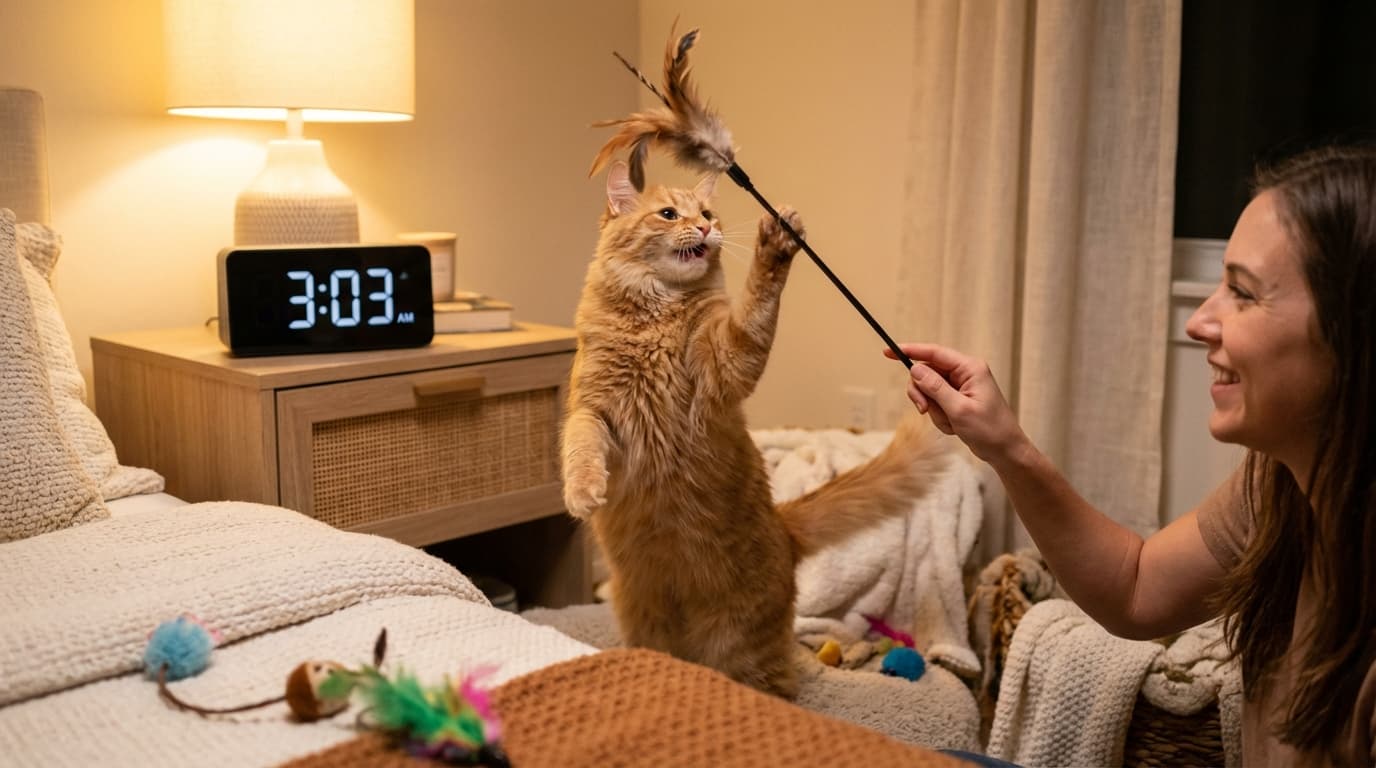
To stop the 2 AM sprints, you can lean into the Hunt-Eat-Groom-Sleep cycle. This is a biological sequence that naturally ends in a nap. About an hour before you want to go to bed, start a high-intensity play session. Use a wand toy to make your cat crouch, stalk, and finally catch the toy. Dr. Alison Gerken notes that these zoomies often happen when a cat has been inactive and suddenly feels a rush of energy. Once they are physically tired, feed them their biggest meal of the day. This mimics a successful hunt. Most cats will spend time grooming themselves after eating and then fall into a deep food coma just as you are tucking in.
Sometimes the zoomies happen right after a trip to the litter box. This is not always about play; it is often a physical response called poo-phoria. When a cat goes to the bathroom, it can stimulate the vagus nerve, which causes a drop in blood pressure and a subsequent rush of energy or relief. It is a literal feeling of physical relief that sends them flying across the room. While it looks wild, it is just a quirk of feline anatomy. Knowing this helps you realize that your cat isn't just acting crazy; they are reacting to a physical sensation they cannot control.
You can also manage this energy by changing how your cat moves through your home. If they only have the floor to run on, they will treat your furniture like hurdles. By adding vertical space like cat trees or wall shelves, you turn a flat sprint into a 3D workout. This burns more calories in a shorter amount of time and keeps them off your face. As Elizabeth Stelow, DVM, points out, zoomies can look almost out of control compared to measured play. Giving them a safe, vertical track prevents them from crashing into things or hurting themselves on slippery floors.
When it comes to choosing the right tools for a quiet night, remember that mental exhaustion is just as effective as physical exercise. Laser pointers are a common go-to, but they can be frustrating because there is no physical catch at the end of the hunt. This can leave a cat more wired and agitated rather than calm. Food puzzles are a much better alternative. They force your cat to use their brain and their paws to get a reward, which provides a cognitive workout that tires them out much more effectively than just chasing a light around the room.
Consistency is your best friend here because cats thrive on predictable schedules. If you provide a routine of play and feeding at the same time every night, their bodies will eventually start to expect rest afterward. It is also important to watch for changes as they age. While a kitten's zoomies are normal, sudden nighttime activity in senior cats can be a medical sign. About 28% of cats aged 11 to 14 show signs of cognitive dysfunction, which can lead to confusion and midnight pacing. If your older cat is suddenly acting like a kitten at 3 AM, it might be time for a check-up rather than a new toy. For most healthy cats, though, a simple routine and some smart enrichment are all you need for a quiet night.
Key insights:
- The Hunt-Eat-Groom-Sleep cycle uses feline biology to trigger a natural sleep state.
- Vertical space burns energy faster than horizontal space and keeps the floor clear.
- Food puzzles provide the mental fatigue necessary to stop frustration-based zoomies.
- Post-litter box sprints are often a nerve response rather than a behavioral issue.
Smart Enrichment Tools
Ever feel like your living room becomes a high-speed racetrack at 2 AM? We call them the midnight crazies, but these bursts are actually Frenetic Random Activity Periods, or FRAPs. While it is tempting to grab a laser pointer to tire them out, that often leaves cats frustrated because there is no physical catch at the end of the hunt. Try food puzzles instead. They mimic the natural challenge of foraging and provide a mental workout that leads to actual long-term calm rather than just more agitation.
If your cat is literally bouncing off the walls, give them more surfaces to hit. Since cats are crepuscular - meaning they are naturally wired to be most active at dawn and dusk - they have plenty of energy to burn when you are trying to wind down. Adding vertical space like tall cat trees or wall shelves allows them to climb and survey their kingdom. It is a simple way to manage their environment and your sanity at the same time.
A solid routine is your best defense against a 3 AM wake-up call. A vigorous play session followed by a small snack mimics the natural hunt-eat-groom-sleep cycle. This structure is especially vital as cats age, considering cognitive dysfunction affects nearly 28% of cats between 11 and 14 years old. A predictable schedule keeps their internal clock in sync and helps you get some actual rest.
Key insights:
- Food puzzles provide a 'win' for the cat that laser pointers lack, reducing post-play frustration.
- Vertical territory helps cats express their natural crepuscular energy without destroying furniture.
- A consistent 'hunt-eat-sleep' routine can mitigate nighttime restlessness in both kittens and senior cats.
Common Questions About Feline Energy
Ever feel like your cat has a secret double life that only starts when you’re trying to sleep? You aren't alone. Whether it’s a high-speed sprint across the sofa or the classic midnight crazies, these energy bursts often leave owners wondering if their pet has lost it. Most of the time, your cat is just experiencing what experts call Frenetic Random Activity Periods, or FRAPs. These aren't just random acts of chaos. They are a physiological release for pent-up energy that can even trigger a rush of feel-good endorphins. Think of it as a pressure valve for their internal motor.
Why do cats bolt after using the litter box? It turns out there is a technical reason for this poo-phoria. Defecation can stimulate the vagus nerve, causing a brief drop in blood pressure followed by a sudden surge of energy. It’s a physical relief that sends them flying. Also, because cats are crepuscular, they are naturally most active at dawn and dusk. If they’ve been napping all day while you were at work, that 3 AM sprint is just their internal clock finally ticking into high gear and burning off kitten energy that never quite went away.
What if your older cat starts acting wild at night? Keep an eye on the frequency. For cats aged 11 to 14, about 28% show signs of cognitive dysfunction, and that number jumps to over 50% once they pass 15. If a senior cat seems confused or restless in the dark, it might be a medical issue like hyperthyroidism or kidney disease rather than just standard zoomies. Still, for most healthy cats, these wild moments are harmless. As Dr. José Arce says, they’re just having fun. Unless they are knocking over your favorite lamp, it is usually best to just let them enjoy the ride.
The interesting part is how external factors play a role too. Research indicates that cats often synchronize their activity with seasonal cycles, peaking in the spring. Some even show higher activity levels during the new moon phase of the lunar cycle. While it feels like your cat is being intentionally difficult, they are often just responding to ancient biological cues. If the behavior is accompanied by skin rippling, it could be Feline Hyperesthesia, but otherwise, consider it a sign of a high-energy cat that needs a bit more enrichment during the day.
Key insights:
- Zoomies are a natural physical release for pent-up energy and can trigger a euphoric endorphin rush.
- The post-litter box sprint is a biological response to vagus nerve stimulation often called poo-phoria.
- Sudden hyperactivity in cats over 11 years old may indicate cognitive dysfunction or medical issues like hyperthyroidism.
- Cats are crepuscular by nature, meaning their 3 AM antics are a result of their natural dawn and dusk activity patterns.
Embracing the Quirkiness
Ever wonder if your living room has turned into a racetrack for a reason? When your cat starts those high-speed laps, it is actually a great sign. These bursts, known as Frenetic Random Activity Periods (FRAPs), show you have a healthy, energized pet with plenty of fuel to burn. Instead of seeing it as a midnight nuisance, think of it as a glowing review of their physical health. A cat that zooms is a cat that feels safe and spirited in its home.
It is easy to focus only on the cat, but the magic happens when we look at the whole picture. Their behavior is often a reflection of the environment you have built and the bond you share. When they feel comfortable enough to let loose, it shows they trust their surroundings. While we can look at biological clocks or 'poo-phoria' for answers, sometimes the simplest explanation is the best one.
As Dr. José Arce points out, they are often just having fun. Not every sprint needs a deep medical diagnosis or a complex behavioral fix. Sometimes, life is just better when you are running at top speed for no reason at all. So, next time the midnight crazies strike, just smile. Your cat is happy, healthy, and simply enjoying the ride.
Key insights:
- Zoomies are a natural indicator of a healthy, high-energy cat.
- A cat's environment and owner bond play a huge role in how they express energy.
- Many instances of the crazies are simply a cat's way of playing and having fun.
Frequently Asked Questions
It is actually very normal and even has a nickname among cat owners called poo-phoria. This happens because the act of pooping can stimulate the vagus nerve in a cat. This stimulation often leads to a sudden drop in blood pressure followed by a rush of energy that makes them feel great.
You can think of it as a physical reflex rather than just being silly. That burst of speed is their way of reacting to a weirdly pleasant physical sensation. While it is most common in kittens and young cats, plenty of older cats still do a victory lap after leaving the litter box.
It mostly comes down to their biology. Cats are crepuscular, which means they are naturally wired to be most active during the low-light hours of dawn and dusk. If your cat spends most of the day napping while you are out, they end up with a lot of pent-up energy that needs to go somewhere once the sun goes down.
These bursts are officially called Frenetic Random Activity Periods or FRAPs. They are just a way for your cat to release steam and have a bit of fun. Just keep in mind that if an older cat suddenly starts acting wild at night, it might be worth a vet visit. Issues like hyperthyroidism or cognitive dysfunction can cause restlessness in senior cats, especially those over fifteen years old.
You can certainly reduce those early morning wake-up calls, though it is hard to fight biology completely. Cats are crepuscular, which means they are naturally most active at dawn and dusk to match when their prey is active. If your cat is bouncing off the walls at 3 AM, they are likely just following an internal clock that tells them it is time to hunt and move.
To get more sleep, try moving their heaviest play session to right before you go to bed to burn off that extra energy. But here is the thing to watch for: if your cat is a senior, specifically over 11 years old, nighttime restlessness can be a sign of cognitive dysfunction syndrome. Since this affects nearly 28% of cats in that age group, it is worth mentioning to your vet if the midnight crazies seem more like confusion than play.
In most cases, those wild sprints are a sign of a happy, healthy cat. These bursts are known as Frenetic Random Activity Periods, or FRAPs, and they act as a physiological release for pent-up energy. Dr. José Arce, president-elect of the AVMA, points out that usually, they are just having fun. These zoomies can even trigger an endorphin release that makes your cat feel a sense of euphoria.
However, there is some nuance to look out for. If your cat is zooming right after using the litter box, it is likely a physical response called poo-phoria, where stimulating the vagus nerve during a bowel movement causes a sudden rush of energy. It only becomes a concern if the running seems panicked or is accompanied by skin rippling, which could signal a medical issue like Feline Hyperesthesia Syndrome. Most of the time, though, you can just enjoy the show.
Conclusion
So, where does this leave you when your living room sounds like a horse track at midnight? It means those cat midnight crazies are rarely a mystery once you see the biology behind them. Between the rush of a post-litter box sprint and the hardwired energy of a crepuscular hunter, your cat is just following an internal clock that does not always align with yours. It is a natural part of feline life that shows your pet is feeling energized and healthy.
The good news is that you can influence this rhythm without much stress. If you want more sleep, consider trying a solid play and feed routine right before you go to bed. Providing more enrichment for high-energy cats during the day helps bridge the gap between their wild instincts and your need for a quiet house. When you understand the why behind the behavior, it becomes much easier to manage the when.
Most of the time, these frantic sprints are just a sign of a happy pet with plenty of spark. While the 3 AM wake up call is not exactly fun, it is a small price to pay for living with such a lively character. Sometimes, the best thing to do is just pull the covers up and let them finish their victory lap.
Send it to someone who should read it next.
PurrScript Editorial Team
Editorial Team
PurrScript's in-house editorial team. We research, write, and review every guide using established veterinary and behavioral resources, and update articles as best practices evolve.
View all articles