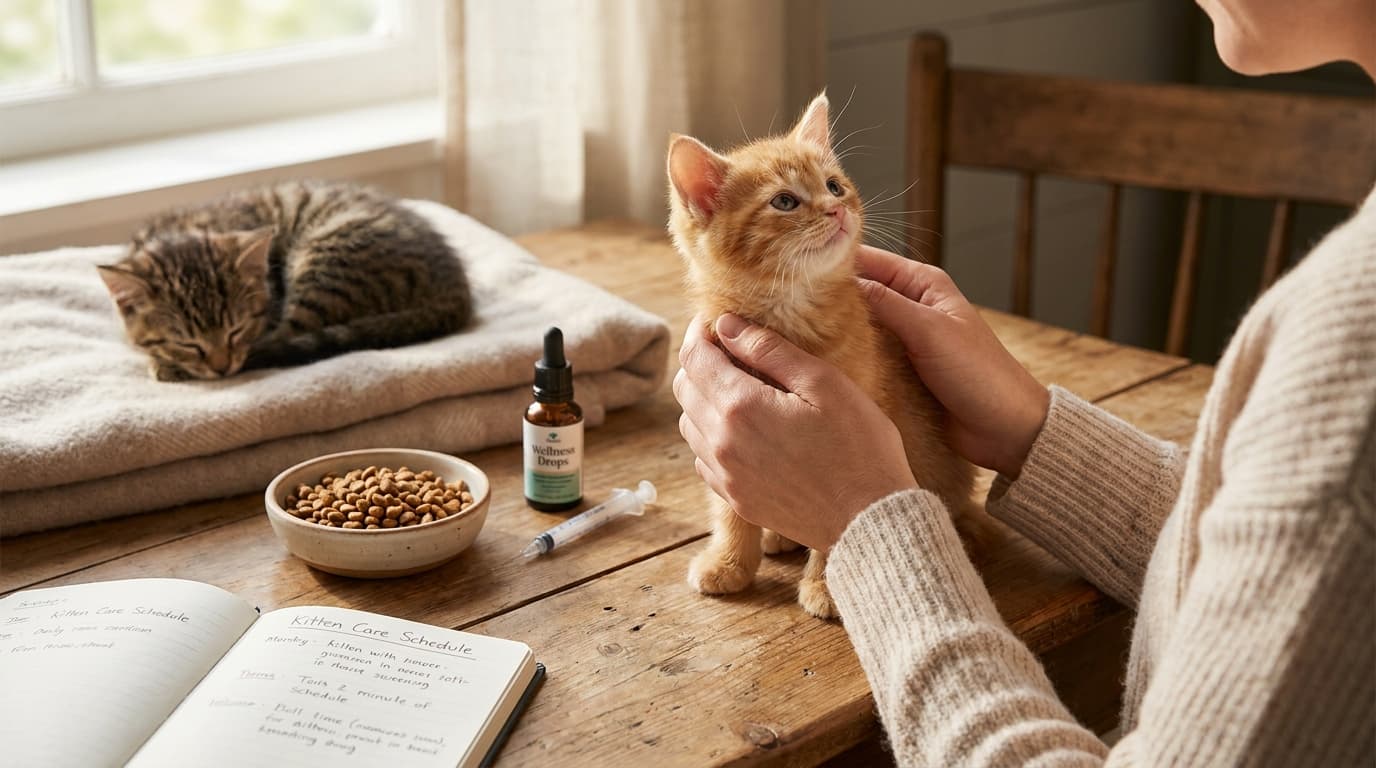
Why Is My Kitten Biting Everything? Teething, Play Aggression, and Fixes
One minute you are cuddling a tiny ball of fluff, and the next, your fingers are being treated like a chew toy. If your sweet pet has suddenly turned into...

PurrScript Editorial Team
Editorial Team
Why Your Kitten is Biting Everything (And How to Help Their Sore Gums)
One minute you are cuddling a tiny ball of fluff, and the next, your fingers are being treated like a chew toy. If your sweet pet has suddenly turned into a tiny land shark, you are definitely not alone. Understanding the kitten teething age is the first step toward reclaiming your hands and helping your furry friend feel much better during this fussy stage.
This constant biting usually is not a behavior problem or a sign of aggression. Instead, it is a natural milestone as those needle-like baby teeth make way for adult ones. It can be a painful process for them, which explains the sudden kitten biting behavior. Learning about soothing sore gums in kittens becomes a top priority so you can help them through the discomfort without losing a finger in the process.
We are going to walk through the timeline of a kitten losing baby teeth and look at the best cat chew toys to keep them busy. You will find practical tips to ease their pain and redirect that energy. By the end, you will know exactly how to handle this phase and get back to the peaceful snuggles you love.
The Teething Timeline: When Do Those Tiny Needles Appear?
Ever wonder why your kitten suddenly turned into a tiny, fuzzy piranha? It usually starts much sooner than you think. Between two and four weeks old, those first little teeth begin poking through the gums. By the time they reach eight weeks, they have a full set of twenty-six baby teeth. This phase is intense because their mouths are sensitive, so they need soft things to chew on to manage the pressure. If you are adopting a kitten at the standard eight-week mark, you are stepping right into the middle of this dental drama.
During those first two months, your kitten is basically a walking set of needles. The incisors and canines are the first to show up, which is why their play bites start to sting. Because their gums are so tender during this initial invasion, you should stick to soft, plush textures. Their mouths are still brand new, so hard plastic might be too much. Instead, a soft fabric toy or even a damp, cool washcloth can feel like a dream to a kitten with sore spots. This first stage is all about comfort and preparation. By eight weeks, that full set of teeth is ready for action, which is exactly when many people bring their new friends home.
Just when you think the biting might stop, the Great Tooth Swap begins. Around eleven or twelve weeks, those baby teeth start falling out to make room for thirty-two adult teeth. You might find a tiny tooth on the floor, but do not be surprised if you never see one. Most kittens actually swallow them while they eat, which is perfectly normal. The process follows a specific order. First, the tiny incisors at the front fall out, followed by the longer canines. Finally, the molars and premolars emerge at the back. It is a massive physical transition that happens in just a few months, and it explains why your kitten might seem extra cranky or obsessed with chewing on your shoelaces.
What does this mean for you? The five-month mark is really the big event. This is when the permanent canine teeth, those long fangs, typically emerge. It can be a bit messy, and you might notice some spotting on their toys or a bit of face rubbing. You might also notice they are grooming less or acting a bit grumpy. By seven or eight months, the process is usually done. If you see your kitten chewing on everything in sight during this window, they are not being bad. They are just trying to soothe the ache of a whole new smile coming in.
Key insights:
- Temperature-based therapy like frozen cloth toys can significantly reduce gum inflammation during the early stages.
- Teething happens in two distinct stages that require switching from soft plush toys to more durable rubber materials as adult teeth emerge.
- The five-month mark is the most critical period for dental eruption when the large adult canine teeth finally appear.
Weeks 2 to 8: The Baby Tooth Invasion
Ever notice your tiny furball suddenly trying to gnaw on your pinky? It usually starts when they are just two to four weeks old. Tiny, needle-sharp incisors and canines begin poking through those pink gums, marking the start of the baby tooth invasion. It is a big milestone, but for a kitten, it feels more like a constant, itchy ache. You might see them rubbing their faces against furniture or skipping grooming sessions because their mouths just feel weird.
During this first stage, your kitten needs specific help. Since their mouths are still very sensitive, heavy-duty rubber is often too much. Soft textures are your best friend here. A damp, chilled washcloth can work wonders. Why the cold? Temperature therapy is a lifesaver for sore gums. If you dampen a soft cloth and pop it in the fridge, the cool texture provides instant relief. It is a simple way to soothe the heat of those emerging teeth without any fuss.
By the time your kitten hits eight weeks, they should have a full set of 26 baby teeth. This is a critical point. Whether you are adopting a new friend or raising a litter, you are officially in the thick of it. These milk teeth are temporary, but they set the stage for how your cat will eat and play. Having that full set ready by two months means they are prepared for solid food, even if those gums still feel a bit tender.
Key insights:
- Soft, chilled fabrics provide better relief for early-stage teething than hard plastic.
- A kitten's behavior, like face rubbing or reduced grooming, often signals dental discomfort before you even see a tooth.
3 to 7 Months: The Great Tooth Swap
Around the 11 or 12-week mark, your kitten hits a major milestone. This is when those needle-sharp baby teeth finally start falling out to make room for the adult set. It can feel like a sudden shift because one day your kitten is fine, and the next they are chewing on your favorite shoes with newfound intensity. This phase is basically the Great Tooth Swap, and it usually wraps up by the time they are 7 or 8 months old.
The process follows a specific schedule. First, you will notice the tiny front incisors popping in around month three or four. By five months, those long, signature canine teeth emerge. Finally, the molars and premolars show up around the six-month mark. It is a lot of activity for such a small mouth, so do not be surprised if you see a little blood on their toys or notice them rubbing their faces against the furniture to soothe the ache.
You might wonder where all those lost baby teeth actually go. While you might occasionally find a tiny tooth on the floor or stuck in a chew toy, most kittens actually swallow them while they eat. It is perfectly normal and nothing to worry about. If your kitten seems extra cranky or stops grooming as much during this time, they are likely just dealing with some dental discomfort. Providing a mix of soft and durable toys can help redirect that biting behavior away from your hands and onto something more appropriate.
Key insights:
- Kittens typically have their full set of 30 adult teeth by 8 months of age.
- Adult canines usually emerge at the 5-month mark, often causing the most noticeable biting behavior.
- Swallowing baby teeth is a common part of the process and rarely a cause for concern.
How to Tell if Your Kitten is Hurting
Ever notice your kitten acting like a tiny, furry enigma? One minute they are zooming across the room, and the next, they are pawing at their mouth or rubbing their face against the corner of your coffee table. While it might look like a quirky new habit, it is often the first sign that those adult teeth are pushing through. You might even spot a little bit of blood on a chew toy or notice they are drooling more than usual. Do not panic - this is a totally normal, albeit messy, part of growing up. It is easy to confuse this discomfort with regular playfulness, but if they start biting harder or seem obsessed with rubbing their cheeks on everything, their mouth is likely the culprit.
The timeline is faster than you might think. By the time your kitten hits 11 or 12 weeks, they start losing those razor-sharp baby teeth to make room for the permanent set. This process keeps going until they are about 7 or 8 months old. During this window, keep an eye on their grooming habits. If a kitten stops cleaning themselves or looks a bit scruffy, it is usually because their gums are too sore to use their tongue effectively. They are not being lazy; they are just hurting. Think of it like trying to brush your hair when you have a massive headache - you would probably skip it too.
Sometimes the physical signs are subtle, but the attitude is loud and clear. If your normally sweet kitten suddenly turns into a tiny grouch, you are likely witnessing 'Crabby Kitten' Syndrome. This irritability often shows up most clearly at mealtime. You might notice your kitten sniffing their bowl and walking away, or acting frustrated with their dry kibble. It makes sense when you think about it - crunching down on hard biscuits feels like stepping on Legos when your gums are inflamed and tender.
This is why many kittens suddenly start begging for wet food or only eating the softest bits of their meal. They are not just being picky eaters; they are looking for relief. Switching to softer textures or even adding a splash of warm water to their kibble can make a world of difference. It is a simple way to help them through the cranky phases until those adult canines fully emerge around five months of age. A little bit of extra patience goes a long way when their mouth feels like a construction zone.
Key insights:
- Look for physical red flags like drooling or pink spots on toys which indicate bleeding gums.
- Watch for 'face rubbing' as kittens often use furniture to massage their sore jawlines.
- Understand that a sudden preference for wet food over kibble is a sign of dental pain, not just pickiness.
- Recognize that the teething process is long, starting around 3 months and lasting until about 8 months.
The 'Crabby Kitten' Syndrome
Ever notice your usually cuddly kitten suddenly acting like a tiny, fuzzy grump? This crabby kitten phase isn't just a mood swing - it is often the first sign that adult teeth are pushing through. When kittens start losing baby teeth around 11 or 12 weeks, their mouths get incredibly tender. You might see them rubbing their faces against furniture or skipping their usual grooming. It is hard to stay sweet when your gums are sore and throbbing.
A sudden strike at the food bowl is another huge red flag. If your kitten ignores crunchy kibble but dives into wet food, they are not just being picky. Hard biscuits feel like chewing on rocks when gums are inflamed or even slightly bleeding. Switching to softer meals or adding warm water to kibble makes a world of difference. They are simply looking for relief from the constant ache that peaks as those adult canines emerge around five months of age.
Key insights:
- Irritability is a physical response to dental pain, not a permanent personality change.
- A sudden preference for soft food helps kittens maintain their weight when chewing hurts.
Soothing the Ouch: Practical Ways to Help Sore Gums
When your kitten starts rubbing their face against the furniture or suddenly stops grooming as much as usual, they are not just being moody. They are likely dealing with the discomfort of new teeth pushing through. This process starts early, with baby teeth emerging between 2 and 4 weeks of age. It is a long road too, because that full set of adult teeth usually is not finished until they are 7 or 8 months old. You might even notice a little blood on their gums or see them biting everything in sight. This matters because their mouth genuinely hurts, and they are looking for any way to dull that constant ache.
One of the best ways to provide instant relief is through temperature therapy. Cold helps numb the gums and reduces the swelling that comes with new teeth. You can take a simple cloth toy, dampen it with a little water, and pop it in the freezer for a short while. Just be careful not to leave it in so long that it becomes a rock. You want a chilly, firm texture that they can gnaw on safely. You can also try offering cold snacks as a dual purpose treat. Chilled wet food or small pieces of safe, cold treats can act as a soothing balm for those inflamed gums while keeping them happy and fed.
But wait, the type of toy you choose is just as important as the temperature. Since kittens go through different stages, like losing baby teeth around 11 weeks and getting adult canines at 5 months, you need a mix of textures. Hybrid toys are a great choice because they combine soft plush for comfort with durable rubber for heavy chewing. This variety helps satisfy different types of pain. Also, look for items with crinkle sounds or catnip to keep them distracted. A toy that makes noise or smells interesting is much more likely to keep them focused on the toy rather than your fingers or furniture.
Always do a quick safety check before handing over a new chew. The reality is that some materials can be dangerous. Avoid any toys made from toxic plastics or those with loose strings that a kitten could easily swallow. If a toy looks like it might fall apart under pressure, it is best to skip it. Stick to sturdy rubber like materials or reinforced fabric to ensure their playtime stays safe. What does this mean for you? It means fewer bitten fingers and a much happier kitten as they navigate the transition to their adult teeth.
Key insights:
- Dampened and frozen cloth toys provide a safe, numbing effect for inflamed gums.
- Kittens need different textures as they age, transitioning from soft plush to more durable rubber by 3 months.
- Multi sensory toys with catnip and crinkle sounds help redirect biting behavior away from furniture.
- The teething process is long, starting at 2 weeks and often lasting until 8 months of age.
The Magic of the Freezer
Have you noticed your kitten rubbing their face against the furniture or maybe grooming themselves a bit less than usual? These are classic signs of dental discomfort. Between 11 and 12 weeks of age, kittens start losing those needle-sharp baby teeth to make room for their adult set. It is a sensitive time, but you can turn your freezer into a secret weapon for gum relief.
The trick is simple. Take a soft cloth toy, dampen it with a little water, and let it chill in the freezer for a while. When your kitten chews on the cold fabric, it acts like a numbing compress for their sore, red gums. It is a great way to encourage safe cat chew toys instead of letting them gnaw on your fingers or power cords. Just make sure the toy is made of non-toxic materials before it goes on ice.
You can also use cold snacks as a tasty way to soothe the mouth. Think of it as a healthy popsicle that helps with kitten biting behavior. Since a full set of adult teeth usually takes until 7 or 8 months to finish growing, having a rotation of cold treats and toys is a smart move. It keeps them happy and keeps your furniture safe while those adult canines finally emerge around the five month mark.
Key insights:
- Dampening cloth toys before freezing provides the best numbing effect for sore gums.
- Freezer therapy is especially helpful when adult canine teeth emerge at 5 months.
- Cold treats serve as both a distraction and a soothing tool during the long teething process.
Choosing Toys That Actually Work
Ever feel like your kitten has turned into a tiny, fuzzy piranha? It usually starts when those first baby teeth pop up around two to four weeks of age. By the time they hit eight weeks, they have a full set of sharp little needles. This is exactly when you need to step in with the right gear before your favorite pair of shoes or your own fingers become a casualty.
The best toys use hybrid textures to keep things interesting. Think of a toy that combines soft plush for comfort with tough rubber parts for heavy-duty chewing. This mix is vital because teething happens in stages. While a two-month-old kitten needs something gentle, a five-month-old growing their adult canines needs much more durability. If you want to keep them focused, look for toys that include crinkle sounds or catnip. These distractions help redirect that biting behavior away from you and onto something meant for chewing.
But before you buy every cute mouse on the shelf, do a quick safety check. Avoid toys made with toxic plastics or anything with loose strings that could be swallowed and cause a trip to the vet. If your kitten is really struggling with sore gums and rubbing their face on everything, try a simple trick. Dampen a cloth toy and put it in the freezer for a bit. The cold helps numb the pain much better than a room-temperature toy ever could. It is a simple way to help them through that final stretch until their full set of adult teeth arrives around seven or eight months.
Key insights:
- Look for hybrid toys that mix soft fabrics with durable rubber to handle different teething stages.
- Use temperature therapy by freezing damp cloth toys to soothe inflamed gums.
- Always check for loose strings or toxic materials that could pose a choking hazard.
Redirected Play: Hands Are Not Toys
Ever find yourself hand-wrestling with your kitten because it looks adorable when they are tiny? It is a common trap many new owners fall into. While those little nibbles do not hurt much when they are only eight weeks old, you are essentially teaching them that your skin is a chew toy. Fast forward to five months when those sharp adult canine teeth emerge, and suddenly that game is not so fun anymore. If you let them treat your fingers like prey now, they will not understand why it is a problem when they are full-grown cats with much stronger jaws.
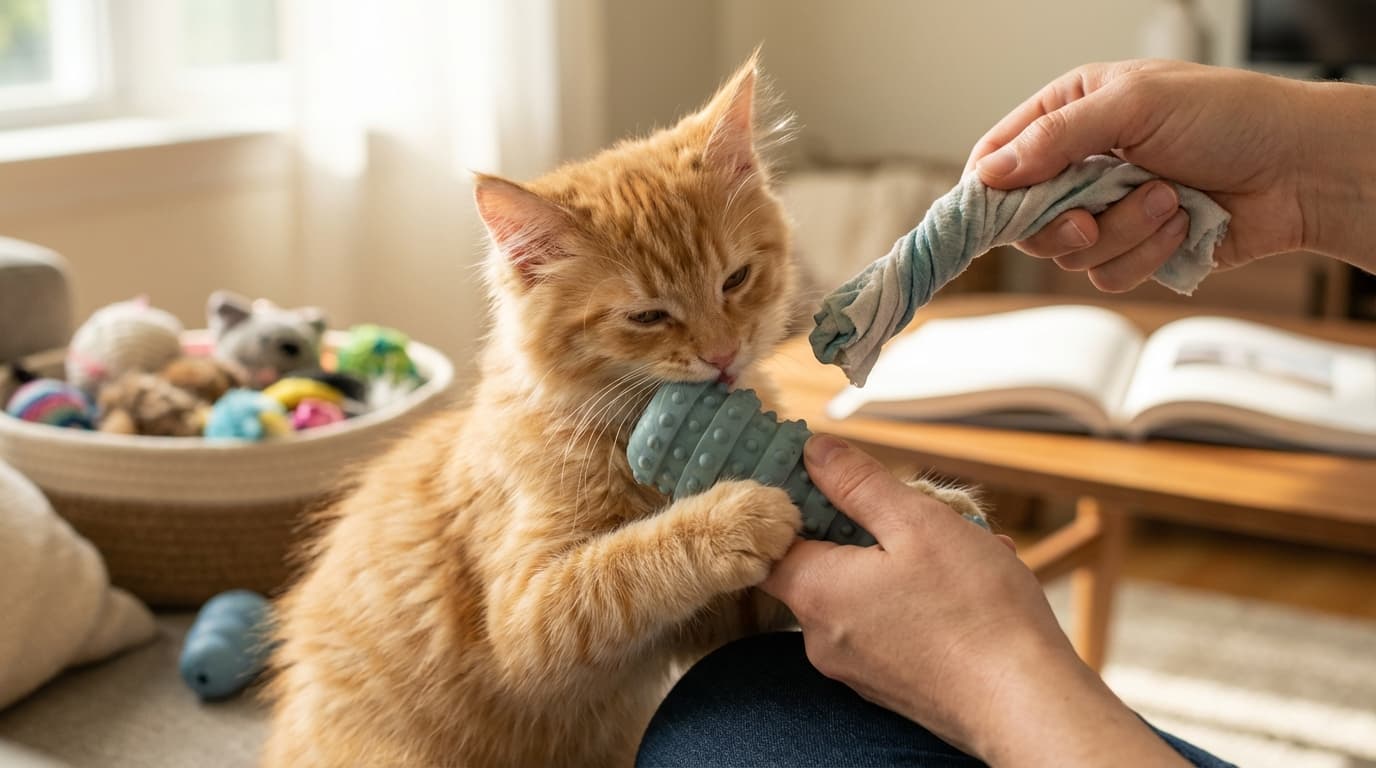
When your kitten starts gnawing on your knuckles, the best move is the Stop, Drop, and Toy method. The moment teeth touch your skin, stop all movement immediately. Do not pull away too fast, as that usually just triggers their hunting instinct and makes them want to chase you. Instead, drop the interaction and redirect them to a proper cat chew toy. Since kittens start losing their baby teeth around 11 to 12 weeks of age, their gums are genuinely sore and inflamed. They are not trying to be aggressive, they are just looking for something to soothe the ache. You can even try offering a toy that has been in the freezer, as the cold temperature provides much-needed relief for those sensitive spots.
To keep your hands completely out of the line of fire during high-energy moments, long wand toys are your best friend. These allow for intense play while maintaining a safe distance between your fingers and those frantic kitten teeth. It is also a smart way to use multi-sensory engagement. Toys that feature crinkle paper, catnip, or varied textures help keep a kitten focused on the object rather than your hands or shoelaces. This is especially important during the second stage of teething which starts around 3 months when they need more durable materials to chew on. By the time their full set of adult teeth is in around seven or eight months, they will have learned that toys are for biting and hands are strictly for petting and chin scratches.
Key insights:
- Hand-wrestling creates a habit that becomes painful once adult canine teeth emerge at 5 months.
- The Stop, Drop, and Toy method prevents the prey drive from being directed at your fingers.
- Using wand toys provides necessary distance during the peak teething window between 3 and 6 months.
When Teething Becomes a Medical Issue
Have you noticed your kitten looking a bit like a tiny vampire lately? Sometimes, an adult canine tooth pokes through before the baby tooth has even wiggled loose. This creates a 'double fang' look that might seem cute for a photo, but it is actually a bit of a space hog. If that baby tooth refuses to budge, it can push the adult tooth into a weird position. This leads to crowding, pain, or even trouble eating as they get older.
While most kittens have their full set of adult teeth by seven or eight months, the journey there can get messy. You might see a little blood on a chew toy or notice them rubbing their face against the couch. That is usually fine, but keep an eye out for the red flags. If their gums look bright red, their breath smells unusually bad, or they suddenly stop wanting to eat their favorite kibble, you are likely looking at an infection rather than just standard growing pains.
This is exactly why that six-month vet check is a non-negotiable part of kitten care. By this point, the molars and premolars should be settling in. Your vet will look for those stubborn baby teeth that refuse to fall out. Often, if a baby tooth is still stuck, the vet can remove it during a spay or neuter surgery. It is a simple fix that prevents a lifetime of dental issues and keeps that kitten smile healthy and straight.
What does this mean for you right now? Just stay observant. Check their mouth once a week while you are playing or snuggling. If you see two teeth squeezed into a spot where only one should be, or if the swelling looks a bit too intense, it is time to call the clinic. Catching these small hiccups early makes the transition to adulthood much smoother for your furry friend.
Key insights:
- The 'double fang' occurs when a baby tooth fails to fall out as the adult canine emerges around five months.
- Extreme gum redness, foul odors, or a sudden loss of appetite are signs of medical issues, not normal teething.
- A six-month dental exam is the best time to catch alignment problems before they become permanent.
Frequently Asked Questions
Yes, seeing a little bit of blood is totally normal. When kittens start losing those baby teeth around 11 or 12 weeks to make room for the adult set, their gums get pretty sensitive and can bleed a bit. It is just a natural part of the growing process.
You might spot a tiny smear of red on their favorite toy or notice them rubbing their face against the furniture more than usual. As long as it is just a small amount and they are still acting like their happy selves, there is usually nothing to worry about. If the bleeding seems heavy or their gums look very bright red and swollen, that is when you should check in with your vet.
It is actually best to avoid human teething rings and stick to toys designed specifically for cats. Human baby rings are made for soft gumming, but kittens have tiny, needle-sharp teeth that can easily puncture plastic or rubber not meant for pets.
If a kitten bites through a human ring, they might swallow the gel inside or choke on small pieces of broken plastic. You are much better off using a soft cat chew toy or even a damp, frozen cloth to help them feel better safely. These options are built to handle cat biting behavior and provide the right kind of relief for those sore spots.
It is actually pretty common for kittens to lose interest in hard kibble when their gums are sore. Think about how it feels to chew something crunchy when you have a toothache. Since those adult teeth start pushing through around 11 or 12 weeks, your kitten is likely just dealing with some dental discomfort.
You can help them out by mixing a little warm water or cat-safe broth into their dry food to soften it up. Some people also switch to wet food for a week or so while the gums are most sensitive. Just keep an eye on them because if they stop eating entirely for more than a day, it is definitely time to call the vet.
Your ankles are moving targets, which makes them very tempting for a kitten with itchy gums. When those adult canine teeth start coming in at five months, the urge to chew is almost impossible for them to ignore. The best way to handle this is to redirect that energy before they actually land a bite.
Always keep a toy nearby so you can swap it in the second they look at your feet. Here is a great trick: damp a small cloth toy and pop it in the freezer. The cold helps numb their gums and gives them a much better sensation than your skin. If you stay consistent with the swap, they will eventually learn that toys are for biting and humans are for cuddles.
Conclusion
So what is the bottom line for your tiny land shark? Teething is just a natural part of growing up, even if it feels like your kitten is trying to chew through everything you own. During the peak kitten teething age, your pet is going through big physical changes as those baby teeth fall out and adult ones come in. Understanding that this biting behavior comes from sore gums rather than being mean makes it much easier to stay patient through the process.
The good news is that this stage does not last forever. By focusing on redirected play and giving them the right cat chew toys, you are building good habits that will last into adulthood. Instead of letting them nibble on your fingers, try keeping a few soft toys in the freezer for soothing sore gums in kittens. It is a simple switch that protects your hands and makes your pet much more comfortable while they grow.
This phase is just a short chapter in your life together. Stick with the safe toys and the consistent boundaries, and before you know it, the biting will be a thing of the past. You have got this, and your kitten will be back to gentle purrs and snuggles in no time.
Send it to someone who should read it next.

PurrScript Editorial Team
Editorial Team
PurrScript's in-house editorial team. We research, write, and review every guide using established veterinary and behavioral resources, and update articles as best practices evolve.
View all articles