The No-Stress Guide to Kitten Vaccinations: Timing, Costs, and Why They Matter
Bringing home a tiny, purring ball of fluff is easily the best part of the year, but that new kitten smell often comes with a side of medical confusion. Between...

PurrScript Editorial Team
Editorial Team
The No-Stress Guide to Kitten Vaccinations: Timing, Costs, and Why They Matter
Bringing home a tiny, purring ball of fluff is easily the best part of the year, but that new kitten smell often comes with a side of medical confusion. Between the late-night zoomies and the litter box training, you're suddenly faced with a mountain of paperwork and jargon you might not expect. Getting your kitten shot schedule right is about more than just checking boxes. It's the literal shield that protects your new best friend from some pretty scary viruses that can linger in your home for months.
It's totally normal to feel a bit overwhelmed by the first vet visit cost or the technical talk about the FVRCP vaccine for kittens. You might wonder why a kitten deworming protocol is necessary if they look healthy, or if feline leukemia testing in kittens is really worth the extra step. We're here to take the mystery out of the process by explaining how those early boosters work with a kitten's natural immunity to keep them safe as they grow and explore.
We'll walk through a month-by-month breakdown of what happens at the clinic, including the importance of microchipping kittens and why even indoor cats need their rabies shots. You'll get a clear look at the costs and the timing so you can stop worrying about the calendar and get back to the yarn-chasing. Let's make sure your kitten gets the best start possible without all the stress.
Welcome to Kitten Parenthood: Getting the First Vet Visit Right
Bringing home a tiny, purring ball of fur is one of the best days ever. But then you look at a medical chart and feel like you need a biology degree just to keep them safe. It is a lot to take in when you just want to enjoy the zoomies. These first months are the most critical for your kitten’s health. Think of it as building a foundation; if the base isn't solid, everything else is at risk.
Timing is everything because of the antibodies kittens get from their mother's milk. As that protection fades, they hit a window where they are vulnerable. That is why core shots like the FVRCP start around six weeks. It protects against Panleukopenia. That virus is so aggressive that 90% of unvaccinated kittens do not survive it. Staying on schedule makes all the difference.
We are here to clear up the confusion. We will walk through the roadmap of shots, explain why deworming is a regular habit, and look at what those first visits cost. What does this mean for you? Less stress and a much healthier cat. Let's start with the basics.
Key insights:
- The first few months are the most important for building a lifetime of immunity.
- Panleukopenia is highly dangerous, making early vaccination a literal lifesaver.
- Maternal antibodies can actually block vaccines if the timing isn't exactly right.
The 'Window of Vulnerability': Why One Shot Isn't Enough
You might wonder why your vet insists on bringing you back every few weeks for another round of shots. It can feel like a lot of trips, but there is a high-stakes reason behind the repetition. Veterinarians call it the window of vulnerability. This is the tricky period where a kitten's natural protection from their mother starts to fade, but they are not quite ready to build their own immunity yet. If you miss that sweet spot, your kitten is essentially walking around without a shield against some very serious threats.
Take the FVRCP vaccine as an example. This combination shot protects against Feline Viral Rhinotracheitis, Calicivirus, and Panleukopenia. That last one is particularly scary because it is incredibly hardy. Panleukopenia can live in the environment for up to a year without a host, and for kittens under six months old, the survival rate is less than 10 percent. Because these viruses are so resilient, getting the timing of those boosters right is a literal lifesaver. Waiting too long between appointments can leave your kitten totally exposed.
The science behind this involves something called Maternally Derived Antibodies, or MDA. When kittens are first born, they get a temporary boost of immunity from their mother's milk. Think of this like a borrowed suit of armor. While this armor is great for keeping them safe in the first few weeks, it has a side effect: it actually blocks the vaccine from working. If a vet gives a shot while mom's antibodies are still high, the vaccine just gets neutralized before it can do its job. We time boosters every three to four weeks because we are waiting for that borrowed armor to thin out enough so the kitten's own immune system can finally take over.
This is why the final shot at 16 to 20 weeks is actually the most important one in the whole series. By this age, we are almost certain the mother's antibodies are gone, allowing the vaccine to finally provide long-term protection. If you stop the series too early, you might be leaving your kitten in that window where they have no protection from mom and no protection from the vaccine. Keeping those back-to-back appointments ensures your kitten never has to face a virus like Panleukopenia without a fighting chance.
Key insights:
- Mother's milk provides temporary immunity that can actually block vaccines from working early on.
- The 16-20 week booster is the most critical because it ensures the kitten's own immune system is finally protected.
- Missing the 3-4 week booster window might mean you have to restart the entire vaccine series from scratch.
- Panleukopenia is so dangerous that 90% of infected kittens do not survive without immediate help.
The Science of Mom's Milk
Kittens start life with a natural superpower thanks to their mother’s first milk. These antibodies provide temporary immunity, but they also create a tricky hurdle for veterinarians. It is called the interference problem. Essentially, the mom’s antibodies are so effective they can actually neutralize a vaccine before the kitten’s own immune system has a chance to learn from it and build its own defenses.
This is why timing is everything. We start shots early, but that final booster between 16 and 20 weeks is the real MVP. By this point, the mother’s protection has faded enough for the vaccine to finally stick. Without that last shot, your kitten might be left wide open to dangerous viruses like Panleukopenia, which sadly has a 90% mortality rate in young cats. Think of the series as a bridge that carries them safely until their own immune system is ready to take over the job.
Key insights:
- Maternally Derived Antibodies (MDA) provide early safety but can block vaccine effectiveness.
- The 16-20 week booster is the most critical shot because it ensures the kitten's immune system responds once maternal protection is gone.
- Missing the booster window might require restarting the entire vaccination series.
Your Kitten Shot Schedule: A Month-by-Month Breakdown
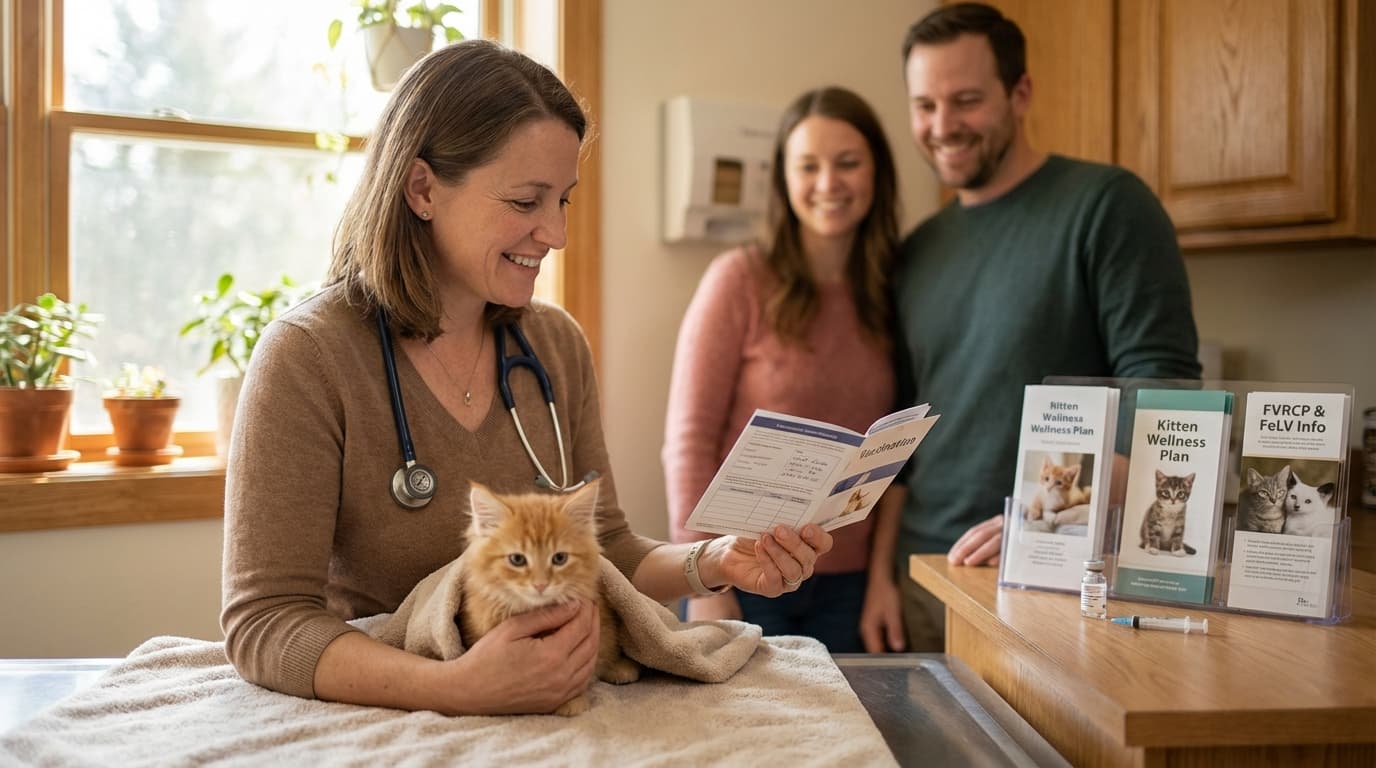
You might wonder why your tiny furball needs so many trips to the vet in their first few months. It all comes down to what vets call the window of vulnerability. When kittens are born, they get a boost of antibodies from their mother's milk, but that protection eventually fades. The tricky part is that these maternal antibodies can actually block a vaccine from working if they are still too high. That is why we use a series of shots starting between 6 and 8 weeks, with boosters every 3 to 4 weeks until they are about 16 to 20 weeks old. It is all about catching that perfect moment when their own immune system is ready to take the wheel.
Most schedules focus on the 6, 9, 12, and 16-week milestones. Along with the shots, you will usually see a deworming protocol at these same intervals to keep parasites at bay. It is a busy time, but it builds a foundation for a healthy life. And here is a bit of legal reality: even if your cat never plans to step paw outside, certain shots like Rabies are often mandatory. In states like New York, the law does not care if your cat is a dedicated couch potato; they still need that protection starting around 12 to 16 weeks of age because of the high risk the virus poses to humans and pets alike.
Let's talk about the FVRCP vaccine, which is basically the must-have for every cat. It stands for Feline Viral Rhinotracheitis, Calicivirus, and Panleukopenia. While the first two cause nasty respiratory issues and mouth ulcers, Panleukopenia is the one that keeps vets up at night. It is a version of feline distemper that is incredibly aggressive, often killing up to 90% of young kittens who catch it. It moves so fast that a kitten can become critically ill in just 12 hours. To make matters worse, these viruses are hardy and can survive in your home environment for up to a year, meaning you could accidentally bring them in on your clothes or shoes.
There is also a growing consensus around the Feline Leukemia (FeLV) vaccine. In the past, it was mostly for outdoor cats, but many vets now recommend it for every single kitten. Think of it as insurance for the escape artist in your home. Even the most well-behaved indoor cat might slip out a door once, and that is all it takes for a life-changing infection. However, you cannot just jump into the shots. It is vital to test for FeLV before the first dose to make sure the kitten is not already a carrier. Many experts even suggest a follow-up test between six months and a year old to be 100% sure of their status before moving to an adult booster schedule.
Key insights:
- Maternal antibodies can interfere with vaccines, which is why a series of boosters is necessary rather than a single shot.
- The Panleukopenia virus is extremely resilient and can live in a home for a full year without a host.
- FeLV testing is a critical first step because the vaccine cannot help a kitten that is already positive for the virus.
- Indoor-only status does not exempt cats from Rabies vaccines due to strict legal mandates in many regions.
Demystifying the FVRCP Vaccine
Ever wonder what those letters on your vet bill actually stand for? FVRCP is the 'everything' shot for kittens. It protects them from three nasty respiratory and stomach viruses known as Rhinotracheitis, Calicivirus, and Panleukopenia. While the names are a mouthful, the protection is non-negotiable.
Take Panleukopenia, often called feline distemper. It is incredibly aggressive. In fact, 90% of kittens under six months who catch it do not survive. It can strike in as little as 12 hours. The scariest part? These viruses are hardy. Panleukopenia can live in your carpet or on your shoes for up to a year.
Because these germs are so persistent and can even be airborne, being an indoor cat is not a perfect shield. That is why the standard kitten shot schedule kicks off between 6 and 8 weeks old. It is about building a wall of immunity before their mother's natural protection fades. Think of it as their essential starter kit for a healthy life.
Key insights:
- Panleukopenia is highly fatal, with a 90% mortality rate in young kittens.
- FVRCP viruses can survive in your home for an entire year without a host.
- Indoor-only status does not protect against these potentially airborne diseases.
The Feline Leukemia (FeLV) Debate
You might think your indoor kitten is safe from Feline Leukemia, but veterinary standards have shifted recently. Most experts now suggest the FeLV vaccine for every kitten during their first year of life. Why the change? Even a pampered indoor cat can become a sudden escape artist. One accidental dash through an open door could lead to a run-in with an infected stray, and the risk is simply too high to ignore.
Before that first dose, testing is a non-negotiable step. You must confirm they aren't already carrying the virus, as FeLV often passes from a mother to her babies. Testing ensures the vaccine is actually useful rather than a wasted effort. Most vets recommend an initial test followed by a second one when the kitten is between six months and a year old to be absolutely certain of their status.
Think of this shot as a vital safety net for their curious nature. While adult cats might move to a less frequent schedule later on, that first-year protection is essential. It guards them while their immune system is still finding its footing and the natural antibodies they got from their mother's milk begin to fade away.
Key insights:
- Universal FeLV vaccination is now the standard for all kittens to protect against accidental outdoor exposure.
- Testing for FeLV is required before the first vaccination to ensure the kitten is not already infected.
- The first-year series provides a critical defense as maternal antibodies decrease and the kitten's own immune system develops.
Wait, My Kitten Has Worms? (Probably, and That’s Okay)
It is a bit of a shock the first time you hear it. Your adorable, fluffy new roommate likely has tiny hitchhikers living in their gut. Don't panic, and definitely do not feel like a bad pet parent. The reality is that nearly every kitten is born with or contracts intestinal parasites like roundworms very early in life, often through their mother’s milk. It is just a standard part of being a cat. Because these parasites are so common, vets do not wait for a positive test to start treatment. They assume the worms are there and act accordingly to keep your kitten growing strong.
This is why your vet will suggest a kitten deworming protocol that lines up perfectly with their shot schedule. Usually, this means a dose of dewormer at 6, 9, 12, and 15 weeks of age. Think of it as a clean sweep for their digestive system while their immune system is still finding its footing. Since those maternally derived antibodies from mom's milk are starting to fade, we need to make sure parasites are not stealing the nutrients your kitten needs to grow. It is all about giving that tiny body a fair shot at staying healthy during those first few critical months.
But what about indoor cats? You might think a strictly indoor lifestyle keeps them safe, but pests are sneaky. Fleas can hitch a ride inside on your clothes, and a single flea swallowed during grooming can lead to tapeworms. Then there is the bigger picture. Parasite prevention is not just about the stomach. It is a full body shield. By staying on top of the three to four week booster cycle, you are protecting them from everything from itchy ears to life threatening viruses like Panleukopenia. That virus is no joke, as it can remain active in the environment for up to a year without a host.
Key insights:
- Most kittens contract parasites through their mother's milk, making early deworming a standard health practice.
- The deworming schedule of 6, 9, 12, and 15 weeks mirrors the vaccination timeline for maximum protection.
- Indoor cats still face risks from airborne viruses and fleas brought in by humans or other pets.
The 'Indoor Cat' Myth: Why Safety Doesn't Stop at the Front Door
You might think your sofa-lounging fluffball is perfectly safe behind a locked door. But here is the thing: viruses do not need a key to find your cat. Some nasty germs are airborne and drift through window screens, while others hitch a ride on your shoes or clothes. This is why the FVRCP vaccine is a must for every pet. It protects against Panleukopenia, a virus so tough it can kill a kitten within 12 hours and stays active in the environment for an entire year. Without boosters, even indoor kitties are unprotected against these hitchhiking diseases.
Now consider the legal side. In many states, a Rabies shot is required by law even for cats that never leave the living room. It sounds strict, but it is there for a reason. Imagine a bat getting into your house or your cat dashing out during a grocery delivery. These what-if moments are also why microchipping is so important. Think of it as the best insurance policy you can buy. It is a tiny chip that offers a huge chance of a happy reunion if your indoor explorer ever gets lost on an accidental solo mission.
The timing of these shots matters because of something called maternally derived antibodies. Kittens get a temporary shield from their mom, but as that fades, it creates a window where they are unprotected because the vaccine and the mom's antibodies can interfere with each other. That is why your vet schedules boosters every few weeks until they are about four months old. The good news is that once they hit adulthood, many core vaccines move to a three-year schedule. This keeps your cat safe without overdoing the needles.
Key insights:
- Viruses like Panleukopenia can enter your home on your clothes or through open window screens.
- Rabies vaccinations are often a legal requirement even for strictly indoor pets to protect against rare encounters like bats.
- Microchipping provides a permanent link back to you if your cat accidentally slips outside through an open door.
The Money Talk: Budgeting for the First Year
Let's be real: bringing home a new kitten is a total blast until you see the first vet bill. You are likely looking at a few hundred dollars for those initial wellness visits. Between the core FVRCP shots starting as early as six weeks and the necessary deworming at nine and twelve weeks, the costs add up fast. But it is not just the shots you have to plan for. You also need to factor in essentials like microchipping and testing for FeLV and FIV. Think of these as the foundation for your cat's entire life rather than just a one-time expense.
Why spend roughly $500 now? Because the alternative is both heartbreaking and incredibly expensive. Take Panleukopenia, for example. It is a nasty virus that can live in your carpet for up to a year without a host. Dr. Ricky Walther warns it can kill a kitten in just 12 hours. The reality is that 90% of kittens under six months who catch it do not survive. Treating a crisis like that in an emergency room can easily top $5,000. Paying for boosters every three to four weeks feels like a lot today, but it is actually the cheapest insurance policy you will ever buy.
Even if your kitten never steps a paw outside, they still need this protection. Some viruses are airborne and can reach them through a window screen, and Rabies is a legal requirement in many states regardless of a cat's indoor status. Also, those maternal antibodies they got from their mom eventually fade, creating a window of vulnerability where they are unprotected. Staying on schedule ensures their own immune system kicks in exactly when it needs to so you can focus on the fun parts of being a cat parent.
Key insights:
- Preventative care costs around $500 in the first year but avoids emergency bills that can exceed $5,000.
- Panleukopenia has a 90% mortality rate in kittens, making the FVRCP vaccine a non-negotiable lifesaver.
- Indoor-only cats still require core vaccines due to airborne viruses and legal mandates for Rabies shots.
Common Questions About Kitten Health
Most kittens handle their shots like tiny champs, but it is normal to see them acting a bit sleepy or skipping a meal afterward. You might notice a small, soft lump where the needle went in. But here is when you should worry: if your kitten starts vomiting, develops a swollen face, or has trouble breathing, call the vet immediately. These reactions are rare, but they are serious. Think of it like a human flu shot where a little soreness is fine but a major reaction needs a pro.
Getting ready for that first visit? Start by leaving the carrier out at home so it does not seem like a scary trap. This trip is about more than just the kitten shot schedule. Your vet will likely suggest feline leukemia testing in kittens and a kitten deworming protocol. It is also a great time to talk about the first vet visit cost and microchipping kittens so your new friend is always findable.
Once the initial series is done, things get easier. Kittens need boosters every few weeks to fight off bugs like Panleukopenia. This virus is fatal for 90% of infected kittens, so regular shots are vital. Adults eventually move to a three-year rotation for the FVRCP vaccine for kittens. Even for indoor cats, these shots matter because some viruses are airborne. It is all about keeping that protection strong as they grow.
Key insights:
- Normal vaccine side effects include mild lethargy or a small lump, but facial swelling or breathing issues require emergency care.
- The FVRCP vaccine for kittens eventually transitions to a three-year booster schedule for adults once the initial series is complete.
- Indoor cats still require core vaccinations because viruses like Panleukopenia can survive in the environment for up to a year.
Frequently Asked Questions
Don't worry too much, but you should definitely call your vet to get back on the schedule as soon as possible. A one-week delay usually isn't a disaster, but these boosters are timed every 3 to 4 weeks for a very specific reason. Kittens have something called maternally derived antibodies from their mother's milk that can actually interfere with the vaccine if the timing is off.
Here is the thing: if you wait too long and miss that window, your vet might suggest restarting the entire vaccine series from scratch. This is because the previous shot needs a follow-up within a certain timeframe to properly 'stick' and build long-term immunity against dangerous viruses like Panleukopenia, which can unfortunately be fatal for up to 90% of young kittens.
It might seem like overkill for a cat that never leaves the sofa, but yes, they really do need it. In many places, like New York, getting a Rabies vaccine is actually a legal requirement for all cats regardless of their lifestyle. It's a public health matter because Rabies is fatal and can be passed to humans.
Also, remember that 'indoor-only' isn't always a guarantee. A kitten could accidentally slip out a door, or a stray bat could find its way into your home. Since some viruses are airborne or can be brought in on your clothes, staying inside doesn't mean they are in a bubble. Getting that shot, usually starting around 12 to 16 weeks old, is just the smartest way to keep your kitten and your family safe.
It might feel like an extra step, but testing for Feline Leukemia (FeLV) is actually a vital safety check. You want to make sure your kitten doesn't already have the virus before you start the vaccine series, because if they are already a carrier, the shot won't be able to protect them or clear the infection.
Here is the thing: knowing their status early helps you and your vet create the right care plan for their specific needs. Most vets even suggest a follow-up test when they are a bit older, usually between six months and a year, just to be 100% sure they are in the clear.
It is very common for kittens to feel a little off or extra sleepy for a day or two after their shots. Think of it like how you might feel a bit sluggish after a flu jab - their immune system is just busy doing the hard work of building up those important defenses.
While a long nap or a slightly smaller appetite is usually nothing to worry about, keep an eye out for anything more serious like vomiting or major swelling. If they aren't back to their usual zoomy self within 48 hours, a quick call to your vet is always the best move just for peace of mind.
Conclusion
Those first vet visits can feel like a whirlwind of dates and acronyms, but there is a simple rhythm to it all. By sticking to a steady kitten shot schedule and kitten deworming protocol, you are doing more than just checking boxes on a medical form. You are closing the window of vulnerability and giving your new friend a shield with feline leukemia testing in kittens and the FVRCP vaccine for kittens.
Even indoor cats need a safety net for the unexpected. Whether it is a stray flea hitching a ride on your socks or an accidental dash out the front door, core vaccines and microchipping kittens keep them protected. Managing the first vet visit cost now is really just buying years of worry-free purrs and midnight zoomies.
So, find a vet you like and get that first appointment on the books. Once the medical stuff is handled, you can get back to the important jobs like finding the perfect cardboard box or teaching them that toes are not toys. Your kitten has a big life ahead, and you just made sure it starts on the right paw.
Send it to someone who should read it next.

PurrScript Editorial Team
Editorial Team
PurrScript's in-house editorial team. We research, write, and review every guide using established veterinary and behavioral resources, and update articles as best practices evolve.
View all articles