Adopting a Cat from a Shelter: Requirements, Timing, and Prep
Adopting a cat from a shelter is a life-saving choice that helps one of the 3.1 million cats entering the U.S. shelter system annually. It’s a simple process, but you’ll...

PurrScript Editorial Team
Editorial Team
Adopting a Cat from a Shelter: Requirements, Timing, and Prep
Adopting a cat from a shelter is a life-saving choice that helps one of the 3.1 million cats entering the U.S. shelter system annually. It’s a simple process, but you’ll need to meet specific requirements and prepare your home for a smooth transition.
Being ready with the right paperwork and supplies ensures your new friend feels safe from day one. It also helps you avoid pitfalls like landlord issues or buying the wrong gear for your space.
You’ll learn about adoption timelines, kitten essentials, and how to introduce a second cat to your home without the stress.
What are the Requirements for Adopting a Cat from a Shelter?
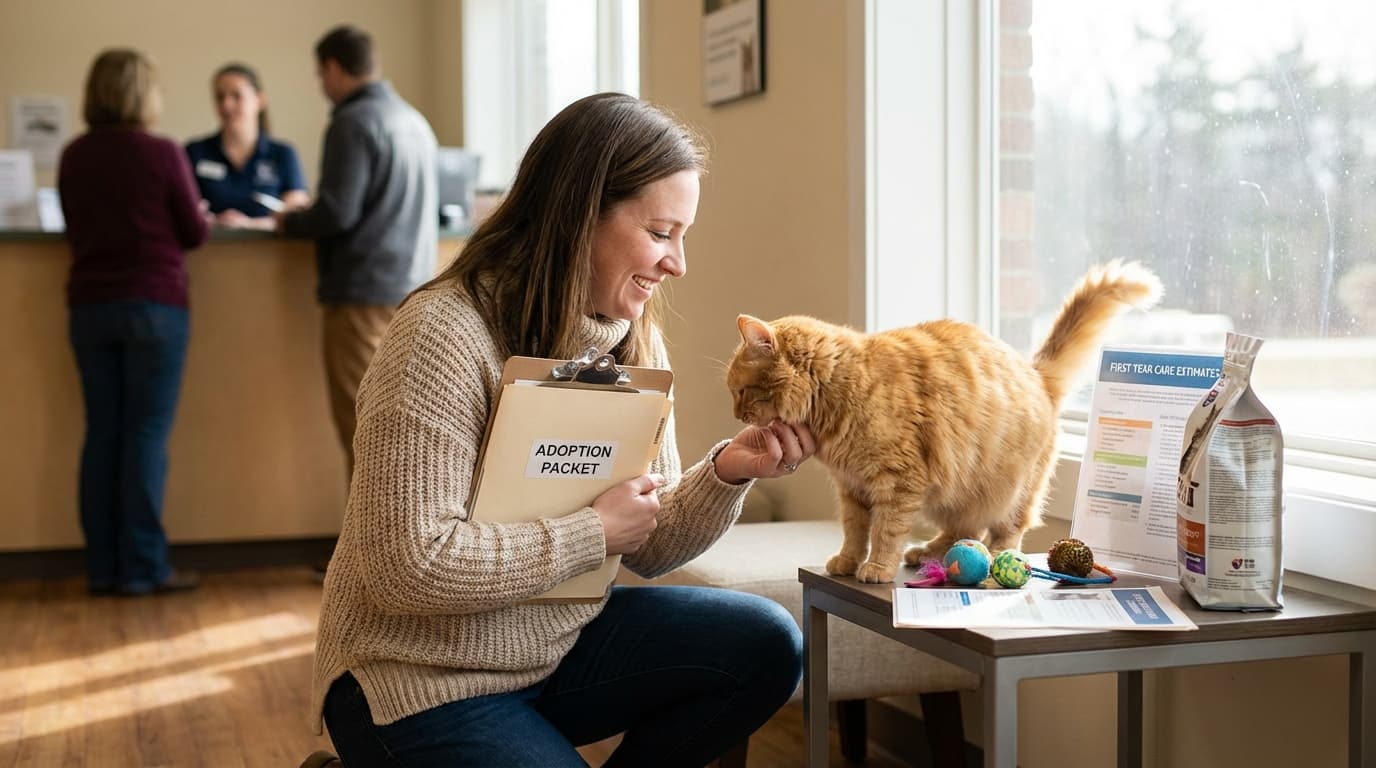
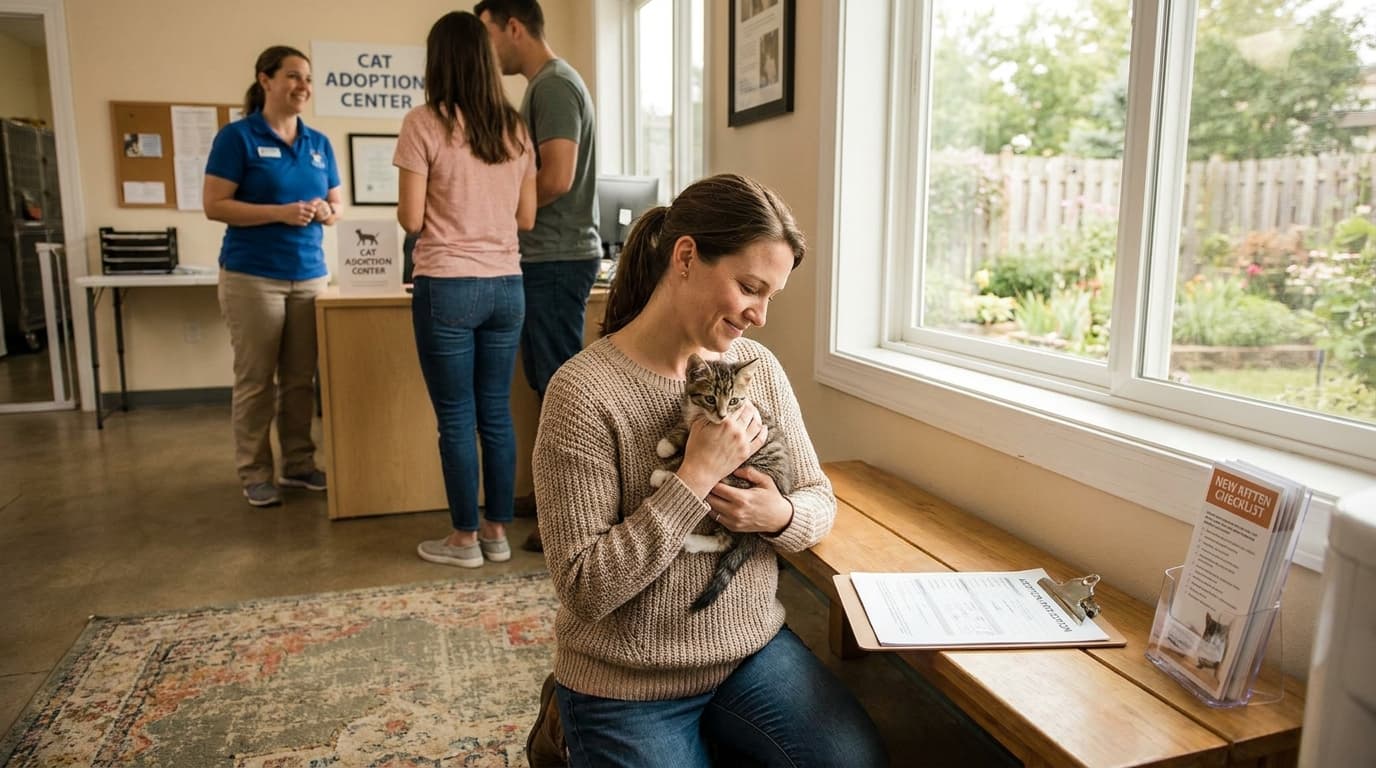
Shelters have one main goal: finding a forever home so the cat never has to return to the system. Since about 3.1 million cats and kittens enter US shelters every year, the staff works hard to ensure every match is a good one. They generally look for a stable environment and a person who understands the long term commitment of pet ownership. You will usually need to provide a valid ID, proof of address, and sometimes a list of personal references to get the ball rolling.
They also need to see that you can handle the financial side of things. While adoption fees usually cover the initial medical work like neutering and vaccines, you still need to prove you can afford the monthly costs of food, litter, and vet visits. Some places might even ask for photos of your living room or a quick home visit to check for safety. They want to know where the litter box will go and if your daily schedule leaves enough time for play and care.
Imagine a first time owner who falls in love with a kitten but lives in a building with a strict no pet policy. Without checking the lease first, they might get through the whole interview only to be turned down at the last minute. It is heartbreaking for the person and a waste of time for the busy shelter staff. This is why having your paperwork ready is just as important as buying a carrier or a scratching post.
Taking these steps early shows the shelter that you are a responsible future owner. It helps the staff feel confident that the cat is going to a safe and prepared home.
Key insights:
- Check your lease for specific pet rules before you fall in love with a cat.
- Get a letter of permission from your landlord if you rent your home.
- Prepare a folder with your ID and a recent utility bill to speed up the approval.
- Set aside a monthly budget for food and unexpected medical costs.
- Clear a small room to help the cat adjust slowly for the first few days.
Financial and Living Situation Checks
Shelters want to make sure you can handle the costs of a new feline friend. They aren't being nosy. They just need to know you can cover basics like food, litter, and vet bills. Most shelters charge an adoption fee, but this usually covers the big stuff like spaying, neutering, and microchipping.
Imagine a first-time owner eyeing a high-energy kitten. The shelter might ask for photos of the living room to check for safety or ask about work hours. If you are away ten hours a day, they might suggest a chill senior cat instead of a kitten that needs constant play.
Key insights:
- Set a budget for monthly food and litter costs.
- Take photos of your home to show it is cat-safe.
- Share your real schedule to get a good personality match.
- Buy a litter box longer than your cat's body.
How Long Does the Cat Adoption Process Actually Take?
The wait time for bringing home a new feline friend can range from a quick afternoon to a few weeks. It all comes down to how the shelter handles their vetting process. Some rescues are very hands-on and want to double-check everything before saying yes. Others focus on getting cats into homes fast to make room for the roughly 3.1 million cats that enter the U.S. shelter system every year.
Usually, you will go through a few stages like an initial application and a short interview. Some places even require a meet and greet where every human in your house has to come say hello to the cat. This helps make sure the cat's personality actually fits your lifestyle and home environment.
Imagine a first-time owner who spots a cute kitten online and heads to the shelter on a Saturday morning. If the shelter requires landlord verification, that owner might have to wait until Monday for a phone call before they can officially sign the papers. But if that same owner went to a special adoption event, they might be picking out a litter box by sunset. It is all about the specific rules of the organization you choose and how prepared you are when you walk through the door.
Key insights:
- Check the shelter website for Same Day Adoption events if you want to speed up the process.
- Have your landlord contact info or lease agreement ready to prove you are allowed to have pets.
- Look for shelters that bundle spaying and microchipping into the adoption fee to save on future vet visits.
- Try to visit during the week when staff are less busy if you want a faster interview.
- Ask about the cat's history to see if they have already been socialized with other animals.
How to Adopt a Cat for Free (and What to Watch Out For)
Finding a cat for free is totally doable, but you have to know where to look. Most shelters charge an adoption fee to help cover the costs of spaying, neutering, and microchipping, which are essential for a healthy start. These fees are usually much lower than what you would pay at a private vet.
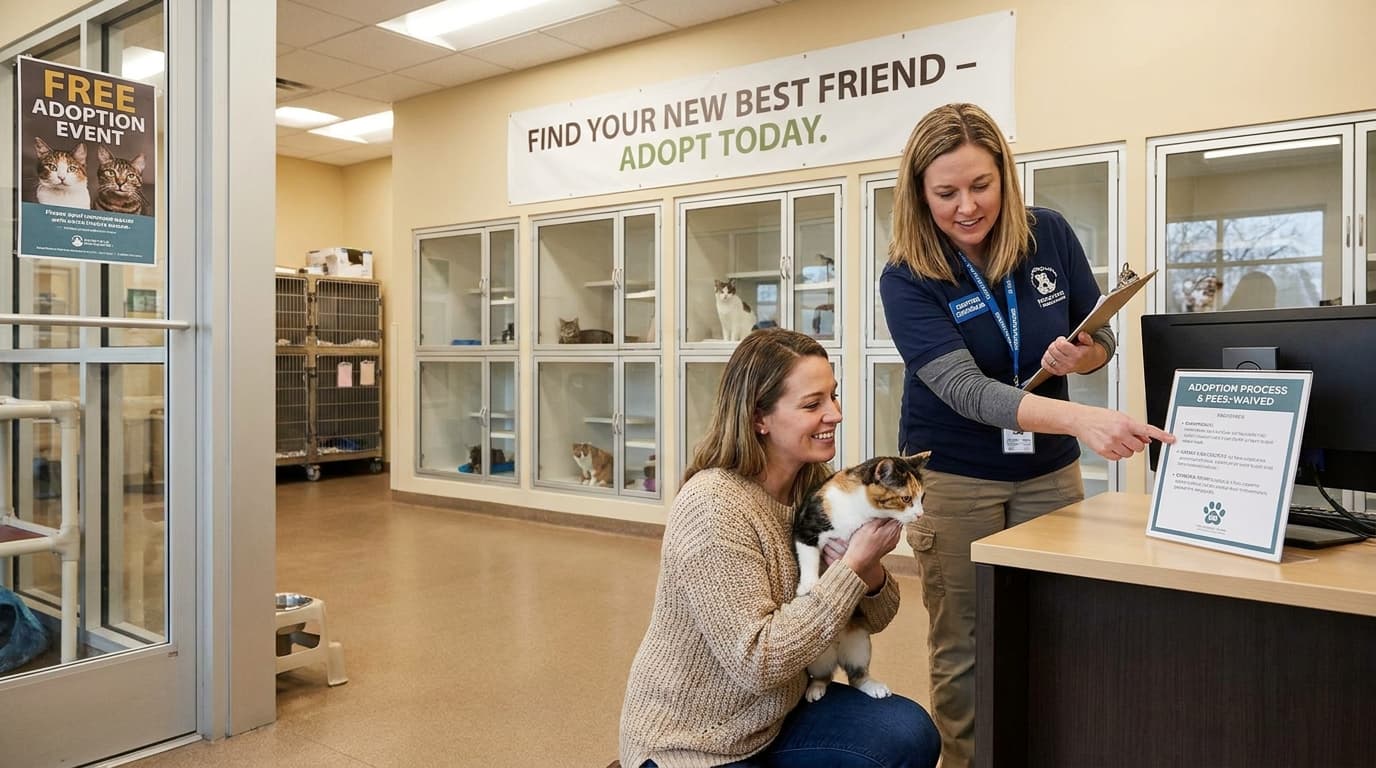
However, many rescues host fee-waived events like 'Clear the Shelters' or holiday specials where generous donors pick up the tab. This helps move some of the 3.1 million cats entering shelters annually into loving homes faster. It is a great way to save money while giving a deserving animal a fresh start.
Imagine a first-time owner who finds a kitten in a community colony. While there is no upfront cost, that 'free' cat often needs immediate medical care for parasites or infections. By waiting for a sponsored adoption weekend at a shelter, you get a cat that is already healthy, vaccinated, and microchipped for zero dollars because a donor covered the bill. It is a much safer way to save money while giving a cat in need a second chance and ensuring they are ready for indoor life.
Here is how you can find these opportunities and prepare your home for a new feline friend without breaking the bank.
Key insights:
- Sign up for shelter newsletters to get early alerts about sponsored adoption weekends and 'name your own price' events.
- Follow local animal rescues on social media to catch 'Clear the Shelters' announcements where fees are often zero.
- Budget for initial supplies like a litter box that is longer than your cat's body to ensure they stay comfortable.
- Ask shelters about 'bonded pair' discounts if you are looking to adopt two cats for their social and mental health.
- Schedule a vet checkup within the first few days for any cat found in the community to establish a vaccination schedule.
The Welcome Home Shopping List: What to Buy for a New Kitten
Getting ready for a new kitten is exciting, but it is easy to get carried away in the pet store aisles. Most new owners spend way too much on fancy gadgets and forget the functional basics that actually keep a cat happy. For instance, a litter box should be physically larger than your cat's total body length. If the box is too small, your kitten might feel cramped and start looking for other spots in the house to go, which is a headache for everyone.
Think about a first-time owner who spends a fortune on robotic mice but picks up a tiny, 'space-saving' litter box to hide in a corner. Within a week, the kitten is avoiding the box because it cannot turn around comfortably, and the owner is stuck cleaning the carpet. It is much better to invest in a sturdy carrier, high-quality food, and a solid scratching post before you even look at the toy section.
When you are at the shelter, keep in mind that physical traits often hint at a cat's vibe. Generally, cats with rounder heads and longer hair tend to be more laid back and easygoing. On the flip side, lean cats with narrow heads and short hair are usually high-energy athletes. This is not a hard rule, but it is a great starting point when you are trying to find a match for your lifestyle.
Imagine a family looking for a calm lap cat who accidentally picks a high-energy shorthair because it looked cute in the cage. After getting home, they realize the cat needs hours of play to stay out of trouble. To avoid this, try to spend at least 20 minutes in a quiet room with a cat before deciding. This gives them time to relax so their true personality can finally come out.
Key insights:
- Select a litter box that is longer than your cat's body from nose to tail.
- Prioritize the basics like a carrier, scratching post, and bed over fancy toys.
- Look for round-headed cats if you want a more relaxed and easygoing pet.
- Choose lean, short-haired cats if you prefer an active and athletic companion.
- Spend 20 minutes of one-on-one time to see a cat's real temperament emerge.
Choosing the Right Personality
Picking a cat is about more than just looks; it is about finding a vibe that fits your daily life. While every kitty is an individual, physical traits often give you a head start on what to expect. Generally, cats with rounder heads and long hair are more laid back, while lean cats with short hair and narrow faces tend to be high-energy athletes ready for action.
Imagine you are at a busy shelter where 3.1 million cats arrive every year. It is easy to feel overwhelmed by the noise and the rows of cages. Take a first-time owner who meets a shy tabby hiding in a corner. Instead of moving on, they spend 20 minutes together in a quiet room. Eventually, the cat relaxes, comes out for a head rub, and shows the true, gentle nature that was hidden by the loud kennel environment.
Key insights:
- Spend at least 20 minutes in a private room to let the cat's guard down.
- Look for rounder body types if you want a calm, easygoing companion.
- Choose lean, short-haired cats if you are looking for an active playmate.
- Consider adopting two cats at once so they have a friend for social and mental health support.
Introducing a Second Cat to Your Home Without the Stress
Bringing a new feline friend home is a huge win, especially since about 2.1 million shelter cats find homes annually and many thrive with a feline companion for social and mental health. But jumping straight into a face-to-face meeting is usually a recipe for hissing and arched backs. Cats are territorial and rely on smell to identify friends, so a successful introduction always starts with scent rather than sight. It is a big transition, but taking it slow ensures your home stays a peaceful sanctuary instead of a feline battleground.
This phased approach is all about reducing stress for everyone involved. By keeping your cats separated at first, you allow their pheromones to mingle without the pressure of a physical fight. It gives the newcomer time to decompress and the resident cat time to realize their kingdom isn't actually under attack. Slowing things down helps both animals feel more secure in their territory.
Imagine you just adopted a mellow, long-haired cat because you heard they are often more easygoing than lean, short-haired breeds. Instead of a 'sink or swim' introduction in the living room, you set the new arrival up in a cozy bathroom with their own bed and toys. Your older cat spends the afternoon sniffing the gap under the door, getting used to the new roommate's scent while you feed them treats on both sides. This phase builds curiosity instead of conflict, making the eventual meeting much smoother. By the time they finally meet, the mystery is gone and the friendship can actually start.
You also want to make sure your home is ready for the extra paws. Doubling up on resources like scratching posts and water bowls prevents any 'resource guarding' behavior. When cats feel secure in their environment, they are much more likely to accept a new companion. It is also a great time to check your gear; for example, every cat needs a litter box that is physically longer than their own body to feel truly comfortable.
Key insights:
- Confine the new cat to a single room for at least 48 hours to let everyone adjust to the new smells safely.
- Swap bedding or toys between the cats so they can investigate each other’s scent without any direct pressure.
- Use a gradual door-cracking method during meal times to build a positive association between food and the other cat's presence.
- Reward both cats with high-value treats and praise whenever they stay calm and curious near the separation door.
- Install an extra litter box in a neutral area to ensure no one feels cornered or competitive about their bathroom breaks.
Frequently Asked Questions
It is usually a great idea. Adopting two cats at once is often better for their mental health because they provide each other with constant social interaction. Cats need a lot of exercise and mental stimulation, and having a buddy to play with makes that much easier. You will find they are often less lonely when you have to be out of the house.
Also, many shelters have bonded pairs that are already close friends. Taking them both home keeps them from feeling the stress of being separated. It is a simple way to make sure your new pets feel safe and happy from day one because they have a familiar face nearby.
You will mostly need a government ID and proof that your home allows pets. If you are a renter, the shelter will likely need to see landlord permission to make sure the cat can stay for the long haul. They also look at your living situation to ensure it is a safe environment for a new pet and that you can handle the financial side of things.
It is also good to know that shelter adoption fees typically cover things like spaying, neutering, and microchipping. Having your info ready helps the process go smoothly so you can get your new friend home as soon as possible.
Yes, you definitely can. Most shelters actually prefer that adopted cats live strictly indoors to keep them safe from cars and other animals. While dogs might need a yard to run around, cats are masters of making the most of vertical space inside your home.
Here is the thing. Shelters focus more on your ability to provide a stable environment and verification of landlord permission if you are renting. As long as you have enough room for a litter box and some scratching posts, a yard is not a requirement at all.
It is best to schedule an appointment within the first week, ideally in the first two or three days. Even if your cat seems perfectly healthy, a quick professional look-over is a great way to start your journey together on the right foot.
Shelter adoption fees usually cover the big stuff like initial vaccinations and microchipping, but your own vet will want to review those records. It is all about establishing a medical baseline and making sure there are no hidden sniffles or tummy issues from the stress of the move.
Conclusion
Bringing a shelter cat home is about more than just picking out a cute face. It is a mix of checking off the practical stuff like landlord letters and getting the fun gear like a sturdy scratching post. When you match the right personality with a home that is actually ready for them, the whole process feels less like a chore and more like a welcome party. Whether you are looking for a high-energy athlete or a lazy lap warmer, knowing the requirements and the timing helps you stay patient while the magic happens.
The bottom line is that these cats just want a safe place to land. Even if the application takes a few days or the first meeting is a bit shy, the effort you put in now pays off in years of purrs and head-butts. You do not need to be a perfect expert to be a great cat parent. You just need to be prepared and willing to go at their pace.
Your next move is simple: head over to your local shelter website or stop by in person. Take a look at the faces waiting there and see who clicks with you. That first trip is the start of a pretty great story. After all, your new best friend is probably already waiting for you to show up.
Send it to someone who should read it next.

PurrScript Editorial Team
Editorial Team
PurrScript's in-house editorial team. We research, write, and review every guide using established veterinary and behavioral resources, and update articles as best practices evolve.
View all articles