Bringing Home Your New Cat: A Practical Guide to a Stress-Free First Week
You are about to join over 17,000 happy people who found a new best friend through adoption. It is an amazing feeling, but bringing a cat home can feel a...

PurrScript Editorial Team
Editorial Team
Bringing Home Your New Cat: A Practical Guide to a Stress-Free First Week
You are about to join over 17,000 happy people who found a new best friend through adoption. It is an amazing feeling, but bringing a cat home can feel a bit like inviting a tiny, furry ninja into your life. To make sure day one is a success, you will need a solid cat adoption shopping list and a plan to keep things calm. Preparation is the real secret to helping your new companion feel brave instead of hiding under the sofa for a week.
This guide is all about making that first transition smooth for both of you. We are going to look at why setting up a base camp room is better than giving them the whole house at once. You will also learn about kitten-proofing for beginners to keep your curious friend away from toxic plants and dangling cords. It is not just about buying stuff, it is about creating a safe space where they can truly relax and feel at home.
We will walk through the essential cat supplies you really need and how pheromones for new cat transition can help speak their language. From litter box rules to the best way to switch their food, this guide covers everything to help your shelter cat feel right at home. Let us get your house ready for its newest member.
You’re joining a community of over 17,000 successful adopters who found their match at SAFE Haven for Cats. It’s an exciting time, but bringing a new friend home is about more than just a cute name. Real preparation is the secret to helping a cat feel confident and safe.
Think of the first week as a slow, steady introduction. Instead of giving them the run of the house, you’ll start with a base camp - one quiet room with all their essentials. It’s also the time to check for hidden dangers, like aloe or lily plants that are toxic to kittens.
So, what’s the plan? We’ll walk through the gear you need and how to kitten-proof your space. By setting the stage now, you ensure that first week is about bonding, not stress.
Key insights:
- A dedicated base camp helps a new cat adjust without feeling overwhelmed by a large house.
- Preparation involves identifying hidden household toxins like lilies before the cat arrives.
The 'Base Camp' Secret: Why Less Space Means a Happier Cat
Imagine moving into a giant warehouse where you do not know where the bathroom is or if the neighbors are friendly. That is exactly how a new cat feels when you give them the keys to the whole house on day one. It is overwhelming for them. Instead of a grand tour, your new friend needs a base camp. This is one quiet, low-traffic room where they can feel like the boss of a small space before they try to conquer the rest of the home. As the experts at Best Friends Animal Society suggest, if you let a cat hide and emerge on their own terms, you are setting the stage for a great relationship. It is not about being restrictive. It is about giving them a safe place to decompress.
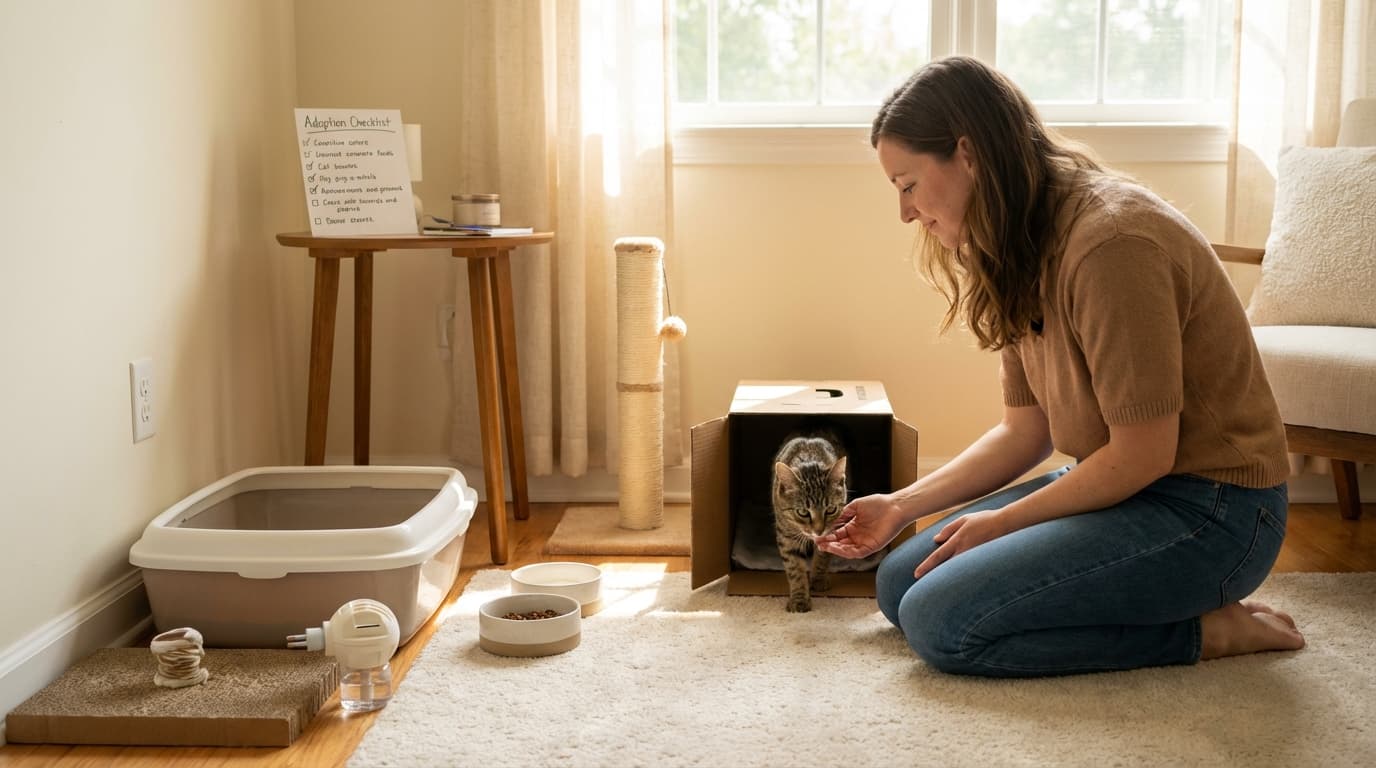
Setting up this room correctly is a bit of an art. You want to keep their food and water in one spot and the litter box in another. Cats are very clean and they do not like eating near where they go to the bathroom. Also, remember the golden rule of litter boxes which is to have one per cat plus one extra. Even in a small room, this helps them feel secure. Give them places to hide that you can still reach if you have to, like a cardboard box or a carrier with the door removed. Add some soft bedding and a bit of vertical space, like a sturdy shelf. This lets them look down on their new world, which makes them feel much safer.
Scent is a cat's primary language, so you should use it to your advantage. You can use synthetic pheromones to signal that the room is a safe zone. There is also a great trick called scent transfer. Gently stroke the cat’s cheeks with a soft towel and then rub that towel on their new scratching post. This marks the post with their own scent and encourages them to use it. It also helps them claim the territory without scratching your furniture. Think of it this way: every cute behavior you encourage today becomes a habit tomorrow, so setting these boundaries early is a smart move for everyone.
While they are in their base camp, pay attention to the small details that keep them healthy. Avoid using plastic bowls because they can trap bacteria and cause feline chin acne. Stainless steel or ceramic dishes are much better choices. Also, make sure the room is free of toxic plants like lilies, aloe, or pothos. If you are bringing home a kitten, remember they are part ninja and part nap machine. They will find every tiny hole or loose wire, so keeping them in one safe room makes it much easier to protect them while they adjust to their new life with you.
Key insights:
- A smaller initial territory reduces stress and helps a cat feel in control of their environment.
- The recommended litter box ratio is one box per cat, plus one extra, even in confined spaces.
- Scent transfer using a towel helps a cat claim new items like scratching posts through pheromones.
- Avoiding plastic bowls prevents common health issues like feline chin acne.
- Safe spaces should include vertical options because cats feel more secure when they can observe from above.
Setting Up the Perfect Base Camp
Imagine walking into a giant, unfamiliar warehouse where you are expected to live. That is exactly how a new cat feels about your entire house. To make the transition easier, start with a base camp. This is just one low-traffic room where they have everything they need. If you allow a cat to hide and emerge on their own terms, you are building a much stronger bond from the start. It is all about giving them a safe space to decompress.
Inside this room, layout is everything. Keep the food, water, and litter box in separate areas. Cats are naturally clean and usually hate eating right next to their bathroom. Also, think about their physical comfort. Use shallow ceramic or stainless steel dishes to avoid whisker fatigue and chin acne caused by plastic bowls. Since kittens are part ninja and part nap machine, give them vertical space like a cat tree and soft bedding to crash on after they play.
Safety is the final step for kitten-proofing for beginners. Before they arrive, check for toxic plants like lilies or aloe that might be on your shelves. You should also follow the golden rule for litter by providing one box per cat plus an extra one. By setting up the room this way, you focus on success rather than scolding them later. This simple preparation makes the first week much smoother for everyone involved.
Key insights:
- Use ceramic or stainless steel dishes to prevent feline chin acne.
- Place food and litter boxes in separate corners to respect a cat's natural cleanliness.
- Vertical space and hiding spots are essential for helping a cat feel secure in a new environment.
Pheromones and Scent: Speaking Their Language
Cats read a room with their noses before they ever feel comfortable in it. To help a nervous newcomer settle in, try using synthetic pheromones. These diffusers release scent signals that tell a cat the area is a safe zone, lowering their stress levels almost instantly.
You can also use the towel trick to help them claim territory. Gently stroke your cat’s cheeks with a soft cloth to collect their natural pheromones, then rub that cloth onto their new scratching posts. This makes the post smell familiar, which naturally encourages them to use it instead of your furniture.
As the Best Friends Animal Society notes, letting a cat emerge on their own terms sets the stage for a great relationship. By using scent to guide them, you are choosing environmental control over punishment. It is a kinder, smarter way to help your new friend feel like they finally belong.
Key insights:
- Synthetic pheromones mimic natural happy signals to reduce anxiety.
- The towel trick helps cats identify new objects as part of their safe territory.
- Focusing on scent-marking is more effective than scolding for behavior management.
Shopping for Your Cat: What You Actually Need (and What to Skip)
Walking into a pet store is dangerous for your wallet. It is easy to get distracted by tiny sweaters or motorized mice, but your new cat cares way more about function than fashion. One of the biggest mistakes new owners make is underestimating the bathroom situation. You need the 1+1 rule: one box for every cat, plus one extra. If you are bringing home one kitty, that means two boxes. It might seem like overkill, but it prevents accidents and helps a nervous shelter cat feel secure in their new territory. Also, skip the fancy plastic sets. Stick to ceramic or stainless steel for everything because these materials are non-negotiable for hygiene.
Why does your bowl choice matter? It is not about matching your kitchen decor. Plastic bowls are notorious for harboring bacteria in tiny scratches, which often leads to feline chin acne - those painful little black bumps on your cat's face. Switching to stainless steel or ceramic fixes this instantly. You should also look for wide, shallow dishes to avoid whisker fatigue. Cats have incredibly sensitive whiskers that hate hitting the sides of deep bowls while they eat. For water, think about a fountain. Many cats are picky about still water, and hydration technology like a recirculating fountain encourages them to drink more, which is a huge win for their long-term kidney health.
Your essential supply checklist needs to cover the basics of daily life. If you are adopting a kitten, plan for three to four small meals a day to keep their energy steady. High-quality food is a must, but so is a sturdy carrier. Do not go for the cheapest cardboard option; you want something that makes vet visits feel safe, not like a battle. For enrichment, grab a few scratchers and a wand toy to redirect that ninja energy away from your curtains. Finally, check your plants. Common ones like lilies, aloe, and pothos are toxic. Organizations like SAFE Haven for Cats have recorded over 17,002 adoptions, and they know a safe, well-stocked home is the secret to a happy transition.
Key insights:
- Follow the 1+1 litter box rule to ensure your cat feels secure and to prevent household accidents.
- Choose wide, shallow ceramic or stainless steel bowls to prevent both bacterial chin acne and whisker fatigue.
- Replace static water bowls with fountains to improve hydration and support feline kidney health.
- Always verify that household plants like lilies and pothos are removed before bringing a new cat home.
Why Your Bowl Choice Matters (Hint: It Is Not Just About Color)
Picking a cute food dish feels like a fun design choice, but for your cat, it is a health decision. Cheap plastic bowls are porous and trap bacteria in tiny scratches. This often leads to feline chin acne, which shows up as painful black crusts. Switching to stainless steel or ceramic is a simple move that keeps their skin clear.
Then there is whisker fatigue. A cat's whiskers are so sensitive that hitting the sides of a deep bowl causes physical stress. Think of it like someone tapping your funny bone every time you take a bite. A shallow, wide dish lets them eat in peace without that constant irritation.
For water, try a fountain. Many cats ignore still water but love a running stream. These fountains encourage hydration and support kidney health. It is an easy way to keep your new friend happy.
Key insights:
- Switch to ceramic or stainless steel to avoid bacterial buildup and chin acne.
- Use wide, shallow dishes to prevent whisker fatigue and mealtime stress.
- Water fountains are better than bowls for cats who prefer moving water.
The Essential Supply Checklist
Kittens are part ninja and part nap machine. They bring huge energy, but they need the right gear to stay safe. Before you bring them home, your cat adoption shopping list needs to be ready. It is not just about finding the cutest bed. It is about meeting their practical needs from the very first hour.
Start with food. Kittens typically need three to four small meals every day. But here is a tip: skip the plastic bowls. Plastic traps bacteria that can cause feline chin acne. Go for shallow ceramic or stainless steel dishes instead. This also prevents whisker fatigue, which happens when deep bowls overstimulate their sensitive whiskers.
You will also need a sturdy carrier and a "one plus one" litter box setup. That means one box per cat, plus an extra. Check your house for toxic plants like lilies or aloe too. Finally, grab some scratchers. If you rub a towel on your cat’s cheeks and then on the post, the scent transfer helps them feel at home.
Key insights:
- Use shallow stainless steel or ceramic bowls to prevent chin acne and whisker fatigue.
- Follow the 'n+1' rule for litter boxes to keep your new cat comfortable.
- Remove toxic household plants like lilies and aloe before bringing a kitten home.
Ninja-Proofing: Keeping Your Home Safe for a Curious Kitten
Your new kitten is essentially a tiny, furry ninja who spends half their day in a deep sleep and the other half trying to parkour off your bookshelf. This ninja energy is why kitten-proofing is non-negotiable. You have to look at your living space through the eyes of a creature that can jump five times its height and finds power cords irresistible. If there is a small gap or a dangling string, they will find it.
Start with the greenery. Many common houseplants, including lilies, aloe, and pothos, are actually toxic to cats. If you have these around, it is best to move them to a room the kitten cannot access or swap them for cat-safe alternatives. Next, walk through your home and secure anything dangling. Cords for blinds and electronics are major hazards, as are small objects like hair ties that a curious kitten might swallow. Also, make sure heavy furniture is stable because if it can be climbed, it will be.
When it comes to training, put away the squirt bottle. Scolding or spraying your cat usually just damages your bond and teaches them to be sneaky rather than stopping the behavior. A better approach is redirection. If they start scratching the sofa, gently move them to a scratching post. You can even rub a towel on their cheeks and then on the post to mark it with their pheromones. This makes the post much more appealing and uses their natural instincts to your advantage.
Remember that every cute behavior today becomes a habit tomorrow. It might be funny when a tiny kitten climbs your leg like a tree, but it won't be as fun when they are a ten-pound adult cat. Setting house rules early and focusing on environmental control helps your kitten understand boundaries without the stress of punishment. It is all about setting them up for success from the very first pounce so you can enjoy a happy relationship for years to come.
Key insights:
- Common household plants like lilies and aloe are dangerous toxins for kittens.
- Environmental control and redirection are more effective than using punishment or squirt bottles.
- Scent marking with pheromones can help encourage your kitten to use their scratching post.
- Establish house rules early to prevent cute kitten habits from becoming problematic adult behaviors.
Managing Behavior Without the Squirt Bottle
Ever feel like you’re in a standoff with a tiny, fuzzy outlaw? It is tempting to grab a squirt bottle when your kitten shreds the sofa, but spraying water usually backfires. Instead of stopping the behavior, your cat just learns to fear you. This damages the bond you’re building. Since kittens are part ninja and part nap machine, they need outlets for that energy. Punishment just makes them see you as a threat.
Try redirecting them instead. If they’re clawing the chair, move them to a scratching post immediately. You can even rub a towel on their cheeks and then on the post to mark it with their pheromones. This makes the post feel safe and familiar. Also, remember that every cute behavior today becomes a habit tomorrow. If you don't want an adult cat on the counters, set those rules now. It is about guidance, not discipline.
Key insights:
- Punishment damages trust and rarely stops the actual behavior.
- Use scent transfer to encourage cats to use their scratching posts.
- Establish house rules early to prevent kitten antics from becoming permanent habits.
Health and Food: The 7-Day Transition Plan
Imagine moving to a new country and suddenly eating only food you have never tried before. Your stomach would probably protest. It is exactly the same for your new cat. Sudden diet changes are a major source of stress and tummy trouble because feline digestive systems are quite sensitive. Swapping brands overnight often leads to a physical mess you will have to clean up. Beyond that, a stable diet helps them feel secure while they are still learning to trust you in their new home.
To keep things smooth, use a simple seven-day plan. For the first two days, mix 25% of the new food with 75% of their old food. On days three and four, go half and half. By days five and six, move to 75% new food. By the seventh day, they are ready for the full new diet. Since kittens need three to four small meals a day, this gradual shift is vital for their growth. Also, skip the plastic bowls because they trap bacteria and cause feline chin acne. Choose wide, shallow ceramic dishes to avoid whisker fatigue, which is the discomfort cats feel when their sensitive whiskers hit the sides of a deep bowl.
While you are settling the food routine, make sure to book that first vet visit. You should discuss microchipping to keep them safe and remember to bring a fresh stool sample so the vet can check for parasites. It might feel like a lot to manage in your first week, but these steps build a healthy foundation for years to come. Groups like SAFE Haven for Cats have seen thousands of successful adoptions by focusing on these health basics. Taking it slow now means a much happier cat later.
Key insights:
- Use ceramic or stainless steel bowls to prevent feline chin acne caused by bacteria in plastic.
- Wide, shallow dishes prevent whisker fatigue and make mealtime more comfortable for cats.
- A seven-day food transition prevents gastrointestinal upset and reduces environmental stress for new pets.
The Renter's Reality: Landlords and Legality
Before you even think about buying a scratching post or looking up a cat adoption shopping list, there is one person you have to talk to: your landlord. It might feel like a hurdle, but getting that official yes is actually the very first step in a successful adoption. Many shelters won't even let you meet a cat until they know your housing situation is secure. Think of it as protecting your future pet. You do not want to bring a new friend home only to face an eviction notice or a forced rehoming situation a week later.
The good news? We are seeing a huge shift toward cat-friendly rentals. More property managers realize that cat owners are often responsible, long-term tenants. If your lease is vague, try advocating for yourself. Show them your plan for kitten-proofing for beginners or your list of essential cat supplies to prove you are a serious owner. Having your paperwork, pet deposits, and lease addendums signed before the cat arrives saves you a massive headache. It turns a potential legal conflict into a smooth transition for everyone involved.
Key insights:
- Landlord approval is a necessary prerequisite for many renters before adopting a cat.
- Advocating for yourself with a solid pet-proofing plan can help sway hesitant property managers.
- Ensure all pet-related lease addendums are signed before the cat enters the home to avoid legal issues.
Frequently Asked Questions
You will usually want to keep your new friend in their base camp for anywhere from a few days to a full week. It really depends on how brave they are feeling. Some cats are ready to explore in forty-eight hours while others might need a bit more time to stop hiding under the bed.
The goal is to let them come out on their own terms so you can build a great relationship from the start. Make sure this room is a low traffic spot like a bedroom and keep their food and water spaced away from the litter box. You can also help things along by rubbing a towel on their cheeks and then on a scratching post to spread their scent around.
It might seem like a lot but having two boxes for one cat is actually the best way to go. The standard rule is to have one box per cat plus one extra. So for a single kitty two boxes is the magic number.
Cats can be picky about where they go and some prefer one box for specific needs and the other for something else. Having an extra one also means they always have a clean spot if you are a little late on the scooping. It is a simple way to keep your cat happy and prevent accidents in the house.
You might be surprised to learn that many popular indoor plants are actually toxic to your new furry friend. Lilies, aloe, and pothos are some of the most common ones that can cause serious health issues for kittens.
Since kittens are basically tiny explorers who use their mouths to learn about the world, they’ll often nibble on leaves just out of curiosity. Lilies are especially scary because even a tiny amount of pollen can be dangerous. When you're kitten-proofing your home, it is a good idea to move these plants to a room the cat can't enter or swap them out for pet-safe options like spider plants or cat grass.
It mostly comes down to survival instincts and physical comfort. In the wild, cats tend to avoid still water because it can harbor bacteria, so the sound of a running fountain tells their brain that the water is fresh and safe to drink.
There is also a condition called whisker fatigue to think about. If a bowl is too deep and narrow, your cat's sensitive whiskers hit the sides every time they take a sip, which can be really annoying for them. Fountains often have a shallower design that prevents this. Also, many fountains are made of stainless steel or ceramic, which is better than plastic because plastic can trap bacteria and lead to feline chin acne.
Conclusion
So what does this all mean for you and your new roommate? Bringing a cat home is about more than just checking off a cat adoption shopping list. It is about creating a world where they feel safe enough to show their real personality. When you focus on setting up a base camp room and getting essential supplies ready, you are building a foundation of trust that lasts way longer than the first week.
Your next move is to take a slow breath and let your cat set the pace. Even with pheromones for a new cat transition and solid kitten-proofing for beginners, every animal moves at their own speed. If you have not done it yet, do a quick sweep for hidden toxic plants like lilies or aloe. Creating safe spaces for shelter cats is the best way to help them settle in comfortably.
Bringing home a new companion is a big deal, and being prepared makes you a great pet parent from day one. Enjoy these quiet early moments while they explore their new home. The best part of the journey is just beginning.
Send it to someone who should read it next.

PurrScript Editorial Team
Editorial Team
PurrScript's in-house editorial team. We research, write, and review every guide using established veterinary and behavioral resources, and update articles as best practices evolve.
View all articles