Cat Care: Why Your Cat Poops Outside the Box, Sneezes, or Hides
Cat behavioral changes — litter box avoidance, hiding, sneezing, vomiting, chocolate ingestion — are clinical signals with specific urgency levels. This guide provides the triage framework to distinguish immediate emergencies from same-day calls from monitoring situations.

Sophia Parks
Breed Specialist & Breeder
Cat Care: Why Your Cat Poops Outside the Box, Sneezes, or Hides
Sudden behavioral changes in cats — pooping outside the litter box, hiding, sneezing with discharge, vomiting repeatedly — are clinical signals rather than personality quirks. Cats are biologically motivated to conceal illness, so visible behavioral changes typically indicate that the underlying condition has reached a threshold the cat's concealment mechanisms can no longer suppress. Understanding what each behavioral change communicates — and critically, which changes represent life-threatening emergencies requiring immediate transport versus those warranting same-day vet contact versus those manageable with environmental adjustment — is the practical skill that determines outcomes.
This guide covers five specific presentations with concrete urgency thresholds for each: litter box avoidance, eye and nasal discharge with sneezing, sudden hiding, digestive sensitivity and vomiting, and chocolate ingestion. The last of these is explicitly time-critical in a way the others are not — chocolate toxicity in cats begins producing symptoms within one to two hours of ingestion and the intervention window closes quickly. Knowing this before it happens is what produces correct action rather than the 'wait and see' approach that allows serious toxicity to develop.
Each section identifies both the most common benign cause and the most serious cause, because distinguishing between them determines whether the response is a vet appointment or an emergency trip tonight. Most behavioral changes in cats fall on a spectrum from 'schedule a vet appointment this week' to 'go to emergency care now,' and knowing where a specific presentation falls on that spectrum is the core knowledge this guide provides.
One principle throughout: the combination of any behavioral change with specific physical signs escalates urgency. Hiding alone may warrant monitoring. Hiding plus urinary straining with no output in a male cat is an emergency within hours. Sneezing with clear discharge may warrant monitoring. Sneezing with yellow-green discharge and appetite loss warrants a same-day vet call. The combination of signs matters more than any single sign.
Why Your Cat Is Pooping Outside the Box
Litter box avoidance for defecation is almost never behavioral protest, and approaching it as such delays identification of the actual cause. Cats eliminate outside the box for two categories of reason: the box setup makes elimination there physically painful, difficult, or aversive; or the cat is experiencing gastrointestinal discomfort, colorectal pain, or urgency that prevents reaching the box in time. The first category requires environmental modification. The second requires medical assessment. Both are addressable, but only if the correct cause is identified.
The most common medical causes of defecation outside the box: constipation (straining produces pain that the cat associates with the box location), colitis (inflammation of the colon producing urgency that the cat cannot control), diarrhea with urgency, and colorectal pain from perianal disease. The most common environmental causes: box sides too high for a cat with mobility limitation, box too small for the cat to posture comfortably, litter type or depth aversive, box location too exposed or too enclosed, or box cleaned infrequently enough that the cat finds it unacceptable. Osteoarthritis is the most consistently underrecognized environmental factor — a cat whose joints make the step over a high box wall painful will choose the nearest available horizontal surface, not because it prefers the floor but because the floor is accessible.
The diagnostic approach at home before the vet appointment: note whether the stool outside the box is normal in consistency and volume (suggesting environmental aversion) or soft, liquid, mucousy, or blood-tinged (suggesting medical cause). Normal stool in the wrong location points toward setup problems. Abnormal stool anywhere points toward medical assessment. The presence of blood in the stool or in the litter box warrants same-day veterinary contact regardless of whether elimination is occurring in or outside the box.
The scent-based reason cats return to the same inappropriate location is not behavioral preference but olfactory signal. Cat urine and feces contain volatile compounds detectable by feline olfaction at concentrations far below human detection thresholds. Standard household cleaners reduce odor to human perception but leave residual compounds detectable to the cat — effectively marking the location as an established elimination site. Enzymatic cleaners that biologically degrade these compounds rather than masking them are the only effective reset for inappropriate elimination locations. This is not a preference issue; it is chemistry.
**Key insights:
- Assess stool consistency at the inappropriate elimination site — normal stool in the wrong location suggests environmental setup problems; abnormal stool suggests medical cause.
- Replace high-sided boxes with low-entry alternatives for any cat over 8 years old or showing stiffness — osteoarthritis is consistently underdiagnosed as a litter box avoidance cause.
- Use enzymatic cleaner on all inappropriate elimination sites — standard cleaners leave residual volatile compounds detectable to cats that mark the location as an established elimination site.
- Contact your vet same-day for blood in stool, significant change in stool consistency, or straining with little output.
- Apply the N+1 box rule in multi-cat households — one box per cat plus one additional, placed in separate locations, prevents resource competition that produces avoidance.
Distinguishing Medical From Environmental Litter Box Avoidance
The distinction that changes the entire management approach is whether the litter box avoidance is driven by something wrong inside the cat or something wrong with the box setup. Medical avoidance typically involves stool or urine that is abnormal in some way — color, consistency, frequency, volume, or the presence of blood or mucus — alongside the inappropriate elimination. Environmental avoidance typically involves normal output in the wrong location. The cat eliminates normally; it is just not doing so in the box.
The useful home test for box-setup avoidance: temporarily offer a different box type in a different location with different litter. A cat with pure setup aversion will use the alternative immediately. A cat with pain association or medical cause will show the same pattern regardless of box type. This observation takes less than 48 hours and provides more specific information for the vet appointment than a general complaint of 'not using the box.'
**Key insights:
- Offer a temporary alternative box setup — different location, entry height, and litter type — to test whether setup is the driver.
- Note whether the cat is posturing to defecate and showing effort with little output — this pattern indicates medical involvement requiring urgent veterinary assessment.
- Check for behavioral pain indicators around the box: approaching and retreating, vocalizing while in the box, or grooming the anal area excessively after attempts.
The Mystery of Watery Eyes and Sneezing
Nasal discharge and ocular discharge in cats, when they occur together, most commonly indicate upper respiratory infection. Feline herpesvirus (FHV-1) and feline calicivirus (FCV) together account for approximately 90 percent of feline upper respiratory infections; Chlamydophila felis accounts for most of the remainder. These pathogens spread through direct contact and shared environment, making multi-cat households and recent additions to the home the most common epidemiological contexts. The clinical presentation — nasal discharge, ocular discharge, sneezing, and often mild lethargy — follows an incubation period of two to six days after exposure.
The color and character of discharge is the most useful triage variable available at home. Clear, watery discharge indicates early viral infection or environmental irritation. Mucoid (thick, cloudy) or mucopurulent (yellow-green) discharge indicates either bacterial infection or secondary bacterial colonization of a primary viral infection. The progression from clear to mucopurulent is the clinical marker that separates a self-limiting viral infection from one requiring antibiotic intervention for the bacterial component. Most primary viral upper respiratory infections in otherwise healthy adult cats are self-limiting within 7 to 10 days; secondary bacterial infections are not and typically worsen without treatment.
Appetite loss is the single most important secondary indicator that escalates a respiratory infection from monitoring to veterinary contact. Cats rely almost exclusively on olfactory signals to identify food — nasal congestion blocks the scent that triggers appetite and food acceptance. A cat with severe nasal congestion literally cannot smell its food and will refuse meals even when nutritionally depleted. This is not pickiness; it is anosmia. A cat that has not eaten for more than 24 hours due to upper respiratory infection warrants a vet call, both because nutritional support may be needed and because a dehydrated, nutritionally depleted cat has significantly reduced capacity to resolve the infection independently.
Environmental support during upper respiratory infection: warm food to near body temperature before offering, which increases aromatic volatility and improves detection through congested nasal passages. Running a humidifier in the room where the cat rests reduces the mucosal drying that concentrates discharge and worsens congestion. Gentle wiping of discharge from the eye and nose areas with warm damp gauze reduces the secondary irritation of accumulated discharge and allows better observation of discharge character. These interventions support recovery but do not replace veterinary assessment for infections with secondary bacterial involvement, significant appetite loss, or lower respiratory signs.
**Key insights:
- Contact your vet same-day for yellow or green nasal or ocular discharge — this indicates bacterial involvement requiring antibiotic assessment.
- Warm food to near body temperature before offering to a congested cat — the increased aromatic volatility allows partial detection through blocked nasal passages.
- Call your vet if the cat has not eaten in 24 hours during an upper respiratory infection — nutritional and hydration support may be needed.
- Run a humidifier in the cat's primary resting room to reduce mucosal drying and ease congestion.
- Go to emergency care for any open-mouth breathing, labored breathing, or blue gum color — upper respiratory infection can progress to lower respiratory involvement, which is an emergency.
Why Your Cat Is Hiding All of a Sudden
Sudden hiding in a previously social or normally active cat is a behavioral indicator of felt physiological vulnerability — the same evolutionarily conserved mechanism that produces this behavior in all species of prey animal. In domestic cats, the absence of actual predators does not disable the behavioral response; the cat hides because its threat-assessment system has classified its current state as requiring protective concealment. The immediate clinical question is what physiological state is producing that classification.
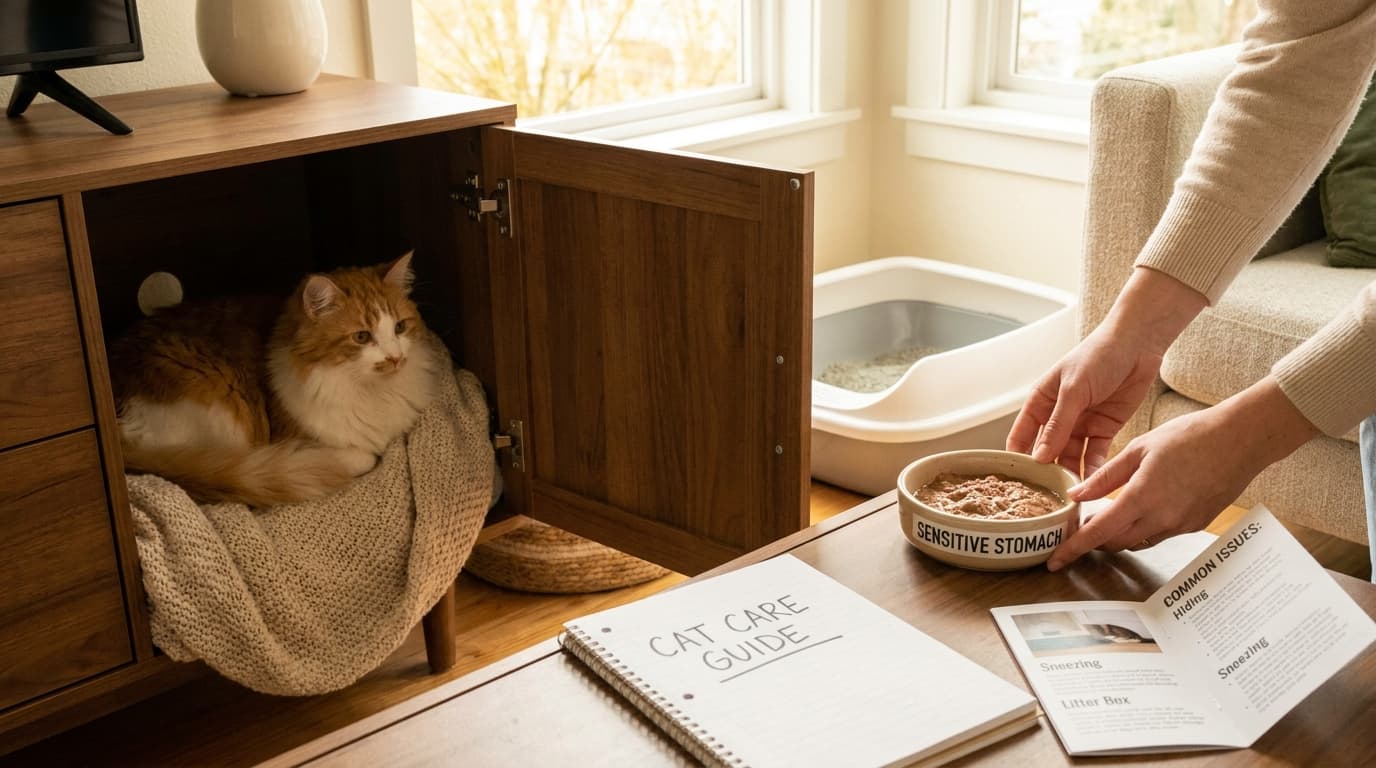
The full differential for sudden hiding is broad: pain from any source, fever, nausea, abdominal discomfort, respiratory difficulty, neurological change, and extreme environmental stress all produce hiding behavior. The urgency determination comes from two assessment steps: gum color assessment (pink and moist is normal; blue, gray, pale white, or dark red is emergency) and breathing assessment (nasal and effortless is normal; open-mouth, labored, or orthopneic posture is emergency). If gum color is normal and breathing is normal, the presentation is urgent but not immediately life-threatening, and a same-day call to the vet is the appropriate response. If either is abnormal, the presentation is an emergency.
The urethral obstruction emergency deserves explicit detail because it produces hiding that owners sometimes interpret as behavioral withdrawal rather than the medical emergency it is. A male cat that is hiding and shows any combination of the following signs has a urethral obstruction until proven otherwise: repeated visits to the litter box with little or no urine output, vocalizing while in the box or straining posture outside the box, licking at the penis, posturing to urinate without output. Urethral obstruction produces death from electrolyte disturbance and bladder rupture within 24 to 72 hours if untreated. It is one of a small number of cat emergencies where the timeline is measured in hours, not days.
The appropriate response when a cat is hiding: do not force removal unless needed for transport, as the hiding spot is providing the psychological resource the cat is using to cope. Quietly observe the cat for gum color and breathing from a position that does not require the cat to move. Check the litter box for output. Note when the cat last ate and drank. Provide this specific timeline to the vet when calling — 'she has been hiding for 8 hours and the last output I know of was yesterday morning' is actionable clinical information.
**Key insights:
- Assess gum color and breathing before deciding urgency — abnormal gum color or breathing elevates hiding to an emergency presentation regardless of other factors.
- Treat male cat hiding combined with litter box straining and reduced urine output as a urethral obstruction emergency — go to an emergency clinic immediately.
- Note the specific timeline: when hiding began, when the cat last ate, drank, and had litter box output — this information is more useful to a vet than 'she seems off.'
- Check whether the cat is still accessible for observation — a cat that cannot be located at all in the home for several hours warrants active searching and vet contact.
- Do not force removal from the hiding spot unless transport is needed — the spot is a coping resource, and forced removal adds stress to an already compromised animal.
Finding the Best Wet Food for Sensitive Stomach Cats
Vomiting in cats falls into a spectrum from normal variation to medical emergency, and the frequency threshold is the most practically useful triage variable. Occasional vomiting — once or twice weekly in a cat that otherwise appears healthy, maintains weight, and eats normally — is common in cats and often reflects hairball expulsion, rapid eating, or mild dietary sensitivity rather than significant pathology. Vomiting more than three times in 24 hours, vomiting with blood, vomiting accompanied by lethargy and loss of appetite, or vomiting in a cat that is also hiding or showing other behavioral changes warrants same-day veterinary assessment rather than dietary management.
For cats with confirmed dietary sensitivity — where medical causes including inflammatory bowel disease, pancreatitis, kidney disease, and hyperthyroidism have been excluded — dietary modification is the appropriate primary intervention. Limited-ingredient diets reduce the number of potential immune sensitization triggers by simplifying the antigen profile the gut immune system must process. Novel protein sources — proteins the cat has not previously been repeatedly exposed to, such as rabbit, venison, duck, or kangaroo — are less likely to have established immune sensitization than common proteins like chicken or beef, which appear in the majority of commercial cat foods and have been consumed repeatedly throughout the cat's life.
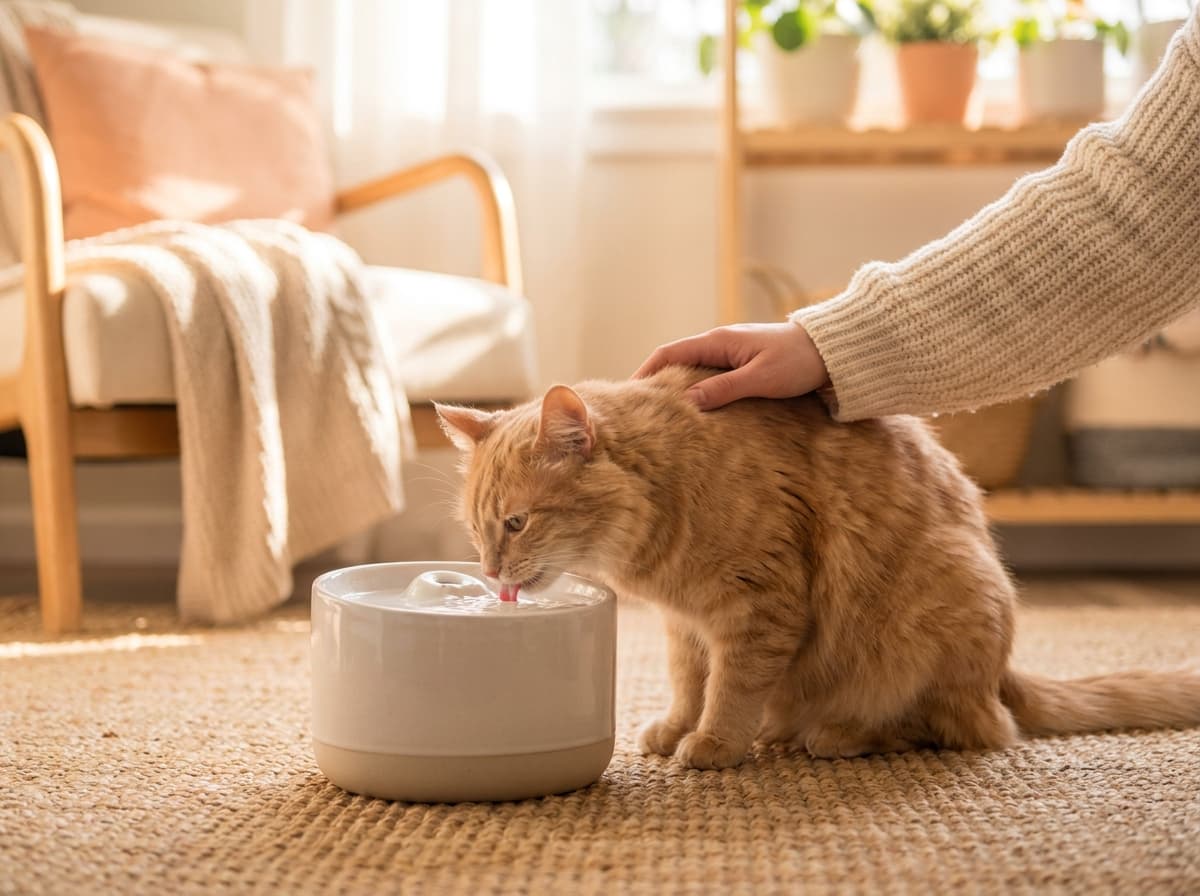
Wet food is preferable to dry food for sensitive-stomach management for reasons beyond ingredient simplicity. Cats have a biologically low thirst drive and evolved to obtain most hydration from prey tissue. A cat on primarily dry food is chronically below optimal hydration, and chronic low-grade dehydration slows gastrointestinal motility, increases the concentration of intestinal contents, and reduces the mucosal protective layer that cushions the gut wall from irritants. Adequate moisture through wet food improves gut transit, reduces constipation that can trigger vomiting reflexes, and supports the kidney function that is secondarily affected by chronic dehydration.
The transition between any two foods must occur gradually regardless of the quality of the new food. Abrupt dietary changes produce intestinal microbiome disruption and osmotic diarrhea in most cats — this is a physiological response to microbial population shift rather than an indication that the new food is poorly tolerated. Many owners conclude that a well-chosen new food 'caused' diarrhea when the cause was the transition speed. The standard protocol — 75 percent current food and 25 percent new for three days, then 50/50 for three days, then 25 percent current and 75 percent new for three days — allows microbiome adaptation.
**Key insights:
- Seek veterinary assessment before dietary modification for vomiting more than three times in 24 hours, bloody vomitus, or vomiting with lethargy — medical causes require different management than dietary sensitivity.
- Choose limited-ingredient wet food with novel single-protein sources for confirmed dietary sensitivity — novel proteins avoid pre-established immune sensitizations.
- Transition any food change over a minimum of seven days — diarrhea from abrupt transition is commonly misattributed to food intolerance rather than the transition itself.
- Avoid carrageenan and artificial additives in formulations for sensitive cats — these are the ingredient categories most consistently associated with symptom exacerbation.
- Prioritize wet food over dry for both hydration and motility benefits — adequate gut moisture directly supports the mucosal protective function that reduces sensitivity symptoms.
What to Do If Your Cat Ate Chocolate
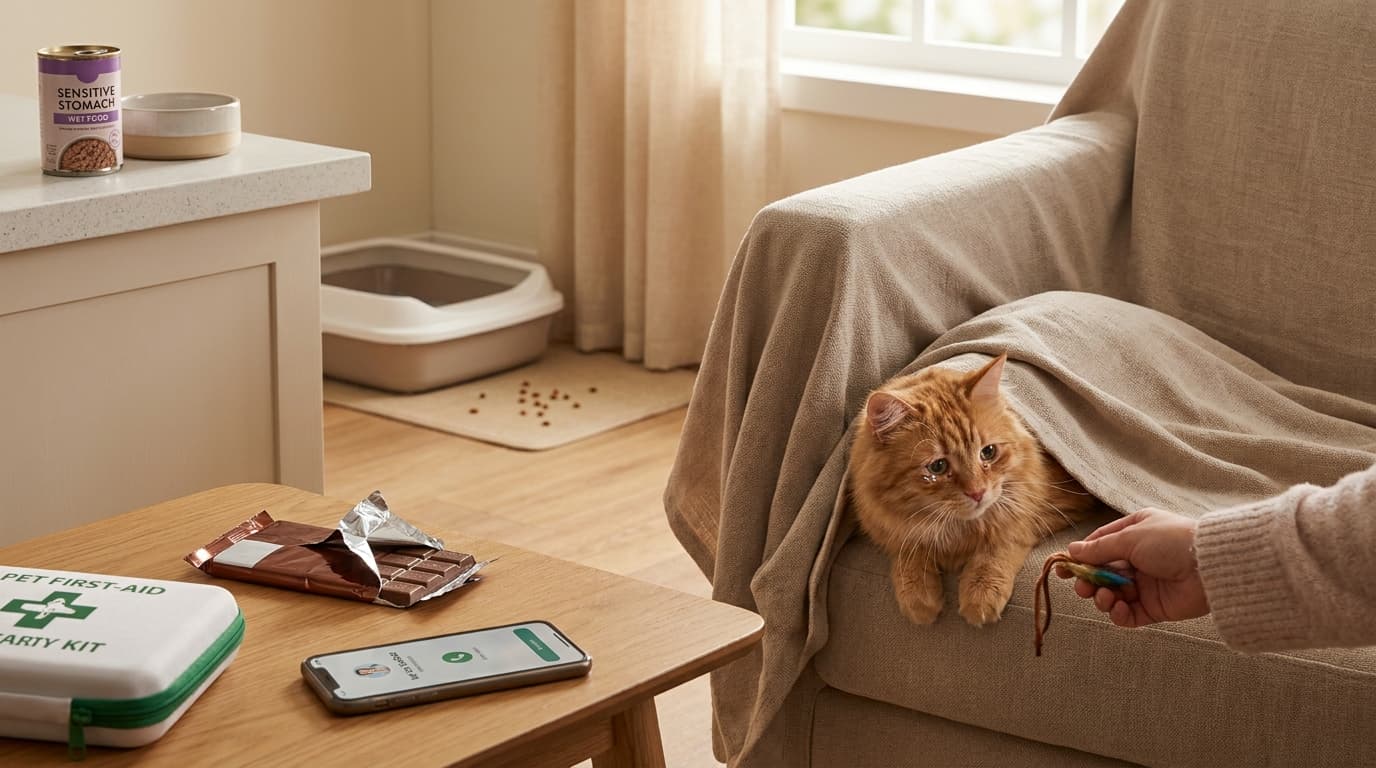
Chocolate toxicity in cats is a true toxicological emergency with a narrow effective intervention window, and the correct response to any confirmed or suspected chocolate ingestion is immediate veterinary contact — not monitoring for symptoms, not waiting until the cat shows signs of distress, and not attempting home interventions. The toxic compounds in chocolate are theobromine and caffeine. Cats lack the hepatic enzyme systems (specifically CYP1A2 cytochrome P450) that metabolize methylxanthines efficiently in humans and dogs. The result is prolonged elevation of plasma theobromine and caffeine concentrations — the biological half-life of theobromine in cats is significantly longer than in dogs or humans, meaning the toxic burden persists and accumulates rather than clearing.
The toxicity is dose and chocolate-type dependent, which is why identifying what was eaten matters for veterinary triage. Theobromine concentration per ounce of chocolate is approximately: cocoa powder 400-800 mg/oz, baking chocolate 400-500 mg/oz, dark chocolate 130-450 mg/oz, milk chocolate 44-64 mg/oz, white chocolate <1 mg/oz. The minimum toxic dose of theobromine in cats is approximately 200 mg/kg body weight, and the lethal dose is approximately 1000 mg/kg. A 4 kg cat eating 1 oz of baking chocolate (approximately 450 mg theobromine) approaches the minimum toxic threshold. Small quantities of dark chocolate or baking chocolate can therefore produce clinical toxicity in cats where the same quantity of milk chocolate might not.
Caffeine absorption begins within approximately one hour of ingestion. Clinical signs of chocolate toxicity in cats include restlessness, increased vocalization, vomiting, diarrhea, tachycardia (rapid heart rate), hypertension, tremors, hyperthermia, and in severe cases, seizures and cardiac arrhythmia. Symptoms can appear between two and 12 hours after ingestion and persist for 24 to 96 hours given the slow clearance. The most critical intervention point is before symptoms appear — at the point of ingestion, the vet can consider inducing emesis (in a veterinary context with appropriate antiemetic support) or providing activated charcoal to reduce absorption. After symptoms appear, management shifts to supportive care, which is less effective and requires more intensive intervention.
The specific instruction not to induce vomiting at home applies for several reasons: hydrogen peroxide, the common home emetic, is corrosive to the esophagus and stomach of cats and can itself cause significant injury. Salt induction of vomiting can cause sodium toxicity. In a cat that is already neurologically affected from caffeine, the aspiration risk during vomiting is significant. Veterinary emesis induction uses dexmedetomidine or other agents that are safe for cats and are administered with appropriate monitoring. Home emesis attempts are not the same intervention and can cause direct harm.
**Key insights:
- Call your vet or an animal poison control center (ASPCA: 888-426-4435) immediately for any confirmed or suspected chocolate ingestion — do not wait for symptoms.
- Identify the specific chocolate type and the approximate quantity eaten — this determines whether clinical toxicity is likely and guides veterinary triage.
- Never induce vomiting at home — home methods (hydrogen peroxide, salt) cause direct injury in cats and the risk-benefit calculation is negative without veterinary monitoring.
- Watch for restlessness, elevated heart rate, tremors, or labored breathing in the 2 to 12 hours after ingestion — these indicate toxicity requiring emergency care.
- Store all chocolate, cocoa powder, and baking products in cat-inaccessible locations — cats are not as strongly attracted to chocolate as dogs, but access events do occur.
The Toxicity Timeline: Why Early Contact Matters More Than Waiting for Symptoms
The pharmacokinetics of theobromine and caffeine explain why contacting a vet before symptoms appear is more effective than waiting to see if the cat deteriorates. Before clinical signs develop, there is a potential window — depending on time since ingestion — during which gastric decontamination (induced emesis or activated charcoal) can meaningfully reduce the absorbed dose. This window closes as absorption proceeds: caffeine is largely absorbed within one hour, theobromine within two to four hours. After this absorption window, the toxic burden is already systemic and management becomes supportive rather than preventive.
The 24 to 96 hour symptom persistence is not a reason to take a 'wait and see' approach — it is a description of how long the toxic burden remains elevated in the absence of treatment. During this window, cardiac and neurological stress is ongoing. Early intervention that reduces absorbed dose shortens both the symptom duration and the peak toxicity the cat experiences.
**Key insights:
- Contact a vet within the first hour of suspected ingestion if possible — the gastric decontamination window is most effective in this period.
- Report time since ingestion as specifically as possible — 'about 30 minutes ago' versus 'sometime in the last few hours' significantly changes what interventions are available.
- If after-hours, go to an emergency clinic rather than waiting until morning — a 6 to 8 hour delay forfeits the intervention window entirely.
A Practical Triage Framework for Cat Behavioral Changes
The most useful single skill for cat owners is rapid triage — the ability to assess a behavioral change and determine quickly whether it requires immediate emergency transport, a same-day vet call, or monitoring with a scheduled appointment. This determination is primarily based on two assessments: gum color (pink and moist is normal; blue, gray, pale white, or very dark red is emergency) and breathing (nasal and effortless is normal; open-mouth, labored, or orthopneic is emergency). These two checks take 30 seconds and determine the most critical urgency decision independently of specific symptom category.
The emergency presentations that require immediate transport regardless of any other factor: open-mouth breathing at rest, blue or gray gum color, male cat straining to urinate with minimal or no output, inability to walk or stand, seizure, confirmed or suspected toxin ingestion, and collapse. These presentations do not wait for a morning appointment or a callback — they require a 24-hour emergency clinic. Knowing this list before an emergency occurs is what produces correct action under the stress of an actual crisis.
The same-day vet contact presentations — presentations that warrant a phone call for same-day assessment but are not immediately life-threatening if circulation and breathing are normal: 24 hours without eating, blood in urine or stool, yellow or green eye or nasal discharge, persistent vomiting (more than three times in 24 hours), confirmed hiding for more than 12 hours with no eating, and any behavioral change in a male cat involving the urinary system. These presentations allow time to call your regular vet but should not be watched for days before seeking assessment.
**Key insights:
- Practice gum color and capillary refill assessment on your cat when they are healthy — this gives you a reference baseline and the physical practice to perform the assessment quickly when it matters.
- Save your nearest 24-hour emergency clinic number in your phone independently of your regular vet — regular clinics are closed during the majority of hours when emergencies occur.
- Know the emergency list by memory: open-mouth breathing, blue gums, male urinary straining, collapse, seizure, toxin ingestion — these require transport without waiting.
- For any behavioral change, note the specific timeline: when it started, what the cat last ate and drank, last litter box output — this information enables phone triage before the appointment.
Frequently Asked Questions
Conclusion
The behavioral changes covered in this guide are informative rather than arbitrary. Litter box avoidance communicates pain, mobility limitation, or environmental aversion. Sneezing with discharge communicates upper respiratory infection at one of several severity levels. Sudden hiding communicates physiological vulnerability. Vomiting that exceeds the occasional frequency communicates digestive pathology requiring investigation. Chocolate ingestion communicates a toxicological emergency with a time-limited intervention window. In each case, the correct response is determined by understanding what the behavior is communicating and applying appropriate urgency — not by waiting to see if it resolves.
The consistent error that produces the worst outcomes is applying the same 'wait and see' response to all behavioral changes, regardless of what the behavior indicates. A male cat hiding and straining to urinate is not the same situation as a cat that has moved its preferred napping spot. A cat that ate half an ounce of baking chocolate is not the same situation as a cat that ate a small piece of milk chocolate wrapper with no actual chocolate. The specific details of each presentation determine the appropriate response, and the guide provides the framework for those determinations.
Two preparatory steps that cost nothing: save your nearest 24-hour emergency veterinary clinic number in your phone today, and practice checking your cat's gum color once when they are clearly healthy so you have a reference baseline and physical familiarity with the assessment. Both take under five minutes. Both are among the most useful emergency preparations available to a cat owner before a crisis occurs.
Send it to someone who should read it next.
About the author

Sophia Parks
Breed Specialist & Breeder
Registered cat breeder and judge with deep expertise in pedigreed breeds and breed standards worldwide.
View all articles