From Kittens to Seniors: A Stress-Free Cat Preventative Care Schedule by Age
The secret to a 20-year cat isn't just good luck or great genes; it's consistency. Cats are experts at hiding when they feel sick, so staying proactive is much easier...

PurrScript Editorial Team
Editorial Team
From Kittens to Seniors: A Stress-Free Cat Preventative Care Schedule by Age
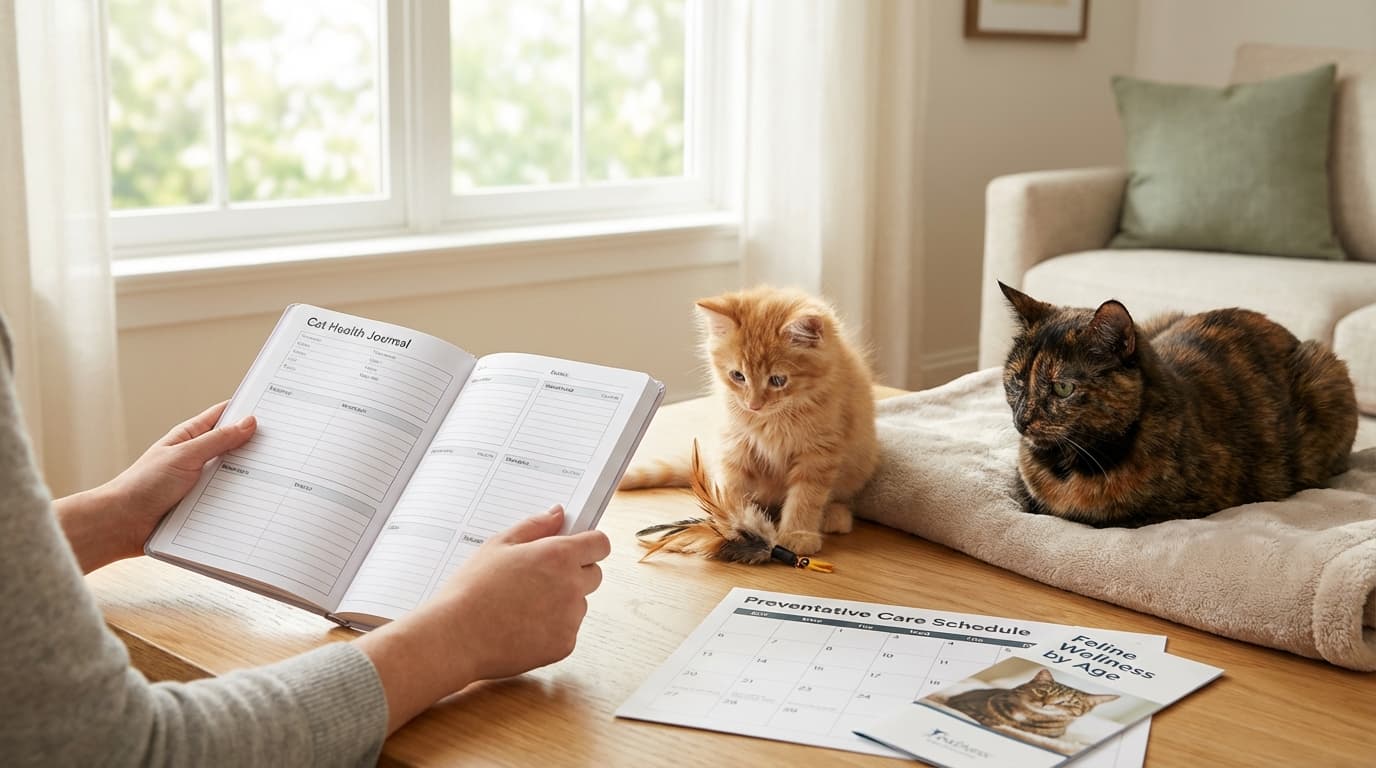
The secret to a 20-year cat isn't just good luck or great genes; it's consistency. Cats are experts at hiding when they feel sick, so staying proactive is much easier than reacting to a midnight emergency. Whether you just brought home a tiny furball or you're caring for a dignified senior, following a cat preventative care schedule by age is the best way to ensure more purrs and fewer surprises.
In this guide, we'll give you the tools to stay organized, like using a feline vaccine tracker template and learning how to keep a cat health journal that actually works. We also cover the tough stuff, like managing a low protein diet for cats with liver issues and how to read a cat lethargy and loss of appetite chart so you know exactly when to call the vet.
From those critical first kitten shots to the essential bloodwork of the golden years, we have you covered. Let's look at the simple steps you can take today to keep your favorite roommate healthy for a lifetime.
The Kitten Kickoff: Why the First 15 Weeks Are Critical
Bringing home a new kitten is a whirlwind of tiny paws and sharp teeth, but those first 15 weeks are about more than just finding the right toy. This is the window where your kitten's immune system is basically a blank slate. Because they are so young, their bodies are incredibly vulnerable to infections that older cats might brush off. That is why vets push for a very specific schedule. You start at six weeks old and come back every two to four weeks until they are at least 15 weeks old. It feels like a lot of trips to the clinic, but there is a very good reason for the repetition.
Think of it as a guessing game involving the mother cat's help. When kittens nurse, they get antibodies from their mom that protect them during their first few weeks of life. But here is the catch: we do not know exactly when those maternal antibodies wear off. If we vaccinate too early while the mom's protection is still active, the vaccine might not work. If we wait too long, there is a dangerous gap where the kitten has no protection at all. By hitting those two to four week intervals, we make sure the vaccine takes the moment the kitten's natural maternal protection fades away.
The heavy lifter during these early visits is the FVRCP shot. It covers the Big Three threats: Rhinotracheitis, Calicivirus, and Panleukopenia. Panleukopenia is especially scary because it is caused by a feline parvovirus that attacks white blood cells and the intestinal tract. It is hardy enough to be spread by fleas or even just on your clothes. Since your kitten's immune system is still learning how to fight, these early shots are the only way to build a solid defense. What does this mean for you? It means peace of mind while your tiny explorer starts to discover their new world.
You might think that if your kitten stays inside, they are safe from everything. Sadly, some of these viruses are surprisingly tough and do not need a direct cat-to-cat meeting to spread. Take Calicivirus, for example. This virus can actually live on a surface in your home for a full month. That means a germ brought in on your shoes or a guest's hands could potentially pose a risk to an unvaccinated pet. The reality is that viruses are often more patient than we are, waiting for the right moment to strike.
Then there is the feline herpesvirus. Once a cat catches it, it often creates a lifelong condition through something called viral latency. It basically hides in the body and can reactivate later in life whenever the cat gets stressed. Before you even start the vaccine series, there is one step that is truly non-negotiable: the combo test. This screens for Feline Leukemia Virus (FELV) and Feline Immunodeficiency Virus (FIV). Because these can be passed from the mother, knowing their status from day one is the first real step in their preventative care schedule. It is about building a foundation of health that lasts for years.
Key insights:
- Early vaccines bridge the gap when maternal antibodies fade at unpredictable times.
- The FVRCP shot is a critical shield against three major viral threats including feline parvovirus.
- Environmental hardy viruses like Calicivirus can survive on household surfaces for up to 30 days.
- FELV and FIV screening is a mandatory first step to establish a kitten's health baseline.
Hidden Dangers: How Long Viruses Stick Around
Did you know some viruses are basically the toughest uninvited houseguests? Take Feline Calicivirus, for example. This bug can live on a surface for an entire month. Think about that. A single sneeze or a shared toy stays risky for weeks. This is why keeping a cat health journal and sticking to a cat preventative care schedule by age is so important. You want to stay ahead of these invisible threats before they settle in.
Then there is the feline herpesvirus. This one is especially tricky because it is a lifelong condition. It goes into a latent or sleeping mode and can wake up whenever your cat feels stressed. To protect them, the FVRCP vaccine is a must. It covers herpesvirus, calicivirus, and panleukopenia, which is a feline parvovirus that attacks white blood cells and the intestinal tract. Starting these shots as early as six weeks old helps build their defenses.
Before you download a feline vaccine tracker template for owners, there is one non-negotiable step: the Combo Test. This screens for Feline Leukemia (FELV) and Feline Immunodeficiency Virus (FIV). Since these often spread through simple contact or from a mother cat, knowing your kitten's status right away is the best way to start their life on the right paw. What does this mean for you? It means peace of mind and a clear path for their future health.
Key insights:
- Feline Calicivirus can survive in the environment for up to 30 days.
- Feline herpesvirus-1 creates a lifelong condition that can reactivate during times of stress.
- The FELV/FIV combo test is a vital first step for any new kitten or cat joining your home.
Staying Organized: How to Keep a Cat Health Journal
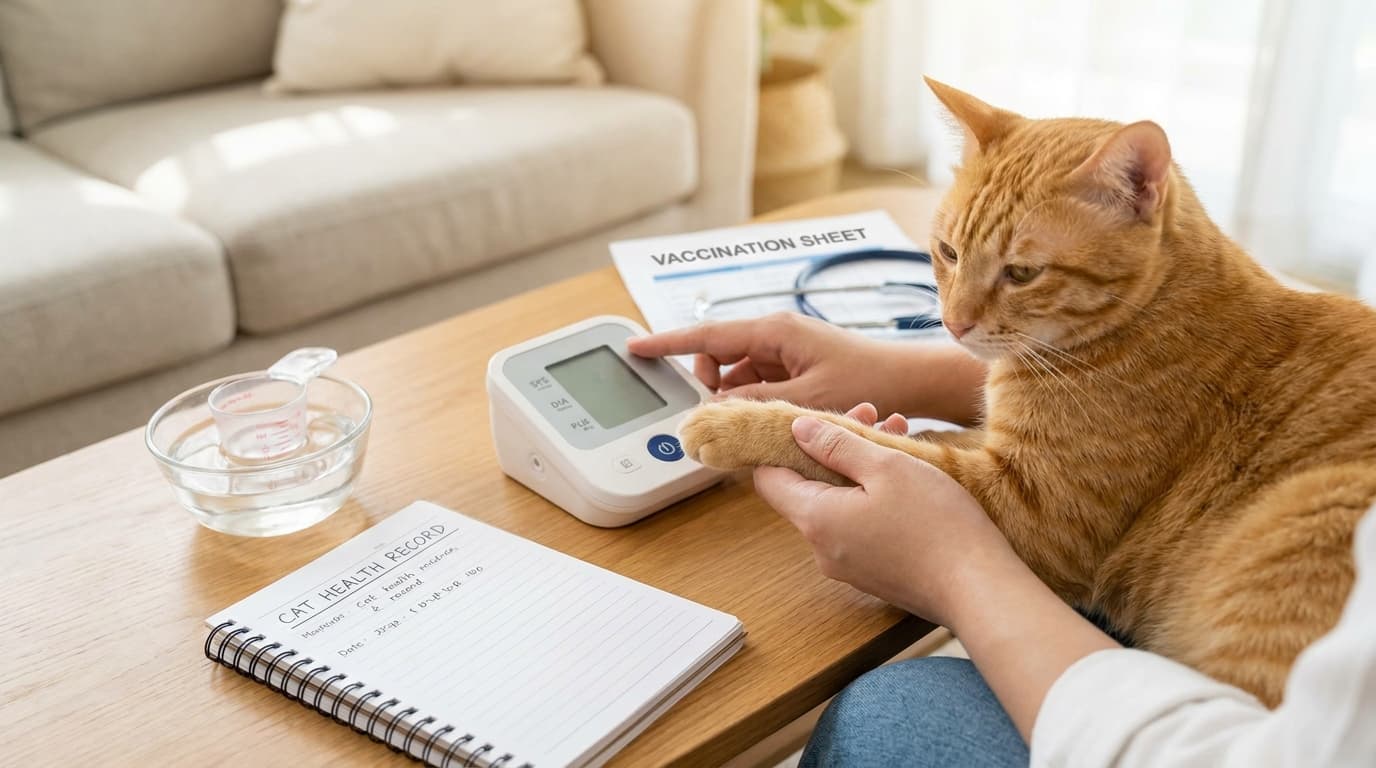
Have you ever sat in the vet’s office and felt that sudden blankness when they ask exactly when your cat started acting a bit off? It happens to everyone. Our memories are great for remembering where the treats are hidden, but they are not always reliable for tracking subtle health shifts over several months. Keeping a health journal creates a clear picture of your cat’s baseline. You should log weight trends, any weird behavioral quirks, and even bathroom habits. These details might seem small, but they help your vet spot issues like Feline Panleukopenia, a nasty virus that attacks white blood cells and the intestinal tract, before they become emergencies.
Think of the journal as a roadmap for your cat's life stages. Kittens, for example, need a specific series of vaccines every 2 to 4 weeks starting at 6 weeks old until they are at least 15 weeks. If you are not writing down the dates for the FVRCP shots, which protect against Rhinotracheitis, Calicivirus, and Panleukopenia, it is easy to lose track. Since Calicivirus can survive on surfaces in your home for up to a full month, knowing exactly when your cat was protected is vital for their safety.
Having a paper trail is not just about being organized. It is about the peace of mind that comes from knowing you have the answers ready. When you can show your vet exactly when a combo test was done for Feline Leukemia (FELV) or FIV, or when the last intestinal parasite screening happened, you are not just a pet owner. You are an advocate for your cat’s long-term wellness. It turns a stressful appointment into a productive conversation where you and your vet are on the same page.
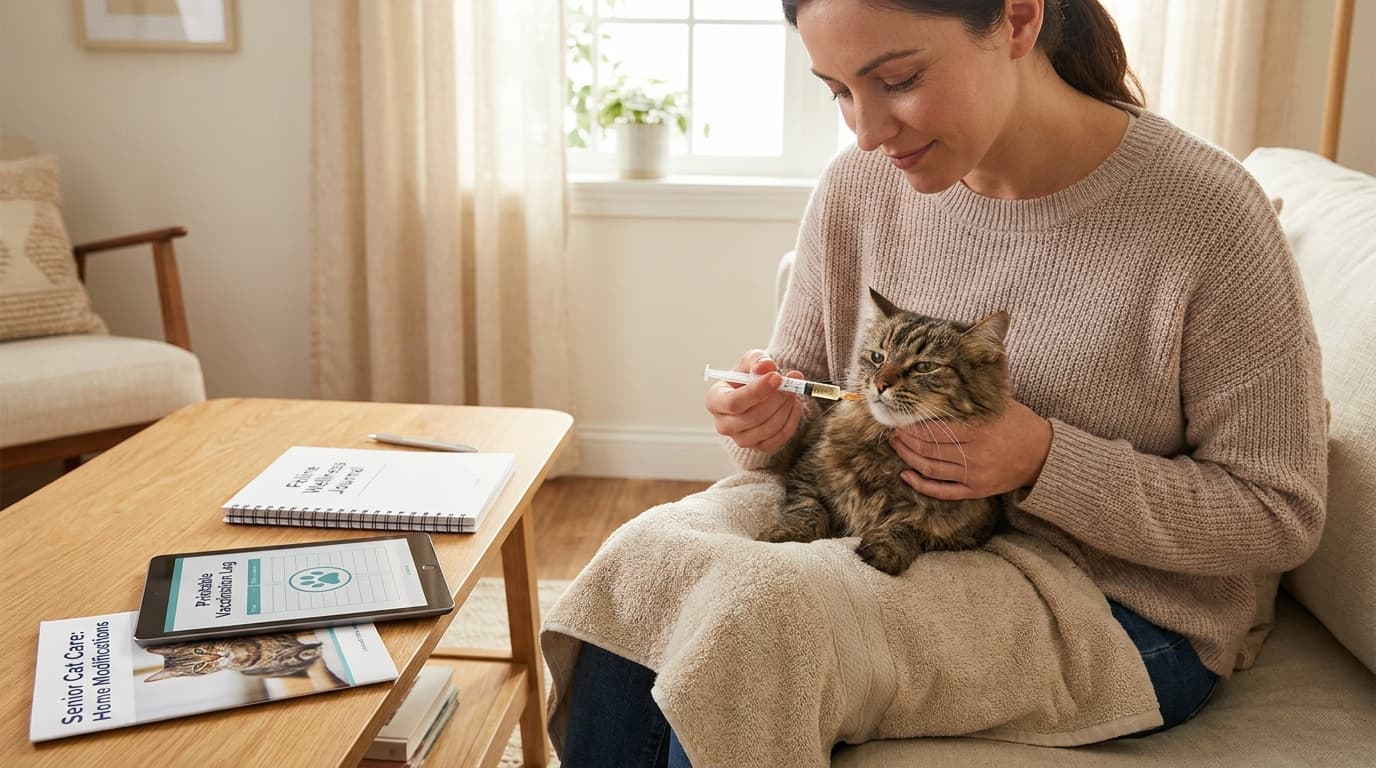
A feline vaccine tracker template is basically your secret weapon for staying ahead of boosters. Instead of guessing when the next round is due, a visual tracker lets you see the whole year at a glance. This is especially helpful for multi-functional preventatives like Revolution Plus. Since this one treatment handles fleas, ticks, and various worms in a single application, missing a dose leaves a big gap in your cat's protection. It is much easier to stay consistent when you can see the schedule right in front of you.
You can set up digital reminders on your phone, but try integrating the tracker into your physical household calendar too. That way, everyone in the house knows when the next vet visit is coming up. Because conditions like feline herpesvirus-1 can stay with a cat for life and flare up during times of stress, keeping a steady schedule helps keep their immune system strong. A quick glance at your tracker ensures you never miss a beat in their preventative care, keeping your cat happy and healthy for years to come.
Key insights:
- Early vaccination is critical when you do not know if a kitten received enough antibodies from its mother.
- Feline herpesvirus-1 is a lifelong condition that can flare up whenever a cat feels stressed.
- Comprehensive kitten care requires a multi-visit approach with exams at 6, 9, 12, and 15 weeks.
- Feline Calicivirus is surprisingly hardy and can live in the environment for up to thirty days.
Your New Best Friend: Using a Feline Vaccine Tracker Template
Ever feel like you need a map just to remember when your kitten needs their next shot? Kittens need a series of vaccines every two to four weeks from age six weeks until they are at least fifteen weeks old. That is a lot to manage while you are also busy with litter boxes and play sessions. A visual feline vaccine tracker template makes this simple. You can see at a glance when the next FVRCP booster is due to protect them from things like Calicivirus, which can actually survive in your home for a month.
The trick is making the tracker work for your real life. Set phone alerts for your multi-visit schedule so you never miss a vet appointment. This is also the perfect spot to log multi-functional preventatives like Revolution Plus. Since these treatments handle fleas, ticks, and various worms all at once, a quick digital nudge ensures your cat stays protected. Sync these reminders with your household calendar so everyone stays in the loop. It turns a stressful chore into a simple, healthy habit.
Key insights:
- Visual trackers help manage the frequent two to four week vaccine windows for young kittens.
- Digital reminders are ideal for tracking multi-functional preventatives like Revolution Plus.
- FVRCP vaccines are vital because viruses like Calicivirus can survive for thirty days in the environment.
The 'Uh-Oh' List: A Cat Lethargy and Loss of Appetite Chart
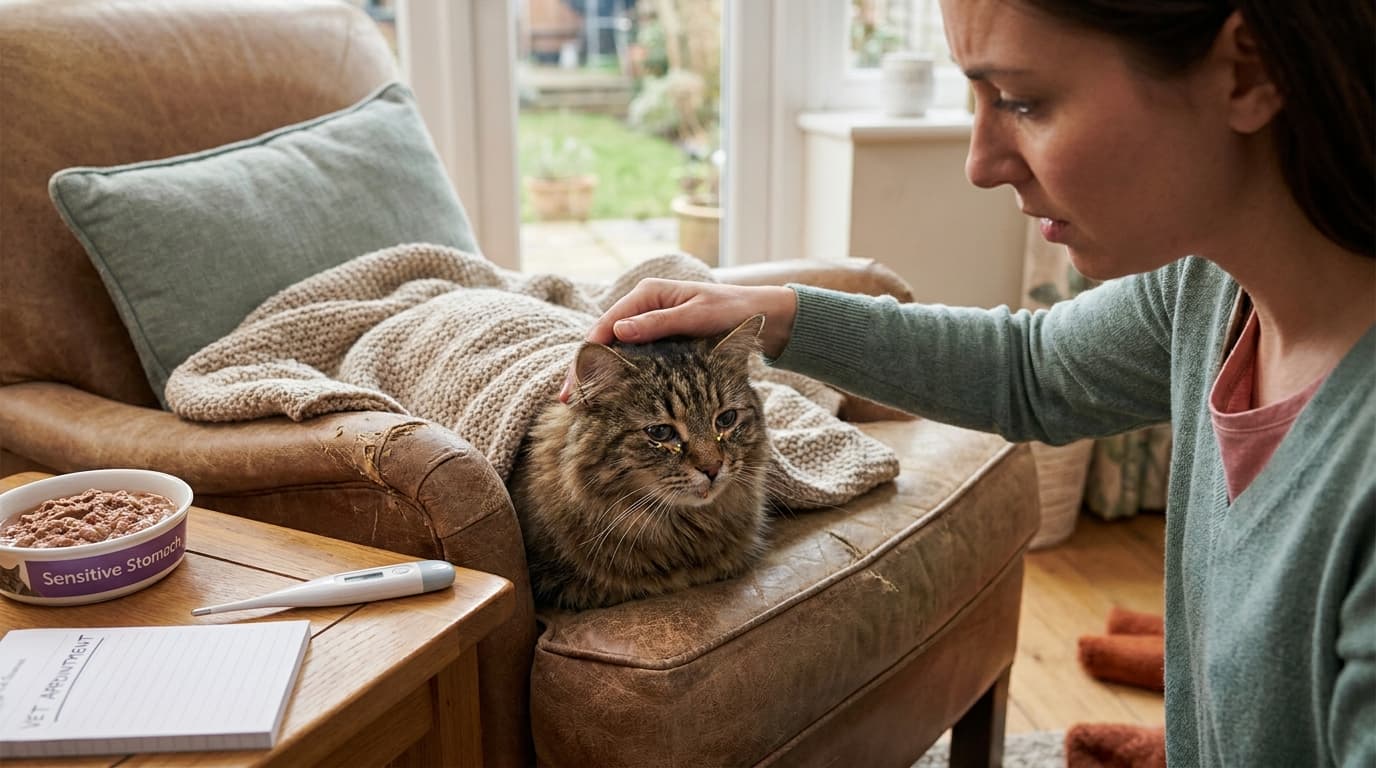
Ever wonder why your cat is suddenly acting like a professional hide and seek player? Cats are experts at masking discomfort because in the wild showing weakness is a big no-no. This means that by the time you notice they are tired or skipping dinner, something might already be wrong. It is helpful to keep a cat lethargy and loss of appetite chart in your head to tell the difference between a lazy Sunday and a medical issue. A long nap is normal, but true lethargy feels heavy and dull. If your cat does not get up for their favorite treats or seems weak when they walk, that is a major red flag.
This is especially risky for kittens because their immune systems are still growing and very fragile. For example, Feline Panleukopenia is a scary virus that attacks the gut and can make a kitten stop eating almost instantly. Since some viruses like Calicivirus can live in your home environment for up to a month, even indoor cats need their shots. If your cat skips more than two meals, it is not just a picky phase. It could be a sign of internal stress or a viral flare-up that needs a vet visit immediately because kittens can get dehydrated so fast.
Reading the signs often means looking at the small stuff. Is your cat suddenly skipping their daily grooming routine? Are they tucked away in a dark closet instead of their usual sunspot? These subtle shifts often point to internal organ stress. When a cat stops eating, their liver can get overwhelmed quite quickly. This is why keeping a health journal is so useful for owners. You can track when they seem off and share those notes with your vet to catch problems early. Sometimes a vet might even suggest a specific low protein diet for cats with liver issues if the lack of appetite has caused some damage.
Staying ahead of these moments is why a preventative care schedule is so vital for every life stage. Using a feline vaccine tracker template for owners helps you stay on top of shots like the FVRCP vaccine. This protects them from Feline Viral Rhinotracheitis, which can stay in a cat for life and flare up during times of stress. When you know your cat's normal baseline, you can spot the 'uh-oh' days before they turn into true emergencies. If you see a shift in their mood or appetite, trust your gut and call your vet for a quick checkup.
Key insights:
- True lethargy is different from a nap because the cat lacks interest in high-value rewards like treats or play.
- A skipped meal in a cat can quickly lead to liver stress, making early intervention critical.
- Feline herpesvirus-1 can stay in the body forever and reactivate when a cat is stressed.
- Vaccines like FVRCP are essential because some cat viruses can survive on surfaces in your home for weeks.
Reading the Signs: Subtle Shifts in Behavior
Ever notice your cat suddenly picking a new hiding spot or skipping their usual grooming routine? It is easy to brush off as just a cat being a cat, but these tiny shifts are often the first whispers of a health issue. Cats are masters at masking pain. By the time they stop eating or act lethargic, it usually means their internal organs are already under significant stress. Think of it as their silent way of sounding an alarm.
This is why keeping a health journal is vital. If your pet seems off, it might be more than a mood. Respiratory bugs like Calicivirus can live in your home for a month, and missing a preventative care visit leaves them open to risks. Your vet might suggest a combo test for FELV or check for issues like herpesvirus, which often flares up during stressful times.
Do not wait for a crisis to act. If their behavior shifts, check your records and call the vet. Catching a problem early is always easier than playing catch-up with their health later.
Key insights:
- Subtle changes in hiding or grooming are often the first signs of internal stress.
- Appetite loss is a serious red flag that requires immediate veterinary attention.
- Maintaining a consistent health journal helps you spot red flags before they become emergencies.
Feeding for Longevity: Managing Liver Issues with the Right Diet
Think of your cat's liver as a high-performance filter that never gets a day off. It cleans out toxins, processes nutrients, and keeps the whole body running smoothly. But when the liver starts to tire out, those toxins can build up, leaving your cat feeling sluggish or losing their appetite. This is where a low protein diet for cats with liver issues comes in. It might sound strange for a carnivore to eat less protein, but there is a clear reason for it. Processing protein creates waste products like ammonia, and a struggling liver just cannot keep up with that workload. By choosing a diet with less protein - but much higher quality - we give the organ a break without starving the body of the energy it needs to stay strong.
The logic is simple: we want to fuel the cat without overworking the engine. Much like how kittens need a strict schedule of vaccines to build a strong foundation, older cats need a specific dietary strategy to maintain their health as they age. If the liver is already stressed, every extra bit of waste it has to process is a burden. High-quality nutrients allow the body to repair itself while keeping the chemical balance in check. It is all about finding that sweet spot where your cat gets enough to thrive but not so much that their system starts to fail.
So, what should you actually look for when checking labels? You want protein sources that are highly digestible. This basically means the food is already easy to break down, so the liver does not have to work overtime. Avoid foods packed with heavy fillers that offer no real nutrition and just create more work for the digestive system. The goal is to make every bite count. While you are tracking their health in a journal, pay close attention to how they react to different protein types, as some cats handle certain meats better than others when their system is compromised.
Hydration is also a major factor in this stage of care. Cats with liver issues need plenty of water to help flush out waste. If your cat is not a big drinker, try swapping dry kibble for wet food or adding a splash of tuna juice to the bowl. If they turn their nose up at prescription food, try warming it up for a few seconds. The smell becomes much stronger, which often tricks a picky eater into taking those first few important bites. These small adjustments make the transition much easier and ensure your cat gets the support they need to live a long, comfortable life.
Key insights:
- High-quality, digestible protein reduces the ammonia buildup that a tired liver cannot process.
- Increasing water intake is a simple but effective way to help the liver flush out toxins.
- Warming up prescription food can help overcome the loss of appetite often seen in cats with liver stress.
What Actually Goes in the Bowl?
What goes in your cat's bowl is the foundation for everything else. If you are managing a low protein diet for cats with liver issues, focus on easy-to-digest proteins rather than cheap fillers that overwork their system. It is a simple balancing act because you want to provide energy without stressing their organs. Think of high-quality protein as clean fuel for a sensitive engine.
Hydration is the next big step. Since liver-compromised cats often feel sluggish, they might skip the water bowl entirely. You can fix this by adding a splash of water or broth to their meals. This keeps them hydrated between visits on your cat preventative care schedule. It is vital because a healthy body fights off threats better, like Calicivirus, which can actually live in your home environment for a full month.
If they hate their prescription food, try warming it up to release the scent. Using a cat health journal to track what they actually enjoy helps you stay ahead of issues like lethargy and loss of appetite. A well-fed cat has a stronger immune system, helping vaccines like FVRCP work effectively while making those routine FELV and FIV combo tests much less stressful for everyone involved.
Key insights:
- Moisture is just as important as nutrients for cats with compromised liver function.
- High-quality, digestible protein reduces the metabolic waste the liver has to process.
- Scent and temperature are the best tools for convincing a sick cat to eat prescription diets.
The Age-by-Age Preventative Care Checklist
Have you ever looked at your cat and wondered if they are actually middle-aged or just a very energetic senior? It is a common puzzle because cats are masters at hiding how they feel. To stay ahead of their needs, you need a roadmap that evolves as they do. For kittens, this starts with a sprint. Since their immune systems are still learning the ropes, they need a series of vaccines every two to four weeks from the time they are six weeks old until they hit fifteen weeks. This isn’t just about shots; it’s about building a shield against things like Feline Panleukopenia, a nasty virus that attacks white blood cells, and Calicivirus, which can survive in your home for up to a month.
Once your cat hits adulthood, the pace settles into a steady rhythm, but the stakes stay high. This is the era of the yearly physical and the parasite screen. Think of these visits as a reset button for their health. Even indoor cats need protection because pests like fleas can hitch a ride inside on your clothes. Modern treatments now offer a simple approach, covering fleas, ticks, and worms in a single application. It is also the right time to use a feline vaccine tracker template to stay organized. If you have not already, your vet will likely run a combo test for Feline Leukemia and FIV to make sure the foundation is solid.
As the years go by, the focus shifts from prevention to detection. When your cat enters their senior years, bloodwork becomes the most valuable tool in your kit. It catches subtle shifts in organ function before your cat ever shows a sign of slowing down. To help visualize this transition, many owners now use age-tracking posters that compare cat years to human years. It is a great reality check. For example, that ten-year-old cat isn’t just getting older - they are effectively in their mid-fifties. Understanding these life stages helps you provide the right care at the right time, ensuring they stay comfortable well into their golden years.
Key insights:
- Kittens require a multi-visit approach to account for unknown maternal antibody status.
- Feline Calicivirus is incredibly hardy and can persist in the environment for 30 days.
- Senior bloodwork can identify health issues long before physical symptoms appear.
Frequently Asked Questions
Even if your cat stays inside all day, they still need to see the vet at least once a year for a checkup. If you have a kitten, those visits happen much more often, usually every 2 to 4 weeks until they are at least 15 weeks old. This is because their immune systems are still growing and they need a series of vaccines to stay safe from common diseases.
It is a common myth that indoor cats are safe from all sickness. Some viruses, like Feline Calicivirus, can actually live in your home environment for up to a month. Also, things like fleas or parasites can get inside on your clothes or other pets. Regular checkups help catch these issues early and keep your cat's preventative care schedule on track.
Yes, you can find plenty of free feline vaccine tracker templates online to help you stay organized. Many vet groups and animal societies provide these tools because they know how hard it can be to keep track of every shot and screening. It is a great way to see exactly when your cat is due for their next FVRCP booster or parasite check.
Using a tracker or a health journal is especially helpful during that first year when visits are frequent. You can log everything from their FELV and FIV test results to their monthly flea prevention. Having all that info in one spot makes it much easier to give your vet a clear picture of your cat's health history during your next visit.
It is actually quite common for cats to act tired while still keeping up with their meals. Cats are experts at hiding when they feel bad, so lethargy is often the first tiny clue that something is wrong. They might be dealing with a hidden infection or a virus like Feline Calicivirus, which can stick around in their environment for up to a month.
Here is the thing to keep in mind. Since kittens and older cats have different immune strengths, this sluggishness could be a sign of a virus flare up. For instance, some respiratory viruses stay in a cat's body forever and pop back up when the cat gets stressed. If you use a health journal or a tracker to log these quiet days, you can spot patterns before they become big emergencies.
If the lethargy lasts more than twenty four hours, it is a good idea to check in with your vet. Even if they are still eating, a sudden drop in energy usually means their body is busy fighting something off.
Actually, the old idea that every cat with liver issues needs low protein is changing. Cats are natural meat eaters, so they really need protein to keep their muscles strong and help their liver cells repair themselves. Cutting protein too much can sometimes do more harm than good by causing their body to waste away.
It usually depends on the specific type of liver problem your cat is facing. Most vets now suggest focusing on high quality, easy to digest proteins instead of just lowering the total amount. You generally only see strict protein limits if the cat is having very specific complications that affect their brain function.
Always check with your vet before switching foods. They might suggest a specific diet that balances the right nutrients without starving your cat of the protein they naturally need to stay healthy.
Conclusion
So, how do we wrap all this up? Keeping your cat healthy across every life stage boils down to being observant and staying organized. When you use a feline vaccine tracker template and keep a simple health journal, you stop guessing and start knowing. It turns a complicated cat preventative care schedule by age into a manageable routine that fits your life and theirs.
Whether you are looking at a cat lethargy and loss of appetite chart or figuring out a low protein diet for cats with liver issues, remember that you are your cat's best advocate. You see the tiny shifts in their mood or energy that a vet might miss in a quick exam. Those small details are often the keys to a long, happy life together.
Your next step is easy: find a spot for your health journal and start tracking the basics like weight and appetite this week. It takes just a few minutes but gives you so much peace of mind. After all, a healthy cat means more years of head bumps and slow blinks.
Send it to someone who should read it next.

PurrScript Editorial Team
Editorial Team
PurrScript's in-house editorial team. We research, write, and review every guide using established veterinary and behavioral resources, and update articles as best practices evolve.
View all articles