Is Your Cat Actually Healthy? How to Check the Vitals Most Owners Miss
Cats are absolute experts at acting like everything is fine even when they feel under the weather. It is a survival skill that makes them cool, but it also makes...

PurrScript Editorial Team
Editorial Team
Is Your Cat Actually Healthy? How to Check the Vitals Most Owners Miss
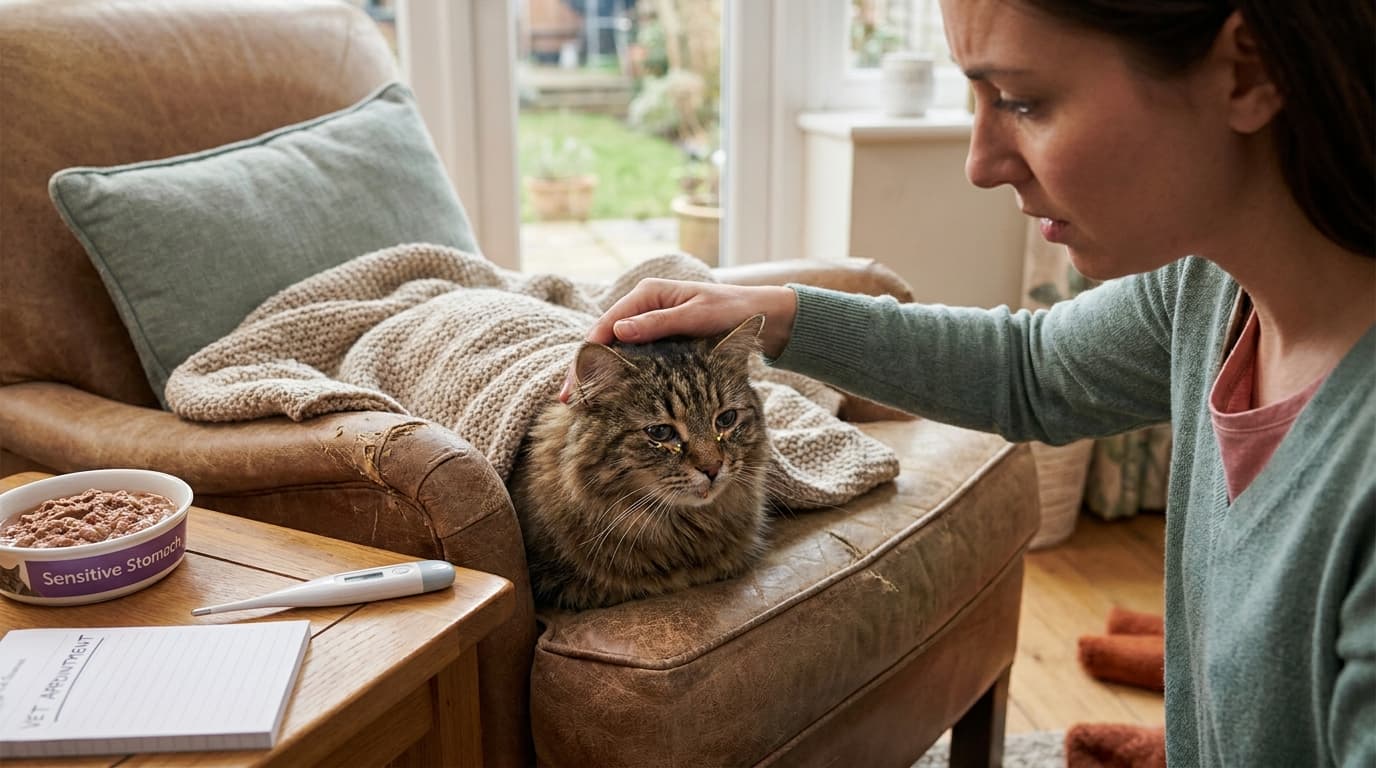
Cats are absolute experts at acting like everything is fine even when they feel under the weather. It is a survival skill that makes them cool, but it also makes our jobs as pet parents a lot harder. If you have ever wondered if your kitty is truly thriving or just putting on a brave face, you are not alone. That is why cat health tracking is such a game changer. By watching the small details, you can catch health issues before they turn into expensive vet bills or scary emergencies.
Most of us know the basics like food and litter box habits, but there are vital signs that usually fly under the radar. Learning how to track cat daily water intake at home or checking for feline heart rate monitoring can give you a clear window into their well-being. It is about becoming a bit of a pet detective so you can support their immune system and spot allergies before they cause real discomfort.
This guide walks you through the simple steps to monitor your cat like a pro without any added stress. We will cover everything from hydration tricks to the benefits of keeping a printable cat vaccination record sheet for owners. You will also learn the difference between food allergies and seasonal sniffles so you can keep your furry friend happy and healthy for years to come.
The Mystery of the Water Bowl: Tracking Hydration
Have you ever caught your cat staring intensely at a dripping faucet but never actually saw them take a drink? It is a common frustration for pet parents. Tracking exactly how much water your cat consumes is a bit like trying to count raindrops in a storm. They are masters of the midnight snack and the secret sip, making it nearly impossible to know if they are hitting their hydration goals just by watching. But here is the thing: water intake is a massive indicator of kidney health and overall vitality. If you are not keeping an eye on the bowl, you might miss the first sign of a health shift before it becomes a real problem.
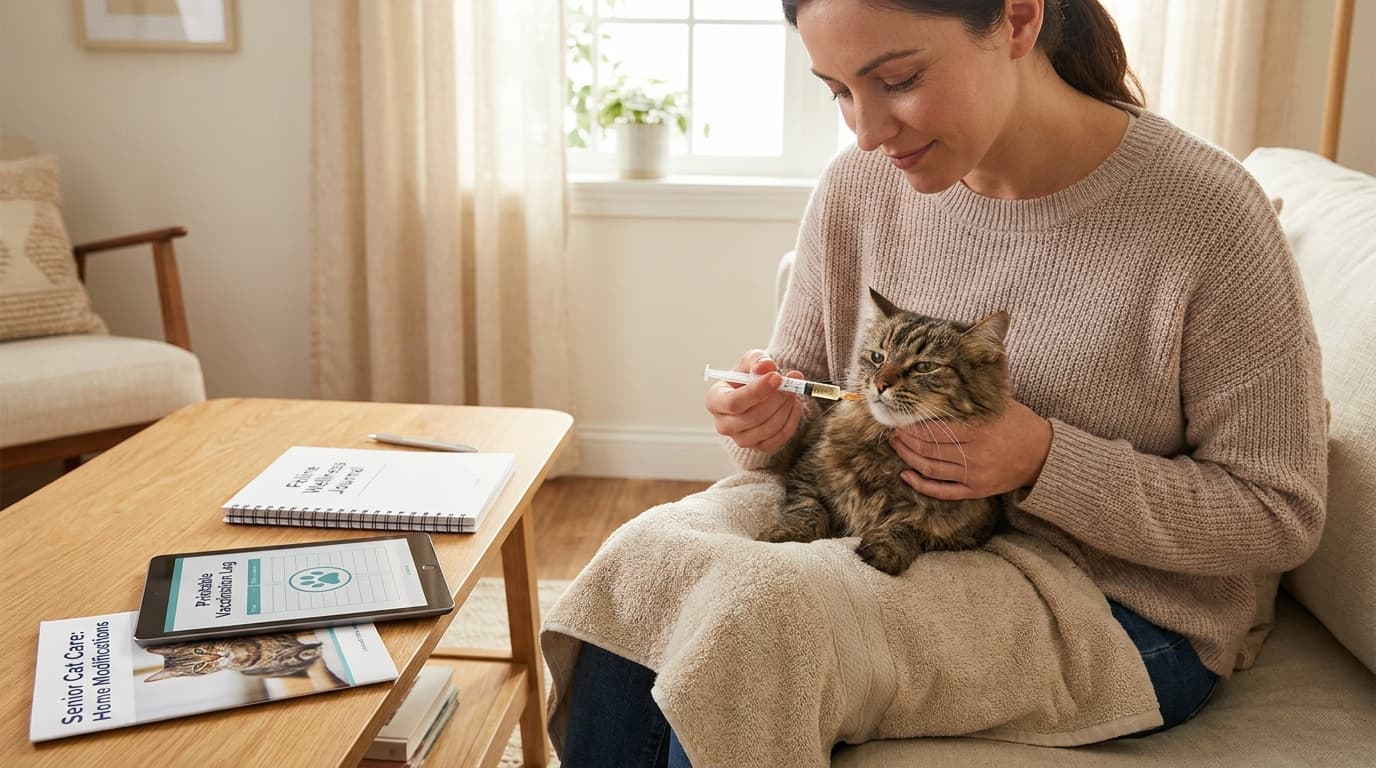
Many owners find that a physical cat health log book or a simple journal is the best way to move past the guessing game. While digital apps are everywhere, there is a current trend toward using physical journals to keep all those medical records and daily observations in one spot. Even the World Cat Organization points to structured health checklists as a way to stay on top of things. By recording how much you pour in versus how much is left, you create a paper trail that your vet will love. It turns a vague guess into a solid record of your cat's daily habits, which is especially helpful when tracking things like immunization dates or medication dosages.
To get an accurate count at home, try the measuring cup method. It is low-tech but works every time. Every morning, measure out a specific amount of water and fill the bowl. The next morning, pour the leftovers back into the cup to see exactly what is missing. If you use a fountain, a small piece of tape on the outside can act as a fill line to help you spot changes. Just remember to factor in wet food. Since canned food is mostly moisture, a cat on a wet-only diet might barely touch their water bowl, and that is usually perfectly fine.
So, when should you worry? A sudden spike in thirst can be a red flag for issues like diabetes, while a cat who stops drinking entirely is at risk for dehydration fast. Think of the water bowl as a daily status report. If the levels stay the same for two days, or if you find yourself refilling it twice as often as usual, it is time to consult your records and call the vet. Consistency is the goal, and a little bit of tracking goes a long way in catching problems early.
Key insights:
- Physical journals help consolidate disparate health data like hydration and medication into one location.
- The measuring cup method is the most reliable way to track daily water consumption at home.
- Wet food significantly reduces a cat's need to drink from a bowl due to its high moisture content.
- Standardized health checklists from global organizations provide a reliable framework for monitoring vitals.
How to Track Cat Daily Water Intake at Home
Ever wonder if your cat is actually drinking or if the water is just sitting there? Cats hide their habits, so tracking intake takes some detective work. The simplest way is the measuring cup method. Instead of topping off the bowl, fill it with a precise amount each morning. When you change it the next day, measure what is left. The difference is exactly what they drank.
For fountains, try marking the side of the tank with a small piece of tape. This gives you a clear visual of the water line at a glance. But remember, the bowl isn't the only source. If you feed wet food, your cat is essentially eating their water. That moisture counts toward their daily total and is a big factor owners often miss.
Keep these notes in a physical cat health journal. Many owners find paper logs easier than apps for tracking these small shifts. Recording these numbers helps you follow World Cat Organization checklists, giving your vet real data instead of just a hunch. It turns your daily observations into a solid medical history that keeps your kitty safe.
Key insights:
- Physical journals help consolidate hydration data with immunization and medication records.
- Wet food can provide a significant portion of a cat's daily moisture needs.
- Visual markers on fountains are more reliable than guessing by eye.
Paper Trails and Paw Prints: Organizing Medical Records
Ever feel like your cat's health history is scattered across three different apps, two email accounts, and a pile of crumpled vet receipts? You are not alone. While digital tools are great, many owners are returning to physical log books to keep things straight. There is something grounding about a paper trail that apps just cannot match. Having a dedicated journal allows you to consolidate medication dosages, wellness milestones, and vet visits in one place. It is not just about nostalgia; it is about having a reliable record that does not require a password or a battery charge when you are in a hurry.
Think of it as a central hub for your cat's life. Global groups like the World Cat Organization even suggest using standardized health check lists to keep things consistent. By using a chronological journal format, you create a clear story of your pet's health over time. This makes it much easier to spot patterns. For example, if you are looking for signs of feline food allergies vs environmental sensitivities, seeing those notes side-by-side on a page helps you connect the dots faster than scrolling through a screen.
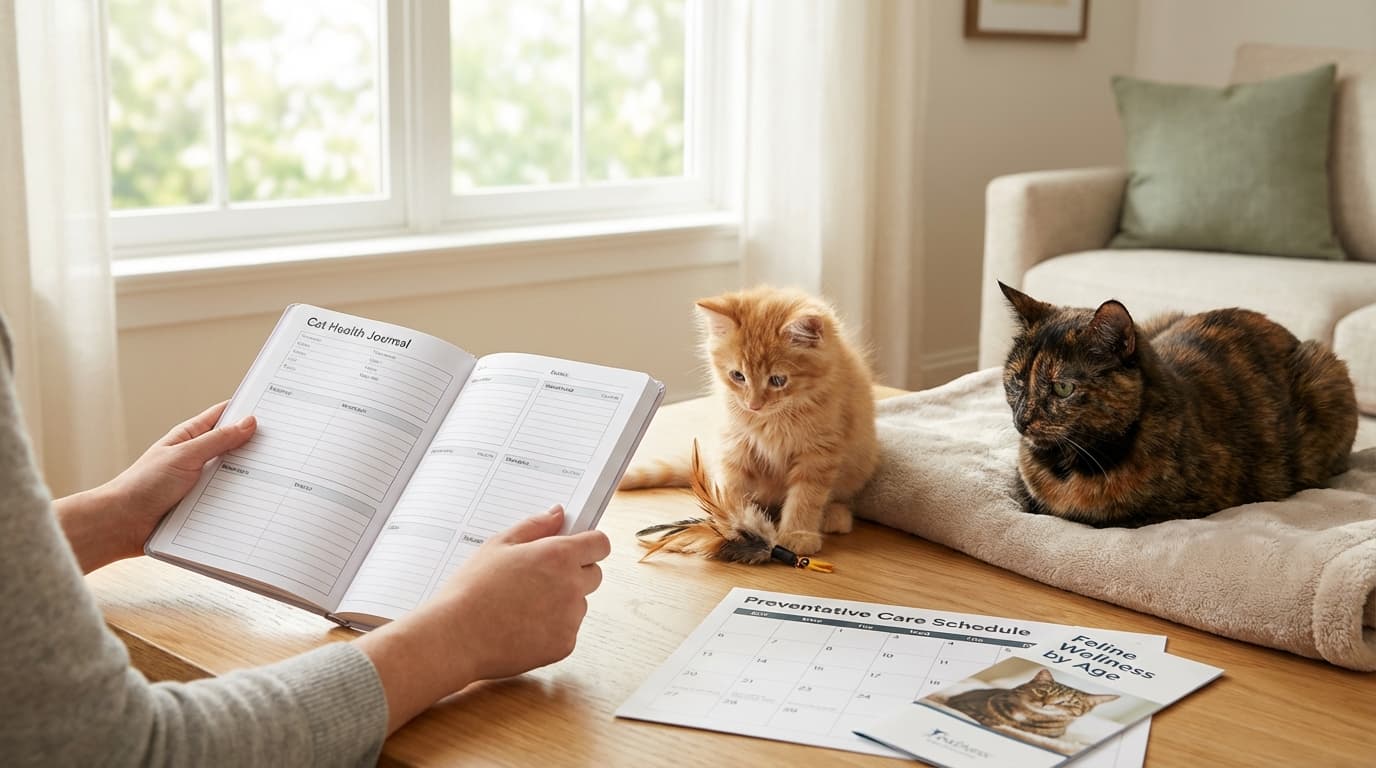
One of the most helpful tools you can keep in this folder is a printable cat vaccination record sheet for owners. Why? Because life happens. Maybe you need to book a last-minute boarding spot or there is a middle-of-the-night emergency at a clinic that does not have your cat's files. Having a physical sheet means you never have to guess when the next booster is due. A solid log should list the date, the specific vaccine given, and the date the next one is required. It is a simple step that saves a massive amount of stress.
Beyond just shots, these records help you track the day-to-day stuff that really matters. You might use your log to figure out how to track cat daily water intake at home or to note the best ways to monitor feline heart rate at home during rest. When you have all this data in one spot, you are better prepared to discuss natural ways to support cat immune system health with your vet. It turns a simple feeling that something is off into a factual conversation based on real data you have collected.
Key insights:
- Physical journals provide a reliable, battery-free way to consolidate medication and wellness records in one spot.
- Standardized health checklists from organizations help owners maintain a consistent history of their cat's condition.
- A physical vaccination log is a vital document for emergency vet visits and boarding requirements.
The Value of a Printable Cat Vaccination Record Sheet for Owners
Have you ever stood at the vet desk trying to remember when your cat last had a rabies shot? It happens to the best of us. A printable cat vaccination record sheet for owners is a simple way to stop the guessing game for good. Having a physical sheet means you never miss a booster shot, which keeps your cat's immune system exactly where it needs to be to stay safe.
These records are also essential for emergencies or last-minute boarding. If you have to drop your cat off quickly, a paper log is much faster than waiting for a vet office to email files. Groups like the World Cat Organization even suggest using structured checklists for better health monitoring. Your log should include immunization dates, specific medication dosages, and summaries from your vet visits.
Many people still prefer physical journals because they keep scattered notes in one spot. It turns random paperwork into a clear, chronological history of your cat's health. When you can see every milestone and treatment on one page, you gain real peace of mind. It is a small step that makes a huge difference in managing your pet's long-term care.
Key insights:
- Physical records are often more reliable than digital files during emergency vet visits or boarding.
- A complete health log should track vaccinations, medication dosages, and wellness milestones in one place.
- Using a chronological journal format helps owners identify health patterns over the cat's lifetime.
The Heartbeat at Your Fingertips: Monitoring Vitals
Ever notice how your cat's heart hammers against their ribs the moment they step into the vet's office? That is the 'White Coat' effect, and it is exactly why those clinic readings are often skewed by stress. To get a true sense of your cat's health, you need to find their resting heart rate at home where they feel safe. This baseline is a vital sign that global pet organizations recommend tracking on a standard health checklist. Think of it as the 'normal' setting for your cat's unique engine.
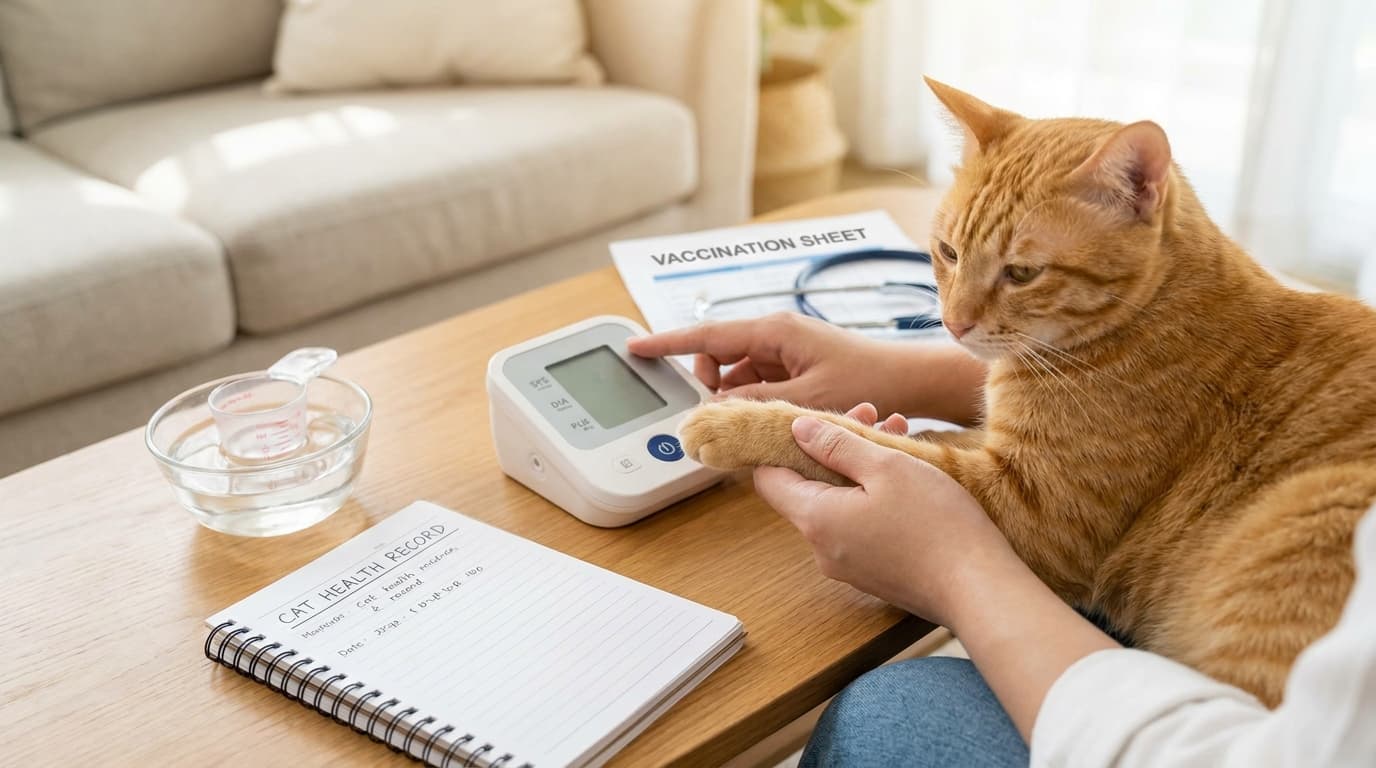
Many owners are now using physical log books to keep these details straight. It is a simple way to combine heart rate data with immunization records and medication schedules in one spot. To find the pulse, wait for a quiet nap time. Gently place your hand on their left side, just behind the front leg where the chest is narrowest. You are not looking for a struggle; you are just looking for that steady, rhythmic thrum. It might take a moment to find, but once you do, it becomes second nature.
When it comes to the best ways to monitor feline heart rate at home, the hand-on-chest technique is the gold standard. It feels like a simple petting session to your cat, so they stay calm. Here is a tip: do not try to count for a whole minute. Most cats will not stay still that long. Use the 15-second shortcut. Set a timer on your phone, count the beats for 15 seconds, and multiply by four. It is fast, accurate, and lets you spot wellness trends before they become big problems.
Key insights:
- Home monitoring eliminates stress-induced 'White Coat' heart rate spikes, giving you a more accurate health baseline.
- The 15-second shortcut (counting beats for 15 seconds and multiplying by four) is the most efficient way to measure a cat's pulse.
- Physical health journals help organize disparate data like heart rate, vaccination history, and medication dosages in one place.
Best Ways to Monitor Feline Heart Rate at Home
Have you ever tried feeling your cat's heart? It’s a quiet rhythm that tells you a lot about their internal health. The best way to check is the hand-on-chest technique. Just slide your hand behind their left front elbow while they are resting. If they are purring, you will likely lose the beat in the vibration, so wait for a quiet nap to get a clear reading.
Instead of fighting for a full minute, use the 15-second shortcut. Set a timer on your phone to stay precise, count the beats you feel, and multiply that number by four. It is fast, accurate, and much easier than trying to keep a wiggly cat still for sixty seconds. Think of it as a quick snapshot of their resting state.
But do not just forget the number once you have it. Many owners use physical log books to track these vitals chronologically. The World Cat Organization even suggests using structured checklists to stay organized. Having a medical history in one place helps you and your vet spot subtle health trends that a single appointment might miss.
Key insights:
- A 15-second count multiplied by four is the most practical way to measure a cat's heart rate at home.
- Maintaining a chronological health journal helps consolidate wellness data into a single, useful medical history.
Itchy or Ouchy? Sorting Out Sensitivities
Ever watched your cat scratch their ear so hard you actually winced? It is a special kind of frustration for both of you. Most owners think a scratch is just a scratch, but itchy skin and a grumbly tummy are often two sides of the same coin. When their digestive system reacts to something they ate, the skin is usually the first place to send up a flare. This connection is why your vet asks so many questions about what is going into the food bowl when you are complaining about a bald patch on their tail or a sudden case of the runs.
To get to the bottom of the mystery, you need more than just a good memory. This is where a symptom diary becomes your best friend. Many owners are now using physical cat log books to track these daily changes because they act as a central record for immunizations, medication doses, and wellness milestones. By keeping a written history, you can spot patterns that would otherwise vanish in a busy week. If you notice the scratching peaks every Tuesday after a specific treat, you have found your culprit. These journals function as both a record keeper and an organizer for medical history, making your next vet visit much more productive.
But how do you tell if it is the food or just the air? Signs of feline food allergies vs environmental sensitivities often look identical, but timing is the big clue. Environmental issues like pollen or dust usually follow a seasonal pattern, while food allergies stay miserable all year round. If your cat is over grooming their belly or dealing with stubborn chin acne, it might be a protein allergy. On the other hand, if their ears get red every spring or their eyes get watery when the windows are open, you are likely looking at a pollen or dust issue. Think about whether the itching stops when the weather changes. If it does not, the bowl is the first place you should look for answers.
The World Cat Organization suggests using a structured health checklist to keep these observations consistent. It helps to look for specific red flags like chronic ear infections or that weird chin acne that just will not quit. You might also notice they seem restless or lose interest in their favorite toys because they are too busy scratching. Instead of guessing, you are providing your vet with hard data. Think of it as being a detective for your cat’s comfort. When you have a chronological record of their health status, you move from worrying to actually taking action. This level of detail helps your vet rule out common pests before jumping into expensive allergy testing.
Key insights:
- Food allergies are usually consistent throughout the year, while environmental allergies often change with the seasons.
- Physical log books help consolidate medication, vaccination, and symptom data into one reliable place for vet visits.
- Skin reactions like chin acne or over grooming are frequently linked to internal digestive sensitivities.
Signs of Feline Food Allergies vs Environmental Sensitivities
Ever wonder why your cat is suddenly a scratching machine? It is a common puzzle. The biggest clue usually lies in the calendar. If your cat only gets itchy when the flowers bloom or the dust kicks up in spring, you are likely looking at environmental sensitivities like pollen. But if the scratching happens all year long regardless of the weather, it is often a sign of a food allergy. Usually, this means their body is reacting to a specific protein in their bowl.
Look for specific red flags that go beyond just a simple itch. Have you noticed your cat over-grooming their belly until the fur is thin? Or maybe they keep getting pesky ear infections or developed a case of cat acne on their chin. These are classic signs that something is not right. These symptoms are often the body's way of shouting that it does not like what it is eating or breathing.
To get to the bottom of it, many owners are using physical health journals. Recent trends show that keeping a physical log book is one of the best ways to track these patterns. Organizations like the World Cat Organization even suggest using structured checklists to monitor wellness. By logging what your cat eats alongside their symptoms in a journal, you create a clear map for your vet. This makes it much easier to spot if that chin acne flares up when the pollen count spikes.
Key insights:
- Environmental allergies are often seasonal, while food allergies persist all year.
- Common physical signs include over-grooming, chronic ear infections, and feline chin acne.
- Chronological health journals help owners identify triggers by tracking diet and symptoms together.
Boosting the Shield: Support for the Immune System
Think of your cat's immune system as an invisible bodyguard that never takes a day off. While we often wait for a vet visit to talk about health, the real work happens in the quiet moments at home. A strong immune system is your cat's first line of defense, and it relies heavily on a predictable environment. Cats are creatures of habit, so maintaining a consistent routine is one of the easiest ways to keep their stress levels low. When a cat feels safe and secure, their body can focus its energy on staying resilient rather than reacting to anxiety.
Staying organized is a huge part of this protective strategy. Many owners are now using dedicated cat health log books to track everything from immunization dates to daily medication dosages. It might seem old-school, but having a physical record helps you spot subtle shifts in wellness that a digital app might miss. Even the World Cat Organization advocates for using a structured health checklist. By keeping a chronological journal of your cat's medical history, you create a clear map of their well-being that makes every vet visit more productive.
If you are looking for natural ways to support cat immune system health, start with what goes into their bowl. High-quality proteins and Omega-3 fatty acids act as the building blocks for a functional defense system. There is also a massive connection between the gut and the immune system, which is why probiotics have become such a staple for proactive owners. Adding safe supplements or specific herbs can provide an extra boost, but the foundation will always be a mix of solid nutrition, a calm home, and a careful eye on the data you track in your health log.
Key insights:
- Physical health journals are becoming a preferred tool for owners to catch health trends early.
- Stress reduction through routine is just as important as medical intervention for long-term immunity.
- A significant portion of a cat's immune health is rooted in their digestive system and gut microbiome.
Natural Ways to Support Cat Immune System Health
Ever wonder why some cats bounce back from everything while others catch every little sniffle? It often comes down to their immune system, which is basically their body's personal security team. While genetics play a big part, you can give that team a major boost through natural ways to support cat immune system health right at home.
Start with the food bowl. High-quality proteins provide the amino acids needed to build strong immune cells, and Omega-3 fatty acids help manage inflammation so the body does not overreact to stress. Think of it as high-octane fuel for their internal engine. But the real secret is that most of their immune system actually lives in their gut. This is why probiotics are so helpful for keeping their internal balance in check.
To make sure these changes are working, many owners now use a physical cat log book to track wellness and daily habits. In fact, groups like the World Cat Organization suggest using structured checklists to monitor your pet's health consistently. Keeping a chronological journal makes it easy to see patterns in their energy and immunity over time. It is about being a proactive partner in your cat's long-term vitality.
Key insights:
- Gut health is the foundation of feline immunity, making probiotics a top priority.
- Physical health journals help owners spot subtle trends that digital apps might miss.
- Consistent tracking of proteins and supplements ensures you know exactly what supports your specific cat.
Common Questions About Home Cat Care
We all have those moments where we stare at our cats and wonder if they’re actually okay. It is a common worry for any pet parent. Is that new itch a sign of feline food allergies vs environmental sensitivities? Instead of spiraling, many owners are turning back to physical cat health journals. These log books are a simple way to track immunization dates and medication dosages in one spot without the stress of scrolling through apps.
A physical record makes life feel more manageable. Many people prefer paper organizers because they keep everything together in a single location. You can use structured guides, like the one from the World Cat Organization, to stay consistent with your wellness checks. It’s not just for a printable cat vaccination record sheet for owners; it’s for small daily habits too. For example, knowing the best ways to monitor feline heart rate at home helps you spot trouble early.
But when do you call the vet? If you are looking for natural ways to support cat immune system health but notice a sudden dip in their vitals, that’s your cue. Knowing how to track cat daily water intake at home also gives you a baseline for what is normal. Having a chronological history makes clinic visits much more productive. You aren't just guessing anymore because you have the facts right there in front of you.
Key insights:
- Physical log books help consolidate immunization, medication, and wellness data into one accessible location.
- Using structured checklists from global organizations ensures consistent and professional-level health monitoring at home.
- Tracking daily vitals like heart rate and water intake provides a baseline to identify health issues before they become emergencies.
Frequently Asked Questions
There isn't a set number of times a cat should visit their bowl, but they generally need about 4 ounces of water for every 5 pounds of body weight each day. You might see them take a few sips every few hours, or they might drink more at once if they only eat dry kibble which doesn't have much moisture.
Because cats are naturally low-thirst animals, it's a good idea to track how much they are actually consuming. You can do this by marking the water level on their bowl or keeping a quick note in a health log book. This helps you spot any sudden changes that might signal a health issue like kidney trouble or diabetes before it becomes a big problem.
For most healthy cats, a normal resting heart rate falls between 120 and 220 beats per minute. It feels very fast compared to a human heart, but that is just how their little bodies work. The best time to check this is when your cat is completely relaxed or even napping so you get a true resting number.
To get an accurate reading at home, place your hand on the left side of their chest just behind their front leg. Count the beats for 15 seconds and multiply that by four. It is really helpful to write these numbers down in a physical health journal or a printable record sheet. Having a baseline makes it much easier for you and your vet to notice if something is off during a checkup.
You might be tempted to try, but human heart rate monitors usually won't work for your cat. Our gadgets are designed for human skin and much slower heart rates, so they really struggle to get a clear reading through thick fur or keep up with a cat's naturally fast pulse.
A cat's heart can beat up to 200 times a minute, which is way faster than ours. If you want to check their heart at home, the best way is the old-school method. Just gently feel their chest right behind the front left leg. Count the beats for 15 seconds and multiply by four. It takes a little practice, but it's much more reliable than using a human device.
It can be hard to spot the difference between food allergies and environmental ones, but timing is a big clue. If your cat is scratching and licking themselves all year round regardless of the season, there is a good chance it's something in their food bowl.
Food-related itchiness often shows up around the head and neck, and you might also see red skin or even some tummy issues like gas. A great way to figure this out is to use a cat health log to track when the itching gets worse. If it doesn't change when the seasons do, it's a sign you should talk to your vet about trying an elimination diet to find the culprit.
Conclusion
So where does all this leave you and your favorite furball? Being a cat detective is about more than just watching for a limp or a sneeze. When you track cat daily water intake at home and keep a printable cat vaccination record sheet for owners, you are building a clear picture of your pet's life. It is the small details, like knowing their resting heart rate or spotting a food allergy early, that make the biggest difference in their long-term wellness.
The bottom line is that you do not need to be a vet to notice when something feels off. By using simple habits like feline heart rate monitoring or keeping a health log, you can catch health shifts before they become expensive emergencies. This proactive approach takes the guesswork out of pet parenting and helps you feel much more confident in your daily care.
Your next move might be as simple as marking a water bowl or printing out a fresh health sheet. Supporting a strong immune system is a daily effort, but it pays off in more head-bumps and loud purrs. A healthy cat is a happy cat, and you now have the tools to keep them feeling their best.
Send it to someone who should read it next.

PurrScript Editorial Team
Editorial Team
PurrScript's in-house editorial team. We research, write, and review every guide using established veterinary and behavioral resources, and update articles as best practices evolve.
View all articles