From Tiny Zoomies to Senior Snoozes: The Real Talk on Cat Health Care
Your cat is a pro at keeping secrets, especially when they aren't feeling their best. It is a survival instinct left over from their wild ancestors, but it makes our...

Sophia Parks
Breed Specialist & Breeder
From Tiny Zoomies to Senior Snoozes: The Real Talk on Cat Health Care
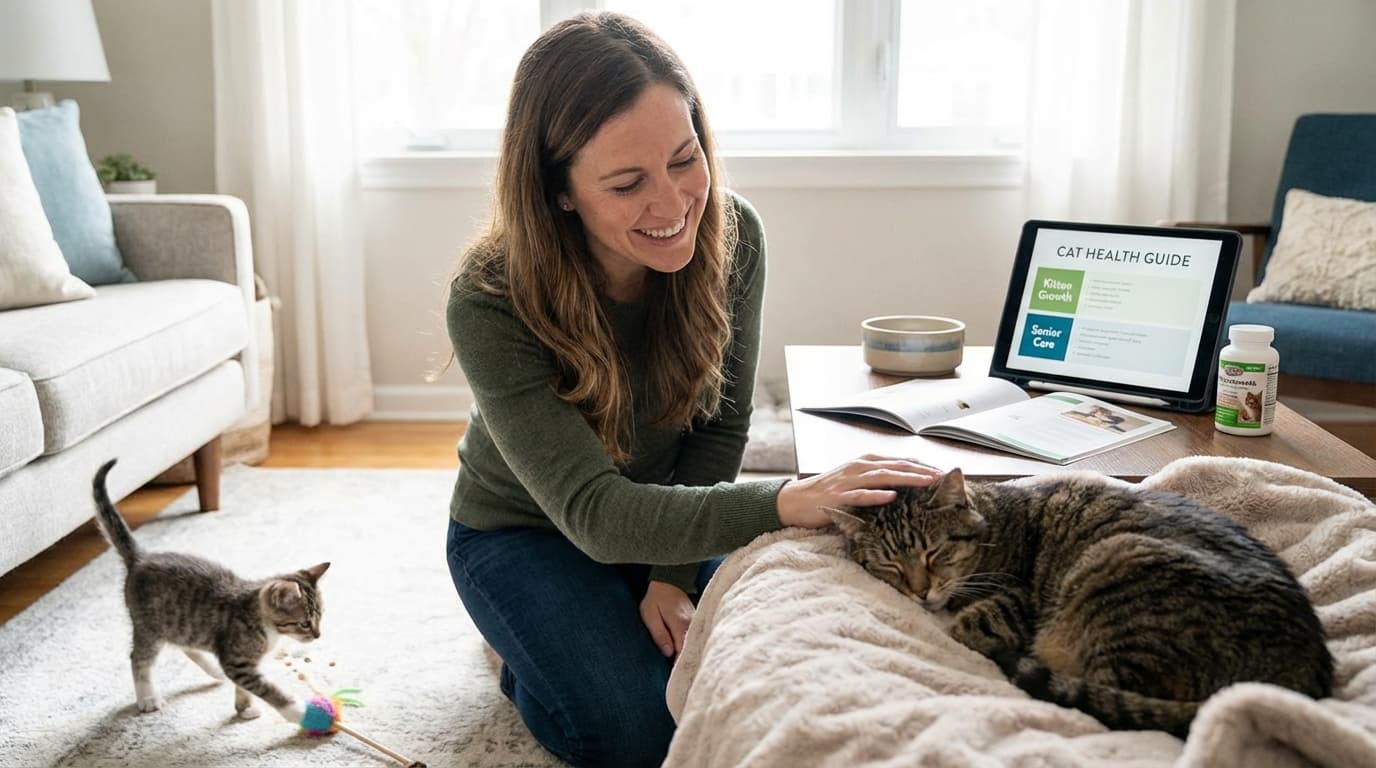
Your cat is a pro at keeping secrets, especially when they aren't feeling their best. It is a survival instinct left over from their wild ancestors, but it makes our job as pet parents a little tricky. Since cats age about five times faster than humans, a lot can change in just a few months while they are busy napping in a sunbeam.
Staying on top of cat health care means knowing what to look for at every age. Whether you are tracking a kitten vaccination schedule for a new fluffball or learning about feline dental care after a professional cleaning, being proactive keeps them happy. It is about catching the small stuff before it becomes a big deal, like spotting early cat asthma signs or helping a stiff senior cat move more easily.
This guide covers the real talk on feline wellness from the first vet visit to managing golden year health. You will find tips on home recovery, thyroid-friendly diets, and why those twice-yearly senior checkups are so important. Let's look at how to keep your favorite feline feeling like a kitten for as long as possible.
The Secret Life of Healthy Cats
Ever wonder why your cat acts fine even when they are sick? They are masters of disguise. Because they evolved as both predators and prey, showing weakness was once dangerous. Dr. Ilona Rodan explains that this survival instinct makes them hide pain better than almost any other species. Since cats age five times faster than humans, their health can shift surprisingly fast.
Taking care of them helps you, too. Most owners see cats as family, and keeping them healthy can actually lower your blood pressure. We will cover everything from kitten checkups every few weeks to bi-annual visits for seniors over age eight. Let's make those average 14 years the best they can be.
Key insights:
- Cats hide illness as a survival mechanism inherited from their wild ancestors.
- Routine veterinary care for cats provides physical and psychological benefits for their human owners.
Starting on the Right Paw: The Kitten Roadmap
Bringing a kitten home is pure chaos in the best way. Those first six months are a total whirlwind of zoomies and vet visits, mostly because cats age about five times faster than we do. Since 78% of us consider our cats to be true family members, getting that kitten growth chart and vaccination schedule right is a top priority. It is about more than just keeping track of their weight. It is about building a roadmap for a life that could last fourteen years or more.
You might wonder why you are at the vet every three to four weeks until they hit six months. It feels like a lot, but kittens are essentially building an immune system from the ground up. These visits allow for vital vaccine boosters and a close look at potential parasites or early growth issues. As Dr. Ilona Rodan points out, cats instinctively hide pain to protect themselves from predators. Because they are so good at masking illness, these frequent checkups are the only way to ensure everything is actually okay under the hood.
Then there is the big conversation about spaying and neutering. While it might feel early, many vets agree that eight weeks is often the magic number for these procedures. Getting it done early is not just about population control. It provides massive long-term health benefits and can prevent behavioral quirks before they even start. Think of it as a one-time investment in their future comfort. A quick call to your vet now can prevent serious complications later, making the transition from tiny kitten to happy adult much smoother.
Key insights:
- Kittens require veterinary visits every 3 to 4 weeks until the 6-month mark to ensure proper immunity development.
- Early spay and neuter procedures can safely begin at 8 weeks old to provide long-term health advantages.
- Because cats naturally mask pain, routine wellness visits are the primary way to catch early growth or health issues.
Why 3-4 Week Checkups Matter
Think about how fast kittens change. Since cats age about five times faster than humans, a few weeks for a kitten is like many months for a human child. That is why those vet visits every three to four weeks until they reach six months are so vital. It is not just about a quick prick of a needle. These frequent checkups let your vet spot sneaky growth issues or parasites before they turn into serious health hurdles.
These visits also help build a solid immune system through timely vaccine boosters. Here is the tricky part: cats naturally hide pain to protect themselves, so you might not see the signs of a struggle. Because most of us consider our cats to be actual family members, keeping this schedule is a small price to pay. It gives your kitten the best start while they are still in that high-speed growth phase.
Key insights:
- Kittens require frequent visits because their development happens much faster than human growth.
- Regular boosters and parasite checks prevent long-term complications that cats often hide instinctively.
The Early Spay and Neuter Conversation
Is eight weeks really the magic number for a kitten's big surgery? It sounds early, but remember that cats age about five times faster than we do. They grow up in a blink! Most vets now suggest spaying or neutering can happen as early as two months old. This timing usually aligns with those routine kitten visits you’re already doing every few weeks anyway.
It’s not just about population control. Doing this early provides major health benefits, like lowering the risk of certain cancers later in life. Since most of us view our cats as family, starting them off right helps them reach that 14-year average lifespan. It’s a simple step toward a healthier future for a pet that instinctively hides its pain from you.
Key insights:
- Cats can be safely spayed or neutered as early as 8 weeks of age.
- Early procedures help prevent reproductive cancers and long-term health complications.
- Scheduling surgery during the initial kitten vaccination window simplifies routine care.
The Post-Dental Bounce Back: Home Care Tips
When your cat wobbles out of the carrier after a dental cleaning, they might look like a little fuzzy alien who has had one too many catnip toys. This groggy phase is a normal part of the process, but it requires a watchful eye from you. Since about 78% of us consider our cats to be full-fledged family members, it is natural to feel a bit anxious during this bounce-back period. The tricky part is that cats are experts at hiding pain. Dr. Ilona Rodan notes that this is a survival skill they kept from the wild to avoid predators. Because they will not always tell you if they are hurting, your job is to be their advocate while the anesthesia wears off.
You might have heard that dry food acts like a toothbrush, but that is a bit of a tall tale. The truth is that dry food is never a substitute for professional dental care. Think of it like a human eating pretzels and expecting their teeth to stay clean; it just does not work that way. Because cats age roughly five times faster than we do, a single year without a checkup can allow dental issues to spiral quickly. Professional cleanings are the only way to get under the gumline where the real trouble starts, regardless of what kind of kibble is in the bowl.
Setting up a recovery nook is the best way to help them settle in safely. For the first night back, skip the high-climbing spots and keep their bed right on the floor. Your cat’s depth perception and balance might be a bit off, so keeping things low to the ground prevents any accidental tumbles from chairs or cat trees. Place their favorite blanket and some fresh water nearby in a quiet, warm corner of the house where they will not be disturbed by other pets or loud noises.
When it comes to dinner, patience is key. It is best to hold off on that first meal until they are fully alert and walking in a straight line. When you do finally offer food, start with a smaller portion than usual to make sure their stomach can handle it after the medication. If anything seems wrong or if they stay lethargic for too long, do not hesitate to reach out to your clinic. As the experts at Best Friends Animal Society suggest, a quick call to your vet can often mean the difference between a smooth recovery and a serious complication.
Key insights:
- Cats instinctively mask pain as a survival mechanism, so close observation is more important than waiting for them to cry out.
- Dry food does not prevent dental disease; regular professional cleanings remain the only way to maintain oral health.
- Post-anesthesia safety involves keeping cats on the floor to prevent falls while their balance is impaired.
- Wait for full alertness before feeding a small post-surgery meal to avoid choking or nausea.
Setting Up a Recovery Nook
After a procedure, your cat won't admit they're feeling woozy. Since cats instinctively mask pain, setting up a recovery nook is vital home care for cats after dental cleaning. Keep this spot low to the ground. Think of a plush bed on the rug rather than a high perch. Anesthesia makes them clumsy, and a fall is the last thing a groggy kitty needs.
Keep the area dim and quiet so they can rest without distractions. When it comes to food, wait a few hours until they are steady on their feet before offering a small meal. Since 78% of owners consider cats family, it is hard not to hover, but giving them space to sleep is often the best medicine.
Key insights:
- Cats hide discomfort as a survival tactic, making a quiet environment essential for monitoring.
- Wait until your cat is fully alert and walking normally before offering the first post-surgery meal.
Is Your Indoor Cat Getting Stiff? Spotting Osteoarthritis
When your cat stops making those big leaps onto the fridge, it is easy to think they are just slowing down. But cats age about five times faster than we do. By the time they hit eight or nine, they are officially seniors. Because they instinctively hide pain to stay safe from predators, that extra nap time might actually be a sign of stiff joints rather than just a quiet afternoon.
Since they hide it so well, you have to look for small clues. Maybe they use a chair as a stepping stone to reach the bed instead of jumping from the floor. Experts like Dr. Ilona Rodan point out that this masking behavior makes regular checkups vital. For a senior cat, a vet visit twice a year helps catch joint issues before they really start to hurt and limit their mobility.
You can make life easier for a stiff cat without needing a big backyard for exercise. Small changes at home go a long way. If their litter box has high sides, it is like asking someone with a bad knee to climb into a deep bathtub every time they need the bathroom. Switching to a low-entry box or adding a simple ramp to the sofa can change their whole day.
Do not forget the power of a heated bed to soothe those old bones. Also, keeping their weight in check is the best medicine you can provide. Extra pounds put a lot of stress on sore joints. While treats are a way to show love, keeping your indoor cat lean is the real secret to helping them move like a kitten again for as long as possible.
Key insights:
- Senior cats over eight years old should see a vet twice a year to monitor joint health.
- Cats hide pain as a survival instinct, so any change in jumping habits is a major red flag.
- Low-entry litter boxes and ramps are simple ways to help a stiff cat stay mobile indoors.
- Weight management is the most effective way to reduce the physical load on aching feline joints.
Environmental Hacks for Sore Joints
Since cats are experts at masking pain to stay safe, you might not notice their stiff joints until they really start to struggle. Because they age five times faster than us, that "slow down" happens much earlier than we expect. If your buddy is hesitating before jumping onto the couch, it is time to adjust their home layout to match their new pace.
Small tweaks go a long way for a cat dealing with feline osteoarthritis. Swap high-sided litter boxes for low-entry versions so they do not have to climb just to go. Ramps or steps near the sofa let them reach their favorite spots without the painful impact of jumping, while a heated bed can soothe those achy limbs during a long nap.
But here is the most important hack: watch the scale. Extra weight is the biggest enemy of sore joints because it adds constant pressure to inflamed areas. Since most of us see our cats as true family members, keeping them lean is the best way to ensure they stay mobile and happy throughout their senior years.
Key insights:
- Low-entry litter boxes reduce the physical strain of daily routines.
- Ramps help cats maintain their social habits without painful jumping.
- Weight management is the most effective way to reduce joint inflammation naturally.
When the Purr Sounds Different: Feline Asthma
Ever heard your cat make a hacking sound and thought, "Oh, just another hairball"? We’ve all been there. But if that hairball never actually appears, you might be looking at one of the common signs of feline asthma attacks. It is tricky because cats are absolute masters at masking illness - a survival skill they kept from their wild ancestors to avoid looking like easy prey. As Dr. Ilona Rodan points out, this protective mechanism makes preventive care even more critical for cats than other pets because they hide their discomfort so well.
When a cat has an asthma attack, they usually crouch low to the ground with their neck extended, huffing as if they are trying to clear their throat. If this happens regularly, it is not a digestive quirk; it is a breathing struggle. The reality of using inhalers with cats is also much less scary than it sounds. While you might imagine a wrestling match, most cats learn to accept a face mask and spacer quite quickly once they realize it helps them breathe. Since 78% of owners view their cats as true family members, getting them this relief is just part of the bond. It is about ensuring their average 14-year lifespan is spent breathing easy rather than struggling for air.
Your home might look spotless, but for an asthmatic cat, microscopic irritants are everywhere. Common triggers like dusty clay litter, strong perfumes, and even fireplace smoke can turn a quiet afternoon into a respiratory emergency. Creating a lung-friendly environment is one of the best ways to support your cat's health between vet visits. Start by switching to unscented, low-dust litter and avoiding aerosol sprays near your pet. Since cats age about five times faster than humans, their respiratory health can shift quickly. Making these simple adjustments now helps protect their lungs as they move from their kitten years into their senior stage.
Key insights:
- The 'crouched' posture with an extended neck is a classic sign of respiratory distress, not just a stomach issue.
- Cats instinctively hide pain, so a visible cough often means the condition has been present for a while.
- Environmental changes like switching litters can be as vital as medical treatments for long-term management.
Triggers Hiding in Your Home
Cats are masters at hiding pain, a trait they kept from the wild. This means you might not notice a respiratory issue until it is serious. Common triggers for feline asthma attacks are often hiding in plain sight, like dusty clay litter, strong perfumes, or cigarette smoke. Since 78% of owners consider their cats family, creating a lung-friendly home is a must.
Switching to low-dust litter and unscented cleaners makes a huge difference. If your cat does develop asthma, vets can even teach them to use special inhalers for relief. Keeping the air clear helps ensure they stay healthy through their average fourteen-year lifespan.
Key insights:
- Cats instinctively mask symptoms, making environmental control vital for their health.
- Fragrances and dust are major contributors to feline respiratory distress.
- Medical management for asthma can include specialized inhalers designed for cats.
Eating Well with Hyperthyroidism
Ever notice your older cat acting like a kitten again, but losing weight despite eating everything in sight? It looks like a second youth, but it is often hyperthyroidism. Because cats age about five times faster than we do, these health changes happen fast. Their metabolism goes into overdrive, making them feel like they are running a marathon while sitting still. This matters because they are not just hungry. They are burning through their own muscle for fuel.
Providing the right nutritional support for cats with hyperthyroidism is a huge part of the fix. They need calorie-dense meals and high-quality protein to keep muscle mass from disappearing. Since cats instinctively mask illness as a survival mechanism, you have to be the detective when their appetite spikes. You might see their spine or hips start to stick out even if they are begging for a third breakfast.
Here is the thing. Food can actually be medicine. Since the thyroid needs iodine to produce hormones, a strictly iodine-restricted diet can sometimes manage the condition without daily pills. But wait, even one tiny treat can ruin the effect. It is a big commitment, but it shows how much power a simple diet change has over their wellness and longevity.
Key insights:
- Hyperthyroid cats burn calories faster than they can consume them, leading to rapid muscle loss.
- Iodine-restricted diets can replace medication for some cats if followed with 100% consistency.
- Increased appetite in senior cats is a common indicator of illness rather than a sign of health.
The Golden Years: Why Twice-Yearly Visits are Non-Negotiable
Most of us see our cats as true family members, so it is tough to realize how fast they actually age. Since cats age about five times faster than humans, one year for us feels like five long years for them. This means waiting a full year for a senior vet visit is like a person skipping the doctor for half a decade. Because their bodies change so quickly, those annual checkups just do not cut it anymore once they reach their golden years.
Once your cat hits eight or nine years old, they enter what many call the 8-Year Shift. This is the life stage where issues like kidney changes or joint pain often start creeping in quietly. The tricky part is that cats hide pain as a survival mechanism inherited from the wild. As Dr. Ilona Rodan notes, they are experts at masking illness to avoid looking vulnerable. If you wait for obvious symptoms to show up at home, the health problem is likely already quite advanced.
Going to the vet twice a year helps you catch these small shifts before they become emergencies. These visits let you set up a diagnostic baseline, which is a record of your cat’s normal bloodwork and weight while they are still feeling good. When something finally does change, your vet has a clear map to compare it against. It is the simplest and most effective way to keep those senior years comfortable, happy, and long.
Key insights:
- Cats age approximately five times faster than humans, making six-month gaps between exams feel like years.
- The 8-Year Shift marks the transition into senior care where hidden issues like osteoarthritis become more common.
- A diagnostic baseline provides a minimum database of normal values to help vets spot early warning signs of disease.
- Because cats instinctively mask pain, regular professional exams are the only way to detect early discomfort.
Common Questions from Fellow Cat Parents
Ever feel like your cat is a total mystery? You aren't alone. Recent studies show that 78% of us consider our cats to be true family members, yet they are absolute pros at hiding when they feel under the weather. This isn't your cat being stubborn. It is actually a survival mechanism. In the wild, showing pain made them targets for predators, so they learned to act tough even when they hurt. This is why staying ahead of their health is so important; by the time they show symptoms, they have often been feeling poorly for a while.
One of the biggest surprises for owners is how fast time really flies. Cats age roughly five times faster than we do, which makes their life stages move in fast-forward. That tiny kitten you just brought home needs a checkup every few weeks for their growth chart and vaccination schedule until they hit six months. By the time they reach eight or nine, they are already considered seniors. Because so much happens in a single cat year, taking an older cat to the vet twice a year is the best way to catch things like feline osteoarthritis or early signs of asthma attacks before they become emergencies.
We know the vet office isn't usually a cat's favorite place, but a quick call to your doctor can be the difference between a fast recovery and a serious complication. To make things easier, try leaving the carrier out in the living room so it becomes a familiar nap spot rather than a scary signal that a car ride is coming. Also, keep in mind that while dry food is convenient, it is never a substitute for professional dental care. Taking these small steps helps your cat reach that average 14-year lifespan and, as a bonus, keeps your own stress levels and blood pressure down too.
Key insights:
- Cats age five times faster than humans, making bi-annual senior checkups essential after age eight.
- The instinct to mask pain is a survival trait that makes preventive care more critical for cats than other pets.
- Regular veterinary visits provide documented psychological and physical health benefits for the human owners as well.
Frequently Asked Questions
Conclusion
Caring for a cat is a lifelong conversation that changes as they grow from tiny zoomies into senior snoozers. Whether you are following a kitten growth chart and vaccination schedule or managing home care for cats after dental cleaning, the goal is staying ahead of a pet that hides pain way too well. By watching their teeth, joints, and breathing, you are giving them the best chance at a long and happy life.
If your cat seems stiff or has a cough that will not quit, it might be more than just getting old. Knowing the common signs of feline asthma attacks or starting feline osteoarthritis management for indoor cats can make a huge difference in their daily comfort. Even specialized needs, like nutritional support for cats with hyperthyroidism, are just another part of the journey you take together.
Your next move is simple: spend a few minutes really watching how your cat moves and breathes today. Great health care often starts with a quiet observation on the living room rug. Here is to many more years of happy purrs and cozy naps.
Send it to someone who should read it next.
About the author
Sophia Parks
Breed Specialist & Breeder
Registered cat breeder and judge with deep expertise in pedigreed breeds and breed standards worldwide.
View all articles