Give Your Cat the Great Outdoors: A Simple Guide to DIY Catios and Window Boxes
Does your cat spend the afternoon staring longingly through the glass at every passing bird? Most indoor cats have a natural itch for adventure, but letting them roam free comes...

PurrScript Editorial Team
Editorial Team
Give Your Cat the Great Outdoors: A Simple Guide to DIY Catios and Window Boxes
Does your cat spend the afternoon staring longingly through the glass at every passing bird? Most indoor cats have a natural itch for adventure, but letting them roam free comes with real worries about traffic or local predators.
A catio is the perfect solution for that indoor-outdoor dilemma. By using the right DIY catio blueprints, you can build a secure space that offers fresh air and sunshine without the danger. Whether you want a small cat window box enclosure or large predator-proof cat runs, these structures keep your pet happy while maintaining a bird-safe garden.
With September being Happy, Healthy Cat Month, it is the perfect time to start your build. We will walk you through picking the best spot, choosing catio flooring and plants, and using catio aesthetic ideas so the structure looks great. You don't need to be a pro to get started. Let's look at how you can give your cat the outdoor life they've been dreaming of.
Welcome to the Catio Life: Why Your Feline Will Thank You
Every cat owner knows that look. Your cat sits by the window, staring at a bird with a tail-twitching mix of desire and frustration. You want them to enjoy the breeze, but the indoor-outdoor dilemma is a tough one. Letting them roam free means worrying about cars or local predators like coyotes. Keeping them inside all the time? That often leads to shredded curtains and a bored, restless pet.
The catio life offers the perfect middle ground. These enclosures, ranging from small window boxes to large structures like the Oasis or Sanctuary plans, give your cat the sensory hits they crave without the risks. Owners like Tracey L. have found that their cats love staying out all day and night, climbing roped posts and lounging on multi-level ledges. It is a simple way to stop behavioral issues like furniture scratching by replacing boredom with bird-watching and fresh air.
The best part is that you do not need to be an architect to get started. Most DIY catio blueprints are designed for easy assembly, and a professional contractor can often finish a build in just two days. We are going to show you how to pick the right spot, choose cat-safe plants, and create a space that blends into your home. Think of it as building a secret garden where your cat can finally soak up the sun in peace.
Key insights:
- Catios provide a safe way for cats to experience the outdoors while protecting local bird and pollinator populations.
- Standard DIY plans allow for professional-grade results in as little as a weekend of work.
- Outdoor enrichment significantly reduces common indoor behavioral issues by providing healthy sensory stimulation.
Finding Your Match: Which DIY Catio Blueprint Fits Your Home?
Before you grab your hammer and head to the lumber yard, take a good look at your outdoor space. Is it a tiny apartment balcony, a single window, or a sprawling backyard? Choosing the right DIY blueprint is all about matching the structure to your home's footprint so it doesn't look out of place. Popular options like the Haven, which comes in 3x6 or 4x8 sizes, are great for smaller yards or decks. If you have more room to work with, the Sanctuary or the massive 8x10 Oasis gives your cat plenty of space to climb, jump, and lounge. There are even resources available that offer up to 30 free DIY plans for various enclosure types, ensuring you find something that fits your specific needs. Having a clear plan isn't just about the dimensions; it's about knowing exactly how much lumber and mesh you need before you start so you don't end up with a half-finished project.
Using a professional blueprint helps you avoid those frustrating 'oops' moments that happen when you try to wing it. These plans handle the technical stuff like weight distribution, door placement, and roof slopes so your cat stays secure and the structure lasts for years. While a DIY build is a rewarding project for a homeowner, it's worth noting that a professional contractor can usually finish one of these plans in about two days. This means your cat could be enjoying the fresh air by the end of the weekend. It's a quick way to upgrade their life while ensuring the structure looks like a professional part of your home rather than a messy afterthought. Plus, following a guide ensures the mesh is tight enough to keep out unwanted visitors.
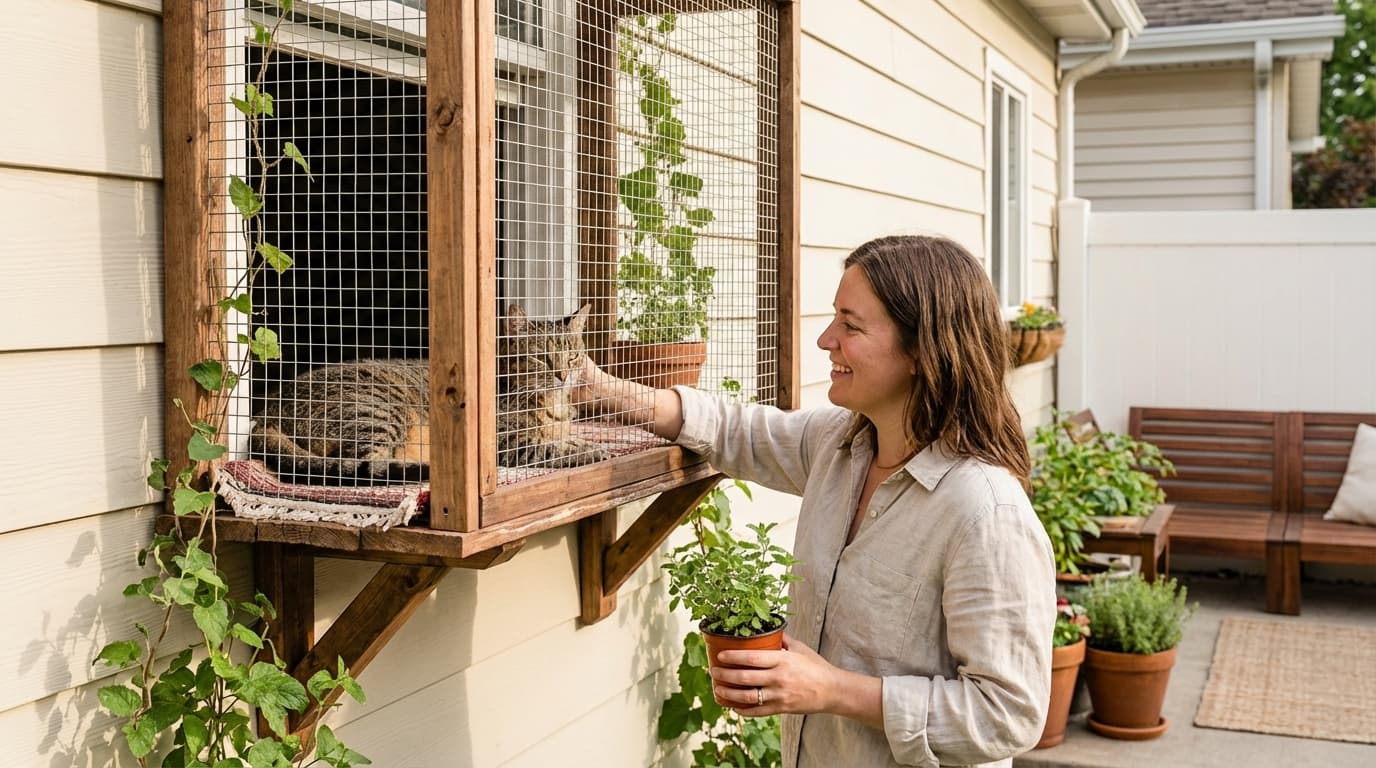
If you are short on square footage, a cat window box enclosure is a total game-changer. These are perfect for renters or homeowners who don't want a massive structure attached to their siding but still want to give their pets some freedom. Your cat gets a 180-degree view of the neighborhood, catching every bird and breeze without ever leaving the safety of the house. They are the easiest 'weekend warrior' project because they don't require a foundation or a huge footprint. For renters, you can often install these using window tension or simple brackets that don't cause permanent damage to the property. As Michelle C. says, her cats love watching the birds and warming themselves in the sun from their safe little perch. It is a simple way to provide enrichment without a major renovation.
For cats that need more room to move, predator-proof cat runs offer a real sense of adventure. If you live in an area with coyotes or hawks, safety is the top priority, and these runs are designed with that in mind. They use sturdy natural wood framing and heavy-duty wire mesh to create a secure environment where your cat can roam. You can even build long tunnels that connect your back door to a larger play area further out in the garden, allowing your cat to explore the yard safely. Just remember to secure the bottom with a footer or mesh; you don't want your cat digging out or a curious neighbor digging in. These structures also help local wildlife by keeping your hunter away from nests and pollinator-friendly gardens, creating a win-win for everyone.
The benefits of a catio go beyond just fresh air and exercise; they offer deep therapeutic sensory stimulation. This is especially helpful for cats with physical disabilities. For example, a visually impaired cat named Danica uses her catio to enjoy the sounds and scents of the outdoors safely without the risk of getting lost or hurt. You can even customize the look by painting the frame to match your house trim or adding cat-safe plants to create a 'secret garden' feel. Judy S. mentioned that her cat Ginger loves finding hiding places in his catio, sometimes making it hard to even find him. With September being Happy, Healthy Cat Month, it is a great time to start a project that lets your cat lounge, jump, and climb to their heart's content.
Key insights:
- Professional blueprints reduce construction errors and allow contractors to finish a build in just two days.
- Window boxes offer a high-impact, low-space solution that provides cats with a 180-degree view of their surroundings.
- Predator-proof runs and tunnels protect domestic cats from coyotes while simultaneously shielding local bird populations.
- Catios provide essential sensory enrichment for cats with disabilities, such as visual impairment, by offering safe access to outdoor sounds and smells.
The Cat Window Box Enclosure: Perfect for Small Spaces
Ever feel like your cat is judging you for living in a tiny space? A cat window box enclosure is a total game-changer. It gives your pet a full 180-degree view of the neighborhood without taking up any yard space at all. Think of it as a private balcony where they can safely sniff the air and watch the world go by. Because these boxes are small and manageable, they are the perfect project for a quick weekend. You do not need to be an expert to get one installed and ready for use.
These enclosures are great for both renters and homeowners because they are easy to set up and often just as easy to remove. While a pro could build a standard DIY plan in about two days, most people find it simple enough to do themselves over a lazy Saturday. Safety is a big part of the deal too. These boxes keep your cat away from predators like coyotes while making sure local birds stay safe from curious paws. It is a simple way to protect wildlife while giving your cat a taste of freedom.
The real joy comes from the sensory experience. Your cat gets to bask in the sun and listen to the birds just like Michelle C. described when her cats spend all day on their sunny deck. You can even customize the box with natural wood or paint to match your house trim so it looks like a part of the architecture. It turns a plain window into a favorite hangout spot. Why settle for a boring view when your cat could have a front-row seat to the great outdoors?
Key insights:
- Window boxes provide maximum outdoor exposure with a zero-footprint design for small homes.
- These structures serve a dual purpose by protecting domestic cats from predators and keeping local birds safe.
- Customization options like matching paint or natural wood help the enclosure blend into your home's existing style.
Predator-Proof Cat Runs for the Adventurous Feline
Ever watch your cat stare longingly at a bird through the glass? They want to be out there, but the neighborhood isn't always safe for a domestic pet. If you live in an area with coyotes or hawks, a standard garden fence just won't cut it. This is where predator-proof runs come in. By using heavy-duty wire mesh and solid wood framing, you create a fortress that lets them enjoy the breeze without becoming part of the local food chain.
The most exciting setups often involve long tunnels that connect your house to a detached play area. It gives your cat a genuine sense of travel and exploration. If you are worried about the work involved, don't be. A professional contractor can usually knock out a DIY plan, like the Sanctuary or Oasis designs, in about two days. This means your feline friend doesn't have to wait weeks to start their new outdoor life.
But here is a tip many people miss: look down. A truly secure run needs to stop your cat from digging out and predators from digging in. Burying a bit of the mesh underground or installing a solid floor keeps everyone where they belong. It is a simple step that provides massive peace of mind. Whether you are celebrating Happy, Healthy Cat Month in September or just looking for a weekend project, these enclosures ensure your cat stays a hunter of toys, not a target for wildlife.
Key insights:
- Sturdy wire mesh and wood frames are essential to keep out hawks and coyotes.
- Ground-level security, like buried mesh, prevents animals from digging under the enclosure.
- Connecting tunnels allow cats to safely 'commute' from the house to a remote play area.
Style Meets Function: Catio Aesthetic Ideas You'll Actually Love
Think about your house for a second. You probably spent a lot of time picking the right paint or keeping the yard looking sharp, so why stop now? A catio shouldn't look like a cage tacked onto the side of your home. Instead, think of it as a custom addition. You can match the wood stain or paint colors to your window trim so the whole thing looks seamless. Whether you are building a compact Haven or a sprawling Oasis, using the same finishes as your house makes the structure feel intentional and high-end. If you are not a master builder, do not worry. A professional contractor can usually finish a standard DIY plan in about two days, giving you a polished look without the stress. This turns a simple weekend project into a permanent upgrade that feels like it has always been there.
The real magic happens when you blend the structure into your landscaping. You can build around trees or tuck the frame behind some tall bushes to help it disappear into the greenery. This isn't just about making the neighbors happy. A well-designed catio actually adds to your home's curb appeal, especially for other pet lovers. It shows that the property is safe and thoughtfully upgraded. Plus, it keeps local predators like coyotes at bay while giving your cat a stylish lounge. It is a functional safety measure that looks like a luxury amenity. When a catio is integrated well, it does not just sit in the yard. It enhances the entire outdoor experience for you and your pets.
When you move from the outside structure to the interior, it is all about the feline jungle vibe. The floor is a great place to start. Cedar decking is durable and smells great, but adding outdoor rugs or patches of real grass gives your cat different textures to explore. Judy S. calls her setup a Secret Garden because her cat, Ginger, loves finding hiding spots among the decor. You can mimic this by adding multi-level shelving and roped climbing posts so they can survey their kingdom from above. Tracey L. mentioned that her six cats spend all day and night in their Sanctuary catio, lounging and jumping between ledges. It is all about those sensory layers that keep a cat's mind active and their bodies moving.
To finish the look, bring in some greenery. You want plants that are beautiful but totally safe, like catnip, spider plants, or oat grass. Be sure to skip anything toxic like lilies or sago palms because they are dangerous for cats. There is also a cool trend where catios and pollinator-friendly gardens work together. By keeping your cat in a secure run, you are protecting local birds and bees from a cat's natural hunting instincts. Your backyard becomes a thriving ecosystem where the cat can watch the action without interfering. It turns your outdoor space into a peaceful retreat for everyone. This way, you are not just building a pen, you are supporting local wildlife while giving your cat a front-row seat to the show.
Key insights:
- Matching your catio's paint to your house trim creates a high-end look that can boost property value for pet-loving buyers.
- Catios protect local birds and pollinators, allowing your backyard ecosystem to flourish while your cat stays safe.
- Using a mix of textures like cedar, rugs, and cat-safe plants provides the sensory stimulation indoor cats often miss.
- DIY plans like the Haven or Sanctuary can be completed by professionals in just two days for a fast, sturdy build.
Flooring and Plants: Creating a Feline Jungle
What is under your cat’s paws matters just as much as the view from the perches. When you are looking at catio flooring and plants, think about comfort first. Many owners use cedar decking for a natural look that matches their house trim, but you can also go with soft outdoor rugs or even a dedicated patch of real grass. If you are building a larger Sanctuary or Oasis DIY plan, you have plenty of room to mix and match textures. Imagine your cat lounging on a soft rug after a busy morning of jumping between ledges. It is all about creating a space where they feel grounded and safe.
Now let us talk about the jungle part. You want greenery, but it has to be safe. Stick to cat-friendly options like spider plants, catgrass, or Boston ferns. You must avoid lilies or sago palms at all costs because they are incredibly toxic. The cool thing is that your catio can actually help your local ecosystem. By keeping your cat in a secure enclosure, you are protecting local birds while your garden attracts bees and butterflies. This pollinator-friendly approach turns your backyard into a tiny wildlife refuge where everyone wins.
Do not worry if you are not a master builder. A professional contractor can usually finish a DIY plan in about two days, making it an easy project to celebrate Happy Healthy Cat Month in September. Whether you are adapting a small cat window box enclosure or a massive structure around an existing tree, the goal is sensory enrichment. As cat owner Michelle C. mentioned, cats love just watching the birds and warming themselves in the sun. It is a simple way to give them the outdoor life they crave without the risks of predators like coyotes.
Key insights:
- Catios protect both the cat from predators and local wildlife from the cat.
- Safe flooring like cedar or rugs adds comfort to the sensory experience.
- Integrating pollinator-friendly plants creates a healthy backyard environment.
The Surprising Perks: It's Not Just About the View
You might think a catio is just a fancy way for your pet to watch squirrels, but it actually plays a much bigger role in your local ecosystem. Think of it as a peace treaty between your cat and the neighborhood wildlife. By giving your cat a secure outdoor space, you are actively protecting songbirds and helping maintain a pollinator-friendly yard. It is a dual-purpose conservation tool: your cat stays safe from local predators like coyotes, and the birds stay safe from your cat's natural hunting instincts. It is a win-win that lets you enjoy a bird-safe garden without the guilt.
The benefits go far beyond basic safety, reaching into the realm of genuine therapy. Take the story of Danica, a visually impaired cat who found a new lease on life through her enclosure. Even without sight, she uses the space for sensory stimulation, soaking up the sun and listening to the wind. Owners like Michelle C. have noted how much their cats love warming themselves and listening to the world around them. If you have been waiting for a sign to start, September is 'Happy, Healthy Cat Month,' which is the ideal time to look through the thirty or so free DIY plans available online and finally get to work.
If the idea of a massive construction project feels daunting, here is some good news: you do not need to be a master carpenter. Most professional contractors can take a standard DIY plan - like the Haven or the sprawling Oasis - and have it fully built in about two days. These structures are designed to blend into your home's look, often using natural wood and wire mesh that can be painted to match your trim. As Tracey L. observed with her six cats, seeing them jump from ledge to ledge in a dedicated Sanctuary space makes the short build time well worth the effort.
But what if you are not a homeowner or you happen to live life on the move? You do not have to skip out on the fun just because you live in an RV or move frequently. Portable outdoor cat pens are the perfect solution for camping, traveling, or temporary stays. These designs are usually collapsible, meaning you can pop them up in a grassy patch during a road trip and fold them away when it is time to hit the highway. They offer the same predator-proof security as a permanent build without the need for a foundation.
These portable options are all about flexibility. They allow your cat to experience the sights and smells of a new environment safely, which is a huge stress-reducer for travel-weary pets. Instead of being stuck in a carrier or hidden under a bed in a hotel, they get to lounge in a safe, screened-in area. It is about bringing that sense of home and security with you, wherever the road leads, ensuring your cat stays happy and healthy no matter your zip code.
Key insights:
- Catios act as a conservation tool by protecting local bird populations and pollinators from feline hunting.
- Enclosures provide vital sensory and therapeutic benefits for cats with disabilities, such as visual impairment.
- September's 'Happy, Healthy Cat Month' is the peak time for owners to build and share catio success stories.
- Portable, collapsible pens offer a safe outdoor solution for cats living in RVs or temporary housing.
Portable Outdoor Cat Pens for Life on the Move
Ever tried taking your cat on a road trip only to realize they are stuck inside the RV all day? Portable outdoor cat pens are the answer for life on the move. These collapsible designs give your feline friend a taste of the fresh air without the commitment of a permanent wooden structure. They are perfect for camping or a temporary setup in a rental yard.
Safety is the main benefit here. Just like permanent DIY catios that keep out coyotes, these mesh pens act as a protective bubble. You get peace of mind knowing your cat is secure from predators while also protecting local birds and wildlife. Think of it as a pop-up sanctuary. These pens fold down in seconds, making them as easy to pack as a camping chair.
While some owners build massive structures like the 8x10 Oasis, others need something that fits in a trunk. These portable options offer instant enrichment. Your cat gets to watch birds and soak up the sun safely. It is a simple way to keep your pet happy and healthy, no matter where you go.
Key insights:
- Portable pens provide predator protection similar to permanent structures.
- Collapsible designs allow for feline enrichment during travel and temporary stays.
- Using mesh enclosures helps protect local bird and pollinator populations.
From Blueprint to Reality: What to Expect During the Build
So you have your plans in hand and you are ready to start. Now comes the part where your backyard actually begins to change. It is exciting to see a structure like the Oasis or the Sanctuary take shape. If you bring in a professional contractor, they can usually finish the entire build in about two days. If you are doing it yourself, it might take a bit longer, but the process is straightforward enough for anyone comfortable with a drill and a saw.
One of the best things about these plans is how flexible they are. You might worry about that big bush in the corner or a yard that slopes a little too much, but these designs are easy to adapt. Many builders simply adjust the framing to work around existing landscaping or uneven ground. You do not need a perfectly flat lot to give your cat a safe space. Just grab some natural wood and sturdy wire mesh and you are already halfway there.
Beyond the wood and mesh, you will need a few basics. A power drill and a circular saw are essential. If you do not own a heavy-duty staple gun for the wire, that is definitely something to borrow from a neighbor. Having the right gear makes the mesh installation much smoother and saves your hands a lot of trouble. A level is also helpful to make sure your perches and shelves do not end up crooked.
The effort pays off the moment you see your cat step outside for the first time. Think about the multi-level shelving and those roped climbing posts. Tracey L. mentioned that her cats love jumping from ledge to ledge all day and night in their new space. Whether your cat wants to hide in a secret corner or just soak up the sun, the build is the bridge to that new life. It is not just about wood and wire, it is about creating a spot where they can finally watch the birds safely.
Key insights:
- A professional can complete a DIY catio plan in just two days.
- Standard natural wood and wire mesh are the primary materials for most builds.
- Plans are easily modified to accommodate sloped yards or existing garden features.
- Basic power tools like a drill and saw are necessary, but specialty items like staple guns can often be borrowed.
Common Catio Questions Answered
You might be looking at these elaborate outdoor enclosures and wondering if you actually have the skills or the time to pull one off. It is a common worry. Most people think they need an architecture degree to build a safe space for their cat, but that is not the case anymore. With the right DIY plan, like the compact Haven or the much larger Oasis, the process becomes a lot more like putting together a puzzle than starting from scratch. If you decide to hire a professional contractor, they can usually wrap up a standard DIY plan in about two days. That is a pretty small investment of time for something that changes your cat's life forever.
Safety is usually the next big question on the list. We want our cats to feel the breeze, but we definitely do not want them meeting the local coyotes. Catios act as a solid barrier that keeps your pet inside while keeping predators out. But there is a second side to this safety story that people often overlook. By keeping your cat in a contained run, you are also protecting the local bird and pollinator populations. It is a win for everyone. Think of it as creating a bird-safe garden where your cat can chatter at the robins without anyone getting hurt.
What about the look of your home? No one wants a giant wire box clashing with their siding. The trend lately is all about aesthetic integration. Many builders choose to paint the wood framing to match their house trim or use natural cedar that blends into the backyard. You can even build around existing trees or bushes to keep things looking organic. Owners like Judy S. have even turned theirs into secret gardens where their cats can hide and play. It is less about a cage and more about an extra room that happens to be outside.
Maintenance is simpler than you might expect. A quick check of the wire mesh and a bit of weather-resistant stain on the wood every few years goes a long way. When winter rolls around, you can add clear polycarbonate panels to block the wind or just put out some heated outdoor beds. Even cats with physical challenges, like those who are visually impaired, get so much out of these spaces. The scents and sounds provide a kind of sensory therapy that an indoor-only life just cannot match. For cats like Danica, a blind cat, the catio is a safe way to experience the world through sound and smell.
If you are still on the fence, remember that September is Happy, Healthy Cat Month. It is the perfect time to join the thousands of owners sharing their success stories. Whether you start with a small window box or a full-scale Sanctuary plan for a whole clowder of cats, the goal is the same. You are giving them a way to lounge in the sun and watch the birds safely. As Michelle C. puts it, there is nothing quite like seeing your cat finally get to warm themselves in the real sun after years of looking through glass.
Key insights:
- Catios provide a dual conservation benefit by protecting both pets and local wildlife.
- Professional installation of a standard DIY plan typically takes only 48 hours.
- Customization options like matching house paint help the structure blend with home architecture.
- Outdoor enclosures offer vital sensory enrichment for cats with physical disabilities.
Ready to Start Building?
Your cat is likely staring out the window right now, twitching their tail at a passing bird. Why keep them waiting for that sunshine? Whether you have a sprawling backyard or just a single sunny window, you can give them a safe taste of the outdoors. It doesn't have to be a massive architectural feat to change their world. Sometimes, the simplest addition is the one they love the most.
If the idea of building feels daunting, remember that help is already mapped out for you. You can find specific DIY catio blueprints like the Haven or the Oasis that take the guesswork out of the process. In fact, these plans are so efficient that a professional could have one finished in just two days. These structures do more than just look good; they act as a vital safety barrier against local predators like coyotes while providing your pet with endless sensory entertainment.
Think of it this way: even a small cat window box enclosure offers a massive upgrade to their quality of life. They get to feel the breeze and hear the neighborhood sounds without any of the risks of the open road. So, grab your tape measure and pick a spot. Your cat is ready for their new favorite hangout, and the best time to start measuring is right now.
Key insights:
- Standardized DIY plans like the Haven or Oasis make professional-grade construction accessible for any homeowner regardless of skill level.
- Catios provide a critical safety zone that protects domestic cats from predators while simultaneously safeguarding local bird populations.
- Even minimal structures like window boxes offer significant therapeutic and sensory benefits for indoor-only cats.
Frequently Asked Questions
The total price really depends on the size of the project and the materials you pick out. If you are following a standard blueprint for something like the Haven or the larger Oasis, you will mainly be spending money on natural wood framing and wire mesh. Building it yourself is a great way to save money because you are not paying for the huge markup you would see on a pre-built kit.
Also, if you decide to hire a contractor to help you out, they can usually finish a standard DIY plan in about two days. That makes it much easier to estimate your labor costs. Many owners like to add custom touches like paint to match their home or roped climbing posts, which might add a little bit to the total but makes the space much more fun for your cat.
You absolutely can. You do not need a giant yard to give your cat a safe taste of the outdoors. For apartment dwellers, a cat window box enclosure is a fantastic option because it does not take up any floor space at all. It just gives your cat a sunny spot to watch the birds and feel the breeze from the safety of a window.
If you have a small balcony, you can look into compact blueprints like the Haven or even portable outdoor cat pens. These plans are often very flexible, so you can adapt them to fit your specific balcony layout or build them around existing features. It is all about making the most of the space you have to keep your cat happy and safe.
You will want to use a heavy-gauge galvanized wire mesh to keep your cats safe from coyotes. While standard window screen keeps bugs out, it will not stop a determined predator. Most DIY builders choose 16-gauge or 14-gauge wire because it is tough enough to withstand chewing or clawing from larger animals.
It is also a good idea to choose a mesh size that is small enough so paws can not reach through, but large enough so you and your cat still have a clear view of the garden. Think of it like building a sturdy fence that still lets the breeze in. It keeps the bad guys out while your cat enjoys the fresh air.
It really depends on where you live and how big your catio is going to be. If you are building a small window box, you probably will not need a permit, but for larger structures like an 8x10 Oasis, it is always smart to check with your local building department or HOA first.
Some neighborhoods have strict rules about structures attached to the house or how they look from the street. A quick tip is to show them your DIY blueprints early on. Since many plans can be painted to match your house trim, you can often get approval by showing how well the structure blends in with your home architecture.
Conclusion
So, what does this all mean for you and your cat? It means you do not have to choose between safety and stimulation anymore. By using DIY catio blueprints, you can build a space that fits your home perfectly, whether that is a simple cat window box enclosure or a sprawling predator-proof cat run. It turns out that adding a bit of catio flooring and plants does more than just look good; it creates a little sanctuary where your cat can finally feel the wind in their whiskers without you worrying about the neighborhood dogs.
If you are still on the fence, remember that you can always start small. A portable outdoor cat pen or a weekend window project is a great way to test the waters before committing to a larger build. Your next move is just to grab a tape measure and see which corner of your yard or balcony has the best sunbeams. You might even find that playing with different catio aesthetic ideas becomes your favorite new hobby.
At the end of the day, a catio is one of the best gifts you can give a house cat. It is about more than just wood and wire. It is about fresh air, bird watching, and a very happy, purring friend waiting for you at the window.
Send it to someone who should read it next.

PurrScript Editorial Team
Editorial Team
PurrScript's in-house editorial team. We research, write, and review every guide using established veterinary and behavioral resources, and update articles as best practices evolve.
View all articles