How to Design a Home Your Cat Loves (Without Ruining Your Decor)
Ever feel like your living room is just one giant, beige carpet tower away from looking like a pet store? You want your cat to be happy, but you also...

Mia Torres
Cat Lifestyle Writer
How to Design a Home Your Cat Loves (Without Ruining Your Decor)
Ever feel like your living room is just one giant, beige carpet tower away from looking like a pet store? You want your cat to be happy, but you also want to keep your personal style intact. Balancing a sleek aesthetic with a cat's instinctual needs is the big challenge of feline-friendly home design. Since cats sleep between 12 to 16 hours a day, they need their own dedicated spots, but those spots do not have to be eyesores.
We are going to look at how to reclaim your space without kicking your cat off the furniture. We will explore smart small apartment cat ideas and how to build a cat-friendly home office that actually keeps your keyboard clear of paws. You will also find tips on low waste cat litter methods and a soothing rescue cat relaxation routine for those quiet evenings at home.
From vertical play zones to hidden litter boxes, you can create a shared home that works for both species. This guide shows you how to blend fun features with your modern decor so everyone stays happy and comfortable.
Stop the Desk Takeover: Setting Up Your Office for Two
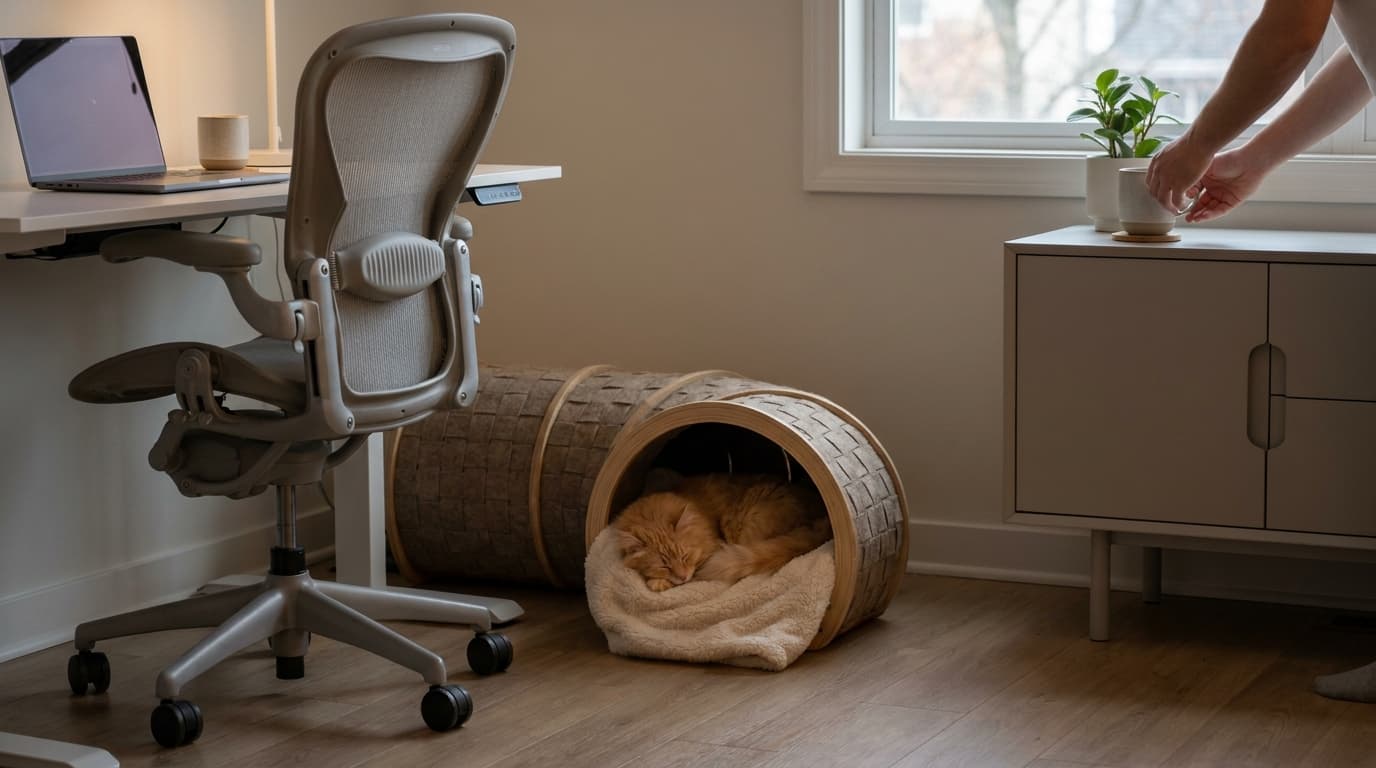
Ever tried to type an email only to have a flurry of paws send gibberish to your boss? We love our co-worker cats, but the desk takeover is real. Cats sleep between 12 and 16 hours every day. When they are awake, they want to be where the action is, which usually means your keyboard. They aren't trying to be difficult. They just want to be close to you while having a spot to survey their kingdom.
Giving your cat a dedicated perch is the best way to save your workspace. It satisfies their need to be near you without them sitting on your laptop. Think of it as a zone of their own that keeps them out of your video calls. This is about creating a feline-friendly home office ergonomic setup that works for both of you without sacrificing your sanity or your keyboard.
To reclaim your desk, think up, not out. Verticality is a secret weapon for productivity. Tall structures, like the 69-inch Lotus tower, give cats a high vantage point to watch you work. Because it uses oak veneers and wood finishes, it looks like real furniture instead of carpet-covered eyesores. It blends into your decor while giving your cat a clear view of the room.
Placement is everything. If you put the cat zone near a window or your chair, your cat feels included without being in the way. As designer Isabella Foster points out, successful design means prioritizing the cat's needs over human aesthetics. When they have a secure spot nearby, they stop competing for your desk. You might even consider a feline express elevator, a vertical tube system, if you want to get really fancy with how they move through their world.
A little planning goes a long way. By using vertical space and choosing materials that match your home, you turn a cluttered office into a shared sanctuary. Your cat stays happy and high up, and you finally get to finish your work in peace.
Key insights:
- Vertical space allows cats to survey their territory without claiming your desk.
- Choosing wood finishes like oak veneer helps cat furniture blend with professional office decor.
- Placing cat zones near windows or your desk satisfies their need for proximity and stimulation.
Verticality as a Productivity Tool
Ever wonder why your cat thinks your laptop is the best bed in the house? It is pretty simple. Cats spend 12 to 16 hours a day sleeping, and they usually want to be right where the action is. But when 'near you' means sitting on your keyboard, your productivity takes a hit. This is where vertical space becomes your secret weapon. By giving them a high spot to perch, you let them survey their territory without claiming your desk as their own.
A tall structure like the 69-inch Lotus tower is a total game changer for a shared office. Because it uses oak veneers and sleek wood finishes, it blends into a professional room much better than those shaggy, carpet-covered eyesores. It actually looks like real furniture. Plus, the wood construction is sturdy enough to handle those sudden mid-afternoon zoomies while you are on a video call.
The real trick is all about placement. Try putting the tower right next to your desk or by a window. This lets your cat feel included while staying in their own designated zone. They get a great view, and you finally get your workspace back. It is a simple way to keep your home office looking sharp while keeping your furry coworker happy too.
Key insights:
- Verticality is essential for productivity because it allows cats to survey their territory without taking over your desk.
- Using furniture with wood finishes and oak veneers helps pet gear blend with professional office decor better than traditional carpeted towers.
- Strategic placement near windows or your desk keeps cats engaged and off your workspace.
Thinking Vertically: The Secret to Happy Apartment Cats
Ever feel like your apartment is too small for a cat? Here is a little secret: your cat does not see the room the way you do. While you are looking at square footage on the floor, they are eyeing the walls, the top of the fridge, and those dusty shelves you can't reach. To a cat, vertical territory is way more valuable than an open floor. It gives them a sense of safety and a bird's-eye view of their kingdom without taking up your walking space.
You can create what designers call a feline highway. This is a clever path of shelves, perches, and bridges that lets your cat zip across the room without their paws ever touching the carpet. It turns boring walls into a playground. Think of it as architectural mental stimulation. By using your home's existing features - like the tops of cabinets or sturdy window sills - you give them a way to explore that does not clutter your living area. This matters because it directly impacts your own productivity. Cats sleep between 12 to 16 hours a day, and if they do not have a dedicated spot, they will likely choose your keyboard. Providing a tall perch, like the 69-inch Lotus Cat Tower with its sleek oak veneer, lets them stay close to you while you work without actually being on your desk.
Now, consider the magic of caterpillar tunnels and express elevators. If you have a kitten playroom, durable crawling tunnels are a lifesaver. They provide that cozy den feeling cats crave in big, open rooms, giving them a place to hide and pounce. But the real showstopper for a multi-level home is the feline express elevator. As Crafty Panda How explains, this isn't just a quirky feature; it is a gravity-powered vertical tube that lets cats move between levels in a flash. Imagine a transparent cylinder where your cat uses their paws against the sides to brake as they glide down. It is efficient, playful, and honestly pretty cool to watch.
These clever pathing designs do more than just look good. They encourage exercise in small spaces where a cat might otherwise get lazy. By mixing tunnels, tall towers, and vertical chutes, you turn a cramped apartment into a multi-level adventure park. It is about making the most of every inch of air, not just every inch of floor. When you prioritize the animal's behavioral needs over just human aesthetics, you end up with a home that feels bigger for everyone.
Key insights:
- Vertical space provides security and territory without interfering with human workspaces.
- Gravity-powered tubes and tunnels offer both exercise and a sense of safety.
- Multi-functional furniture like tall towers helps manage the 12-16 hours of daily feline sleep time.
The Magic of Caterpillar Tunnels and Express Elevators
Have you noticed how cats love to tuck themselves away? It is because they need a den to feel safe, especially in large, open rooms. Durable caterpillar-style crawling tunnels are perfect for this. They give your kitten a place to retreat while keeping the room feeling organized. Think of it as a security blanket for your pet that does not ruin your floor plan or clutter your living space.
Then there is the feline express elevator. This sounds high-tech, but it is actually a simple, gravity-powered vertical tube. Cats climb in and use their paws against the sides to control their speed as they glide down. It is a brilliant way to encourage exercise through clever pathing. As the team at Crafty Panda How puts it, this isn't just a quirky feature; it is a playful shortcut that helps cats navigate their multi-level world with ease.
This kind of verticality is a lifesaver for small apartments and home offices. When cats have high spots to survey their territory, they are less likely to take over your workspace. Even though we want our homes to look a certain way, prioritizing your cat's behavioral needs often leads to a more peaceful house. After all, a cat that has its own highway is a cat that stays off your keyboard while you are trying to work.
Key insights:
- Vertical chutes allow cats to move between floors quickly while using their natural instincts to brake with their paws.
- Providing enclosed tunnels in open-concept rooms satisfies a cat's biological need for a secure den and reduces anxiety.
- Strategic vertical pathing keeps cats active and preserves desk space for humans.
Small Apartment? Big Style: Designer Ideas for Tight Spaces
Living in a studio or a tiny one-bedroom doesn't mean your home has to look like a pet store exploded in your living room. The real secret to small-space living with a cat is realizing that feline needs and human style can actually work together. While we might care about velvet sofas and gold accents, your cat cares about security and high perches. Since cats sleep between 12 to 16 hours a day, they need designated spots to rest that aren't your keyboard or the middle of the kitchen counter. Designers are now moving toward built-in features that treat pet needs as part of the architecture, like 'feline highways' along the walls that keep the floor clear for you while giving them a place to roam.
It's all about putting behavior over looks, though you can definitely have both. Designer Isabella Foster once worked on a project for a particularly anxious rescue and found that a concealed cabinet became that shy cat's best friend. She noted that prioritizing the cat's need for a safe hideout actually made the room feel more peaceful for the owner too. By using vertical space, like a 69-inch Lotus Cat Tower with its sleek oak veneer, you give your cat a way to survey their kingdom without taking up the entire living room floor. The goal is to stop thinking of cat furniture as an add-on and start seeing it as a part of your home's layout.
When every square foot counts, your furniture has to work twice as hard. Think about your side tables or ottomans. Could they hide a litter box? Modern designs now include charcoal filters and passive venting systems so you can keep the litter box in the living area without any smells giving it away. Even your table legs can be part of the plan. Wrapping them in sisal creates an 'invisible' scratching post that saves your rugs and looks like a deliberate design choice. If you choose durable woods and washable fabrics, your pieces will last much longer against the daily wear and tear of a playful kitten.
For the truly adventurous, there is even the 'feline express elevator.' This is a gravity-powered vertical tube system that lets cats glide between different levels of a home using their paws against the sides to brake. As the team at Crafty Panda How described it, this isn't just a quirky feature; it's a playful and efficient way for them to move through their world. This kind of vertical thinking is essential for staying productive in a home office because it lets your cat stay close to you without claiming your desk as their territory. What does this mean for you? It means a home that feels bigger, looks better, and keeps your cat incredibly happy.
Key insights:
- Prioritizing a cat's behavioral needs for security and height can actually reduce clutter and improve the overall flow of a small apartment.
- Dual-purpose furniture, like ottomans with hidden litter enclosures and carbon filters, allows for essential pet functions to exist in living areas without sacrificing aesthetics or air quality.
- Vertical solutions like wall-mounted perches or tall, slim towers provide cats with necessary territory while keeping floor space open for human use.
Furniture That Does Double Duty
Ever feel like your cat’s gear is taking over the living room? It is a common struggle when you are trying to keep a nice home. The secret is furniture that works twice as hard. Imagine a stylish ottoman or a sleek side table that looks great but hides a litter box inside. Today’s designs even use charcoal filters and venting to keep smells away. This lets you keep your decor intact while giving your cat the privacy they need.
You can also turn everyday items into cat tools. Wrapping table legs in sisal creates an invisible scratching post that protects your sofa. Since cats sleep 12 to 16 hours a day, they need these spots to relax so they do not take over your workspace. Using durable woods like oak veneer and washable fabrics ensures these pieces last. As designer Isabella Foster says, good design puts the cat’s needs first. It is about making your home functional for everyone.
Key insights:
- Dual-purpose furniture like litter box enclosures can use carbon filters to manage odors in small spaces.
- Choosing durable materials like oak veneer and washable fabrics helps furniture withstand daily feline use.
- Providing dedicated rest areas prevents cats from occupying human workspaces during their 12-16 hours of daily sleep.
The Litter Problem: Eco-Friendly Ways to Keep Your Home Fresh
Let’s be honest: in a small apartment or a professional home office, a standard plastic litter box is a total vibe-killer. It is not just about the eyesore, though. Traditional boxes often fail in tight quarters because they trap moisture and odors in stagnant air pockets, making it nearly impossible to keep your space feeling fresh. When you are working just a few feet away from your cat’s bathroom, you need a solution that goes beyond just scooping.
The secret lies in the science of airflow. Modern feline furniture now uses passive venting and charcoal or carbon filters to neutralize smells before they ever reach your nose. Think of it as a quiet, low-tech air purifier built right into the box. By allowing air to move through a filter rather than sitting still, you can maintain a scent-neutral home even in a tiny studio. It is a simple mechanical fix that makes a world of difference for your daily comfort.
For the eco-conscious owner, the goal is often low-waste disposal. Moving away from heavy plastic bags and toward biodegradable liners or sustainable litter types helps reduce your environmental footprint. This matters because small changes in how we handle waste add up over time, especially when you are trying to balance a green lifestyle with the realities of indoor pet ownership.
But where do you actually put the box? The smartest solutions involve hiding trays inside furniture you already use, like under-sink drawers or hallway benches. Designer Isabella Foster points out that successful small-space design requires prioritizing the cat’s needs over purely human aesthetics. However, you can actually have both. A well-designed cabinet can look like a high-end side table while secretly housing a full litter setup.
Maintenance is the final piece of the puzzle. Look for setups with slide-out trays and removable liners to make cleaning less of a chore. If the tray slides out like a drawer, you are much more likely to keep up with it. This keeps the mess contained and the odors at bay, ensuring your home stays inviting for both you and your guests. After all, a clean home is a happy home for everyone involved.
Key insights:
- Passive venting and carbon filters are more effective than air fresheners for long-term odor control.
- Integrating litter boxes into functional furniture like benches saves floor space and maintains decor.
- Prioritizing easy-access features like slide-out trays ensures consistent cleaning habits.
Discreet Solutions for Odor and Mess
Let's be honest: nobody wants their living room to smell like a pet store. If you are living in a tight studio, finding a spot for the litter box is a real puzzle. But what if it just looked like a normal piece of furniture? Many owners are now tucking trays into under-sink drawers or custom benches. It keeps the mess out of sight and saves precious floor space. Think of it as a secret room for your cat that fits right into your existing layout.
To keep things fresh, modern designs use carbon filters and passive venting systems to trap odors before they drift into your kitchen. You can even find side tables or ottomans that double as litter enclosures. This isn't just about hiding the box, though. It is about making your life easier too. By blending the tray into a piece of furniture you already use, you stop the litter area from taking over the room's vibe.
Look for units with slide-out trays and removable liners. They make cleaning so much faster. When you can just pull a drawer out and wipe it down, maintaining a scent-neutral home feels like less of a chore. This simple change helps you stay on top of the mess without a struggle. It is the best way to keep your decor looking sharp while making sure your cat has a private, clean place to go.
Key insights:
- Hidden litter boxes in benches or side tables keep odors contained and floor space clear.
- Carbon filters and passive venting are essential for maintaining a fresh-smelling small apartment.
- Slide-out trays and removable liners simplify the cleaning process for busy owners.
From Stress to Purrs: An Evening Routine for Anxious Rescue Cats
Ever noticed how your rescue cat seems to jump at every floorboard creak? For a cat that has had a rough start, the world feels like a series of unpredictable threats. This is where a rock-solid evening routine comes in. It is not just about being organized; it is about sending a clear signal that the day is winding down and they are safe. Because cats sleep between 12 to 16 hours a day, having a designated, predictable rest area is vital to keep them from feeling exposed or stressed during their downtime.
To get that anxious energy out, try the play-eat-groom-sleep cycle. Start with a vigorous play session to mimic a hunt, then serve dinner. This triggers a natural biological response to groom and then nap. If you are working with a small apartment, think about verticality. Vertical space is essential for security because it lets a cat survey their territory without feeling trapped on the floor. You might even consider a tall piece of furniture, like a Lotus Cat Tower, which stands 69 inches tall and gives them a high-up safe zone made of sturdy wood and oak veneer.
As the night goes on, create a wind-down zone with soft lighting and cozy textures. Designer feline interior design ideas for small apartments often focus on how the space feels to the cat, not just the human. As designer Isabella Foster points out, successful design means prioritizing the animal’s behavioral needs over our own aesthetic preferences. This might mean placing a cozy perch near your desk or using a feline express elevator, which is a gravity-powered tube system, to let them move between levels without stress.
What does this mean for your evening? It means your cat stops seeing the shadows as monsters and starts seeing the living room as a sanctuary. By keeping the lights low and the noise down, you are building a ritual that tells them the hunt is over. Even small details, like using discreet litter solutions with carbon filters to keep the air fresh in a tight space, contribute to a calm environment. When the routine is the same every night, your rescue cat finally learns that they do not have to stay on high alert. They can just be a cat.
Key insights:
- Predictable schedules help lower stress hormones in high-anxiety pets.
- Vertical territory provides a psychological safety net for cats to observe their surroundings.
- The play-eat-groom-sleep cycle mimics natural feline biological rhythms to encourage rest.
- Prioritizing a cat's behavioral needs over aesthetics leads to a more peaceful home environment.
Frequently Asked Questions
You probably wonder if your home is about to look like a carpeted jungle gym. It does not have to. Since cats sleep between 12 to 16 hours a day, they really just need a designated spot to crash so they do not take over your keyboard or kitchen counters. If you are tight on floor space, the best advice is to think up. Products like the 69-inch Lotus Cat Tower use wood and oak veneer to look like actual furniture while giving your cat a high perch. This vertical approach is a game-changer for home offices because it lets your cat watch you work from a safe distance without sitting on your laptop. It is about sharing the room, not giving it up entirely.
What about the smell? This is the biggest worry for most of us, especially in small apartments. Modern designs are getting really smart about hiding the mess. You can now find litter boxes tucked inside side tables or benches that look totally normal to guests. These pieces often use charcoal filters and passive venting systems to keep odors from drifting across the room. Designer Isabella Foster once noted that successful design means looking at what the cat needs to feel secure, like a concealed cabinet, while still keeping your home looking and smelling fresh. These dual-purpose pieces mean you do not have to choose between a clean house and a happy pet.
If you are feeling adventurous, look into feline highways or even a feline express elevator. These are gravity-powered tubes that let cats glide between different levels of a home by using their paws to brake against the sides. It sounds wild, but it is part of a bigger trend where owners are building cat-friendly features directly into their walls or using AI tools to plan the perfect layout. Whether you are integrating a litter box into an under-sink drawer or installing sisal-wrapped posts for scratching, the secret is choosing materials like wood and washable cushions that last. It proves you can have a stylish home that still lets your cat be a cat.
Key insights:
- Vertical space is the most efficient way to give cats territory in small apartments without cluttering the floor.
- Modern litter solutions use furniture camouflage and carbon filters to manage odors in shared living spaces.
- The latest trends involve building pet-friendly features like climbing chutes directly into the home's architecture.
Bringing It All Together
Balancing your personal style with your cat's wild side doesn't have to be a headache. It really comes down to prioritizing their behavior over just looking at a furniture catalog. When you give a cat what they need, like a high spot to watch you work, you are not just buying a piece of decor. You are reclaiming your desk. Since cats sleep up to 16 hours a day, having a dedicated spot like a 69-inch Lotus Cat Tower means they stay close to you without constantly sitting on your laptop keyboard.
The long-term payoff is huge for both of you. You get a house that stays clean and organized thanks to hidden litter solutions with built-in carbon filters, and they get a playground that feels secure. It is all about those smart, dual-purpose pieces that blend into your room. If you are feeling overwhelmed, just start small. Try adding one vertical shelf or a single hidden feature this weekend. You do not need a full home renovation to see a massive jump in your cat's mood and your own peace of mind.
Key insights:
- Prioritizing feline behavioral needs like verticality helps reclaim human workspaces.
- Dual-purpose furniture with carbon filters maintains home aesthetics while managing pet odors.
- Starting with one small vertical or hidden feature provides immediate benefits for pet security and owner comfort.
How do I stop my cat from jumping on my desk while I'm working?
The best way to keep your cat off your keyboard is to give them a better view somewhere else. Cats naturally want to be near you and they love high spots where they can watch everything going on. Since they sleep for 12 to 16 hours every day, they just need a comfy spot that is not your laptop.
Here is the thing: if you put a tall cat tower or a wall shelf right next to your desk, your cat can stay close without getting in your way. A tall tree like the 69 inch Lotus model gives them a great perch to survey the room while you focus. It is all about giving them their own vertical space so they do not feel the need to claim yours.
Are those clear wall tunnels actually safe for heavy cats?
They are surprisingly safe as long as they are installed correctly into your wall studs. These clear tubes are often called feline express elevators because they let cats move between floors using gravity. It might look a bit scary, but cats are experts at managing their own speed.
When a cat goes down one of these tubes, they actually use their paws against the sides to brake and control their descent. If you have a heavier cat, just make sure the tube is wide enough for them to move easily and that the brackets are heavy duty. Most of these systems are built with sturdy wood and strong acrylic to handle even the chonkier feline friends.
What is the best way to hide a litter box in a one-bedroom apartment?
In a small apartment, you really want furniture that pulls double duty. The best trick is using a cabinet or bench that looks like a regular piece of decor but hides the box inside. It keeps the mess out of sight and saves you precious floor space.
Modern designs often include carbon filters and vents to handle smells. You can even find side tables or under-sink drawers that blend right in. Just make sure it has an easy-to-clean tray so you are not struggling with it every day.
How can I make my home office more ergonomic for me and my cat?
Since cats sleep about 12 to 16 hours a day, they mostly want a cozy spot to nap near you. The real secret is going vertical. If you set up a tall tower or a wall shelf near your desk, your cat can watch you work from a high perch instead of sitting on your keyboard.
This keeps your workspace clear and lets your cat feel like they are part of the action. You can also look into things like feline highways or vertical tubes that let them move around the room without ever touching the floor. It is a win for your productivity and their happiness.
Conclusion
Creating a space that works for both of you is all about balance. You do not have to choose between a chic living room and a happy pet. By using designer feline interior design ideas for small apartments, you can build a playground that blends into your furniture. Whether it is a feline-friendly home office ergonomic setup or durable caterpillar-style crawling tunnels for kitten playrooms, these additions make your daily life smoother and your cat’s life much more exciting.
Your next move does not have to be a total renovation. Consider starting with practical shifts like low waste cat litter disposal methods for eco-conscious owners or establishing an evening relaxation routine for high-anxiety rescue cats. These small steps help manage both the business side of pet ownership and your cat's emotional well-being without cluttering your space.
A cat-friendly home is simply a place where everyone feels welcome. When your cat has their own spots to climb and you have your desk back, your house finally feels like home. Go ahead and try one new feature today. Your cat will love the upgrade, and you will love having your decor back.
Send it to someone who should read it next.
About the author

Mia Torres
Cat Lifestyle Writer
Cat mom of four and writer covering the joys, quirks, and everyday adventures of living with cats.
View all articles