Making Life Better for Your Indoor Cat: Routines, Care, and Wellness Secrets
Did you know that almost every cat owner now considers their pet a true family member? It is a big shift in how we think, and it means we are...

Mia Torres
Cat Lifestyle Writer
Making Life Better for Your Indoor Cat: Routines, Care, and Wellness Secrets
Did you know that almost every cat owner now considers their pet a true family member? It is a big shift in how we think, and it means we are all looking for better ways to make their lives inside our four walls as happy as possible. One of the best ways to keep your kitty calm and confident is by establishing a predictable indoor cat routine that balances play, food, and plenty of rest.
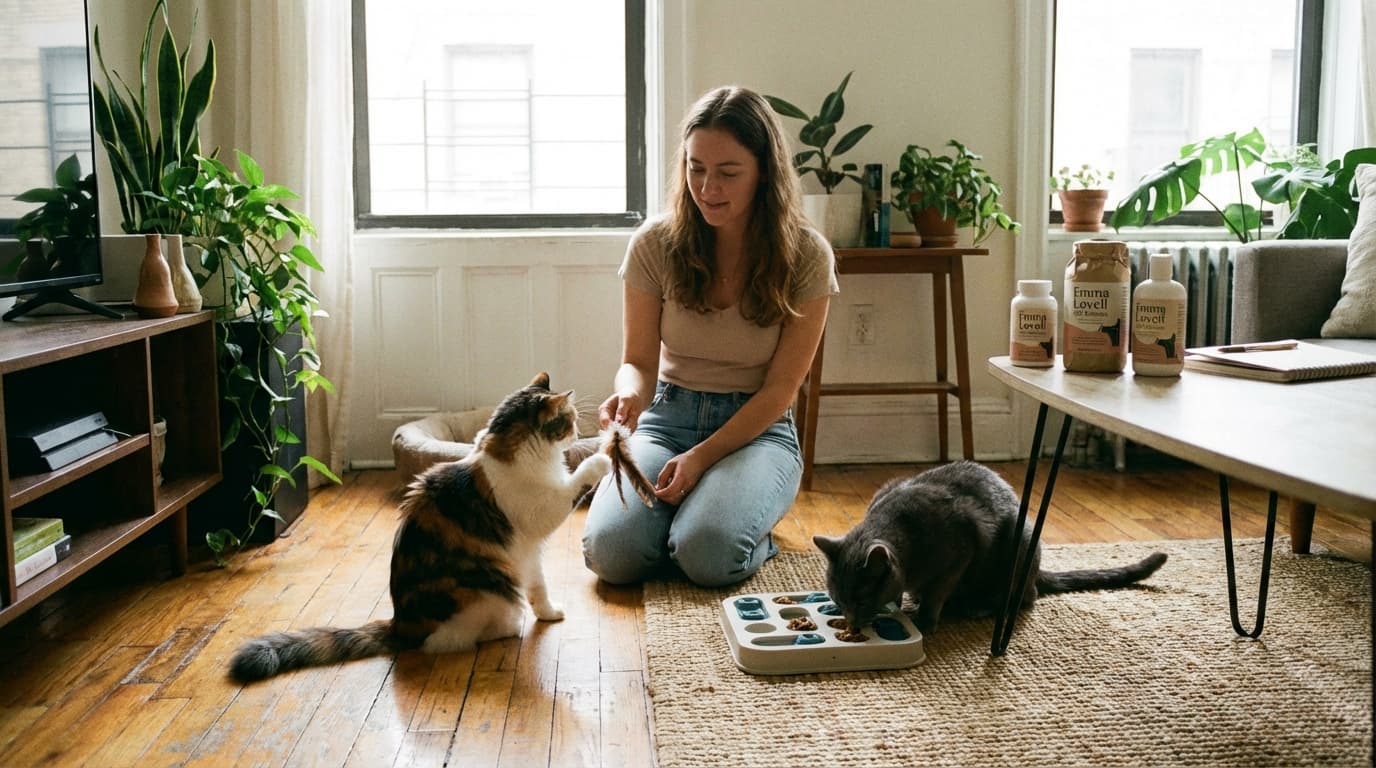
Living in a small apartment or a busy house can be tough on a pet, especially if you have several cats sharing the same space. We are going to look at everything from mental enrichment for high-energy cats to the specifics of Emma Lovell cat wellness products that actually look good in your living room. You will also get some helpful tips on feline pharmacology for home care so you can handle medications without the usual stress.
We will cover how to manage multi-cat urban homes and how to build a daily schedule that keeps your cat's inner hunter satisfied. By the time you finish reading, you will have a clear plan to help your cat thrive and feel safe in every single corner of your home.
Why Your Cat\'s Lifestyle Is About More Than Just a Full Bowl
Think about your cat for a second. Is she just a pet, or is she the heart of your home? Most owners now see their cats as true family members. This shift means we care about their mental health more than ever. A predictable routine is the simplest way to cut down on feline anxiety. When your cat knows exactly what to expect, they can finally relax.
It is not just about a full bowl, though. We also need to understand medicine safety and urban living hacks. Specialized animal science is growing fast, making home care easier than before. From Emma Lovell wellness products to mental enrichment for high-energy cats, we are going to show you how to make your apartment a stress-free zone.
Key insights:
- Predictable routines are the foundation of a low-stress feline life.
- Modern pet ownership treats cats as integral family members, requiring more specialized care and safety knowledge.
The Power of a Predictable Indoor Cat Routine
Ever wonder why your cat stares you down exactly five minutes before the alarm goes off? It is not just a coincidence. Cats are creatures of habit who find deep comfort in knowing what happens next. Since most of us view our pets as genuine family members - a sentiment shared by researchers like Froma Walsh who highlight how pets build resilience in family systems - setting a schedule is one of the best ways to show we care. A solid routine reduces anxiety and prevents those boredom-driven behaviors that can stress out a household.
Start your day with a focused play session before you even think about breakfast. You want to tap into their natural hunting instincts right away. Instead of just filling a bowl, try a puzzle feeder to make them work for their meal. This simple switch mimics hunting and provides the mental enrichment high-energy cats crave, especially in smaller urban apartments where space is limited. It burns off that morning energy and sets a calm, predictable tone for the hours ahead.
To stop those 3 AM zoomies from ruining your sleep, you have to signal that the day is officially over. A late-night play session followed by a grooming ritual works wonders. Brushing is not just about keeping the fur off your sofa; it is a vital health-check tool. As we see more specialized literature like Katzung’s pharmacology texts becoming standard in animal care, it is clear that being an informed owner is part of the modern human-animal bond. Use this quiet time to check for lumps or skin changes while your cat is relaxed.
If you work from home, your cat might think your laptop is a heated bed and your Zoom calls are for their entertainment. The trick is to stay consistent even when you are physically there all day. Set specific times for interaction and stick to them so your cat understands you are not always on call for head scratches. This boundary-setting is a key part of establishing a predictable indoor cat routine that keeps both of you productive and happy.
Key insights:
- Mimic the hunt-catch-eat cycle by playing before meals to satisfy natural feline instincts.
- Use grooming as a nightly bonding ritual and a proactive way to monitor physical health.
- Set clear 'office hours' to help your cat adjust to a work-from-home lifestyle without constant interruptions.
- Consistency is more important than the specific time; cats thrive on the sequence of events.
Morning Rituals: Setting the Tone for the Day
Does your cat start zooming the second your alarm goes off? There is a reason for that. Most pet owners today regard their cats as true family members, and part of that bond is respecting their natural instincts. A short play session first thing in the morning burns off that pent-up energy and sets a calm tone.
Next, make breakfast an event. Instead of a boring bowl, try a puzzle feeder to mimic hunting. This satisfies their predatory drive before they nap. Since we now have more specialized research in animal biotechnology, it is clear these small routine changes are vital for healthy indoor living.
Key insights:
- Interactive play sessions burn off nocturnal energy and prevent morning boredom.
- Puzzle feeders mimic natural hunting behaviors, providing important mental enrichment.
The Evening Wind-Down
Ever been woken up at 3 AM by a furry blur racing across your bed? Since the vast majority of us view our cats as true family members, it helps to give them a clear signal that the day is done. A consistent evening wind-down stops those midnight zoomies before they start. It is about setting boundaries that help your cat feel secure and relaxed in your shared home.
Try using grooming as your main tool for this transition. It is a great way to bond while doing a quick health check. This quiet time reflects a bigger shift in how we care for them; we now treat pet wellness with serious scientific depth, from advanced pharmacology to specialized biotechnology. A simple nightly brush keeps them healthy and signals that it is finally time for everyone to rest.
Key insights:
- Establishing a routine prevents disruptive late-night energy bursts.
- Grooming serves as both a physical health check and an emotional bonding ritual.
- Modern pet care is increasingly backed by specialized animal science and pharmacology.
Feline Pharmacology: What Every Owner Should Know About Home Care
Most of us don't just see a cat; we see a family member. It is a perspective backed by research showing that the vast majority of owners view their pets as integral parts of the household. Because of this bond, managing their health at home feels deeply personal. But when a vet hands you a bottle of pills, that family feeling can quickly turn into a stressful wrestling match on the kitchen floor. Understanding how feline pharmacology works helps turn that stress into a predictable routine that keeps your cat's trust intact.
The world of animal medicine is moving fast. Just look at how academic libraries are stocking up. In the last few years, we have seen a surge in specialized literature covering everything from aquaculture pharmacology to animal biotechnology. Even standard texts like Basic & Clinical Pharmacology are being updated more frequently to keep pace with new discoveries. This matters because it means the treatments we give our cats are becoming more precise. We are no longer just using scaled-down human science; we have data specifically for the feline system that ensures better safety and results.
Safety is the biggest priority when you are handling meds at home. While advanced imaging like PET scans has standardized how we diagnose animals, the real work happens in your living room. A common mistake is assuming a treatment is safe just because it worked for a dog or a human. Without a solid routine, it is also easy to miss a dose or double up by accident. Keeping things predictable for your indoor cat isn't just about food and play; it is about making their medical care a quiet, normal part of the day.
Giving a cat medicine should not feel like a betrayal. If your cat runs the moment they hear a foil packet crinkle, it is time to change the game. Positive reinforcement is your best friend here. Instead of a chase, try using high-value rewards right after the dose. The goal is to make the process so routine that they barely notice it happening. Think of it as a small hurdle in an otherwise great day of play and naps.
Sometimes the form of the medicine is the actual problem. If tablets lead to scratched hands and a grumpy pet, ask your vet about liquid versions or flavored chews. Many feline medications can now be compounded into liquids that taste like tuna or chicken. It is a simple switch that can save your relationship with your cat. After all, wellness products and medical care should make life better for your pet, not more complicated for you.
Key insights:
- Specialized animal pharmacology is growing rapidly, leading to more precise and safer feline treatments.
- Most owners view cats as family, which makes low-stress medical care essential for the human-animal bond.
- Liquid or flavored medications are often better alternatives for cats that resist traditional tablets.
- Consistency and positive reinforcement prevent medical routines from damaging your cat's trust.
The Art of Giving Meds Without Losing Your Cat\'s Trust
Ever tried to give a cat a pill and ended up with a scratched arm? It is a real struggle. Since most of us see our cats as family members, keeping that bond strong during medical care is vital. You want your pet to feel safe, not hunted.
Feline pharmacology for home care has improved fast. New medical texts from 2021 show a big jump in specialized animal medicine, meaning you often have better choices. Ask your vet about liquid versions or flavored chews. A simple change in format makes the routine much easier.
Use positive reinforcement too. Give a treat or play right after the dose. This helps your cat link the medicine to something good. It turns a scary chore into a predictable part of your indoor cat routine.
Key insights:
- Recent medical literature highlights a shift toward specialized animal medicine and more accessible dosing options.
- Positive reinforcement turns a stressful medical event into a bonding moment that preserves trust.
Thriving in Small Spaces: Multi-Cat Tips for Urban Homes
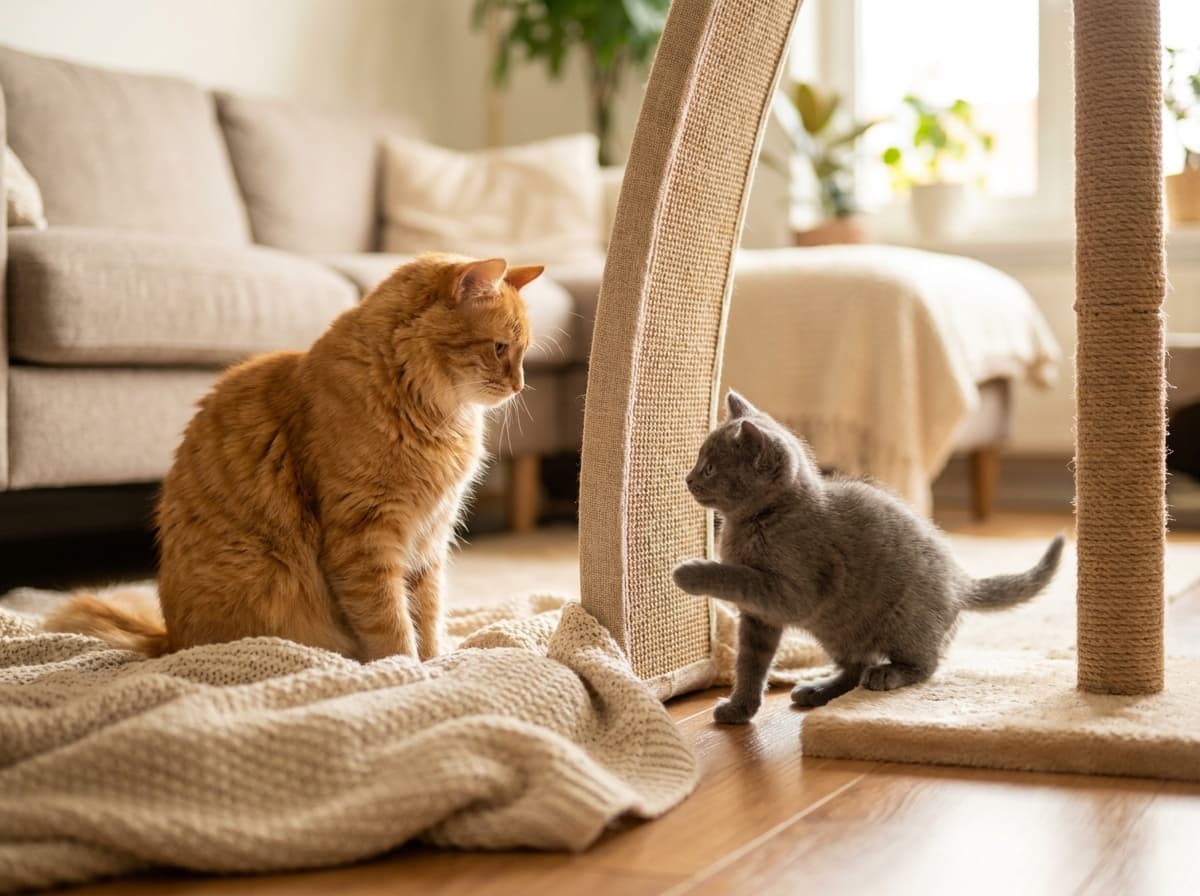
Living in a city apartment doesn't mean your cats have to feel cramped. While we might feel the squeeze of a small floor plan, cats see the world in three dimensions. They don't just live on the rug; they live on the bookshelves, the tops of cupboards, and the backs of sofas. This is what we call vertical real estate. By adding a few sturdy wall shelves or a ceiling-high cat tree, you are essentially doubling their living space. It gives them a way to move around each other without a direct face-off, which is the easiest way to stop a territory dispute before it starts.
Most of us view our cats as genuine family members, a sentiment backed by researchers like Froma Walsh who highlight how these bonds are vital for our home life. Because they are family, their stress levels really matter. In tight quarters, scent is their secret language. Using pheromone diffusers can help signal that the home is a safe zone, creating a scent map that tells everyone to relax. When a cat feels they truly own a specific perch or a sunny corner, they are much less likely to feel the need to guard the hallway or the kitchen.
If you are living in a one-bedroom flat, the 1+1 rule is your best friend. You should provide one resource for every cat, plus one extra. For two cats, that means three litter boxes and three separate water stations. It might seem like a lot for a small home, but it prevents gatekeeping, where one cat decides to block the path to the bathroom. Also, don't overlook the power of a simple visual block. A well-placed chair or a decorative screen gives a shy cat a place to disappear for a moment. Sometimes, just being out of sight is enough to keep the peace.
Keeping your cats happy in a small space also means staying on top of their health. We have seen a huge jump in specialized animal literature and better diagnostic standards lately, which helps vets catch issues earlier. This is important because a cat that is secretly in pain is a grumpy roommate. By mixing a smart home layout with modern wellness checks, you are not just managing a small space - you are building a better lifestyle for your feline family.
Key insights:
- Vertical space acts as a pressure valve for multi-cat tension in small apartments.
- The 1+1 rule for resources prevents dominant cats from guarding essential areas.
- Scent and pheromones are crucial for establishing a sense of security in shared territories.
- Visual blocks like furniture or screens allow cats to retreat and reduce social stress.
Creating Personal Space in a One-Bedroom
Living in a one-bedroom apartment with a cat can feel a bit tight. Since most of us view our cats as genuine family members, they need their own dedicated space to thrive. Start with the 1+1 rule: try to have two litter boxes and two water bowls for just one cat. Spreading these stations out across your home gives your pet a sense of territory and control over their environment, which is a big win for their daily wellness.
You can also use visual blocks like tall cat trees or simple cardboard boxes to create private hiding spots. Think of it as setting a performance standard for your home layout, ensuring every corner serves a purpose. These little escape rooms help shy cats feel safe when things get loud. Adding these predictable spots into your routine keeps their stress low and makes a small urban apartment feel much bigger for a curious feline.
Mental Enrichment for High-Energy Cats
Ever wonder why your cat suddenly decides 3 AM is the perfect time to parkour off your head? Usually, a naughty cat is just a bored one looking for a job. Since most of us view our cats as true family members, we have to treat their mental health with the same care we give our own. Activity-based therapy is a great way to handle this. It is not just about burning energy; it is about using play to heal stress and build a deeper bond. When you give them a task, you are tapping into their natural instincts, which keeps them calm and happy.
You do not need expensive gadgets to keep things interesting. Think about their inner predator. Simple DIY puzzles, like hiding treats in an empty egg carton or a toilet paper roll with the ends folded in, force them to use their brain and paws. It turns mealtime into a hunt. This kind of challenge is what stops them from finding hobbies you hate, like shredding the curtains or knocking over your favorite mug. It is about giving them a way to be a cat in a human world.
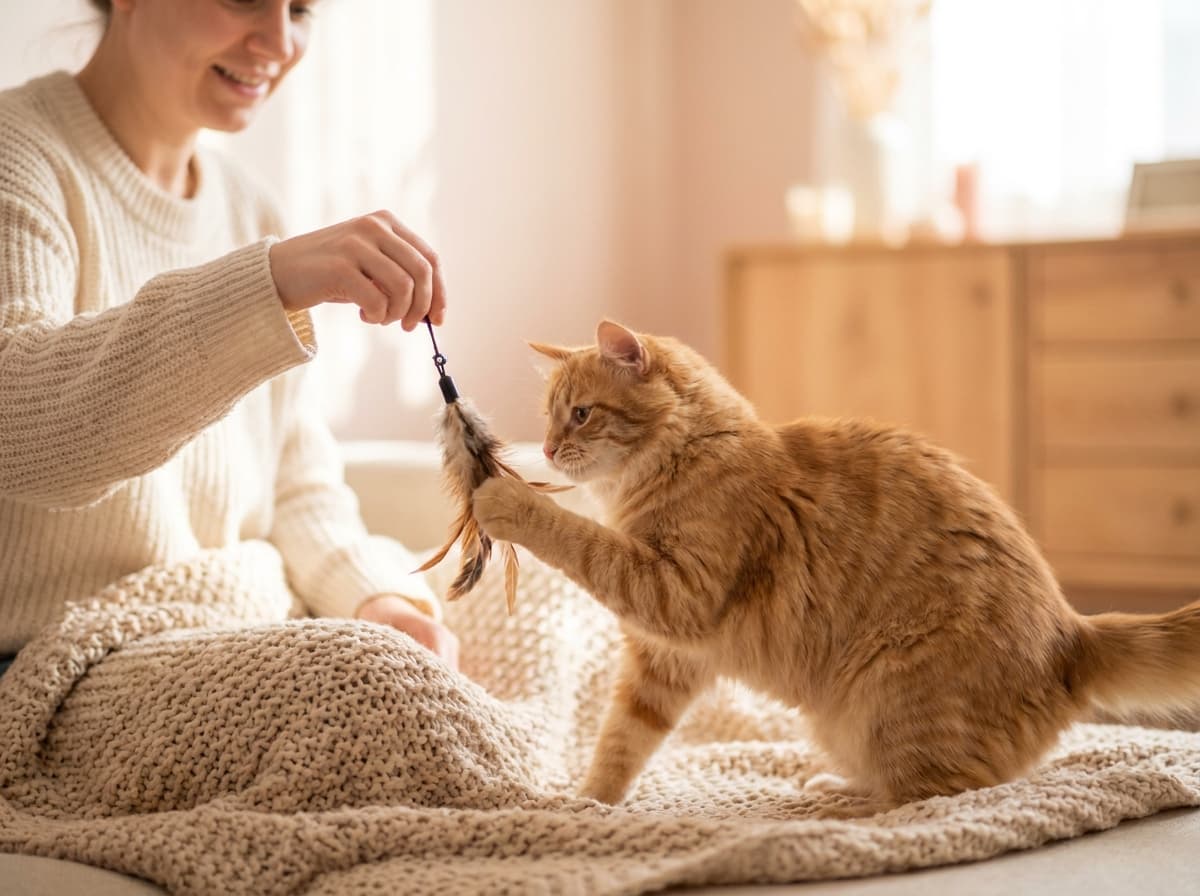
While laser pointers are easy, they can actually leave cats feeling frustrated because there is nothing to physically grab. To really satisfy them, you need to complete the catch and eat cycle. Always end your play sessions by letting them pounce on a physical toy they can sink their claws into, then follow it up with a small treat. Also, try rotating your toys every week. If the same feathered wand is always lying on the floor, it becomes dead prey and loses its charm. Keeping it fresh keeps them engaged.
Key insights:
- Boredom is the leading cause of destructive behavior in high-energy cats.
- Completing the hunting cycle with a physical catch prevents predatory frustration.
- Simple household items can be turned into effective cognitive puzzles.
- Toy rotation prevents habituation and keeps the indoor environment stimulating.
Beyond the Laser Pointer
Ever wonder why your cat seems grumpy after a laser session? While we love watching them zip around, the catch and eat cycle is actually a big deal for their mental health. Since most of us see our cats as true family members, we want them to feel satisfied, not just tired. Without a physical prize to grab at the end, that high-energy chase can lead to real frustration.
To keep things interesting in multi-cat urban homes, try switching up the toy box every few days. It is a simple mental enrichment strategy that prevents them from getting bored with the same old feathers. Think of it like a rotating menu for their hunting instincts. When they finally kill that toy mouse, follow it up with a small treat to complete the cycle and keep their routine rewarding.
Key insights:
- Complete the hunting cycle with a tangible reward to prevent feline frustration.
- Rotate toys frequently to maintain high engagement and prevent habituation.
- Treating pets as family members means prioritizing their psychological needs during play.
Curated Wellness: A Look at Emma Lovell Cat Products
Is your cat just a pet, or are they a full-blown family member? Most of us agree it’s the latter. Research shows that the vast majority of owners view their animals as vital parts of the family system. This shift in perspective is why Emma Lovell cat wellness and lifestyle products are so popular now. We aren't just looking for cheap plastic anymore; we want items that respect our home's style while serving our cat's real needs.
Finding the sweet spot between a stylish room and a happy cat is what we call curated wellness. It means picking design-forward products that encourage natural behaviors without the clutter. It’s a mix of beauty and health. While experts are busy updating animal pharmacology and imaging standards to keep pets healthy, we can do our part by building a better home environment. This matters because a predictable routine and a well-designed space reduce stress for everyone.
What are the must-haves for a modern cat parent? Focus on pieces that offer vertical space or cozy, hidden spots. These items treat your cat as an active participant in your life. When you choose high-quality gear, you're investing in their mental health. It’s not just a pretty object; it’s making sure your cat feels truly at home.
Key insights:
- Pet owners increasingly view cats as family members, shifting demand toward high-quality lifestyle products.
- Modern cat wellness balances aesthetic design with the functional needs of feline behavior.
- Investing in quality home gear supports a cat's mental health and strengthens the human-animal bond.
Common Questions About Feline Lifestyles
Have you ever caught yourself talking to your cat like they are a human roommate? You are definitely not alone. Most pet owners today see their animals as full-blown family members rather than just pets. In fact, researchers like Froma Walsh have pointed out that while we treat them like family, the science of how they fit into our home systems is still catching up. This shift matters because when we see cats as family, we worry more about their happiness. Is my indoor cat bored? Are they getting enough exercise in a small apartment? We want them to thrive, not just survive in our living rooms.
One big worry for owners is how to handle health issues and medications at home. If your cat needs meds, it can feel overwhelming and scary. But here is some good news: the world of animal medicine is exploding right now. Since 2020, we have seen a huge wave of new research and books on animal pharmacology and biotechnology. We are moving way past basic care. Even the tech used to look inside a cat's body, like PET scans, has become much more precise thanks to new standards set since 2008. This means your vet has access to better tools and more accurate info than ever before. It is a huge relief to know that feline care is becoming as advanced as human medicine.
So, what does this mean for your daily routine? It means you can feel confident using modern wellness products, like those from Emma Lovell, to keep your high-energy cat busy. Whether you live in a multi-cat urban home or a single-cat flat, the goal is the same: creating a predictable routine that keeps them sharp. Also, do not be afraid to ask your vet about the latest feline pharmacology. With so much new data coming out, there are often better ways to manage care than there were just a few years ago. Your cat is a partner in your home life, and they deserve that level of care.
Key insights:
- Most pet owners now view cats as integral family members, which changes how we approach their mental health.
- Specialized animal pharmacology has seen a massive increase in academic and clinical focus since 2020.
- Standardized medical imaging for small animals ensures that diagnostic tools are now as reliable as human versions.
- A predictable routine is the foundation of wellness for cats living in busy urban environments.
The Future of Your Relationship With Your Cat
Think about how your cat fits into your life. For most of us, they aren't just pets; they are full-blown family members. This isn't just a feeling. Research shows the vast majority of owners see their companions as vital parts of the family. Because we care so much, cat wellness is evolving fast. We are seeing better medical standards and a surge in specialized pharmacology books, all aimed at helping our feline friends live longer.
Your daily routine is the bridge to that future. Small habits like predictable feeding and enrichment provide the stability cats crave. But remember, every cat is a total original. While science gives us the framework, you are the expert on your cat’s unique personality. Your dedication makes all the difference. Keep it up!
Frequently Asked Questions
Conclusion
Living with an indoor cat is about finding that sweet spot between a predictable indoor cat routine and enough daily excitement to keep things interesting. Whether you are figuring out the best way to handle feline pharmacology for home care or turning a small apartment into a vertical playground, it all comes down to understanding what your cat needs to feel safe. It is not just about the food bowl anymore. It is about creating a space where they can thrive, even if they never step paw outside.
You might want to start by looking at your current setup through your cat's eyes. Maybe that means adding some Emma Lovell cat wellness items to your home or finally setting up that morning play session for your high-energy kitty. Small changes in how you manage mental enrichment or territorial space in multi-cat urban homes can make a massive difference in their stress levels and your bond.
The bottom line is that every cat is a little different, and your care should be too. Take it one step at a time, watch how they react, and enjoy the process of learning their unique language. After all, a happy cat makes for a much happier home.
Send it to someone who should read it next.
About the author

Mia Torres
Cat Lifestyle Writer
Cat mom of four and writer covering the joys, quirks, and everyday adventures of living with cats.
View all articles