How to Take Better Cat Photos Without the Stress (Even if They Won't Sit Still)
Trying to photograph your cat often feels like herding kittens because it requires a lot of patience and a bit of feline luck. Since cats spend about 80% of their...

PurrScript Editorial Team
Editorial Team
How to Take Better Cat Photos Without the Stress (Even if They Won't Sit Still)
Trying to photograph your cat often feels like herding kittens because it requires a lot of patience and a bit of feline luck. Since cats spend about 80% of their day napping, catching them in a moment of peak cuteness is a challenge that usually ends in a gallery full of blurry tails. But you don't need a professional studio for stunning shots. With some simple cat photography tips, you can turn your home into a mini-studio and capture your pet's personality without the usual stress.
Cats operate on their own schedule, but you can still get great results by understanding cat photography lighting and the best camera settings for pets. We will show you how to use natural light for those glowing catchlights in their eyes and how to use smartphone pet photography hacks to get a professional look without the expensive gear.
This guide covers everything from the magic of the golden hour to using stinky treats for bribery and capturing cat action shots during playtime. You'll learn how to work with your cat's mood to get sharp, beautiful photos every time. Let's get started.
Why Capturing Your Cat is Harder Than It Looks
Ever feel like you’re trying to herd kittens? You aren't alone. Taking a great photo of your cat is notoriously tricky because, unlike dogs who usually want to please you, cats operate on their own mysterious schedule. They spend about 80% of their day napping, and when they are awake, they aren't exactly known for posing on command.
The reality is that cat photography requires a high tolerance for failure. They won't follow a shot list just because you asked. But here is the thing: you can still get professional shots using the gear you already own. It just takes a bit of feline understanding and plenty of patience to turn chaotic moments into something special.
Key insights:
- Cats spend 80% of their day sleeping, making timing your biggest challenge.
- Success comes from adapting to the cat's mood rather than forcing a pose.
- Great portraits are possible with basic gear if you prioritize patience over perfection.
The Secret to Glowing Eyes: Why Natural Light is Your Best Friend
Ever wonder why your cat looks like a majestic lion in person but a startled alien in your phone's gallery? The culprit is almost always a harsh camera flash. Artificial light is the enemy of soft fur texture and those deep, vibrant eye colors we love. Instead of using the flash, try nudging your cat toward a large window. This is the easiest way to capture catchlights, which are those tiny, sparkling reflections in the eyes that make a pet portrait feel truly alive. You do not need a massive house for this. Even a small six to ten foot square area near a glass door works perfectly as a DIY studio.
If you are using a dedicated camera, try a 50mm lens with a wide aperture like f/1.8 or f/2.8. This helps pull in that natural light while making the background look soft and blurry. The goal is to show off the fine details of their coat without the flat, washed-out look that comes from a bulb. Using natural light also prevents the dreaded red-eye effect that often ruins an otherwise perfect feline close-up.
Timing your session is just as important as the light source. Since cats spend about 80% of their day napping, you have to be strategic about when you pick up the camera. The best time to shoot is during the Golden Hour in the early morning or late afternoon. During these times, the sun is lower in the sky, creating a warm, diffused glow that makes fur look incredible. It also helps you avoid the harsh midday sun that causes cats to squint or creates dark, distracting shadows across their face.
Cats operate on their own schedule, so you might need to use a wand toy to direct their gaze toward the window. If they are not feeling the model vibe, keep some high-value stinky treats like tuna or chicken nearby. A little bribe goes a long way when you are waiting for that perfect, sun-drenched moment. Remember that cat photography requires a high tolerance for failure, so stay patient and keep clicking.
Key insights:
- Natural light preserves fur texture and eye color better than a camera flash.
- Positioning your cat near a window creates catchlights that add depth and life to their eyes.
- The Golden Hour provides warm, diffused light that prevents harsh shadows and squinting.
- High-value stinky treats and wand toys are essential for directing a cat's attention toward the light.
The Golden Hour: When Your Cat's Fur Looks Its Best
Have you ever noticed your cat looking like a glowing masterpiece right before sunset? That is the magic of the golden hour. In the early morning or late afternoon, the sun sits low, casting a warm, diffused light that makes fur texture and eye color pop. It is the best way to get stunning shots without a fancy studio setup.
Midday sun is usually the enemy. Harsh light creates deep shadows and makes your cat squint, which ruins the vibe. Since cats spend about 80% of their day napping, timing your session during these soft light windows is essential. Natural light is always better than a jarring flash because it showcases their features without startling them.
The reality is that cats follow their own schedule, not yours. You might need a lot of patience to catch them awake during these windows. But when the light hits those eyes just right, the result is pure magic.
Key insights:
- Natural light is superior to flash for capturing authentic fur texture and eye color.
- Aim for early morning or late afternoon to avoid harsh shadows and feline squinting.
Stop the Blur: The Camera Settings That Actually Work for Pets
You finally catch your cat doing something incredible, but the photo looks like a fuzzy blob. Freezing a mid-air jump or a sudden case of the 'zoomies' takes more than just luck. It takes specific settings. But here is the secret: even pros fail most of the time. Cats do not take direction well, so having a high tolerance for failure is just part of the job.
Picking gear depends on the story you want to tell. For a tight, soulful portrait, reach for a 50mm prime lens. If you want to show your cat in their favorite sunny spot, a 35mm lens captures more of the environment. To get that professional look with a soft, blurry background, use a wide aperture like f/1.8. This creates a shallow depth of field that makes your cat really pop against the household clutter.
When the feather wand comes out, everything moves fast. To keep those eyes sharp, you need a high shutter speed to freeze split-second movements. Manual adjustments are your best friend here. Since cats spend about 80% of their day napping, you have to be ready to toggle your settings the moment they wake up. Focus on the eyes and remember that the perfect shot usually follows a dozen blurry ones.
Key insights:
- Wide apertures like f/1.8 are the secret to getting that professional blurry background in pet portraits.
- A 50mm lens is best for close-up shots, while a 35mm lens works better for capturing the cat in its environment.
- High shutter speeds are essential for action because cat movements are incredibly fast when they are not napping.
Choosing the Right Lens for the Vibe
Ever wonder why some cat photos look like professional portraits while others just look like a messy snapshot? It often comes down to the lens. If you want a soulful shot where those eyes really pop, a 50mm prime lens is your best friend. It captures tight, flattering portraits without distorting your cat's face.
On the flip side, if you want to show off your cat's kingdom, try a 35mm lens. It is wider, so it is perfect for environmental shots where you want to see the whole scene, like your kitty lounging in a sunbeam. It gives the photo more context and tells a better story about their daily life.
To get that dreamy, blurry background, use a wide aperture like f/1.8 or f/2.8. This creates a shallow depth of field, often called bokeh, which keeps the focus on the whiskers while softening everything else. It is a simple trick to hide a cluttered room and make your pet look like a total star.
Shutter Speeds for High-Speed Feline Action
Cats spend about 80% of their day in nap mode, so when the 'zoomies' hit, you have to be ready. To freeze those mid-air leaps when the toys come out, use a very fast shutter speed. It is a game of timing.
While they are moving, try to keep your focus locked on their eyes. A tiny reflection of light there, known as a catchlight, adds a sparkle that makes the portrait feel alive. It really brings out the character in their face.
Don't worry if you miss the shot at first. Cat photography requires a high tolerance for failure since they rarely hold a pose. Be patient. Using a wand toy is a great way to guide their gaze while you click away.
Key insights:
- Fast shutter speeds are essential for freezing movement during active play.
- Focusing on the eyes and capturing catchlights adds depth and life to the photo.
- Patience is necessary because cats rarely stay in one position for long.
Bribery and Play: Getting Your Cat to Look at the Lens
Let’s be real. Cats don't care about your shot list. They spend about 80% of their day napping, so when they are actually awake, they usually want to do their own thing. To get a great photo, you have to stop acting like a photographer and start acting like a playmate. This means ditching the stationary toys that just sit there and using interactive tools to guide their focus.
If your cat is acting bored, try using stinky treats. Squeezable gel treats or a little bit of tuna are much more exciting than standard dry kibble. The strong smell is usually enough to win over even the pickiest subjects. If you want to capture those cute, rolling-around-on-the-floor moments, a quick spray of catnip can work wonders. It helps the cat relax and show off those silly, natural behaviors that look so good on camera.
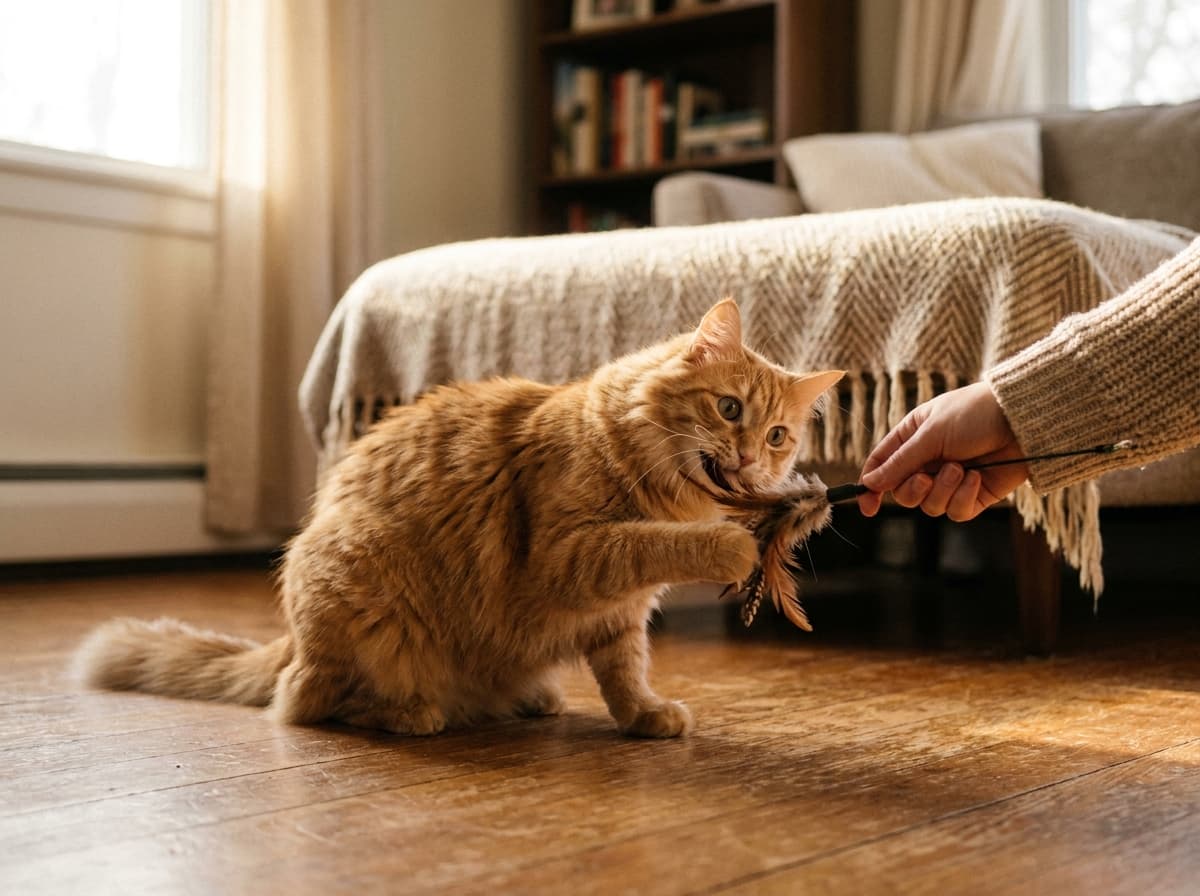
Wand toys are another great tool for directing where a cat looks. Instead of hoping they look at the lens, you can use a feather lure to pull their gaze upward or to the side. This is especially helpful when you want to create a specific composition without getting the toy in the frame. By moving the toy like a bird, you trigger their natural hunting instincts. Their eyes will lock onto the movement, giving you that sharp, focused expression that makes a portrait stand out. It is much more effective than holding a toy right against the camera, which usually just results in a blurry cat face lunging at your gear.
Key insights:
- High-value 'stinky' treats like tuna or gel are better for focus than dry food.
- Catnip spray is a great way to capture relaxed or playful rolling behaviors.
- Wand toys provide better control over a cat's gaze than stationary props.
The Power of the 'Stinky' Treat
Most cats spend about 80% of their day in nap mode, so asking them to strike a pose usually results in a yawn or a quick exit. Since they operate on their own schedule, you need a high-value bribe to keep them interested. This is where the 'stinky' stuff comes in.
Forget dry kibble. We’re talking about squeezable gel treats or a little tuna - things with a scent they simply can’t ignore. If you want those adorable, relaxed rolling shots, try a quick mist of catnip spray on the rug. It’s all about working with their instincts. Cat photography often involves plenty of trial and error, but a smelly snack makes the process much smoother for everyone involved.
Key insights:
- High-value wet treats like tuna are far more effective than dry kibble for capturing a cat's attention.
- Catnip spray is a secret weapon for encouraging playful or relaxed poses without physical handling.
Using Wand Toys to Direct the Gaze
Ever wonder why your cat looks everywhere except at the camera? They operate on their own schedule. Since cats spend 80% of their day napping, you must make active moments count. Wand toys are your best friend.
Instead of hoping for a glance, use a feather lure to pull their interest upward and away from the lens. This creates that alert, wide-eyed expression we all love. It also stops them from lunging at your phone for a sniff.
A long wand also lets you set up the composition from a distance. You can guide them into the light without crowding their space. It turns the shoot into a game, which is the secret to capturing their real personality.
Key insights:
- Use vertical movement to trigger a more alert and majestic expression.
- Feather lures allow you to position a cat in natural light without getting too close.
No DSLR? No Problem. Smartphone Hacks for Pro-Level Pet Photos
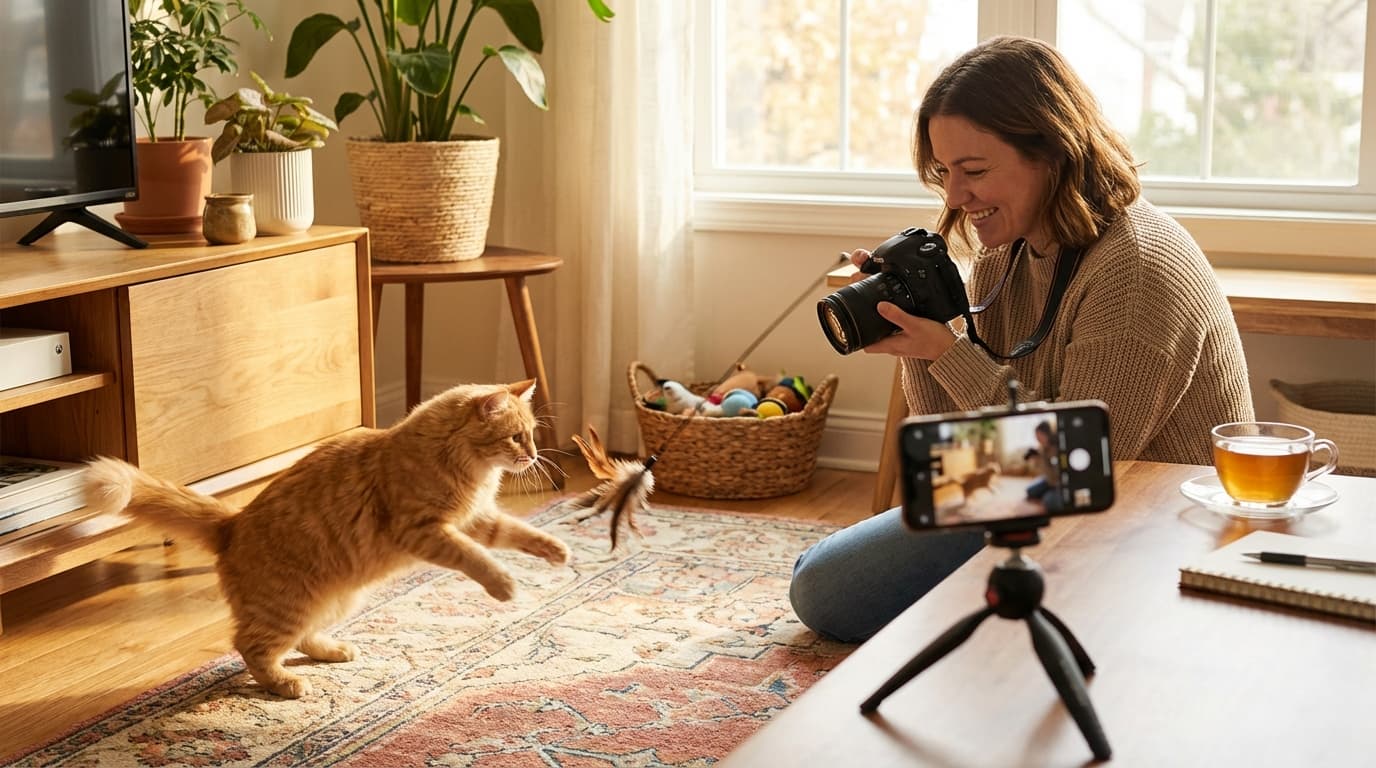
You do not need a bulky camera and a bag of lenses to capture your cat's best side. Honestly, the phone in your pocket is more than enough to get those Instagram-worthy shots we are seeing everywhere in 2025. The trick is knowing which buttons to tap. Start by flipping your phone into Portrait Mode. This feature essentially mimics the look of a high-end wide aperture lens, creating that soft, blurry background that makes your cat really pop. It is the easiest way to get professional-looking bokeh without spending thousands on gear.
While you are framing the shot, do not just let the phone do all the thinking. Tap on your cat's eyes to lock the focus and then slide your finger up or down to adjust the exposure on the fly. You want to see those catchlights, the little glints of light in their eyes that add life to a portrait. If the fur looks a bit too yellow or blue, a quick tweak to the white balance can fix it instantly. Since cats spend about 80% of their day napping, you have plenty of stationary targets to practice on before they decide to move.
The reality is that cat photography requires a high tolerance for failure. They aren't like dogs; they won't sit still just because you asked nicely. But that is part of the charm. By using natural light instead of a startling flash, you keep them calm and capture their true colors. Whether you are setting up a tiny six-foot studio corner or just catching them in a sunbeam during golden hour, remember that the best photo is usually the one you did not overthink. Just keep snapping and stay patient.
Key insights:
- Portrait Mode simulates the shallow depth of field found in expensive f/1.8 lenses.
- Manual exposure and focus locks help capture the essential sparkle in a cat's eyes.
- Natural light is always better than flash to avoid startling your subject or creating red-eye.
The 80% Rule: Working With Your Cat's Schedule
Ever wonder why your cat seems to be a professional sleeper? It is because they actually spend about 80% of their day in nap mode. Instead of fighting that schedule to get a high-energy action shot, why not work with it? Some of the most beautiful, authentic moments happen when your cat is just being themselves in their favorite sunbeam. This is exactly why there is a major shift toward in-home sessions. It keeps the stress low and the comfort high for your feline friend while capturing them in their natural environment.
To make this work, you have to think about timing. While dogs usually want to please you, cats strictly follow their own agenda. Try to catch them during the Golden Hour - that soft light in the early morning or late afternoon. It makes their fur glow and eyes pop without the harsh shadows of midday sun. If you are shooting indoors, skip the flash entirely. Natural light is much better for showing off fur texture and eye color, and it won't startle a jumpy cat like a sudden artificial burst will.
The reality is that cat photography requires a high tolerance for failure. They rarely pose on command, so you have to be ready when the moment happens. If you want those dreamy, blurry backgrounds, use a wide aperture lens like f/1.8 or f/2.8. This helps your cat stand out from the household clutter. Just remember that success is often about patience and having a few high-value, stinky treats on hand to grab their attention. If the first attempt fails, do not worry. Just wait for the next nap cycle and try again.
Key insights:
- Plan your session around the 80% of the day cats spend resting to capture calm, authentic lifestyle shots.
- Natural light is always superior to flash, as it prevents startling the cat and better highlights their natural features.
- In-home sessions are becoming the standard because they reduce feline stress and allow for more genuine expressions.
Setting the Stage: Creating a Mini-Studio at Home
You do not need a professional studio to get great shots of your cat. A small 6-10 foot square area in your living room is plenty of space to work with. Think of it as a cozy corner rather than a formal set. Since cats spend about 80% of their day napping, picking a spot where they already feel relaxed is a smart move.
Before you bring out the camera, grab a lint roller. Cleaning fur off your backdrops now will save you hours of tedious editing later. It is much easier to prep the surface than to click away stray hairs in post-production. While you are at it, choose cat-friendly photo props that do not distract from your subject. Think of items that complement their fur without being overwhelming.
Here is the reality: cats do not pose on command. Capturing them is a bit like herding kittens, so you need a high tolerance for failed shots. If they are bored, try using a wand toy to guide their gaze. This keeps them engaged and helps you get those sharp, curious expressions that make a portrait pop without the stress.
Key insights:
- A 6-10 foot square area provides enough room for a dedicated home photo space.
- Prepping fabrics with a lint roller significantly reduces the need for digital retouching.
- Wand toys are essential tools for directing a cat's attention toward the camera lens.
Common Cat Photography Questions
Ever feel like your cat is actively sabotaging your photoshoot? You are not alone. Capturing cats on camera is a lot like herding kittens because they simply do not care about your carefully crafted shot list. Since cats spend about 80% of their day in nap mode, your first hurdle is usually just catching them while they are awake and moving. The reality is that cat photography requires a high tolerance for failure. You have to be okay with the fact that they rarely maintain a stunning pose for more than a split second.
A common question owners ask is about the right gear for the job. While smartphones are great for quick shots, using a 50mm prime lens is often the best choice for high-quality portraits. If you want to include more of the room, a 35mm lens works better for those environmental shots. To get that professional look with a blurry background, try using a wide aperture like f/1.8 or f/2.8. You do not need a massive studio either. A small area of about 6 to 10 square feet is plenty of space to set up a mini-studio right in your living room.
What about lighting? Natural light is almost always better than a flash because harsh flashes can startle your cat or cause unnatural reflections in their eyes. Try shooting during the golden hour in the early morning or late afternoon to get a warm glow that makes their fur pop. If your cat is acting disinterested, skip the dry kibble and reach for the stinky stuff. High-value treats like tuna or squeezable treats are much more effective. Also, try using a wand toy instead of a stationary one. This lets you direct their gaze exactly where you want it while keeping your hands out of the frame.
Key insights:
- Natural light is superior to flash for capturing true fur texture and eye color.
- High-value 'stinky' treats like tuna are more effective than dry treats for uncooperative subjects.
- Wand toys are essential for directing a cat's gaze without interfering with the composition.
- A 50mm lens with a wide aperture (f/1.8) is the ideal technical setup for feline portraits.
Final Thoughts: It's All About the Connection
You can buy the best 50mm lens and set up a perfect ten-foot studio space, but your cat still won't pose on command. Since they spend about 80% of their day napping, you are usually working in very small windows of activity. This is where your technical gear meets feline intuition. You just have to accept that cats operate on their own schedules, not ours.
The truth is that great cat photography requires a high tolerance for fails. If your camera roll is full of blurry ears and empty rugs, you are actually doing it right. Think of it like herding kittens. It is messy and unpredictable. But please, keep clicking. Often, the most authentic photo is the one you did not plan for at all. It is that tiny, split-second look that captures their true spirit. That connection is always worth the wait.
Frequently Asked Questions
It usually happens because the camera is a strange, clicking object they don't quite trust yet. Since cats operate on their own schedule and aren't big on following commands, you have to make the experience worth their while.
Try ditching the flash because that sudden light can be really startling for them. Instead, use high-value stinky treats like tuna or chicken to create a better mood. Also, using a wand toy is a great way to direct their gaze and keep them engaged without making the camera lens feel like a threat.
That glowing effect is usually caused by your camera flash reflecting off the back of your cat's eyes. It's a common issue that often hides their beautiful natural eye color and makes the fur look flat.
The easiest fix is to rely on natural light instead of a flash. Shooting during the golden hour, which is early morning or late afternoon, gives you a soft light that makes their eyes sparkle. You can also try to capture catchlights, which are those tiny reflections of light in the eyes that add depth and make your pet look more alive in the portrait.
The secret is usually hiding right in your kitchen or toy box. Using a wand toy is one of the best tricks because you can wiggle it right above your camera lens to pull their eyes exactly where you want them. Unlike a regular ball, a feather lure lets you control the movement while keeping your hands out of the shot.
If toys aren't working, try a stinky treat. We are talking about the good stuff like tuna or those squeezable meat tubes. Cats aren't always eager to please like dogs are, so you have to make it worth their while. Also, try to position them so the light hits their eyes. This creates a little reflection called a catchlight that makes them look alive and bright in the photo.
You definitely can. You don't need a fancy camera to get a great shot of your cat, but you do need to be smart about your lighting. The biggest tip is to turn off your flash. It often scares cats and makes their eyes look weirdly reflective or red. Instead, try to take photos during the golden hour, which is that soft light you get in the early morning or late afternoon.
If your phone has a portrait mode, use it to get that blurry background look. Even if it doesn't, you can still get sharp shots by tapping the screen to lock your focus on their eyes. Just remember that cats move fast, so you might have to take a lot of photos to get that one perfect moment. It is all about being patient and catching them when they are relaxed.
Conclusion
So what does all this mean? Great cat photography is about working with your cat instead of against them. By using natural cat photography lighting and the best camera settings for pets, those blurry action shots turn into clear memories. It is all about being ready when they are, whether you use a pro camera or just some quick smartphone hacks.
The real secret is that the best feline portraiture happens when you stop forcing a pose and start following your cat's lead. A simple cardboard box or a well-timed treat often does more for your photos than a fancy studio setup. If you focus on their personality instead of perfection, those candid moments will be the ones you treasure most.
Try keeping your camera handy during their next active window and just start clicking. Do not worry about the fails because they are just part of the fun. With a little patience and a few cat-friendly photo props, you will eventually get those perfect catchlights in their eyes that make it all worth it.
Send it to someone who should read it next.

PurrScript Editorial Team
Editorial Team
PurrScript's in-house editorial team. We research, write, and review every guide using established veterinary and behavioral resources, and update articles as best practices evolve.
View all articles