How to Actually Get Work Done When Your Cat Thinks Your Desk Is a Bed
You are right in the middle of a high-stakes email when a furry blur lands on your spacebar, sending a long string of nonsense to your boss. We love our...

PurrScript Editorial Team
Editorial Team
How to Actually Get Work Done When Your Cat Thinks Your Desk Is a Bed
You are right in the middle of a high-stakes email when a furry blur lands on your spacebar, sending a long string of nonsense to your boss. We love our pets, but keeping cat off keyboard duty has become a full-time job for many remote workers. To your cat, that glowing desk isn't a place for spreadsheets. It is a warm, vibrating stage perfectly designed for their next nap.
This daily struggle is a common hurdle for anyone trying to stay productive with pets nearby. Your cat isn't actually trying to sabotage your deadlines. They just want to be part of whatever you are doing. Luckily, you can have a focused workday and a happy cat at the same time. Building a cat-friendly home office setup is the best way to reclaim your desk while still keeping your coworker close.
We are going to explore clever solutions like desk-side cat beds and the best office toys for cats to keep them busy. You will also find out how to ignore a meowing cat during important calls and why a decoy laptop might be your best friend. Let's look at how to turn your workspace back into a productive zone instead of a giant cat bed.
Why Your Office Is the Most Exciting Place in the House
Ever wonder why your cat ignores that expensive plush bed for your laptop? It is not just about being annoying. Your computer generates a consistent warmth that acts like a heating pad for them. Plus, you are there. Since you spend hours in this spot, your cat sees it as the social hub of the home. They want to be where the action is, and right now, that is your keyboard.
From a cat's perspective, your desk is not just a workspace. It is actually a lively stage full of interesting action. Think about the flickering cursor, the scrolling text, and the way your fingers dance across the keys. All that movement triggers their natural hunting instincts. To a curious feline, your monitor is basically a high-definition bird feeder that stays on all day long. This sensory environment is exactly why your cat chooses your desk over the rest of the house.
Cats can be delightful coworkers, but they are less fun when they start deleting your work. While they just want to be close to you, their presence can make a cat-friendly home office setup feel like a battleground. Understanding these triggers is the first step. Once you know they are after warmth and entertainment, you can start using things like desk-side cat beds or office toys for cats to reclaim your space without hurting their feelings.
The Art of the Decoy: Redirection Instead of Rejection
Have you ever noticed how your cat seems to have a sixth sense for the exact moment you open a spreadsheet or join a video call? It is not just your imagination. From a cat's perspective, your desk is far more than a place for emails; it is a lively stage full of interesting action, warmth from your electronics, and the motion of your hands. When we try to push them away or say no, we are often just engaging in a game they are happy to play. The secret to a quiet workday is not rejection, but redirection. By using a decoy strategy, you can lean into their natural desire for mimicry to get your workspace back. Instead of fighting for every inch of your desk, try setting up a secondary station within arm's reach. This lets them feel included in your work day while keeping their paws off your delete key.
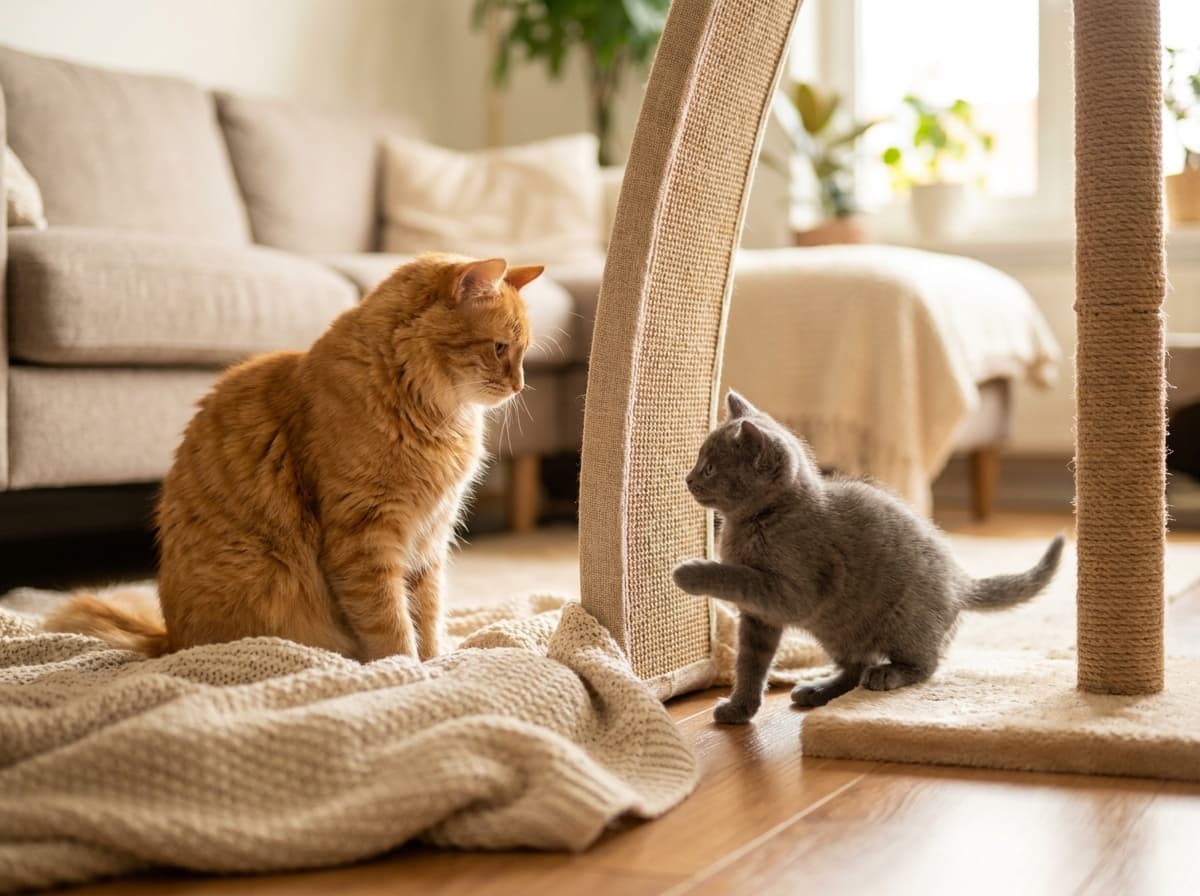
If you want to win the battle for the desk, you have to think like a climber. Cats naturally seek out high vantage points because height equals security and status in their world. This is why a cat tree in the corner of your office will almost always beat a plush bed on the floor. When a cat is at eye level with you, they feel safe and connected to the action. The key is all about the placement. If the cat tree is across the room, they will ignore it to stay near you. But if you place a tall perch right next to your setup, they get the psychological benefit of the high ground while still being close enough to feel like your favorite coworker. It is about providing a better view than the one they get from sitting on your hands.
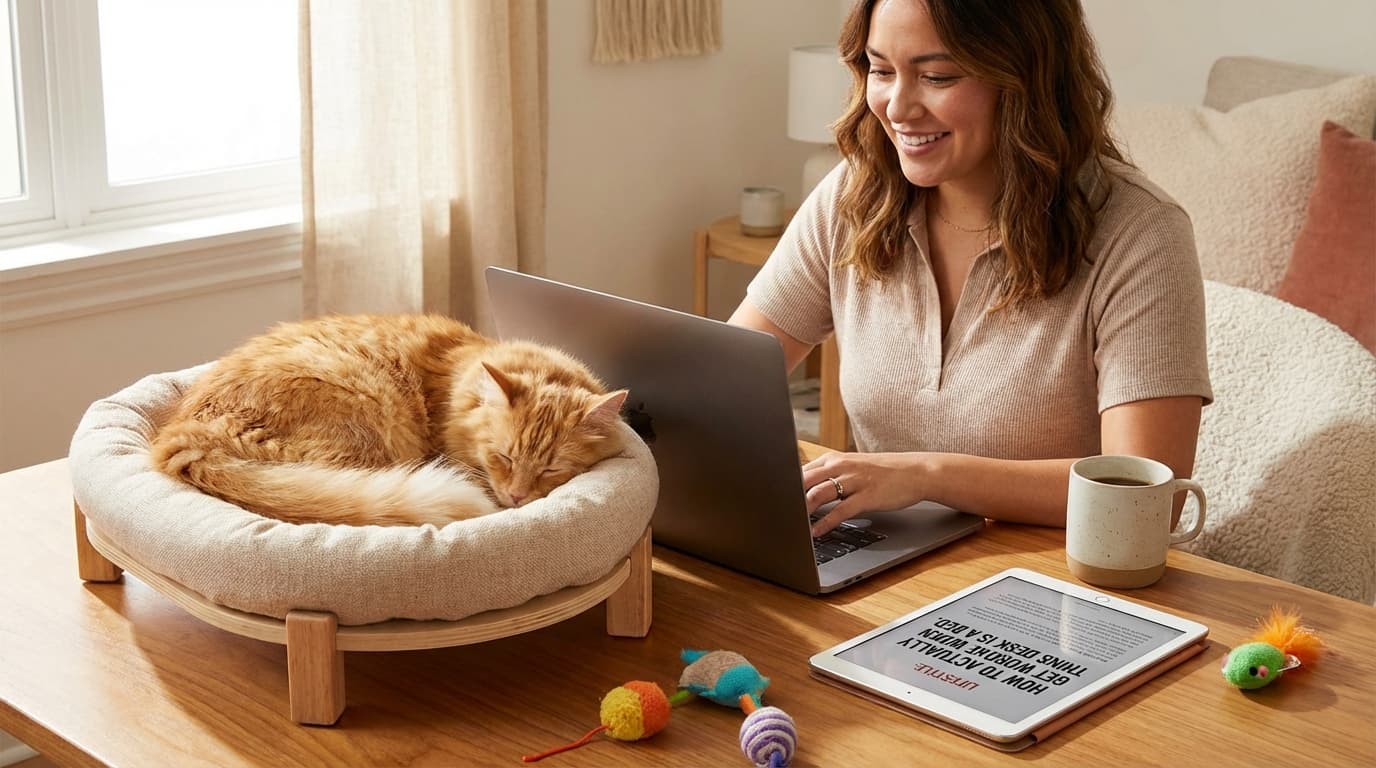
Then there is the classic fake laptop trick. Cats love boundaries and they love doing exactly what you are doing. This is why the Deskbox solution works so well - a simple cardboard lid on the corner of your desk creates a physical boundary that most cats find nearly impossible to resist. For a more permanent or professional fix, specialized furniture like the Desk Nest provides a floating bed that clamps onto the side of your desk. This gives them a dedicated spot without eating up your actual surface area. If they still insist on the real thing, you might consider an acrylic keyboard shield to physically protect your work while still letting them see what is happening. The goal is to make the decoy feel like the best seat in the house.
Beyond just moving the cat, it helps to look at their overall routine. Recent observations suggest that feeding cats multiple small meals throughout the day can actually decrease begging behavior during your peak work hours. If they are full and have a warm, high perch to retreat to, the allure of your keyboard starts to fade. You can also use passive enrichment, like a window-mounted bird feeder or cat-specific videos, to keep them occupied while you focus. It is also a good idea to secure your setup by using split loom tubing or plastic protectors on your cables to prevent any curious nibbling. When you create an environment that satisfies their curiosity and their need for warmth, you will find that sharing an office becomes much easier for both of you.
Key insights:
- Redirection is more effective than rejection because it addresses the cat's need for social inclusion.
- Vertical space is a high-value resource for cats that can be used to lure them away from flat desk surfaces.
- The 'mimicry' behavior in cats means they are more likely to use a decoy that looks or feels like your own equipment.
- Small, frequent meals can help regulate a cat's energy and reduce disruptive behavior during work hours.
Why Vertical Space Beats Floor Space Every Time
Ever wonder why your cat ignores that expensive floor bed but tries to balance on your monitors? It is not just to annoy you. Cats naturally crave high ground because it makes them feel safe and in control of their territory. From a cat's perspective, your desk is a lively stage full of interesting action, and they simply want the best seat in the house to watch it all unfold.
Here is the thing: a cat tree in the corner is much better than a plush cushion on the rug. Providing vertical alternatives like shelves or tall trees is often more effective than using deterrents because it works with their instincts instead of against them. When they are up high, they get the security and warmth they need while staying out of your direct path. It turns a potential conflict into a peaceful coexistence.
You can also try clever products like the Desk Nest, which is a floating bed that clamps onto your desk. This gives your pet a dedicated spot right next to you without taking up your actual workspace. The trick is keeping their perch close enough so they feel included in your daily routine. They just want to be part of the team without literally sitting on your keyboard and stopping your progress.
But what if they still insist on the desk? Some owners find success using the decoy strategy, like setting up a fake laptop or a simple cardboard box nearby. This exploits their natural mimicry behavior. If they think they are doing what you are doing, they might finally leave your real equipment alone so you can actually finish that report.
Key insights:
- Vertical space satisfies a cat's instinctual need for security and observation.
- Integrated office solutions like floating beds provide proximity without sacrificing desk area.
- Redirecting behavior with high perches is more successful than using negative deterrents.
The 'Fake Laptop' Trick and Other Mimicry Hacks
Ever notice how your cat ignores every expensive toy until you open your laptop? It is not a coincidence. Cats are drawn to home offices because of the warmth from electronics, the motion on your screen, and a simple desire to be near you. They see you working and want to join the lively stage of your desk. This is where mimicry hacks save your sanity. Since they want to do what you are doing, give them a way to do it that does not involve sitting on your escape key.
The 'Deskbox' is a classic solution because cats love boundaries. Placing a simple cardboard lid or a tray next to your setup gives them a dedicated spot that feels like part of your space. If you have an old, broken laptop gathering dust, try opening it up nearby. This 'fake laptop' trick satisfies their need to mirror your movements. You can also try desk-side cat beds like the Desk Nest. These floating beds provide the high vantage point cats prefer without stealing your actual desk surface.
To make a decoy actually work, you have to introduce it correctly. Put the new spot right in the action zone and act like it is a big deal. When they choose the box over your keyboard, you are officially winning at the cat-friendly home office setup. It is a simple way to stay productive with pets while keeping your furry coworker happy and off your hardware. What does this mean for you? It means finally finishing that report without a tail in your face.
Key insights:
- The 'fake laptop' strategy works because it exploits feline mimicry behavior.
- Cats prefer high vantage points, making floating desk-side beds more effective than floor toys.
- Setting clear physical boundaries like a 'Deskbox' satisfies a cat's need for security while you work.
Essential Gear for a Cat-Proof (and Productive) Workspace
Your cat doesn't see a workspace. They see a warm, glowing stage where you happen to be the main attraction. Between the heat radiating from your laptop and the interesting motion on your screen, the desk is basically the best seat in the house. Instead of a constant battle for surface area, the latest office trends are shifting toward integrated pet furniture. We are seeing more solutions that allow you to share the office without sacrificing your productivity or your home's aesthetic.
Protecting your tech is the first priority for any remote worker with a pet. If your cat loves helping you type during meetings, an acrylic keyboard shield is a simple fix. It creates a clear bridge over your keys so you can keep working while they lounge directly on top. For the chewers, standard cords are just too tempting. Using split loom tubing or flexible PVC to cover your wires is much safer than just hoping they won't bite. You can also use pet-safe bitter sprays, but routing cables behind furniture or into hidden boxes is usually the most reliable way to keep them out of reach.
To really reclaim your desk, consider a floating bed like the Desk Nest. These solutions clamp onto the side of your table, giving your coworker a dedicated spot at eye level without taking up your actual workspace. It is an ergonomic win for both of you. If your office is small, remember that a tall cat tree nearby often works better than any deterrent. Cats naturally want the highest vantage point in the room, so if the tree is taller than your monitor, they will usually pick the better view over your keyboard every time.
Do not overlook the power of a good distraction. Feeding small meals throughout the day instead of two big ones can stop the begging while you are trying to focus. Some owners even use a decoy laptop to satisfy a cat's desire to mimic their human. It might sound silly, but giving them their own spot to work often provides just enough passive enrichment to buy you a few hours of quiet. At the end of the day, it's about providing a better alternative than your laptop, not just telling them no.
Key insights:
- Vertical space is often more attractive to cats than a flat desk surface.
- Cable protection like split loom tubing is a more permanent solution than deterrent sprays.
- The decoy strategy works by exploiting a cat's natural desire to mimic their owner's behavior.
- Small, frequent meals can significantly reduce attention-seeking behavior during work hours.
Protecting Your Tech from Teeth and Paws
Ever wonder why your cat treats your keyboard like a heated massage bed? It is not just to annoy you. They are drawn to the warmth of your laptop and the flickering motion on the screen. To keep your work safe from paws, an acrylic keyboard shield is a game-changer. These clear covers sit right over your keys. You can still type underneath them while your cat sits on top, watching the cursor move without deleting your last spreadsheet. It is a simple way to stay productive while staying close to your pet.
Cables are another story. For many cats, a dangling wire looks like a snack or a toy. You can stop the chewing by using split loom tubing or flexible PVC pipes to cover every exposed cord. If your cat is a persistent nibbler, try applying a pet-safe bitter spray to the surface of the protectors. Routing your cables behind heavy furniture or inside specialized boxes also keeps them out of sight and out of mind. It is much easier to hide a cord than it is to replace a fried power adapter.
The goal is to make your tech less interesting than the alternatives. While you are securing the wires, think about giving them a better spot to hang out. Products like the Desk Nest, which is a floating bed that clamps to your desk, offer that social company they crave without the hardware risks. Sometimes a decoy works too. A fake keyboard or a small box nearby can satisfy their need to mimic you. When they have their own dedicated space, your expensive gear stops being the main attraction.
Key insights:
- Use acrylic shields to allow typing while providing a sturdy surface for cats to sit on.
- Combine physical barriers like split loom tubing with bitter sprays to discourage chewing.
- Redirect mimicry behavior by providing a decoy keyboard or a dedicated desk-side bed.
Floating Beds and Desk-Side Nests
Ever notice how your cat treats your laptop like a personal heating pad? It is not just about warmth. From a cat’s perspective, your desk is a stage full of interesting action. They want to be near you and the screen. Floating beds like the Desk Nest can save your sanity. These clamp onto the side of your desk, giving your pet a spot that is not on your keyboard.
These solutions are perfect for small offices where desk space is tight. You get your surface back, and they stay at eye level with you. Vertical alternatives are usually more effective than deterrents because cats love high vantage points. A nest right next to your monitor satisfies their need for company while keeping your workspace clear.
Consider the ergonomics too. When your coworker has a perch, you can finally sit with good posture instead of leaning around a sleeping tabby. It creates a boundary that feels like a reward. They stay close enough to supervise, but far enough away that they cannot delete your hard work.
Key insights:
- Vertical perches satisfy a cat's natural instinct to seek high vantage points for security.
- Clamp-on beds preserve desk surface area while maintaining the social proximity cats crave.
- Dedicated pet spaces improve human ergonomics by removing the need to work around a pet.
How to Handle the 'Meow-ting' Interruptions
We've all been there. You're mid-sentence in a big meeting when the 'meow-ting' starts. It’s loud, persistent, and usually timed perfectly to your most important tasks. But before you scoop them up, ask yourself: is this a real need or just a 'boredom' yell? Most cats are masters of intermittent reinforcement. If you ignore them nine times but give in on the tenth, you've just taught them that persistence pays off. To them, that one 'hello' or 'not now' resets the clock. Setting boundaries doesn't make you a bad cat parent; it just makes you a productive one.
Managing these interruptions often starts with their stomach. Since cats are naturally attracted to the warmth of your laptop and the motion on your screen, they’re already predisposed to hang out near your desk. You can turn this around by using the power of small, frequent meals. Instead of two large feedings, try breaking their food into tiny portions throughout the day. This keeps their hunger cycles from peaking during your work hours. An automatic feeder or a puzzle toy is a great tool here. If you schedule a small snack to drop right before your biggest meeting, your cat will be too busy 'hunting' kibble to worry about your conference call.
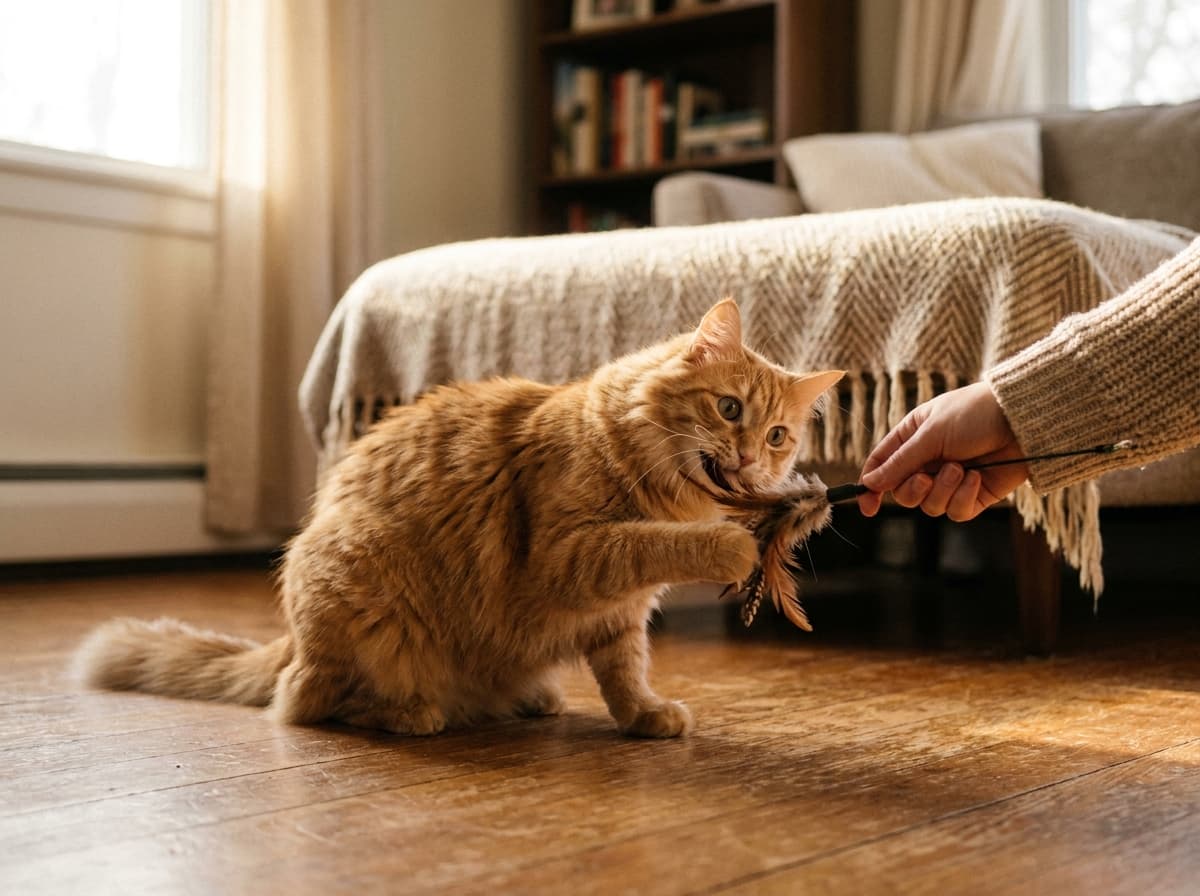
Beyond food, you can lean into the 'play-eat-groom-sleep' rhythm to buy yourself a quiet afternoon. A high-intensity play session before you log on can drain their battery. Once they've 'hunted' their toy, give them a treat to signal the 'eat' phase. They’ll naturally transition into grooming and a long nap. When they do inevitably meow for attention later, you have to stay strong. Think of it this way: any reaction is a reward. If you want them to stop, you have to be completely unreactive. It’s tough, but it’s the only way to break the cycle.
If they still won't budge, try a 'decoy' strategy. Cats love to mimic us, which is why they sit on keyboards. Products like the Desk Nest or even a simple 'fake' laptop can redirect that need for social closeness. By providing a vertical alternative like a cat tree or a floating bed right next to your desk, you satisfy their desire for a high vantage point without losing your workspace. As the PetLovers team says, your desk is a 'lively stage full of interesting action.' If you give them their own spot on that stage, they’re much more likely to stay off your equipment.
Key insights:
- Vertical alternatives like cat trees are often more effective than using deterrents because cats naturally seek out high vantage points.
- Passive enrichment, such as window-mounted bird feeders, acts as a substitute for active owner attention during work hours.
- The decoy strategy exploits feline mimicry behavior, redirecting them from your keyboard to a 'fake' version of their own.
The Secret Power of Small, Frequent Meals
Ever noticed how your cat’s loudest demands for attention happen exactly three minutes before your biggest meeting? It isn’t just bad luck. Cats often associate your presence at the desk with a snack, leading to that persistent work-hour begging we all know too well. Their hunger cycles are often synced to your movements, which is why they suddenly become starving the moment you open a laptop or sit in your office chair.
The fix is simpler than you might think. Instead of two large meals that leave your pet bored and hungry by noon, try breaking their daily food into several small portions. Feeding cats multiple small meals throughout the day can actually decrease begging behavior during work hours. This is where automatic feeders or puzzle toys become your best coworkers. By automating the process, you remove yourself from the food provider role. The cat starts watching the feeder instead of your keyboard.
For a pro move, schedule these automated snacks to go off right when your most important calls start. If they are busy hunting kibble out of a toy, they aren't walking across your webcam or sitting on your notes. This passive enrichment acts as a substitute for your attention during deep work. It means you can finally stop apologizing for your fuzzy assistant on every video call and actually get things done.
Key insights:
- Switching to frequent, small portions reduces the intensity of hunger-based begging.
- Automatic feeders help break the association between the owner's desk presence and mealtime.
- Puzzle toys provide the dual benefit of feeding and mental stimulation to keep cats occupied.
When to Ignore and When to Play
You sit down for a meeting and suddenly your cat is screaming for attention. It feels personal, but it is really just about timing. To get a quiet afternoon, try following their natural rhythm with a play-eat-groom-sleep cycle. Give them a high-intensity play session right before you log on. Once they hunt their toy, feed them. Cats usually groom themselves after eating and then fall into a long nap. This gives you a solid window of peace while they dream away.
If they wake up and start meowing while you work, the hardest part is staying silent. You have to ignore them. If you look at them or talk back, you are teaching them that noise works. Instead, try giving them small meals throughout the day rather than two big ones. This reduces begging because they are not waiting hours for food. You can also set up passive distractions like a window-mounted bird feeder to keep them busy without needing your help.
Think of it from their perspective. Your desk is warm and full of moving shapes. If ignoring them feels impossible, use a decoy. A simple box or a cat tree nearby often satisfies their need to be close. Providing a high spot is usually more effective than any deterrent because cats naturally want a good vantage point. Sometimes they just want to be your coworker, so giving them a designated spot keeps them off your keyboard and out of your hair.
Key insights:
- Use the play-eat-groom-sleep cycle to time your cat's naps with your work meetings.
- Switch to multiple small meals to stop food-related begging during the day.
- Ignoring meowing is essential to avoid reinforcing attention-seeking behavior.
Passive Entertainment: Keeping Them Busy While You Work
Ever feel like your cat thinks your Zoom call is an invitation to perform a solo dance across your keyboard? It is not just your imagination. From a cat's perspective, your desk is a lively stage full of interesting action. They are drawn to the warmth of your laptop, the flickering motion on your screen, and your undivided attention. But you have deadlines. This is where passive entertainment comes in. The goal is to give them something better to do than sitting on your Escape key. Think of it as setting up a parallel workspace for your feline coworker.
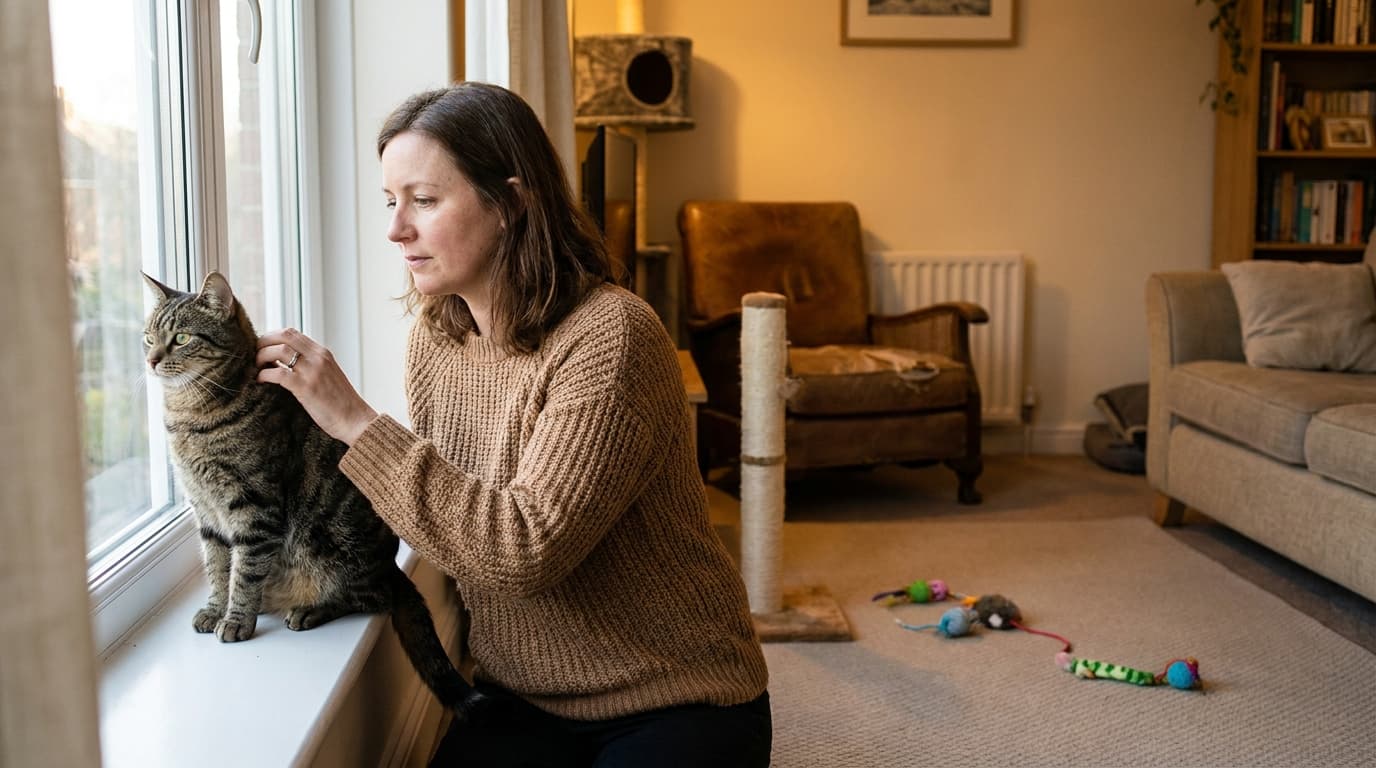
One of the most effective ways to do this is by installing a window-mounted bird feeder. It is the original Cat TV and provides hours of visual stimulation that does not involve your mouse cursor. If you do not have a good window view, digital entertainment works too. There are plenty of interactive videos designed specifically for cats that can keep them occupied while you focus on those spreadsheets. You can also use self-moving toys that do not require you to lift a finger. These gadgets keep the hunt alive while you are stuck in a meeting.
Sometimes the attraction is just about being near you. If your cat is a velcro pet, try using a decoy strategy. This exploits their natural mimicry behavior. You can set up a Desk Nest, which is a floating cat bed that clamps onto your desk. It gives them a dedicated spot to supervise your work without taking up your actual surface area. Some people even use acrylic keyboard shields. These clear covers protect your keys from wandering paws while still letting you see what you are typing. It is a simple way to physically separate the cat from the work without making them feel excluded.
Do not forget about their other senses. Using different scents or textures off-desk can lure them away from your electronics. You might also consider changing how you feed them. Recent findings show that offering multiple small meals throughout the day rather than two large ones can decrease begging behavior during work hours. When you combine these environmental changes with a few vertical alternatives like cat trees, you create a home office where you can both coexist. Providing a high vantage point is often more effective than using deterrents because cats naturally prefer being up high where they feel secure.
As Class Act Cats points out, cats can be delightful coworkers, but they are less delightful when they prevent you from actually working. The trick is to stay ahead of their boredom. By using passive enrichment as a substitute for your active attention, you can get through your to-do list without a tail in your face. Whether it is a fake laptop or a well-placed window perch, these small shifts make a huge difference in your daily productivity.
Key insights:
- Passive enrichment acts as a substitute for owner attention during work hours.
- The decoy strategy uses mimicry behavior to keep cats off active equipment.
- Small, frequent meals can reduce disruptive begging behavior while you are busy.
- Vertical spaces like cat trees are more appealing to cats than flat desk surfaces.
Conclusion: Finding Your Work-Life-Purr Balance
Your cat isn't trying to sabotage your career. They just think your desk is the hottest spot in the house. Between the warmth of your laptop and the flickering screen, it is a total feline magnet. Accepting a bit of chaos is part of the deal. As the PetLovers Team notes, your desk is a "lively stage" to them, not just a workspace.
You can stay productive by using smart redirection. Whether you install a desk-side cat bed or use a "decoy" laptop to satisfy their need for mimicry, these shifts really matter. Even simple moves, like feeding smaller meals or shielding cords with tubing, can stop the begging and chewing that breaks your flow.
Finding balance means working with their instincts. High spots like cat trees are often better than using deterrents. It takes time to find the right mix of office toys and keyboard shields, but it is worth it. Your cat might be a "less delightful" coworker sometimes, but you are finally back in charge of your workday.
Key insights:
- Redirection is more effective than punishment because it addresses the cat's natural need for warmth and height.
- Mimicry behavior means giving a cat their own version of your gear can satisfy their social curiosity.
Frequently Asked Questions
It really comes down to a mix of warmth, movement, and your undivided attention. Your laptop is basically a heated bed that makes interesting clicking noises and shows moving images on the screen. From your cat's perspective, your desk isn't just a workspace; it's a lively stage full of interesting action that they naturally want to join.
There is also a social side to it called mimicry. Because you are spending so much time staring at and touching the keys, your cat figures it must be the most important place in the room. They want to be where you are, and since the keyboard is literally right under your nose, it's the best spot for them to get in on the fun. Sometimes setting up a 'decoy' laptop or a small box nearby can satisfy this urge to copy you without ruining your productivity.
It is usually better to skip the spray bottle. While it might get them to jump down in the moment, it rarely teaches them to stay off the desk long-term. Most of the time, it just makes your cat wary of you rather than the furniture. They don't always connect the water to the desk; they just see you as the person who randomly attacks them with a squirt gun.
A more effective strategy is to make the desk less interesting while providing a better alternative. Cats naturally love high vantage points and warmth, so placing a tall cat tree or a floating 'Desk Nest' nearby gives them what they want without blocking your screen. If you pair that with cord protectors and maybe some small, frequent meals to keep them full during work hours, you'll find they are much more likely to leave your keyboard alone on their own.
The best way to keep your cat busy is to use passive enrichment that doesn't require your help. You can set up a window-mounted bird feeder or put on a cat-specific video of squirrels and birds to give them something to watch. These act as a substitute for your attention so you can focus on your screen without a furry coworker blocking your view.
Another smart move is to have a quick play session right before your meeting. If you spend ten minutes with a wand toy to burn off their energy, they'll likely nap through your call. You might even try a decoy strategy like putting an old laptop or a small box on the corner of your desk. Cats often just want to copy what you're doing, so giving them their own spot can keep them away from your actual keyboard.
You'll find that physical barriers are your best friend here. Covering your cords with split loom tubing or flexible PVC pipes makes them much harder to chew through. You can also use cable management boxes or Velcro ties to hide the wires behind furniture where your cat can't reach them.
If they still won't leave the wires alone, try applying a pet-safe bitter spray to the covers. The bad taste usually teaches them to stay away pretty quickly. Just keep in mind that cats often chew out of boredom or a need for texture, so providing safe alternatives like cat grass or silvervine sticks can help satisfy that urge in a better way.
Conclusion
At the end of the day, your cat is not trying to sabotage your career. They just want to be part of your world. Whether it is the warmth of your laptop or a simple case of feline mimicry, their desk-side antics are actually a compliment. By setting up a dedicated cat-friendly home office setup with things like desk-side cat beds and engaging office toys for cats, you finally stop the constant battle for keyboard real estate.
The secret is not just about the gear. It is about finding a rhythm that works for both of you. Learning how to ignore a meowing cat when you are in deep work and rewarding them with play later creates a boundary that actually sticks. Once you stop fighting their instincts and start redirecting them, the coworker dynamic gets a lot more productive and much less stressful.
If you are feeling overwhelmed by the fur and the constant interruptions, start small. Try placing a simple cardboard box just out of reach or setting up a high perch nearby. You will likely find that being productive with pets is much easier when they have their own place to shine. After all, a quiet, purring cat is the best assistant you could ask for.
Send it to someone who should read it next.

PurrScript Editorial Team
Editorial Team
PurrScript's in-house editorial team. We research, write, and review every guide using established veterinary and behavioral resources, and update articles as best practices evolve.
View all articles