How to Give Your Indoor Cat a Safe Taste of the Wild (Without the Stress)
Does your cat spend half the day chirping at birds through a window? It's a classic dilemma for owners of indoor cats who want to provide enrichment without the scary...

Mia Torres
Cat Lifestyle Writer
How to Give Your Indoor Cat a Safe Taste of the Wild (Without the Stress)
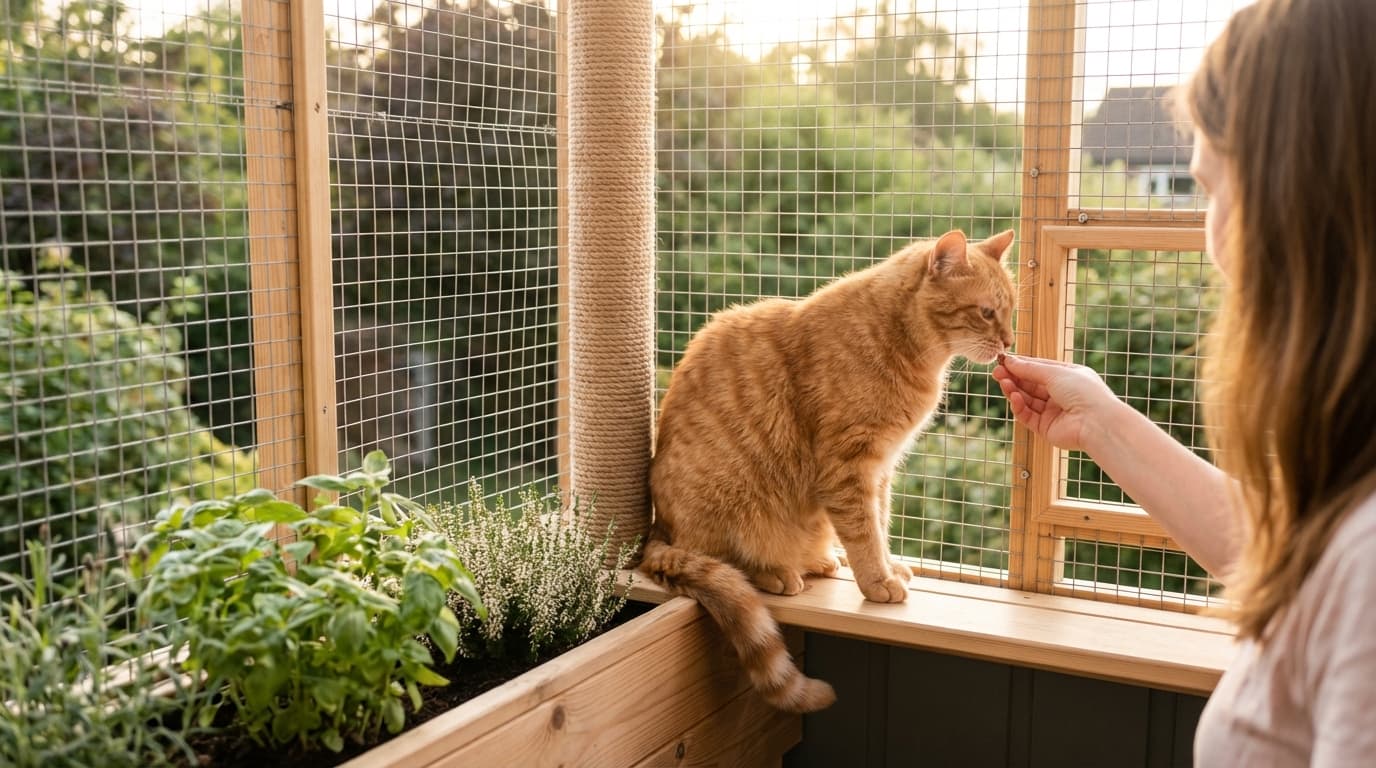
Does your cat spend half the day chirping at birds through a window? It's a classic dilemma for owners of indoor cats who want to provide enrichment without the scary risks of the great outdoors. You want them to feel the wind in their whiskers, but you also want them tucked away safely from traffic and predators.
Luckily, you can bridge that gap with a balcony cat enclosure or a simple window box catio. These setups give your pet the mental boost they crave while keeping them totally secure. It's about finding that perfect balance between safety and a little bit of wild adventure without any of the stress.
This guide walks you through the best options, from quick portable cat tents to a full DIY outdoor cat run. We will also cover predator-proof cat enclosures and fun catio flooring ideas to help you build a space your kitty will never want to leave.
Why Your Indoor Cat is Staring Out the Window (And How to Help)
Ever wonder why your cat spends all day staring through the glass? They are watching Cat TV, but they are also feeling a bit bored. It is the big indoor-outdoor dilemma. You want them safe from traffic and predators, yet you hate seeing them stuck inside. A catio is the perfect middle ground because it gives them the breeze and the birds without the risks.
Getting started is easier than you might think. You can grab DIY plans from Catio Spaces for as little as $25. These help you build everything from a small window box catio to a full backyard oasis. If you want a premium setup, Habitat Haven has been building high-end kits since 2003. They even offer a five-year warranty and free shipping on orders over $999.
Think of it as a shared sanctuary. Many modern designs now include space for human seating or even hidden litter boxes. Whether you need a portable cat tent or a predator-proof run, these enclosures protect local wildlife while keeping your pet active. It is a win for everyone.
Key insights:
- Catios provide a safe way to balance feline enrichment with bird conservation.
- Options range from $25 digital DIY plans to premium modular kits with multi-year warranties.
Small Space? No Problem: Balcony and Window Solutions
Living in a small apartment or a home with zero yard space doesn't mean your cat has to spend their life staring through glass. You can actually turn a standard window view into a safe outdoor venue. From high-rise balconies to tiny studios, there are ways to let the breeze in without risking your security deposit or your pet's safety. What does this look like for you? It might be as simple as a mesh screen or as custom as a wooden perch that hangs over the ledge.
Think of the window box catio as a luxury balcony built just for your cat. These units attach to your window frame, giving your pet a front-row seat to the neighborhood birds while keeping those birds safe from hunting. If you're handy, you can grab DIY plans from places like Catio Spaces for anywhere between $25 and $60. It’s a great way to use cedar flooring and materials that match your house so the enclosure blends right in. For those who prefer a pro setup, Habitat Haven has been around since 2003 making kits that fit even the tightest spaces. This setup is a game-changer for high-rise cats who otherwise never get to feel the wind on their whiskers.
If you move often, travel with your pet, or just want something temporary, portable tents and pop-up mesh enclosures are your best friends. These are perfect for supervised play on a balcony or a patio because they can be packed away in minutes. The key is to check the mesh quality before you buy. Those tiny claws can be tough on cheap material, so look for something reinforced that can handle a bit of climbing. Some of these setups are even modular, meaning you can connect them with tunnels to create a whole playground. Many premium kits even come with a 5-year warranty, which gives you some peace of mind. It’s a simple way to bring the outdoors in, one afternoon at a time, without a permanent commitment.
Key insights:
- Window box catios provide vertical enrichment without requiring any yard space or ground-level access.
- Budget-friendly DIY plans allow renters to build custom solutions for under sixty dollars.
- Portable mesh enclosures are the best option for owners who need to move their cat's outdoor space between different locations.
The Magic of the Window Box Catio
Ever feel like your apartment is a bit too small for a cat who longs for the breeze? If you are in a high-rise or a tiny home, a window box catio is a great choice. These compact enclosures attach to existing windows, giving your cat a private balcony without needing a backyard. Access is easy. Most setups use a cat door in the window frame so your pet can pop out whenever they spot a bird.
You won't have to sacrifice your home's look. You can choose materials that blend with your siding, like the cedar flooring used in many DIY designs. Catio Spaces offers plans from $24.95 to $59.95, and they donate 10% of affiliate purchases to animal welfare. If you prefer a kit, Habitat Haven has been around since 2003 and offers a 5-year warranty on their setups.
These boxes keep local wildlife safe while giving your cat a secure spot to lounge. It is a simple way to boost their quality of life. As the pros at Catio Spaces like to say, life is good in a catio. It is about creating a safe taste of the wild for your pet.
Key insights:
- Window box catios provide essential mental stimulation for cats in small urban spaces.
- Choosing cedar flooring and matching paint helps the enclosure feel like a natural part of your home architecture.
- Using a window-mounted cat door allows for easy installation without permanent wall modifications.
Portable Tents and Pop-Up Enclosures
Ever wish you could just pop a 'cat room' onto your lawn for an hour? Portable cat tents and pop-up enclosures are basically the 'instant coffee' of the catio world, quick, easy, and surprisingly effective. They are perfect for supervised sunshine sessions, whether you are lounging on the patio or gardening in the backyard. Since they fold down in seconds, moving the party from the grass to the deck is a breeze.
But here is a pro tip: do not skimp on the mesh quality. Your cat’s 'murder mittens' are surprisingly sharp, and a flimsy screen will not stand a chance against a determined climber. While premium brands like Habitat Haven have been perfecting heavy-duty enclosures since 2003, these portable versions offer a low-stakes way to see if your cat actually enjoys the breeze before you commit to a permanent structure.
It is a win-win for everyone. Your cat gets to sniff the fresh air and the local birds stay safe from a surprise pounce. Veterinarians across North America even recommend these types of enclosures as one of the best ways to keep pets safe while they explore. After all, life really is better when your kitty gets a safe, stress-free taste of the wild.
Key insights:
- Mesh durability is the most critical feature to prevent escapes from curious claws.
- Portable options provide a budget-friendly alternative to permanent DIY plans which typically cost between $24.95 and $59.95.
The DIY Route: Building a Dream Run on a Budget
If you have a free weekend and a basic toolkit, building a catio doesn't have to break the bank. You can find professional DIY plans that range from $24.95 to $59.95, which is a small price to pay for a blueprint that actually works. These plans take the guesswork out of the build, so you aren't staring at a pile of lumber wondering where to start. It’s about giving your cat outdoor freedom without the high cost of a custom contractor. Plus, there is a nice bonus: 10% of your plan purchase goes toward animal welfare organizations, so your project helps more than just your own pet.
When it comes to materials, cedar is the gold standard. It naturally resists rot and insects, which is vital for a structure sitting in the rain and sun. While you could use cheaper pressure-treated wood, cedar is safer for sensitive paws and looks much better against most home exteriors. Most DIY tunnel specifications even suggest using cedar flooring for a sturdy, natural feel underfoot. Think of it as a long-term investment in your cat’s new favorite hangout that won't fall apart after one season.
The real magic happens when you connect your home to the enclosure using 8-foot tunnels. These are usually 18.5 inches wide, which is the perfect sweet spot for a cat to feel secure but not cramped. It’s like a private hallway that lets them choose when they want to sunbathe and when they want to come back inside for a nap. You can install these access points through windows, walls, or even existing doors, making the transition from the living room to the outdoors feel like a natural extension of their territory.
Choosing the right size depends on your available space and how many cats you have. A compact Haven plan at 3x6 feet fits perfectly on a small patio or narrow side yard. If you have more room, the larger Oasis or Sanctuary plans can go up to 8x10 feet. These bigger versions are great because they offer enough room for a human chair, allowing you to share a morning coffee with your cat. It is interesting to note that companies like Habitat Haven have been refining these designs since 2003 and even offer a 5-year warranty on their premium kits, which shows how long these structures are meant to last.
What does this mean for your daily life? It means no more worrying about your cat darting out the front door or getting into trouble with local wildlife. By using a plan that accounts for vertical space with shelves and bridges, you’re tapping into their natural instinct to climb and observe. It’s a simple way to make an indoor life feel much bigger and more exciting. You are creating a safe zone where they can watch birds without being a threat to them, which is a win for everyone involved.
Key insights:
- DIY plans offer a budget-friendly middle ground between cheap portable tents and expensive professional kits.
- Cedar is the preferred material for its natural durability and safety for feline paws.
- The 18.5-inch tunnel width is specifically designed to accommodate feline movement while maintaining a sense of security.
- Modern catio designs increasingly focus on shared spaces where owners can sit with their pets.
What's in a Plan? Dimensions and Tunnels
Choosing a catio size is like picking furniture. It has to fit your home and your cat's energy. For small balconies, a 3x6 Haven is a lifesaver. If you have yard space, go big with an 8x10 Oasis. These DIY plans cost between $25 and $60, a small price for a professional blueprint that takes out the guesswork.
The connectors are where the magic happens. There is a sweet spot for feline tunnels: 18.5 inches wide. This is roomy enough for a fluffy cat to stroll through but cozy enough to feel secure. Standard designs feature an 8-foot length and 20-inch height with cedar flooring. It provides a sturdy, natural surface for their paws as they head out for some fresh air.
Your project helps more than just your own pet. When you buy a plan from Catio Spaces, 10% of that purchase goes to animal welfare. What does this mean for you? You get a design from experts who have been at this since 2003, and shelters get a helping hand. It is a simple way to give back while keeping your cat safe.
Key insights:
- The 18.5-inch width is an engineered sweet spot that provides safety without sacrificing comfort.
- Catio designs prioritize high-quality materials like cedar to ensure durability and a natural feel for paws.
- Premium kits often include a 5-year factory limited warranty for long-term peace of mind.
When Only the Best Will Do: Premium Kits and Custom Builds
Sometimes you want to build a quick weekend project with a few boards and a PDF. But what if you want something that lasts as long as your actual home? If you are looking for a professional-grade setup, companies like Habitat Haven represent the top tier of outdoor cat enclosures. They have been hand-fabricating these systems in the USA since 2003, and there is a massive difference between a budget DIY project and a high-end kit. This matters because outdoor gear takes a beating from the sun, rain, and snow.
Think about how harsh the weather can be on basic materials. Most cheap kits start to rattle or rust after just one season. That is why a 5-year factory limited warranty is such a game changer for your peace of mind. It is a clear signal that the metal and cedar are meant to survive the elements. Veterinarians across North America actually recommend these specific builds because they are not just cages. They are predator-proof sanctuaries that keep your cat safe from the local wildlife while protecting the birds in your garden.
Now, let us look at the investment. These premium setups are heavy, high-quality structures. While a DIY plan from Catio Spaces might only cost you between $25 and $60 for the blueprints, a full premium kit is a bigger financial step. To help with that, Habitat Haven offers free freight shipping on orders over $999. It makes those larger, modular designs featuring towers, bridges, and spiral staircases much more accessible. You can even start small and add new sections over time as your budget allows.
The interesting part is how these enclosures are changing our backyards. We are seeing a huge shift toward shared spaces where humans can hang out with their pets. Larger plans like the 'Oasis' or 'Sanctuary' offer enough room for a chair or a bench. Imagine sitting outside with your morning coffee while your cat lounges on a cedar bridge right next to you. It turns a simple pet run into a beautiful backyard feature that improves the quality of life for everyone in the house.
Key insights:
- Premium kits offer long-term value through weather-resistant materials and 5-year warranties.
- Free freight shipping on orders over $999 significantly offsets the cost of larger, modular systems.
- Professional enclosures are veterinarian-recommended for their superior predator-proofing and safety standards.
- The modular nature of high-end kits allows you to expand the catio with tunnels and towers as your needs grow.
Keeping the Bad Guys Out: Predator-Proofing 101
Ever watched your cat stare longingly at a squirrel and wondered if the feeling was mutual? While we want them to enjoy the breeze, the great outdoors is often less than great for a house cat. This matters because a standard window screen just won't hold up against a determined predator. Veterinarians across North America actually recommend Habitat Haven systems specifically because they keep pets safe from roaming threats. It is not just about keeping your cat from wandering off; it is about stopping coyotes or clever raccoons from getting in. Using heavy-duty wire gauges and secure latches turns a simple balcony cat enclosure into a fortress.
If you are looking at a DIY outdoor cat run, the materials you choose are everything. You need something tougher than standard chicken wire which can be easily torn by a stray dog or a wild animal. Think about the hardware. Companies like Habitat Haven have been refining these components since 2003, even offering a five-year factory limited warranty on their premium kits. For those on a budget, DIY plans from Catio Spaces range from $24.95 to $59.95. This gives you a professional blueprint to build a predator-proof cat enclosure without the guesswork. Plus, when you buy these plans, 10% of the purchase goes back to animal welfare organizations. It is a win for your cat and the community.
There is a hidden bonus to these structures that goes beyond just feline safety. By keeping your cat contained, you are also protecting the local bird population. It is a dual-benefit system: your cat gets to hunt visually from a window box catio or a larger Sanctuary unit, while the birds stay safe in the trees. You might even consider catio flooring ideas like cedar, which is used in many standard 8-foot tunnels to keep things comfortable and weather-resistant. Whether you are setting up portable cat tents for a quick afternoon or a permanent cedar-floored Oasis with free freight shipping on orders over $999, you are creating a space where life is good in a catio and the local wildlife can breathe a sigh of relief too.
Key insights:
- Catios serve a dual purpose of feline enrichment and local wildlife conservation by keeping cats and birds separated.
- Veterinarians recommend professional-grade enclosures to prevent injuries from outdoor predators like coyotes and raccoons.
- Material quality matters, with premium kits offering 5-year warranties and DIY plans providing affordable, structured safety solutions.
Decking Out the Den: Flooring and Accessory Ideas
Choosing the right floor for a DIY outdoor cat run is more than just a style choice; it is about how the space feels under a paw. Cedar slats are a popular go-to because they are durable and smell great, but many owners are opting for outdoor turf to give their balcony cat enclosure a softer, more natural feel. If you are looking at DIY plans from Catio Spaces, which typically cost between $25 and $60, you will find they offer plenty of advice on these materials. The goal is to create a destination. If you decide to go with a high-end pre-made kit, companies like Habitat Haven - who have been at this since 2003 - even offer a 5-year warranty to make sure your investment lasts through the seasons.
Once the floor is set, it is time to think about verticality. Cats do not just want to walk; they want to climb and survey. Adding elements like spiral staircases or triangle lounges transforms a basic box into a feline playground. You can even connect different zones using 18-inch wide tunnels, which give your pet a safe way to travel from a window box catio to a larger garden unit. This keeps them safe from predators while letting them burn off energy. It is also worth noting that some programs, like the one at Catio Spaces, donate 10% of their plan sales to animal welfare, so your project helps more than just your own pet. This matters because it turns a home improvement project into a way to give back to the broader animal community.
We are also seeing a major shift toward cat-human shared spaces. Rather than just a cage on the side of the house, these are becoming true home extensions. Larger designs like the Sanctuary or Oasis models provide enough room for you to bring a chair and a book inside. You can even use litter box benches that double as seating for you, keeping things tidy and functional. To make it look like it belongs, many owners paint the wood to match their home's architecture. Adding a bird-safe garden just outside the mesh provides cat TV that is safe for the local wildlife, making the catio a peaceful spot for both of you to relax. What does this mean for you? It means you get a new favorite reading nook while your cat enjoys a safe taste of the wild.
Key insights:
- Catios bridge the gap between indoor safety and outdoor stimulation, protecting both cats and local bird populations.
- Strategic flooring like cedar or turf improves durability and comfort for multi-season use.
- Modern designs focus on shared occupancy, allowing owners to lounge alongside their pets in a secure environment.
- Vertical elements like towers and spiral stairs are essential for satisfying a cat's natural instinct to climb and observe.
The 'Cat-Human' Shared Space Trend
Ever caught yourself staring at your cat lounging in a sunbeam and felt a little jealous? You are not alone. The latest trend is all about shared spaces where you and your kitty relax together. Plans like the Sanctuary or Oasis offer enough room for a chair and a book so you can enjoy the fresh air right alongside your cat. This shift makes the catio a destination for the whole family rather than just a cage for the pet.
Appearance matters too. Many owners now paint enclosures to match their home's architecture or use cedar catio flooring ideas to keep things looking sharp. You can even plant a bird-safe garden just outside the mesh. This gives your cat a front-row seat to nature without putting birds at risk. It is a simple way to provide enrichment while keeping the peace with your local wildlife.
If you are worried about the cost, DIY plans are quite affordable. They usually range from $24.95 to $59.95, and ten percent of those sales go to animal welfare groups. For a more permanent setup, companies like Habitat Haven have been around since 2003 and offer five-year warranties. Whether you build a DIY outdoor cat run or buy a kit, the goal is simple. Life is just better when you are sharing the breeze together.
Key insights:
- Modern catio designs like the Sanctuary and Oasis specifically include space for human seating.
- Enclosures are increasingly treated as architectural additions that can be painted to match the primary residence.
- Affordable DIY plans often include a charitable component, donating a portion of sales to animal welfare.
The Final Verdict: Is an Enclosure Worth the Effort?
Does your cat really need a dedicated outdoor spot? Think of it this way. A catio isn't just a cage. It's a way to let your kitty watch birds and feel the breeze without the danger of cars or predators. Habitat Haven notes that veterinarians recommend these enclosures to keep pets safe outdoors. Since 2003, they've been building kits that even come with a five-year warranty, proving that durability is a long-term investment for your peace of mind.
You don't have to break the bank to start. DIY plans from Catio Spaces range from about $25 to $60. Also, 10% of those sales go to animal welfare organizations, so your project helps other animals too. Whether you want a simple window box catio or a massive DIY outdoor cat run, the goal is the same. You're giving your cat vertical space to climb and a safe taste of the wild without risking their health or the local bird population.
The real magic happens when you realize these spaces are for you too. Many designs, like a balcony cat enclosure, now include room for human seating, turning a basic enclosure into a shared sanctuary. Whether you choose a budget-friendly project or a premium kit with free shipping on large orders, the result is a happier cat. It's time to take that first step toward a safer, more stimulating life for your feline friend.
Key insights:
- Catios provide a dual benefit of feline enrichment and local wildlife conservation by keeping cats safely separated from birds.
- Budget-friendly DIY plans make outdoor safety accessible for as little as $25 while supporting animal welfare charities.
- Modern enclosures are shifting toward shared spaces that allow owners to relax alongside their pets in a secure environment.
Frequently Asked Questions
Conclusion
So where does this leave us and our favorite felines? It shows that you do not have to choose between keeping your pet safe and letting them follow their wild instincts. Whether you pick a small window box catio or build a full DIY outdoor cat run, you are giving your indoor cats a way to watch birds and catch a breeze without any of the usual stress.
The trend toward predator-proof cat enclosures is really about expanding their world. When you add fun touches like soft catio flooring ideas or vertical climbing spots, you turn a simple structure into a true sanctuary. You will likely find that a more stimulated cat leads to a much calmer and happier home for everyone.
Consider starting small with portable cat tents to see how your kitty likes the grass before committing to a balcony cat enclosure. The most important thing is simply taking that first step toward better enrichment. A little fresh air goes a long way. Every cat deserves a safe front-row seat to the great outdoors.
Send it to someone who should read it next.
About the author

Mia Torres
Cat Lifestyle Writer
Cat mom of four and writer covering the joys, quirks, and everyday adventures of living with cats.
View all articles