How to Host Houseguests Without Stressing Out Your Shy Cat
Does your cat turn into a disappearing act the second the doorbell rings? You're not alone if your feline friend treats every visitor like a high-stakes emergency. While some cats...

PurrScript Editorial Team
Editorial Team
How to Host Houseguests Without Stressing Out Your Shy Cat
Does your cat turn into a disappearing act the second the doorbell rings? You're not alone if your feline friend treats every visitor like a high-stakes emergency. While some cats are social butterflies, many struggle with feline social anxiety, making introducing cats to houseguests feel like a stressful chore for everyone involved.
It's tough when you want to enjoy your friends but your cat is shivering in one of their favorite shy cat hiding spots. Your home should be a safe space for both you and your pet, but hosting doesn't have to be a disaster. You'll learn how to set up the perfect retreat, manage visitor etiquette for cat owners, and even pick up some cat allergy tips for guests who might be sneezing.
We'll go over why your cat acts this way and how to build a fortress where they feel secure. By the time your next guest arrives, you'll have a solid plan to help your cat stay brave and keep your home happy for everyone.
You know the drill: the doorbell rings, and your cat pulls a vanishing act. One second they are lounging on the rug, and the next, they have disappeared into a secret dimension behind the couch. It is a relatable struggle for many pet owners, but hosting friends should not turn your home into a stress zone for your furry roommate.
Why the drama? Shyness often starts early. The big socialization window for kittens is just two to seven weeks old. If they missed out on visitors then, or even if they just inherited a nervous streak from their father, strangers can feel scary. To help, you need a safe spot where the sound of knocking is muffled. Think of it as a quiet feline VIP lounge where they can relax away from the noise.
We will show you how to prep your space and teach your guests to respect boundaries. It is about giving your cat the power to choose when to be brave on their own terms. What does this mean for you? You will learn how to set up the perfect hiding spot and how to handle visitors who want to force a friendship. Let's make your home a sanctuary for everyone.
Key insights:
- Early socialization between two and seven weeks old is the biggest factor in how cats handle guests.
- Shyness can be genetic, as kittens with fearful fathers are statistically more likely to be anxious.
- A successful safe room must be located away from the front door to muffle the sound of bells and knocking.
Why Your Cat Thinks the Doorbell Is a Siren
Ever wonder why your cat teleports under the bed the second the doorbell rings? To us, it is just a package delivery. To a shy cat, that chime sounds like a literal siren warning of an incoming invasion. It is easy to label this as just a weird personality trait, but social anxiety in cats is usually deeply biological. It is not something they choose to do to be difficult. Most of the time, their reaction is a mix of how they were raised and the genes they inherited from their parents.
The most important time for a kitten happens between two and seven weeks of age. This is the critical socialization window. If a kitten does not meet a variety of friendly people during these few weeks, they often grow up to be skeptical of anyone they do not know. It is like missing a vital class in school. While you can still help an older cat feel more secure, that early lack of exposure creates a much higher baseline for fear. Even if you missed this window, you can still make progress, but it takes patience.
Genetics also play a massive role. Research shows that kittens born to fearful fathers are statistically more likely to be fearful themselves. If you have a cat that hides the moment a guest walks in, stop blaming yourself. You did not break your cat. Some cats are simply born with a more cautious nature. Think of it like a personality baseline. Accepting that your cat might never be a social butterfly is the first step toward making them feel truly safe in your home.
One of the biggest mistakes we make is trying to force a meeting. We want our friends to see how cute our cat is, so we pull them out from under the couch. This almost always backfires. Forcing a cat to stay in a scary social situation actually makes their anxiety worse. They need to know they have the power to leave. When they have a safe room where the sounds of knocking or doorbells are muffled, they feel much more in control of their world.
Key insights:
- Socialization between 2 and 7 weeks is the primary driver of adult cat confidence.
- Fearfulness can be inherited from the father, meaning some cats are genetically wired to be shy.
- Autonomy is essential because forcing a cat to interact usually increases their social anxiety.
The 2-to-7 Week Window: Why Early Days Matter
Have you ever wondered why some cats act like tiny socialites while others vanish the second the doorbell rings? It often comes down to a tiny sliver of time: the window between two and seven weeks of age. This is the critical socialization period for kittens. If a cat doesn't meet new people or hear typical house noises during these few weeks, they often grow up viewing every visitor as a potential threat. It's not that they're being difficult - their brains just didn't get the memo that humans are friends.
Nature also plays a surprising role here. Research shows that kittens born to fearful fathers are statistically more likely to be nervous themselves, regardless of how much love they get. So, if your cat is currently hiding under the sofa or behind a curtain like a silent shadow, they might just be following their DNA. It's a combination of those early days and the genes they were born with.
But here is the thing: while you can't go back in time, it's never too late to start. Socialization doesn't have to end at seven weeks. It just requires a bit more patience and a lot of positive reinforcement. By understanding that their apprehension is a deep-seated survival instinct, you can help them feel safe again, one quiet visitor at a time.
Key insights:
- The 2-to-7 week window is the primary driver of how cats handle social situations as adults.
- Genetics matter; kittens with fearful fathers often inherit a more anxious temperament.
- While early socialization is ideal, older cats can still learn to be comfortable through gradual, positive exposure.
Like Father, Like Kitten? The Genetic Link
Ever wonder why your cat vanishes the second a guest knocks? It might not be anything you did. Research shows that personality is often written in the DNA. Kittens born to fearful fathers are statistically more likely to be nervous adults, regardless of how much you spoil them. This bit of science is actually great news because it takes the guilt off your shoulders. You are not a bad cat parent. Your friend might just be wired for a quieter life.
While the critical socialization window happens early, specifically between 2 and 7 weeks, genetics play a huge role. If your cat prefers a hiding spot over a stranger's lap, that is just their natural baseline. Some of us are social butterflies, and others just want a quiet corner. By accepting who they are instead of forcing interaction, you make your home a truly safe space for them to be themselves.
Key insights:
- Genetics from the father can predetermine a kitten's fear levels.
- The primary socialization window closes very early, around 7 weeks of age.
- Accepting your cat's natural temperament reduces stress for both of you.
Building a 'No-Humans-Allowed' Fortress
Imagine the doorbell rings and your cat instantly vanishes. To a shy cat, a houseguest isn't a fun new friend. It's a giant, loud intruder. Setting up a 'No-Humans-Allowed' fortress gives your pet a way to opt out of the social stress entirely. This isn't just about giving them a place to hide. It's about creating a dedicated sanctuary where the rules of the rest of the house don't apply. When the living room gets crowded, this room becomes their private retreat where they can actually relax.
Why is your cat so worried? It might be in their blood. Believe it or not, kittens born to fearful fathers are often more anxious themselves. There's also a tiny developmental window between two and seven weeks of age that shapes how a cat sees the world. If they didn't meet many people then, guests feel like a threat. Physical distance is the best tool we have to counter this. By putting a few walls between your cat and the party, you lower their stress hormones. If they can't see the intruder and the noise is muffled, their brain finally stops screaming danger.
The goal is to make the safe zone so perfect that your cat has zero reasons to peek out. If they have to brave the hallway just to get a drink of water or use the litter box, the fortress isn't doing its job. You want them to feel like they have everything they need to wait out the invasion in total comfort. This autonomy is vital because forced interaction always backfires. When a cat knows they have a guaranteed escape, they actually stay calmer than if they feel cornered or trapped in a social situation.
To build the perfect spot, pick a back room where the sound of knocking or doorbells is barely a whisper. This is the heart of your checklist. Start with the basics like a litter box, their usual food, and fresh water. But don't stop there. Add high-value enrichment like a puzzle feeder or a new catnip toy to keep their mind busy. If the house is particularly loud, use a white noise machine or a pheromone diffuser to create a scent-based sense of security that helps them feel at home.
Think of it as a five-star feline resort. You can even play soft music specifically designed for cats to mask the thumping of footsteps or loud laughter from the next room. The idea is to create a sensory bubble. Inside the room, everything is predictable and safe. Outside, the world might be chaotic, but in here, it's just another quiet afternoon. This setup protects your cat's mental health and lets you enjoy your guests without feeling guilty about your hiding pet.
Key insights:
- Early socialization between 2 and 7 weeks is the biggest factor in how cats handle strangers.
- Genetics play a role because some cats are born with a predisposition toward shyness.
- A safe room must be an all-inclusive suite so the cat never feels forced to leave for basic needs.
The Perfect Safe Spot Checklist
Think about how your cat reacts when the doorbell rings. For many, that chime is a signal to vanish instantly. To help them feel secure, you need a designated safe zone in a quiet corner of the house. This should be a spot where the sound of knocking or heavy footsteps is muffled. It is not just about being shy because some cats are genetically wired to be more fearful, especially if their parents were anxious. They really need that extra layer of protection to feel okay.
A true sanctuary needs to be self-contained so your cat never feels forced to run the gauntlet past guests just to find a snack. Make sure the room has the basics like fresh water, a food bowl, and their litter box. But do not stop there. Toss in some high-value treats or a favorite puzzle toy to keep them busy while people are over. You can also use a pheromone diffuser or play soft music to help mask the scary sounds of people chatting in the next room.
The goal here is giving them a choice. When cats feel they have a way out, they actually stay much calmer. Remember that early socialization windows are short, usually between two and seven weeks old. If your cat missed that boat, they might always be a bit of a wallflower. By setting up this space, you are respecting their boundaries instead of forcing them to interact before they feel safe. This matters because forced interaction usually just makes the anxiety worse.
Key insights:
- Early socialization between two and seven weeks old is a major factor in how cats handle strangers.
- Providing a self-contained room prevents the cat from feeling trapped or forced to interact.
- Background noise like soft music can help drown out the startling sounds of visitors.
Training Your Guests: A Guide to Visitor Etiquette
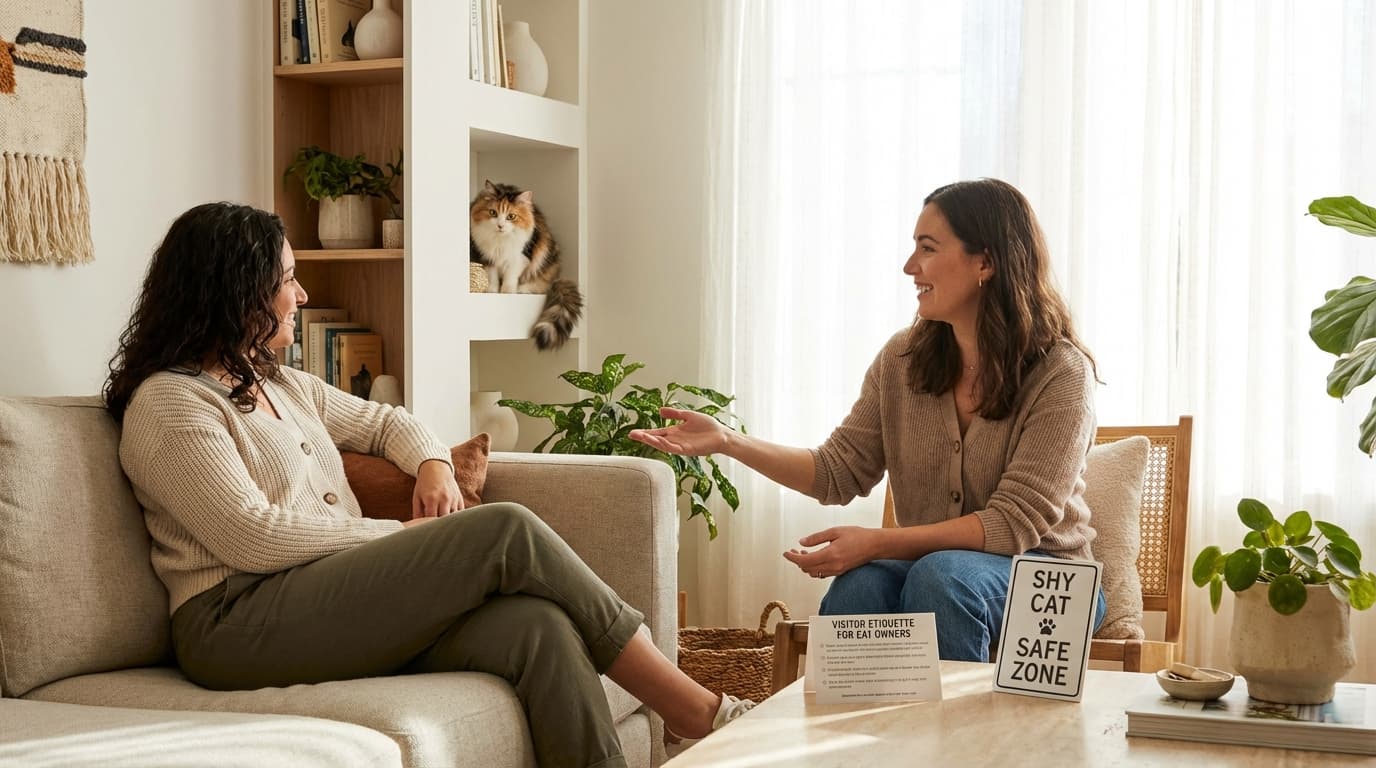
Think about the last time you walked into a house and a dog jumped all over you. Most people just roll with it, but cats are different. When friends come over, you have to be your cat’s bodyguard before they even ring the doorbell. It sounds a bit intense, but setting ground rules for your humans is the only way to build your cat's trust. The biggest rule? Tell everyone to completely ignore the cat. It sounds backwards, but when a stranger doesn't make eye contact or reach out, a shy cat feels safe enough to peek out from the hallway. This matters because cats are naturally skeptical. In fact, research shows that kittens born to fearful fathers are often more anxious by nature, so they need that extra layer of protection from over-eager guests.
Kids are basically tiny, loud chaos agents to a cat. You have to explain cat body language in ways they actually get. Tell them that a twitching tail is like a stop sign, not a play sign. We like to use the one finger pet rule where they can only use one finger to touch the cat’s head. This keeps the interaction light and predictable. If the cat moves away, the game is over. It’s your job to step in and tell the kids when the cat needs a break before things get stressful. Showing them how to stay calm is better than just giving them a list of things they cannot do.
The golden rule of cat parenting is simple: never, ever hold a cat so someone can pet it. Trapping them for a meet and greet is the fastest way to ruin their progress. A cat that feels trapped will eventually feel like they have to use their claws to escape. Instead, let them end the social session whenever they want. When a cat knows they have a clear path to their safe room, they are much more likely to stay in the room for a few extra minutes. This safe area should be an out-of-the-way location where the sound of knocking or doorbells is muffled. Autonomy is the best tool for reducing fear and preventing aggressive defense.
It is also helpful to remember that the critical socialization period for kittens is very short, happening between two and seven weeks of age. If your cat missed out on positive human interaction during that window, they aren't being difficult; they are just wired to be cautious. You can help them by rewarding calm behavior when a guest is standing at a distance that doesn't feel threatening. Over time, that distance gets smaller, but the cat should always be the one to decide when it is time to say hello.
Key insights:
- Being an advocate means setting rules for guests before they arrive.
- The 'ignore the cat' rule reduces pressure and lets the cat initiate contact.
- Children need simple rules like 'one finger' petting to ensure safety.
- Never trap or hold a cat for a visitor; autonomy is the key to trust.
- Safe rooms should be located away from loud entryways to muffle doorbell sounds.
Teaching Kids the 'Gentle Hands' Approach
Think of a child’s excitement like a tiny, loud hurricane - now imagine being a ten-pound cat. It is a lot to handle! Teaching kids the gentle hands approach is about more than just being soft; it is about learning to read a cat’s mood. Start with the one finger rule. Instead of a full-palm pat or a sudden grab, show your little ones how to use just one finger to stroke the top of the cat’s head. It is less overwhelming for the pet and keeps the interaction predictable for the child.
We also need to explain that cats speak with their whole bodies. If that tail starts thumping like a drum or those ears turn flat, the cat is saying they have had enough. Remind the kids that even though some cats are born naturally braver than others, every cat deserves a quiet spot away from the noise. Since a cat’s safe space should be somewhere muffled and calm, explain that when the kitty goes to their room, they are simply recharging and should not be disturbed.
Why does this matter so much? Well, research shows that a cat's personality is shaped early on, often between two and seven weeks of age, and can even be influenced by their father's temperament. If a cat is naturally shy, forced petting will only make them hide longer. By teaching kids to respect these boundaries, you are helping the cat feel safe enough to eventually come out on their own terms. It turns a stressful visit into a lesson in empathy.
Key insights:
- The one finger rule prevents overwhelming a shy cat during initial introductions.
- Teaching kids to spot ear pinning and tail thumping prevents accidental scratches.
- Respecting a cat's safe zone builds long-term trust between children and pets.
Why Your Cat Must Always Have an Exit Strategy
Think about the last time you felt trapped in a conversation you couldn't leave. It's stressful, right? For a shy cat, forced interaction is even worse. The golden rule of feline hospitality is simple: never hold or trap your cat for a 'meet and greet.' When you take away their choice, you leave them with no option but to use claws or teeth to defend themselves. Giving them an out isn't just polite; it's a safety measure.
Autonomy is the secret to a happy pet. Since the critical socialization period happens so early - between two and seven weeks of age - many adult cats are naturally cautious if they missed out on early visitors. Some even inherit a fearful streak from their fathers. You can't change their past or their DNA, but you can give them control over their current environment. If they want to sniff a guest's shoe and then bolt, let them go.
Providing a clear exit strategy actually builds long-term confidence. When your cat knows they can retreat to a quiet safe room where the doorbell sounds are muffled, they feel less like prey. It’s a bit of a paradox: the more freedom they have to hide, the more likely they are to eventually peek out and say hello on their own terms because they know they aren't stuck.
Key insights:
- Never force physical contact; autonomy reduces the need for aggressive defense.
- The socialization window is tiny (2-7 weeks), so many cats are naturally 'late bloomers' socially.
- A safe room away from the noise of the front door is a cat's best friend during guest visits.
Sniffles and Sneezes: Managing Guest Allergies
It is a classic hosting headache. Your best friend arrives, but within ten minutes, their eyes are watering and they are reaching for the medicine. When you have a shy cat, managing allergies is actually a double win. Why? Because the same cat-free zone that keeps your pet feeling secure also keeps the dander away from your guests. Setting up a dedicated safe room in an out-of-the-way spot, ideally where those scary doorbell sounds are muffled, gives your cat a retreat and your guest a literal breather.
Before the doorbell rings, try a few quick cleaning hacks to lower the sneeze factor. Running a HEPA filter in the main living area can make a massive difference by trapping tiny allergens before they land on the sofa. If you are short on time, focus on high-traffic fabric surfaces where cat hair loves to hide. Use a damp microfiber cloth or a lint roller on the chairs where guests will actually sit. It is much easier to focus on your cat’s socialization when your visitors are not struggling to breathe.
The interesting part is how genetics play a role here. Research from Best Friends Animal Society suggests that kittens born to fearful fathers are often more fearful themselves, so your cat's hiding is not a failure on your part. By keeping your guest’s allergies in check, you create a calmer environment for everyone. When the house is quiet and the air is clear, your cat might even feel brave enough to peek out from a distance. This is the perfect time to reward that calm behavior with a treat.
Key insights:
- A dedicated safe room serves two purposes: it protects your cat's peace and keeps dander away from guests.
- HEPA filters are the most effective way to clear the air before a visitor arrives.
- Genetics often dictate a cat's social comfort level, so do not take a hiding cat personally.
The Long Game: Helping Your Cat Gain Confidence
Ever wonder why your cat vanishes the moment the doorbell rings? It’s rarely just a quirk. For many felines, the fear of strangers is actually baked into their DNA or rooted in those first few weeks of life. Research shows the critical window for socialization happens incredibly early - between two and seven weeks of age. If they didn't meet many people then, or if they happen to have a naturally fearful father, they’re starting from a bit of a disadvantage. This isn't your fault, but it does mean you're playing the long game.
Helping a shy cat gain confidence isn't about forcing them to be social. In fact, that usually backfires. Instead, think of it as systematic desensitization. You want to create a positive association with 'scary' visitors by using high-value treats - the kind of snacks they never get otherwise. The trick is the 'non-threatening distance' method. Have a friend sit quietly across the room while you reward your cat for simply staying calm. If your cat feels safe enough to stay in the same zip code as a stranger, that's a massive win.
While you work on these social skills, your environment needs to support the mission. A safe room is a must, but placement matters more than you might think. Set up their sanctuary in a spot where the sounds of knocking or loud laughter are muffled. This gives them a true retreat where they can decompress without feeling like the 'intruder' is right outside the door. Remember, the goal is to give your cat the autonomy to end a session whenever they want. When they feel in control, they’re much more likely to eventually step out of the shadows.
Key insights:
- The socialization window is tiny, closing as early as seven weeks old.
- Fear can be hereditary, especially from the father's side.
- Control is everything - letting your cat choose when to leave a social interaction is the fastest way to build trust.
Frequently Asked Questions
It's usually because their internal alarm system takes a while to reset. Even when the house goes quiet, the lingering scents and the memory of loud noises like doorbells keep them on high alert. For a cat, the stress of a visitor doesn't just vanish the moment the door closes.
Here's the thing about feline anxiety. If your cat missed out on social experiences during that critical window between two and seven weeks old, they're naturally more skeptical of strangers. They need to feel 100 percent sure the coast is clear before they feel brave enough to peek out from their hiding spot.
You really should avoid doing that. It might feel like you're helping them face their fears, but forcing a cat out of their safe spot is usually counterproductive. They need to feel like they have the power to end a social session whenever they want.
When you drag them out, it creates a negative association with guests. Instead, let them stay under the bed and have your friends toss a few high-value treats toward them from a distance. This way, your cat learns that visitors mean good things happen, and they'll eventually choose to come out on their own terms.
The best way is to set expectations early, even before your guests arrive. You can keep it light by saying something like, our cat is pretty shy, so we let her call the shots on when she wants to say hello. It helps to explain that if they ignore her, she is actually much more likely to come out and investigate on her own.
Here is the thing, cats feel threatened when someone follows them into their hiding spots. By asking your friends to give her space, you are helping your cat feel safe in her own home. If they really want to interact, give them a few high value treats to toss her way from across the room so she starts to associate visitors with good things.
Yes, but it depends on the cat and how you handle the process. While a naturally nervous cat might never become a social butterfly, you can certainly help them feel less stressed. It usually involves a slow process of rewarding them for staying calm while people are nearby.
It is important to remember that much of this behavior is often set during their first few weeks of life or even comes from their parents. If they missed that early socialization window, they are essentially learning a new language. The key is never forcing the interaction. When they know they can retreat to a quiet safe room whenever they want, they will feel much more confident about sticking around for a few minutes.
Conclusion
At the end of the day, hosting friends shouldn't feel like a betrayal to your cat. When you balance visitor etiquette with your cat's natural need for a safe retreat, the whole energy of the house shifts. It is less about forcing a friendship and more about creating a space where your pet feels like they actually own the place again.
The big secret is that the less pressure you put on your cat to be social, the more likely they are to eventually get curious. By setting up those shy cat hiding spots and teaching guests the golden rule of ignoring the cat, you are building a foundation of trust. Your next move could be as simple as testing out a quiet room with some soft music and high-value treats before the next doorbell rings.
Helping a cat through feline social anxiety takes a bit of patience, but the payoff is a much calmer home for everyone involved. You do not need a social butterfly to have a great party. You just need a plan that respects the tiny, furry roommate who was there first.
Send it to someone who should read it next.

PurrScript Editorial Team
Editorial Team
PurrScript's in-house editorial team. We research, write, and review every guide using established veterinary and behavioral resources, and update articles as best practices evolve.
View all articles