How to Tell If Your Cat Has a Fever (Without a Vet Visit)
Cats conceal illness effectively, so behavioral signals — hiding, grooming cessation, fast breathing — are often the earliest indicators of fever or systemic illness. This guide explains what each signal means and exactly when it requires emergency care versus a scheduled vet call.

PurrScript Editorial Team
Editorial Team
How to Tell if Your Cat Has a Fever and Other Signs They are Sick
Knowing how to tell if your cat has a fever at home requires understanding both what to measure and why the common methods people reach for first are unreliable. Normal cat body temperature is 99.9°F to 102.5°F — higher than human normal, which is why cats consistently feel warm to the touch even when healthy. A fever in cats is technically defined as any rectal temperature above 102.5°F, with temperatures above 104°F considered high fever requiring prompt veterinary attention and above 106°F constituting a medical emergency.
Cats conceal illness as an evolved survival behavior, which means the behavioral changes that signal fever or illness are typically the first observable indicators — earlier than any physical sign. A cat that is hiding, has stopped grooming, is breathing faster than usual at rest, has changed its eye discharge, or has stopped eating is communicating something specific through each of these behavioral shifts. Understanding what each signal means and when it requires immediate action versus same-day vet contact versus monitoring is the practical skill this guide develops.
This guide covers five specific illness indicators that overlap significantly in practice: fever detection at home, lethargy and hiding behavior, fast breathing at rest, eye discharge color changes, and dietary management for cats with sensitive stomachs that are prone to digestive symptoms during illness. Each section explains the mechanism behind the symptom, the specific signs that distinguish severity levels, and when the presentation requires emergency care versus scheduled veterinary attention.
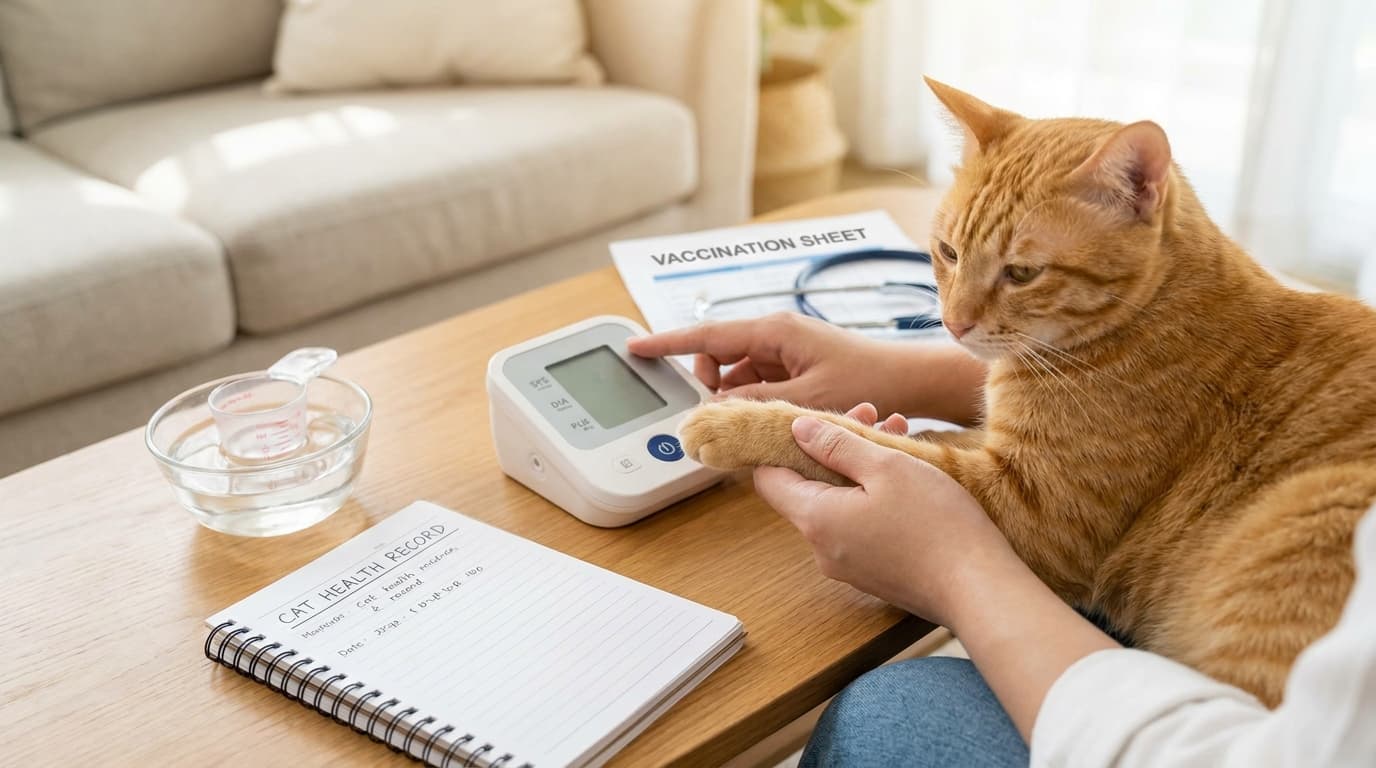
One consistent principle: touching a cat's nose, ears, or forehead provides no reliable information about body temperature. Surface temperature is influenced by ambient temperature, recent activity, proximity to heat sources, and many other factors unrelated to core body temperature. The only accurate home measurement of feline body temperature is rectal temperature with a digital thermometer.
How Can You Tell if Your Cat Has a Fever at Home?
The definitive home assessment for feline fever is rectal temperature measurement with a digital thermometer. Normal range is 99.9°F to 102.5°F. A reading of 102.6°F to 104°F indicates low-to-moderate fever. A reading above 104°F warrants same-day veterinary contact. A reading above 106°F is a medical emergency — temperatures at this level can cause neurological damage, organ failure, and death within hours without treatment.
Shivering in cats is one of the more specific behavioral signs of fever because it differs mechanistically from the circumstances that produce shivering in humans. Humans shiver when cold, as a thermoregulatory response to warming the body. Cats also shiver for this reason, but in addition, shivering is produced by the hypothalamic response to fever — the same mechanism that causes humans to feel chills despite having a high temperature. A cat shivering in a warm environment (above 70°F) where cold is not a plausible explanation is much more likely to be febrile than cold. When shivering accompanies skin that feels warmer than usual to the touch, the combination is a strong behavioral indicator of fever.
The behavioral cluster that most reliably indicates systemic illness including fever: withdrawal from usual resting locations to dark, enclosed spaces; cessation of voluntary grooming (producing a coat that looks dull, flat, or slightly unkempt within 24 to 48 hours); reduced or absent food and water interest; reduced responsiveness to stimuli that normally produce a response (treat bag, familiar voices, toys); and a hunched or protective body posture. No single behavioral sign confirms fever, but their presence in combination, particularly withdrawal combined with grooming cessation, should prompt temperature measurement and veterinary contact if temperature confirms fever.
Fever in cats is symptom rather than disease — it indicates that the immune system has activated a coordinated defense response against something, not what that something is. Causes range from bacterial and viral infections (the most common) to immune-mediated conditions, neoplasia, and toxin exposure. A cat that has been running a fever at home for more than 24 hours without an obvious cause that is resolving should be assessed by a vet, because fever of unknown origin requires diagnostic investigation rather than wait-and-see management.
The emergency signs that require immediate transport regardless of measured temperature: open-mouth breathing at rest, gum color that is blue, gray, white, or brick red rather than bubblegum pink, inability to stand or walk, seizure, suspected toxin ingestion, or rectal temperature above 106°F. These signs indicate that the condition has progressed beyond what home monitoring can safely manage.
**Key insights:
- Use a digital rectal thermometer for the only accurate home temperature measurement — touching nose, ears, or forehead provides no reliable fever information.
- Consider any temperature above 102.5°F a fever, above 104°F a same-day vet call, and above 106°F an immediate emergency.
- Treat shivering in a warm environment as a specific fever indicator — cats do not shiver from cold as readily as humans do.
- Watch for the behavioral cluster: withdrawal + grooming cessation + food/water refusal + reduced responsiveness — these together suggest systemic illness more reliably than any single sign.
- Do not wait longer than 24 hours to call your vet for a febrile cat that is not showing signs of rapid improvement.
Why Shivering Is a Specific Fever Indicator in Cats
The physiological mechanism behind fever-associated shivering is the same in cats as in humans: the hypothalamus, which regulates body temperature, receives signals from immune-activated cytokines and raises its temperature set point in response. The body then attempts to reach this new higher set point by generating heat, and shivering — rapid involuntary muscle contraction — is one of the mechanisms for rapid heat generation. The cat feels cold (chills) despite having elevated core temperature because the body temperature is still below the raised set point.
This is why fever-associated shivering and cold-associated shivering look identical from the outside but have completely different causes. The distinguishing context is ambient temperature: a cat shivering in a warm room where cold is not a plausible cause is experiencing the thermoregulatory response to fever. A cat shivering in a genuinely cold environment may simply be cold. When the skin feels warmer than usual to the touch and the shivering persists in a comfortable environment, fever is the most parsimonious explanation until temperature measurement confirms or rules it out.
**Key insights:
- Assess the ambient temperature before interpreting shivering — shivering in a warm room is a specific fever indicator, shivering in a cold environment may simply be thermoregulation.
- Combine the shivering observation with skin temperature assessment — fever-associated shivering in a cat that feels warmer than usual is a strong combination signal.
- Take rectal temperature when shivering is observed in a warm environment — this is the confirmation step rather than an additional inference.
Why Is Your Cat Lethargic and Hiding Under the Bed?
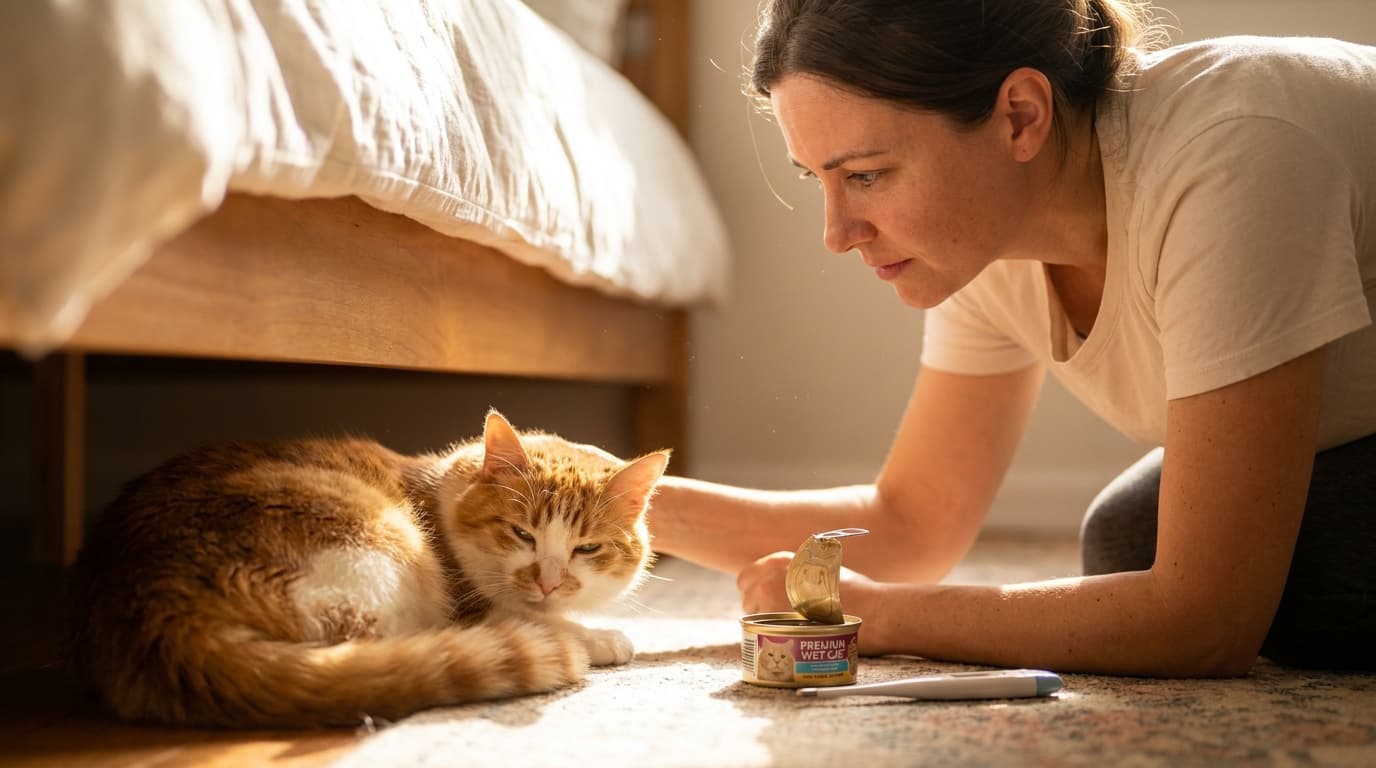
Hiding in a sick cat is an evolved defensive behavior rather than a social withdrawal or a mood. In the wild, a visibly compromised animal is a target — predators selectively target the weak, and competing animals exploit illness as an opportunity. The behavioral imperative to conceal vulnerability is deeply conserved in domestic cats despite the absence of predators in most indoor environments. When a cat is febrile, in pain, or experiencing systemic illness, the withdrawal to a dark, enclosed, protected location is a functional behavior driven by the cat's threat-assessment system, not a choice or a mood.
True lethargy differs from extra sleep or reduced activity, and the distinction matters for urgency assessment. Normal variation in a cat's activity level is broad — cats sleep 12 to 16 hours daily, and a cat that naps more than usual on a given afternoon is not necessarily unwell. True lethargy is characterized by reduced responsiveness to stimuli that normally produce a response: the sound of a food bag, a familiar person's voice, a favorite toy, the presence of another household animal. A lethargic cat may physically open their eyes but not orient, may not lift their head, or may appear dull and slow to respond. This represents suppression of the normal arousal response, which occurs when the nervous system is significantly occupied with fighting systemic illness.
Grooming cessation is an early and reliable indicator of systemic illness because it requires both physical capability and a baseline of felt normalcy to perform. Cats that feel acutely unwell stop grooming almost immediately because the energy and attention it requires are diverted toward illness response. Within 24 to 48 hours of grooming cessation, the coat develops a characteristic appearance: it looks dull, the lie of the fur becomes flat or slightly oily, and individual hairs may stick together slightly. This coat change is observable before many other physical signs of illness and provides a visual confirmation of lethargy and withdrawal that has been present for at least a day.
The urgency thresholds for hiding and lethargy: a cat that is hiding but still eating and drinking, with no respiratory changes and normal gum color, warrants a same-day phone call to the vet. A cat that has been hiding for more than 24 hours and has not eaten warrants a same-day appointment. A cat that is hiding and shows any change in breathing, abnormal gum color, or inability to walk warrants emergency care immediately. The combination of hiding with any respiratory symptom or gum color abnormality is the escalation that changes the presentation from urgent to emergency.
**Key insights:
- Distinguish true lethargy (reduced responsiveness to normal stimuli) from extra sleep — the former indicates systemic illness, the latter may be normal variation.
- Check gum color and breathing before deciding on urgency — normal gum color and nasal breathing indicate a same-day vet contact; any abnormality escalates to emergency care.
- Note when the cat last ate and drank — 24 hours without eating in a hiding cat warrants a same-day veterinary appointment regardless of other symptoms.
- Look for grooming cessation alongside hiding — this combination indicates the illness has been present for at least 24 hours and is affecting the cat's basic self-maintenance.
- Never forcibly remove a sick hiding cat — the hiding spot is a coping resource, and forced removal adds stress to an animal whose system is already under significant load.
Is Your Cat Breathing Fast While Sleeping?
Normal resting respiratory rate in cats is 16 to 30 breaths per minute, measured while the cat is relaxed or asleep. A consistent resting rate above 30 breaths per minute is clinically abnormal and warrants same-day veterinary contact. A rate above 40 at rest is an emergency. Counting resting respiratory rate is one of the most useful home monitoring parameters available for cats with known or suspected cardiac or respiratory disease, and learning to count it before an emergency makes accurate assessment possible when it matters.
The method: watch the cat while it is asleep or deeply resting. Count the number of times the chest rises over 30 seconds and multiply by two, or count for 60 seconds. Do not count individual chest movements if the cat is purring — purring involves chest muscle activation that can confuse the count. The count is most accurate when the cat is in a non-purring sleep state. Establish a baseline by counting several times over a week when the cat is clearly well, so deviations from that individual baseline are apparent.
Cats are obligate nasal breathers — they breathe exclusively through the nose except during extreme post-exertional panting, which is uncommon and brief. Open-mouth breathing at rest is therefore never normal in a cat and always indicates that nasal airway is insufficient to meet oxygen demand. The conditions that produce this include hypertrophic cardiomyopathy with pulmonary edema or pleural effusion, feline asthma with bronchospasm, pyothorax or chylothorax (infection or fluid in the pleural space), and severe respiratory infection with lower airway involvement. All of these are emergencies when open-mouth breathing is present at rest.
Fast resting breathing that does not include open-mouth breathing is urgent but allows slightly more assessment time. Check gum color immediately: bubblegum pink with normal capillary refill (one to two seconds when pressed and released) indicates adequate oxygenation despite elevated rate. Blue, gray, lavender, or pale white gums indicate compromised oxygenation and require immediate emergency transport. A fast-breathing cat with pink gums should be seen by a vet same-day. A fast-breathing cat with abnormal gum color should be transported to emergency care immediately.
The connection between fever and fast breathing: elevated body temperature increases metabolic rate, which increases oxygen demand, which drives compensatory increases in respiratory rate. A febrile cat may breathe somewhat faster at rest purely as a consequence of fever. This is different from primary respiratory disease and usually resolves as fever is treated. If fast breathing persists after fever resolution, or if the rate is significantly elevated (above 40 at rest), primary cardiac or pulmonary disease should be investigated.
**Key insights:
- Count resting respiratory rate by watching chest rises for 30 seconds and doubling — establish a personal baseline for your cat when well.
- Contact your vet same-day for any consistent resting rate above 30 breaths per minute.
- Transport immediately to emergency care for open-mouth breathing at rest, any gum color other than pink, or resting rate above 40.
- Check gum color alongside respiratory rate — the combination determines whether the situation is urgent or emergency.
- Note that elevated resting rate can be a secondary effect of fever — but primary respiratory disease should be considered if the rate does not normalize as fever resolves.
Decoding Cat Eye Discharge: Yellow or Green Gunk
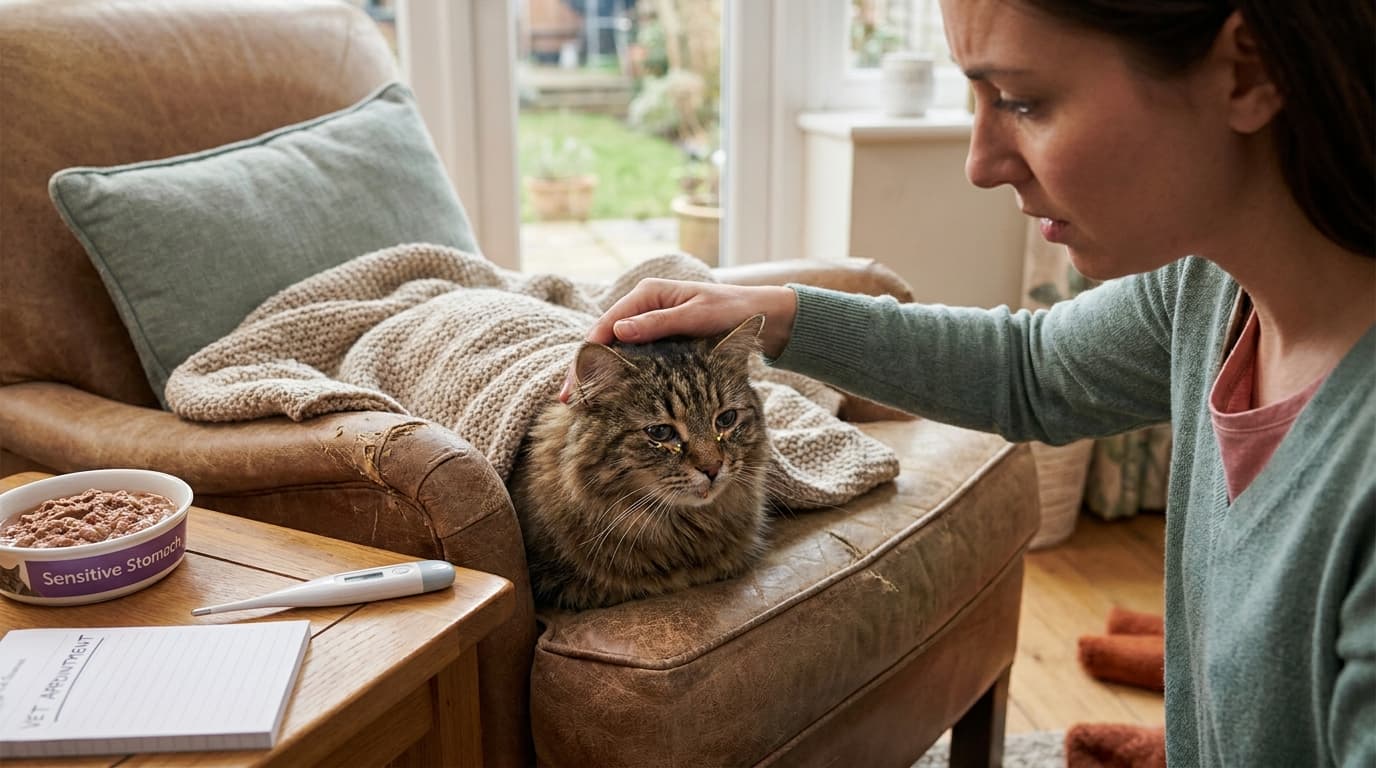
The color and consistency of eye discharge provides specific diagnostic information about the type of process producing it. Clear, watery discharge from one or both eyes is typically allergic or irritant in origin — exposure to dust, smoke, pollen, or mild conjunctival irritation. It does not indicate infection and often resolves without treatment if the irritant is removed. Bilateral clear discharge that is chronic or recurrent in young cats may indicate feline herpesvirus (FHV-1), which causes persistent low-grade conjunctivitis that flares with stress.
Yellow or green discharge indicates purulent material — white blood cells, bacteria, and inflammatory debris from active immune response in the conjunctival tissue. Yellow or green discharge is almost always associated with either bacterial infection or viral infection with secondary bacterial involvement. Feline herpesvirus and calicivirus both cause upper respiratory infections with conjunctivitis, and the eye discharge in these infections typically progresses from clear to mucopurulent (cloudy, yellowish) as secondary bacterial involvement develops. Chlamydophila felis causes conjunctivitis that classically produces a heavy, persistent yellow-green discharge often affecting one eye initially before becoming bilateral.
Corneal ulceration is a specific condition that produces eye discharge, squinting, and photophobia that owners sometimes mistake for a simple eye infection. A corneal ulcer is a defect in the surface of the cornea — often caused by trauma, FHV-1 reactivation, or chemical exposure — that is painful and progresses rapidly without treatment. The distinguishing features from simple conjunctivitis: intense squinting or holding the eye completely closed, visible opacity or cloudiness on the corneal surface, and behavioral indicators of pain (pawing at the eye, keeping the head tilted away from light). Corneal ulcers require same-day veterinary treatment — not antibiotic eye drops purchased over the counter, and not waiting to see if it improves.
The home management appropriate for eye discharge while arranging a veterinary appointment: gently wipe the discharge away with a clean, warm, damp cloth — this reduces the irritation of discharge sitting on the eyelid skin and allows better observation of the discharge character. Do not use human eye drops, contact lens solution, or any product not specifically labeled for ophthalmic use in cats. Many human eye preparations contain preservatives or active compounds that are toxic to cat ocular tissue. The vet visit establishes whether the discharge is bacterial, viral, or corneal in origin, which determines whether treatment is a topical antibiotic, antiviral, or a corneal ulcer protocol.
**Key insights:
- Distinguish clear (allergic/irritant) from yellow or green (infectious/purulent) discharge — the color indicates whether infection is present and how urgently assessment is needed.
- See a vet for any yellow or green discharge lasting more than 24 to 48 hours — over-the-counter human eye drops are not appropriate treatment.
- Treat intense squinting, held-closed eye, or visible corneal cloudiness as same-day urgent — these may indicate corneal ulceration, which progresses rapidly without treatment.
- Clean discharge with a warm damp cloth only — never use human eye drops, contact lens solution, or any product not specifically labeled for feline ophthalmic use.
- Note whether discharge is unilateral or bilateral and report this to the vet — unilateral onset is more characteristic of certain infections, bilateral onset of others.
Choosing the Best Wet Food for Sensitive Stomach Cats
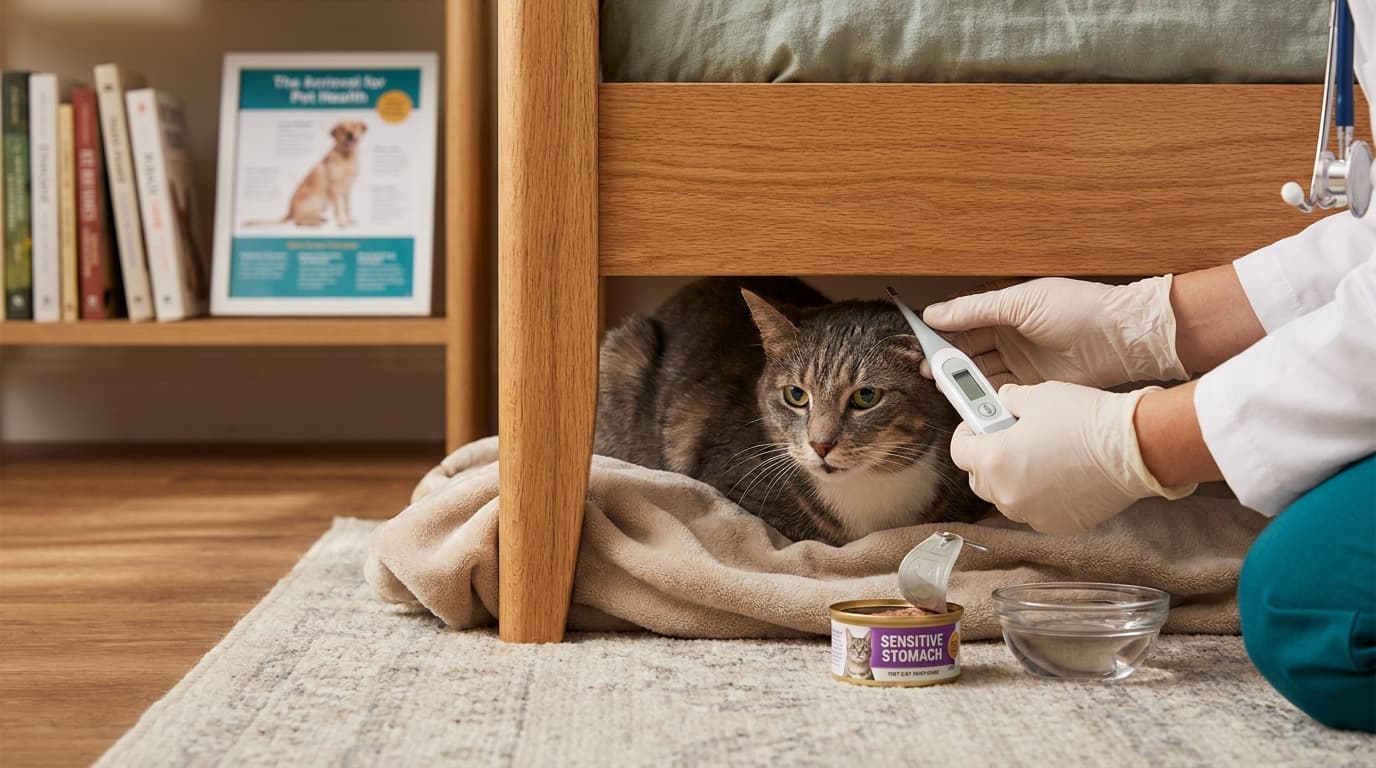
Sensitive stomach in cats is a functional descriptor covering several distinct presentations — intermittent vomiting, loose stools, excessive gas, or food avoidance — that may have different underlying causes. Before attributing these symptoms to food sensitivity, a vet visit should exclude inflammatory bowel disease, parasites, and pancreatitis, all of which produce similar symptoms and require specific treatment rather than dietary management. Food modification is the correct primary intervention for true dietary sensitivity; it is the wrong first step for a medical condition that happens to produce digestive symptoms.
For confirmed dietary sensitivity, limited-ingredient wet food formulations reduce the variables that can trigger an immune response in the gut. The fewer the ingredients, the lower the probability of encountering a problematic component, and the easier identification becomes if symptoms persist. Novel protein sources — proteins the cat has not previously been exposed to, such as rabbit, venison, duck, or kangaroo — are less likely to trigger an existing immune sensitization than common proteins like chicken or beef that most cats have encountered repeatedly. This is the basis of the novel-protein elimination diet approach used in veterinary practice to identify food allergens.
Specific ingredients to avoid in sensitive-stomach formulations: carrageenan is a seaweed-derived thickener used in many wet cat foods with an inflammatory potential documented in multiple animal models, though human and feline clinical data is less definitive. High grain or legume content as primary carbohydrate sources adds fermentable substrate that can increase gas production and stool looseness. Artificial colors, flavors, and preservatives have no nutritional function and add unnecessary processing variables to an already sensitized system. These are the ingredient categories most commonly associated with digestive symptom exacerbation, though individual sensitivity varies.
The digestive symptoms of food sensitivity and the digestive symptoms of systemic illness overlap significantly. A cat that is vomiting, has loose stools, and has reduced appetite may be reacting to a dietary ingredient — or may have a fever, a parasitic infection, or early kidney disease. The behavioral indicators that suggest systemic illness rather than primary digestive sensitivity: withdrawal and hiding alongside digestive symptoms, grooming changes, fast resting breathing, or eye changes. When digestive symptoms appear alongside any of these behavioral indicators, the assessment starts with systemic illness evaluation rather than dietary modification.
**Key insights:
- See a vet before attributing chronic digestive symptoms to food sensitivity — IBD, parasites, and pancreatitis all present similarly and require different treatment.
- Choose limited-ingredient formulations with novel single-protein sources for confirmed dietary sensitivity — novel proteins reduce the probability of triggering an existing immune sensitization.
- Avoid carrageenan, high grain content, and artificial additives in formulations for sensitive cats — these are the ingredient categories most consistently associated with symptom exacerbation.
- Transition between any two foods over seven to ten days regardless of food quality — abrupt changes produce gut microbiome disruption that causes diarrhea independent of ingredient sensitivity.
- Evaluate whether digestive symptoms are occurring alongside behavioral indicators of systemic illness — if they are, prioritize veterinary assessment over dietary modification.
A Practical Framework for Monitoring Your Cat's Health
The most practically useful health monitoring approach is establishing a behavioral baseline for your individual cat during a clearly well period and tracking deviations from that baseline. Cats vary considerably in their normal behavior — some are reliably social, some routinely solitary; some groom frequently, some less so; some eat every meal immediately, some graze. What matters diagnostically is change from established pattern, not whether a given behavior matches a population average.
The five behavioral categories that provide the earliest observable indicators of illness in cats: appetite and food interest (the most sensitive early indicator for many conditions), grooming behavior and coat appearance (provides a 24 to 48 hour early warning when it declines), litter box use and output (changes in frequency, volume, consistency, or color are often the first clinical sign of urinary and gastrointestinal disease), activity and mobility patterns (willingness to access previously used elevations, play interest, social engagement), and respiratory pattern (resting rate and the presence or absence of open-mouth breathing). Daily observation of these five categories takes under two minutes and provides comprehensive early warning coverage.
The emergency signs that require immediate transport to a 24-hour emergency clinic without calling ahead for an appointment: open-mouth breathing at rest, blue or gray gum color, complete inability to walk or stand, seizure, suspected toxin ingestion, and urinary straining in male cats. These presentations are time-critical in a way that other urgent presentations are not — the interval between observation and treatment affects outcome measurably.
**Key insights:
- Establish and informally track your cat's individual baseline in the five key behavioral categories — deviations from personal baseline are more informative than comparison to population norms.
- Learn gum color assessment now, before an emergency — practice pressing and releasing the gum to observe capillary refill when the cat is clearly well, so you have a reference for abnormal.
- Know the emergency presentations by memory: open-mouth breathing, blue gums, inability to walk, seizure, toxin ingestion, male urinary straining — these require transport without waiting.
- Schedule senior wellness examinations every six months for cats over 12 — many of the conditions this guide covers are detectable at earlier stages through examination and bloodwork than through behavioral observation.
Frequently Asked Questions
No, and this is the most consistently repeated misconception in feline health assessment. A cat's nose surface temperature is influenced by ambient temperature, recent activity, proximity to heat sources, nasal discharge, and many other factors that have nothing to do with core body temperature. A cat sleeping next to a sunny window may have a warm, dry nose purely from the heat. A cat with a significant fever may have a cool, damp nose depending on their environment. Surface temperature assessment provides no reliable information about whether a fever is present.
The only accurate home fever assessment is rectal temperature measurement with a digital thermometer. Normal is 99.9°F to 102.5°F. Above 102.5°F is fever. Above 104°F warrants same-day contact with your vet. Above 106°F is a medical emergency. If you are uncomfortable taking a rectal temperature at home, use behavioral indicators — shivering in a warm environment, withdrawal and hiding, grooming cessation, food and water refusal — as surrogate indicators that a temperature measurement and vet contact are warranted.
Hiding when unwell is an evolutionarily conserved behavior rather than a social preference. In the wild, a compromised animal is more vulnerable to predation and to competitive displacement by healthy rivals. The survival-optimal behavior for an unwell animal is to minimize visibility while the immune system works, which means finding an enclosed, dark location that minimizes exposure from multiple directions. Domestic cats retain this instinct fully regardless of whether any actual threat exists in their indoor environment.
The clinical significance of hiding is proportional to its deviation from the individual cat's established behavior. A cat that occasionally seeks solitary spots is not alarming. A cat that is hiding continuously, has not eaten or drunk in 24 hours, and is unresponsive to stimuli that normally engage it is providing a strong combined behavioral signal of systemic illness. The assessment priorities when this pattern is present: check gum color and breathing first, as these determine whether the situation is emergency or urgent. Then take temperature if possible. Then contact your vet with specific information about when the hiding started, when the cat last ate, and what the temperature reading is.
Clear, watery eye discharge most commonly indicates allergic or irritant conjunctivitis — exposure to something in the environment (dust, smoke, cleaning products, pollen) that is irritating the conjunctival tissue without producing infection. It typically resolves when the irritant is removed and does not require treatment in most cases. Monitoring is appropriate: if the clear discharge persists beyond a few days without an obvious trigger, or if it progresses to cloudier or more viscous discharge, a vet visit is warranted.
The exception is chronic bilateral clear discharge in cats with known or suspected feline herpesvirus history — FHV-1 establishes latent infection that reactivates with stress and produces recurrent conjunctivitis. This is manageable with veterinary-prescribed l-lysine supplementation and, during active flares, antiviral ophthalmic medication. Clear discharge in a cat that has a history of upper respiratory infections or that is showing any behavioral signs of illness alongside the eye symptoms warrants assessment to distinguish simple environmental irritation from FHV-1 reactivation.
Temperature is the most reliable appetite stimulant for cats with sensitive stomachs that are reluctant to eat wet food. Cats evolved to hunt warm prey, and their appetite response is strongly cued by the aromatic volatility that increases with temperature. Refrigerated wet food at 4°C has a fraction of the olfactory appeal of food warmed to near body temperature (approximately 38°C). Microwaving for 10 to 15 seconds and stirring thoroughly produces measurable improvement in appetite engagement without changing the nutritional content of the food.
For cats transitioning from dry to wet food or from one wet food to another, the seven-to-ten-day gradual transition protocol is the most important single intervention. Abrupt changes produce gut microbiome disruption and diarrhea in most cats regardless of the quality of the new food — this is frequently misattributed to the new food being poorly tolerated when it is actually a transition problem that would occur with any abrupt change. Gradual mixing with progressively increasing proportions of the new food allows microbiome adaptation. If a sensitive-stomach cat continues to vomit or have loose stools after a proper gradual transition, the issue is likely the specific ingredients rather than the transition itself, and a vet consultation to discuss a novel-protein or hydrolyzed protein diet is the appropriate next step.
Conclusion
The practical skill this guide develops is pattern recognition — the ability to look at a combination of behavioral signals and correctly assess their urgency rather than responding to each symptom in isolation. A hiding cat is concerning. A hiding cat with fast breathing and abnormal gum color is an emergency. A cat with yellow eye discharge needs a vet appointment. A cat with yellow eye discharge combined with intense squinting needs a same-day appointment because corneal ulceration does not wait. A cat with a sensitive stomach may need dietary management — or may have IBD, which needs a different management entirely. The combination of symptoms and their context is what produces the correct response.
The two most common errors this guide is designed to prevent are waiting too long when symptoms warrant urgency, and assuming behavioral symptoms in a sick cat are temporary phases rather than communication. Cats that are hiding, not grooming, and not eating have been experiencing those symptoms for at least 24 hours by the time the coat shows it. Cats breathing with their mouths open at rest cannot wait. The specificity of these signals means that recognizing them accurately and responding appropriately is the difference between a treatable condition caught early and a serious one managed late.
Two preparatory steps that cost nothing and take under five minutes each: practice the gum color and capillary refill assessment on your cat today while they are healthy, so you have a reference baseline when you need to assess it under stress. And save the number of your nearest 24-hour emergency veterinary clinic in your phone independently of your regular vet's number. These two things together are the most practical emergency preparation available to any cat owner.
Send it to someone who should read it next.

PurrScript Editorial Team
Editorial Team
PurrScript's in-house editorial team. We research, write, and review every guide using established veterinary and behavioral resources, and update articles as best practices evolve.
View all articles