How to Travel with Your Cat Without the Stress (and the Screaming)
We have all been there. You are just two minutes into a road trip when your cat starts that low, haunting howl that sounds more like a siren than a...

PurrScript Editorial Team
Editorial Team
How to Travel with Your Cat Without the Stress (and the Screaming)
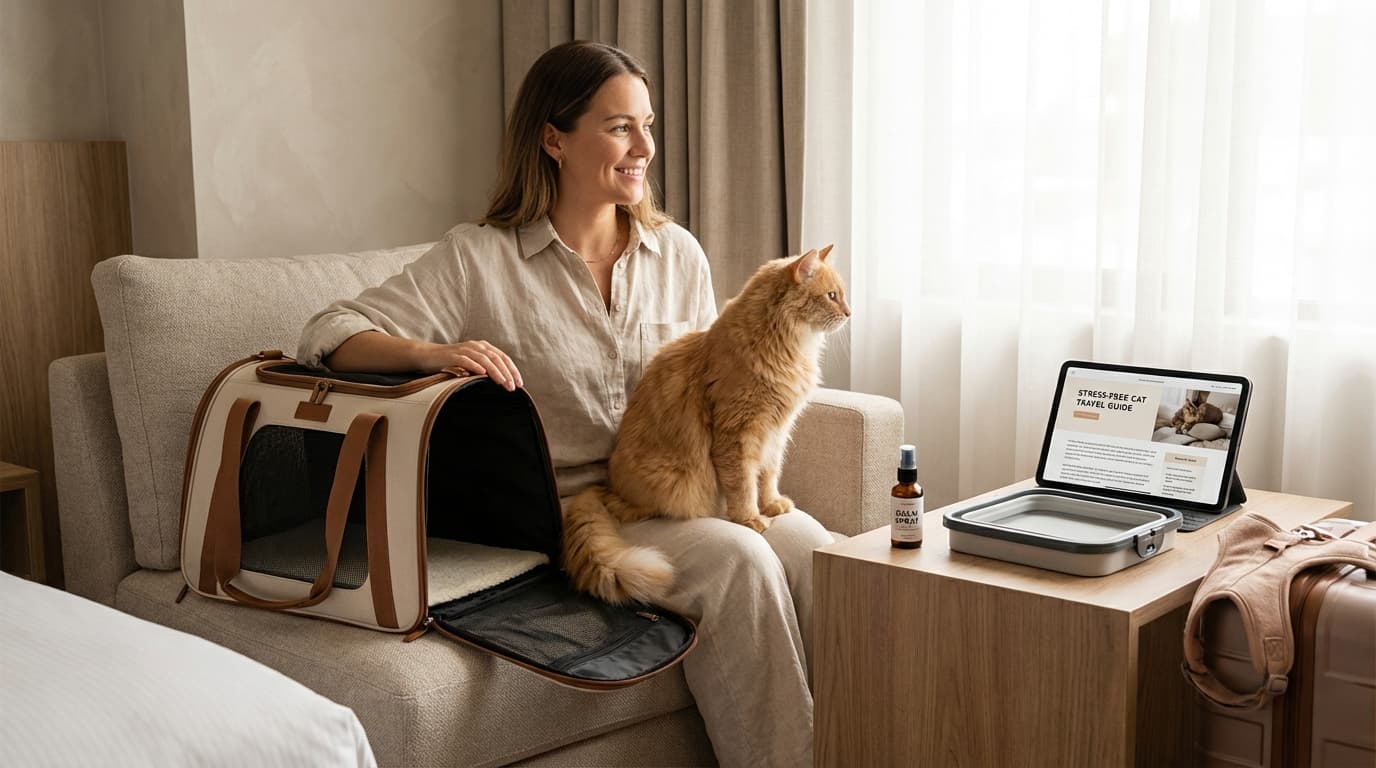
We have all been there. You are just two minutes into a road trip when your cat starts that low, haunting howl that sounds more like a siren than a pet. It is heartbreaking and a bit exhausting for everyone in the car. Most felines see a trip as a scary mystery because they simply do not understand how cars or planes work. The secret to a quiet ride starts with cat travel carrier comfort, turning that scary plastic box into a cozy sanctuary they actually want to sleep in.
Whether you are planning hotel stays with cats or looking for flying with a cat tips, you can turn a high-stress event into a manageable adventure. Using a calming spray for car rides or finding a reliable cat travel litter box makes a huge difference for a nervous traveler. You do not have to leave your furry friend behind just because the journey feels a little bit daunting right now.
We will look at how to manage motion sickness, pick the best cat harnesses for travel, and use pheromones to keep the peace. By the time we are done, you will have a solid plan to keep your kitty happy and relaxed on the road or in the sky. It is time to stop the screaming and start enjoying the trip together.
Turning the 'Scary Box' into a Cozy Bedroom
For most cats, the carrier is a scary box that only appears right before a stressful vet visit. But what if it felt like a cozy bedroom instead? Cat behaviorist Ingrid Johnson says the very first step is making the carrier an awesome place to be. This means it shouldn't live in a dusty garage or a dark closet. Instead, make it a permanent piece of your home furniture so your cat sees it as a normal, safe object rather than a signal for trouble.
By keeping the carrier in your living room, you help your cat get used to it through constant exposure. Toss in their favorite toys and a familiar blanket to create a scent-safe zone. If you use a calming spray for car rides, like Feliway, remember to spray the carrier corners 15 minutes before your cat goes inside. This gives the alcohol base time to evaporate so the soothing pheromones can actually do their job without irritating your cat's nose.
Once you are actually moving, a simple cat curtain can work wonders for instant calm. Since cats do not understand how cars work, seeing the world whiz by at high speeds is often terrifying. Draping a thick towel or sheet over the carrier acts as a privacy shield. Reducing that visual stimulus keeps most cats much quieter because they feel hidden and safe from the chaotic outside world. It is a small trick that makes a massive difference in their stress levels.
Key insights:
- Leave the carrier out year-round to turn it into a benign piece of furniture.
- Always wait 15 minutes after using pheromone sprays before putting your cat in the carrier.
- Use a towel as a visual shield to reduce the stress of moving environments.
Why Your Carrier Should Live in Your Living Room
Think about the last time you pulled the cat carrier from the closet. Your cat probably vanished before the door even clicked. To them, that box is a 'scary taxi' that only appears for vet visits.
Fix this by making the carrier a permanent piece of furniture. When it stays out all year, it becomes boring and safe. Toss in a familiar blanket to create a scent-safe zone. This simple shift turns a stressful cage into a cozy nap spot.
Key insights:
- Keeping the carrier visible 24/7 removes the association with scary vet trips.
- Familiar bedding creates a scent-safe zone that helps cats feel secure during travel.
The 'Cat Curtain' Trick for Instant Calm
Ever wonder why your cat starts wailing the second the car moves? It is usually because the world outside is moving too fast for them to process. Think of it this way. If you can’t see the 'scary' stuff, it isn't there.
Draping a light towel or sheet over the carrier, called a 'cat curtain,' instantly turns a stressful box into a private, dark den. This simple trick cuts out the visual chaos that triggers panic. It is a relief for anxious travelers.
Key insights:
- Visual stimulus reduction is a key method for keeping cats calm during transit.
- A simple towel or sheet acts as a privacy shield to prevent sensory overload.
The Science of Chill: Sprays, Treats, and Pheromones
Think of synthetic pheromones as a scented hug for your cat. Products like Feliway mimic the facial pheromones cats use to mark their territory as safe, essentially tricking their brains into feeling secure even in a moving car. It helps transform the carrier from a scary box into something familiar. While these over-the-counter tools work wonders for mild stress, they are not a cure-all. If your cat is a vocal protester, you might need to bridge the gap between these sprays and prescription help from your vet.
If you use a spray, do not rush the process. Most pheromone sprays have an alcohol base that needs to evaporate, so give it a full 15 minutes before putting your cat inside. Spritz the corners and bedding where they will be resting for the best results. For an extra boost, consider calming treats containing L-theanine. This natural green tea extract helps take the edge off their anxiety without making them groggy or sedated.
One final tip: keep the treats light. It is usually best to stop all heavy meals about six hours before travel to prevent motion sickness. You want them relaxed, but a full stomach in a vibrating car is often a recipe for disaster. By combining the right scents with a light snack and the right timing, you can make the journey much quieter for everyone involved.
Key insights:
- Wait 15 minutes after spraying pheromones to let the alcohol scent dissipate before the cat enters.
- L-theanine treats provide natural relaxation without the heavy side effects of sedation.
- Fast your cat for six hours before travel to minimize the risk of vomiting and motion sickness.
Timing Your Calming Spray Just Right
Before you usher your cat into their carrier, timing is everything. If you’re using a calming spray like Feliway, you have to wait at least 15 minutes after spraying. Why? These sprays have an alcohol base that needs to evaporate completely. If you skip this step, the scent is way too intense for your cat’s sensitive nose.
Just hit the interior corners of the carrier and give it that quarter-hour buffer. This simple pause allows the synthetic facial pheromones to settle, turning a scary plastic box into a space that feels safe and familiar. Think of it as letting the paint dry before you hang the art - your cat will definitely appreciate the fresh air.
Key insights:
- The 15-minute wait prevents the sharp alcohol smell from overwhelming your cat.
- Focus your spray on the carrier's corners where cats naturally rub their faces.
What’s Actually in Those Calming Treats?
Ever wondered why those little chews actually work? Most calming treats like Composure use L-theanine. This is an active ingredient found in green tea that helps cats relax without making them groggy. It is great for mild nerves or a quick car trip.
But here is the thing. If your cat is really panicking, you might need veterinary-grade options instead. These treats are helpful tools, but they are not magic. Also, remember to skip the snacks six hours before you leave to avoid motion sickness.
Key insights:
- L-theanine provides natural relaxation without heavy sedation.
- Stop feeding your cat six hours before travel to prevent car sickness.
Road Trip Pro Tips: Cars, Curves, and Queasiness
Ever wonder why your cat acts like the world is ending when the engine starts? They do not understand how cars work, so the shaking and blurring feel like a total crisis. To help, try tucking the carrier into the footwell behind the front seat. This spot usually has the least vibration and movement, making the ride much easier on their equilibrium and their stomach.
Beating Motion Sickness Before It Starts. To avoid mid-ride accidents, follow the six-hour fasting rule. Stop all food well before you leave so their stomach stays settled during those curves. If your cat is prone to getting sick, ask your vet about prescription nausea medication. Giving it to them about an hour before departure can make a huge difference for everyone’s comfort.
Practice Makes Perfect: The Drive-Thru Test. Do not make the big trip their first time in the car. Try short practice runs to a bank drive-thru or just around the block. This builds tolerance and shows them that car rides can be boring or even rewarding. Use high-value treats to praise quiet behavior so they learn that staying chill actually pays off.
Key insights:
- The footwell behind the front seat is the secret to a smoother, low-vibration ride.
- Fasting for six hours is the best way to prevent nausea and mid-trip messes.
- Short 'practice trips' help cats realize the car is not just a machine that takes them to the vet.
Beating Motion Sickness Before It Starts
Ever had to clean a messy carrier on the side of a highway? It is not fun. To avoid accidents, follow the six-hour fasting rule. Skipping that last meal keeps their stomach settled and stops motion sickness before it starts.
If your cat still struggles, ask your vet about prescription nausea meds. Giving these an hour before you leave is a total game-changer. For a smoother ride, tuck the carrier into the footwell behind the front seat since it is the sturdiest spot with the least vibration.
Key insights:
- The car footwell provides the most stable, low-vibration environment for a nervous traveler.
- Prescription medications usually need a full hour to take effect before the car starts moving.
Practice Makes Perfect: The Drive-Thru Test
Now that the carrier isn't a scary box, it is time for a test drive. Try taking your cat on short, positive practice trips around the block or through a drive-thru. It proves the car isn't always a trip to the vet.
Reward quiet behavior with high-value treats. You might try Composure, which uses L-theanine to keep things chill. Also, apply Feliway spray 15 minutes before leaving so the alcohol base can evaporate. These small wins build the tolerance they will need for longer hauls.
Key insights:
- Short trips break the negative association between the car and the vet.
- Waiting for pheromone sprays to dry ensures the scent is comforting, not irritating.
Flying and Hotels: The Logistics of a Cat on the Go
Ever tried walking through a busy airport or a crowded lobby with a cat? It is a lot. Public spaces are loud and unpredictable, which is basically a cat’s version of a nightmare. Since cats do not understand how planes or cars work, they rely on you to make sense of the chaos. The goal is to turn a temporary hotel room into a home base where they feel safe enough to actually come out of the carrier and relax. If you are driving, try placing the carrier in the footwell behind the front seat because this spot has the least vibration and keeps the ride steady.
Here is a pro tip: stop feeding your cat about six hours before you leave. This simple move prevents motion sickness during the bumpy parts of the trip. Also, if you use a calming spray, apply it to the carrier fifteen minutes before your cat goes inside. This gives the alcohol base time to vanish so they only smell the soothing pheromones. You want the carrier to be a cozy sanctuary, not a chemical cloud. You can even try calming treats that contain L-theanine to help take the edge off their anxiety before you even walk out the door.
Now, about the bathroom situation. You can choose between collapsible fabric boxes or disposable pans. Collapsible ones pack down small and are great for frequent travelers, but disposable pans are handy because you can just throw them away before you check out. Whatever you pick, bring a little bit of their litter from home to mix in. That familiar scent acts like a signpost, telling your cat exactly where the bathroom is in a strange room. It is a small detail that prevents a lot of messy accidents.
Once you arrive at the hotel, do a five-minute safety sweep before you let the cat out. Check under the bed for hidden holes in the box spring and make sure all the windows are truly locked. You might also try using a pheromone diffuser to help them settle. These gadgets mimic the natural facial pheromones cats use to mark their territory. It helps a weird hotel room feel like their living room back home, which means you both might actually get some sleep instead of listening to worried meows all night.
Key insights:
- Stopping food intake six hours before travel is a simple way to prevent motion sickness.
- Applying pheromone sprays fifteen minutes early ensures the cat only smells the calming scent, not the alcohol base.
- A small amount of used litter from home acts as a scent-based guide for your cat in a new hotel room.
- The car footwell is the most stable spot for a carrier because it minimizes vibrations.
Picking the Right Portable Litter Box
When nature calls on the road, your cat needs a reliable spot. You usually have two choices. Collapsible fabric boxes fold flat to save space in your luggage. Disposable pans are also great because you just toss them when you are done.
But here is the real secret. To make a strange hotel room feel safe, try mixing in a little bit of litter from their box at home. While products like Feliway mimic facial pheromones to build comfort, having their own bathroom scent helps them relax and know exactly where to go.
Key insights:
- Bringing a small bag of familiar litter can prevent stress-related accidents in new environments.
- Collapsible boxes are better for long-term travel, while disposable pans save time on short trips.
Hotel Manners and Safety Checks
Once you check in, give the room a quick five-minute sweep. Look under the bed for loose wires or holes in the furniture where a nervous cat could hide. You want to block off any gaps where you can't reach them.
Next, plug in a pheromone diffuser. These mimic natural facial pheromones to make a strange room feel like home. It's basically an invisible 'safe space' scent that settles their nerves while you unpack. A calm cat is less likely to get into mischief.
Key insights:
- Pheromones provide a familiarity signal that helps prevent hiding behaviors in new environments.
Adventure Gear: Harnesses and Safety
Think of a harness as your cat's emergency brake. Even if they usually stay in their carrier, a well-fitted harness is a mandatory backup for those 'just in case' moments when you open the car door at a busy rest stop. Look for a vest-style harness that fits snugly. You want security without making them feel restricted or uncomfortable.
The carrier itself matters just as much. Experts like Ingrid Johnson suggest making the carrier an awesome place to be by leaving it out at home like a permanent piece of furniture. When you're shopping, go for a top-loading, hard-sided model. These give you much easier access if your cat is feeling shy or needs a quick check-in.
Once you're in the car, try placing the carrier in the footwell behind the front seat. This spot has the least vibration, which helps keep the ride smooth and quiet for your passenger.
Common Questions About Feline Travel
We have all been there. You start the engine, and suddenly your car sounds like a feline opera house. It is stressful for everyone involved, but there is a reason for the noise. As the Feliway Blog points out, cats simply do not understand how a car works. To them, the shifting gears and engine hum are just scary, unpredictable movements. The good news? Most of that crying comes from a place of confusion that we can actually manage with a little bit of prep work.
One of the biggest worries for owners is motion sickness. To keep your cat comfortable and your upholstery clean, skip the snacks. Cats should not eat for at least six hours before you head out. If your pet is a nervous traveler, try a calming spray. These products mimic natural facial pheromones to make a weird car feel familiar. Just make sure to spray the carrier fifteen minutes before your cat goes inside. This lets the alcohol base evaporate so they only get the soothing scents without the harsh sting.
Where you put the carrier matters more than you might think. While it is tempting to buckled them into the passenger seat, the floorwell behind the front seat is usually the stablest spot with the fewest vibrations. Think of it as the smooth-ride zone. You can also try L-theanine treats, which use active ingredients found in green tea to take the edge off. By turning the carrier into what behaviorist Ingrid Johnson calls an awesome place to be rather than a scary box, you are setting the stage for a much quieter trip.
What about those long hauls? If you are worried about your cat seeing too much, try the cat curtain trick. Draping a simple sheet over the carrier helps block out the blur of passing cars and bright lights. This visual reset, combined with a few practice trips around the block, helps your cat realize that the car is not a monster. It is just a weird, vibrating room that eventually leads back to safety.
Key insights:
- Stop feeding your cat six hours before travel to prevent nausea and accidents.
- Place the carrier in the footwell to minimize stress-inducing car vibrations.
- Give pheromone sprays fifteen minutes to settle before putting your cat in the carrier.
- Use a towel or sheet as a visual barrier to keep your cat calm during the drive.
Frequently Asked Questions
You'll find that most cats can handle being in a carrier for about 4 to 6 hours at a time, but it really depends on how much training you've done beforehand. Since cats don't understand how cars work, the vibrations and noise can be a lot for them to take in all at once.
To make the trip smoother, it's a good idea to stop feeding your cat at least 6 hours before you leave to prevent motion sickness. You can also help them stay calm by turning the carrier into a permanent piece of furniture in your home weeks before the trip. This stops it from being a scary box and makes it a familiar nap spot instead. If they seem stressed by the movement outside, just drape a towel over the carrier to create a little cat curtain that blocks out the chaos.
They actually do work quite well because they use synthetic pheromones that mimic the ones cats use to mark their territory as safe. It's a simple way to make a strange car feel a bit more like home.
But here is the thing: you have to use them correctly for them to be effective. You should spray the carrier about 15 minutes before you put your cat inside so the alcohol base has enough time to disappear. If your cat is still really anxious, you might also try treats with L-theanine or even talk to your vet about prescription options for nausea if they have a history of getting sick on the road.
Yes, covering the carrier is a smart move. Most cats feel much safer when they can't see the world zooming by outside the car window. Think of it like a cat curtain that helps block out all that scary visual noise.
Just make sure you use a light sheet or a thin towel so your cat still gets plenty of fresh air. You can also spray the blanket with feline pheromones about fifteen minutes before you head out. This makes their little travel cave feel familiar and much less like a scary box.
You should always check with your vet before giving your cat any medication. While some people look for quick fixes, there are actually better options like calming treats that contain L-theanine. These are made specifically for pets and help them relax without the guesswork of human meds.
If your cat has a history of getting really sick or panicky, your vet can prescribe something stronger for nausea or stress. Also, don't forget that simple things like putting the carrier in the footwell behind the front seat can help because that spot has the least amount of bumpy vibrations.
Conclusion
So, what is the real secret to a quiet trip? It is not just one magic spray. It is about blending all these pieces together. You want to make sure your cat travel carrier comfort is high by turning it into a permanent nap spot instead of a scary vet box. Using a calming spray for car rides signals safety, while planning for hotel stays with cats keeps things simple. When you see travel through your cat's eyes, the screaming usually stops.
You might not have a perfect trip the first time, and that is fine. Every practice drive or night testing a cat travel litter box builds confidence. By focusing on flying with a cat tips and the best cat harnesses for travel, you are building a safety net that lets both of you breathe easier. Preparation beats panic every single time.
Your next move is easy. Bring that carrier into the living room today so it becomes part of the furniture. With a little patience, you can turn a stressful haul into a genuine adventure for your furry roommate. Happy trails to you and your favorite traveler.
Send it to someone who should read it next.

PurrScript Editorial Team
Editorial Team
PurrScript's in-house editorial team. We research, write, and review every guide using established veterinary and behavioral resources, and update articles as best practices evolve.
View all articles