Is It Play or a Problem? Decoding Your Cat's Wildest Behaviors
Ever wonder why your sweet furball suddenly turns into a tiny tiger? It’s a common worry, and sadly, about 27 percent of cats in shelters were given up because of...

Mia Torres
Cat Lifestyle Writer

Is It Play or a Problem? Decoding Your Cat's Wildest Behaviors
Ever wonder why your sweet furball suddenly turns into a tiny tiger? It’s a common worry, and sadly, about 27 percent of cats in shelters were given up because of behavior issues like aggression. Most of the time, these 'mean' moments are just a big misunderstanding of feline body language. Learning to spot real cat play fighting signs is the secret to a happy, peaceful home where everyone feels safe.
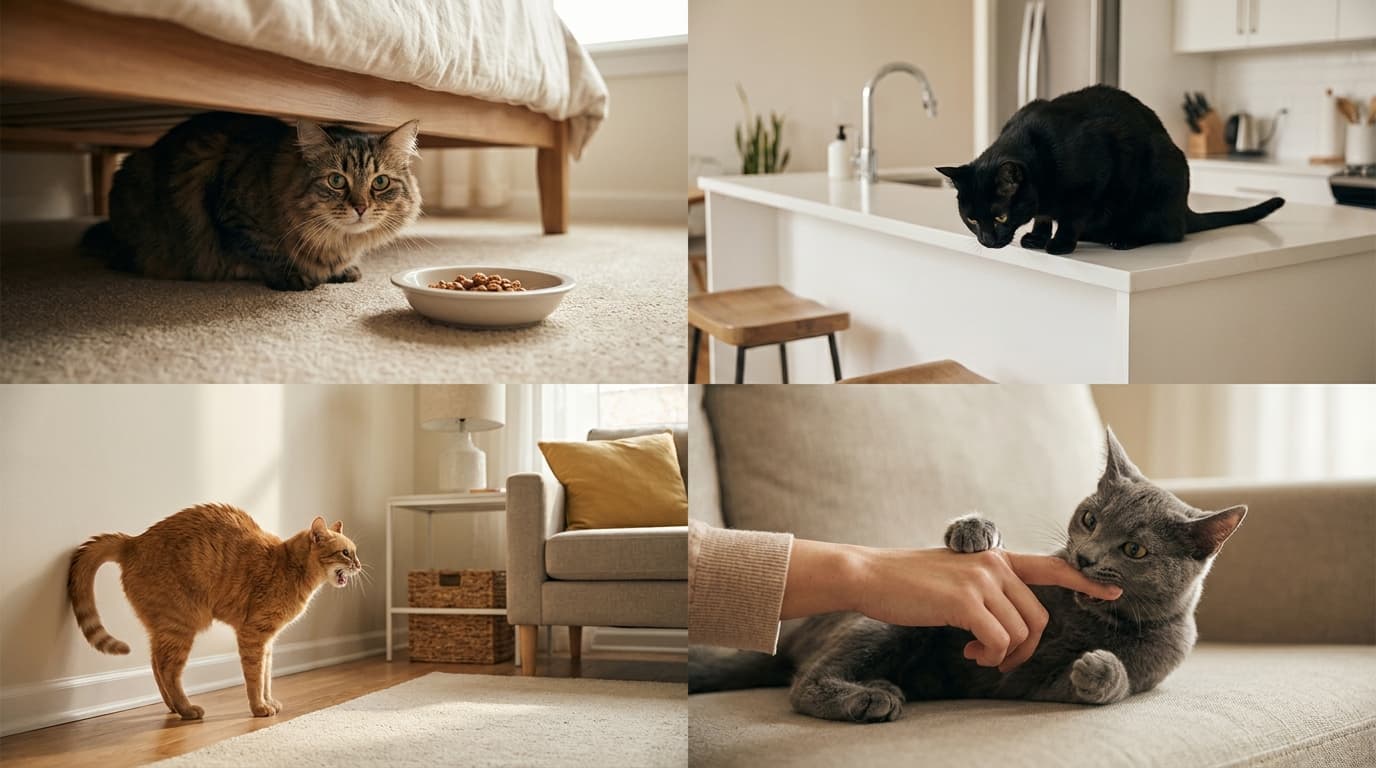
When you see dilated pupils in cats or notice flattened ears meaning your pet is annoyed, they are actually trying to tell you something. Cats use these signals to show they’re stressed, scared, or just over-excited. We’ll look at why your cat might be biting or showing redirected aggression in cats, and how you can fix the vibe with some simple home changes.
This guide breaks down the feline social ladder and helps you spot when a 'grumpy' cat might actually be in pain. You’ll learn how to stop the biting and turn those flying fur matches back into friendly wrestling. Let’s get into the real reasons behind your cat’s wildest moves.
Ever watched your cats go from cute wrestling to a blur of fur and wondered if you should step in? Telling play from fighting is tough, and aggression is why about 27 percent of cats are surrendered to shelters. But here is the thing: your cat isn't being mean. Most scary behaviors are actually rooted in defensive instincts and fear rather than malice.
Body language is the secret sauce to a happy home. We will look at cat play fighting signs like dilated pupils and flattened ears while exploring how catification can settle a tense social hierarchy. Whether it is a medical issue or redirected aggression, we will help you figure out if it is just play or a real problem.
Key insights:
- Aggressive behaviors are usually defensive reactions to stress or fear, not attempts to be mean or spiteful.
- Physical punishment is never the answer because it increases anxiety and usually makes the aggression worse.
The Fine Line Between Play and a Real Feline Feud
Have you ever watched your cats go from a peaceful nap to a full-speed hallway sprint? It looks intense because play is actually a rehearsal for hunting. They are practicing the pounce, the bite, and the chase. But when does fun wrestling turn into a fear fight? This matters more than you might think. Recent data shows that about 27 percent of cats surrendered to shelters for behavioral reasons are there because of aggression. That is a huge number of cats losing their homes over what might be a simple misunderstanding. Cats are genetically wired to be both predators and prey, which means they use aggression to defend themselves when they feel stressed or cornered.
They communicate through a mix of body language, sounds, and even chemical scents called pheromones. When we miss these signals, we might let a small spat turn into a big problem. Understanding the fine line between a game and a grudge helps you step in before things get ugly. Is it just a rough game, or is someone actually scared? Learning to read the room can save your furniture and your sanity. It is about knowing if they are working on their hunting skills or if they are genuinely upset with each other.
If your living room sounds like a silent movie while your cats tumble, you are likely in the clear. Friendly play is almost always quiet. Another big sign is the I chase you, then you chase me dynamic. This turn-taking shows that both cats are having a good time and nobody feels like prey. You should also see soft paws and bites that do not actually hurt. They are basically pulling their punches. Think of it like two friends wrestling on the grass. They might look wild, but they are careful not to cause real pain. When they stop to groom themselves or just wander off, you know the vibe was positive and mutual.
Things take a turn when the silence breaks. If you hear hissing, growling, or screaming, the game is over. Watch for the bottle-brush tail where the fur stands straight up and the back arches high. This is a classic defensive move meant to make them look bigger to a threat. Unlike play, a real fight is usually one-sided. If one cat is constantly cornered while the other keeps attacking, that is bullying, not bonding. One cat might have dilated pupils from an adrenaline rush, which is a sign they are ready to strike.
But here is something to consider: sudden aggression is often a sign of pain rather than a bad attitude. Medical issues like hyperthyroidism, dental disease, or arthritis can make a cat very cranky. If your peaceful cat starts picking fights out of nowhere, it is time to call the vet to rule out a health problem. It is also important to avoid physical punishment. Hitting or yelling only increases a cat's fear and can make the aggression much worse. Instead, focus on giving them enough space and toys to keep their hunting instincts satisfied.
Key insights:
- Play is a natural hunting rehearsal that should involve equal turn-taking between cats.
- Silence usually indicates friendly play, while hissing and growling are major red flags for a real fight.
- A bottle-brush tail and arched back are defensive signals showing a cat feels threatened.
- Sudden behavioral changes often stem from medical issues like dental disease or arthritis.
- Physical punishment is never the answer because it increases fear and worsens aggressive behavior.
How to Spot Friendly Cat Play Fighting Signs
Ever watched your cats tumble across the rug and wondered if you should call a referee? Knowing the difference is vital, especially since aggression is a top reason cats end up in shelters. Luckily, friendly play has a specific rhythm. First, silence really is golden. If they are quiet, they are usually just having fun.
Look for that classic "I chase you, you chase me" dynamic where they take turns being the boss. This back and forth shows it is a mutual game rather than a one-sided attack. You will also notice soft paws and inhibited bites that never actually break the skin or cause pain.
While real aggression often stems from fear or stress, play feels relaxed. If their ears stay forward and tails stay slim rather than puffed up like a bottle brush, everyone is having a blast. You can sit back and enjoy the show because your cats are just being cats.
Key insights:
- Silence is the best indicator that a feline wrestling match is friendly.
- Healthy play involves a back and forth flow where both cats take turns chasing.
- Inhibited bites and soft paws show the cats are self-regulating their strength.
When the Fur Starts Flying: Red Flags
Ever feel like your living room has turned into a feline wrestling ring? It is easy to confuse high-energy play with a real fight, but the red flags are usually written all over their bodies. If you see a bottle-brush tail or an arched back, your cat is trying to look bigger because they feel threatened. Watch for airplane ears and dilated pupils too. Even the sounds they make tell a story. Hissing is not just a noise; it is actually a clever way cats mimic snakes to scare off potential threats.
But how do you know if it is just a game? True play is mutual, while bullying is one-sided. If one cat is constantly screaming or trying to escape while the other refuses to let up, you are looking at a real problem. This matters because aggression is a major issue, leading to about 27 percent of shelter surrenders. Most of the time, these outbursts come from fear or hidden medical pain like dental disease rather than spite. If the fur starts flying, a quick vet check is always the smartest first step.
Key insights:
- Aggressive behavior is usually a defensive reaction to fear or pain rather than a sign of a mean personality.
- Distinguishing between mutual play and one-sided bullying is the most important step in keeping a multi-cat home peaceful.
Decoding the 'Airplane Ears' and Giant Pupils
Ever feel like your cat is a total mystery? While we usually wait for a meow to understand what they want, cats actually do most of their talking through a silent mix of visual cues and chemical signals called pheromones. It is a language that is often much more honest than any vocalization. This matters because understanding these signs can save your relationship. Sadly, recent data shows that about 27 percent of cats in shelters are there because of behavioral struggles like aggression. Many times, these issues start because we simply miss the subtle warning signs in their eyes and ears.
Take those giant, dilated pupils. When a cat's eyes turn into black saucers, it's usually a sign of a massive adrenaline rush. But here is the thing: it does not always mean they are angry. Context is everything. If you are playing with a feather wand in a dim room, those eyes show a focused hunter ready to pounce. But if the room is bright and your cat is backed into a corner, that same look signals a terrified prey animal. It is the difference between a fun game and a cat who feels they have no choice but to defend themselves from a threat.
Then there are the ears. You might have heard people call them airplane ears when they rotate out to the side like wings. This is a clear yellow light. If those ears move from slightly flat to fully pinned back against the head, you need to take a step back immediately. Cats tuck their ears away to protect them during a potential fight. It is a defensive survival move, not a sign of malice. In fact, most feline aggression is actually rooted in fear or even hidden pain from medical conditions like arthritis or dental disease rather than a desire to be mean.
So what does this mean for you? As expert Jackson Galaxy often points out, the roots of cat-to-human aggression usually lie with how we interact with them. If we push past their stop signs - like those flattened ears - we accidentally teach them that biting is the only way to get us to listen. Instead of using punishment, which only makes a scared cat more anxious, try to look for the why behind the behavior. Sometimes a trip to the vet is more effective than a training session, because a cat in pain is a cat that is likely to lash out.
Key insights:
- Aggressive behaviors are almost always defensive instincts driven by fear rather than spite.
- Context determines if dilated pupils mean playfulness or extreme terror.
- Airplane ears serve as an early warning sign to stop interaction before a bite occurs.
- Medical issues like hyperthyroidism or joint pain are frequent hidden triggers for sudden irritability.
What Dilated Pupils Actually Mean
Ever notice your cat’s eyes suddenly turn into giant black saucers? It’s a clear sign of an adrenaline rush, but it doesn't always mean they’re angry. Think of it as a chemical surge. During a game, it’s the "focused hunter" look. But if the room is bright and those pupils stay wide, your cat might feel like "terrified prey."
Most feline aggression actually stems from fear or stress, not spite. It’s also worth noting that sudden shifts can be tied to hidden pain or medical issues like hyperthyroidism. Context matters most. Are they playing, or are they feeling cornered? Look at the whole picture before you jump in.
Key insights:
- Dilated pupils indicate adrenaline, which can signal either high-intensity play or defensive fear.
- Aggressive behaviors are usually rooted in self-defense rather than a desire to be mean.
- Medical issues like hyperthyroidism or dental pain are frequent triggers for behavioral changes.
The Truth About Flattened Ears
Have you ever noticed your cat’s ears shifting into airplane mode? It looks cute, but those slightly flattened ears are a clear signal of growing irritation. When ears go from tilted to fully pinned back against the skull, your cat is preparing for a real fight. They tuck them away to protect the delicate cartilage from claws and teeth during a scrap.
This is a survival instinct because aggressive behaviors are usually rooted in fear or stress rather than malice. It matters because catching these visual cues is the best way to identify irritation before it turns into a bite. If those ears stay flat, give your cat some space to decompress and relax.
Key insights:
- Flattened ears are a physical shield to prevent injury during combat.
- Most feline aggression is defensive and stems from anxiety, not a desire to be mean.
Why Your Cat Might Be Taking Their Frustration Out on You
Ever feel like your cat is holding a grudge for no reason? One minute they are staring intently out the window at a squirrel, and the next, they are lunging at your ankles as you walk by. This isn't your cat being a jerk; it is actually a common behavior called redirected aggression. Think of it like this: your cat is totally 'locked-on' to a target they can't reach, and that pent-up hunting energy has to go somewhere. Since they can't get to the bird behind the glass, you become the closest available outlet for that frustration.
When you see those dilated pupils and that twitching 'bottle-brush' tail, it is time to give them space. Never try to pick up or comfort a cat in this state, as you will likely end up with a scratch. Instead, try to break their focus safely by sliding a piece of cardboard between you or tossing a toy in the opposite direction. It is a serious issue, too - around 27 percent of cats surrendered to shelters are there because of aggression. If these outbursts happen often, it is worth a vet visit, as things like dental disease or hyperthyroidism can make a cat feel extra irritable.
Then there is the 'petting-induced' bite. You are having a nice cuddle session when suddenly, chomp. This usually happens because of overstimulation. Your cat is basically saying, 'That is enough now!' but we often miss the memo. Watch for the warning signs: a flicking tail, skin twitching on their back, or ears turning out like little 'airplane wings.' This isn't malice; it's just a communication breakdown where your cat's nervous system is essentially hitting its limit.
As Jackson Galaxy famously points out, the root cause of these bites usually lies with the person, not the cat. We might have played too rough when they were kittens or simply ignored their body language for years. The trick is to stop petting before they get annoyed. If you see that tail start to thud or the ears go flat, it is time to stop. Respecting their personal space and understanding their vocal cues is the fastest way to build trust and keep your hands scratch-free.
Key insights:
- Aggression is often a defensive reaction to stress or fear rather than a sign of a 'mean' cat.
- Medical issues like osteoarthritis or dental pain can lower a cat's tolerance for handling.
- Redirected aggression requires a safe interruption like a physical barrier rather than manual intervention.
- Body language cues like airplane ears and dilated pupils are early warnings to stop interaction.
How to Stop Cat Biting During Petting
Ever had a peaceful snuggle turn into a sudden nip? It is frustrating, but your cat isn't being mean. Usually, biting during petting happens because of overstimulation. Your cat's senses simply get overloaded, turning a good feeling into a stressful one. Jackson Galaxy points out that the root of this behavior usually lies with us rather than the cat. We often miss the subtle 'leave me alone' signs because we are too focused on the cuddles.
Watch for the tail flick warning. If that tail starts thumping or twitching, it is time to keep your hands off. The reality is that nearly 27 percent of cats surrendered to shelters are there for aggression, yet much of this is preventable. Sometimes, the biting is actually a cry for help. Medical issues like dental disease or hyperthyroidism can make even the sweetest cat feel irritable and defensive. If the nips start out of nowhere, a vet visit is your best first move.
Key insights:
- Most petting aggression is defensive and stems from sensory overload, not malice.
- Always rule out physical pain or medical conditions before assuming a behavior is purely psychological.
Who’s the Boss? Navigating the Multi-Cat Social Ladder
Ever wonder why your cats are best friends one minute and swatting at each other the next? We often try to find the alpha cat, but that is a dog concept that just does not fit our feline friends. Cats do not have a fixed boss. Instead, their social ladder is fluid and changes depending on the time of day or even which room they are in. One cat might own the sunny windowsill at noon, while the other takes over the top of the fridge by dinner.
This shifting dynamic is usually about resources. When cats feel they have to compete for food, litter boxes, or the best napping spots, things get tense. It is a big deal because about 27 percent of cats given to shelters for behavior issues are there because of aggression. If you see dilated pupils or airplane ears, your cat is not being a jerk. They are likely feeling stressed or defensive. Most aggressive behaviors are actually rooted in fear rather than malice.
Before you assume your cat has a personality flaw, check with a vet. Hidden pain from things like dental disease or arthritis can make a cat very irritable. Also, think about your home layout. Adding vertical space gives everyone a way to escape without a fight. Jackson Galaxy often points out that the roots of aggression often lie with the person and how we interact. A little bit of extra space and understanding goes a long way toward keeping the peace.
Could Your Cat Be in Pain? The Medical Side of Grumpiness
Have you ever reached out to pet your cat, only to have them hiss or swat at you? It is easy to label a cat as mean or cranky, but the reality is they might just be hurting. Recent data shows that about 27 percent of cats surrendered to shelters for behavioral reasons are actually there because of aggression, which is often triggered by hidden medical problems. Because cats are both predators and prey, they are genetically programmed to hide weakness until it becomes totally unbearable.
Think about how a toothache makes you feel. Dental disease is a major reason cats get snappy when you are nearby. Other issues like hyperthyroidism or osteoarthritis can turn a sweet pet into a grumpy one because they feel constant discomfort or anxiety. When every movement hurts, a cat uses aggression as a shield to keep people away. They aren't trying to be jerks; they are trying to protect themselves from further pain.
This is why a veterinary-behaviorist approach is so vital. Experts from the Cornell Feline Health Center emphasize ruling out physical issues before trying to fix behavior. Instead of punishing a cat for biting, you look for the root cause. By treating the medical side first, you often find that the mean behavior disappears on its own once your friend finally feels comfortable again.
Key insights:
- Aggression is frequently a defensive reflex caused by physical pain rather than a personality trait.
- Medical conditions like hyperthyroidism and dental disease are primary drivers of sudden irritability.
- A vet visit should always be the first step when a cat's behavior changes unexpectedly.
Practical Ways to Bring Back the Purrs
Ever wonder why your sweet furball suddenly turns into a tiny tiger? It is a bigger issue than you might think - nearly 27 percent of cats surrendered to shelters are there because of behavioral aggression. But here is the secret: your cat is not being a jerk on purpose. Experts like Dr. Hannah Hart point out that these behaviors are almost always defensive instincts rooted in fear or stress rather than malice. Before you try to fix the behavior, check with a vet. Medical issues like hyperthyroidism or painful arthritis are often the hidden culprits behind those sudden, irritable swats.
When things get heated, your reaction matters most. The Cornell Feline Health Center warns that any kind of physical punishment just fuels the fire, making a cat more anxious and likely to lash out even harder. If the tension is between two cats clashing over the living room, try the slow reintroduction method. Think of it as a social reset button. By using pheromones and positive reinforcement with treats, you can slowly help them associate each other with good things again instead of territorial threats.
To really change the vibe at home, you need to start 'catifying' your space. If the floor feels like a battlefield, the solution is usually to look up. By adding wall shelves and high perches, you create a 'cat highway' that lets your pets move across the room without ever having to cross paths on the carpet. This vertical expansion is a huge win for managing social hierarchy because it gives the more timid cat a way to stay high and feel safe.
The layout of your furniture can actually prevent fights before they start. Make sure every room has multiple escape routes so no one ever feels cornered or trapped in a doorway. When a cat knows they have a clear way out or a high spot to watch the world from, their adrenaline levels drop. You are not just decorating; you are giving them the environmental enrichment they need to choose peace over a fight. What does this mean for you? A much quieter, happier home for everyone.
Key insights:
- Aggression is typically a survival instinct linked to fear, not a personality flaw.
- Medical evaluations should always come before behavioral training to rule out hidden pain.
- Vertical space and 'cat highways' reduce ground-level friction in multi-cat homes.
- Punishment is counterproductive and usually increases a cat's anxiety and aggression.
Leveling Up Your Home with Catification
Ever feel like your living room has turned into a feline boxing ring? It’s a common stressor. The stakes are high because around 27 percent of cats in shelters were surrendered for behavioral issues like aggression. But here is the secret: you can often fix the friction by simply looking up.
Catification is about using vertical space to give your pets a 'cat highway.' This expands their territory and stops those tense floor-level standoffs. Make sure every room has at least two escape routes so nobody feels cornered. When a cat knows they can leave a situation easily, they are much less likely to lash out. It is less about home decor and more about a household peace treaty.
Key insights:
- Vertical territory reduces the 'predator versus prey' anxiety that causes defensive aggression.
- Multiple exit points in a room prevent cats from feeling trapped and resorting to biting.
Common Questions About Cat Combat
Why does a sweet cat suddenly lash out? It is a bigger issue than many realize, with about 27 percent of shelter surrenders linked to behavioral aggression. But here is the secret: your cat isn't being mean or spiteful. Most feline combat is actually rooted in fear or stress. They are simply using their natural instincts to defend themselves when they feel cornered or overstimulated.
Before you try to figure out how to stop cat biting, watch for the physical clues. Are you seeing dilated pupils or those 'airplane' flattened ears? This body language, along with a puffed-up tail, is a clear sign they need space. If these behaviors start suddenly, it might not be a 'mood' at all. Medical issues like dental disease or hyperthyroidism often make cats feel incredibly irritable and defensive.
A vet visit is always the best first step to rule out pain. From there, consider how you interact; playing too rough or ignoring the cat social hierarchy can trigger outbursts. Whether it is redirected aggression or a simple territorial misunderstanding, understanding their perspective is the fastest way to bring peace back to your home.
Key insights:
- Most aggressive behaviors are defensive reactions to fear or anxiety, not signs of malice.
- Sudden behavioral changes often signal underlying medical pain, such as arthritis or dental issues.
- Reading body language like flattened ears can help you intervene before play turns into a real fight.
Frequently Asked Questions
Conclusion
What is the big takeaway from all these zoomies and wrestled paws? It comes down to reading the room. When you see dilated pupils in cats or flattened ears, you are getting a glimpse into their internal world. Knowing the difference between a fun wrestling match and actual cat play fighting signs lets you keep the peace. It is not about being the boss; it is about being a translator for their silent cues.
If things still feel tense, remember that redirected aggression in cats or a shaky cat social hierarchy usually has a fixable cause. Maybe your home needs more vertical space, or a quick vet visit is needed to rule out hidden pain. Most grumpy behavior is just a cat saying they feel crowded or scared by something they cannot control.
Your next move is simple: just watch. Pay attention to tail flicks and ear tilts during your next play session. When you learn how to stop cat biting by catching the warning signs early, you are building real trust. You are your cat's best advocate, and now you have the tools to keep the purrs coming.
Send it to someone who should read it next.
About the author

Mia Torres
Cat Lifestyle Writer
Cat mom of four and writer covering the joys, quirks, and everyday adventures of living with cats.
View all articles