What Is Your Cat Really Saying? Decoding Tails, Nips, and Mood Swings
Ever felt like your cat is a fuzzy little enigma wrapped in a mystery? You are enjoying a quiet moment together when suddenly that tail starts thumping or a gentle...

Dr. Emily Hart
Veterinarian, DVM
What Is Your Cat Really Saying? Decoding Tails, Nips, and Mood Swings
Ever felt like your cat is a fuzzy little enigma wrapped in a mystery? You are enjoying a quiet moment together when suddenly that tail starts thumping or a gentle pet turns into a sharp nip. It is enough to make any owner wonder what is really going on in that little head.
It can feel confusing, but your cat is actually talking to you all the time through body language. Getting a handle on understanding cat tail movements and meanings is the first step to knowing if your pet is happy, annoyed, or just plain overstimulated. This connection is the key to a happy home and a much better bond with your feline friend.
We will also look at deeper issues like signs of feline separation anxiety in indoor cats and how to spot senior cat behavior changes and cognitive dysfunction signs. From figuring out why does my cat bite me when being petted to knowing when to hire a cat behaviorist for aggression, this guide covers it all. Let's start decoding those secret signals so you can understand your cat better than ever.
The Secret Language of Cats: Why Their Behavior Matters
Ever feel like your cat is a tiny, furry riddle? It’s a common feeling. But here’s the thing: cats aren’t actually trying to be mysterious. They communicate constantly through a silent language of body cues and subtle movements. Once you start to see these signals for what they are, the mystery starts to fade.
Learning to read your cat turns guesswork into a real conversation. Whether you are spotting signs of feline separation anxiety in indoor cats or wondering why your cat bites when you pet them, understanding the why strengthens your bond. It is just about listening with your eyes instead of your ears.
We are going to decode these signals today. From understanding cat tail movements and meanings to knowing when to hire a cat behaviorist for aggression, this is your roadmap to finally hearing what your cat is saying. Let's jump in.
Key insights:
- Your cat is always talking to you, even when they are being silent.
- Reading body language turns frustrating mysteries into a deep, trusting bond.
- Knowing the why behind a behavior makes you a much better pet parent.
The Language of the Tail: More Than Just a Wag
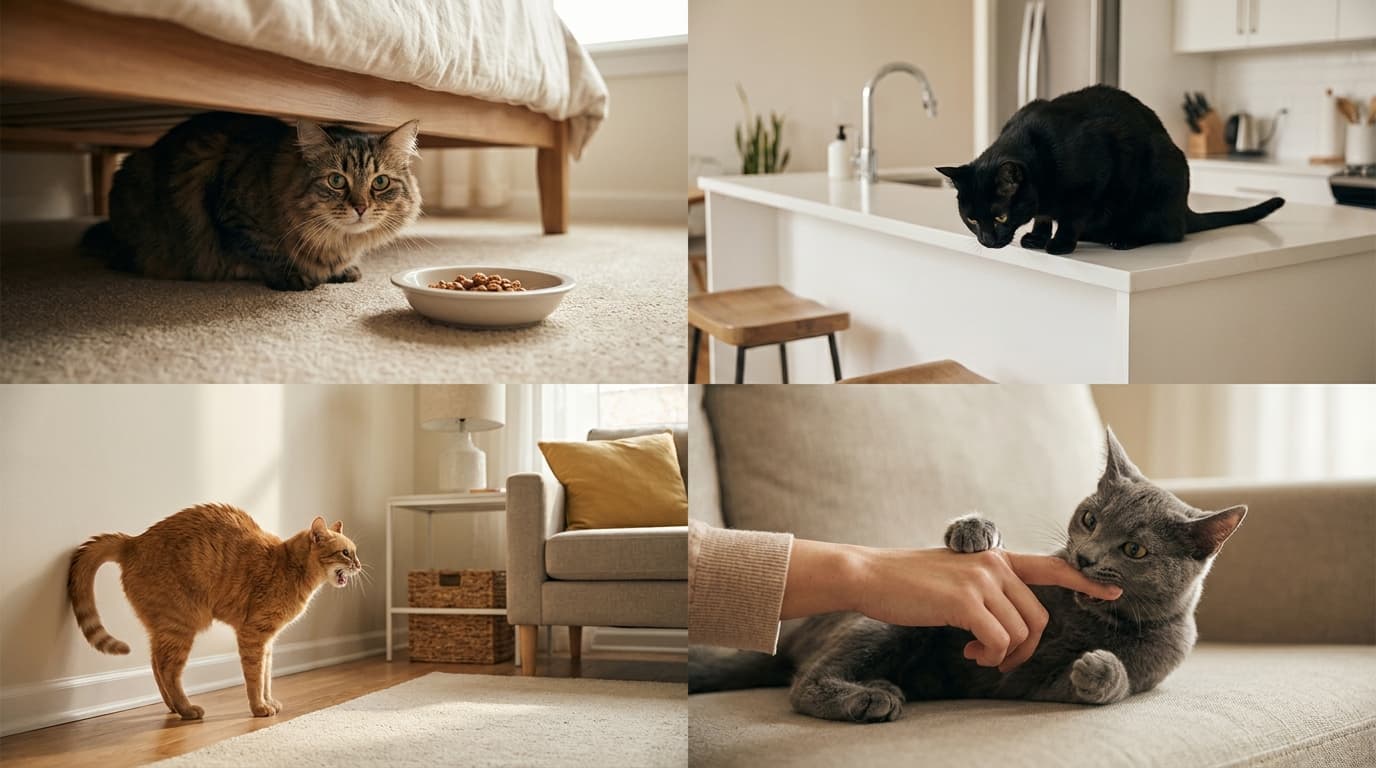
Have you ever watched your cat across the room and wondered what's actually going on in that furry head? While we often focus on their eyes or ears, the real story is usually told by the tail. Think of it as a highly sensitive emotional barometer. Here’s the big thing to remember: never confuse a cat’s tail movement with a dog’s wag. When a dog wags, they’re usually thrilled, but when a cat starts thumping their tail against the floor, they are likely reaching their limit. It’s a signal that they’re overstimulated and need some space before that annoyance turns into a nip or a scratch.
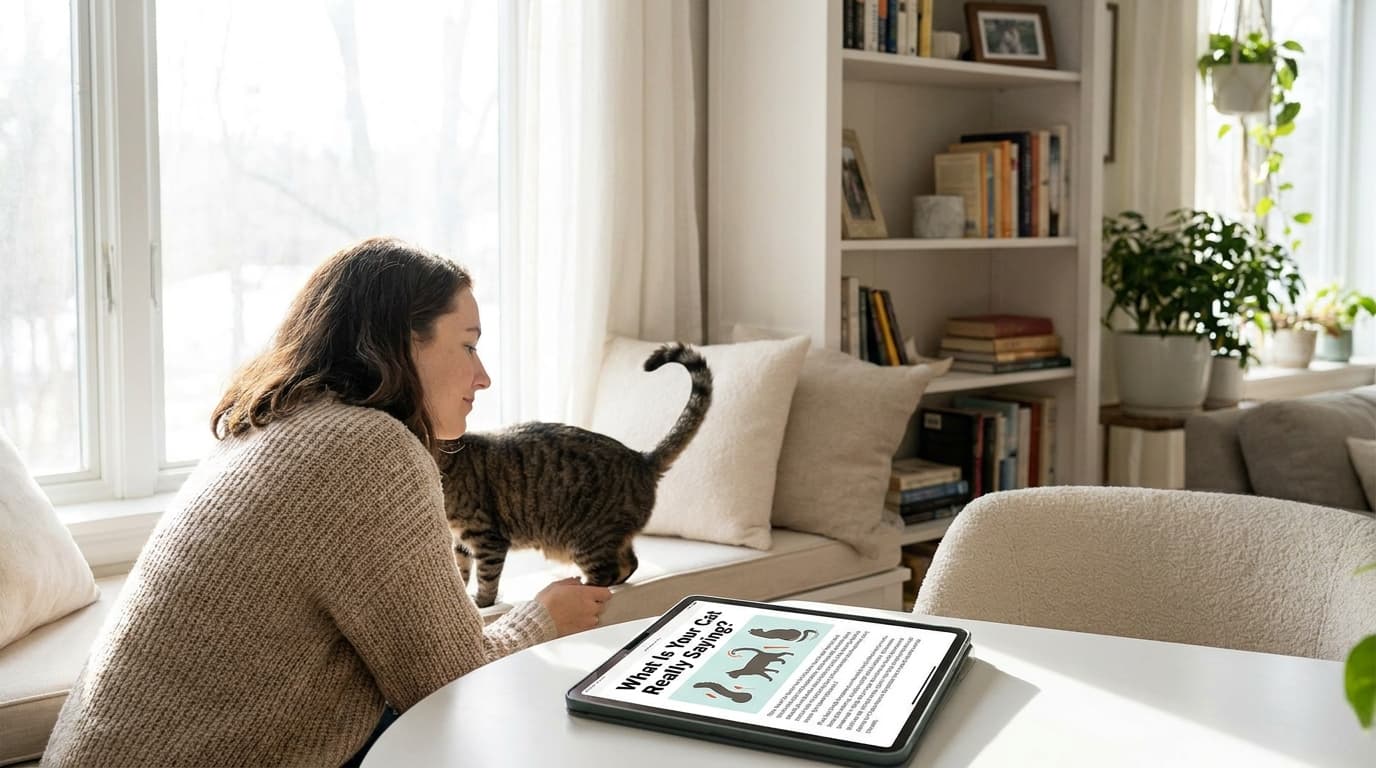
When your cat strolls into the room with their tail held high, look for a little curve at the very top. This "happy hook" or question mark shape is a classic feline greeting that says they’re feeling social and confident. You might even notice the tail vibrating or quivering when you come home or during mealtime. That’s a sign of pure, concentrated excitement. It’s quite different from a stiff, vertical tail or a soft, lazy sway, which usually shows they are just relaxed and content in your company. These subtle movements help us understand their mood before they even make a sound.
On the other hand, some tail signals are clear requests for distance. If you see the "bottle brush" look where the fur stands straight up, your cat is likely terrified or feeling aggressive. They’re trying to look as big as possible to ward off a perceived threat. But watch for the subtle signs too, like a low-level twitching at the tip. This often means they’re getting frustrated or focused on something they don't like. If that tail is tucked tightly against the body, it’s a red flag for extreme fear or even physical pain. Understanding these shifts helps you respect their boundaries and keep your bond strong.
Key insights:
- A thumping tail is a warning to stop petting, not a sign of happiness.
- The upright question mark tail is one of the most positive social signals a cat can give.
- A vibrating tail often indicates high-energy excitement or anticipation.
- The bottle brush tail is a defensive reflex used when a cat feels threatened or startled.
- Low-level twitching is a precursor to annoyance and should be respected to avoid aggression.
The 'Happy Hook' and Other Friendly Signals
Ever walk into a room and see your cat trotting toward you with their tail held high, curving slightly at the tip? That question mark shape is the feline equivalent of a warm hug. It means they feel confident and friendly. When you see this, you know your cat is in a great mood and probably looking for some quick head scratches or a play session.
The way the tail moves tells a story too. A soft, rhythmic sway shows they are relaxed or curious about something nearby. But if you notice a tiny, rapid vibration at the base of the tail when they see you, take it as a huge compliment. That vibrating tail is a sign of pure excitement. It is basically your cat saying they are thrilled you are finally home.
Key insights:
- A curved question mark tail is a universal sign of a friendly and approachable cat.
- Soft swaying signals relaxation, while vibrating tails show intense joy or anticipation.
- Fluid movements generally indicate a happy cat, whereas stiff movements suggest tension.
Warning Signs: The Twitch, the Lash, and the Puff
Ever seen your cat suddenly double in size? That 'bottle brush' tail is a high-alert signal that they are spooked. They are puffing up to look bigger to a threat, essentially telling the world to back off. It is a clear survival instinct that shows your cat feels cornered or extremely defensive.
Small movements matter, too. A tiny twitch at the tip of the tail often means your cat is getting annoyed. This is usually why a cat might nip while being petted because they gave a silent warning you missed. If that tail starts lashing back and forth, they are officially over the interaction.
Watch for the tucked tail. When it is pressed against their belly, it signals intense fear or physical pain. Recognizing these shifts helps you catch mood swings before they escalate. What is your cat trying to tell you right now?
The Love-Bite Mystery: Why Your Cat Nips During Cuddle Time
You are sitting on the couch and your cat is purring while you provide some gentle scratches. Everything feels perfect until those tiny teeth suddenly clamp down on your hand. It is confusing and feels a bit like a betrayal. But this bite and bolt routine is not a sign that your cat has suddenly turned on you. It is actually a very common behavior known as petting-induced aggression. Think of it like someone tickling you for just a few seconds too long. It starts out as fun, but it quickly becomes irritating or even overwhelming.
The biological reason behind this sudden mood swing is simple. Cats have incredibly sensitive skin and hair follicles. When we pet them repeatedly in the same spot, those nerves get overstimulated. For some cats, it feels like a build-up of static electricity or a physical itch they cannot escape. So, why does my cat bite me when being petted? Because they have reached their sensory limit and their brain is shouting for the contact to stop. The bite acts like a physical circuit breaker that ends the stimulation immediately.
To keep the peace, you need to become a bit of a cat detective. Before the teeth come out, your cat is usually sending several tiny red flags. Watch for their skin rippling along their back or their ears starting to rotate toward the side like little satellite dishes. If their tail starts thumping the floor or their pupils suddenly get huge, they are reaching the danger zone. One of the clearest signs is the look back. That is the moment they stop purring and stare directly at your hand. That is your cue to stop everything and give them space.
The best way to avoid overstimulation is to stick to the golden zones like the cheeks, chin, and the area between the ears. Most cats find long strokes down the back or belly rubs much more intense, which leads to that biting reflex much faster. Try keeping your petting sessions shorter than you think they need to be. If you stop while they still want more, you leave them happy instead of agitated. It is all about reading the room and respecting that invisible line where a good scratch becomes too much.
Key insights:
- Petting-induced aggression is a sensory overload response, not a sign of hate.
- Watch for skin twitching and ear flattening as early warning signs.
- The look back is often the final signal before a cat resorts to nipping.
- Focusing on the head and keeping sessions short prevents overstimulation.
Spotting the 'Stop' Signs Before the Bite
Ever feel like your cat is a tiny landmine? One second they’re purring, and the next, they’ve clamped down on your hand. You might wonder, "why does my cat bite me when being petted?" It usually isn't random. Cats are actually great communicators, but we often miss their "please stop" signals before the teeth come out.
Watch their fur. If you see a weird rippling or twitching along their back, they’re getting overstimulated. Their ears might also start to flatten or pivot. But the biggest cue is the "look back." If your cat stops and stares directly at your hand with wide eyes, that’s your final warning.
To keep things chill, stick to the cheeks and chin. Most cats prefer these "low-risk" zones over the sensitive belly. By watching for these shifts, you can enjoy cuddle time without the surprise nips.
Home Alone: Spotting Separation Anxiety in Indoor Cats
Ever left the house and felt like your cat barely noticed you were gone? We often tell ourselves that cats are independent loners who love the peace and quiet. It is a comforting myth, but for many indoor cats, it is just not true. Cats are actually social animals that bond deeply with their humans. When you leave, that silence can feel pretty overwhelming for them. They do not just miss the food; they miss the interaction and the sense of security you provide.
Indoor cats are especially vulnerable to boredom and stress. Since their whole world is inside your four walls, you are their main source of fun and safety. If your routine changes, like staying late at work or starting a new gym habit, your cat notices the shift immediately. Without enough to do, that lack of activity turns into genuine anxiety. Think of it this way: your cat's day is built around your movements. When that rhythm breaks, they do not have a way to ask where you went. They just feel the gap where you used to be.
The interesting part is how their stress shows up. You might find a puddle on the rug and think they are being mean, but it is actually about seeking your scent to feel safe. This is often called a protest pee, but it is really a cry for comfort. Some cats start grooming themselves too much or get very loud the second you grab your keys. If the couch only gets scratched when you are not home, they are not being bad. They are just trying to handle the stress of the quiet. Watch for these subtle clues because they are your cat's way of saying they are struggling with the solo time.
Key insights:
- Cats are social creatures and rely on your presence for emotional stability more than people realize.
- Boredom is a primary trigger for separation anxiety in cats that stay indoors full time.
- Inappropriate bathroom habits and destructive behavior are usually signs of stress rather than spite.
- A predictable daily routine helps cats feel secure and reduces their anxiety when you leave.
Subtle Red Flags You Might Be Missing
Ever come home to a damp spot on your favorite rug? It feels personal, but that "protest pee" is rarely about spite. For indoor cats, inappropriate bathroom habits are often a loud signal of stress. They aren't trying to be bad; they're just struggling to tell you they feel anxious. This matters because missing these cues can lead to bigger health issues later on.
Watch for the drama near the door. If your cat starts a loud concert or begins frantic grooming the moment you grab your keys, you're looking at signs of feline separation anxiety. These behaviors aren't just quirks; they are physical reactions to the stress of you leaving. It's their way of asking for more stability in their environment.
Destructive behavior is another big clue. If the curtains only get shredded while you’re at work, it’s not just boredom. It’s a sign they can’t handle the solitude. Catching these subtle red flags early makes life much easier for both of you.
Growing Old Gracefully: When 'Grumpy' Is Actually a Health Change
You might notice your once-sprightly cat becoming a bit of a curmudgeon as the years tick by. It is easy to label this as just getting old or being grumpy, but there is usually more to the story. Aging affects a cat's brain just as much as their joints. While they might move slower, a sudden shift in how they react to you or their environment often signals a deeper health change rather than just a bad mood. It is about how their mind processes a world that is starting to feel a bit different.
Distinguishing between a cat who is just tired and one experiencing cognitive decline can be tricky. A tired cat still knows where they are and who you are. A cat with cognitive issues, however, might start yelling at the wall at 3 AM. This vocalizing often happens because they feel lost in the dark or confused by the silence. They aren't trying to wake you up for fun; they are looking for reassurance in a house that suddenly feels unfamiliar. Think of it as them losing their internal map.
Feline Cognitive Dysfunction is essentially kitty dementia, and it shows up in ways that can be heartbreaking if you don't know what to look for. You might see your cat get stuck in a corner or stare blankly at a door they have used for a decade. Their internal clock gets wonky, too. They might sleep all day and wander aimlessly at night, or suddenly stop greeting you at the door. It is a big shift for a creature that usually thrives on a strict routine.
Helping a confused senior cat does not require a total home renovation. Small tweaks make a massive difference. Try plugging in night lights near their food and litter boxes so they can find their way when the sun goes down. Keep their favorite beds in the same spots and maybe add a few extra litter boxes in easy-to-reach places. Consistency is their best friend when their own mind feels a bit inconsistent. A little extra patience goes a long way here.
Key insights:
- Nighttime vocalization is often a sign of disorientation rather than a bid for attention.
- Sudden changes in social habits, like hiding or unusual clinginess, can signal cognitive shifts.
- Simple environmental aids like night lights and extra resources help reduce senior cat anxiety.
The Truth About Feline Cognitive Dysfunction
Ever find your senior kitty staring at a wall like they forgot why they walked into the room? It is a tough sight, but it is often a clear sign of Feline Cognitive Dysfunction. This is basically kitty dementia. You might see them get "lost" in a familiar corner or start yowling at 3 AM because their internal clock is totally flipped. They aren't just being difficult; their brain is simply processing the world differently now.
You will also notice shifts in their social life. A cuddly cat might suddenly act distant, or a loner might become your constant shadow. But here is the good news: you can help. Simple tweaks like adding night lights near their food bowl or using low-entry litter boxes make a massive difference. Try to keep the furniture exactly where it is, too. A predictable home helps a confused mind feel much safer.
Key insights:
- FCD is a physical brain change, not just a behavioral quirk.
- Night lights help senior cats navigate when their vision and memory fade.
- Consistency in the home layout reduces stress for disoriented pets.
When the Hissing Doesn't Stop: Is It Time for a Behaviorist?
Ever feel like your living room has turned into a feline fight club? We’ve all been there, nursing a scratch and wondering if our cat just woke up on the wrong side of the scratching post. But there’s a big difference between a cat being naughty and one that’s genuinely stressed. A naughty cat might knock over a glass for attention, but a stressed cat is reacting to a world that feels unsafe. When the hissing becomes a daily soundtrack or your cat’s mood shifts from a minor annoyance to something dangerous, it’s time to look past the surface. Aggression isn't a personality trait. It is usually a plea for help.
While your vet is the go-to for physical health, a behaviorist is like a cat psychologist. They look at the why behind the hiss. If you’re wondering when to hire a cat behaviorist for aggression, the answer is usually as soon as you feel afraid in your own home or notice your cat simply cannot relax. They dive into environmental triggers and social dynamics that a standard medical checkup might miss. Think of it this way. The vet fixes the engine, but the behaviorist teaches the driver how to handle the road. They provide the tools to bridge the communication gap between you and your pet.
Getting things back on track starts with a little detective work. First, rule out medical pain. A cat with a hidden toothache or joint pain will lash out at the slightest touch because they are hurting. If the vet gives a clean bill of health, start keeping a behavior log. Jot down what happened right before the swat. Was it a loud truck outside or a certain scent? This data helps you find the specific triggers. When you are ready, look for a certified feline behavior consultant. They have the training to decode those complex moods and bring peace back to your hallways.
Key insights:
- Aggression is often a reaction to stress or fear rather than just being bad behavior.
- Medical issues like dental pain or arthritis are common hidden causes of sudden hissing.
- Behaviorists focus on the environment and social triggers that medical vets might not cover.
- A behavior log is the best tool to help a professional understand your cat's specific triggers.
The First Steps Toward a Calmer Home
Is your cat suddenly acting out or biting when you pet them? Before you assume it’s just a bad mood, think about their physical health. Cats are masters at hiding discomfort, so your first step is always a vet visit to rule out hidden pain. If they get a clean bill of health, it's time to play detective.
Start a simple behavior log to track what happens before a hiss or a nip. Note the time, the room, and even the sounds nearby. This helps you spot triggers you might otherwise miss. But if things feel overwhelming, don't go it alone. Look for a certified feline behavior consultant. These experts specialize in decoding complex mood swings and can help you create a much happier, calmer home for everyone.
Frequently Asked Questions
Conclusion
So what does all this tell us? It shows that your cat is always talking, even when they are not meowing. When you spend time understanding cat tail movements and meanings or learn why your cat bites you when being petted, you are learning to respect their boundaries. Those random nips and tail swishes are actually clear signs of how they feel in the moment, and recognizing them makes you a much better friend to your pet.
This connection becomes even more important as your cat moves through different life stages. Keeping an eye out for signs of feline separation anxiety in indoor cats or tracking senior cat behavior changes and cognitive dysfunction signs helps you catch health issues before they become big problems. If things ever get too intense or the hissing does not stop, knowing when to hire a cat behaviorist for aggression can save your sanity and keep your home peaceful.
The best thing you can do right now is just observe your furry roommate with fresh eyes. Try to spot the happy hook tail or the subtle ear twitch before a love bite happens. Being a great cat owner is mostly about being a good listener. Once you crack the code, you will find that your cat has been telling you exactly what they need all along.
Send it to someone who should read it next.
About the author

Dr. Emily Hart
Veterinarian, DVM
Small animal veterinarian with 12 years of clinical experience specializing in feline health and preventive care.
View all articles