Is Your Cat Just Wild or Actually Stressed? Decoding Zoomies, Couch Tag, and Feline Moods
Did you know that 27 percent of cats in shelters are there because of behavior issues that owners can often fix at home? It is a tough reality, but most...

PurrScript Editorial Team
Editorial Team
Is Your Cat Just Wild or Actually Stressed? Decoding Zoomies, Couch Tag, and Feline Moods
Did you know that 27 percent of cats in shelters are there because of behavior issues that owners can often fix at home? It is a tough reality, but most of the time, your cat isn't trying to be a jerk. They are just trying to communicate their needs in a world that doesn't always speak feline.
Whether your kitty is tearing across the room at midnight or you are looking for safe ways to play couch tag with high energy cats, it is important to know what is normal and what is a cry for help. Sometimes those wild eyes are just play, but you should also know the signs of feline hyperesthesia syndrome versus normal zoomies to ensure your cat isn't actually in distress.
This guide will help you understand the meaning of different cat chirps and trills and how to manage feline redirected aggression toward housemates if things get tense. We will also look at when it makes sense to consider hiring a certified feline behavior consultant online. Let's figure out what your cat is really thinking so you can both live in peace.
Introduction: Why Cats Are the Most Misunderstood Roommates
Ever feel like your cat is a total mystery? One minute they are purring in your lap, and the next they are tearing across the room like a furry hurricane. It is a fine line between a happy pet and a stressed-out feline. We often write off weird behavior as just cats being cats, but the reality is more serious than a knocked-over glass of water.
About 27 percent of cats surrendered to shelters are there because of aggression. It is heartbreaking because most of these issues are fixable. Often, what looks like mean behavior is actually a cry for help caused by hidden medical problems like dental pain or hyperthyroidism. Other times, your cat is just frustrated because they cannot use their natural hunting instincts in a quiet apartment.
We are going to decode your cat together. From spotting the difference between normal zoomies and FHS to managing redirected aggression, you will learn exactly why your roommate acts out. Understanding those chirps and trills changes everything. Let's find out if your cat is just wild or actually stressed.
Key insights:
- Behavioral issues like aggression account for 27 percent of shelter surrenders but are often manageable.
- Aggressive outbursts are frequently linked to underlying medical conditions like hyperthyroidism or dental disease.
- Distinguishing between high-energy play and stress-induced disorders is the first step to a peaceful home.
Playtime or Parkour? How to Play Safe Couch Tag Without Getting Scratched
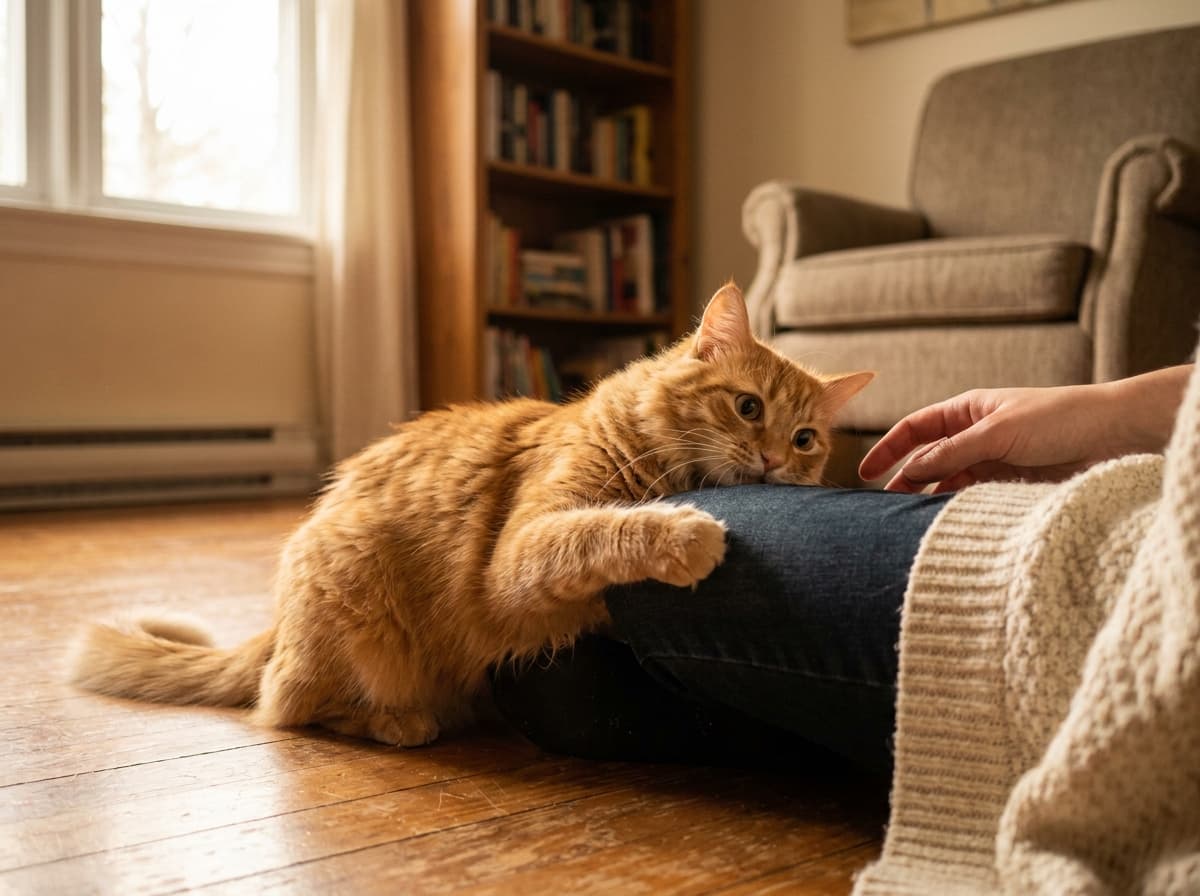
Have you ever watched your cat turn the living room into an Olympic parkour course? Couch tag is the peak of high-energy feline fun, but it quickly turns from cute to painful when your shins become the target. The thrill of the chase is real for them, but using your hands or feet as bait is a recipe for disaster. Once a cat learns that skin is a toy, those sharp claws stay out. It is a serious issue too because nearly 27 percent of cats surrendered to shelters are there because of aggression. We want to keep the game fun without the battle scars.
Setting boundaries is the secret sauce to keeping the peace. You need to know when the zoomies are crossing a line. Sometimes, what looks like wild play might actually be Feline Hyperesthesia Syndrome (FHS), where a cat gets overstimulated and lashes out. Other times, it could be a medical quirk like hyperthyroidism or even joint pain making them cranky. If your cat back is twitching or they seem genuinely distressed, it is time to stop. Think of it this way: you are the coach, and you decide when the whistle blows to prevent a playful nip from turning into redirected aggression.
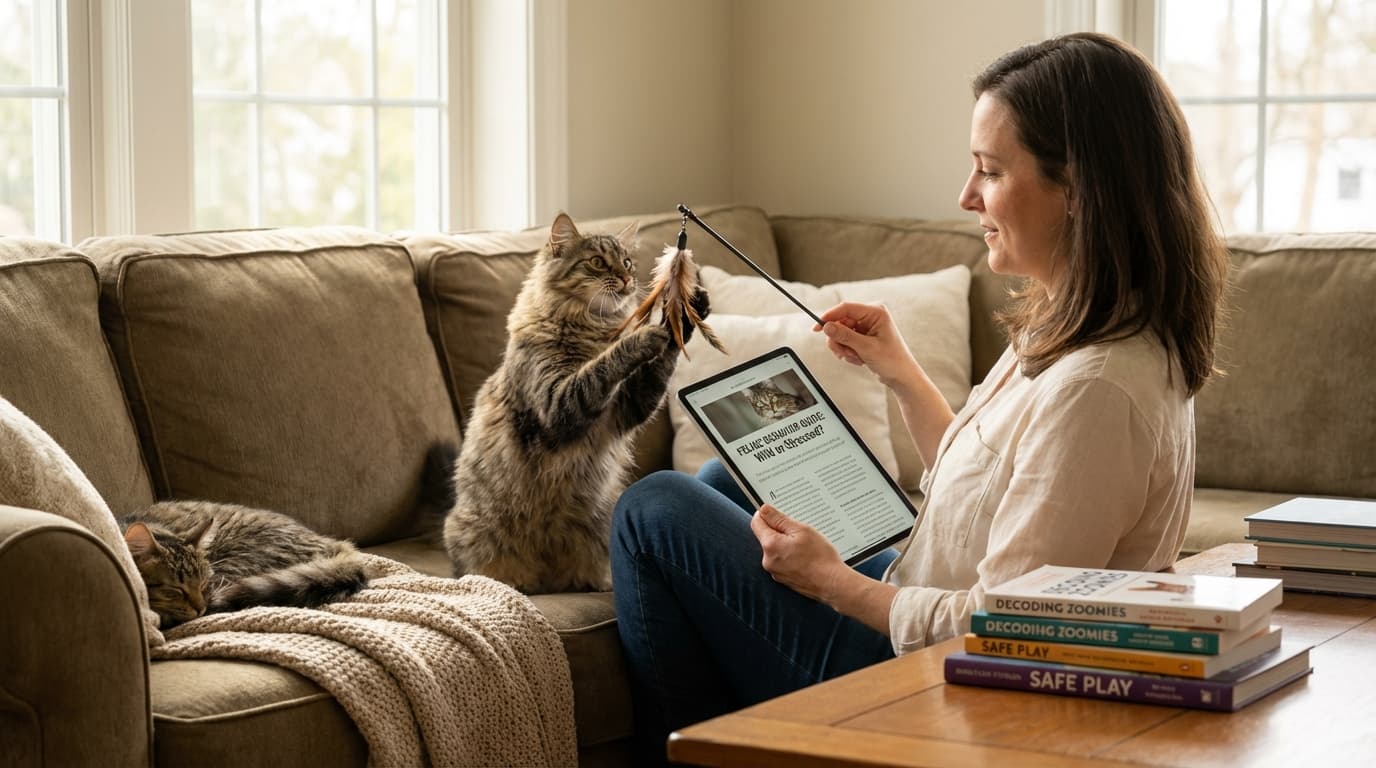
To keep things safe, bring in interceptor toys. Think long feather wands or kickers that put some distance between your fingers and those feline reflexes. Try the Pause and Reward method: every few minutes, toss a small treat or a piece of kibble to reset their brain. This keeps their energy from boiling over into a full-blown attack. When you are ready to call it quits, do not just walk away. End with a final catch on a toy and a snack. This satisfies their hunting instinct and prevents that frustrated pounce on your ankles as you leave the room.
Key insights:
- Redirected aggression often happens because owners miss the original trigger, like a bird outside or a loud noise.
- Using hunting-based feeding toys can reduce boredom-induced aggression by up to 90 percent in some cases.
- Immediate separation is the best way to stop a play session from escalating into a long-term fight between cats.
Safe Ways to Play Couch Tag with High Energy Cats
Ever feel like you’re being hunted in your own living room? Couch tag is a blast, but high-energy cats get intense fast. To keep it fun, use an interceptor toy like a long wand or a sturdy kicker. This creates a safe buffer between your skin and those sharp claws. It is not just about avoiding scratches. It is about teaching your cat that play happens with toys, not your ankles.
If things get too wild, try the Pause and Reward method. When energy peaks, stop the movement for a few seconds and offer a small treat once they settle down. This keeps their brain engaged and prevents excitement from boiling over. Since behavioral issues like aggression cause 27 percent of shelter surrenders, these small breaks are vital for a happy home.
Never just walk away mid-chase, or you will likely get a frustrated pounce to the calf. Wind the game down slowly and end with a food puzzle. This mimics the natural hunt-catch-eat cycle. If they still seem unusually twitchy, it is worth checking if it is Feline Hyperesthesia Syndrome rather than just the zoomies. Intellectual stimulation can actually reduce that kind of aggression by up to 90 percent.
Key insights:
- Using a physical barrier like a toy prevents cats from associating human skin with prey.
- The hunt-catch-eat cycle helps cats transition from high-energy play to a calm state.
- Distinguishing between play zoomies and FHS is crucial for proper behavioral management.
When the Zoomies Get Intense: Is It Just Energy or Feline Hyperesthesia Syndrome?
Ever wake up at 2 AM to the sound of your cat reenacting a high-speed chase through the hallway? Most of us call these the midnight crazies, and usually, they are just a sign of a happy, high-energy pet. But sometimes, that burst of energy feels different. It gets intense, maybe even a bit scary. It is a sad reality that about 27 percent of cats given to shelters for behavior issues are there because of aggression. Often, these owners are not dealing with a mean cat, but one struggling with something like Feline Hyperesthesia Syndrome or underlying medical issues like dental disease or hyperthyroidism.
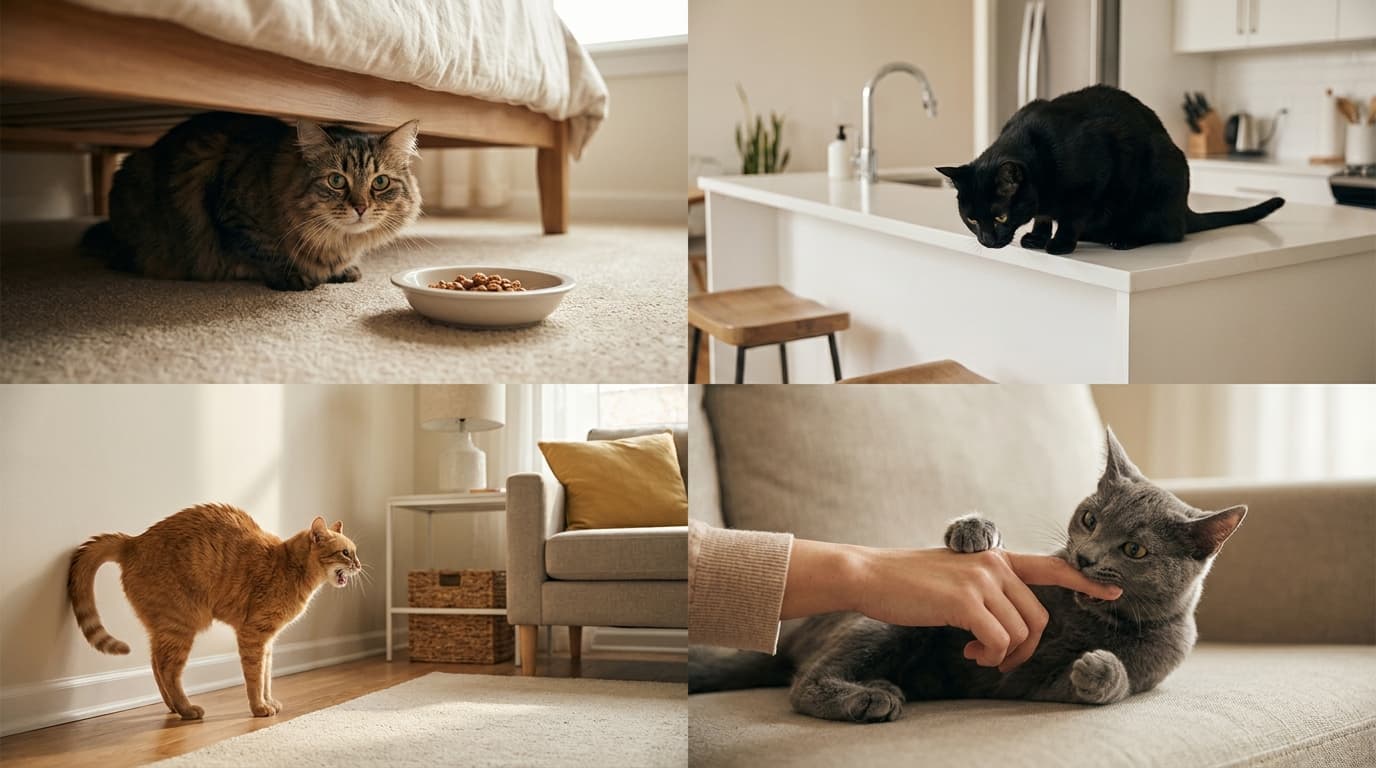
So how do you tell the difference between a fun game of couch tag and a medical condition? Normal zoomies are full of joyful running and wide, excited eyes. Feline Hyperesthesia Syndrome is different. You might see your cat's skin ripple or twitch along their back like they are being electrocuted. They might obsessively chase their tail or suddenly turn and bite themselves or you. It is a neurological twitchiness that feels frantic rather than playful. If your cat seems agitated by their own body, it is a sign that their brain might be overstimulated or misfiring.
The interesting part is that you can often manage this behavior by changing how you play. One case study showed that simply switching to hunting-based play reduced aggression by a staggering 90 percent. Cats are tiny tigers that need to use their brains to find food. When we move from basic bowl-feeding to foraging toys, we satisfy that deep biological drive. Instead of their energy turning into redirected aggression toward you or another pet, it goes into the hunt. This kind of intellectual stimulation is a secret weapon for keeping a peaceable home because it meets a need that domestic life often ignores.
Key insights:
- FHS causes physical symptoms like skin rippling and self-biting that differ from normal play.
- Intellectual stimulation through foraging can reduce neurological aggression by up to 90 percent.
- Medical issues like hyperthyroidism or dental pain are often the hidden roots of sudden feline hostility.
Signs of Feline Hyperesthesia Syndrome Versus Normal Zoomies
Have you ever watched your cat suddenly bolt across the room? We usually call this the zoomies. During a normal session, your cat might have dilated pupils and look like they're having a blast. It’s joyful, frantic, and totally harmless. But sometimes, that wild behavior isn't just play.
The real difference lies in the skin ripple. If you notice the muscles along your cat's back twitching or rolling like a wave, it could be Feline Hyperesthesia Syndrome. Unlike normal play, FHS often involves obsessive tail chasing, loud vocalizing, or even sudden, frantic biting directed at their own body.
This matters because FHS can lead to aggression. Interestingly, research shows that adding hunting toys can reduce these outbursts by 90 percent. If you see that strange back-twitch, it is worth checking with a vet to rule out medical issues like hyperthyroidism before assuming it is just a mood.
Key insights:
- Normal zoomies are joyful bursts of energy, while FHS involves frantic, obsessive behaviors.
- A rolling skin ripple along the back is a primary indicator of FHS.
- Intellectual stimulation through hunting-based play can drastically improve FHS-related aggression.
The Power of Hunting Toys
Did you know that 27 percent of cats surrendered to shelters are there because of aggression? It is a heavy statistic, but the solution is often much simpler than we think. Most house cats spend their days waiting for a food bowl to appear, which ignores their biological need to hunt. When that hunting drive has nowhere to go, it often turns into redirected swipes at your ankles or other pets.
Consider this: a case study showed that using hunting toys reduced one cat’s aggression by about 90 percent. That is a massive shift just by changing how they eat. By moving from boring bowl-feeding to foraging, you satisfy their brain and their belly at the same time. It gives them a job to do. Instead of your legs being the target, the toy becomes the prey, turning a high-stress home into a much calmer space.
Key insights:
- Switching from bowls to foraging toys can reduce feline aggression by up to 90 percent.
- Hunting-based play satisfies a cat's predatory drive that traditional feeding ignores.
The 'Why Are You Mad at Me?' Moment: Dealing with Redirected Aggression
Imagine you are sitting on the couch when your cat suddenly turns into a hissing blur of fur, targeting you or a fellow pet for no apparent reason. It feels like a betrayal, but it is rarely personal. This is redirected aggression, a common behavior where a cat gets agitated by something they cannot reach - like a stray cat outside the window or a loud crash in the kitchen - and takes that frustration out on the nearest living being. Because cats can stay in a state of high arousal long after the trigger is gone, these attacks often happen minutes later, making them seem random. Interestingly, this behavior is most frequent in households with five or fewer cats, as those in more crowded environments often have different social dynamics or desensitization levels.
When the fur starts flying, the 'immediate separation' rule is your most important tool. You should never let cats 'work it out' on their own. Feline grudges can last a lifetime, and according to Cornell University, aggression is a factor in about 27 percent of cats surrendered to shelters. If your cats have a falling out, separate them in different rooms immediately to prevent a cycle of defensive strikes. As behavior expert Pam Johnson-Bennett points out, a surprised victim cat will often strike back, which only adds fuel to the fire. Once things calm down, use a slow reintroduction process with high-value treats to rebuild those broken bonds through positive associations.
The hardest part for us humans is resisting the urge to follow a scared cat to comfort it. While we want to offer cuddles, Ingrid Johnson of Fundamentally Feline warns that this can backfire. If you pursue an agitated cat, they may begin to associate your presence with the scary event itself, cementing a negative perception of you. Sometimes the kindest thing you can do is simply walk away and give them the space they need for their adrenaline to fade naturally. Think of it as giving them a 'time out' to reset their nervous system without any added pressure from you.
It is also worth considering if the 'craziness' has a physical root. Medical conditions like hyperthyroidism or dental disease can make a cat’s fuse much shorter. There is also Feline Hyperesthesia Syndrome (FHS), which causes cats to act aggressively toward themselves or others due to extreme skin sensitivity. The good news is that behavioral changes can make a massive difference. One study showed that adding intellectual stimulation, like hunting-based toys and foraging feeders, reduced FHS-related aggression by 90 percent. By meeting their biological need to hunt, you can often turn a high-strung cat back into a relaxed housemate.
Key insights:
- Cats remain agitated long after a trigger is gone, which is why redirected aggression often seems to happen for no reason.
- Immediate separation is vital because allowing cats to fight leads to long-term hostility and relationship breakdown.
- Giving an agitated cat space is more effective than comforting them, as it prevents negative associations with humans.
- Environmental enrichment, like hunting toys, can reduce neurological or stress-based aggression by up to 90 percent.
How to Manage Feline Redirected Aggression Toward Housemates
Imagine you are relaxing when a loud crash in the kitchen sends your cat into a panic. Instead of hiding, they lash out at their unsuspecting housemate. This is redirected aggression, and it is a major reason why nearly 27 percent of cats end up in shelters for behavioral reasons. It often happens in homes with five or fewer cats, where a stray outside the window or a sudden noise turns a best buddy into a perceived threat.
Here is the deal: never let them work it out. That just makes the hostility stick. You need to separate them immediately to stop their relationship from falling apart. Think of it as a necessary cooling-off period. Once the tension drops, you can start a slow reintroduction using high-value treats to create new, happy associations between your pets. This matters because the victim cat is usually totally blindsided and may start acting defensive, which only fuels the fire.
Sometimes, underlying stress or even medical issues like dental disease make these outbursts worse. But there is hope. Some cats see a massive 90 percent improvement in aggression just by adding hunting-style toys to their routine. By giving them a better outlet for their energy and brainpower, you are helping them feel safe and relaxed again.
Key insights:
- Immediate separation is the only way to prevent a permanent rift between feline housemates.
- Redirected aggression is frequently triggered by external factors like outdoor cats or sudden loud noises.
- Using hunting-based play can reduce aggression by meeting a cat's biological needs for intellectual stimulation.
Don't Comfort the Craziness
If your cat puffs up after a loud crash, your first instinct is to scoop them up for a cuddle. But wait. Following a scared cat to comfort them can backfire. Expert Ingrid Johnson notes that by chasing your pet to offer love, you might accidentally make them think you were part of the scary event. This creates a negative association that triggers redirected aggression.
Since about 27 percent of cats in shelters are there for aggression, giving them space is vital. When a cat is on edge, being followed feels like a threat. Let them hide and reset on their own terms. It keeps your bond safe and stops a simple scare from turning into a grudge.
Key insights:
- Comforting a scared cat can make them associate you with the frightening trigger.
- Giving your cat physical space prevents redirected aggression and protects your relationship.
Chirps, Trills, and Meows: What Is Your Cat Actually Saying?
Have you ever walked into a room and been greeted by a soft, rolling brrrpt sound? That is a trill, and it is basically your cat’s way of saying hey, glad you are here. It is a friendly, social greeting that mothers use with kittens and pet cats use with their favorite humans. It is very different from the short, repetitive chirps they make when they are staring at a bird through the window. Those chirps are a hunting call, fueled by a mix of intense excitement and the frustration of not being able to reach their prey.
While these sounds are usually charming, they are only half the story. You have to watch the tail and ears to get the full picture. If your cat is trilling with ears forward and a tail held high like a question mark, they are in a great mood. But if those chirps start to sound more intense and you notice the tail twitching or ears flattening back, the energy is shifting. This high arousal can sometimes lead to redirected aggression. This happens when a cat gets so worked up by a trigger they can’t reach that they lash out at the nearest thing, whether that is a fellow pet or your ankle.
Understanding these shifts matters because behavioral issues are a leading reason pets lose their homes. Recent data shows that 27 percent of cats surrendered to shelters for behavior reasons were given up because of aggression. The reality is that many of these cases stem from simple misunderstandings or underlying medical issues like dental disease or hyperthyroidism. Even complex conditions like Feline Hyperesthesia Syndrome can often be managed without heavy medication. In fact, using hunting toys for intellectual stimulation has been shown to reduce this kind of aggression by as much as 90 percent. So, the next time your cat starts chirping, treat it as a sign to grab a toy and help them burn off that hunting energy safely.
Key insights:
- Trills are friendly social greetings, while chirps are usually high-energy hunting calls.
- Aggression is often redirected frustration from a trigger the cat cannot reach.
- Providing intellectual stimulation through hunting toys can reduce aggression by up to 90 percent.
When to Call in the Pros: Hiring a Feline Behavior Consultant
It is a heartbreaking reality that about 27 percent of cats surrendered to shelters are there because of behavioral issues, with aggression being a top reason. But before you assume your cat is simply 'mean,' you have to look deeper. Many times, the root of the problem is actually physical. Medical conditions like hyperthyroidism or dental disease can cause sudden, sharp changes in mood. If your cat is in pain, they are not trying to be difficult; they are just reacting to discomfort. A vet visit is always the essential first step to rule out these underlying triggers.
Once your vet gives a clean bill of health, who do you call? It is easy to get confused by titles, but there is a big difference between a trainer and a certified feline behavior consultant. While a trainer might help with basic manners, a consultant is like a therapist for your pet. They look at the 'why' behind the hiss. As experts from Cornell University explain, aggression is often a hostile behavior intended to dominate or intimidate, and these pros are trained to decode those complex social signals.
The good news is that you do not always need a stranger coming into your home to get help. Hiring a certified feline behavior consultant online has become a popular and effective trend. Since cats are notorious for hiding or acting differently when a visitor arrives, a virtual session lets the pro see your cat’s natural behavior in their own territory. This setup is perfect for managing issues like redirected aggression or housemate tension without adding more stress to an already frazzled pet.
Key insights:
- Always rule out medical pain like dental disease or hyperthyroidism before starting behavioral training.
- Certified behavior consultants focus on the psychology of aggression rather than just basic obedience.
- Virtual consultations are often more effective because cats stay relaxed in their own environment.
Frequently Asked Questions
This is likely what experts call redirected aggression. When your cat sees something outside that gets them excited or upset, like a stray cat or a bird, they can't actually reach the trigger. Since they are stuck behind the window, they turn that pent-up energy on the closest thing nearby, which is often your other cat.
It is a bit of a misunderstanding between them. The victim cat is totally surprised and might fight back, which makes the whole situation worse. If this happens, you should separate them immediately. Giving them space right away is the best way to prevent a long-term grudge from forming because letting them stay together usually just adds fuel to the fire.
While it looks cute, it is usually not the best idea. Playing with your feet under the blankets teaches your cat that your body is a prey object. This can lead to them pouncing on you when you are sleeping or just walking around the house, which is not fun for anyone.
A better move is to use toys that mimic hunting. Many owners are switching to foraging and food puzzles to help cats burn off that extra energy. If the chasing seems really intense or includes back twitching and loud meowing, it might be worth looking into Feline Hyperesthesia Syndrome instead of just a case of the zoomies. Also, consider talking to a certified feline behavior consultant online if the play turns into real aggression.
It can be tricky to tell the difference between a weird case of the zoomies and a real medical issue like Feline Hyperesthesia Syndrome. If you see your cat's skin rolling or twitching along their back, especially if they start vocalizing or chasing their tail like they are annoyed by it, you are likely looking at a medical condition rather than just play.
Here is the thing to watch for: this syndrome often makes cats act out aggressively toward themselves or even you. While normal play is fun, this twitching usually looks frantic. Since things like hyperthyroidism or even dental pain can cause similar behavior, it is always best to let a vet take a look to rule out those underlying physical problems.
You definitely can, and in many cases, it is actually better than an in-person visit. Cats are notorious for acting totally different when a stranger walks into their house, so a video call lets a consultant see your cat's natural behavior in their own space without the stress of a visitor.
These online sessions are becoming a huge trend because they give you access to expert help no matter where you live. A certified consultant can help you spot things you might miss, like how a stray cat outside your window is actually causing redirected aggression toward your other pets. It is a great way to get a custom plan for things like reintroductions or setting up hunting toys without leaving your couch.
Conclusion
So what is the bottom line for your high-energy roommate? Understanding your cat is about telling the difference between a playful burst of energy and a cry for help. Whether you are figuring out safe ways to play couch tag with high energy cats or trying to spot signs of feline hyperesthesia syndrome versus normal zoomies, it all comes down to observation. When you see the world from their level, those random midnight sprints make much more sense.
If you find yourself dealing with tougher issues like how to manage feline redirected aggression toward housemates, remember that patience is your best tool. You do not have to solve every mystery alone. Sometimes the smartest next step is hiring a certified feline behavior consultant online to help you decode the meaning of different cat chirps and trills that might be signaling stress.
Living with a cat means accepting a little bit of chaos, but it should feel like fun, not a struggle. By focusing on enrichment and listening to what those trills are trying to say, you can turn a tense home into a happy one. Your cat is not just being wild; they are just waiting for you to finally speak their language.
Send it to someone who should read it next.

PurrScript Editorial Team
Editorial Team
PurrScript's in-house editorial team. We research, write, and review every guide using established veterinary and behavioral resources, and update articles as best practices evolve.
View all articles