Why Your Cat Bites Your Legs, Hides, and Meows at Night: Understanding Feline Anxiety
Sudden biting, hiding, and night meowing are often clear signs of anxiety in indoor cats symptoms rather than just bad behavior. These actions are your cat's way of telling you...

Oliver Chen
Cat Rescue Advocate
Why Your Cat Bites Your Legs, Hides, and Meows at Night: Understanding Feline Anxiety
Sudden biting, hiding, and night meowing are often clear signs of anxiety in indoor cats symptoms rather than just bad behavior. These actions are your cat's way of telling you they feel stressed or overwhelmed by their environment.
When your cat lunges at your ankles or disappears under the bed, it's usually a reaction to a trigger like a new guest or a lack of mental stimulation. Understanding these signals is the first step toward helping your pet feel safe again.
You'll discover how to decode these behaviors, stop the couch scratching, and finally get a quiet night's sleep.
Table of Contents
- Why Does My Cat Suddenly Bite My Legs When Walking?
- My Cat Is Hiding Under the Bed All Day: When to Worry
- Recognizing Common Signs of Anxiety in Indoor Cats Symptoms
- How to Stop Cat From Scratching New Couch for Good
- What Causes a Cat to Meow Constantly at Night?
- Frequently Asked Questions
- Conclusion
Why Does My Cat Suddenly Bite My Legs When Walking?
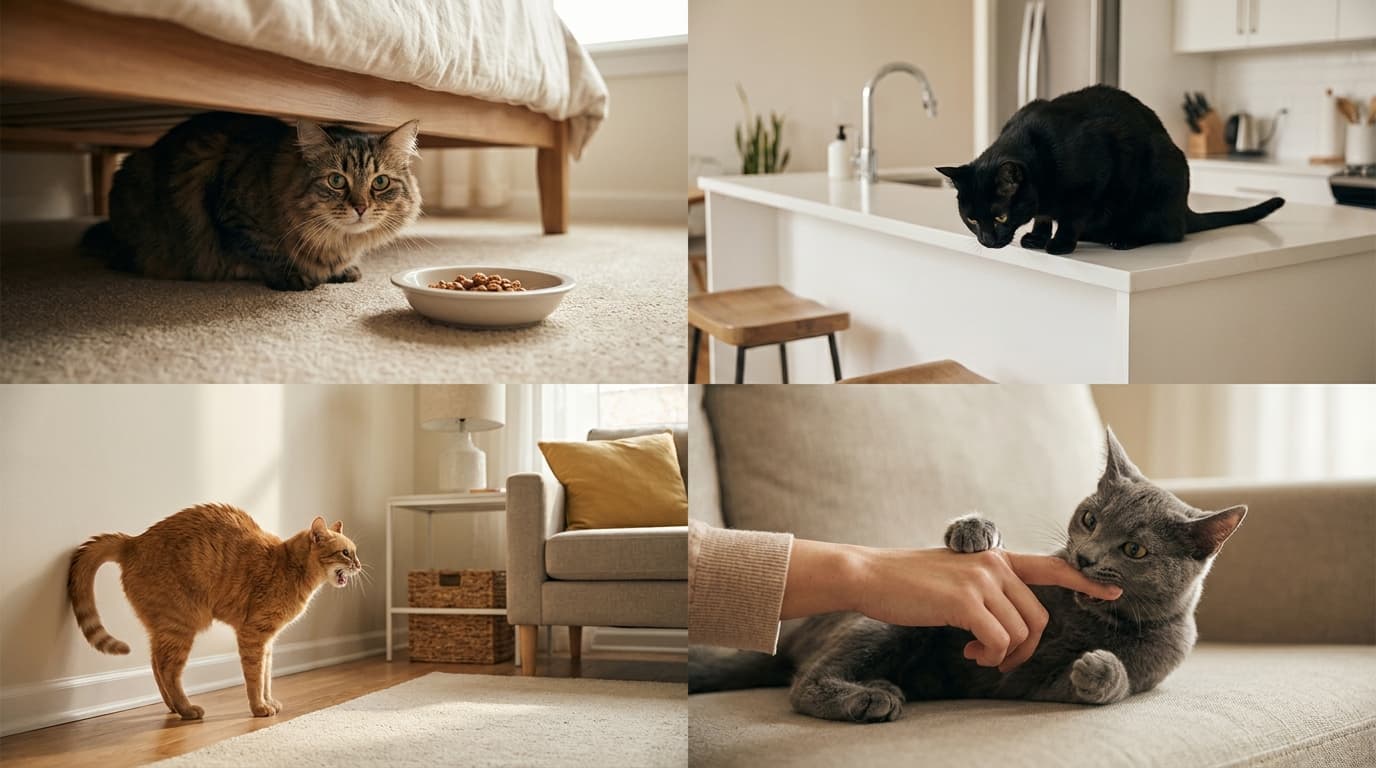
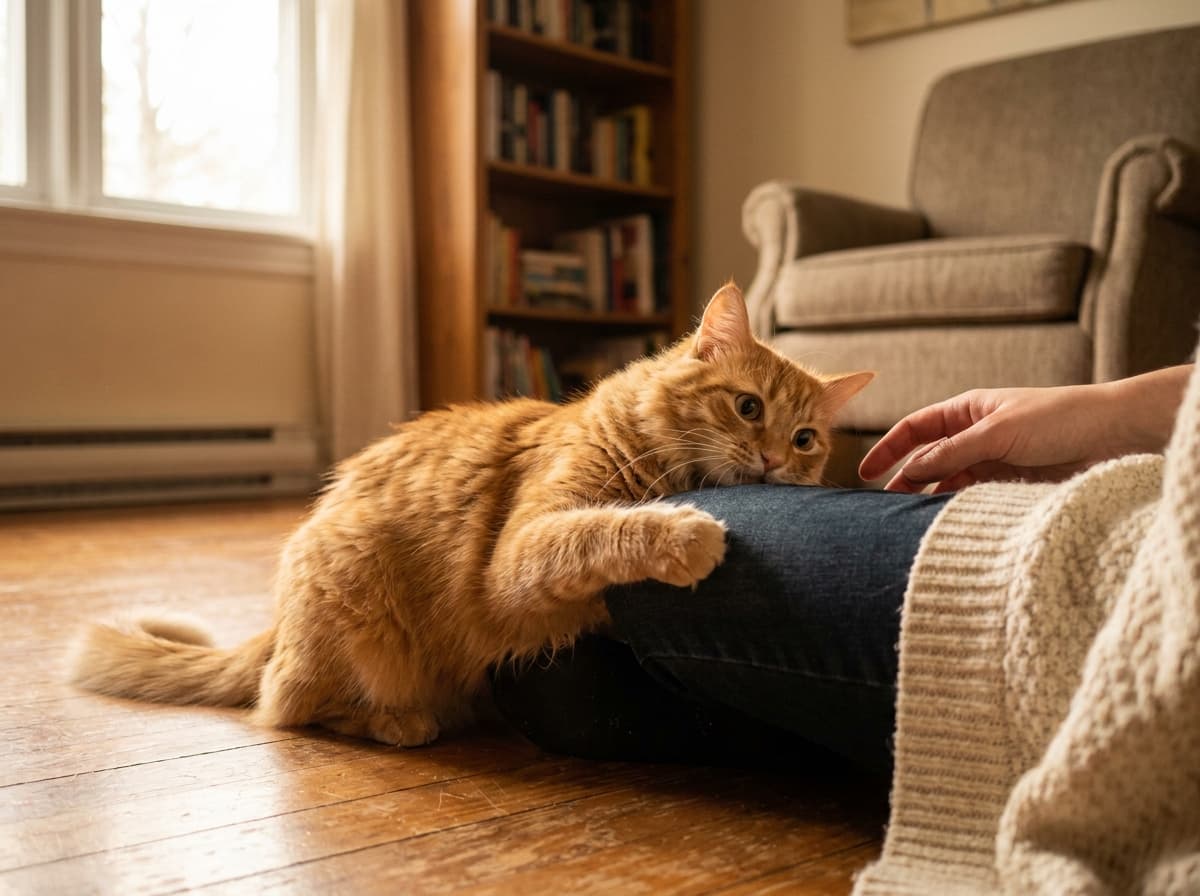
Cats are built to hunt, and sometimes your moving ankles are just too tempting for them to pass up. This sudden pounce is usually play aggression or redirected frustration. It is actually quite common, as aggression is the second most common behavior problem seen by animal behaviorists in cats. Your pet isn't trying to be a villain; they are likely just bored or reacting to a stimulus they can't reach, like a squirrel outside the window.
Think about a typical morning where you are walking to the coffee maker. Out of nowhere, your cat launches from under the dining table and wraps around your ankle. Since aggressive cats have five weapons at their disposal - their teeth and all four clawed paws - this game can leave you with real scratches. This often happens because they haven't had enough mental stimulation, and your movement triggers their deep-seated predatory drive.
But what if the biting feels different or more frantic? You might be dealing with Feline Hyperesthesia Syndrome (FHS), also known as twitchy cat syndrome. This condition makes a cat's skin feel hypersensitive, and it usually shows up between 1 and 5 years of age. You will often see the skin on their back rippling or twitching just before they snap at your legs or even their own tail. It is a strange disorder where cats seem tormented by sensations they can't escape.
Dealing with these lunges requires a mix of play and medical checkups. If it is play aggression, you can often fix it by adding more enrichment to your home. Why your indoor cat needs more than just a couch explains how vertical space and hiding spots can lower these stress levels. If you suspect FHS, your vet will need to rule out mites or spinal issues before considering medications like Gabapentin or serotonin-enhancers.
Sometimes these lunges are just one of many signs of anxiety in indoor cats symptoms that owners overlook. If your cat is also over-grooming or constantly scanning the room, their leg-biting might be a cry for help. Understanding the difference between a playful hunter and a stressed-out pet is the best way to keep your ankles safe and your cat happy.
Key insights:
- Redirect their energy by using a wand toy for at least 15 minutes every day.
- Avoid using your hands or feet as playthings so your cat doesn't view your body as a target.
- Look for rippling skin on the back as a sign to consult a vet about FHS.
- Provide vertical territory like cat trees to help your cat feel secure and less reactive.
- Try natural supplements like Zylkene if your vet thinks the behavior is driven by mild environmental stress.
Could It Be Feline Hyperesthesia Syndrome?
Sometimes a sudden snap at your ankles isn't just playfulness. It could be Feline Hyperesthesia Syndrome (FHS), a condition often called "twitchy cat syndrome." This disorder causes extreme skin sensitivity, making a cat feel like their own fur is crawling. According to research from Good Pet Parent, it usually starts showing up in cats between 1 and 5 years old.
Picture your cat relaxing on the rug when their back muscles suddenly start rolling like a wave. They might hiss at their own tail or lunge at your legs as if they have been shocked. It is a confusing moment where the cat seems tormented by sensations they cannot escape, leading to frantic behavior that looks like aggression but is actually physical discomfort.
Because FHS is a diagnosis of exclusion, your vet will need to rule out other health issues before starting treatment. You can learn more about why cats groom so much to see if their licking is a related sign of this neurological overstimulation.
Key insights:
- Consult a vet to rule out other issues like skin mites, ringworm, or spinal problems.
- Record a video of the "rippling skin" episodes to help your vet see the behavior in a home setting.
- Ask about specialized medications like Gabapentin or serotonin-enhancers if the episodes become frequent.
- Avoid touching the cat's lower back during an episode as this can trigger a bite response.
My Cat Is Hiding Under the Bed All Day: When to Worry
Hiding is a cat's primary way of coping when they feel overwhelmed, scared, or physically unwell. It is essentially their version of a "do not disturb" sign. While some cats are naturally introverted, a social cat who suddenly spends ten hours behind the headboard is likely reacting to a major stressor or a hidden medical issue. If you just brought a furry friend home, remember the 3-3-3 rule because hiding is a totally normal part of the initial adjustment period.
This behavior often stems from changes in the home, like a new guest, a loud appliance, or even a neighbor's construction. Statistics show that anxiety and fear-related issues account for up to 20% of cases referred to veterinary behaviorists. If your cat is hiding under the bed all day and it is a new development, it is a loud signal to look closer at their environment or physical health to ensure they are not in pain.
Imagine your usually bold cat, Luna, who normally demands head scratches the moment you sit down. After a loud afternoon thunderstorm, she vanishes into the dark corner under your bed and refuses to come out even for her favorite tuna flakes. For a concerned owner, the instinct is to reach in and grab her to offer comfort, but that often backfires by making the fear worse. She needs to know she has a safe spot where she will not be bothered or forced into social interaction before she is ready.
Physical health issues also frequently disguise themselves as hiding. Cats are masters at masking pain, so a cat with a dental infection or arthritis might retreat to a dark spot to avoid being touched. If the hiding is paired with other signs of stress like over-grooming or a lack of appetite, a vet visit should be your first priority to rule out underlying medical triggers.
Key insights:
- Provide 'safe zones' like high shelves or hooded beds so they have secure options besides the floor.
- Avoid pulling them out of their hiding spot by force as this destroys their sense of security and can lead to defensive biting.
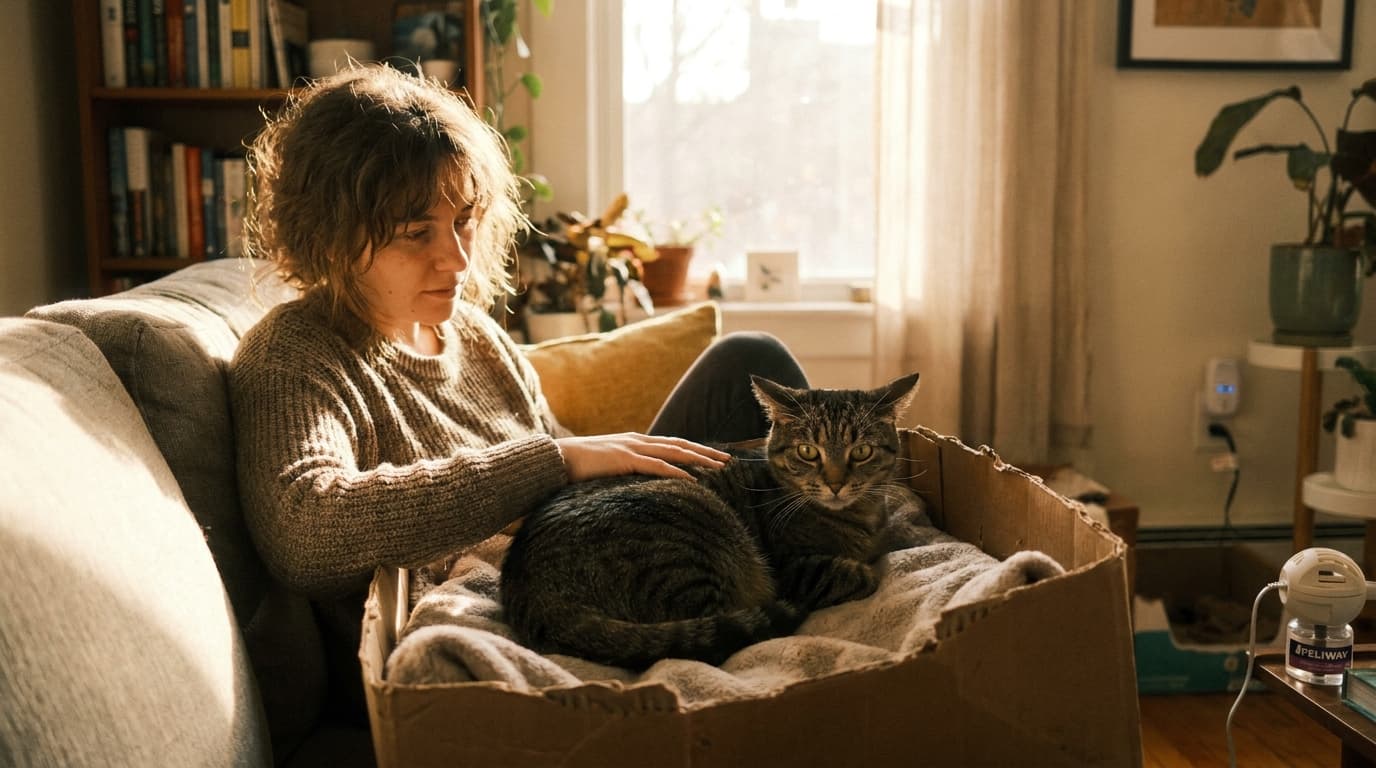
- Try using a pheromone diffuser or a natural supplement like Zylkene to help lower their baseline stress levels.
- Keep a behavior log to see if the hiding matches up with specific triggers like certain times of day or external noises.
- Consult a vet if the hiding lasts more than 24 hours or if the cat stops eating and using the litter box.
Recognizing Common Signs of Anxiety in Indoor Cats Symptoms
Anxiety in cats is often quiet. Unlike a dog that might bark or pace, a cat's distress shows up in 'scanning' the room or having pupils as big as saucers. It is a survival instinct to hide vulnerability, so you have to look for tiny shifts in their daily routine. Sometimes, it is as subtle as a cat sitting frozen with their ears tilted back, staring at a door for hours like they are waiting for a ghost.
Physical health issues often disguise themselves as bad behavior. For example, why cats groom so much is frequently a response to stress rather than a need for cleanliness. Some cats even suffer from Feline Hyperesthesia Syndrome, a condition where the skin ripples and the cat seems tormented by invisible stimuli. Statistics show that anxiety and fear-related issues account for up to 20% of cases seen by veterinary behaviorists, so these subtle cues are more common than you might think.
Take a cat owner named Sarah and her tabby, Oliver. Oliver used to be a lap cat, but lately, he spends his evenings perched on the back of the sofa, eyes darting toward every floorboard creak. He has started licking his belly so much that a bald patch is forming. Sarah notices he is 'scanning' the room constantly and sitting in a hunched position, recognizing these as classic signs of anxiety in indoor cats symptoms.
Key insights:
- Watch for a hunched posture where the cat looks like a tight spring ready to pop at any moment.
- Check for dilated pupils that stay large even in bright light, which signals a constant fight or flight state.
- Start a behavior log to track if these signs happen after specific noises or at certain times of day.
- Look for rippling skin along the back, which might indicate twitchy cat syndrome in cats between one and five years old.
- Provide vertical space and hiding spots to help them feel secure in their territory without being forced to interact.
How to Stop Cat From Scratching New Couch for Good
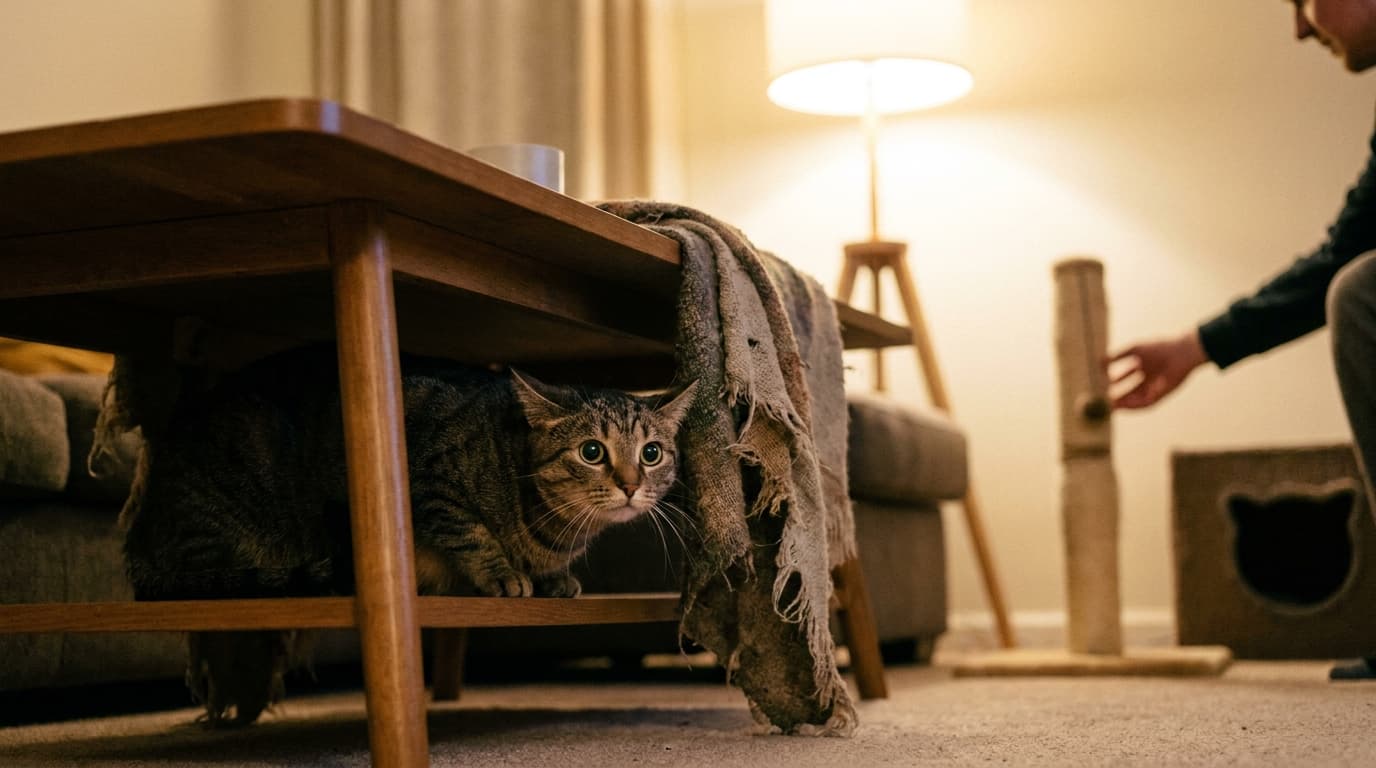
Cats do not scratch your furniture to be spiteful or seek revenge for a late dinner. They do it to shed their outer claw sheaths, stretch their muscles, and leave scent markers from the glands in their paws. Because your couch is likely the sturdiest and most central object in the living room, it serves as the perfect billboard for them to announce their territory to anyone who walks by. A heavy sofa provides the resistance they need to really pull against their muscles during a morning stretch.
If you want to save your fabric, you have to understand that aggression is the second most common behavior problem seen by animal experts, and scratching is often a territorial component of that stress. This is especially true for indoor cats who lack the natural trees and fences they would use in the wild to claim their space. Your cat is not trying to destroy your home; they are trying to feel secure in it, and simply telling them no will not work because the physical drive remains.
Imagine you just spent a month's salary on a brand new velvet sofa that looks perfect in the center of the room. By Friday, you find the corners shredded into a fuzzy mess of pulled threads. If you are wondering how to stop cat from scratching new couch for good, the answer is not a spray bottle or a loud yell. You have to make the couch less appealing while offering a better alternative right in the same spot where they already like to hang out.
Key insights:
- Place a tall, sisal-covered scratching post directly in front of the specific corner the cat has already started to damage.
- Apply double-sided sticky tape to the couch fabric to create a tacky, unpleasant sensation that naturally deters their paws.
- Implement the secret to a scratch free home by adding vertical territory like cat trees and shelves near the furniture.
- Use positive reinforcement by giving your cat a high-value treat every single time they choose the post over the upholstery.
- Avoid punishment like water sprayers, as this can increase anxiety and lead to defensive behavior or hiding.
What Causes a Cat to Meow Constantly at Night?
Cats are naturally more active during the twilight hours, which often clashes with our human sleep schedules. Most nocturnal vocalization is a simple bid for attention, driven by a desire for food or a need to burn off pent-up energy. Sometimes, medical issues like Feline Hyperesthesia Syndrome - also known as twitchy cat syndrome - can cause a cat to feel agitated and vocalize at odd hours.
When looking at what causes a cat to meow constantly at night, boredom is usually the main culprit. If they have nothing to do while you are at work, they save all that hunting instinct for the middle of the night. You can find more specific advice on this in our guide on Indoor Cats Why Does My Cat Meow At Night And Top Care Tips.
Picture this: it is 3:00 AM, and you are jolted awake by a series of deep, mournful yowls coming from the hallway. You rush out, thinking there is an emergency, only to find your cat sitting calmly by their empty bowl or a random toy. They have learned that a loud enough shout is the fastest way to get you out of bed, effectively training you to be their personal late-night waiter.
Key insights:
- Establish a play-feed-sleep routine by having an intense play session followed by a large meal right before you go to bed.
- Ignore the vocalization completely because even a shush or a gentle nudge acts as a reward for the noise.
- Use puzzle feeders to keep them occupied and provide a midnight snack without you having to get up.
- Increase daytime activity with vertical territory like cat trees to help them burn energy before the sun goes down.
Frequently Asked Questions
Conclusion
So what does all this mean? Your cat isn't being mean when they bite your legs or hide under the bed all day. These behaviors are just ways they tell you they feel stressed or bored. When you see these signs of anxiety in indoor cats symptoms as a call for help rather than a reason for frustration, it becomes much easier to fix the problem.
The best next step is to check with your vet and then focus on a solid routine. A few more scratching posts and some dedicated play time can stop the couch scratching and the midnight meowing. Most of these issues get better once your cat feels safe and has a healthy way to use their energy.
Living with a cat is all about patience and understanding. Once you meet their natural needs, you can get back to the best part of being a pet parent. That means more quiet purrs and a happy, relaxed home for both of you.
Send it to someone who should read it next.
About the author

Oliver Chen
Cat Rescue Advocate
Founder of a no-kill rescue shelter and passionate advocate for feline welfare and responsible cat adoption.
View all articles