The 3-3-3 Rule: What to Actually Expect When Bringing Home a New Cat
You finally did it and brought home a new rescue cat. But instead of the cuddly lap cat you imagined, your new friend has vanished under the sofa and won't...

PurrScript Editorial Team
Editorial Team
The 3-3-3 Rule: What to Actually Expect When Bringing Home a New Cat
You finally did it and brought home a new rescue cat. But instead of the cuddly lap cat you imagined, your new friend has vanished under the sofa and won't come out for dinner. Don't worry because this is a totally normal part of the cat decompression timeline. Cats are territorial creatures, so moving to a new house feels like landing on another planet to them.
Understanding the 3 days 3 weeks 3 months cat rule is the secret to staying patient while your pet finds their footing. This framework helps you manage expectations while helping a shy cat adjust to their new surroundings. Whether you are dealing with hiding behavior in new cats or just want to start off on the right paw, knowing what to expect makes the process much easier for both of you.
We're going to break down exactly how to support your cat through every stage of the feline adjustment period. You'll learn how to set up a safe space, build a routine that works, and eventually see their true personality shine. Let's look at how you can start building trust with a rescue cat so they feel like a true member of the family.
Bringing Home a Rescue: The Real Timeline for Feline Friendship
You’ve finally signed the papers and brought that new ball of fluff home. It’s an amazing feeling, but let’s be real: it’s also a little nerve-wracking for both of you. You might expect instant cuddles, but your new friend is likely thinking about one thing only - territory. Unlike dogs, cats find their security in their surroundings first. If they're hiding under the couch right now, don't worry. They aren't rejecting you; they're just recalibrating.
To help manage those "will they ever love me?" jitters, rescues like Kitten Angels suggest using the 3-3-3 rule. It’s a compassionate framework for the first three days, weeks, and months of adjustment. This timeline helps you realize that while the first 72 hours often involve hiding and missed meals, the three-week mark is where curiosity kicks in. By the time you hit three months, their true, goofy personality finally shines.
The reality is that building trust takes time. Think of this period as a slow-motion friendship where consistency is your best tool. By sticking to a predictable routine and giving them space, you're building a foundation of safety. It’s a slow burn, but that first real purr makes every patient second worth it.
Key insights:
- Cats prioritize territorial security over social bonding in new environments.
- The 3-3-3 rule is a flexible guide for decompression, not a rigid deadline.
- Predictable daily routines are the most effective way to reduce feline anxiety.
The First 3 Days: Survival Mode and the Art of Hiding
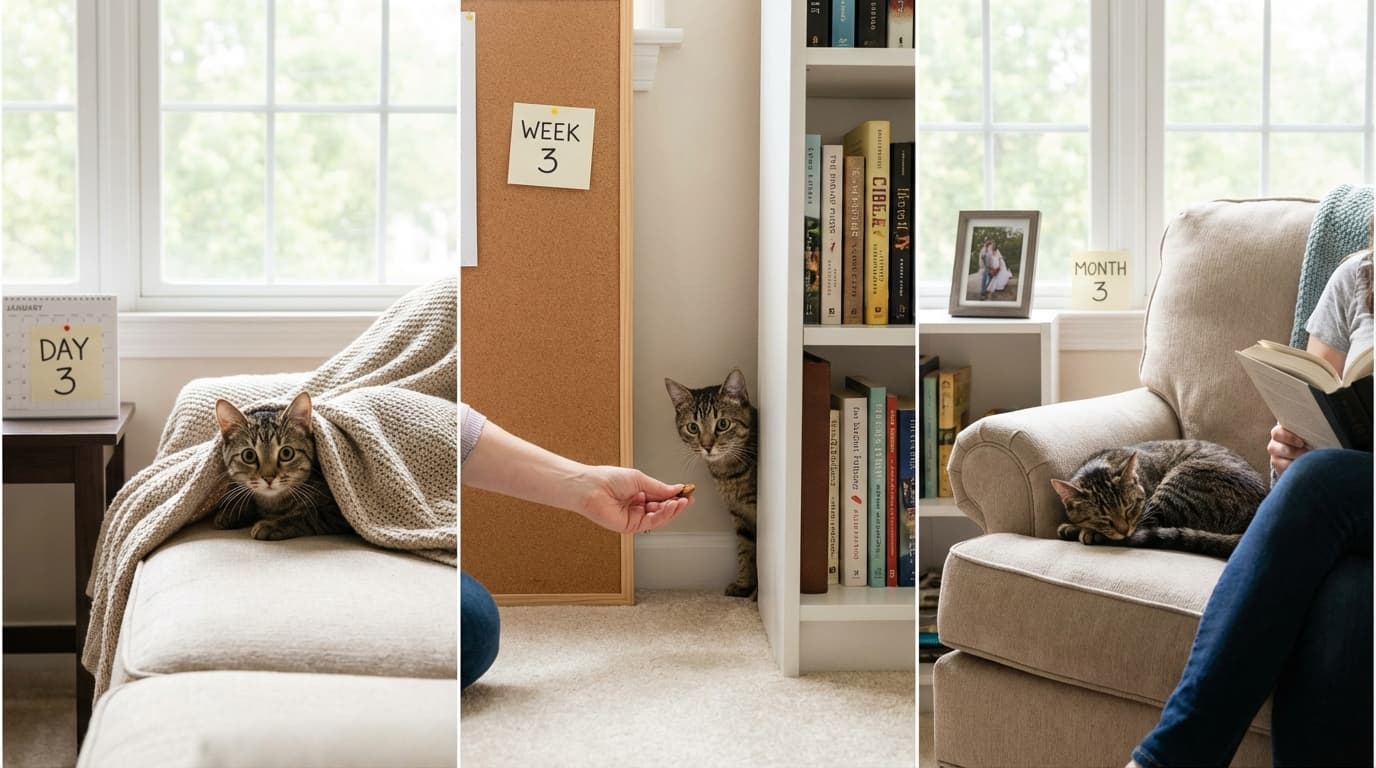
Imagine you just moved into a new house where you do not speak the language and the residents are ten times your size. You would probably want to hide under the bed too. When you bring a rescue cat home, they are often in what experts call survival mode. For the first three days, your new friend is just trying to figure out if they are safe. This is the decompression phase, and it is the most sensitive part of the 3-3-3 rule for feline adjustment.
During this time, hiding under the couch or behind the washing machine is actually a very smart choice for a cat. In the wild, a cat that stays out in the open in a strange place is at risk. By staying tucked away, they are observing the sounds and smells of your home from a spot where they feel protected. You might notice they avoid eye contact or even refuse to eat their first few meals. Do not take it personally. They are not being stubborn, they are just waiting for their nervous system to settle down before they can focus on things like play or snacks.
The big thing to remember is that territory is the primary source of security for cats, which is very different from how dogs view the world. While a dog might look to you for comfort, a cat needs to trust the room first. This is why setting up a safe room is so helpful. By keeping them in one small area, you make the world feel manageable rather than overwhelming. You want to give them the basics like food, water, and a litter box, but also include some high-up spots like a cat tree or a shelf. Cats feel much safer when they can look down on their surroundings from a distance.
You can also help lower the stress volume by using pheromone diffusers or sprays. These mimic the natural scents cats use to mark a space as safe. Also, try to keep your routine as boring as possible. Feeding them at the same time every day helps them learn that you are a predictable and reliable part of their new life. The first three days are about showing them that nothing scary is going to happen while they are in your care.
As the team at Kitten Angels often points out, the 3-3-3 rule is a compassionate framework rather than a strict formula. Every cat is an individual with their own history and personality. Some might bounce back in forty-eight hours, while others might stay under the dresser for a week. The goal is to meet them where they are. If they are not ready to play with that feather wand yet, just give them space. Your patience now is the foundation for the trust you will enjoy for years to come.
Key insights:
- Territory is a cat's main source of security, so they need to trust the space before they trust the person.
- Hiding is a natural survival instinct for a new cat and should be encouraged rather than discouraged.
- Consistency in feeding times and daily routines is the fastest way to reduce feline anxiety.
- The 3-3-3 rule is a flexible guide, and factors like age or past trauma can change the timeline.
Setting Up the Perfect 'Safe Room'
Imagine being dropped into a giant, unfamiliar mansion with no map. That is how a new cat feels. While you might want to give them the whole house, a small safe room feels much more secure. Territory is a cat's primary source of security. Limiting their world for three days helps them feel safe instead of overwhelmed.
Stock this room with a litter box, food, and water. But do not forget the high-up spots. A cat tree or a shelf lets them observe from a position of power. Since cats often hide or avoid eye contact at first, having a dedicated spot helps them settle. It gives them a sense of control.
You can also lower the stress volume with pheromone diffusers. These mimic scents that tell a cat the area is safe. Combine this with a predictable feeding routine. This consistency builds the trust they need to eventually explore. It makes the transition much easier for everyone.
Key insights:
- A small room reduces sensory overload during the first three days.
- Vertical space allows cats to observe safely from above.
- Consistent feeding routines help lower feline anxiety levels.
The 3-Week Mark: Testing the Waters and Learning Your Name
By the time you hit the three-week mark, the survival mode of those first few days usually starts to fade. You will notice your cat isn't just hiding under the couch anymore; they are actually curious about what is happening in the hallway. This is a huge milestone in the 3-3-3 rule. It is the moment they stop seeing your house as a scary new planet and start seeing it as their territory. You might even see them perk up when you say their name or follow you into the kitchen to see what is for dinner.
Keep an eye out for the little wins. Maybe they are grooming themselves in the middle of the room instead of tucked away in a corner, or perhaps they are finally using that cat tree you bought. These signs mean they are starting to feel secure. As the experts at Kitten Angels suggest, this isn't a rigid deadline but a compassionate framework. Every cat moves at their own pace, especially if they have had a rough past, so do not worry if yours takes an extra week to show their face.
The best way to build this trust is through a rock-solid routine. Cats thrive on knowing exactly what comes next. If you feed them at the same time every morning and night, you are telling them that their world is predictable and safe. This consistency is a powerful tool for lowering feline anxiety. Once they know the food is coming, you can start bridging the gap with interactive play. Grab a feather wand or a laser pointer. These short sessions are not just for exercise; they are how you prove you are a friend rather than a threat.
Think of it this way: your cat is rebuilding their sense of safety from the ground up. While things like pheromone diffusers or vertical spaces help, your presence and predictability matter most. By week three, you are not just a roommate anymore - you are becoming their person.
Key insights:
- Territory is a cat's primary source of security.
- Predictable mealtimes are the fastest way to reduce a new cat's anxiety.
- The 3-3-3 rule is a flexible guide, not a strict schedule.
The Power of a Predictable Routine
Think about how much you love knowing exactly when lunch is. For a rescue cat, that same predictability is a total game-changer. Since territory is their main source of security, a new home feels like a puzzle they haven't solved yet. By the 3-week mark of the cat decompression timeline, mealtimes often become the highlight of their day. Feeding them at the same time every day helps a shy cat adjust because they stop worrying about survival and start trusting you as a reliable provider.
Once they feel safe enough to eat in your presence, try bridging the gap with interactive play. A simple feather wand can turn a nervous hider into a curious hunter, helping them feel more at home in their space. This consistency is what reduces feline anxiety. While the 3 days 3 weeks 3 months cat rule is a helpful guide, remember it is a flexible framework. Every small routine you build helps their true personality finally come out as they realize they are officially part of the family.
Key insights:
- Consistent mealtimes are the fastest way to build confidence and trust with a new cat.
- Interactive play serves as a bridge to help cats transition from hiding to exploring.
- Predictability in the household directly reduces feline stress and anxiety levels.
Three Months and Beyond: When the Real Personality Emerges
Think back to those first few days when your cat was just a pair of glowing eyes under the sofa. Now, around the ninety-day mark, something shifts. You aren't just a landlord providing kibble anymore; you are officially family. This is the stage where the 3-3-3 rule really pays off. As the experts at Kitten Angels point out, this timeline is a compassionate framework rather than a strict formula. By now, your cat has realized the hallway isn't a scary gauntlet and your lap is actually the best seat in the house.
What does total security look like in a cat? It is that first unsolicited head-butt against your chin or the moment they finally sprawl out in the middle of the floor, belly exposed and completely unbothered. Because territory is the primary source of security for felines, this comfort means they finally feel they own the place. Celebrating that first lap-sit is a huge deal - it is the clearest sign that the guest phase is over and they have fully moved into their role as a permanent household member.
You might find yourself wondering if this is even the same cat you brought home. When those true colors emerge, you will start seeing weird quirks and bursts of playfulness you never expected. Maybe they have a specific song they sing at mealtime or a strange obsession with watching the faucet drip. This emergence of personality is why we wait those three months. These traits only come out when a cat feels 100% safe in their environment, letting their guard down to show you who they really are.
Deepening the bond happens in these small, shared moments - like when they decide your keyboard is the perfect pillow while you are trying to work. The three-month mark is a beautiful turning point, but it is not the finish line. It is the moment the house officially becomes a home for both of you. You will keep seeing new quirks and playfulness for years, proving that patience is the best gift you ever gave them. Every day from here on out, you will discover new layers of their personality as they continue to blossom.
Key insights:
- The three-month mark signals the transition from a guest mindset to a family mindset.
- Security is tied to territory; a cat showing their belly in the open is a sign of total trust.
- True personality quirks, like vocalizations or specific play habits, usually don't appear until the cat feels completely safe.
Is This the Same Cat? Seeing Their True Colors
Have you noticed a change in your cat lately? Around the three-month mark, something shifts. The shy rescue that spent the first few days hiding now treats your hallway like a private racetrack. This is when their true personality finally shines. You will start seeing goofy quirks and playfulness that were hidden before.
The 3-3-3 rule shows that three months is when a cat feels fully secure. They have stopped just observing your routine and started participating in it. Because territory is a cat's main source of safety, this confidence means they finally trust their environment.
But remember that this timeline is a flexible framework. This milestone is really just the start of a bond that will keep deepening. You are finally living with a family member who knows they are home.
Key insights:
- The three-month mark is when a cat's true personality and unique quirks usually emerge.
- Territorial security is the foundation for a cat's confidence in a new home.
- Adjustment is a flexible process that continues to evolve well beyond the first 90 days.
Why Some Cats Don't Follow the Clock
Have you ever followed a recipe perfectly only for the cake to collapse? That is exactly how the 3-3-3 rule feels when your new rescue cat is still hiding under the dresser on day four. While the 3 days, 3 weeks, 3 months cat rule is a great baseline, it is not a rigid countdown clock. Some cats carry heavy baggage from previous trauma that makes the decompression stage take much longer than a long weekend. For these shy cats, helping them adjust is a marathon, not a sprint.
Age plays a massive role in this timeline too. There is a growing trend of applying rescue protocols even to tiny kittens to help owners manage their expectations, but kittens usually breeze through the stages. They have less history to unlearn. A senior rescue, on the other hand, might need months just to accept that the living room is actually theirs. Since territory is a cat's primary source of security, rebuilding that sense of safety takes as long as it takes. You cannot rush a feeling of ownership.
The experts at Kitten Angels, who have seen thousands of successful transitions in New York, remind us that this rule is really just a compassionate framework. It is about flexibility over formulas. If your cat is still a bit jumpy at the three-week mark, they aren't failing the test. They are just taking the scenic route to feeling safe. What matters most is that you stay consistent, keep their routine predictable, and let them lead the way at their own speed.
Key insights:
- Previous trauma can significantly extend the initial three-day decompression phase.
- Kittens generally integrate faster than senior cats due to having fewer negative past experiences.
- Territory is the foundation of feline security, so moving house is a major psychological event.
- The 3-3-3 rule should be used as a guide for patience rather than a strict deadline for behavior.
Practical Ways to Speed Up the Trust Process
You’ve brought your new rescue home, and your first instinct is probably to shower them with cuddles. But here’s a weird truth: the best way to make a cat love you is often to act like they don’t exist. This ignore them to love them approach is a game-changer during those first three days of decompression. While you’re dying to pet that fuzzy head, your cat is likely hiding or skipping meals because they’re overwhelmed. By giving them space, you’re telling them you aren’t a threat. Think of it as playing hard to get, but with much higher stakes for their comfort.
Since cats find their confidence through territory, giving them a birds-eye view is essential. A tall cat tree or a cleared-off bookshelf acts like a security tower. When a shy cat can look down on the room, they feel less like prey and more like the king of the castle. It’s one of those simple environmental tweaks that helps them move from the hiding phase of the first week into the curious phase by week three. Adding vertical space is a fast way to help a nervous cat feel like they actually own their new home.
Once they start peeking out, use high-value treats as your primary communication tool. We’re talking the good stuff, like tuna flakes or those popular lickable treats. You’re essentially bribing them to associate your presence with the best snacks they’ve ever had. Pair this with a predictable routine, like feeding at the exact same time every morning, to lower their anxiety. Consistency is a huge tool for reducing feline stress because it lets them know exactly what to expect from their new humans.
By the three-month mark, these small daily wins add up to a cat that finally shows their true personality. It’s not about rushing the process, but about building a foundation of safety. What does this look like for you? It means being patient when they retreat and celebrating the first time they choose to sit near you on the couch. The 333 rule is a flexible guide, so just remember that every cat moves at their own pace while they learn to trust you.
Key insights:
- Territory is a cat's primary source of security, so vertical space is a must.
- Consistency and daily routines are the fastest ways to lower a new cat's anxiety.
- The 'ignore them' strategy allows cats to observe you without feeling pressured or hunted.
- High-value treats create a positive association between you and safety.
Common Questions About the Cat Adjustment Period
You finally brought your new feline friend home, but instead of the instant cuddles you imagined, you have a cat-shaped shadow living under your sofa. It is totally normal to feel a bit worried when they hide, avoid eye contact, or even skip a meal during those first three days. Think of it this way: for a cat, territory is their primary source of security. Moving to your house is like landing on a different planet where they do not know the map or the rules yet. They need this initial decompression time just to realize they are safe.
Once you hit the three-week mark, you will notice the atmosphere start to shift. This is where the 333 rule really shines as your cat begins to learn your household routines and might even start responding to their name. As the team at Kitten Angels points out, this rule is not a strict formula but a compassionate framework to help you manage expectations. Consistency is your best friend here. Feeding your new pet at the same time every day builds the predictability they crave, helping them trade that lingering anxiety for curiosity about their new family.
By the time three months roll around, the transformation is usually complete and your cat's true personality finally emerges. They have gone from a nervous visitor to a confident resident who feels secure in their environment. It is important to remember that while pet hospitals now suggest this timeline for everyone from rescue owners to new kitten parents, it remains a flexible guide. Some cats might take a little longer than ninety days to fully settle in, especially if they have dealt with past trauma or are adjusting to other pets in the home.
To help things move along, focus on creating a safe room equipped with hiding spots and vertical spaces like cat trees. You can also use pheromone diffusers to signal that the area is secure. Around that three-week milestone, try using feather wands or laser pointers for interactive play. These sessions are not just fun, they are vital for strengthening your bond and giving your cat the mental stimulation they need to feel at home. After all, the goal is to make the world a better place one purr at a time, and that happens at your cat's own unique pace.
Key insights:
- Territory equals security for cats, making the first three days a critical period for quiet decompression.
- The 333 rule is a flexible guide rather than a rigid deadline, influenced by a cat's age and history.
- Predictable daily routines like scheduled feedings are the most effective tools for reducing feline stress.
- A dedicated safe room with vertical space and pheromone support can significantly speed up the adjustment process.
Patience is Your Best Training Tool
Think of the 333 rule as a gentle map rather than a strict schedule. While some cats bounce back fast, others need more time to feel safe. Kitten Angels reminds us that this rule is just a compassionate framework to help you manage expectations. During those first three days, your new friend might just want to hide and skip a few meals. That is totally fine. They are just figuring out their new territory, which is where cats get their primary sense of security.
By the three-week mark, curiosity usually wins over fear. They might start exploring or responding to their name. But the real magic happens around month three. This is when their true personality shines because they finally feel secure. It takes consistency to get there. Feeding them at the same time every day builds a bridge of trust that no toy can match.
The journey from a shy rescue to a social family member is a great experience. It might feel slow, but every small win counts. As they say at Kitten Angels, we can make the world better one purr at a time. So take a breath and stay patient. The reward of a cat who truly trusts you is worth the wait.
Frequently Asked Questions
It is actually quite common for a cat to still feel a bit shy after a couple of weeks. While the 333 rule suggests many cats start exploring by the three week mark, remember that this is just a helpful guide and not a strict deadline. Every cat has a different past, and some simply need more time to realize they are safe.
Since territory is the main source of security for cats, your pet might just be a slow mover when it comes to claiming their new space. Stick to a very predictable routine and keep their environment quiet. You can also try adding more hiding spots or vertical spaces like cat trees. They will come out on their own terms once they feel the house is truly theirs.
You really should avoid forcing the interaction. It is tempting to want to scoop them up and show them love, but pulling a cat out of their hiding spot can actually make them more anxious. They need to know that their safe space is respected.
Instead of forcing it, try sitting on the floor nearby and talking softly or reading a book. This lets them get used to your scent and voice without feeling threatened. You can also use interactive toys like feather wands to spark their curiosity from a distance. Letting them choose to approach you is the fastest way to build real, lasting trust.
Yes, it is completely normal and actually very common. When a cat moves to a new home, they lose their primary source of security, which is their territory. Because of this, the first three days of the 333 rule are often spent in survival mode. You will likely see them hiding, avoiding eye contact, and skipping meals while they try to figure out if their new surroundings are safe.
To help them out, try setting up a dedicated safe room with their food, water, and litter box in one quiet spot. This lets them observe everything from a secure corner without feeling exposed. Most cats will start to show interest in food again once the initial shock of the move wears off and they realize they are not in danger.
It can be hard to tell the difference at first, but it usually comes down to their energy and physical signs. A cat that is decompressing will often hide or act shy, but they still stay alert and aware of their surroundings. They might watch you from under the bed or move around only when the house is quiet. This is just a normal part of the feline adjustment period.
On the other hand, a sick cat will often look lethargic or weak rather than just scared. If you notice things like runny eyes, constant sneezing, or if they still refuse to eat anything at all after forty-eight hours, you should probably check in with a vet. While the 333 rule is a great framework, it is not a rigid law, so always trust your gut if your new pet seems physically unwell.
Conclusion
Bringing a new cat home is less about hitting specific calendar dates and more about starting a long, quiet conversation. The 3-3-3 rule gives us a helpful map, but every cat reads it at their own pace. Whether your new friend is still hiding under the bed or just starting to sniff your hand, they are slowly learning that your house is a place where they can finally relax.
It is normal to feel a little anxious when progress feels slow, but those quiet weeks of patience are where the real bond begins. You are not just waiting for a cat to stop being scared. You are building a foundation of safety that turns a nervous rescue into a confident family member.
If you are in the middle of those first few weeks, just keep showing up with a predictable routine and plenty of space. Focus on the small wins, like a slow blink from across the room or a curious ear twitch. Trust is the best gift a rescue cat can give, and when they finally choose to sit beside you, you will know it was worth every second of the wait.
Send it to someone who should read it next.

PurrScript Editorial Team
Editorial Team
PurrScript's in-house editorial team. We research, write, and review every guide using established veterinary and behavioral resources, and update articles as best practices evolve.
View all articles