Is 'Tortitude' Real? The Truth Behind Your Feisty Tortoiseshell Cat’s Personality
If you have ever been purred at one second and swatted the next, you probably own a tortoiseshell cat. This legendary spiciness has a name in the feline world: tortitude....

PurrScript Editorial Team
Editorial Team
Is 'Tortitude' Real? The Truth Behind Your Feisty Tortoiseshell Cat’s Personality
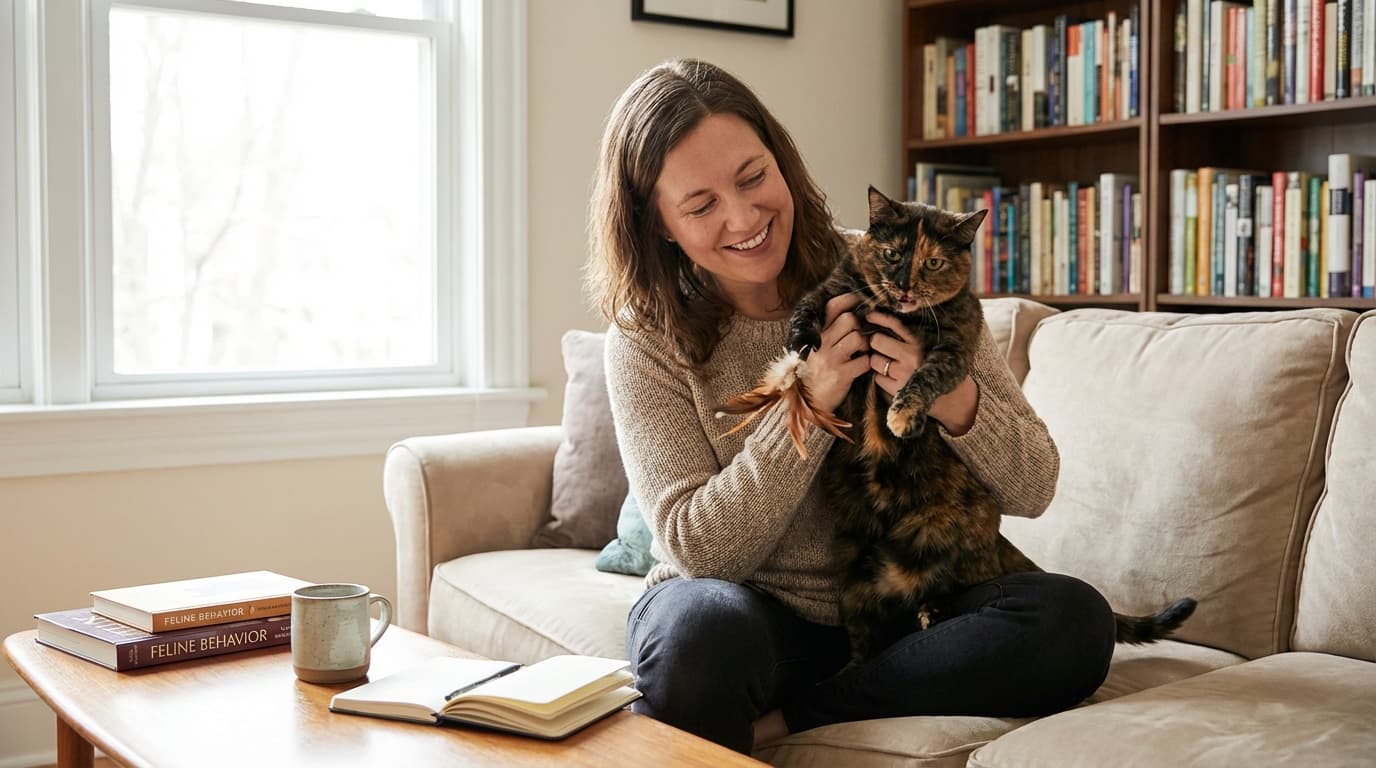
If you have ever been purred at one second and swatted the next, you probably own a tortoiseshell cat. This legendary spiciness has a name in the feline world: tortitude. But are tortoiseshell cat personality traits and tortitude actually backed by science, or is it just a colorful myth? Recent research suggests there is more to these divas than just a striking coat of orange and black.
Whether your cat is a dilute gray or a classic mosaic, understanding their unique genetics can help you manage those famous feisty streaks. We will look at why these cats are almost always female and what a major university study discovered about their attitude toward humans. If your cat's energy feels like a bit too much, we also cover when it might be time for hiring a feline behaviorist to help bring peace back to your living room.
From learning how to stop a cat from playing couch tag aggressively to spotting indoor cat separation anxiety signs, this guide covers the practical side of living with a tortie. We also answer the weird questions, like why cats get the zoomies after using the litter box. By the end, you will know exactly how to handle the quirks and embrace the beautiful chaos of your favorite feline diva.
Ever wonder why your tortoiseshell cat seems to have a massive personality packed into a small frame? In the pet world, these colorful cats are famous for tortitude. It is a unique mix of sass and unpredictable energy. Dr. Lizzie Youens even calls them the divas of the cat world. But here is the thing: a tortoiseshell isn't a specific breed. It is a coat pattern of mixed black and ginger fur. Because the pattern requires two X chromosomes, these cats are almost always female.
While owners have long sworn their torties have a sharp edge, science is finally catching up. A 2016 study from UC Davis found that these cats really do display more aggressive behaviors, like hissing or swatting, during daily human interactions. It turns out that tortitude is more than just folklore. Whether they are money cats bringing good luck or just feisty roommates, that spicy attitude is likely a mix of genetics and female feline independence.
Key insights:
- Tortitude is likely influenced by gender since nearly all tortoiseshell cats are female.
- The UC Davis study confirmed that tortoiseshell and calico cats show more frequent aggressive behaviors toward humans.
- The tortoiseshell pattern is a genetic mosaic where orange and black genes are both carried on the X chromosomes.
More Than Just a Pretty Coat: What Exactly is a Tortoiseshell?
Have you ever noticed a cat with a coat that looks like a beautiful, chaotic splash of paint? You might be looking at a tortoiseshell. One of the biggest myths is that these cats belong to a specific breed, but that is not the case. Tortoiseshell is actually a coat pattern that can show up in many different breeds, from Persians to simple domestic shorthairs. It is a colorful mosaic usually made of black, ginger, and cream fur. Because the pattern is random, no two torties ever look exactly the same.
This unique look has sparked plenty of stories over the years. In the United States and many other parts of the world, these cats are often called money cats. People have long believed that having one in your home brings good luck and financial wealth. Dr. Lizzie Youens from Cats.com describes them as the divas of the cat world because of their big characters and their many mentions in folklore. Whether you believe in the luck or not, there is no denying that their striking appearance makes them stand out in any crowd.
The real magic happens at a microscopic level. The genetic secret behind that coat is tied directly to the X chromosome. The genes for orange and black fur both live on the X chromosome. Since female cats have two X chromosomes, they can carry both colors at once to create that famous pattern. Males usually only have one X and one Y chromosome, so they are almost always just one color or the other. This biological quirk is why nearly every tortoiseshell you meet will be female.
Finding a male tortoiseshell is like finding a needle in a haystack. It only happens in about one out of every three thousand births, usually due to a rare genetic mutation where the male has an extra X chromosome. Even when these rare boys are born, they are almost always sterile. This rarity adds to their mysterious reputation. It also explains why variations like the dilute tortie, which has soft gray and cream fur, or the torbie, which adds tabby stripes to the mix, are so highly prized by cat lovers.
This genetic link between color and gender might also explain the famous tortitude. A study by the University of California Davis found that torties often show more feisty or aggressive behaviors during human interactions than cats with other coat colors. Crystal Uys from Catster notes that these findings support the idea that torties really do display more challenging behaviors. So, when you see that beautiful mosaic coat, you are not just looking at a pretty pattern. You are looking at a complex mix of genetics and personality that makes these cats truly one of a kind.
Key insights:
- The money cat nickname reflects a long history of torties being seen as lucky charms across different cultures.
- Because the tortie pattern is tied to the XX chromosome, their feisty personality traits might be as much about being female as they are about their fur color.
- Variations like dilute and torbie show how diverse this single genetic pattern can look in real life.
The Genetic Secret: Why Nearly All Torties are Female
Ever notice that almost every tortoiseshell you meet is a girl? It is not a coincidence. The genes for orange and black fur both live on the X chromosome. Because females have two X chromosomes, they can carry one color on each to create that famous mosaic pattern. Males usually only have one X chromosome, so they have to pick a side. This genetic quirk is why many owners believe tortitude is just a form of female feline independence.
Finding a male tortie is like finding a four-leaf clover. Only about one in 3,000 is male, usually because of a rare genetic mix-up where the cat has an extra chromosome. While these money cats are considered lucky in many cultures, they are almost always sterile. It is a strange trade-off for such a unique coat.
You might also see dilute torties, which have muted gray and cream patches, or torbies that mix the pattern with tabby stripes. No matter the shade, the underlying science stays the same. For the most part, the tortoiseshell world is a girls-only club.
Key insights:
- The tortoiseshell pattern is sex-linked and requires two X chromosomes, making these cats almost exclusively female.
- Male tortoiseshells are a genetic rarity and are typically sterile due to an extra X chromosome.
- Variations like dilute and torbie coats follow the same genetic rules as standard black and orange patterns.
Is 'Tortitude' a Myth? Here’s What the Science Actually Says
You have probably heard the rumors that tortoiseshell cats are the divas of the feline world. This reputation for being spicy or having tortitude is so common that many owners consider it a badge of honor. But is it just a bit of fun folklore, or is there something deeper going on? For a long time, scientists were skeptical about the idea that a coat pattern could dictate a cat's mood. However, recent research suggests that those fiery personalities might actually be backed by some interesting data.
Back in 2016, researchers at the University of California-Davis decided to put this theory to the test. They surveyed over 1,200 cat owners to see if coat color really linked up with behavior. The results were pretty eye-opening. The study found that torties and calicos were more likely to hiss, swat, or bite during daily interactions with their humans compared to cats with other coat patterns. It turns out that when your tortie gives you that famous look, she might actually be living up to a statistical trend recorded by veterinary experts.
Why does this happen? One big clue lies in their genetics. The genes for black and orange fur are both carried on the X chromosome. Because a cat needs two X chromosomes to show both colors, almost every tortoiseshell you meet is female. Some experts think tortitude is simply a side effect of being a girl. Female cats are often observed to be more independent and assertive than their male counterparts. When you combine those natural traits with a striking coat, you get a cat that knows exactly what she wants and isn't afraid to tell you about it.
Despite their reputation for being a handful, these cats are beloved worldwide. In the United States, they are often called money cats because they are thought to bring wealth and good luck. Whether they are bringing you riches or just a lot of sass, their unique mosaic pattern makes them stand out in any home. They are not just pets. They are characters with a lot to say. But wait, what happens when that famous feistiness starts to feel like it is getting out of control?
Sometimes that personality can cross the line from cute to concerning. If your cat's attitude starts to feel more like genuine aggression, it might be time to bring in a professional. A feline behaviorist can help you figure out if your cat is just being bold or if she is actually stressed out. They look at everything from your cat's medical history to the way your furniture is set up to find the root of the problem. This matters because what looks like a bad mood might actually be a reaction to something in her environment.
During a consultation, you can expect a deep dive into your cat's daily life. The pro will ask about when the hissing happens and what the environment looks like. They are not there to judge your parenting. Instead, they act as a translator to help you understand what your cat is trying to communicate. By bridging this gap, you can move past the constant couch tag and get back to enjoying your feisty friend's company without the scratches. It is all about finding a balance between her natural spark and a peaceful home.
Key insights:
- Tortitude is more than just a myth, as a UC Davis study found that torties and calicos display challenging behaviors more frequently than other cats.
- The tortoiseshell pattern is almost exclusively female because the orange and black genes are both linked to the X chromosome.
- Folklore often views these cats as lucky 'money cats,' even if their owners find them a bit more demanding than the average pet.
- Hiring a behaviorist can help owners distinguish between a cat's natural sass and behaviors caused by stress or environmental triggers.
When the Feistiness Becomes Too Much: Hiring a Feline Behaviorist
Owning a tortoiseshell cat often feels like living with a tiny diva. While we love their spicy tortitude, there is a line between a feisty personality and actual behavioral problems. If your cat is frequently swatting or biting during normal interactions, it might be more than just a mood. A 2016 study by UC Davis confirmed that torties and calicos display aggressive behaviors more often than other coat patterns. This means your cat’s attitude has a statistical backing, but you do not have to just live with the scratches.
When the hissing becomes a daily routine, hiring a feline behaviorist can change everything. These experts do not just look at the cat. They look at your whole home. During a consultation, they will ask about your cat's history and perform a thorough environment check. They want to find the why behind the hiss. Is it a bad litter box location, a lack of vertical space, or just overstimulation? Often, what looks like mean behavior is actually a cat trying to tell you they are stressed.
Think of a behaviorist as a translator who bridges the communication gap. They help you see that your cat might be affectionate one minute and snappy the next for a specific reason. By learning these triggers, you can stop the aggressive play before it starts. What does this mean for you? It means you can finally enjoy your lucky money cat without the constant fear of a surprise pounce. You get to keep the personality while losing the pain.
Key insights:
- Aggression in torties is often situational and linked to specific human interactions rather than being a constant state.
- Behaviorists focus on the environment and history to find out why a cat is acting out.
- The 2016 UC Davis study suggests that tortitude is a real statistical phenomenon, not just a myth.
Living with a Diva: How to Handle Spicy Behavior and 'Couch Tag'
Ever feel like your cat has a split personality? One second she’s purring in your lap, and the next, she’s giving you a spicy swat because you dared to move your hand. This is the classic tortitude experience. While it sounds like feline folklore, a 2016 study from UC Davis actually backed this up. Researchers surveyed over 1,200 owners and found that tortoiseshells and calicos really do show more aggressive behaviors than other cats. It’s not just in your head; your lucky money cat might just have a bit of a temper.
Why the attitude? It likely boils down to the fact that almost all torties are female. Because the coat pattern requires two X chromosomes, these cats are the true bosses of the house. Dr. Lizzie Youens calls them the divas of the cat world, and she’s right. Their feisty nature is a mix of independent traits and that unique genetic mosaic. This aggression is usually situational, meaning it pops up during petting or play when they’ve suddenly had enough. They love you, but they love their personal space just as much.
Then there’s the dreaded couch tag. You’re just walking to the kitchen when a furry blur launches from under the sofa to snag your ankles. This isn't your cat being mean. It's her hunting instinct going into overdrive. Since torties are often high-energy indoor cats, they turn your furniture into a jungle gym. If you don't give them a job to do, they’ll make hunting you their full-time hobby. They aren't trying to hurt you; they're just looking for a way to burn off that feisty energy.
To stop the ankle-biting, you have to redirect that fire. Keep a wand toy handy and move it the moment you see that predatory wiggle in her hips. You want her focusing on feathers, not your feet. Also, consider your walls. Adding vertical space like cat trees or shelves gives her a lookout point. When a cat feels like she owns the high ground, she’s less likely to ambush you from below. It turns her hunting energy into a game she can win without leaving you with scratches.
Key insights:
- The 2016 UC Davis study confirmed that tortoiseshell cats show more frequent aggression during human interactions than other coat colors.
- Tortitude is likely linked to gender, as the tortoiseshell pattern is almost exclusively found in female cats due to X chromosome genetics.
- Redirecting play to toys and providing vertical space are the most effective ways to stop aggressive couch tag behaviors.
How to Stop Your Cat from Playing Couch Tag Aggressively
Ever walked past the sofa only to have a furry blur lunge at your ankles? If you have a tortoiseshell, you probably call this tortitude. A 2016 UC Davis study actually found that torties and calicos show more aggressive behaviors during daily interactions than other cats. This isn't just them being mean. It is often a misplaced hunting instinct where your feet are the only moving targets in the room.
To stop these ambushes, you need to change the game before the claws come out. When you see that telltale wiggle or those wide eyes, toss a toy in the opposite direction immediately. You want to redirect that high energy toward something they can actually bite and kick. Also, consider your room layout. Adding a cat tree or a high shelf can work wonders. Cats feel much safer when they can watch the world from above. Vertical space gives them a way to hunt without using your legs as the prey.
It is also helpful to remember that nearly all torties are female because the coat pattern is linked to the X chromosome. This genetic link might play a role in their independent and sometimes feisty nature. By giving them structured play and a high place to retreat, you respect their diva status while keeping your ankles safe. Think of it as giving them a job so they don't have to invent their own trouble.
Key insights:
- Redirecting play with toys prevents cats from viewing human limbs as prey.
- Vertical space reduces hunting-based aggression by providing a safe vantage point.
- The 2016 UC Davis study suggests a statistical link between tortoiseshell patterns and feisty behaviors.
Is It Attitude or Anxiety? Spotting Stress in Indoor Cats
Ever feel like your tortoiseshell cat is judging your every move? We often laugh off tortitude as just a diva personality, but sometimes that spicy behavior is actually a cry for help. While a dog might chew up your favorite shoes when you leave, signs your indoor cat has separation anxiety are much more subtle and easy to miss. You might notice your girl becoming a literal shadow, following you from room to room, or perhaps she starts vocalizing loudly the second you pick up your car keys. It is not just her being difficult; it is often about her feeling a bit insecure in her solo kingdom when you are not there to provide a sense of routine. This matters because what we call attitude is often just a cat trying to communicate a need for more comfort.
If you are seeing patches of thin fur from excessive grooming or finding surprises outside the litter box, it is time to look at her environment rather than just her attitude. Since these cats are almost exclusively female due to their unique X-chromosome genetics, they often carry a specific independent streak that can quickly turn into frustration if they are not mentally stimulated. Think about it: a solo tortoiseshell needs more than just a window perch to stay happy. You can make your home more stimulating by adding food puzzles, vertical climbing spots, or even bird-watching stations to channel that energy. A 2016 study from UC Davis actually backed up the idea that these cats can be more sensitive during human interactions, so making your home a sanctuary is key to keeping the peace and reducing those stressful outbursts.
Speaking of weird behaviors, let us talk about the post-poop sprint. You know the one where your cat uses the box and then launches themselves across the room like they are training for the Olympics. This is not just your cat being a weirdo; it is often called poo-phoria. There is a fascinating link between the vagus nerve and that sudden burst of energy. Why do cats get the zoomies after using the litter box? For one, the stimulation of that nerve literally feels good. But there are also evolutionary reasons for running away from the scent. In the wild, leaving a fresh scent trail is like leaving a map for a predator, so a quick exit is a smart survival strategy that is still hardwired into your house cat.
But how do you know if it is just a silly victory lap or a sign of discomfort? Usually, if the run is fast and ends in a nap or a play session, you are in the clear. However, if she is yowling while in the box or sprinting away as if she is trying to escape physical pain, it might be a sign of a urinary or digestive issue. Most of the time, it is just that classic tortoiseshell cat personality trait - a mix of high energy and a little bit of drama that makes living with them so entertaining. Understanding these quirks helps you tell the difference between a happy cat and one that needs a little extra support from her favorite human.
Key insights:
- Separation anxiety in cats often manifests as excessive vocalization or shadow-like following rather than destructive chewing.
- The 2016 UC Davis study suggests that tortoiseshell aggression is often situational and linked to specific human interactions.
- Post-litter box zoomies are caused by the vagus nerve and evolutionary instincts to escape the scent of potential predators.
- Environmental enrichment like food puzzles is essential for solo torties to prevent boredom-induced stress.
Why Does My Cat Go Wild After Using the Litter Box?
Ever watched your cat finish their business and then sprint across the house like they are training for the Olympics? It is a common sight that many owners find hilarious. We often call it 'poo-phoria.' This happens because the vagus nerve gets stimulated during a bowel movement, triggering a sudden rush of endorphins. It is a literal natural high that sends them flying from the room.
There is also an old-school survival instinct at play here. In the wild, leaving waste behind is like leaving a neon sign for predators to find. By zooming away at top speed, your cat is putting distance between themselves and the scent as quickly as possible. They are basically making sure nothing can track them back to their current spot.
Most of the time, these post-litter box sprints are just harmless, silly behavior. But you should still keep an eye out. If the running is paired with crying or if they are jumping out because it actually hurts to go, it might be a sign of a urinary or digestive issue. Otherwise? Just enjoy the show. What is a little extra speed after a job well done?
Synthesis: Embracing the Chaos of a Tortoiseshell Life
Living with a tortoiseshell cat is like sharing your home with a tiny, colorful storm. It is a unique mix of genetic destiny and ancient luck. While folklore calls them 'money cats,' science points to the X chromosome to explain why almost every tortie is female. Research from UC Davis even confirms that 'tortitude' is a real, measurable sassiness. These cats are the true divas of the feline world, often showing their feisty side during human interaction.
But why do we love the chaos? Because the bond is earned. When a cat with this much personality chooses to curl up with you, it feels like a massive win. They are independent and vocal, making them rewarding companions for anyone who appreciates a pet with a strong opinion. You aren't just an owner; you are a partner to a feline who knows exactly what she wants and says so.
For new owners, patience is everything. Don't take the occasional hiss or the sudden zoomies personally. Focus on daily play to channel that feisty energy and learn to respect their boundaries. It is a wild ride, but once you have experienced the love of a tortie, life without one might just feel a little too quiet.
Key insights:
- Tortitude is a statistically backed phenomenon, not just a myth, as evidenced by veterinary research into feline aggression.
- The bond with a tortoiseshell cat is uniquely rewarding because it is built on mutual respect for their independent nature.
Frequently Asked Questions
It is not just your imagination. Many owners swear by the idea of tortitude, and there is actually some science to back it up. While they aren't necessarily mean, tortoiseshell cats are known for being a bit more feisty and independent than other cats.
A study by UC Davis found that torties and calicos do show more aggressive behaviors like hissing or swatting during human interactions. Since almost all of these cats are female, their spicy nature might just be part of their DNA. They are often called the divas of the cat world because they have such big characters.
Yes, but it is extremely rare. You are looking at about a one in three thousand chance of finding one. Because the genes for both orange and black fur live on the X chromosome, a cat needs two X chromosomes to show the pattern.
Since males are usually XY, they only have one spot for a color gene. For a male to be a tortie, he has to be born with an extra chromosome, which is a rare genetic fluke. Most of the time, if you see that beautiful mixed coat, you can bet you are looking at a girl.
The easiest way to tell them apart is to look for white fur. Tortoiseshell cats have a beautiful, mottled mix of black and ginger fur that looks like a mosaic. Calico cats have those same colors, but they also have clear, distinct patches of white fur mixed in.
Here is the interesting part about their genetics. Both patterns are almost exclusively found in female cats because the color genes are carried on the X chromosome. While people often think they are specific breeds, they are actually just coat patterns that can show up in many different types of cats. In the United States, you might even hear people call them money cats because they are considered a sign of good luck.
It often comes down to when the behavior happens. If your cat is just bored, they will usually act out while you are home because they want you to play with them. You might see them knocking things off counters or starting a game of aggressive couch tag. If it is separation anxiety, the stress usually starts the second you grab your keys or head for the door.
Look for specific signs like crying when you leave, accidents outside the litter box only when you are gone, or even over grooming. If you are unsure, it is a good idea to talk to a feline behaviorist. They can help you figure out if your cat needs more toys and climbing spots or if they need a specific plan to help them feel safe when they are home alone.
Conclusion
So what is the final word on these colorful divas? Whether you call it tortitude or just a strong personality, tortoiseshell cat personality traits and tortitude are a real part of the experience for many owners. Science suggests that coat genetics and being female might play a role in that famous spice, but every cat is also an individual with their own unique quirks and charms.
Living with a tortie means learning to read the room. Sometimes those cats get zoomies after using the litter box because of a natural energy burst, but other times, behaviors like how to stop a cat from playing couch tag aggressively or spotting indoor cat separation anxiety signs require a bit more attention. If the feistiness starts to feel overwhelming, hiring a feline behaviorist is a great way to get your home back in balance and finally understand what your cat is trying to tell you.
The smartest next step is to embrace the chaos and lean into the play. With the right mix of vertical space, redirected energy, and plenty of patience, that spicy attitude usually turns into a deep and rewarding loyalty. Life with a tortoiseshell cat is never boring, and that is exactly why we love them.
Send it to someone who should read it next.

PurrScript Editorial Team
Editorial Team
PurrScript's in-house editorial team. We research, write, and review every guide using established veterinary and behavioral resources, and update articles as best practices evolve.
View all articles