Is Your Cat Happy? How to Actually Read Their Body Language
Have you ever looked at your cat and wished they could just tell you what they are thinking? Maybe they are staring at you with huge pupils or giving you...

Oliver Chen
Cat Rescue Advocate
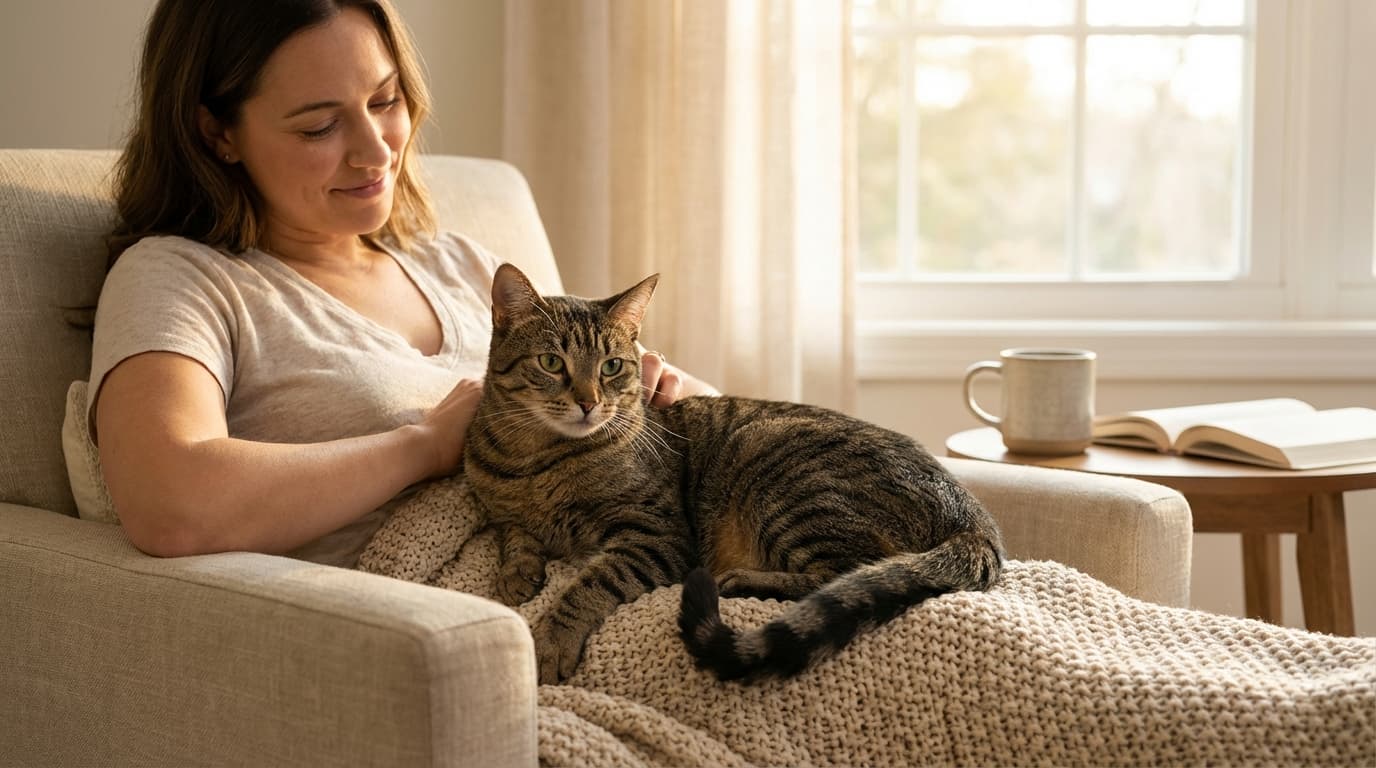
Is Your Cat Happy? How to Actually Read Their Body Language
Have you ever looked at your cat and wished they could just tell you what they are thinking? Maybe they are staring at you with huge pupils or giving you a weird little tail twitch that feels like a secret code. Understanding cat body language is the best way to figure out if your feline friend is actually happy or just seconds away from a playful zoomie attack.
Decoding things like cat tail positions meaning or why cats purr helps you respect their boundaries and build a much deeper trust. It is not just about the sounds they make but also the subtle signs like slow blinking at cats or noticing dilated pupils in cats during playtime. Learning these cues prevents those random scratches and makes life together a lot more peaceful for everyone involved.
This guide covers everything from radar-like ear positions to the famous belly trap and various cat vocalization meanings. You will get practical tips on reading their moods in the moment so you can respond with confidence. Let us dive into the world of feline communication and turn you into an expert on your cat's unique personality.
Stop Guessing: A Guide to Understanding Your Cat
Cats are not mysterious. They just speak a different language. One second they are purring, and the next, you have a scratch on your hand. It feels random, but it is not. Learning feline cues is the best way to prevent those "random" nips and build a real bond based on respect.
Think of their body language as a code. A tail pointed straight up with a little curl at the tip is a reliable sign of a happy, confident cat. You might also see them "slow blink" at you. This shows deep trust. Dr. Alison Gerken says you can even blink slowly back to show them you love them too.
But context is everything. An exposed belly shows they feel safe, but it is not always an invite for a belly rub. If their pupils get big and round or their ears go flat, they might be scared or overstimulated. When you stop guessing, you finally see what your cat is really saying.
Key insights:
- A tail pointed up with a curled tip is a sign of confidence and happiness.
- The slow blink is a feline way of saying "I love you" and shows they feel safe.
- An exposed belly is a sign of trust but often is not an invitation to be touched.
- Environmental context is key because a flicking tail can mean excitement or annoyance depending on the situation.
The Tail: Your Cat's Most Honest Mood Meter
Ever feel like your cat is a total mystery? Just look at the tail. It is basically a furry mood ring that tells you exactly what is going on inside their head. The gold standard for a happy cat is the question mark tail. This is when the tail stays vertical with a friendly little curl at the very tip. It shows they are feeling confident and ready to say hello. If you see this when you walk in the door, it is a great time for some chin scratches because they are genuinely happy to see you.
But what about that weird little vibration? If the tail is straight up and quivering, your cat is likely feeling a massive burst of joy or excitement. However, keep an eye out. This same movement can also mean they are about to spray and mark their territory. Context is everything here. You also need to spot the difference between a slow swish and an angry lash. A gentle side to side motion often means they are focused or curious. But once that tail starts thumping or whipping fast, they are definitely getting annoyed. If you are petting them and the tail starts lashing, it is best to give them some space.
The height of a cat's tail acts like a volume knob for their confidence. When a cat walks into a room with their tail held high and proud, they feel like they own the place. They are comfortable and in control of their surroundings. It is their way of saying they are open to hanging out and feel zero threat from the environment. It is the sign of a cat that feels truly at home and safe with their human family.
On the flip side, a tail held low or tucked between the legs is a major red flag. This usually means your cat is feeling defensive, anxious, or scared. Think of it as them trying to make themselves look as small as possible to avoid a fight. If the tail stays low even when things are quiet, it might even be a sign they are feeling sick or in pain. Expert Billie Reynolds suggests we should always trust these physical cues before trying to force a cuddle. Watching the tail helps you respect their boundaries and build a much stronger bond over time.
Key insights:
- A quivering tail can signal intense happiness or a warning that the cat is about to mark territory.
- The question mark tail is the most reliable indicator of a cat that is friendly and open to interaction.
- Tail height is a direct reflection of a cat's internal confidence and sense of safety.
- Persistent low tail carriage should be monitored as it can indicate either fear or underlying health issues.
High and Proud vs. Low and Tucked
Ever notice your cat strutting into the room with their tail held high like a fuzzy antenna? When that tail points straight up, maybe with a little crook at the tip, it is a clear sign of happiness. Your cat is feeling bold and totally in charge of their space. Sometimes you might even see the tail quiver. They aren't cold; they are just vibrating with pure excitement to see you.
But what happens when that tail drops? A low or tucked tail usually means your cat is feeling small, scared, or even under the weather. If they are hiding their tail between their legs, they are trying to hide. It is their way of saying they don't feel safe. Always check the rest of their body too. Are their ears flat? Are their eyes wide? Understanding these shifts helps you know exactly when your cat needs a little extra comfort or a quiet place to rest.
Key insights:
- A tail pointed straight up with a curled tip is a reliable sign of a confident and happy cat.
- A quivering tail indicates high levels of excitement or a very friendly greeting.
- Low or tucked tails are defensive signals that often point to fear, anxiety, or physical discomfort.
Eye Contact: From 'I Love You' Blinks to Saucer Pupils
Have you ever caught your cat staring at you from across the room, only for them to slowly close and open their eyes? That isn't just sleepiness. It's a 'kitty kiss.' Experts like Dr. Alison Gerken explain that this slow blink is a huge sign of trust and love. It shows your cat feels completely safe in your presence. If you want to build that bond, try blinking slowly back at them. It’s a simple way to say 'I love you' in their own language without making a sound.
But don't mistake every look for affection. A hard, unblinking stare can actually be a challenge or a threat in the cat world. While humans see eye contact as a sign of attention, a cat might see it as a standoff. This is why blinking or looking away is so helpful - it breaks the tension and tells the cat you aren't a rival. It’s all about making them feel secure rather than cornered.
Then there’s the 'saucer eye' look. We know pupils change with light, but cats use them to show emotion too. When those thin vertical slits turn into big black circles, it usually means high stimulation or 'aggressive excitement.' You’ll see this right before they pounce on a toy during a zoomie session. But watch out - if their ears are flat against their head, those same wide eyes mean they are scared and ready to defend themselves.
The trick is looking at the whole picture. A cat with big eyes during play is having the time of its life, but a cat with big eyes hiding under the bed is likely terrified. As behavior consultant Billie Reynolds suggests, we should take time to observe their body language before acting on our own feelings. By checking these cues first, we respect their boundaries and build a much deeper connection with our feline friends.
Key insights:
- Slow blinking is a mutual sign of trust that you can use to communicate safety to your cat.
- Pupil dilation into a rounded shape signals intense stimulation, whether from play or fear.
- Context is key: always look at ear position and surroundings to tell the difference between excitement and aggression.
Decoding the 'Saucer Eye' Look
Ever noticed your cat's eyes suddenly turn into giant black orbs right before they pounce? It is a striking transformation. While their vertical slit pupils are great for hunting in low light, they dilate into a rounded, almost human-like shape when emotions run high. This saucer eye look is often a sign of aggressive excitement during play. Think of it as their brain flipping a switch to maximum focus so they do not miss a single move.
But context is everything. Those same wide eyes can also signal intense fear. When a cat feels threatened or startled, their pupils blow wide open to soak up every bit of visual data available. This helps them decide whether to run or stay and fight. So, if the toys are put away but the saucer eyes are out, your cat might be feeling more spooked than playful. What is their environment telling you in that moment?
The interesting part is how quickly they can shift. One minute they are relaxed, and the next, a strange sound triggers that fight-or-flight dilation. By watching these changes, you get a direct window into their nervous system. It is a biological radar that tells you exactly when they have moved from calm to high alert.
Radar Ears: Why They Swivel and Flatback
Ever wonder why your cat seems to know you are opening a bag of treats before you even touch the plastic? It is because their ears are essentially high-tech radar dishes. Cats have the unique ability to swivel each ear independently, allowing them to track tiny sounds with incredible precision. When those ears are pricked forward, you are looking at a curious hunter who is totally dialed into their environment. It is the signature look of a confident cat who is ready to play or investigate a new toy. But keep an eye out for airplane ears, where the ears tilt out to the sides like wings. This is a subtle warning that your cat is starting to feel overstimulated or just needs a little break from the action.
Understanding these shifts is a huge part of being a great cat owner because it helps you respect their boundaries. It is not just about the ears, though; you have to look at the whole body to get the full story. A happy cat usually has their tail pointed straight up with a friendly little curl at the tip. But if you see those ears swiveling rapidly while the tail is flicking, they might be feeling anxious about a sound or a change in the room. The key is to interpret these cues within their environment. A flicking tail while they are watching a bird is just excitement, but that same movement while you are petting them is a clear sign they have had enough.
When ears go from airplane mode to being pinned flat against the skull, you have entered the danger zone. This is a rare signal that goes far beyond simple annoyance. It is a sign of extreme fear and an immediate readiness to defend themselves. By flattening their ears, the cat is instinctively protecting their most sensitive sensory tools from potential injury during a fight. It is a survival move. You can tell the difference between a cat that is just grumpy and one that is truly terrified by looking at their eyes. In these high-stress moments, their vertical slit pupils will often dilate into large, round circles as they try to take in every bit of visual information to stay safe.
This is where the idea of consent-based interaction becomes so important for a happy home. We often see a cat in a vulnerable position, like lying on their back, and assume they want a belly rub. But as behavior consultant Billie Reynolds points out, an exposed belly is a sign of trust, not necessarily an invitation to touch. If you see flat ears combined with that posture, stay back and give them space. Instead of forcing a connection, try to rebuild that bond with a slow blink from across the room. As experts note, a slow blink is a way to say I love you in cat language. It shows them they are safe, helping them move from a state of terror back to feeling comfortable and relaxed.
Key insights:
- Independent ear movement acts as a sophisticated sensory radar for tracking environmental threats and prey.
- Forward-facing ears indicate a curious and engaged hunter, while ears tilted sideways suggest the cat needs physical space.
- Flat back ears represent a rare and extreme state of fear where the cat is physically preparing to defend itself from a perceived threat.
- Context is everything; an exposed belly or a specific ear position must be read alongside tail movement and pupil dilation for accurate interpretation.
The Danger Zone: Flat Back Ears
Ever noticed your cat's ears suddenly vanish against their skull? It is a striking sight that should stop you in your tracks immediately. While airplane ears usually mean your cat is just a bit grumpy, flat back ears are a different story. This rare signal means your cat is feeling extreme fear and is fully prepared to defend themselves. They aren't just annoyed or frustrated. They are terrified.
Distinguishing between these states is vital for your safety and theirs. Think of their ears as a high-tech emotional radar. When they are pinned flat, your cat is essentially in a defensive crouch. Expert Billie Reynolds reminds us to trust these cues before following our own feelings. If you see this, look at the environment. Is a loud noise or a sudden movement scaring them? Instead of reaching out, give them space until they feel safe again.
Beyond the Meow: Trills, Purrs, and Yowls
If you think your cat only talks to you when they want dinner, you are missing out on a whole world of conversation. Most of us recognize the standard meow, but here is a secret: adult cats rarely meow at each other. They mostly saved that sound specifically to communicate with humans. To really get what is going on in your cat's head, you have to listen for the subtler stuff. Have you ever heard that high-pitched, rolling sound when you walk into the kitchen? That is a trill. It sits right between a meow and a purr, and it is basically your cat's way of saying, "Hey, I am glad you are here!"
Then there is the purr, which is perhaps the most misunderstood sound in the feline world. We usually assume a purring cat is a happy cat, but that is not always the case. Cats also purr when they are stressed, in pain, or even injured. Think of it as a self-soothing mechanism or a tiny internal motor for recovery. Some research shows the frequency of a purr can actually help bones and tissues heal. So, if your cat is purring while tucked away in a corner, they might not be content - they could be trying to calm themselves down. Context is everything here. As certified behavior consultant Billie Reynolds suggests, we need to observe the whole cat before acting on our own feelings.
When the volume goes up, the meaning shifts. There is a massive difference between the short, repetitive meow for treats and a long, guttural yowl. Yowling is often a mating call or a sign of territorial distress. If your cat is making this sound, they are likely feeling a high level of intensity. Watch their eyes during these vocalizations; if those vertical slit pupils dilate into big, rounded circles, your cat is likely scared or overstimulated. By pairing these sounds with their physical cues, like the slow blink of trust or a tail pointed straight up in greeting, you can finally start to understand the complex language they have been using all along.
Key insights:
- Purring is a multi-purpose tool used for both happiness and physical healing through low-frequency vibrations.
- Trilling is a friendly, high-pitched greeting that cats use to show approval or get your attention.
- A yowl is a distinct, urgent sound usually reserved for mating or expressing significant physical or environmental distress.
The Belly Trap and Other Body Cues
You walk into the room and see it: your cat is sprawled on the rug, fluffy belly fully exposed. It looks like a clear invitation for a belly rub, doesn't it? But for many of us, reaching in results in a "trap" of sudden claws and teeth. Here is the thing: when a cat shows you their stomach, they are handing you a massive compliment. They are telling you they feel safe and trust you completely. Because the belly is their most vulnerable spot, showing it off is a sign of deep comfort, but it is rarely a request for a massage. If you want to stay in their good graces, acknowledge the trust with a soft word rather than a hand to the gut.
How else can you tell they are happy? Look at the tail. A tail pointed straight up with a little curl at the tip is a reliable sign of a confident, happy cat. Sometimes, you might even see that tail quiver. If they aren't currently marking territory, a quivering tail means they are incredibly excited to see you. You might also notice them rubbing their cheeks against your shins. This is not just a greeting; they are using scent glands to mark you as a familiar, safe part of their world. It is their way of claiming you as a member of their family.
On the flip side, you have to watch for the "statue" posture. If your cat suddenly freezes or their ears go flat against their head, they are not being calm; they are experiencing extreme fear and might be ready to lash out. Keep an eye on their eyes, too. Those vertical slit pupils will dilate into big, round circles when they are surprised, scared, or highly stimulated. Context is everything here. A flicking tail while they watch a bird out the window means they are engaged, but that same flick while you are petting them is a clear sign of growing annoyance.
It is tempting to scoop up our cats whenever we want a cuddle, but the best bonds are built on a "cat-first" policy. Experts are increasingly focused on consent-based interaction, which essentially means waiting for the "all clear" from your cat before moving in for physical contact. As cat behavior consultant Billie Reynolds suggests, we should consistently take time to observe their cues before acting on our own feelings. If you wait for them to approach you first, you are showing them that you respect their personal space and autonomy.
One of the most powerful tools in your communication kit is the slow blink. When a cat looks at you and slowly closes their eyes, they are showing deep trust and affection. Dr. Alison Gerken notes that you can actually blink slowly back to show them you love them too! This simple exchange can diffuse tension and build a sense of safety. It is a non-verbal way of saying, "I am not a threat, and I care about you."
Paradoxically, the more you respect their boundaries and give them the choice to walk away, the more affectionate they usually become. When a cat knows they won't be forced into a hug or picked up against their will, they feel secure. This security makes them much more likely to seek you out for head bumps, trills, and purrs on their own terms. By letting them call the shots, you are actually strengthening the bond and ensuring that every interaction is a positive one for both of you.
Key insights:
- An exposed belly is a display of vulnerability and trust, not necessarily a request for physical touch.
- Tail positions, like a curled tip or a quiver, provide immediate feedback on a cat's confidence and excitement levels.
- Consent-based interaction, such as waiting for a cat to approach you, reduces pet stress and fosters a more affectionate relationship.
- Environmental context is vital; the same physical cue can mean different things depending on the cat's surroundings.
Consent-Based Interaction
Ever felt the urge to scoop up your cat the moment they look cute? We have all been there, but building a real bond means waiting for their 'all clear' first. Think of it as feline consent. Behavior consultant Billie Reynolds suggests we should always take a beat to observe their cues before acting on our own feelings. If you see a tail pointed straight up with a little curl at the tip, that is a fantastic sign. It means they feel confident and happy to have you nearby.
Here is the tricky part: just because your cat shows you their belly does not mean they want a tummy rub. While an exposed belly is a beautiful sign of trust, it is often just a way of saying they feel safe, not an invitation for a hand to the gut. If you ignore this and dive in, you might get a defensive growl or a quick grab. Instead, wait for a slow blink. Dr. Alison Gerken explains that this is a cat's way of showing love. When you blink slowly back, you are confirming that the feeling is mutual.
What happens when you stop forcing the interaction? Something amazing. By respecting these boundaries and waiting for signals like a quivering tail or a friendly trill, you actually make your cat feel more secure. This trust is the secret sauce for a more affectionate pet. When they know you will not push them, they are much more likely to jump into your lap or rub their cheeks against you to mark you as their favorite human.
Key insights:
- Environmental context matters - a flicking tail means focus during a hunt but might signal annoyance during a nap.
- Respecting a cat's physical space actually encourages them to initiate more frequent contact.
- A slow blink is a low-pressure way to communicate affection without invading their personal bubble.
Context Is Everything: Putting the Pieces Together
Ever caught your cat staring at you while their tail thumps against the sofa? It is easy to assume they want to play, but the setting changes the meaning entirely. If they are mid-nap, that flicking tail usually means they are annoyed by a noise or just want peace. But if they are crouching near a toy, that same movement shows intense focus. Billie Reynolds, a cat behavior consultant, suggests we should always take a beat to observe these cues before we try to join in. Trusting their body language over our own feelings keeps the bond strong.
To really get it right, you have to look at the whole cat. Think of their ears as a sophisticated radar system. While they can swivel them independently to track sounds, flat back ears are a serious warning of fear or a looming attack. Pair that with their eyes. Cats have vertical slit pupils that turn into round shapes when they feel surprised or highly stimulated. Even a tail pointed straight up with a little curl at the tip is a great sign of confidence, but you still need to check the rest of the picture to be sure.
It is also about realizing that vulnerability is not always an invitation. For example, a cat showing their belly is a sign of trust, but it does not always mean they want a belly rub. They might just feel safe enough to expose their most sensitive spot. If you misread this, you might get a quick grab or a growl. Instead, look for signs of affection like slow blinking or cheek rubbing against your hand to scent mark their territory. Dr. Alison Gerken says that if a cat blinks slowly at you, they trust and love you. You can even blink back to show them the feeling is mutual.
Key insights:
- Environmental context helps distinguish between a playful tail flick and an annoyed one.
- A cat showing its belly is expressing safety and trust, not necessarily asking for physical contact.
- Accurate interpretation requires looking at ears, eyes, and tail movements as a combined signal.
Frequently Asked Questions
Conclusion
So what does all this mean for you and your cat? Learning about cat tail positions meaning or why cats purr isn't just about fun facts. It is about moving from guessing to actually knowing how your pet feels. When you notice forward-facing feline ear positions or catch a trill, you are decoding cat vocalization meanings in real time. This understanding helps prevent those confusing moments where a quick pet turns into a nip.
Your next move is simple: just watch. Before you reach out, check if those dilated pupils in cats are from play or fear. Try slow blinking at cats when they are relaxing to see if they send a kitty kiss back. These quiet moments build the most trust over time because they show you are paying attention to what your cat is actually saying.
Building a bond takes patience, but every tail quiver brings you closer together. Keep observing and remember that sometimes the best way to show love is simply respecting their space. Your cat will thank you for finally speaking their language.
Send it to someone who should read it next.
About the author

Oliver Chen
Cat Rescue Advocate
Founder of a no-kill rescue shelter and passionate advocate for feline welfare and responsible cat adoption.
View all articles